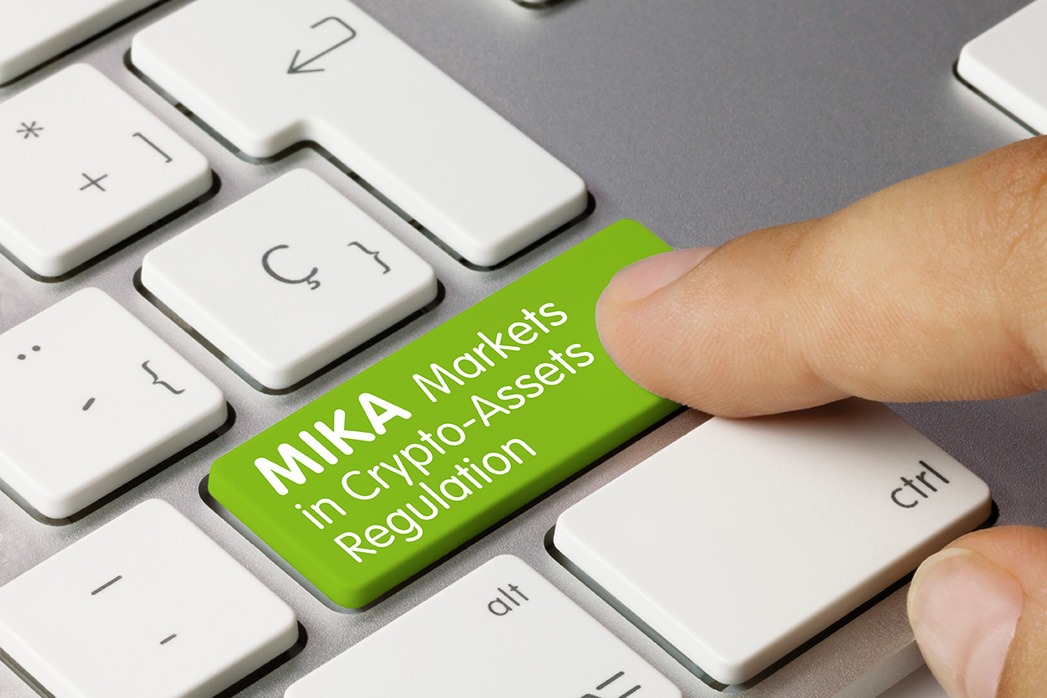

After MiCA, Compliance Becomes Part Of The Product
“After MiCA, compliance is no longer just a condition of operating. It becomes part of the product clients are actually buying.” DNA Crypto.
Compliance Has Moved From The Background To The Front Of The Market
For many years, compliance in crypto was treated as something separate from the product. The product was access, speed, price, liquidity or market opportunity. Compliance sat behind the scenes, often described as a burden, a cost, or a requirement to be satisfied after the commercial model had already been built.
That view no longer fits the market.
After MiCA, compliance becomes part of the client proposition. It helps define who can operate, how clients are onboarded, how assets are accessed, how transactions are monitored, how settlement is handled, and how trust is created among investors, platforms, counterparties, and regulators.
The firms that understand this shift will speak about compliance differently. They will not treat it as paperwork. They will treat it as infrastructure.
The Deadline Changed The Meaning Of Trust
The MiCA transition has changed the meaning of trust in Europe’s digital asset market. Before the deadline, some firms could rely on reputation, relationships, national registration, market knowledge or founder credibility to build confidence.
Those things still matter, but they are no longer enough.
The post-MiCA market asks harder questions. Is the firm authorised to provide the service? If not, which authorised route is being used? How are clients protected? How are conflicts managed? How are assets safeguarded? How are transactions monitored? What happens if something goes wrong?
ESMA’s statement on the end of the MiCA transitional periods made this point practical. The transitional period expired across the EU on 1 July 2026, and entities providing crypto-asset services to EU clients without a MiCA licence must cease offering those services. ESMA also focused on orderly wind-down, client migration and the risks of dealing with unauthorised providers.
That is why trust has moved from narrative to evidence.
Compliance Is Becoming A Commercial Signal
In the next phase, compliance will be judged not only by regulators. It will be judged by clients, investors, partners, banks, custodians, liquidity providers and asset owners.
This matters because serious counterparties do not want uncertainty around responsibility. They want to know whether a firm has proper onboarding, transaction monitoring, governance, recordkeeping, complaint handling, business continuity, and client communication. They want to understand whether the business can operate under pressure.
Compliance, therefore, becomes a commercial signal. It tells the market whether a firm is disciplined enough to handle client relationships, investor capital and digital asset infrastructure properly.
The weaker firms will continue to describe compliance as a brake on innovation.
The stronger firms will understand that compliance is the key to making innovation usable.
Client Protection Is Part Of The Product
Clients are not only buying access to digital assets. They are building confidence in the process around that access.
That process includes identity checks, risk assessment, source-of-funds review, clear communication, appropriate routing, transaction records, custody understanding, settlement visibility, and the ability to ask who is responsible for each part of the service.
This is why client protection is no longer a separate regulatory theme. It is part of the product experience.
A client may not use the word “compliance” when deciding whom to trust, but they will feel the difference between a firm that has processes and a firm that relies only on personality, speed, or enthusiasm.
The post-MiCA client will become more demanding because the market itself has become more serious.
The Best Compliance Should Be Felt, Not Advertised
Good compliance does not need to be loud. It should be visible through the quality of the process.
A serious client should feel that onboarding is clear, questions are purposeful, documentation is organised, risks are explained, communication is consistent, and transaction routes are understood. The experience should feel controlled without becoming hostile.
This is where digital asset businesses need to mature. Compliance should not feel like a pile of forms added to a weak product. It should feel like the operating discipline that makes the product trustworthy.
The best firms will not turn compliance into marketing theatre. They will embed it into the way clients move through the business.
That is the difference between appearing regulated and behaving like infrastructure.
Stablecoins Show Why Compliance Matters
Stablecoins are one of the clearest examples of why compliance becomes part of the product. Their value proposition often includes speed, liquidity, movement, and settlement flexibility. But speed without control can create risk.
If Stablecoins are used for settlement, payments, cross-border transfers or digital asset transactions, the surrounding infrastructure matters. Investor onboarding, AML checks, sanctions screening, transaction monitoring, counterparties, and record-keeping all factor into whether the system can be trusted.
This is why Stablecoins should be understood as financial infrastructure, not simply crypto liquidity. Their usefulness increases when the controls around them are credible.
For institutional clients, the question is not only whether value can move quickly.
The question is whether it can move properly.
Tokenisation Will Need Compliance-Led Distribution
Tokenisation will also need compliance to become part of the product. Real Asset Tokenisation is not simply about making property, private markets or income-producing assets available in digital form.
It is about understanding who can invest, what they are buying, how rights are documented, whether transfer restrictions apply, how settlement works, how income is reported and how liquidity may develop.
A tokenised Real Asset without investor checks, documentation discipline, and clear transfer rules may create more confusion than it provides access.
This is where compliance-led distribution becomes essential. The market will not scale through open access alone. It will scale through structures that investors, asset owners, advisers, banks and regulators can understand.
Tokenisation needs trust before it needs more tokens.
Real Assets Raise The Standard Further
Real Assets raise the standard because the underlying value is often meaningful, long-term and legally complex. Property, infrastructure, private credit and income-producing assets are not casual products. They involve ownership rights, documentation, valuation, income treatment, tax, jurisdictional rules and exit planning.
When digital infrastructure touches Real Assets, compliance becomes even more important. The investor needs to know what they own. The asset owner needs confidence in the investor base. The platform needs controls around eligibility, transfers, reporting and settlement. Counterparties need to understand the process.
This is why Real Asset Tokenisation cannot be built like a speculative token launch. It has to be built like a financial infrastructure.
That is a higher standard, but also a stronger opportunity.
Compliance Can Improve Distribution
Compliance is often viewed as something that slows distribution. In weaker models, that may be true. In stronger models, compliance improves distribution because it increases trust.
An institutional investor, family office or serious cross-border investor is more likely to engage with a product if the process is clear, the rules are understood, and the documentation is credible. Banks, custodians and authorised partners are also more likely to support a business that can explain its controls.
That means compliance can become a competitive advantage in distribution. It can open conversations that would otherwise remain closed.
The goal is not to make compliance heavy for its own sake. The goal is to make the route into the opportunity credible enough for serious capital.
After MiCA, Advisory Must Become More Precise
Advisory also changes after MiCA. A business providing market education, Tokenisation strategy, infrastructure insight or cross-border capital analysis must be careful about how it describes its role.
There is value in explaining the market. There is value in helping clients understand digital asset infrastructure, Real Assets, Stablecoins, custody, settlement and authorised routes. There is value in helping asset owners and partners think through Tokenisation models.
But advisory language must be precise. It should not blur into regulated financial advice or unauthorised execution where permissions are required.
This is not a limitation on thought leadership. It is the discipline that makes thought leadership credible.
The market needs clearer interpretation, not looser claims.
Authorised Partnerships Become More Important
As regulated execution becomes more clearly separated from education, advisory and infrastructure, authorised partnerships become more important.
A post-MiCA business may still add value through client education, infrastructure design, Tokenisation strategy, relationship mapping and market intelligence. But where regulated execution, custody, or other crypto-asset services require authorisation, those services need to be provided by the correct authorised providers.
This model can be powerful if handled properly. It allows specialist firms to focus on where they add value while relying on authorised infrastructure where required.
But the roles must be transparent. Clients need to know who is providing which service, who is authorised, where assets sit and who carries responsibility.
Clarity is not a formality.
It is the foundation of trust.
Compliance Is Also A Founder Discipline
For founders, the post-MiCA environment requires a different mindset. It is no longer enough to be early, energetic or commercially creative. The founder has to build a business that can carry responsibility.
That means accepting constraints, defining boundaries, documenting processes, choosing partners carefully and refusing to use language that overstates what the business can do.
This can feel frustrating, especially for smaller firms that entered the market before the full cost of regulation was clear. But it is also part of the maturation of digital assets.
A founder who can adapt to this reality may become more credible, not less.
The market does not need more noise. It needs disciplined builders who understand where trust comes from.
What This Means For DNA Crypto
For DNA Crypto, compliance must now be treated as part of the product, even if the business is no longer positioned as a direct crypto brokerage.
The next phase is digital asset infrastructure, Tokenisation, institutional advisory, cross-border capital and Real Asset access, with regulated execution delivered only through appropriate authorised routes where required.
That positioning only works if the compliance philosophy is visible inside the business. Client education has to be clear. Tokenisation commentary has to respect the legal structure. Stablecoin settlement has to be discussed with controls in place. Cross-border capital has to include onboarding, documentation and jurisdictional awareness. Authorised partners have to be distinguished from advisory activity.
This is how DNA Crypto elevates the conversation.
Not by pretending compliance is easy, but by showing that trusted infrastructure cannot exist without it.
The Capital Behaviour Shift
Capital behaves differently when regulation becomes real. It moves away from vague access and towards credible routes.
Investors and partners want confidence that a business understands its obligations, respects boundaries, and can operate within professional standards. They are less interested in claims about speed or disruption if the underlying controls are weak.
This is the most significant behavioural shift that matters after MiCA. Serious capital does not want crypto wrapped in better language. It wants infrastructure that can withstand scrutiny.
Compliance becomes part of that scrutiny.
It is no longer just the cost of entering the market. It is part of the reason capital may decide to trust the market.
The Direction Of Travel
The direction of travel is clear. Digital assets are becoming more institutional, not less. That does not mean they become slow, lifeless or identical to traditional finance. It means the market’s useful parts need stronger foundations.
Bitcoin still raises important questions about ownership and custody. Stablecoins still matter for settlement. Tokenisation still matters for access to Real Assets. Cross-border capital still needs better rails.
But all of these themes require a trusted architecture.
Compliance is one of the layers in that architecture. It is not the whole product, but without it, the product becomes difficult to trust.
Conclusion
After MiCA, compliance becomes part of the product.
It defines how clients are onboarded, how risks are understood, how authorised routes are used, how transactions are monitored and how investors decide whether a business is credible.
For DNA Crypto, this is a moment of elevation. The business can move beyond the language of crypto brokerage and into a more serious role around digital asset infrastructure, Tokenisation, institutional advisory, cross-border capital and Real Asset access.
That role requires discipline.
It requires clear boundaries, trusted partners, careful language and a deeper understanding of how capital behaves when trust becomes scarce.
The future of digital assets will not be built by firms that treat compliance as a burden.
It will be built by firms that understand compliance as part of the infrastructure clients are actually buying.
Relevant DNACrypto Articles
- – MiCA Crypto Regulation
- – Digital Asset Infrastructure
- – Tokenisation Infrastructure
- – Stablecoins Infrastructure
- – Digital Asset Escrow
Image Source: Envato Stock
Disclaimer: This article is for informational purposes only and does not constitute financial, legal, or investment advice.