
Tokenisation Will Be Won By People Who Understand Assets, Not Tokens

Tokenisation Will Be Won By People Who Understand Assets, Not Tokens

“The token may travel on-chain, but investor trust is built in the asset, the rights and the route back to value.” DNA Crypto.

The Market Has Been Looking At The Wrong Object

Tokenisation is often discussed as if the token is the main event. It is not.

The token is the representation. The asset is the substance.

This distinction matters because many weak Tokenisation narratives begin with technology and work backwards. They explain the token, the platform, the wallet and the blockchain before explaining the asset, the rights, the valuation or the route back to value.

Serious capital will not accept that order.

Tokenisation will be won by people who understand assets, not by people who know how to create tokens.

The Asset Comes First

A property, infrastructure project, private credit exposure or income-producing asset must make economic sense before it is tokenised.

If the underlying asset is weak, unclear, overvalued or badly governed, Tokenisation will not fix it. A digital wrapper can make the asset look more modern, but it cannot make poor fundamentals disappear.

This is why Real Asset Tokenisation has to start with asset quality. Investors need to understand what they are being offered before they care how it is represented digitally.

The strongest models will start with the same questions serious investors already ask.

What is the asset? Who owns it? What income does it produce? What risks sit inside it? How is it valued? How can the investor exit?

Only after those questions are answered does the token become useful.

Legal Rights Decide What The Token Means

A token does not automatically create ownership. It represents whatever rights the legal and operational structure gives it.

That could be equity, debt, revenue participation, beneficial interest, fund units, contractual rights or something else entirely. Each structure carries different protections, risks and responsibilities.

This is why Tokenisation Infrastructure has to include legal clarity. Without that clarity, an investor may hold something digital without understanding what it actually means.

The blockchain can record a token.

The legal structure decides whether the claim behind it can be enforced.

That is where trust begins.

Property Makes The Point Clearly

Property is one of the strongest examples of why asset knowledge matters.

Real estate is familiar. Investors understand land, buildings, rental income, development potential and long-term ownership. That makes property attractive for Tokenisation.

But property is also local, legal and operationally complex. It depends on title, planning, valuation, tax, tenancy, insurance, financing, maintenance, asset management and exit strategy.

A tokenised property interest still has to deal with all of those realities.

This is why property exit mechanics are just as important as access. Investors do not only need to get into an asset. They need to understand how value can be realised later.

Tokenisation may improve administration and access, but it cannot make property simple.

Valuation Is Where Discipline Shows

Valuation is one of the clearest tests of a Tokenisation model.

Listed assets often have visible market prices. Real Assets do not always have that advantage. Property values may move with interest rates, local demand, rental income, comparable transactions, planning risk and economic conditions. Private credit and infrastructure assets may depend on cash flow models, borrower quality, contracts and repayment assumptions.

If the valuation is weak, the token does not protect the investor.

This is why Tokenisation needs valuation discipline. Investors need to know who values the asset, how often it is reviewed, what assumptions are used and how changes are communicated.

A token can make ownership easier to record.

It cannot make an uncertain valuation certain.

Custody Has To Protect The Link To The Asset

Custody in Tokenisation is more complex than holding a token securely.

The investor needs confidence that the token remains connected to the rights it represents. That means records, legal documentation, issuer obligations, asset custody, investor registers, transfer controls and recovery processes all matter.

If the platform fails, the issuer changes, records are unclear or legal rights are poorly documented, the investor may discover that holding the token is not enough.

This is where custody becomes trust infrastructure.

The question is not only who controls the wallet.

The deeper question is whether the investor can rely on what the wallet balance represents.

Income Distribution Tests The Operating Model

Many Real Asset Tokenisation models involve income. Property may generate rent. Private credit may generate interest. Infrastructure may generate contracted cash flows.

That income is part of the attraction, but it also tests the operating model.

Who receives the income? How are costs deducted? What tax applies? How often are distributions made? What currency is used? What happens if income falls, is delayed or becomes disputed?

Smart contracts may help automate parts of distribution, but the income still has to be collected, verified, accounted for and reported.

Automation helps only when the underlying process is sound.

This is where asset management and investor communication become as important as technology.

Liquidity Cannot Be Claimed Into Existence.

Tokenisation is often promoted through the promise of liquidity. That promise needs careful handling.

A tokenised asset is not liquid simply because it is digital. Liquidity depends on demand, pricing, transfer rules, investor eligibility, regulatory restrictions, market access and confidence in the asset.

This is why Tokenisation liquidity has to be designed, not assumed.

Property and private market assets are not naturally liquid in the same way listed equities are. Tokenisation may improve transfer mechanics, but it does not automatically create a deep buyer base.

That is why Why Most Tokenised Assets Will Never Reach Institutional Capital remains an important argument.

Access without realistic liquidity can create disappointment.

Liquidity without structure can create risk.

Escrow Can Make The Route More Trusted

Escrow is highly relevant to Tokenisation because many Real Asset transactions depend on conditions being met before value should move.

An investor may need confirmation that documents are complete. An issuer may need confirmation that funds have arrived. A platform may need to verify eligibility, identity, compliance checks and settlement conditions before transfer.

This is where Digital Asset Escrow can improve trust. It can help organise the point where parties need confidence before releasing funds or rights.

Escrow does not remove the need for legal agreements, due diligence or oversight. It helps structure the moment of uncertainty.

For Real Asset Tokenisation, that moment is critical.

Stablecoins May Support Settlement

Stablecoins can also support Tokenisation when used within a responsible structure.

If a tokenised Real Asset involves cross-border investors, staged payments, income distributions or escrow release, Stablecoins may help improve settlement efficiency. They can reduce some frictions around timing and payment movement, especially where the transaction process is designed clearly.

But Stablecoins do not solve the asset problem.

They may help value move. They do not decide whether the asset is good, whether rights are enforceable or whether liquidity exists.

The value of Stablecoins in Tokenisation is strongest when they support settlement around assets that have already passed serious scrutiny.

Cross-Border Capital Needs More Than Access

Cross-border access is one of the strongest reasons Tokenisation matters.

International investors often face friction around local law, banking, currency movement, documentation, tax, reporting, asset management and exit routes. Digital infrastructure can improve parts of that journey, but it cannot remove the need for local clarity.

This is why International Property Investment is closely connected to the Tokenisation thesis. The opportunity is not simply to sell more assets to more investors. The opportunity is to build more trusted routes between capital and assets.

That requires structure.

It also requires honesty about what technology can and cannot do.

Why Asset People Will Matter

The next phase of Tokenisation will not be shaped only by blockchain developers. It will also be shaped by asset managers, property professionals, lawyers, custodians, compliance teams, valuers, settlement specialists and investor communication teams.

That is a positive sign.

It means Tokenisation is moving closer to the real economy. It also means the market will become more demanding. Claims will need to be clearer. Assets will need to be better explained. Liquidity promises will need to be more realistic.

This is where Real Assets become central to the conversation.

The market will not reward digital presentation alone.

It will reward structures that make ownership easier to understand and trust.

Why This Matters For DNA Crypto

For DNA Crypto, Tokenisation remains one of the most important long-term themes because it connects digital ownership to assets that people already understand.

Bitcoin teaches ownership. Smart contracts teach process. Stablecoins can support settlement. Escrow can improve transaction confidence. Tokenisation brings those ideas closer to property, Real Assets, private markets and cross-border capital.

The lesson is clear.

DNA Crypto should not position Tokenisation as a shortcut. It should position Tokenisation as infrastructure that can make good assets easier to access, administer and understand.

That is a stronger advisory message.

It is also more credible.

The Capital Behaviour Shift

Capital behaves differently when real assets are involved.

Investors may tolerate volatility in liquid markets, but they expect clarity when capital is tied to property, income, private credit or long-term ownership structures. They want to know what they own, how rights are protected, how value is assessed, how income is handled and how exits may work.

Tokenisation becomes valuable only if it improves those answers.

Capital will not move because an asset has been digitised.

It will move when the digital structure makes ownership more understandable, administration more disciplined and access more trusted.

That is the capital behaviour shift.

The Direction Of Travel

The direction of travel is clear. Tokenisation will become more serious as it moves closer to Real Assets, but it will also become more demanding.

The market will need legal clarity, valuation discipline, custody standards, investor onboarding, compliance controls, escrow processes, Stablecoin settlement, reporting and realistic liquidity design.

The firms that succeed will not be those that make the most noise about tokenised assets.

They will be those that understand assets well enough to make digital ownership credible.

Conclusion

Tokenisation will be won by people who understand assets, not tokens.

The token may travel on-chain, but investor trust is built in the asset, the rights and the route back to value. Legal structure, valuation, custody, income, liquidity, settlement and investor communication carry the real weight.

That does not weaken the Tokenisation thesis.

It makes it more serious.

For DNA Crypto, this is the right message now. Tokenisation is not about making assets look digital. It is about building better infrastructure around ownership, access and trust.

The future will not be won by tokenising everything.

It will be won by making the right assets easier to understand, administer and trust.

Relevant DNACrypto Articles

Image Source: Envato Stock

Disclaimer: This article is for informational purposes only and does not constitute financial, legal, or investment advice.

Read more →

Magnifying Glass Inspecting Binary Code Information Background.

Smart Contracts Are Useful Only When The Real World Can Trust Them

“A smart contract is useful when the world around it can be trusted enough for code to execute the right thing.” DNA Crypto.

The Smart Contract Conversation Needs To Grow Up

Smart contracts are still one of the most misunderstood ideas in digital assets.

They are often presented as if they remove trust completely. That version of the story is too simple. A smart contract can execute conditions, hold assets, release funds, update records and follow rules written into code. Still, it does not automatically understand law, valuation, identity, disputes or commercial fairness.

That distinction matters.

The real opportunity is not pretending code replaces trust. The real opportunity is using code to make trusted processes clearer, more consistent and easier to verify.

Code Can Execute, But It Cannot Judge.

A smart contract can perform an action when defined conditions are met. That is valuable because finance depends on conditions.

Funds should be released when requirements are satisfied. Assets should transfer when payment is confirmed. Income should be distributed according to agreed rules. Collateral should move when certain thresholds are reached.

But execution is not judgement.

Code does not know whether a valuation is fair. It does not know whether a legal document is valid unless a reliable system tells it. It does not know whether a party acted in bad faith outside the transaction flow. It does not know whether an off-chain event has been reported correctly.

This is why smart contracts should be treated as process infrastructure, not legal wisdom.

Trust Is Not Removed, It Is Reassigned

The phrase “trustless” has caused damage to the smart contract conversation. It suggests that trust disappears when code is introduced.

That is not what happens.

Trust is reassigned. Instead of trusting only a person, a broker, a platform or a manual process, the market may begin trusting code, data inputs, governance rules, auditors, administrators, oracles and legal structures.

This is why trust infrastructure matters. A smart contract is only one layer. The process around it decides whether that layer is useful.

The serious question is not whether trust can disappear.

The serious question is whether trust can be designed more carefully.

The Real World Enters Through Data

Smart contracts work best when the information they rely on is already on-chain and easy to verify. The difficulty begins when they need information from the real world.

A property valuation, legal title, identity check, delivery confirmation, rental payment, insurance status or dispute notice does not automatically exist on-chain. That information has to be collected, verified and connected to the smart contract through a reliable process.

This is where oracles and data providers become important.

They can bring external information into blockchain systems, but they also introduce new trust questions. Who provides the data? How is it checked? What happens if the input is wrong? Who is responsible if a wrong input triggers a wrong outcome?

The real world does not become clean because code is involved.

It has to be structured before automation becomes safe.

Escrow Shows The Practical Value

Escrow is one of the clearest smart contract use cases because escrow is already conditional.

A buyer should not release funds without confidence. A seller should not transfer an asset without confidence. A platform should not complete a transaction unless defined conditions have been met.

This is where Digital Asset Escrow becomes relevant. A smart contract can help hold value, confirm steps and release funds according to agreed rules.

But escrow still needs legal terms, identity checks, documentation, dispute processes and human judgement for situations the code cannot fairly resolve.

The best smart contract escrow models will not remove the real world.

They will organise it better.

Tokenisation Needs More Than Automation

Tokenisation also depends on smart contract logic, especially where ownership, transfer, eligibility and income distribution need clear rules.

A smart contract can support transfer restrictions, investor records, payment schedules and lifecycle events. That can improve administration if the underlying asset structure is sound.

But Tokenisation Infrastructure needs more than automation. It needs legal rights, asset verification, custody, valuation, reporting and investor communication.

A token is not the asset.

A smart contract is not the law.

Automation can make a good structure more efficient. It cannot turn a weak structure into a strong one.

Stablecoins Show The Settlement Use Case

Stablecoins show why smart contracts matter for settlement.

When combined with smart contract logic, Stablecoins can support conditional payments, staged settlement, income distributions and cross-border workflows. That makes them relevant to escrow, Tokenisation, OTC transactions and institutional payment processes.

The value is not only speed.

The value is controlled movement. Funds can move when rules are satisfied, not simply when one party promises performance.

This is why Stablecoins Infrastructure sits close to the smart contract conversation. Stablecoins may provide the settlement asset, while smart contracts may help define the process around movement.

Speed is useful, but controls are what make speed credible.

Identity Defines Who Can Use The Process

A smart contract can execute rules, but it does not automatically know whether the person interacting with it is eligible, verified or appropriate for the transaction.

That matters in serious markets.

Investor eligibility, sanctions screening, source of funds, jurisdictional restrictions and transfer rules may all determine whether a transaction should proceed. If the system cannot handle those requirements, it may be efficient but unsuitable.

This is why Crypto Identity and KYC remain important. Digital asset infrastructure needs better ways to connect wallet activity with identity, compliance and access control where regulated or restricted assets are involved.

Smart contracts can automate a process.

Identity and compliance help define who should be allowed into that process.

Governance Is The Difference Between Automation And Infrastructure

Automation without governance is fragile.

What happens if a bug appears? What happens if an oracle provides incorrect data? What happens if a legal order affects the underlying asset? What happens if a fraud occurs outside the code? What happens if the intended commercial outcome conflicts with the programmed outcome?

These are not abstract questions. They are the questions serious capital will ask before relying on smart contract systems.

Good governance may include legal agreements, administrator rights, audit processes, dispute procedures, upgrade controls, disclosure, insurance and contingency planning.

That does not make smart contracts less powerful.

It makes them more usable.

Smart Contracts And Real Assets Need Boundaries

The closer smart contracts move to Real Assets, the more carefully boundaries need to be drawn.

Property, infrastructure, private credit and income-producing assets all depend on facts outside the blockchain. They depend on documents, managers, jurisdictions, title records, valuation reports, tenants, borrowers, payment flows and legal rights.

Smart contracts may help administer parts of these processes, but they cannot replace the structures that make the asset credible.

This is why smart contracts need to be designed around real-world limits. The code should know what it is responsible for and what remains outside its authority.

That boundary is where good infrastructure begins.

The Investor Experience Can Improve

Smart contracts can improve investor experience when they are used carefully.

They can make transaction status clearer, distribution rules more visible, and settlement steps easier to track. They can reduce manual handoffs and make certain workflows more consistent.

That matters because many private market and Real Asset processes are difficult for investors to follow. Documentation may be fragmented. Updates may be slow. Settlement may depend on manual coordination. Investors may not always know where they stand.

Smart contracts can help create more transparency.

But the goal is clarity, not complexity. If the system becomes too technical for investors to understand, the trust benefit is weakened.

Why This Matters For DNA Crypto

For DNA Crypto, smart contracts matter because they sit between Bitcoin and Tokenisation.

Bitcoin teaches ownership. Smart contracts teach process. Tokenisation tests whether digital ownership and process can connect to Real Assets, property, settlement and cross-border capital.

That sequence is important.

DNA Crypto should not talk about smart contracts as a technical trend. It should talk about them as infrastructure for better transaction design. Escrow, settlement, Stablecoins, Tokenisation and investor workflows all become more credible when the process is clearer.

This is where advisory work becomes valuable again.

The market needs people who can explain where code helps, where it does not, and what must sit around it.

The Capital Behaviour Shift

Capital behaves differently when process becomes visible.

In traditional markets, many settlement, custody and administration steps are hidden behind institutions. Investors often trust that the process works because established providers sit behind it.

In digital markets, some of those steps can become more transparent. That can increase confidence, but it also exposes weakness. If the rules are unclear, the data is unreliable, or governance is missing, the technology may create false comfort.

Serious capital does not only want automation.

It wants dependable automation.

That is the shift.

The Direction Of Travel

The direction of travel is clear. Smart contracts will matter most where they support real market processes.

Escrow, Tokenisation, Stablecoin settlement, private markets, cross-border payments, income distribution and investor workflows are all areas where conditional execution can create value.

But the winning systems will not be those that pretend code replaces everything. They will be those that combine code with law, data, governance, compliance and investor communication.

That is where smart contracts become useful.

They make parts of trust easier to structure.

Conclusion

Smart contracts are useful only when the real world can trust them.

They can improve escrow, settlement, Tokenisation, Stablecoin workflows and investor processes. But they cannot replace legal rights, reliable data, identity, governance or commercial judgement.

The market needs to move beyond slogans about trustless finance.

The better idea is a trusted process.

For DNA Crypto, this is the right way to explain smart contracts: not as magic, but as infrastructure for clearer ownership, better settlement and more disciplined digital finance.

Relevant DNACrypto Articles

Image Source: Adobe Stock

Disclaimer: This article is for informational purposes only and does not constitute financial, legal, or investment advice.

Read more →

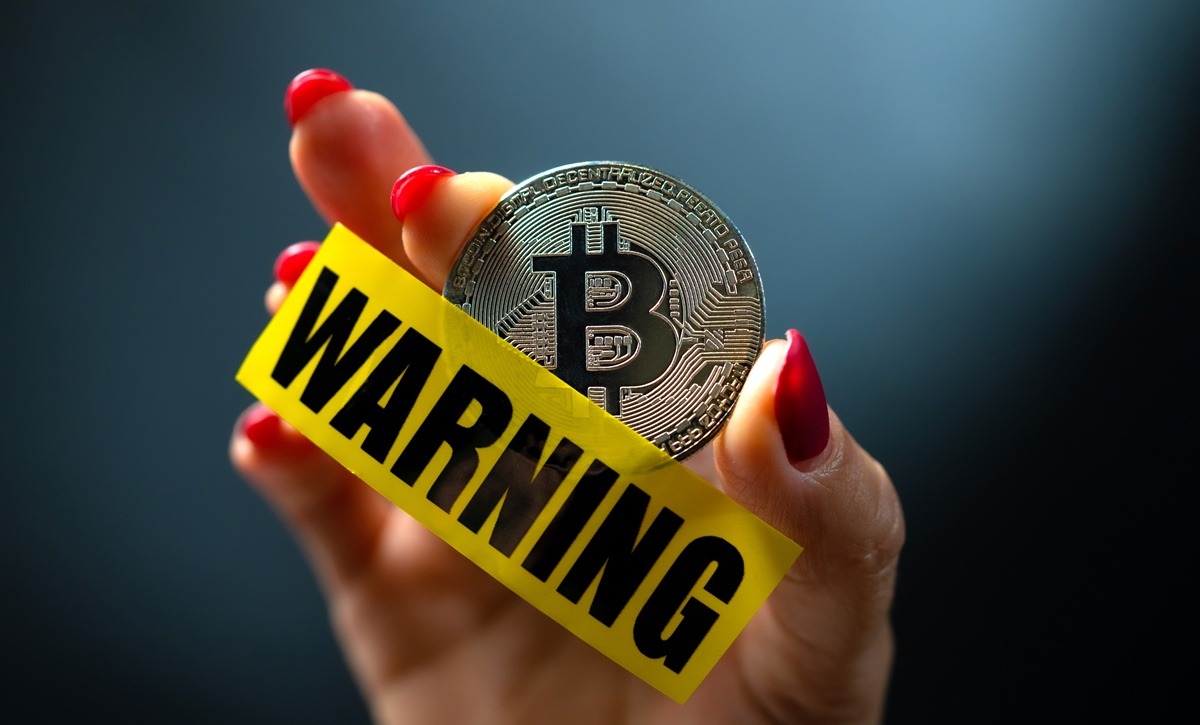
Bitcoin Warning Message in Hand with Red Nails.

Bitcoin Still Matters Because Control Still Matters

“Bitcoin still matters because it forces the market to ask who controls value when confidence in intermediaries is no longer enough.” DNA Crypto.

The Price Story Is Not Enough

Bitcoin is still discussed too often as a price story. The market watches each movement, each cycle, each institutional allocation and each correction as if the chart alone explains why Bitcoin matters.

It does not.

Price attracts attention, but control explains the deeper reason Bitcoin remains important. Bitcoin introduced a different relationship between value, custody and ownership. It forced investors to think not only about what they own, but how that ownership is held, secured, transferred and protected.

That is why Bitcoin still sits at the centre of digital assets. It is not because every future financial system will be Bitcoin-only. It is because Bitcoin created the first serious public test of direct digital ownership.

Bitcoin Changed The Ownership Question

Most financial products are built around access. A client accesses a bank account, a brokerage account, a fund platform, a payment app or an exchange. The experience may feel like ownership, but control normally sits inside a wider system of intermediaries, permissions, records and operating rules.

Bitcoin changed that question.

It asked whether value could be held directly, secured digitally and transferred across a network without depending entirely on the traditional account-based system. That was not only a technical development. It was a change in financial behaviour.

This is why Bitcoin ownership remains a critical theme. It forces the market to separate access from control.

Access is being allowed into a system.

Control is understanding where the asset sits, who can move it, how it is protected and what happens when the system around it comes under pressure.

Account-Based Finance Has Limits

The modern financial system is highly sophisticated, but it is still built around trusted institutions. Banks, brokers, custodians, exchanges, payment providers and platforms all maintain records and permissions that allow capital to move.

That system works well until confidence weakens.

When confidence falls, investors start asking different questions. They ask whether accounts can be restricted, whether assets are segregated, whether settlement can fail, whether counterparties are solvent and whether access depends on a provider remaining operational.

Bitcoin does not remove every risk, but it changes the location of some risks.

That is why the asset continues to matter during periods of financial uncertainty. It gives the market a different reference point for ownership, one that is not entirely dependent on an account provider.

Custody Decides Whether Ownership Is Real

Bitcoin makes custody impossible to avoid. If someone owns Bitcoin but does not understand how it is held, controlled or recovered, the ownership position is incomplete.

This is one of the most important lessons in digital assets.

A weak custody model can turn a strong investment thesis into an operational risk. A holder may believe they own Bitcoin, but the real question is whether they control the keys, whether a custodian controls them, whether recovery processes exist and whether the custody route is suitable for the scale and purpose of the holding.

That is why Bitcoin custody infrastructure is not a back-office detail. It is part of the asset thesis.

For private investors, custody is about access and responsibility.

For institutions, custody is about governance, reporting, authorisation, segregation, operational continuity and fiduciary standards.

Control Is Not The Same As Speculation

Bitcoin is often treated as a speculative asset because its price moves sharply. Volatility is real and should never be ignored.

But volatility is not the only form of risk.

Dependency is also a risk. Counterparty exposure is a risk. Currency weakness is a risk. Platform failure is a risk. Settlement friction is a risk. Account-based access is a risk when the holder does not fully understand the route through which value is held.

This is why Bitcoin financial protection remains a serious conversation. The argument is not that Bitcoin removes risk. The argument is that Bitcoin changes the risk map.

Some investors hold Bitcoin because they expect capital appreciation.

Others hold it because they want a form of financial control that sits outside the conventional account-based system.

Those are different motivations, and both need to be understood clearly.

Liquidity Makes The Question Sharper

Bitcoin also matters because it is liquid in a way many digital assets are not. It has deep global markets, broad recognition, established infrastructure and continuous trading.

That liquidity does not make Bitcoin stable. It makes Bitcoin usable.

In stressed markets, liquidity matters because capital needs options. Investors want the ability to move, rebalance, pledge, exit or reposition. An asset can look attractive on paper, but if there is no real market for it when confidence falls, the investor may discover too late that the exposure is difficult to manage.

This is where Bitcoin has a specific role inside digital assets. It is volatile, but it is also one of the primary liquidity references in the market.

The question for serious investors is not simply whether Bitcoin rises or falls.

The better question is what role Bitcoin plays in a wider capital strategy where liquidity, custody and control are all important.

Institutions Need Process, Not Slogans

Institutional investors do not need Bitcoin slogans. They need process.

An institution may believe that Bitcoin has a long-term role, but belief is not enough. The asset has to fit inside an operating model. That means custody approval, investment policy, risk limits, reporting, accounting, tax treatment, execution quality, board understanding and recovery procedures.

This is why institutional Bitcoin custody is so important. The institutional question is not only whether Bitcoin belongs in a portfolio. It is whether the institution has a responsible way to hold it.

The strongest Bitcoin conversations are now moving away from retail excitement and towards infrastructure.

That is healthy.

Bitcoin becomes more serious when the market asks harder questions about control.

The Trust Question Has Not Disappeared

Bitcoin was designed to reduce reliance on trusted intermediaries, but the market around Bitcoin still requires trust decisions.

Most investors do not interact with Bitcoin in a purely technical way. They use exchanges, brokers, custodians, wallets, OTC desks, accountants, lawyers, advisers and reporting systems. Each layer creates choices.

Who can be trusted? Who controls the keys? How is execution priced? How are records maintained? What happens if a provider fails? How does the investor recover access?

This is why who can be trusted with Bitcoin remains a practical question rather than a philosophical one.

Bitcoin reduces some forms of reliance, but it does not remove the need for judgement.

Bitcoin And Tokenisation Are Connected

Bitcoin and Tokenisation are often treated as separate conversations. They are not.

Bitcoin introduced the ownership question. Tokenisation extends that question into the real economy. If a token represents property, private credit, infrastructure or another Real Asset, investors still need to ask who controls the asset, how the rights are recorded, how transfers happen and what infrastructure sits behind the claim.

Bitcoin teaches the market to take ownership seriously before it adds more complexity.

That is why Bitcoin remains relevant even as Tokenisation grows. The lessons are connected: control, custody, settlement, liquidity, trust and responsibility.

The market cannot build credible Tokenisation infrastructure if it has not learned the basic ownership lessons that Bitcoin exposed first.

Why This Matters For DNA Crypto

DNA Crypto started with the belief that people needed clearer advice around Bitcoin and digital assets. That belief remains right.

The next phase should be sharper. It should focus on digital ownership, custody, liquidity, Tokenisation, Real Assets, Stablecoins, escrow and institutional infrastructure. Bitcoin remains the starting point because it is the cleanest expression of the ownership question.

This is where the advisory role becomes valuable again.

The market does not need louder crypto promotion. It needs calm explanation of how ownership works, where risk sits, and what infrastructure is required before capital can trust digital assets properly.

That is the space DNA Crypto should occupy.

A Note For Market Makers And Liquidity Partners

Liquidity still matters. For serious investors and future authorised routes, access to institutional-quality pricing, execution support and disciplined liquidity partnerships can make a material difference.

If you are a market maker or liquidity provider able to support quality pricing, execution support or discounted routes where appropriate, DNA Crypto is open to relevant conversations.

The aim is not to create noise around trading. The aim is to understand where trusted liquidity and professional execution can support the next stage of digital asset infrastructure.

For appropriate discussions, please reach out through DNACrypto.co.

The Capital Behaviour Shift

Capital behaves differently when trust weakens. In easy markets, investors often focus on return. In difficult markets, they focus on control, liquidity and protection.

Bitcoin sits directly inside that shift.

It forces capital to ask where ownership really sits. It forces the investor to think about custody before comfort. It forces the institution to treat operational risk as part of the investment decision.

That is why Bitcoin remains more than a market narrative.

It is a discipline in financial control.

The Direction Of Travel

The direction of travel is clear. Digital assets are moving from access towards ownership infrastructure.

Bitcoin remains the first lesson. Tokenisation extends the lesson into Real Assets. Stablecoins support settlement. Custody protects control. Escrow can improve transaction confidence. Advisory helps investors understand the route.

This is the constructive story.

The market does not need another round of empty crypto language. It needs better infrastructure around ownership.

Bitcoin still matters because control still matters.

Conclusion

Bitcoin still matters because it forces the market to ask who controls value.

That question has not become less important. It has become more important as digital assets move towards institutional allocation, Tokenisation, Stablecoin settlement and Real Asset infrastructure.

Bitcoin is not only a price chart. It is the first serious lesson in digital ownership, custody responsibility, liquidity and financial control.

For DNA Crypto, that is where the advisory conversation begins again.

Not with hype.

With ownership.

Relevant DNACrypto Articles

Image Source: Envato Stock

Disclaimer: This article is for informational purposes only and does not constitute financial, legal, or investment advice.

Read more →