“The only true shield against regulation is pure decentralisation — and very few projects can claim it.” – DNA Crypto Knowledge Base.
On 30 December 2024, the EU’s Markets in Crypto-Assets Regulation (MiCA) officially came into force, setting rules for Stablecoins, exchanges, and service providers. But one corner of crypto doesn’t fit neatly into this framework: Decentralised Finance (DeFi).
Learn more: What is MiCA and Why It Matters
MiCA’s Recital 22 says that if a service is provided in a fully decentralised way, without intermediaries, then MiCA doesn’t apply.
Sounds like a win? Not quite.
Unless a protocol has no governance keys, no upgrades, and no identifiable issuer, it’s unlikely to qualify as “fully decentralised.”
Related: DeFi and MiCA Regulation
Most DeFi today is hybrid — decentralised in some areas, centralised in others:
MiCA could treat these as crypto-asset service providers (CASPs), requiring them to obtain licenses, report, and comply with AML/KYC regulations.
Explore: MiCA Licensing Requirements
MiCA’s rules on disclosure and liability don’t apply if there’s no central issuer.
Read: Investor Protections Under MiCA
The truth is blunt: adapt, decentralise, or risk being regulated out of Europe.
More: Global Impact of MiCA
Image Source: Adobe Stock
Disclaimer: This article is purely for informational purposes. It is not offered or intended to be used for legal, tax, investment or financial advice.

Register today at DNACrypto.co
Regulation doesn’t end innovation—it defines the rules of the game.” – DNA Crypto Knowledge Base.
In 2025, the European Union entered a new era of digital asset regulation. The Markets in Crypto-Assets Regulation (MiCA) is the world’s first comprehensive legal framework for cryptocurrencies, Stablecoins, and service providers.
Unlike fragmented rules elsewhere, MiCA provides a harmonised framework across 27 EU states, creating clarity for investors and a level playing field for businesses.
Learn more: What is MiCA and Why It Matters
MiCA brings the crypto market into line with EU financial regulation by covering:
“MiCA is Europe’s shot at setting the global standard for crypto regulation.” – Financial Times, 2025
“MiCA is the most ambitious framework yet—it could be the template for global regulation.” – CoinDesk Policy Desk, 2025
MiCA’s influence extends beyond Europe. The UK, Singapore, and the U.S. are watching closely. If successful, MiCA could serve as a blueprint for global digital asset laws.
Since MiCA’s introduction, a growing number of applications have not made it through the authorisation process. Public registers from national regulators (such as the AMF in France, BaFin in Germany, and others) already show instances of applications being refused, withdrawn, or returned for remediation. While aggregate EU-wide data is still being compiled, early trends indicate that failure rates are significant enough to warrant caution.
Why applications fail:
How to improve success odds:
For firms serious about licensing, a rigorous scope-to-MiCA article mapping, a fixed-fee deliverable structure, and transparent engagement with regulators are becoming best practices.
For investors, MiCA brings transparency and protection. For businesses, it offers clarity and scale—but only for those ready to meet higher compliance standards.
Crypto in Europe is no longer in the shadows—it’s entering the spotlight.
And as always, the early bird catches the worm.
Image Source: Adobe Stock
Disclaimer: This article is purely for informational purposes. It is not offered or intended to be used for legal, tax, investment or financial advice.
The Markets in Crypto-Assets Regulation (MiCA) is set to reshape the financial landscape across Europe. More than a regulatory milestone, it presents a unique opportunity for platforms that bridge crypto and real assets, such as DeFi Property, to unlock cross-border capital flows in the EU’s $17 trillion single market.
“MiCA is not merely a set of rules—it is the foundation for pan-European crypto scalability,” explains DNAcrypto.co. “It gives investors trust, platforms legitimacy, and start-ups a license to grow.”
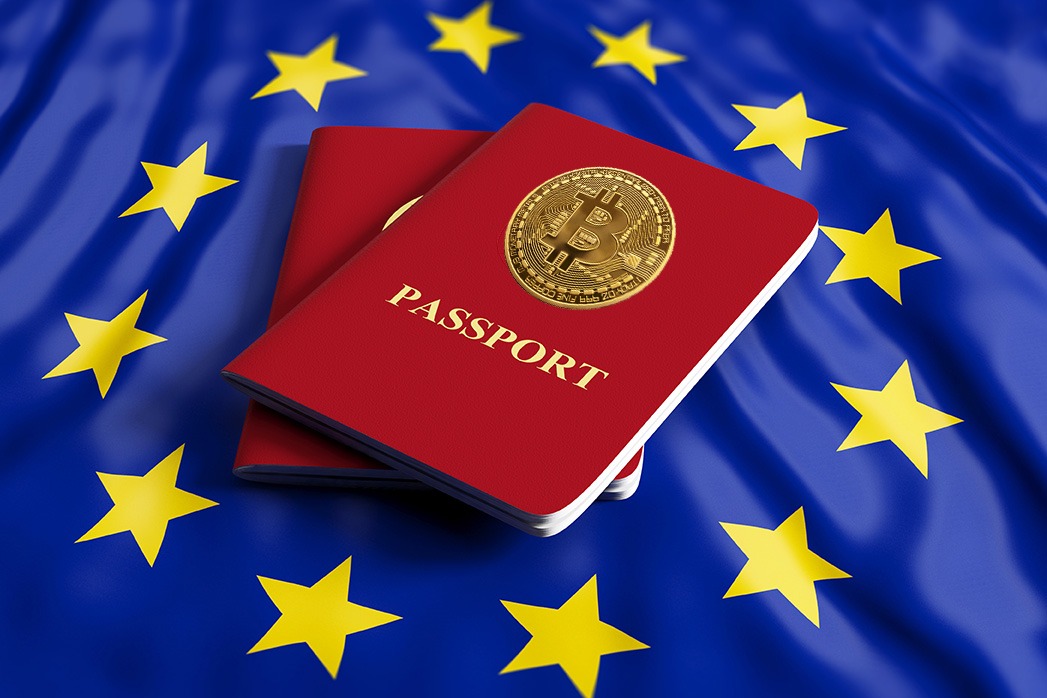
MiCA introduces a unified licensing regime—the MiCA passport—allowing Crypto Asset Service Providers (CASPs) to operate across all EU member states under a single license. For DeFi Property and similar platforms, this transforms the game:
– List tokenized assets EU-wide with one authorisation.
– Onboard investors in Milan, Berlin, or Athens under one AML/KYC flow.
– Streamline capital deployment using digital euros or stablecoins.
“MiCA eliminates the fragmentation that stifled innovation in crypto finance. It offers the clarity institutional capital needs,” states a recent DNAcrypto article.
| Region | Regulation | Key Challenges |
|---|---|---|
| EU | MiCA Passport | Harmonised rules, capital buffers |
| UK | FCA-led regime | Fragmented licensing |
| USA | SEC/CFTC divide | Enforcement-first, unclear jurisdiction |
| Asia | Mixed clarity | Singapore/HK lead, others uncertain |
While the US still grapples with litigation and state-by-state licensing, and the UK advances cautiously with its policies, Europe is taking a leadership stance with MiCA.
Historically, real estate has been illiquid, siloed, and local. But tokenization—by converting properties into programmable digital assets—removes those frictions. Now, with MiCA:
– Properties in Lisbon or Warsaw can be tokenized and made accessible to any EU investor.
– Compliance is automated, borderless, and fast.
– Investments settle in minutes using blockchain rails and stablecoins.
“The tokenization of property, supported by MiCA, could be Europe’s answer to unlocking dormant real estate value,” says DNAcrypto in its analysis of real estate tokenization.
– Minimum Capital: €50K–€150K depending on services.
– Operational Buffer: 25% of the previous year’s fixed costs.
– Insurance & Flexibility: Risk-mitigation options for startups.
This financial architecture is strengthened by DORA (Digital Operational Resilience Act) and TFR (Transfer of Funds Regulation), ensuring:
Resilient IT and cybersecurity infrastructure.
AML compliance through the “travel rule” for crypto transfers.
Together, they turn Europe into a safe and regulated home for institutional crypto investors.
Early adoption of MiCA gives DeFi Property an advantage as both a licensed gateway and asset manager:
– Partner with developers to bring tokenized projects to market.
– Attract institutional capital seeking transparent, yield-generating assets.
– Serve global investors from the Middle East, Asia, and the Americas, via a trusted EU regulatory framework.
MiCA is Europe’s digital passport to innovation. It’s about borderless compliance, yes—but it’s also about borderless credibility.
“Firms that treat compliance as strategy—not obligation—will become tomorrow’s market leaders,” reads the DNAcrypto position on regulatory readiness in The End of Anonymous Trading.
Image Source: Adobe Stock
Disclaimer: This article is purely for informational purposes. It is not offered or intended to be used for legal, tax, investment or financial advice.
As the crypto industry matures, the era of anonymous trading is quickly giving way to a new paradigm: risk-aware, transparent, and regulation-aligned markets.
With Europe’s MiCA regulation coming into force and global AML directives gaining momentum, the pressure on exchanges and platforms to implement advanced compliance frameworks has never been greater.
“Compliance is no longer an operational hurdle—it’s a foundation for trust and institutional adoption.” — Read more
The existing AML infrastructure—designed for traditional finance—relied on centralized control, local jurisdictions, and one-size-fits-all onboarding. But in the DeFi era, such rigidity is ineffective. Pseudonymous wallets, global liquidity pools, and borderless transactions challenge the traditional methods of detecting and preventing financial crime.
That’s why the industry is now looking toward AML 2.0—a model that’s dynamic, risk-based, and powered by real-time analytics.
At DNA Crypto, we are closely exploring a roadmap that would elevate compliance and enhance user security across every touchpoint. Some of the capabilities under consideration include:
Real-Time Wallet Sanctions Screening:
Automatically detect blacklisted, sanctioned, or high-risk addresses using integrations with global databases.
Tiered Risk-Based KYC:
Design onboarding tiers aligned with transaction volume and jurisdictional risk. For example:
– Tier 1: Basic onboarding for low-volume users
– Tier 2: Enhanced verification
– Tier 3: Full due diligence and source of funds
Continuous On-Chain Monitoring:
Utilise tools to flag high-risk behaviour (e.g., mixer usage, abnormal flows, private token transfers) and apply automated escalation protocols.
“We don’t just want to meet the MiCA standard—we want to exceed it.” — DNAcrypto.co vision
Major financial institutions, sovereign entities, and large OTC desks are demanding stricter controls, especially with USDT minting reaching new highs and institutional flows into Bitcoin accelerating. At the same time, the latest “Genesis” legislative proposals in the U.S. signal that regulatory scrutiny is only going to intensify.
“The platforms that thrive in this next cycle will be those that see compliance as an enabler, not a blocker.” — MiCA’s Blind Spots
As the market grows, so does the demand for privacy. The next step is compliance models that respect user rights while satisfying regulators, such as zero-knowledge proofs, selective disclosure, and decentralized ID frameworks.
These technologies are being evaluated globally, and DNA is actively watching and learning how they might be implemented responsibly.
Explore related thought leadership from DNAcrypto’s Knowledge Hub:
– Will MiCA Make Europe Safer for Crypto Investors?
Image Source: Adobe Stock
Disclaimer: This article is purely for informational purposes. It is not offered or intended to be used for legal, tax, investment or financial advice.
The Markets in Crypto-Assets Regulation (MiCA), which came into effect in December 2024, is reshaping how digital assets are issued, traded, and managed across the EU’s 27 member states. For investors, token issuers, and crypto service providers (CASPs), MiCA is more than a regulatory framework; it is a competitive advantage for those who understand it.
MiCA cuts through fragmented national rules, replacing them with unified guidelines that enable compliant operators to scale confidently across the EU.
Key changes include:
– Token Issuer Licensing: Issuers of all crypto-assets (including Stablecoins and utility tokens) must publish regulator-approved whitepapers and meet disclosure standards.
– Supervised CASPs: Crypto-asset service providers are required to register and demonstrate robust capital, governance, cybersecurity, and risk management frameworks.
– EU Passporting: Once licensed in one EU country, CASPs can operate across the entire European Economic Area without additional national licenses.
– Market Integrity and Investor Protection: MiCA enforces anti-market manipulation policies, insider trading restrictions, and rigorous AML/KYC obligations.
“MiCA sets the floor, not the ceiling. For sophisticated investors, it’s the entry point into secure, scalable crypto investing.”
— DNA Crypto Knowledge Hub
For HNWIs and institutional investors, MiCA brings:
– Reduced Risk: Dishonest actors are eliminated as compliance becomes mandatory.
– Legal Clarity: Clear roles and responsibilities for CASPs and investors alike.
– Cross-Border Access: A single license unlocks EU-wide crypto investment and trading.
– Regulatory Confidence: Seamless alignment with tax, AML, and reporting requirements.
MiCA offers a stable bridge between traditional wealth management and the evolving crypto economy.
Platforms that align with MiCA will define the next phase of crypto investing. DNA Crypto is positioned to lead by providing:
– Licensed Digital Asset Services: MiCA-compliant listings, secure custody, and trading under full EU regulatory approval.
– Cross-Border Investment Support: Enabling seamless digital asset investing across EU markets.
– Institutional-Grade Compliance: From advanced KYC/KYB onboarding to AML monitoring and real-time reporting.
– Custom HNWI and Institutional Services: Including white-glove onboarding, treasury management, and compliant crypto portfolio solutions.
“Institutional crypto adoption will be built on compliant, transparent infrastructure.”
— Read how MiCA shapes tokenized real estate investing
Whether you are in France, Germany, or the UK, MiCA enables you to:
Invest confidently through compliant platforms like DNA Crypto.
Access regulated digital asset products across EU markets.
Diversify portfolios in a legally clear, standardised environment.
Streamline tax and regulatory reporting.
For UK investors post-Brexit, leveraging EU-licensed platforms ensures future-proof positioning as regulatory divergence continues.
MiCA has arrived not just to regulate, but to empower. It offers forward-thinking investors a secure, scalable, and compliant path to participate in the crypto economy while safeguarding wealth in a regulated, growth-oriented environment.
As a MiCA-ready platform, DNA Crypto positions its clients to invest with confidence, capturing opportunities across a rapidly maturing European crypto market.
“MiCA isn’t just regulation. It’s the architecture for Europe’s next wave of tokenization.”
— DNA Crypto Knowledge Hub
Image Source: Adobe Stock
Disclaimer: This article is for informational purposes only and does not constitute legal, tax, investment, or financial advice.
With the growth of the cryptocurrency industry, the European Union has taken a significant step forward in enhancing investor protection, market transparency, and clarity in laws with the introduction of the Markets in Crypto-Assets (MiCA) regulation.
MiCA has been officially in effect since December 2024, and it promises to introduce uniform rules for the European crypto space—a much-needed update from the patchy and disparate national legislation that preceded it. But does this regulation make Europe safer for crypto investors? Let’s find out.
The most significant change made by MiCA is the development of a unified licensing regime for Crypto Asset Service Providers (CASPs). Previously, crypto firms had to navigate a maze of inconsistent national laws, often facing regulatory barriers and high operational costs.
Now, any CASP that obtains a licence in one EU member state can “passport” its services across the entire EU. This harmonisation ensures market access, reduces friction, and protects consumers under shared standards.
To obtain and retain a license, CASPs must:
– Establish a registered office within the EU.
– Implement strong cybersecurity and governance controls.
– Submit comprehensive documentation on ownership, AML practices, and governance.
– Pass integrity screenings for shareholders and executives.
“MiCA will give crypto-asset service providers access to the single market, with clear rights and obligations.”
— Mairead McGuinness, European Commissioner for Financial Services
Importantly, CASPs serving over 15 million users will face enhanced oversight by EU regulators to ensure institutional-grade stability and scalability.
MiCA mandates complete transparency from token issuers. Projects must publish a regulator-approved whitepaper disclosing the token’s use case, structure, and risks. No promotions are allowed before this approval, reducing the chance of investor manipulation.
This transparency helps consumers make informed choices and protects them from speculative or misleading projects that dominated past market cycles.
“The crypto sector must live up to the standards expected of mainstream finance — MiCA is Europe’s answer to that challenge.”
— Verena Ross, Chair of the European Securities and Markets Authority (ESMA)
For Stablecoins, MiCA imposes strict rules:
– 1:1 reserves in Fiat held in liquid, segregated accounts.
– An e-money license for circulation and issuance.
– A daily transaction cap of €200 million to preserve the euro’s role as a sovereign currency.
MiCA incorporates stringent anti-money laundering (AML) requirements into its licensing framework. All CASPs are required to:
– Perform customer due diligence (CDD),
– Monitor transactions for red flags,
– File reports with national AML agencies.
Regulators are empowered to revoke licenses if a CASP is found to be non-compliant or linked to illicit financial activity.
“Crypto should not become a haven for criminals — MiCA puts the EU’s AML shield firmly in place.”
— Christine Lagarde, President of the European Central Bank
Background checks on shareholders and executives further prevent bad actors from entering the space under regulatory radar.
This approach effectively
Harmonises crypto with mainstream financial sector compliance requirements and eliminates a safe haven for illicit actors.
Yes — MiCA does more than set rules. It establishes a legal foundation designed to foster innovation and enforce accountability simultaneously.
Its key contributions:
– One license across the EU
– Required whitepapers and disclosures
– Strong AML rules
– Stablecoin reserve and transaction mandates
While MiCA doesn’t yet cover DeFi or NFTs, it lays the groundwork for a trust-based digital asset ecosystem within the EU’s financial framework.
“We’re witnessing the end of crypto’s Wild West — MiCA represents the beginning of maturity for the digital finance sector.”
— Markus Ferber, Member of the European Parliament, ECON Committee
MiCA may not solve every challenge, but it marks a transformational step for investor safety, regulatory clarity, and crypto legitimacy in Europe. By emphasising risk controls and compliance, it provides crypto firms with a credible, long-term framework in one of the world’s largest economies.
As MiCA continues to roll out, one thing is clear: the future of crypto in Europe will be safer, smarter, and more accountable.
Image Source: Adobe Stock
Disclaimer: This article is purely for informational purposes. It is not offered or intended to be used for legal, tax, investment or financial advice.
In light of cryptocurrency’s permanence in the global economy, the European Union has taken an innovative step to regulate this dynamic area by introducing the Markets in Crypto-Assets (MiCA) framework. With full implementation as of 30th December 2024, MiCA delivers the most comprehensive governance structure for digital assets to date, specifically targeting Asset-Referenced Tokens (ARTs) and E-Money Tokens (EMTs), the EU’s regulatory vision for Stablecoins.
“MiCA is the most comprehensive crypto regulation globally and puts Europe ahead of the pack.”
— Verena Ross, Chair of the European Securities and Markets Authority (ESMA)
MiCA brings legal precision and financial certainty to a market that has historically been fragmented and volatile. In this write-up, we examine how MiCA is reshaping Stablecoin rules and custodial responsibilities, raising the standards for crypto service providers across Europe.
MiCA categorises crypto assets into three segments:
These classifications aren’t just technical—they define the reserve requirements, operating mandates, and compliance conditions for all crypto issuers and custodians in the EU.
These rules reflect the EU’s caution regarding private tokens that could potentially undermine national monetary policies.
MiCA’s framework for ART and EMT issuers is among its most significant achievements:
“Stablecoins must not interfere with monetary sovereignty. MiCA ensures the euro remains the only legal tender in the EU.”
— Fabio Panetta, Member of the Executive Board, European Central Bank
MiCA prohibits ARTs and EMTs from being issued in the EU without prior approval. Issuers must:
– Non-compliance can result in license revocation and a ban on distribution.
– MiCA introduces demanding operational criteria for Crypto Asset Service Providers (CASPs):
– Larger platforms (with 15 million+ users) face additional oversight, including real-time monitoring and external audits.
“MiCA is pushing crypto toward the compliance standard of banking.”
— Markus Ferber, Member of the European Parliament, ECON Committee
The first effects of MiCA implications are already being felt across the industry.
“The new EU rules are a wake-up call. Compliant crypto businesses will be the ones left standing.”
— Brian Armstrong, CEO of Coinbase
MiCA positions the EU at the forefront of digital asset regulation. With clearly defined reserve, custody, and licensing rules, crypto finance ensures that it respects monetary policy while maturing into a secure and scalable sector.
For crypto firms, aligning with MiCA is more than regulatory box-ticking—it’s a gateway to long-term credibility in the world’s third-largest economic bloc.
Is your crypto project MiCA-ready?
Before launching or scaling in Europe, audit your token mechanics, custody setup, and regulatory posture to ensure compliance with local regulations.
Image Source: Adobe Stock
Disclaimer: This article is purely for informational purposes. It is not offered or intended to be used for legal, tax, investment or financial advice.
Due to its rapid expansion, the cryptocurrency market needs standardised regulatory standards. The EU’s Markets in Crypto-Assets (MiCA) Regulation provides essential guidelines for developing straightforward and secure regulatory procedures for the crypto business marketplace. MiCA establishes consumer protections by providing anti-money laundering regulations while promoting progress in banking operations.
Lithuania has become the top choice for European crypto companies seeking a MiCA license. With the full implementation of MiCA at the end of 2024, this is the ideal time to understand why Lithuania is the top destination for crypto business licensing and growth.
EU membership gives Lithuania its spot as a port of entry for crypto companies which need market access across the entire European region. Acquiring a MiCA license in Lithuania allows companies to serve the EU as a whole market through passporting rules without requiring numerous licenses across multiple territories.
The Bank of Lithuania demonstrates both technological progressiveness and innovation friendliness to share responsibility between encouraging new technology and ensuring financial stability. Crypto firms find Lithuania appealing because its regulatory environment supports cryptocurrency affiliate businesses.
Lithuania has a very straightforward and efficient licensing process through MiCA, which introduces standardised regulations for crypto-asset service providers like crypto exchanges, wallet services, and token issuers.
So, what is Lithuania’s regulatory system all about?
Thanks to this new approach, Lithuania minimises unnecessary delays and gives one of the best licensing experience processes.
Thanks to its cost-effective business environment, Lithuania stands out from other EU countries like Germany and the UK. How? One may wonder.
Lithuania provides lower operational costs and a straightforward licensing framework, hence a strong competitive advantage over its counterparts.
Lithuania is home to one of Europe’s fastest-growing fintech hubs, attracting top financial technology companies and investors worldwide. This thriving ecosystem offers:
This dynamic environment creates the perfect foundation for crypto companies looking to scale and innovate.
Since establishing the entire regulatory framework, Lithuania has proactively licensed every business under MiCA. Companies conducting business in the Bank of Lithuania territory can benefit from its strict compliance protocols, which ensure a smooth transition.
Why this matters:
MiCA in Lithuania guarantees compliance, stability and long-term success for crypto firms.
With a MiCA license from Lithuania, crypto businesses can quickly expand across the EU, creating countless growth opportunities. Advantages include:
This strategic positioning enables businesses to tap into new markets and bring more collaborations to the European crypto space.
Through MiCA, the 2025 crypto landscape is already filled with fundamental changes as it introduces standardized rules that guarantee transparency and security while protecting consumer rights. Lithuania attracts financial companies seeking MiCA licenses through its speedy licensing process, favourable business climate, and robust technology ecosystem.
Businesses possessing licenses from the Bank of Lithuania under the MiCA framework are optimised for success in the European market. Lithuania positions itself as the ideal destination for crypto firms which need regulatory clarity and financial benefits to expand their market operations.
Image Source: Adobe Stock
Disclaimer: This article is purely for informational purposes. It is not offered or intended to be used for legal, tax, investment or financial advice.
Europe has continued to see growth and maturity within its crypto market. This is especially true with investors looking to invest in digital assets. However, the regulatory landscape for crypto in Europe is still complex and changing by the day.
For compliance purposes, institutional investors must do their due diligence and follow set regulations. The checklist below is a good place to start.
Institutional investors can use this checklist as a starting point in their quest for safe and by-the-book investment in Europe’s ever-dynamic world of crypto. For success, always be on the lookout for trends, news and expert advice on new or amended crypto regulations.
Image Source: Adobe Stock
Disclaimer: This article is purely for informational purposes. It is not offered or intended to be used for legal, tax, investment or financial advice.
Cryptocurrencies continue to flex their muscles in transforming the financial sector as they empower decentralised transactions and develop new economic systems. Thus far, regulatory frameworks have struggled to keep pace with crypto development, leading nations to adopt diverse payment regulations.
The crypto world enjoys enthusiastic acceptance from Japan, but China strictly limits its use. The European Union (EU) actively supports the Markets in Crypto-Assets (MiCA) regulation as it represents the first standardised framework for digital assets.
The Market in Crypto-Assets (MiCA) represents the EU’s ground-breaking regulatory blueprint for establishing uniform standards of practice for Cryptocurrency. The European Union approved the Markets in Crypto-Assets (MiCA) regulation in 2022, which took effect in December 2024. Regulatory legislation works to maintain investor protection and market transparency while preserving market integrity.
Unlike past EU regulations that addressed individual crypto aspects, MiCA establishes a comprehensive framework governing digital asset providers and their services, including various subcategories of digital assets. This framework provides standardised legal requirements that enhance adoption across borders whilst reducing uncertainty around regulations.
MiCA classifies crypto-assets into four categories:
These clear guidelines ensure each type of asset is regulated appropriately, balancing oversight with innovation.
Global crypto regulations have remained fragmented for a long time. Different countries have adopted varying strategies, with some offering clarity while others remain uncertain or restrictive.
The US still lacks a unified framework. This is especially true with multiple agencies overseeing Cryptocurrencies:
Additionally, each state has its own set of regulations, further complicating the crypto space. Discussions on crypto legislation in the US are ongoing, even though a comprehensive federal regulatory framework has yet to be finalised.
The UK regulatory framework, developed by the Crypto Assets Task Force, is akin to MiCA but covers fewer aspects. The regulatory definitions under the UK framework cover only basic utility tokens.
In contrast, e-money tokens are limited, and the regulatory scope for crypto-assets remains narrower than MiCA. The UK’s Financial Conduct Authority (FCA) continues to shape its digital asset regulations as new rules continue to take shape in 2025.
For a while, Switzerland has been at the forefront in crypto adoption, offering tax clarity and treating digital assets as property. Yet, its regulations primarily focus on asset classification and taxation rather than holistic oversight like MiCA.
It is typical to say that Asian countries have adopted varying regulatory stances:
MiCA stands out because it offers a unified, standardised approach, which is lacking in most parts of the world.
Lithuania is known for its thriving fintech sector and with significant shifts with MiCA’s recent implementations, which have so far had the following effects:
By aligning with MiCA, Lithuania solidifies its role as the hub for regulated digital assets in Europe.
As crypto adoption grows, regulatory clarity is crucial. MiCA’s framework could undoubtedly be used by other countries and international organisations such as the IMF and the World Bank.
Over time, MiCA could help bridge the gap between regional regulations, hence a more unified approach to global crypto governance.
Mica creates a vital regulatory structure that brings cohesion to global crypto-legal frameworks through EU-wide guidelines. Implementing MiCA in Lithuania entails stringent requirements, coupled with new opportunities that will boost the country’s future fintech growth. The future will define the extent of MiCA’s influence on global crypto regulations in Europe and beyond.
Image Source: Adobe Stock
Disclaimer: This article is purely for informational purposes. It is not offered or intended to be used for legal, tax, investment or financial advice.
Massive things are in play in crypto. The European Union (EU) implemented new regulations; MiCA (Markets in Crypto-Assets). These set of rules basically stipulate how crypto businesses should operate. The elephant in the room is where does this place the UK?
Since the UK is no longer in the EU, it no longer has to follow MiCA. That could be good since the UK can decide what is best for its economy.
However, it also raises questions. Without concrete regulations, crypto businesses can’t know if they should or should not move to the UK. So will Britain’s approach allow it to be a crypto leader, or will businesses be attracted to the better-coordinated system in the EU?
MiCA is a new set of laws designed to make the crypto market in the EU safer and more predictable. It targets crypto exchanges, Stablecoins, and digital asset providers.
MiCA is straightforward in principle. It is tasked with protecting investors from scams and making businesses as transparent as possible and subject to simple guidelines. At the same time, it is tasked with preventing financial crime in the form of money laundering and making crypto in the EU market safer and more secure.
This is both good and bad for businesses. On one hand, they now have a clear guide on what’s allowed. On the other hand, the rules are strict, meaning extra paperwork and costs.
But while the EU is following MiCA, the UK is doing its own thing.
–>
Instead of copying MiCA, the UK created its rules under the Financial Services and Markets Act (FSMA). The idea is to give businesses more freedom while still keeping things safe.
One area where the UK is taking a different path is Stablecoins (cryptocurrencies tied to real-world money like the US dollar or British pound). The EU’s MiCA has tough restrictions on them, but the UK is taking a friendlier approach, allowing Stablecoins to be part of its financial system. This could make the UK a great place for fintech start-ups looking to innovate.
But still, the UK’s crypto rules aren’t fully ready yet. This leaves businesses in an awkward situation as they don’t know exactly what to really expect. That kind of uncertainty can be risky. Some companies might prefer the EU because its rules are already in place.
The UK is one of the biggest financial hubs in the world, coming second just after New York. It is home to major banks and investment firms and home to countless crypto start-ups. But how long will this be the position?
Here are some challenges the UK needs to deal with:
If the UK wants to stay ahead, it needs to act fast. Otherwise, companies might decide to move to the EU instead.
We can safely say the UK is at a crossroads. The fintech magnet has the chance to create a crypto-friendly environment appealing to multinationals and local investors. But again, without clear regulations, it risks falling behind the EU.
Will the UK’s flexible approach make it a global crypto leader? Or will businesses prefer the safer, more structured rules in the EU? The decisions made in the next few years will shape the future of crypto in the UK.
Image Source: Adobe Stock
Disclaimer: This article is purely for informational purposes. It is not offered or intended to be used for legal, tax, investment or financial advice.
The Markets in Crypto-Assets (MiCA) regulation introduces fundamental changes in how the European Union oversees crypto assets. MiCA achieves two main objectives through its regulatory framework: investor protection and increased market visibility while providing financial stability to crypto assets.
Institutions can use specific regulatory exemptions called “loopholes” to successfully navigate MiCA and maintain cost-effective transactions while engaging in non-custodial trading activities.
Navigating MiCA Without Breaking the Bank
The main operational and transaction cost concern for institutions implementing MiCA is the greater regulatory oversight that they face. The bulk of innovative businesses recognize MiCA obligations as their opportunity to develop compliance frameworks that avoid large expenses.
The following approaches can be helpful to institutions:
1. Leveraging Technological Innovation
Modern financial institutions use automated smart contracts technology to enhance their compliance process management. MiCA-compliant automated reporting and real-time monitoring solutions powered by Blockchain enable both proper standards maintenance and automated cost-efficient operations that would have required manual interventions in the past.
2. Optimizing Clearing and Settlement Mechanisms
Clearing and settlement system infrastructure powered by distributed ledger technology and algorithms can perform transactions more efficiently to decrease operational expenses. Organizations supporting these technologies achieve faster trade processing, which preserves and maximizes the size-related benefits of their operations despite regulatory costs.
3. Partnering with Specialized Service Providers
Establishing partnerships with companies focused on regulatory technology enables institutions to distribute their compliance duties. These providers give advanced solutions that improve your ability to stay compliant with MiCA rules while minimizing transaction expenses.
4. Adopting a Compliance-by-Design Approach
Forward-thinking establishments include regulatory requirements within their platform design foundations to minimize the need for future retroactive adjustments. The proactive design approach lowers the costs of necessary retroactive changes, which helps institutions run lean operations in various regulatory environments.
Many institutions focus on non-custodial trading access because it lets users maintain asset ownership control, reducing counterparty risks and requirements for centralized fund storage. The introduction of MiCA concentrates mainly on regulating custodial trading, but institutionally, it still enables certain avenues to offer non-custodial trading services.
While MiCA largely addresses custodial trading practices, there are still potential avenues for institutions to facilitate non-custodial trading:
1. Decentralized Finance (DeFi) Protocols
Most decentralized platforms function under principles that do away with their need for traditional custodial practices. Financial institutions that integrate DeFi protocols and smart contracts can develop non-custodial trading systems which avoid the principal requirements of MiCA as asset custodian. These platforms require thorough risk management systems that meet all regulatory requirements.
2. Peer-to-Peer Trading Networks
Creating novel peer-to-peer transaction platforms, either individually or through cooperation, is another regulatory option for institutions. These networks allow buyers and sellers to match directly since participants can execute transactions without needing the firm to hold any assets in custody, thus offering a decentralized and fee-efficient trading environment.
3. Innovative Client Wallet Solutions
The widespread adoption of integrated wallet solutions offers institutions a secure method to combine traditional warfare protocols with decentralized wallet capabilities. Clients maintain control of their passwords through private key ownership. Still, the institution offers users a secure platform that supports trading activities as per accepted guidelines and without taking complete ownership of assets.
Best Practices and Cautions
We can safely say that these opportunities are promising. Thus, institutions should do their due diligence as they explore these “loopholes.”
Here’s how:
Parting Shot
The MiCA initiative is a major regulatory achievement that seeks to establish an equilibrium between protecting crypto asset innovation and safeguarding market honesty. The new requirements from this regulatory framework expand institutional responsibilities but do not create a standard set of rules that hinder creative development. Establishments under MiCA will benefit from technological innovation, restructured transactions and non-custodial trading approaches. These approaches control transaction costs and enable innovative crypto market solutions to meet current market requirements.
Strategic institutions comprehending MiCA’s existing loopholes can convert these potential regulatory hurdles into benefitting opportunities.
Image Source: Adobe Stock
Disclaimer: This article is purely for informational purposes. It is not offered or intended to be used for legal, tax, investment or financial advice.