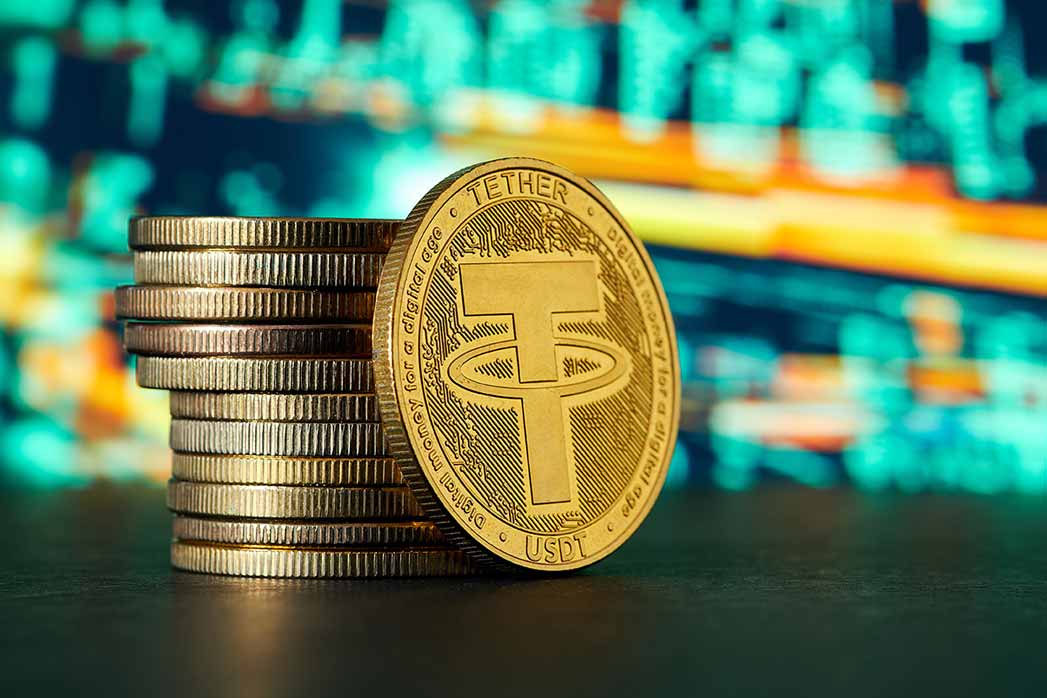
Everyone Wants To Cash Out USDT. The Real Product May Be Your Bank Account.
“When somebody is willing to pay an extraordinary price to turn digital money into ordinary bank money, the scarce asset may not be the USDT. It may be access to the banking system.” DNA Crypto.
The Offer Sounds Almost Too Easy
There is a particular kind of proposition circulating around the digital asset market that sounds, at first, less like a scam than an unusually profitable piece of business.
Someone has USDT. Sometimes it is $100,000. Sometimes $500,000. Sometimes the number reaches into the millions.
They want pounds, euros or dollars.
They are not especially concerned about achieving the best possible exchange rate. In fact, they may be willing to surrender several percentage points just to complete the transaction. They may offer one per cent, three per cent or considerably more to the person prepared to receive the USDT and send ordinary currency to a bank account.
The offer can sound seductive because the arithmetic is so simple.
Take $1 million of USDT. Keep 3%. Send the balance in fiat.
Thirty thousand dollars for moving money from one form to another.
Before calculating the commission, however, there is a more important question to ask.
Why is somebody prepared to pay $30,000 for something legitimate exchanges and professional OTC desks routinely do for a fraction of that cost?
There can be perfectly legitimate answers. Large transactions sometimes require specialist execution. A corporate client may have banking constraints. A customer may need settlement in a particular jurisdiction or currency. Exchange limits, timing, liquidity and treasury arrangements can all make professional OTC services valuable.
But where the explanation is vague, and the premium is extraordinary, the economics themselves become information.
The person may not really be paying for foreign exchange.
They may be paying for access to a bank account they cannot safely use themselves.
USDT Is Not The Problem
It is worth getting one distinction out of the way immediately.
USDT is not inherently suspicious.
Stablecoins have become useful precisely because they solve legitimate financial problems. They allow value to move rapidly across borders, operate outside conventional banking hours and provide a relatively stable digital settlement asset in markets where Bitcoin and Ether may be too volatile for day-to-day payments.
FATF, the international standard setter for combating money laundering, makes essentially the same point. Its March 2026 report said the stability, liquidity and interoperability that make Stablecoins attractive to legitimate users also make them attractive to criminals. The report cited Chainalysis data indicating that Stablecoins accounted for 84% of identified illicit virtual-asset transaction volume in 2025. That statistic does not mean that 84% of Stablecoin transactions were illicit. It means that, within the crypto activity identified as illicit, Stablecoins had become the dominant instrument. FATF
This is an important distinction because the wrong conclusion would be that USDT itself is the scam… It is not.
The more interesting problem begins when legitimate financial technology meets people who cannot, or do not want to, explain where their money came from.
The Blockchain Is Open. The Banking System Is Not.
A person can create a wallet and receive digital assets without first persuading a bank to open an account. That is one of crypto’s defining characteristics.
Banks operate differently. They have customer identification requirements, transaction monitoring, sanctions controls, fraud systems and obligations to understand suspicious movement through their accounts.
The boundary between those two systems has therefore become enormously valuable.
On one side sits a global market in which Stablecoins can move between wallets quickly and across jurisdictions.
On the other sits the conventional financial system where pounds, euros and dollars can pay salaries, buy property, settle invoices and enter ordinary commercial life.
The bridge between them is the off-ramp.
For a legitimate customer, that bridge is simply financial infrastructure.
For somebody holding proceeds they cannot comfortably take to a regulated exchange or bank, it can be the obstacle standing between digital money and usable wealth. That is where another person’s banking relationship becomes valuable.
The Real Transaction May Be Access
Consider the economics of the unusually generous commission again.
A customer wants €500,000.
They send the equivalent in USDT and are apparently prepared to lose €15,000 simply to receive the remaining €485,000 in a bank account.
Why?
If the funds are legitimate, documented and compatible with the recipient bank’s policies, professional conversion routes exist.
If they are not, the commission looks different.
It may be compensation for somebody else accepting the compliance risk.
The bank account has something the USDT holder needs: a history, an owner, a financial institution willing to accept incoming and outgoing payments and, crucially, a name other than theirs sitting between the crypto and the eventual fiat.
The apparent FX transaction can therefore perform another function.
It adds a layer.
The USDT arrives from Wallet A. A legitimate business converts or accepts it. Fiat then leaves that business’s bank account and goes to Account B.
The person behind Wallet A can now be one transaction further removed from the bank money.
That distance can be the product.
This Is What A Money Mule Does, Even When The Mule Looks Like A Business
The phrase “money mule” often conjures up a young person allowing criminals to use a personal current account in return for a few hundred pounds.
The real market is broader.
The National Crime Agency defines money muling as moving criminal money for somebody else, including by allowing criminals to use a bank account, withdrawing cash for them or buying and selling cryptocurrency on their behalf. The purpose is to help conceal the origin of criminal funds. National Crime Agency
That definition matters because a mule does not have to look criminal.
– The account can belong to an ordinary person.
– It can also belong to a company.
Last week the FCA published the results of a major review of money-mule activity across UK financial firms. It found that firms had closed 238,396 suspected mule accounts in 2025, compared with 184,935 in 2023. The regulator also found evidence of accounts being used repeatedly and across different fraud types, suggesting organised infrastructure rather than isolated opportunism. FCA
Most of those accounts were personal accounts, but business accounts and other legal entities also appeared in the data. FCA
This is where the apparently respectable USDT conversion deal becomes dangerous.
A company doesn’t need to know it is laundering criminal money for the consequences to become serious. It can believe it is simply providing conversion services while its bank sees funds arriving and leaving in a pattern consistent with financial crime.
The customer may disappear… The banking record does not.
Professional Money Laundering Has Become A Service Industry
One reason these approaches can feel surprisingly organised is that modern money laundering increasingly operates as a service.
Criminals who generate money do not necessarily launder it themselves. Specialist networks provide the infrastructure.
Chainalysis estimates that Chinese-language money-laundering networks processed $16.1 billion in 2025, or roughly $44 million a day across more than 1,799 identified active wallets. Its analysis divides that ecosystem into several specialist businesses, including money mules, informal OTC services, brokers and cryptocurrency money-movement operations. Chainalysis
The description of informal OTC activity is particularly revealing.
Chainalysis found vendors advertising supposedly “clean funds” or “White U”, with some exchange rates carrying premiums that reflected the value of circumventing financial controls. Its analysis also found that these informal OTC operators could combine small transactions into larger amounts as funds moved towards integration into the legitimate financial system. Chainalysis
That terminology holds a useful lesson.
In a normal market, customers pay a premium for better service, faster execution or scarce liquidity.
In an illicit market, they may pay a premium for cleaner access.
That is why unusually generous economics should never be treated as free money.
The premium may be pricing a risk the recipient has not yet understood.
Sometimes They Want Your Bank Account. Sometimes They Want Your Reputation.
A functioning company offers more than an IBAN or sort code. It offers legitimacy.
If a company has been incorporated for years, has directors, invoices, a website and a banking history, payments flowing through it can look very different from payments arriving through a newly created personal account.
That makes apparently legitimate businesses attractive to people seeking to obscure financial activity.
Europol’s latest assessment of Europe’s most threatening criminal networks says organised crime increasingly exploits not only cryptocurrencies but also legal business structures to obscure activity and reinvest criminal proceeds. Europol
This means the asset being borrowed may not simply be the bank account.
It can be the company’s credibility.
A criminal counterparty gains a layer of separation.
The legitimate company gains a payment trail it may later struggle to explain.
That is an extremely poor exchange.
The Most Dangerous Deal May Begin With Real USDT
A previous article examined fake USDT, where the apparent payment itself can be counterfeit.
This is a different problem.
Here, the USDT can be completely genuine.
That can make the transaction more dangerous because the recipient checks the blockchain, confirms that real Tether has arrived and concludes that the risk has disappeared.
But authenticity answers only one question: Did real USDT arrive?
It does not answer: Where did the USDT come from?
Genuine Stablecoins can represent proceeds of fraud, ransomware, stolen funds, hacked exchanges, sanctions evasion or other criminal activity.
A Blockchain transaction can be technically perfect and economically toxic.
That is why crypto identity and KYC matter as much as transaction verification. Professional operations have to establish both the authenticity of the asset and the legitimacy of the customer and source of funds.
One without the other is not enough.
Third-Party Payments Should Change The Conversation Immediately
One of the most revealing moments often comes when settlement instructions arrive.
The person sending the USDT is not the person receiving the fiat.
Wallet A may belong to one individual, but you are asked to send euros to a company in another country.
Then the instructions change.
Part of the payment should go to one beneficiary, another portion to a second account and perhaps a final amount somewhere else.
There can be legitimate commercial structures involving agents, counterparties or corporate groups. But they need an explanation that can be documented and independently understood.
Without one, the transaction is no longer a straightforward conversion.
You are moving value between unrelated parties.
That is precisely the functionality professional laundering networks sell.
The NCA’s Operation Destabilise has exposed networks that can collect criminal money in one country and make equivalent value available elsewhere, often by swapping between cash and cryptocurrency. Its 2026 assessment says organised crime groups use these professional laundering networks to move illicit funds and evade the conventional financial sector. National Crime Agency
– No suitcase of cash needs to cross a border.
– Value simply reappears somewhere else.
A USDT-to-fiat transaction involving unrelated senders and beneficiaries can perform a surprisingly similar economic function.
The Fiat Can Be Dirty Too
Another version of the trade is easy to overlook because it seems safer.
The customer offers to send the bank money first.
Only after the fiat arrives are you expected to release USDT.
That sounds reassuring. The money is in the account before the crypto leaves.
– But what if the bank transfer came from somebody else’s compromised account?
– What if it came from a fraud victim?
– What if the person sending the fiat has no connection to the person buying the USDT?
The recipient may release irreversible digital assets and later discover the banking transaction is part of a fraud investigation.
Recent U.S. cases continue to show stolen bank and crypto funds being converted into digital assets as part of account-takeover fraud. On 28 September, federal prosecutors in Massachusetts filed a forfeiture action involving 110,270 USDT allegedly traced from a victim whose crypto account had been compromised through fraudulent messages. The allegations have not yet been adjudicated, but the case illustrates how genuine USDT can sit downstream from an entirely conventional fraud. Department of Justice
Receiving fiat first therefore does not eliminate counterparty risk.
It merely changes which side of the transaction needs explaining.
The Small Test Payment Can Be Part Of The Confidence Trick
Many large OTC approaches begin sensibly.
“Let’s do a test.”
Perhaps $10 or $100 of USDT is sent first. The recipient confirms it arrived. A small amount of fiat is returned. Everything works perfectly.
The larger transaction follows.
– A test transaction is good operational practice. But it should not be mistaken for due diligence.
– A small payment can prove that the wallets work and that the parties can technically settle with each other.
– It proves almost nothing about the economic legitimacy of the $500,000 arriving next.
In fact, a successful small transaction can become part of the social engineering. It creates familiarity. The parties have already done business. The customer behaved correctly. Nobody lost money.
The pressure to apply the same level of scrutiny to the larger trade begins to fall.
That is exactly when it should rise.
Why The Criminal Market Likes USDT
The features that make USDT useful to legitimate global commerce also help explain – its attractiveness in illicit markets.
– It is relatively stable compared with Bitcoin.
– It is liquid.
– It moves quickly.
– It operates across multiple blockchain networks.
– It can be transferred globally without requiring every movement to pass through a bank.
FATF’s 2026 report specifically highlighted stability, liquidity, interoperability and ease of cross-border transfer as characteristics that can make Stablecoins attractive to threat actors as well as legitimate users. FATF
The mistake is to conclude that those characteristics make Stablecoins criminal.
Cash also moves value. Banks can be abused. Companies can be abused.
Financial infrastructure is useful precisely because it moves money.
The important question is who is using it, why and where the value goes next.
The Off-Ramp Has Become One Of The Most Valuable Parts Of The Crypto Economy
In crypto’s earliest years, people focused on the on-ramp.
How do you persuade ordinary people to move fiat into Bitcoin?
That problem has largely been solved. Exchanges, ETFs, brokers and payment applications have created multiple routes into digital assets.
The more sensitive problem today can be the other direction.
How does value leave crypto and re-enter banking?
For legitimate investors, the answer is straightforward enough when customer identity, source of funds and banking relationships are in place.
For someone who can’t meet those requirements, the bottleneck becomes the valuable part.
This creates an uncomfortable inversion.
In a suspicious USDT-to-fiat transaction, the customer may have no shortage of crypto liquidity.
– What they lack is banking permission.
– Your account solves that problem.
– That is why the title of this article matters.
– The apparent product is currency conversion.
– The real product may be the bank account.
What Makes A Transaction Different From Normal OTC Business?
Nothing is inherently suspicious about someone wanting to sell a large amount of USDT.
Professional OTC markets exist because large clients need execution, privacy from public order books, predictable pricing and coordinated settlement.
The difference lies in the behaviour around the transaction.
A professional client should be able to explain who they are, why they own the assets, where the assets came from, why they need the transaction, who will receive the fiat and what commercial relationship exists between all parties.
A suspicious proposition often becomes weaker the more ordinary questions are asked.
- – The commission is dramatically above normal market economics without a credible commercial reason.
- – The customer resists KYC or source-of-funds requests despite proposing a very large transaction.
- – USDT arrives from wallets unrelated to the customer.
- – Fiat is requested to be sent to third parties with no obvious relationship to the sender.
- – Settlement instructions repeatedly change.
- – The customer wants the transaction split across multiple bank accounts, wallets or jurisdictions.
- – Urgency increases as compliance questions increase.
- – The customer describes assets as “clean USDT”, “white USDT” or uses similar language implying that provenance itself is a product.
- – The customer is unusually indifferent to price while being intensely concerned about which bank account will send the fiat.
None of these factors by itself proves criminality.
Together, they can completely change the character of the transaction.
The Commission Is Not Revenue Until The Risk Is Understood
This is perhaps the easiest mistake for a small brokerage or new digital asset business to make.
– A 2% margin on a €1 million trade looks like €20,000 of revenue.
Accounting encourages the mind to see it that way.
– Compliance should interrupt the calculation.
– What is the expected return if the transaction results in the company’s bank account being restricted?
– What happens if the bank asks for customer files and the source-of-funds explanation consists of a Telegram conversation?
– What is the cost of losing access to banking?
– What happens if law enforcement freezes funds while investigating the upstream customer?
– What happens to other customers whose payments are now caught inside the same account?
– The potential loss is not limited to the principal involved in the trade.
– A financial business depends on infrastructure that is difficult to replace quickly: banking, payment rails, compliance relationships and reputation.
– A large commission can be catastrophically cheap if the customer is purchasing access to all of those things.
The UK Data Shows Why Banks Are Nervous
It is easy for crypto businesses to become frustrated with bank compliance because innocent transactions are sometimes delayed or challenged.
But the latest FCA figures explain something of the environment banks are dealing with.
The regulator found that 238,396 suspected mule accounts were offboarded in 2025 across the firms it surveyed. Nearly half of suspected mule accounts in the relevant tenure data had been closed within their first year, while the cases examined by the FCA showed criminals moving fraud proceeds through chains of accounts before cashing out. FCA
Banks therefore do not see a USDT-to-fiat transaction in isolation.
They see it against a wider pattern of professional networks deliberately searching for accounts capable of moving value through the legitimate financial system.
This creates friction for good businesses.
But pretending the underlying problem does not exist will not reduce that friction.
Better controls might.
The Global Laundering Market Is Becoming More Efficient
There is another reason these approaches are unlikely to disappear.
Crime has specialised.
People conducting fraud, cybercrime, or drug trafficking do not necessarily need to build their own international payment infrastructure. Professional networks can provide it.
The NCA says Russian-speaking laundering networks investigated under Operation Destabilise serve numerous organised crime groups and can broker cross-border transactions, converting criminal cash into cryptocurrency and moving value through structures designed to bypass the traditional financial sector. The agency says the investigation has resulted in 129 arrests and more than £25 million seized in cash and cryptocurrency in the UK, alongside further overseas seizures. National Crime Agency
Chainalysis describes another ecosystem operating through Chinese-language networks and informal OTC services. Chainalysis
The networks are different.
The commercial logic is strikingly similar.
– Someone has value in one form or place.
– Someone else needs equivalent value somewhere else.
The laundering network connects them and charges for solving the problem.
Viewed this way, suspicious USDT-to-fiat offers are not necessarily amateur crypto scams.
They can resemble an alternative global settlement market.
That is why they should be taken seriously.
The Blockchain Can Help, But It Cannot Do Compliance For You
One advantage of digital assets is that transaction history can often be analysed in ways that would be impossible with physical cash.
Blockchain analytics can identify exposure to known hacks, sanctioned entities, fraud services, high-risk exchanges and other suspicious activity.
That is valuable.
But it can create false confidence if treated as the entire compliance framework.
A wallet can have no immediately obvious connection to an identified illicit address and still belong to somebody misrepresenting the purpose of the transaction.
– Funds can pass through multiple wallets.
– New addresses can be created instantly.
– The bank beneficiary may be unrelated to the wallet owner.
– The commercial story may simply make no sense.
– On-chain analytics therefore answers part of the question.
– Customer due diligence answers another.
– Transaction behaviour answers another.
– Banking information answers another.
The judgement sits where those pieces meet.
This is why digital asset infrastructure must include trust and compliance, rather than treating them as obstacles bolted on after the technology is built.
Real OTC Business Should Survive Basic Questions
A useful principle is that a legitimate high-value financial transaction should usually become clearer as documentation accumulates.
– Who is the customer?
– Where did the wealth come from?
– Where did these particular assets come from?
– Why is USDT being sold?
– What is the relationship between the wallet owner and the fiat beneficiary?
– Why has this provider been selected?
– Why is the customer willing to pay the quoted price?
– What is the underlying commercial purpose?
The answers may be complex.
Complexity is normal in international finance.
Evasion is different.
If every attempt to understand the transaction produces another wallet, another intermediary, another beneficiary and another explanation, the complexity itself becomes relevant.
The goal of due diligence is not to produce enough paperwork to justify doing the trade. It is to understand the trade.
The Capital Behaviour Shift
A broader financial lesson here reaches beyond crime.
Digital assets have made moving value more open.
Banking remains permissioned.
That difference creates an economic price for crossing from one system into the other.
Most of the time, that price is an ordinary combination of fees, spread, compliance and operational cost.
Sometimes it becomes much larger.
When somebody is prepared to sacrifice several percentage points merely to turn a highly liquid Stablecoin into bank money, the premium can reveal something about where scarcity really sits.
– The Stablecoin may be abundant.
– Compliant banking access is not.
– This is the capital-behaviour shift worth understanding.
– The crypto industry spent years assuming liquidity was the scarce resource.
– In parts of the off-ramp market, legitimacy is scarcer than liquidity.
Why This Matters For The Future Of Stablecoins
None of this diminishes the legitimate case for Stablecoins.
In fact, the opposite is true.
Stablecoins are becoming significant enough that they increasingly sit inside the same financial-crime problems banks and payment networks have dealt with for decades.
FATF’s concern is not that Stablecoins have no legitimate purpose. Its March report explicitly recognises their legitimate utility while calling for stronger controls around illicit use, particularly where unhosted wallets and cross-border transactions make oversight difficult. FATF
The more Stablecoins move into payments, treasury management and global settlement, the less sustainable it becomes to divide the world into “crypto” and “real finance”.
It is all finance once somebody wants dollars in a bank account.
That is where regulation, identity, transaction monitoring and ownership become unavoidable.
The market that understands this early will build stronger infrastructure.
The market that treats every USDT balance as automatically good money will eventually learn the difference the expensive way.
What A Professional Business Should Refuse To Become
A simple line runs through all of this.
A crypto company can legitimately provide conversion.
– It should not become an unexplained bridge between anonymous digital assets and unrelated bank accounts.
– It can provide execution.
– It should not sell its banking relationship.
– It can take commercial risk.
– It should not accept somebody else’s compliance risk simply because the fee looks attractive.
That distinction is fundamental.
The client should be buying a regulated or professionally controlled service.
They should not be buying access to the company’s identity.
Conclusion
Everyone seems to want to cash out USDT.
Most of those transactions may be entirely legitimate. Stablecoins have become an important part of global digital finance, and businesses need credible routes between digital assets and fiat currency.
But unusually generous offers deserve unusually careful questions.
– Why does the customer need you?
– Why are they willing to pay so much?
– Where did the USDT come from?
– Why can they not use an established exchange or OTC provider?
– Who owns the destination bank account?
– Why is the person receiving the fiat different from the person supplying the crypto?
– Why does the transaction become more complicated each time a compliance question is asked?
In crypto, there’s a tendency to think the valuable thing is always the asset being transferred. Sometimes it is not.
– The USDT may be genuine.
– The liquidity may be real.
– The transaction may settle perfectly on-chain.
What the customer may actually need is the thing sitting on the other side: a functioning company, a trusted banking relationship and somebody else willing to place their name between digital money and the financial system.
That is why the extraordinary commission should not be the first number you calculate.
The first calculation is the risk you are being paid to inherit.
Because sometimes the USDT is not the product.
Your bank account is.
Relevant DNACrypto Articles
- – Stablecoins Are Becoming A Test Of Trust
- – Stablecoins Infrastructure
- – Stablecoins Are The Hidden Infrastructure Of Modern Finance
- – Crypto Identity And KYC
- – Crypto Safety
- – Trust Infrastructure
- – Digital Asset Infrastructure
- – Digital Asset Escrow
- – Stablecoins As Working Capital Infrastructure
Image Source: Adobe Stock
Disclaimer: This article is for informational purposes only and does not constitute financial, legal, compliance or investment advice.