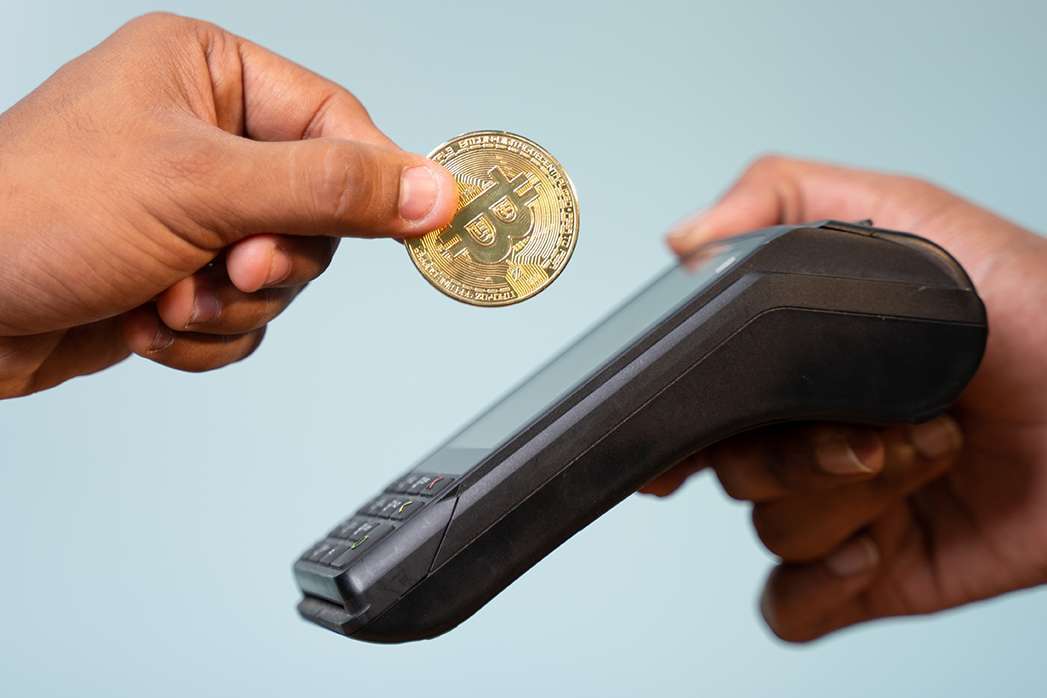

The logo for cbdc central bank digital currency incorporates elements of blockchain technology and utilises the concept of NFTs.

What is CBDC? Digital Currency Explained

State money evolves slowly. Financial rails evolve fast.” — DNA Crypto.

Central bank digital currency (CBDC) is a type of fiat currency that doesn’t exist as banknotes or coins but exists only as digital data. Digital currencies are stored in digital wallets. Typically, its definition is inseparable from that of a “central bank.”

What Exactly is Central Bank Digital Currency?

Central Bank Digital Currency, CBDC, is the digital equivalent of physical cash that can be transferred into circulation by central banks. Just as CBDCs use the current infrastructure to move physical cash between bank accounts, blockchain technology could be used to enable these transfers digitally. The main questions surrounding this topic are: why we need this and what the implications are for central banking. In the UK, the Bank of England is the central bank, and it’s currently working closely with HM Treasury to bolster digital currency across the UK.

How CBDC Differs from Cryptocurrency?

CBDCs and crypto assets are both digital currencies, but they differ in key ways. Crypto assets are decentralised, peer-to-peer virtual currencies that can be traded independently of central banks or governments, with the most well-known crypto asset being bitcoin. Central banks issue CBDCs as a substitute for cash, meaning they can be used to make payments just like physical notes and coins. They may also be used to make payments between financial institutions. In contrast, crypto assets are typically transacted privately between two parties, with no involvement from the issuing bank or government institution.

Why is the UK Considering a Central Bank Digital Currency?

Change is inevitable, and we must be willing to adapt with the times. The challenges facing the global economy are immense, but so is the opportunity. Cash has been steadily declining in importance since the introduction of ATMs and contactless cards in the 1990s and 2000s. Today, only about 15% of all payments in the UK are made in cash – down from 40% two decades ago – and many businesses no longer accept it. This trend is expected to continue as more people adopt digital payments and other non-cash methods, such as QR codes and mobile wallets, gain traction. But there are still concerns about whether we have sufficient cash available in emergencies or during bank holidays when banks aren’t open. Surely, this is food for thought.

What are the Chances CBDC will replace Cash?

Despite the potential official adoption of digital currency by governments, cash remains a popular payment method, and it’s essential to many people. The Bank of England will continue issuing money in the UK as long as people want to use it, and has no plans to stop providing notes and coins within the next decade. Ultimately, central bank digital currency has the potential to promote a cashless society. This will likely take time to achieve, but the push toward further adoption of digital currencies is inevitable. Stay tuned, as this technology will undoubtedly be the next big thing in financial services.


Image Source: Adobe Stock

Disclaimer: This article is provided for informational purposes only. It is not offered or intended to be used as legal, tax, investment, financial, or other advice.

Read more →

An illustration of a building with a Bitcoin logo on it, representing the convergence of cryptocurrencies and decentralized finance (DeFi) in the emerging crypto landscape.

Central Banks Are Pushing for CBDC Projects

“Central banks are pushing CBDC projects not because the system is broken, but because the plumbing of money is no longer fit for a digital-first economy.” — DNA Crypto.

It is no secret that central banks worldwide are collaborating with companies such as Ripple to launch their own CBDCs.

According to the IMF, more than 110 central banks have stepped toward CBDC development. At the same time, Ripple Labs Inc., a blockchain payments company, released a report stating that approximately 90% of central banks are actively developing their own digital currencies.
It is important to note that CBDCs are not entirely new; surprisingly, they have been around for almost three years. In 2020, China spearheaded the CBDC concept by conducting a broad-based retail test of the Chinese digital Yuan. The report titled “The Future of Fiat” by Ripple gives several reasons why it believes many central banks will embrace CBDCs. One of the firm’s main reasons highlighted was improved payment efficiency.
Today, digital payment methods are rapidly replacing cash payments, especially in developed nations. The advent of blockchain technology exposed shortcomings in digital payment methods, including high transaction costs and slow processing times. Typically, an overseas transaction via digital payment takes days to complete, and, worse still, a cash payment takes longer.
However, with blockchain technology, these transactions typically take seconds to minutes to complete. Given its significant advantages, it has been difficult for users to reject blockchain technology and thus threaten legal tender in many nations. CBDCs can improve a country’s overall payment landscape, particularly given recent global advancements.

Ripple has reported that the introduction of CBDCs will improve national competitiveness. In addition, the firm believes CBDCs will help financial institutions reposition themselves and build greater trust among citizens.

Ripple and CBDCs: How?

Over the years, Ripple has grown into one of the most dominant blockchain payment ecosystems in the market. Throughout its lifetime, the firm has developed a simple, engaging solution built on XRPLedger. Central banks can use this ledger to deploy their own CBDCs. Ripple claims its CBDC hosting platform will offer stability, resilience, and security. The firm adds that central banks can use its XRP-proven ledger to build trust. This will ensure consistent top performance and enforce privacy and security. Moreover, Ripple announced that XRPLedger would enable CBDCs to create wholesale products for use by banks, the public, and fintech.

Another significant benefit for central banks adopting XRPLedger is interoperability and overlay services. The CBDC development will also be sustainable as it will be based on Ripple’s energy-efficient protocol. After highlighting its ability to support CBDC and Stablecoin development efficiently, Ripple noted its strategic plan with Bhutan to create the digital Ngultrum. Currently, Ripple competes with firms such as Visa and Mastercard, which are actively seeking solutions to support central banks in CBDC development.

Image Source: Adobe Stock
Disclaimer: This article is provided for informational purposes only. It is not offered or intended to be used as legal, tax, investment, financial, or other advice.

Read more →

A group of btc coins, showcasing the wonders of blockchain technology, are elegantly arranged on a pristine white background.

3 Things to Consider Before You Buy Cryptocurrency

So, you want to invest in cryptocurrency? The blockchain-based, encrypted digital assets are taking the world of finance by storm. Bitcoin, Ethereum and Litecoin have all seen huge gains over the couple of years, and they’re not alone. There are now more than 1,500 different cryptocurrencies out there — and many of them are skyrocketing in value right now.

But before you gamble with your savings on a new form of “digital gold” that may or may not pay off as an investment, consider a few factors. While it’s possible to make a fortune from cryptocurrency investing, it’s extremely risky. You can also lose a lot of money. Generally speaking, you should only invest money that you can afford to lose.

Learn About Cryptocurrency

Cryptocurrency is a new and exciting asset class. Before you buy cryptocurrency, make sure you’re familiar with the basics. You’ll want to understand how blockchain technology works and the reasons behind the mining of cryptocurrencies. Before you start trading, you’ll want to understand how different cryptocurrencies work and how to avoid the most common pitfalls. Explore your options.

Put Safeguards in Place to Protect Yourself from Financial Setbacks

Before you buy crypto, ensure to have a plan for what to do if the value of your crypto falls to zero. There is a good chance that will happen. Even if Bitcoin is not a bubble, bubbles can form in individual altcoins. The risk of losing everything is real. It’s not just that some people might have been so unlucky as to buy near a peak and then sell near a valley; more likely, it’s that many people will have bought near a peak and then lost the password or lost interest or lost their ability to remember the keys.

There are risks even if you don’t lose your keys or sell your coins. If you leave your coins on an exchange, there’s always the risk of theft by hackers. If you hold your coins in software on your computer or phone, there’s always the risk of forgetting your keys or getting rid of your computer without remembering to take out the wallet file. There has been at least one spectacular case where someone dumped a drive with keys worth over $100 million in Bitcoins.

Make Saving for Future plans a Priority

You may be new to cryptocurrency, but you’re not new to saving and investing. Before buying crypto, it’s important to know the basics of building a portfolio that is balanced and diversified.

When you save for something, you want to achieve in the future, you usually make regular deposits over time into an account that earns interest (like an online savings account). When you invest money, your goal is usually to earn more than you would in an account that only pays interest. Investing can be riskier than saving because there is the potential to lose some or all of your initial investment. But it can also be more rewarding since investments have the potential to grow faster than savings accounts.

To get started on building a well-balanced portfolio, start by setting clear financial goals and breaking them down into short-term, medium-term and long-term goals. Then determine what kinds of accounts make sense for each one of those goals.

Image Source: Adobe Stock

Disclaimer: This article is provided for informational purposes only. It is not offered or intended to be used as legal, tax, investment, financial, or other advice.

Read more →

A gold coin sits on top of a stack of gold bars in the world of blockchain.

Bitcoin or Gold? The Best Inflation Hedge

Inflation rates continue to soar high above the limits set over the previous years, forcing investors to search for anything that will reduce the effects of the soaring inflation rates on their portfolios. Over the years, investors turned to commodities such as gold to…

Read more →

Bitcoin coins on a dark background.

A Comforting Prospect as Bitcoin Returns to Green

The price undercurrents of cryptocurrency are typically analysed using linear regression and Granger causality analysis. Price undercurrents are generally represented by the following four types: news-based, chart-technical, momentum, and volume. Although both the news-based and chart-technical approaches are powerful for analysing cryptocurrency price movements,…

Read more →