A pen and a bitcoin sit on top of a tax form, showcasing the interaction between traditional paperwork and the digital currency bitcoin.

Is Bitcoin the Future Currency for Governments?

There have been mixed criticisms about Bitcoin, and there are several different perspectives on whether or not it could be the new currency. The arguments for and against Bitcoin’s replacement for conventional government-issued currencies will be examined in greater detail in this article. Why…

Read more →

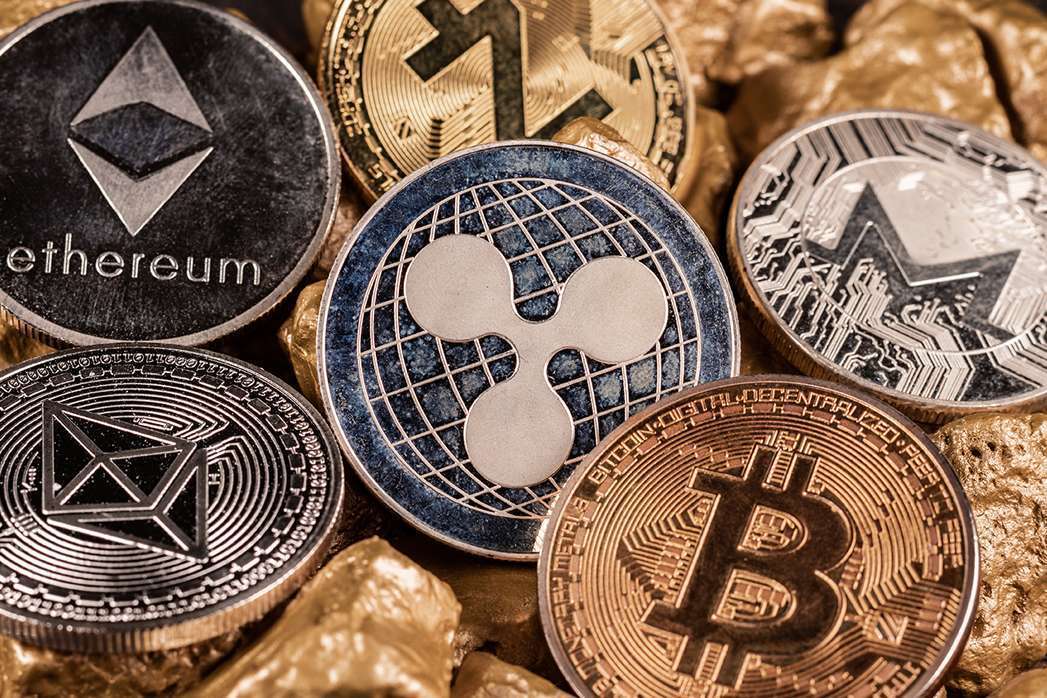
A pile of crypto coins, altcoins and bitcoin on top of a pile of money in the world of DeFi and ukcrypto.

Things You Should Consider Before Investing in Altcoins

“Altcoin investing rewards timing in bull markets, but discipline over the long term.” — DNA Crypto.

By definition, an Altcoin is any cryptocurrency other than Bitcoin, so there are thousands. Altcoins account for more than half of the cryptocurrency market’s value. Like Bitcoin, Altcoins are based on the Blockchain as an incorruptible ledger. Some claim to build on Bitcoin’s triumphs, while others aim to overcome its issues.

On the other hand, the Ethereum blockchain saw potential in Bitcoin’s Blockchain technology. It went beyond recording financial transactions and began documenting agreements as “smart contracts.” Other cryptocurrencies have emerged, claiming to be safer or faster. The result is a complex ecosystem of Altcoins that is difficult to categorise. However, the classification can be done as follows:

Native Cryptocurrencies

Native cryptocurrencies are coins explicitly designed for use on a particular network. Because Bitcoin is the currency utilised on the Bitcoin blockchain, it is considered a native coin. Another native coin, Binance Coin, is now the fourth-largest cryptocurrency by market capitalisation. And if you are a newbie and you’re not sure where to start, contact an expert who will provide you with enhanced encryption information to help you store, trade, send, and receive your virtual currency safely.

Stable Coins

Stablecoins were created to provide the benefits of cryptocurrencies without their price volatility. They do so by matching the value of an existing currency at a one-to-one ratio. Tether, the most valuable Stablecoin by market capitalisation, is pegged to the US dollar.

Token

A token is a monetary unit that may be used for specified purposes and operates on an existing blockchain. Chainlink, for example, is based on the Ethereum platform and translates real-world data into a blockchain-compatible format. The adoption of Chainlink technology is directly proportional to the demand for its tokens.

There are a few things to think about before buying altcoins. Before you invest in any altcoin, find out what the company behind it is trying to accomplish. Think about the following issues:

  • Does the altcoin look like it could be a viable Bitcoin alternative?
  • – If it’s a token, is it a real-world application?
  • – If it’s a Stablecoin, what will you do with it?
  • – What made it happen if it’s a fork, and do you agree with the decision?

Forks

When a group votes to make any alteration to the rules that govern the chain, the process is referred to as a “fork.” A new chain appears, ready to begin recording transactions in compliance with the latest regulations. Bitcoin Cash is a fork of the original Bitcoin blockchain, while Dogecoin is a branch of Luckycoin.

To Sum it Up

Keep in mind that this is a new market that will eventually settle. Some of these projects will fail—a lengthy list of cryptocurrencies has already died—while others will thrive. That’s why financial gurus define altcoins as “alternative assets,” something you might take part in if your portfolio is already well-diversified.

Image Source: Adobe Stock

Disclaimer: This article is provided for informational purposes only. It is not offered or intended to be used as legal, tax, investment, financial, or other advice.

Read more →

Greedy corporate businessman crushing and exploiting earth.

Global Economy: The Great Reset and the IMF

As we emerge from the shadow of an unprecedented pandemic, countries worldwide grapple with the devastating economic aftermath.

One of the biggest challenges is the International Monetary Fund’s plans for a Great Reset. They recently launched a new initiative called The Great Reset to develop a new approach to global economic policies and promote greater financial stability.

So, what is the Great Reset? It refers to the global economy’s recovery journey, following a period in which it was recalibrated by factors such as the international financial crisis.

The IMF’s vision for this Reset focuses on four key components:
– Focusing on sustainable policies.
– Using innovative technology.
– Creating an enabling environment through financial inclusion.
– Strengthening international collaboration.

IMF’s Role in the Global Economy and How the Great Reset Will Impact Global Economics

To achieve its mission, the IMF promotes policies that keep inflation and unemployment low while encouraging growth. It also provides technical assistance, advice, and research to countries needing economic guidance. The IMF also provides loans and other financial assistance to countries experiencing economic crises or budgetary difficulties.

Additionally, the IMF plays a vital role in the current push towards a “Great Reset” of the global economy. Its World Money initiative promotes green finance and embodies sustainable development goals across countries.

Another thing you may not know about the Great Reset is how it will impact global economics. The IMF has proposed a new system of international currency exchange based on Special Drawing Rights (SDR), composed of five international currencies: the U.S. dollar, Euro, Japanese Yen, and Chinese Yuan. This system would move away from the U.S.-led dollar-based system and give more countries an equal say in the global economy.

The introduction of SDRs could change the way currencies are currently used. The U.S dollar, Euro, Yuan and Yen would still be used for local transactions, but their use for global trading would decline significantly as new rules surrounding the issuance of SDRs take effect.

The IMF’s World Money – The Great Reset – has people asking, “What can I do to prepare?” In this new global financial system, having as much financial visibility and control as possible is essential. That means understanding the basics of budgeting and monitoring debt. It also means understanding options for investing in products beyond stocks, such as bonds and commodities.

Overall, the IMF’s Great Reset necessitates a change in how we think about money and international finance. This shift can positively impact the management of the global economy today. With these new approaches to cash come fresh opportunities for economic stability and growth amid increasing volatility. The Great Reset empowers countries to better manage their finances by equipping them with more flexible tools to stimulate economic activity when necessary. Overall, the IMF’s Great Reset necessitates a change in how we think about money and international finance. This shift can positively impact the management of the global economy today. With these new approaches to cash come fresh opportunities for economic stability and growth amid increasing volatility. The Great Reset empowers countries to better manage their finances by equipping them with more flexible tools to stimulate economic activity when necessary. Overall, the IMF’s Great Reset necessitates a change in how we think about money and international finance. This shift can positively impact the management of the global economy today. With these new approaches to cash come fresh opportunities for economic stability and growth amid increasing volatility. The Great Reset empowers countries to better manage their finances by equipping them with more flexible tools to stimulate economic activity when necessary.

The IMF’s proposal provides a roadmap for governments to adopt the necessary policies and reforms to ensure a more inclusive and equitable world economy.

Image Source: Adobe Stock

Disclaimer: This article is provided for informational purposes only. It is not offered or intended to be used as legal, tax, investment, financial, or other advice.

Read more →

A woman is pointing to the word blockchain on a screen showcasing crypto technology.

What is Blockchain?

Blockchain technology isn’t a fad. It’s the future. But what is Blockchain technology? And how can it be used to shape the future of the world economy?

Should you trust Blockchain? A tricky question indeed. Although it was first invented by Satoshi Nakamoto and intended to provide a decentralised currency, the technology has since evolved and is now being used for much more. If you’re new to Blockchain, keep scrolling.

What is a Blockchain and how does it work?

A Blockchain is a growing list of records called blocks linked and secured using cryptography. Typically, each block contains a hash pointer as a link to a previous block, a timestamp and transaction data. Blockchains are secure databases linked together in a chain of digital transactions that are resistant to modification and tampering.

Blockchain is the technology behind Bitcoin, but it does much more than store cryptocurrency. It can be used to track various forms of value, including money, votes, and shipping documents. The Blockchain is a distributed database that keeps a continuously growing list of ordered records called blocks.

We have already seen that Blockchain is a decentralized digital ledger technology that records transactions securely and transparently. In a Blockchain, every transaction is verified and added to the chain of previous transactions, creating an immutable and transparent history of all transactions.

Below is a simplified explanation of how a Blockchain works:

  1. A transaction is initiated: When a user initiates a transaction, it is broadcast to the network of computers connected to the Blockchain.
  2. Verification: The nodes verify the transaction using a consensus mechanism, which can be Proof of Work or Proof of Stake.
  3. Adding to the block: Once the transaction is verified, it is added to a block along with other verified transactions.
  4. Hashing: The block is hashed using a cryptographic algorithm to create a unique digital fingerprint that identifies the block.
  5. Chain of blocks: The hashed block is added to the previous block, creating a chain of blocks stored on every network node.
  6. Immutable record: As each block is added to the chain, it creates a rigid record of all the transactions on the Blockchain.
  7. Distributed ledger: Since the Blockchain is distributed across the network of nodes, it is transparent, secure, and resistant to tampering.
  8. Incentives: Depending on the consensus mechanism used, users or nodes on the network may be incentivised to participate in verifying transactions and adding them to the Blockchain.

As shown above, Blockchain technology enables the secure and transparent recording and verification of transactions without the need for a centralised authority. This has led to its use in various industries, including finance, healthcare, and supply chain management and by extension, institutional investors.

What are the Pros and Cons of Blockchain?

Blockchain technology is a groundbreaking development in the world of finance and business. It has several advantages and disadvantages, each worth considering:

Advantages:

  1. Security: Blockchain technology uses cryptographic algorithms and decentralized distribution to ensure the security and integrity of transactions, making it highly resistant to hacking, fraud, and tampering.
  2. Transparency: Since Blockchain technology is distributed, every node in the network has access to the same information, making it highly transparent and trustworthy.
  3. Efficiency: Blockchain technology eliminates the need for intermediaries, thereby reducing transaction costs and accelerating the settlement process.
  4. Immutable record: Every transaction added to the Blockchain is permanent and cannot be altered, creating an immutable record that can be used for auditing, compliance, and other purposes.
  5. Decentralisation: Blockchain technology eliminates the need for a central authority, resulting in a highly democratic and autonomous system.

Disadvantages:

  1. Complexity: Blockchain technology demands substantial technical expertise to develop, operate, and maintain.
  2. Scalability: Blockchain technology can be slow and resource-intensive, making it difficult to scale for high-volume transactions.
  3. Energy consumption: Proof-of-Work consensus algorithms, used by some Blockchains, require significant amounts of energy to operate, making them environmentally unsustainable.
  4. Limited regulation: Blockchain technology’s decentralized and anonymous nature makes regulating and enforcing legal compliance challenging.

As the world becomes increasingly digitised, Blockchain technology is considered the next big thing to revolutionise how we do things. This article provides an overview of what it’s all about and how it’s already transforming the way businesses operate.

Image Source: Adobe Stock

Disclaimer: This article is provided for informational purposes only. It is not offered or intended to be used as legal, tax, investment, financial, or other advice.


Read more →