Defi Open Finance illustration with options. Titles, Stablecoins, Payments, Derivatives, Investments

Understanding DeFi and its Benefits to the Banking Sector

“Banks do not adopt DeFi to decentralise finance, but to improve efficiency within controlled frameworks.” — DNA Crypto.

From 2020, banks and other financial institutions have increasingly engaged with Web3 services in the UK. This move also applies to DeFi, as several potential cases that could trigger a new wave of innovation have emerged. 

What is Institutional DeFi?

Institutional DeFi refers to the use of DeFi protocols by major institutions to tokenise tangible assets with institutional-level controls for consumer protection and regulatory compliance, rather than to expand institutional investments in DApps and DeFi protocols. 

One question often asked is: What extra advantages does DeFi provide to online banking?


    • – Automated business logic.

    • – Transparent ledgers.

    • – Tokens guarantee liquidity.

    • Use of interoperable and operable DeFi protocols.

Banking used to involve physical labour, paper-based transactions, and a network of institutions for communication, not too long ago. Thanks to digitisation, efficiency has increased, reducing workloads for bank branches and enabling automation. 

However, even after banks were digitised, data remained dispersed, making reconciliation difficult. Although transactions occurred online, bookkeeping had to be performed independently. DeFi alters this by uniting bookkeeping and transaction execution on the same network. Thus, an edge over conventional digitising.

Regulatory Compliance for Institutional DeFi

Banks undergo extensive scrutiny before providing their services to their customers. Stress situations are used to test its vulnerability, but, more importantly, a keen eye is kept on behavioural problems.

For example, if interest rates on lending products are incredibly high, they may be misrepresented to customers and therefore subject to scrutiny.

Today, some DeFi instruments wouldn’t withstand the typical level of due diligence that banks perform. Unprecedented in traditional financial services, several DeFi platforms compensate their liquidity suppliers with three- to four-digit annual percentage rates.

Legal Framework for Smart Contracts

The significance of Smart contracts in DeFi cannot be overstated. Despite their importance, smart contracts remain a relatively novel technology. As a result, regulatory and legal bodies worldwide have begun to guide on this issue. 

An example is Nevada in the United States, where the legal enforceability of smart contracts has been established. Yet, as with yesterday, a broader agreement among nations is needed to establish a comprehensive legal framework that provides a sound legal foundation for financial services using programmable money.

Data Privacy

DeFi applications have relied on the transparency of on-chain transactions to understand market dynamics. For instance, these apps track whale activity to assess market behaviour. The openness of on-chain transactions has given rise to models such as automated market making (AMM) in DeFi, enabling protocols to use real-time supply-and-demand data to calculate asset prices. 

However, veteran capital market players value transaction privacy. Brokers often act as intermediaries for institutions executing large market orders, which ensures anonymity. To achieve the success of institutional DeFi, a balance between DeFi and the privacy of traditional capital markets is essential. 

Banks have previously experimented with DeFi using permissioned blockchains, which allowed only specific participants to join. However, institutional investors have recently become more receptive to the idea, as evidenced by JPMorgan’s collaboration with Polygon. The challenge lies in achieving transaction privacy while providing on-chain information for AMM algorithms. 

AML and KYC Controls

Strong KYC and AML procedures are essential to banks and financial services companies. Banks employ between 10% and 15% of their workforce to ensure compliance and that risk standards can meet regulatory requirements.

On the other hand, in the first quarter of 2022, approximately $10 billion (£7.9 billion) in cryptocurrency was held in illicit addresses, according to recent Chainalysis research. According to the estimate, fraudsters laundered approximately $8.6 billion (GBP 7.1 billion) in cryptocurrency in 2021.

Once more, a compromise must be found that allows institutional DeFi participants to authenticate themselves through robust KYC procedures. Additionally, users must comply with any AML restrictions and on-chain analytics requirements imposed by the institutions to use the DeFi services they offer.

Disclaimer: This article is provided for informational purposes only. It is not offered or intended to be used as legal, tax, investment, financial, or other advice.

Read more →

PayPal PYUSD image with a Bitcoin logo. PayPal Stablecoin.

PayPal, Payments and PYUSD

Money is powerful when it is used, but not when it is just sitting around. Every day, billions of transactions occur worldwide, and payments are the most regular and tangible use of money. But again, payments are more than just a means of exchanging…

Read more →

Gold Cardano (ADA) coin on a black background.

Understanding the Cardano Roadmap

With a commitment to openness and high assurance of formal development technology, Cardano (ADA) is not your typical cryptocurrency. The Cardano Roadmap outlines the unique features and developments that set it apart from others. What is Cardano? Created in 2015 and launched in 2017, Cardano…

Read more →

Dogecoin crypto coins, meme coins, on a green candle trading chart Bull run background.

Dogecoin DOGE: The Meme Cryptocurrency

Like Bitcoin and Ethereum, Dogecoin is also one of the top cryptocurrencies, although, it comes with a whole different vibe. Basically, Dogecoin was formed as a result of a mere joke, typically, a meme by crypto enthusiasts.

What is Dogecoin?

Dogecoin (DOGE) is a cryptocurrency that operates on a peer-to-peer, open-source network. Introduced in December 2013, it’s often categorized as an altcoin and sports the adorable Shiba Inu dog as its emblem. Derived from Litecoin, Dogecoin’s blockchain boasts commendable technology.


Bespoke aspects of Dogecoin include:

Its use of the Scrypt algorithm (pronounced ess-crypt)

It’s wallet-friendly price

It’s unlimited Supply

So, what is unique about Dogecoin? Elon Musk. He the mastermind behind Tesla and SpaceX, has a knack for turning the crypto world into his own playground, especially, Dogecoin. With a tweet here and a remark there, he’s like the pied piper for cryptocurrency, leading the market on a rollercoaster ride.

His words aren’t just tweets; they’re financial seismic events that shake up the prices and grab everyone’s attention. Move over, fortune tellers; we’ve got Elon and his X crystal ball predicting Dogecoin’s next move.

How Does Dogecoin Work?

The Dogecoin blockchain functions on a proof-of-work consensus mechanism. Miners employ computers to tackle intricate mathematical problems, facilitating the processing of transactions and their subsequent recording on the blockchain. In return for their role in sustaining the blockchain, miners receive additional Dogecoin, allowing them to either retain or trade it on the open market.

While Dogecoin is usable for transactions, it could serve as a more effective store of value. This limitation stems from the absence of a lifetime cap on the total number of Dogecoins that can be mined, resulting in a highly inflationary nature for cryptocurrency.

The blockchain generates millions of new Dogecoins daily to compensate miners for their efforts. This constant influx makes it challenging for speculative price increases in Dogecoin to maintain stability over a longer period.

Dogecoin vs Bitcoin

Ostensibly, Dogecoin is more of a lighthearted alternative to Bitcoin, sporting a Shiba Inu dog as its mascot as its informal and playful vibe resonated well with the emerging crypto community. Its utilization of the Scrypt algorithm and the availability of an unlimited supply made a case for a faster, more adaptable, and user-friendly counterpart to Bitcoin.

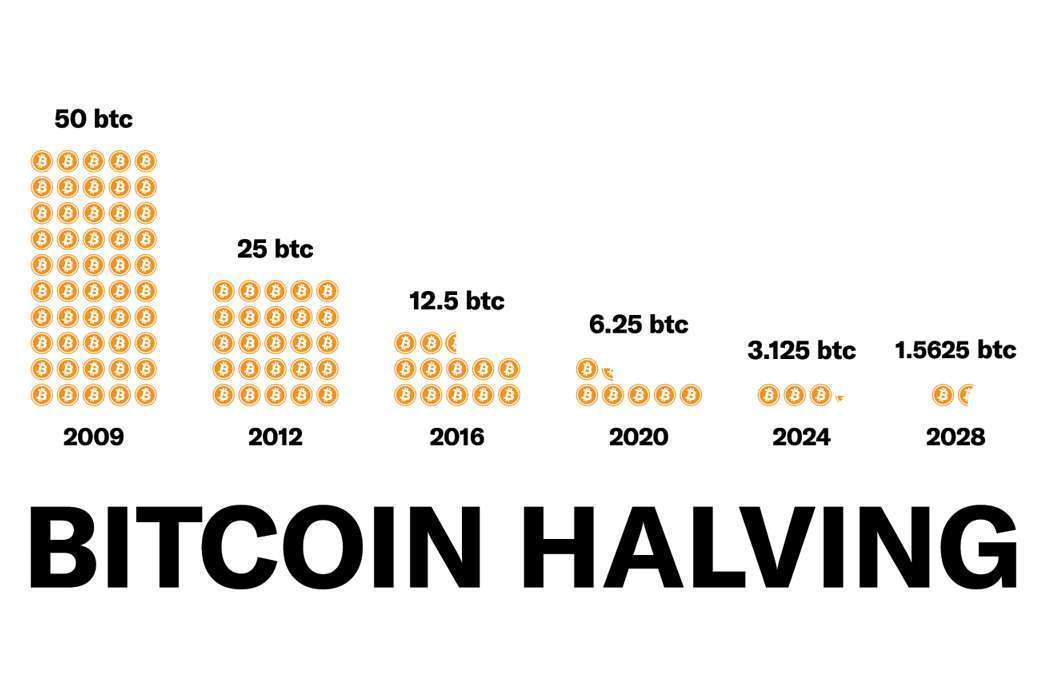
As opposed to the “deflationary” nature of Bitcoin, Dogecoin is considered an “inflationary coin.” Unlike Bitcoin, which has a capped limit on the total number of existing coins, Dogecoin doesn’t impose such constraints. Bitcoin undergoes a halving process every four years, reducing the mining rewards and its inflation rate by half until all coins are circulated. This sets Dogecoin apart as a cryptocurrency with a different approach to supply dynamics.

Is Dogecoin a Good Investment?

Since Dogecoin doesn’t have a limit on its total supply, and millions of new coins are added daily, there needs to be more incentive to hold it for the long term. Unlike Bitcoin, which gains value due to its capped supply, Dogecoin is designed more as a spending currency, just like DASH or Bitcoin Cash, according to White.

The historical value of Dogecoin per coin has been quite low, around $0.003 for much of 2020, making it more disposable for many. According to Grey, platforms like Reddit, X, and Facebook see users using Dogecoin to tip or reward each other for content.

All in all, Dogecoin is a cryptocurrency that operates on a peer-to-peer, open-source network and came into existence in 2013, initially conceived as a playful commentary on the world of cryptocurrency. The project’s charm lies in its technical aspects and the humour embedded in the community and development efforts, which likely contributes to its longevity compared to other cryptocurrencies.

Image: Adobe Stock

Disclaimer: This article is provided for informational purposes only. It is not offered or intended to be used as legal, tax, investment, financial, or other advice.


Read more →