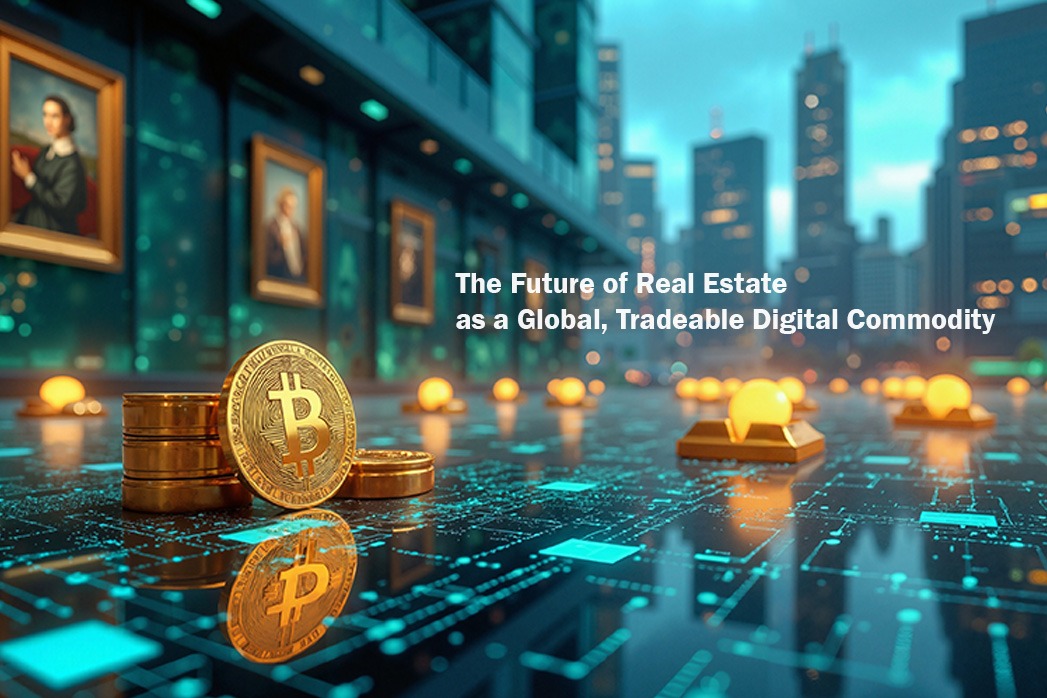

Tokenized Real Estate Background with Glowing Cityscape, Digital Property Blocks Represented, Blockchain-Based Assets.

Tokenized Real Estate: How Bitcoin and Smart Contracts Are Rewriting Global Property Investment

“If Bitcoin is the digital gold, then tokenized real estate is the digital land.” – DNA Crypto Knowledge Base

Delays, low liquidity, and steep capital barriers have long defined conventional real estate investing. Now, blockchain and Bitcoin are unlocking a new frontier—tokenized property ownership and frictionless cross-border transactions—providing smarter access and opportunity for high-net-worth individuals (HNWIs) and institutional investors.

“Blockchain is changing the way we think about ownership. Tokenized real estate is no longer an experiment—it’s the new blueprint for cross-border investment.” – EY Global Real Estate Leader

Property Deals via Smart Contracts

Smart contracts are the cornerstone of this revolution. These self-executing digital agreements remove intermediaries like brokers and escrow providers, drastically lowering transaction costs and timelines.

Bitcoin meets property: Through escrow-backed smart contracts, Bitcoin holders can acquire real estate assets directly—payments are automated and enforced on-chain once conditions are met. Trust is coded in. Human error is coded out.

Learn more: How Smart Contracts Simplify Asset Transfers

“Smart contracts in real estate are turning legal friction into programmable efficiency. This is trust, evolved.” – CoinDesk Analyst Brief, 2025

Chainlink Oracles, Compliance & Regulated Settlement

DNA Crypto integrates Chainlink oracles to connect smart contracts to off-chain property data (title deeds, valuations, ownership records). This ensures:

  • – Full data transparency
  • – Real-world verification
  • – Automated execution under legal parameters

Compliance is non-negotiable. KYC/KYB and AML protocols ensure alignment with MiCA regulations for EU-based investors.

“Compliance should be a bridge, not a barrier, to innovation.” – Regulatory Readiness in Web3

What Is Tokenized Real Estate?

Tokenization fractionalizes real estate into digital tokens, each representing a share of ownership. This model is transforming a $50 billion market into a projected $4 trillion industry by 2035.

  • – Minimum entry: As low as $1,000
  • – Average rental returns: 11%
  • – Institutional share by 2026: Estimated 5.6%

This innovation removes the liquidity problem in real estate. It brings instant diversification, real-time market access, and democratized investment.

Explore: Fractional Ownership with Blockchain

“Tokenization is not just a trend—it’s the next wave of financial engineering.” – World Economic Forum, Future of Real Estate Report 2025

Spotlight: Europe, Dubai, the UK, and Asia

DNA Crypto is rapidly expanding across the globe, and our strategic footprint reflects where tokenized real estate is gaining real traction.

Europe (including Poland)

With MiCA compliance and rapidly digitising land registries, Europe is becoming a regulatory and technical hub for digital asset investment. Cities like Warsaw and Krakow have embraced blockchain-backed real estate solutions, enabling compliant digital property transactions powered by DNA Crypto’s infrastructure.

Dubai

Dubai continues to lead the way for crypto-backed luxury real estate. With support from blockchain-friendly free zones like DIFC, we are building a launchpad for cross-border transactions in tokenized beachfront villas, branded residences, and commercial real estate. Bitcoin, smart contracts, and Chainlink verification support each secure transfer.

United Kingdom / Jersey

Our UK presence is spearheaded by DeFi Property UK, an entity fully aligned with evolving digital asset regulations. From Jersey’s tax-efficient ecosystem to broader access across the British Isles, we are enabling HNWIs and institutions to acquire high-end property using crypto wealth, with complete legal clarity and financial oversight.

Asia – Philippines and Beyond

DNA Property Corp., our flagship in Southeast Asia, is based in the Philippines. It anchors our operations across Asia and supports future expansion into Singapore, Hong Kong, and Thailand. These markets represent strong demand, digital infrastructure, and progressive regulation—ideal for tokenized real estate. DNA Property Corp. is onboarding early adopters as we roll out localised, compliant solutions.

Introducing the DNA Crypto Tokenization Project

At DNA Crypto, we’re building the future of real estate investment. Our tokenization platform will launch in Q4 2025, enabling:

  • Asset-backed real estate tokens across Europe and MENA
  • Fully automated smart escrow contracts
  • Compliance-ready onboarding for HNWIs and funds

We are currently seeking early adopters—both private investors and institutional partners—to shape this next chapter of blockchain finance.

“The future of real estate isn’t brick and mortar—it’s protocol and code.” – DNA Crypto Labs

Learn more about our upcoming launch: DNA Crypto Tokenization Project


The Future Is Borderless, Compliant, and On-Chain

Tokenized real estate unlocks a scalable, transparent, and fully digital property market. With blockchain infrastructure, smart escrow, Chainlink verification, and MiCA-ready compliance, the opportunity is not only innovative—it’s investable.

This is the bridge between Bitcoin and real estate, and it’s being built now.

Disclaimer: This article is for informational purposes only. It does not constitute legal, tax, or investment advice.

Read more →

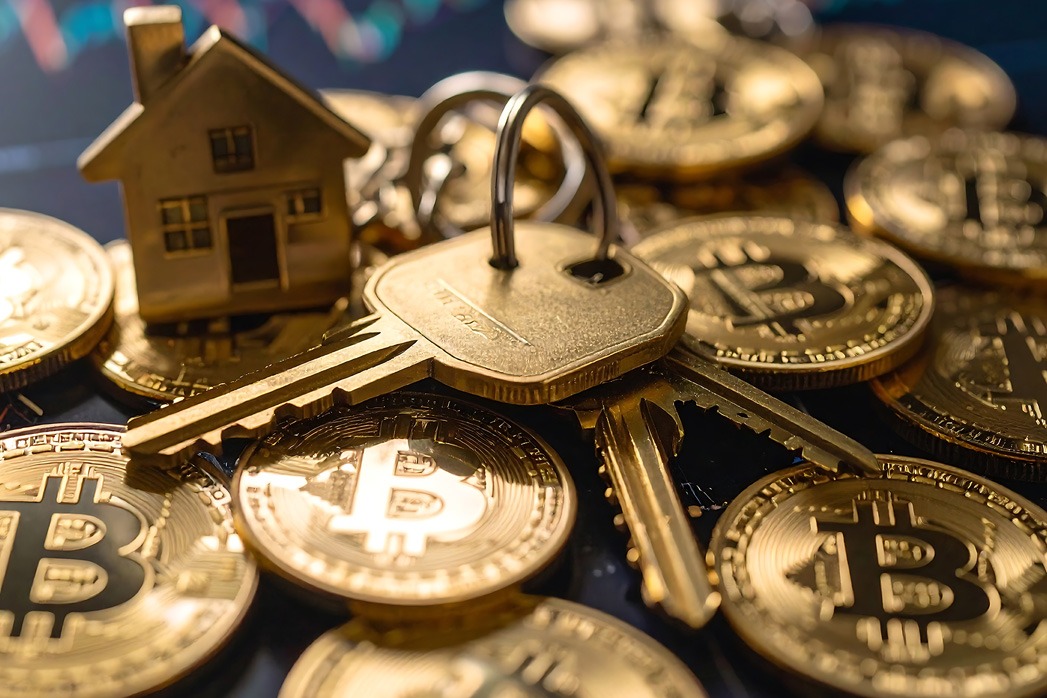
Golden bitcoin coin with house silhouette. Suitable for real estate cryptocurrency, digital property investment, and blockchain housing.

Real Estate Meets Digital Gold: 3 Jurisdictions Where Buying Property with Bitcoin is Now Legally and Financially Smart

“When property meets Bitcoin, capital becomes both productive and portable.” — DNA Crypto.
Today, Bitcoin is no longer merely a speculative bubble or digital gold; actual purchasing power is becoming a reality. There is no better place to draw from than the property market, where early adopters exchange SATs in square footage, and the governments are catching up. We are in a new world of crypto-fuelled real estate, where luxury, legality and liquidity intersect. But to which three jurisdictions, you may ask? Let’s examine Poland, the UK, and Dubai, where purchasing property using Bitcoin is both possible and a smart move.

1. Poland: The Regulatory Dark Horse

Legal Pathway Poland has no prohibition on using cryptocurrency as a form of payment; instead, it defines cryptocurrency as a digital representation of value that can be used in barter-type transactions. This implies that selling private property through Bitcoin is legal as long as the parties agree and fulfil all their tax obligations. Escrow & Settlement The performance of both fiat and cryptocurrency escrow services is improving. A good example is DeFi Property-mediated deals that deploy two-layer smart contracts. They store Bitcoin in escrow until the notarial deed is signed and registered, which makes the price final and legally binding. Market Appetite Poland is experiencing a surge in crypto-native investors, particularly in urban centres such as Kraków and Warsaw. High-end apartments in the Old Town are being snapped up by digital nomads and remote workers, attracted by low costs, easy EU access, and the country’s increasing digitalisation.

2. United Kingdom: London’s Next Crypto Boom

Legal Pathway It is worth noting that the UK regards crypto as property, rather than currency. HM Land Registry accepts the finalisation of land transactions in fiat. Still, crypto can be used as a medium of exchange, provided the transaction value is correctly listed in GBP. Even a few progressive conveyancers are now facilitating sales priced in Bitcoin, with contracts indexed to live BTC prices. This is particularly popular among high-net-worth individuals who purchase using SPVs or offshore trusts. Escrow & Infrastructure Trustworthy Over-The-Counter intermediaries, such as the London offshoot of DeFi property, now provide registered custodianship, with buyers and sellers signing cryptographic criteria binding the launch. The anti-money laundering regulations are managed through zero-knowledge KYC integrations. Market Appetite Exotic payment structures are not uncommon in prime London real estate. Crypto is emerging as the asset swap of choice among buyers who are not interested in slow banking processes. Developers in Mayfair, Knightsbridge and Canary Wharf have started quietly accepting Stablecoins and Bitcoin from verified wallets.

3. Dubai: Digital Gold’s Natural Home

Legal Pathway Dubai serves as a model for the union between cryptocurrency and real estate, with Ejari and Smart Dubai leading the way in partnerships with the Dubai Land Department. Developers are designing transactional arrangements that fully accept crypto via direct wallet payments or through on-chain escrow initiated by smart contracts. Escrow & Execution Some of the best projects in Dubai have recently tokenised their titles and begun accepting payments in BTC, ETH, USDT, or even DOGE. DeFi Property offers institutional-quality settlement infrastructure, combining on-demand title services with multi-sig escrow vaults and AML screening of retail and institutional clients. Market Appetite Dubai is the most crypto-literate luxury market in the world. According to CZ, the founder of Binance: Buyers in flip-flops with 6-figure BTC balances come to the Palm Jumeirah showrooms and make deposits. A new wave of Asian, Russian, and European digital migrants has opted to unlock their apartments to Blockchain, pay mortgages via DeFi, and even house their mining rigs in windows facing the Burj Khalifa.

Why DeFi Property?

The real estate revolution is not only about wallets and keys. DeFi Property helps:
  • – Facilitate cross-border real estate acquisition using crypto.
  • – Provides regulatory-grade escrow and KYC support.
  • – Structures tax-smart deals across Dubai, the UK and Poland.
  • – Utilises tiered access portals and ZK identity layers to safeguard the privacy of high-net-worth buyers.
Basically, we don’t just help you buy homes with Bitcoin; we engineer safe, legal, and tax-optimised acquisitions in the world’s most sought-after markets.

The New Global Ritual

What started as a joke, purchasing pizza with BTC at the beginning, turned out to be a new migration of the economy. Savvy crypto owners are converting virtual riches into immovable property – swanky homes on the oceanfront, penthouses in a skyscraper, vintage warehouses. Since cold wallets may not be the safest place to store your Bitcoin winnings in this new age, it is better to be in a smart home with views across the sea, fully paid in digital gold. Image Source: Adobe Stock Disclaimer: This article is purely for informational purposes. It is not offered or intended to be used for legal, tax, investment or financial advice. Register today at DNACrypto.co
Read more →

Two red Bitcoin passports on a European Union flag background, featuring MiCA.

The MiCA Passport: Unlocking Borderless Real Estate Investment in the EU

The Markets in Crypto-Assets Regulation (MiCA) is set to reshape the financial landscape across Europe. More than a regulatory milestone, it presents a unique opportunity for platforms that bridge crypto and real assets, such as DeFi Property, to unlock cross-border capital flows in the EU’s $17 trillion single market.

“MiCA is not merely a set of rules—it is the foundation for pan-European crypto scalability,” explains DNAcrypto.co. “It gives investors trust, platforms legitimacy, and start-ups a license to grow.”

MiCA: The First Harmonised Crypto Framework for 27 Countries

MiCA introduces a unified licensing regime—the MiCA passport—allowing Crypto Asset Service Providers (CASPs) to operate across all EU member states under a single license. For DeFi Property and similar platforms, this transforms the game:

  • – List tokenized assets EU-wide with one authorisation.

  • – Onboard investors in Milan, Berlin, or Athens under one AML/KYC flow.

  • – Streamline capital deployment using digital euros or stablecoins.

“MiCA eliminates the fragmentation that stifled innovation in crypto finance. It offers the clarity institutional capital needs,” states a recent DNAcrypto article.

Why MiCA Outpaces the UK, US, and Asia

RegionRegulationKey Challenges
EUMiCA PassportHarmonised rules, capital buffers
UKFCA-led regimeFragmented licensing
USASEC/CFTC divideEnforcement-first, unclear jurisdiction
AsiaMixed claritySingapore/HK lead, others uncertain
 

While the US still grapples with litigation and state-by-state licensing, and the UK advances cautiously with its policies, Europe is taking a leadership stance with MiCA.

Tokenization + MiCA = Real Estate Without Borders

Historically, real estate has been illiquid, siloed, and local. But tokenization—by converting properties into programmable digital assets—removes those frictions. Now, with MiCA:

  • – Properties in Lisbon or Warsaw can be tokenized and made accessible to any EU investor.

  • – Compliance is automated, borderless, and fast.

  • – Investments settle in minutes using blockchain rails and stablecoins.

“The tokenization of property, supported by MiCA, could be Europe’s answer to unlocking dormant real estate value,” says DNAcrypto in its analysis of real estate tokenization.

MiCA Requirements: Capital, Compliance, and Cybersecurity

  • – Minimum Capital: €50K–€150K depending on services.

  • – Operational Buffer: 25% of the previous year’s fixed costs.

  • – Insurance & Flexibility: Risk-mitigation options for startups.

This financial architecture is strengthened by DORA (Digital Operational Resilience Act) and TFR (Transfer of Funds Regulation), ensuring:

  • Resilient IT and cybersecurity infrastructure.

  • AML compliance through the “travel rule” for crypto transfers.

Together, they turn Europe into a safe and regulated home for institutional crypto investors.

The Competitive Edge for DeFi Property

Early adoption of MiCA gives DeFi Property an advantage as both a licensed gateway and asset manager:

  • – Partner with developers to bring tokenized projects to market.

  • – Attract institutional capital seeking transparent, yield-generating assets.

  • – Serve global investors from the Middle East, Asia, and the Americas, via a trusted EU regulatory framework.

Why This Is a MiCA Moment

MiCA is Europe’s digital passport to innovation. It’s about borderless compliance, yes—but it’s also about borderless credibility.

“Firms that treat compliance as strategy—not obligation—will become tomorrow’s market leaders,” reads the DNAcrypto position on regulatory readiness in The End of Anonymous Trading.

Related Reads on DNAcrypto.co


Image Source: Adobe Stock
Disclaimer: This article is purely for informational purposes. It is not offered or intended to be used for legal, tax, investment or financial advice.
Read more →

Golden Bitcoin Coin and a mound of gold on a dark background.

Digital Gold 2.0: Why Tokenized Gold May Outpace Bitcoin for Wealth Preservation

“Using property—or gold—tokens as collateral for DeFi loans turns static assets into dynamic, liquid capital” — DNA Crypto.

Gold has safeguarded wealth for 5,000 years; Bitcoin has reshaped finance in just 15. Now a hybrid asset class—tokenised gold—blends ancient trust with blockchain speed, offering a 21st-century refuge for capital.

Tokenised Gold: The Missing Link Between Physical Safety and Digital Speed

Unlike traditional bullion, tokenised gold is not confined to vaults. Each digital token is backed by physical gold, stored and audited, yet remains transferable on-chain, globally and instantly.

For family offices, pension funds, and sovereign wealth strategies, this isn’t just compelling. It’s transformative.

Bitcoin for Growth, Gold for Stability

Bitcoin, often referred to as “digital gold,” is a high-beta macro asset. It thrives on speculation, innovation, and narrative. However, its volatility remains a deterrent to institutional allocators focused on preservation. Tokenised gold is different. It offers low correlation with equities, is price-stable, and is now deployable across DeFi platforms for yield generation. For family offices, pension funds, and sovereign wealth strategies, this isn’t just compelling. It’s transformative.

Tokenised gold offers a calmer alternative. It tracks the spot price of bullion, providing portfolios with an anchor asset that remains integrated with DeFi and global exchanges.

Regulatory Confidence via MiCA: What Real Estate Should Watch Closely

Tokenised gold has benefited from early regulatory clarity. MiCA in the EU has created space for commodity-backed tokens, subject to defined custodial and reporting obligations. With audited reserves and transparent issuance, tokenised gold aligns with regulators’ demand for asset-backed clarity, something Bitcoin still wrestles with in some jurisdictions.

A Blueprint for Real Estate Tokenization

Tokenised gold demonstrates five key advantages that translate perfectly to real estate:

  1. Liquidity – 24/7 global access via blockchain
  2. Fractional Ownership – Democratizing access to high-value assets
  3. Yield Generation – DeFi staking and lending
  4. Compliance – Full alignment with EU regulatory frameworks
  5. Trust – Audited, redeemable, asset-backed infrastructure

If gold can be made programmable, so can buildings.

And they will be.

Conclusion: From Vaults to Villas—Digital Assets Are Rewriting the Rules

Tokenised gold is not a niche product. It is a harbinger. It proves that physical wealth can be re-engineered for digital finance without sacrificing safety. The next frontier? Real estate, where trillions in locked capital are waiting to be unlocked. And tokenisation. pioneered by gold, will be the key.

Adobe Stock
Disclaimer: This article is purely for informational purposes. It is not offered or intended to be used for legal, tax, investment, or financial advice.

Register today at DNACrypto.co.

Read more →

Futuristic Blockchain Technology Visualizing Asset Tokenization for Real Estate, Art, and Commodities in a High-Tech Digital Landscape.

From Illiquid Assets to Web3 Wallets: The Future of Real Estate as a Global, Tradeable Digital Commodity

Land, buildings, and borders have long defined real estate — static, local, and hard to move. But in 2025, permanence is digital. A new age is emerging where homes, towers, and even entire neighbourhoods are no longer just listed on spreadsheets but are tokenized, fractionalised, and traded globally.

Thanks to the rise of Web3 technologies, including DeFi, NFTs, and AI, the real estate market is shifting from a paper-heavy bureaucracy to a programmable finance model. The result is a real estate class that becomes liquid, accessible, and borderless.

Tokenization: Turning Buildings into Blockchain Assets

Asset tokenization allows physical real estate — a villa in Tuscany, a condo in Lisbon, or a mall in Berlin — to be represented digitally on a blockchain. Through fractional tokens, investors from any country can own a piece of these assets with the click of a button.

“Tokenization is set to unlock $13.5 trillion in real-world asset value by 2030 — with real estate leading the charge.” — BCG & DNA Crypto Knowledge Series

Real estate, one of the world’s largest but least liquid asset classes, is perfectly positioned for disruption. What was once confined to elite access is now on the verge of global democratization.

Real Estate Meets DeFi: From Static Asset to Collateral

Imagine this: You invest in a fraction of a commercial tower in Amsterdam via your crypto wallet. Each month, rental income flows in through a smart contract. That same token is used as collateral for a DeFi loan — no banks, no borders, no delays.

“Using property tokens as collateral for DeFi loans turns static assets into dynamic, liquid capital.” — DNA Crypto Research

https://dnabitcoinbroker.com/knowledge/micas-blind-spots-what-wealthy-investors-must-know-about-defi-nfts-and-cross-border-risks

In this model, AI determines fair valuation and risk. DeFi enables instant lending, staking, and settlements. NFTs offer immutable proof of title, access, or even voting rights.

This isn’t theory — it’s programmable real estate in action, connecting legacy TradFi with the borderless power of Web3.

Beyond Collectables: NFTs as Title, Identity, and Governance

NFTs in real estate go far beyond digital artwork. They serve as smart, interactive legal wrappers:

  • Utility: Access to gated communities or digital twins in the metaverse

  • Governance: Voting rights for building management and maintenance

  • Identity: An on-chain record of ownership, rental, insurance, and usage


“A smart NFT title deed doesn’t just say who owns it — it can automatically enforce rights, rent, or insurance policies.” — DNA Crypto Knowledge Series

This is what transforms tokenized property into a compliant, intelligent, and internationally tradable financial product.

TradFi Meets Web3: Institutional Capital Joins the Revolution

Global pension funds, asset managers, and family offices are exploring blockchain for real estate allocation. As MiCA and other EU frameworks bring clarity, tokenized property becomes more accessible — and compliant.

“Tokenized property bridges legacy finance with blockchain—reducing admin, increasing liquidity, and globalising access.” — DNA Crypto Insights

A French pension fund can now invest in student housing in Warsaw using tokens. A Dubai REIT can offer fractional ownership of properties in Portugal. The world is opening up, and blockchain is the passport.

Challenges Ahead

Of course, this revolution isn’t without friction. Legal and regulatory inconsistencies persist across jurisdictions. Smart contract vulnerabilities and custody concerns remain. Secondary markets for property tokens still lack deep liquidity. Governance protocols and token standards need refinement.

Still, momentum is strong. Industry consortia, regulators, and platforms like DNA Crypto are developing frameworks to bring credibility and structure to a rapidly evolving market.

The Real Future: Real Estate as a Programmable Commodity

We are witnessing real estate shift from static, localised investments to digitally liquid, globally tradable instruments. This opens the door to broader public participation in property markets, liquidity for dormant capital, sustainable funding for housing, and new collaboration models for international development.

“Whether you own a building, a brand, or a brilliant idea, there’s a future where that value is liquid, global, and programmable.” — DNA Crypto Vision

https://dnabitcoinbroker.com/knowledge/will-mica-make-europe-a-safer-place-for-crypto-investors

Let’s build it securely, transparently, and together — one token at a time.

Image Source: Adobe Stock

Disclaimer: This article is for informational purposes only and does not constitute legal, tax, investment, or financial advice.

Read more →

Modern trends: visual representation of the merger of real estate and tokenization.

Transforming Real Estate Investment with Blockchain Tokenization

Transforming Real Estate Investment with Blockchain Tokenization

The real estate investment landscape is poised for a ground-breaking transformation, all thanks to the innovative potential of Blockchain technology. As investors seek more efficient, transparent, and accessible avenues into the property market, Blockchain Tokenization is a typical game-changer.

At its core, Blockchain Tokenization turns physical assets—like real estate properties—into digital tokens stored on a Blockchain. Think of each token as a share of ownership in a property. Instead of coughing up the total price for an entire building or home, you can snag a fraction through these digital tokens. This democratises access to real estate investments and enhances liquidity, making buying and selling shares a straightforward process.

In 2024, real estate Tokenization is gaining serious traction as institutional investors, like asset managers and pension funds, dive in. More players are getting on board, and more transparent regulations are boosting confidence, and it’s easy to see why.

Benefits of Tokenization in Real Estate

    • – Increased Liquidity: If you’ve ever tried selling a property, you know it can feel like an eternity and cost you an arm and a leg. Traditional real estate investments often require substantial upfront payments and can take a considerable amount of time to sell. Tokenization flips the script, allowing you to buy and sell shares of properties with ease. This means investors can enjoy greater liquidity and flexibility in managing their portfolios.

    • – Lower Barriers to Entry: One of the most exciting aspects of Tokenization is that it lets you invest in real estate without needing a treasure chest of cash. By enabling fractional ownership, you can own a slice of a property instead of the whole pie. This opens the door to property investment for a broader range of investors.

    • – Enhanced Transparency and Security: Blockchain technology records all transactions on a secure and transparent ledger. This allows investors to verify ownership and track a property’s history with smart contracts. It significantly reduces the risk of fraud and builds trust in the investment process.

    • – Global Reach: Blockchain Tokenization connects investors worldwide. No matter where you are, you can dive into real estate markets, broadening the pool of potential investors and sparking healthy competition.

    • – Efficiency in Transactions: Tokenized real estate transactions streamline the buying and selling by automating tasks through smart contracts. This means you can often skip the middlemen—like brokers or lawyers—resulting in lower transaction costs and faster settlements for the parties involved.

What’s Next for Real Estate Investment?

As Blockchain technology evolves, so does its potential to revolutionise real estate investing. With more properties being Tokenized, diversifying your investment portfolio will become more accessible. This diversification can lead to more stable returns, helping you manage risks more effectively.

That said, a few hurdles remain:

    • – Regulations: Different regions have different real estate laws, and setting clear rules for Tokenized assets is critical to making the system work.

    • – Education: People have yet to embrace Blockchain and Tokenization fully. Investors will find it more attractive by spreading the word and making the technology widespread.

    • – Tech Integration: Blockchain must be adopted in ways that maintain the use of real estate terminology. Enterprise companies must adopt proper technology to integrate traditional methods with innovative ones.

Ultimately, Blockchain Tokenization is poised to revolutionize real estate investment, making it more inclusive, efficient and transparent. As awareness of this technology grows and continues to evolve, the possibilities for property investment are set to expand dramatically. For those contemplating entering the real estate market, this could mark the dawn of an exciting new chapter.

Image Source: Adobe Stock

Disclaimer: This article is provided for informational purposes only. It is not offered or intended to be used for legal, tax, investment, or financial advice.

Read more →

Keir Starmer new UK Prime Minister.

UK Labour Victory Could Boost on RWA Tokenisation and CBDC

The UK’s Labour Party won the 2024 General Election, which may signal a significant shift in the nation’s policy outlook on digital currencies and Blockchain. This UK Labour victory boosts Tokenisation and CBDC potential. Although Bitcoin and other cryptocurrencies were barely mentioned in the Labour Party’s manifesto, there are important indications of a more liberal approach to financial technology.

A Vision for the Digital Pound and Tokenization

At the core of Labour’s plans is the concept of a Digital Pound, which could put the UK ahead of other countries in CBDC adoption. The new contenders for the Chancellor and City Minister posts, Rachel Reeves and Tulip Siddiq, have not cloaked themselves in antipathy toward technologies and their applications in financial services. Basically, Siddiq has a grand vision to turn the UK into a tokenised asset hub. This initiative highlights how the UK Labour victory boosts Tokenisation and CBDC.

The “Financing Growth” strategy outlines a broad approach to financial innovation proposed by Labour. This scheme highlights the UK’s potential to develop fintech and AI in financial services and outlines strategies that will consider open banking and finance, securities Tokenisation, and CBDC. This proactive strategy aims to create new financial instruments that play a significant role in the financial services sector.

Open Banking and Regulatory Sandboxes for Fintech

Nevertheless, Labour is ambivalent and passive regarding CBDCs. The party acknowledges the need to find a middle ground. This approach would ensure the provision of new technologies. At the same time, it aims to protect citizens’ rights regarding privacy, funding, and stability.

Labour also intends to push forward open banking projects. Additionally, it plans to create regulatory sandboxes to support innovation in financial services and digital assets. This approach could foster favourable conditions for fintech novices and more established companies, potentially making the UK a Crypto hub. Consequently, the UK Labour victory boosts Tokenisation and CBDC, significantly influencing financial innovation.

Thus, Labour’s affirmative stance on considering a CBDC does not necessarily imply its immediate adoption. The party is known for its proactive approach to public participation. It carefully analyses potential consequences, mindful of the UK’s role in a global digital currency economy. This approach balances privacy interests with financial sustainability.

A New Path Forward for UK Fintech and Digital Assets

With the UK now on a new political journey under the Labour Party, crypto and fintech enthusiasts are watching closely. Their interest in potential developments is deep. If Labour can align innovation with public values, the UK could become a model for the rest of the world on a responsible approach to CBDC and the integration of digital assets.

The future will be decisive for Labour in defining its position and actions regarding digital currencies and Blockchain. While challenges persist, including uncertainty around current crypto regulations and public sentiment, the future of Britain’s financial services remains very bright. This will change the nature of digital finance in the UK and worldwide. The global audience is closely following this new leadership.

Image Source: Adobe Stock

Disclaimer: This article is provided for informational purposes only. It is not offered or intended to be used for legal, tax, investment or financial advice.

Read more →

A golden house surrounded by Bitcoins highlighting the intersection of real estate and cryptocurrency investments.

BlackRocks $10 Trillion Tokenization Vision

The global investment environment stands on the brink of phenomenal change. This shift is driven by digital-age innovation and the boldness of financial institutions. Leading this revolution is BlackRock, the world’s largest asset manager, which aims to tokenise $10 trillion in physical instruments (RWA) under its $10 Trillion Tokenisation Vision.

How does it have the distinct potential to change the strategic landscape of investing? And how does it align with BlackRock’s $10 Trillion Tokenization Vision?

Tokenisation

Real-world asset tokenisation is a relatively new practice that involves turning assets such as bonds, equities, real estate, and even art into tokens on a Blockchain. This digital transformation is not only a complex engineering achievement. It also opens the door to absolute freedom of funds, clear asset provenance, and greater openness. BlackRock’s $10 Trillion Tokenization Vision fully encompasses this change.

Who are the Primary benefactors?

Mainstream investors will be able to tap into investment avenues previously considered inaccessible.

In March 2024, BlackRock announced the launch of its first tokenised fund: a specific version of the BlackRock USD Institutional Digital Liquidity Fund already available on the Ethereum Blockchain. Robert Mitchnick, BlackRock’s Head of Digital Assets, described this as a historic moment. He called it “the latest evolution of our digital asset strategy.” We are actively building solutions in the digital asset market to solve real-world problems for our clients. We’re thrilled to partner with Securitise to realise BlackRock’s $10 Trillion Tokenization Vision.

Security Tokens and Utility Tokens

Business Tokenisation gets interesting with real estate Tokenisation. By unlocking security and utility token configurations, we may witness an influx of liquidity. This could open up new pathways of ownership. It creates a world where fractional participation is not only viable but flourishing. This can help increase property investment by making ownership, trading, and use of such properties more liquid, adaptable, and less costly.

Security Tokens

Security tokens are digital instruments that serve as an electronic proxy for the underlying asset or its shares and are subject to strict regulatory oversight. Translating this into the real estate context means that property share transactions resemble stock trading, with property share horizons that enable additional income generation and asset appreciation.

Utility Tokens

These are the pellets that create the foundation of a new form of asset engagement. While regulations categorise them separately from security tokens, utility tokens confer full ownership rights. They are like simultaneously getting a slice of the pie and the whole dessert. Moreover, NFTs, including RWA NFTs, can be securitised as tangible assets, and a single person can own each piece.

The Ripple Effect

The debate reflects a growing interest and expectancy for a definitive wave of asset digitisation. Just as we stand on the edge of a substantial change, the potential is virtually endless – taking down barriers hampering investment, unspooling new advancements and bringing a semblance of democracy to the investment world, all integral to BlackRock’s $10 Trillion Tokenization Vision.

Having BlackRock and Securitise in the cockpits, their track is firmly under the global lens. If their idea is to fly, the investment landscape could shift into a new generation in which waves of digital integration intermingle with the tides of conventional corporate earnings, creating a matrix of positive function, efficiency, and clarity. The effort to ‘tokenise’ $10 trillion isn’t just about money – its goal proves the strength of innovation to transform the financial world through BlackRock’s $10 Trillion Tokenization Vision.

As we shift our focus to this new world, change is on the horizon. Will it lead us to a new horizon where democratisation and digitalisation shape our investment paths? Only time can tell.

Image Source: Adobe Stock

Disclaimer: This article is provided for informational purposes only. It is not offered or intended to be used for legal, tax, investment, financial or other advice.

Register today at DNACrypto.co.

Read more →

Tokenization is crucial in enabling computers to process and analyse textual data efficiently.

What is Tokenization?

Simply put, tokenization is like giving sensitive data a secret identity by swapping it with special codes. These codes still carry all the essential details but without putting the data at risk. 

Small and midsize businesses are embracing Tokenization to increase security in credit card and online transactions. It’s a smart move that safeguards sensitive information and reduces the hassle and expenses associated with following industry rules and government regulations.

What Does Tokenization Entail?

Tokenization technology is broad, extending from protective mechanisms to various types of sensitive data and from bank transactions and medical records to criminal histories, driver information, loan applications, stock trading, and voter registration, asserting its versatile nature. 

Typically, any system that can use a non-sensitive proxy to stand in for sensitive details stands to benefit from Tokenization

Vis-à-vis payment processing, Tokenisation safeguards credit card data and other sensitive information. It’s the silent protector for various scenarios, including mobile wallets like:

  • – Google Pay and Apple Pay.
  • – E-commerce platforms. 
  • – Businesses securely hold onto customers’ card details. 

With Tokenization, these applications protect sensitive data from threats and unforeseen breaches.

How Tokenization Works

Tokenization is like a digital disguise for sensitive information, where the actual details are swapped with substitute data known as a token that comes to life in different modes:

  1. Reversible Encryption: Think of it like a secret code that can be cracked with the right key.
  2. Non-reversible Functions: This is more like a one-way street, using functions like hash functions that don’t go backwards.
  3. Index Functions or Random Numbers: Tokens can also be born from these methods.

Now, the token becomes the public face of the information, while the sensitive details it represents are kept in a central server called a token vault, where the original info can be reconnected with its token companion.

History of Tokenization

Tokenization isn’t a new concept – it’s been around since the early days of fiat currencies. Please think of the coin tokens people used back when they replaced actual coins and bills. You’ve probably seen it with subway tokens or in the glittery world of casinos, where they stand for real cash. It’s the same idea, whether we’re talking about physical tokens or their digital counterparts – they’re standing in for something more precious.

Now, Tokenization’s digital side made its debut in the 1970s. Back then, it was a neat trick to keep sensitive data separate from the rest in the databases of the time.

Fast-forward to more recent times, and Tokenization has become integrated into the card payment industry. It stepped in as the superhero to shield highly sensitive cardholder data and adhere to the industry’s rules. A group called TrustCommerce is the brains behind the concept, introducing tokenization in 2001 to keep payment card information safe and secure.

Types of Tokens

According to the SEC, there exist three main types of tokens:

  1. Asset/Security Tokens: These are like financial whiz-kids, offering a promise of profit. Think of them as the economic counterparts of bonds and stocks.
  2. Utility Token: Now, these tokens are multitaskers. They’re not just about paying the bills; they can unlock access to a product or platform or snag you a discount on future goodies and services. They add extra value to how things work.
  3. Currency/Payment Token: These tokens are born to be spenders. They exist to be the money in transactions for stuff outside the platform they call home.

And when it comes to payments, there’s a tremendous difference between high-value tokens and their low-value counterparts. This came when the FCA in the UK recently approved using tokenized shares for investment purposes.

The Perks of Tokenization

Why is Tokenization the cool kid on the block? Well, here’s the lowdown:

  • Friendlier with Legacy Systems: Unlike encryption, Tokenization plays nice with the older systems-no need for a tech overhaul.
  • Light on Resources: Tokenization doesn’t hog resources like encryption does. It’s like going for a jog instead of lifting weights.
  • Less Fallout in a Breach: If the worst happens and there’s a data breach, Tokenization minimises the mess: less damage control and more peace of mind.
  • Boosts Convenience in Payments: Tokenisation is the driving force behind innovations like mobile wallets, one-click payments, and more, even dipping its toes into the world of cryptocurrency. Customers and investors love it because it’s both secure and convenient.
  • PCI DSS Compliance Made Easier: Dealing with PCI DSS regulations becomes simpler for merchants. Tokenization streamlines the process, making everyone’s life easier.

Tokenization and PCI DSS

The Payment Card Industry (PCI) rules are clear: no credit card numbers should be stored on those point-of-sale terminals or in the merchant’s databases once the customer completes their transaction.

So, if a merchant wants to play by the rules and be PCI-compliant, they have a couple of options. One, they can invest in sophisticated end-to-end encryption systems. Two, they can take the easier route and hand over their payment processing to a service provider that incorporates tokenization into the mix. That way, the service provider ensures the cardholder data remains secure. 

Tokenization and Blockchain

In the blockchain world, tokenization refers to converting real-world assets into digital tokens, also known as security or asset tokens. These tokens represent physical assets, such as property or currency, in a digital form.

Unlike the traditional approach, where big banks kept track of transactions, blockchain empowers individuals. People using cryptography, rather than a significant central authority, confirm the integrity of each transaction.

How does it work? All these cryptocurrency tokens are connected to a blockchain, a digital ledger of transactions. This chain creates an unchangeable record of transactions, with each new set (or block) depending on the previous ones for verification.

The cool part is that authorised individuals can trace a tokenised asset in the blockchain back to the real-world asset it represents. And all this happens securely because every block in the chain has to make sense. It’s like a digital paper trail that keeps everything in check.

Image stock: Adobe Stock

Disclaimer: This article is provided for informational purposes only. It is not intended to be used as legal, tax, investment, financial, or other professional advice.

Read more →