
Magnifying Glass Inspecting Binary Code Information Background.

Smart Contracts Are Useful Only When The Real World Can Trust Them

“A smart contract is useful when the world around it can be trusted enough for code to execute the right thing.” DNA Crypto.

The Smart Contract Conversation Needs To Grow Up

Smart contracts are still one of the most misunderstood ideas in digital assets.

They are often presented as if they remove trust completely. That version of the story is too simple. A smart contract can execute conditions, hold assets, release funds, update records and follow rules written into code. Still, it does not automatically understand law, valuation, identity, disputes or commercial fairness.

That distinction matters.

The real opportunity is not pretending code replaces trust. The real opportunity is using code to make trusted processes clearer, more consistent and easier to verify.

Code Can Execute, But It Cannot Judge.

A smart contract can perform an action when defined conditions are met. That is valuable because finance depends on conditions.

Funds should be released when requirements are satisfied. Assets should transfer when payment is confirmed. Income should be distributed according to agreed rules. Collateral should move when certain thresholds are reached.

But execution is not judgement.

Code does not know whether a valuation is fair. It does not know whether a legal document is valid unless a reliable system tells it. It does not know whether a party acted in bad faith outside the transaction flow. It does not know whether an off-chain event has been reported correctly.

This is why smart contracts should be treated as process infrastructure, not legal wisdom.

Trust Is Not Removed, It Is Reassigned

The phrase “trustless” has caused damage to the smart contract conversation. It suggests that trust disappears when code is introduced.

That is not what happens.

Trust is reassigned. Instead of trusting only a person, a broker, a platform or a manual process, the market may begin trusting code, data inputs, governance rules, auditors, administrators, oracles and legal structures.

This is why trust infrastructure matters. A smart contract is only one layer. The process around it decides whether that layer is useful.

The serious question is not whether trust can disappear.

The serious question is whether trust can be designed more carefully.

The Real World Enters Through Data

Smart contracts work best when the information they rely on is already on-chain and easy to verify. The difficulty begins when they need information from the real world.

A property valuation, legal title, identity check, delivery confirmation, rental payment, insurance status or dispute notice does not automatically exist on-chain. That information has to be collected, verified and connected to the smart contract through a reliable process.

This is where oracles and data providers become important.

They can bring external information into blockchain systems, but they also introduce new trust questions. Who provides the data? How is it checked? What happens if the input is wrong? Who is responsible if a wrong input triggers a wrong outcome?

The real world does not become clean because code is involved.

It has to be structured before automation becomes safe.

Escrow Shows The Practical Value

Escrow is one of the clearest smart contract use cases because escrow is already conditional.

A buyer should not release funds without confidence. A seller should not transfer an asset without confidence. A platform should not complete a transaction unless defined conditions have been met.

This is where Digital Asset Escrow becomes relevant. A smart contract can help hold value, confirm steps and release funds according to agreed rules.

But escrow still needs legal terms, identity checks, documentation, dispute processes and human judgement for situations the code cannot fairly resolve.

The best smart contract escrow models will not remove the real world.

They will organise it better.

Tokenisation Needs More Than Automation

Tokenisation also depends on smart contract logic, especially where ownership, transfer, eligibility and income distribution need clear rules.

A smart contract can support transfer restrictions, investor records, payment schedules and lifecycle events. That can improve administration if the underlying asset structure is sound.

But Tokenisation Infrastructure needs more than automation. It needs legal rights, asset verification, custody, valuation, reporting and investor communication.

A token is not the asset.

A smart contract is not the law.

Automation can make a good structure more efficient. It cannot turn a weak structure into a strong one.

Stablecoins Show The Settlement Use Case

Stablecoins show why smart contracts matter for settlement.

When combined with smart contract logic, Stablecoins can support conditional payments, staged settlement, income distributions and cross-border workflows. That makes them relevant to escrow, Tokenisation, OTC transactions and institutional payment processes.

The value is not only speed.

The value is controlled movement. Funds can move when rules are satisfied, not simply when one party promises performance.

This is why Stablecoins Infrastructure sits close to the smart contract conversation. Stablecoins may provide the settlement asset, while smart contracts may help define the process around movement.

Speed is useful, but controls are what make speed credible.

Identity Defines Who Can Use The Process

A smart contract can execute rules, but it does not automatically know whether the person interacting with it is eligible, verified or appropriate for the transaction.

That matters in serious markets.

Investor eligibility, sanctions screening, source of funds, jurisdictional restrictions and transfer rules may all determine whether a transaction should proceed. If the system cannot handle those requirements, it may be efficient but unsuitable.

This is why Crypto Identity and KYC remain important. Digital asset infrastructure needs better ways to connect wallet activity with identity, compliance and access control where regulated or restricted assets are involved.

Smart contracts can automate a process.

Identity and compliance help define who should be allowed into that process.

Governance Is The Difference Between Automation And Infrastructure

Automation without governance is fragile.

What happens if a bug appears? What happens if an oracle provides incorrect data? What happens if a legal order affects the underlying asset? What happens if a fraud occurs outside the code? What happens if the intended commercial outcome conflicts with the programmed outcome?

These are not abstract questions. They are the questions serious capital will ask before relying on smart contract systems.

Good governance may include legal agreements, administrator rights, audit processes, dispute procedures, upgrade controls, disclosure, insurance and contingency planning.

That does not make smart contracts less powerful.

It makes them more usable.

Smart Contracts And Real Assets Need Boundaries

The closer smart contracts move to Real Assets, the more carefully boundaries need to be drawn.

Property, infrastructure, private credit and income-producing assets all depend on facts outside the blockchain. They depend on documents, managers, jurisdictions, title records, valuation reports, tenants, borrowers, payment flows and legal rights.

Smart contracts may help administer parts of these processes, but they cannot replace the structures that make the asset credible.

This is why smart contracts need to be designed around real-world limits. The code should know what it is responsible for and what remains outside its authority.

That boundary is where good infrastructure begins.

The Investor Experience Can Improve

Smart contracts can improve investor experience when they are used carefully.

They can make transaction status clearer, distribution rules more visible, and settlement steps easier to track. They can reduce manual handoffs and make certain workflows more consistent.

That matters because many private market and Real Asset processes are difficult for investors to follow. Documentation may be fragmented. Updates may be slow. Settlement may depend on manual coordination. Investors may not always know where they stand.

Smart contracts can help create more transparency.

But the goal is clarity, not complexity. If the system becomes too technical for investors to understand, the trust benefit is weakened.

Why This Matters For DNA Crypto

For DNA Crypto, smart contracts matter because they sit between Bitcoin and Tokenisation.

Bitcoin teaches ownership. Smart contracts teach process. Tokenisation tests whether digital ownership and process can connect to Real Assets, property, settlement and cross-border capital.

That sequence is important.

DNA Crypto should not talk about smart contracts as a technical trend. It should talk about them as infrastructure for better transaction design. Escrow, settlement, Stablecoins, Tokenisation and investor workflows all become more credible when the process is clearer.

This is where advisory work becomes valuable again.

The market needs people who can explain where code helps, where it does not, and what must sit around it.

The Capital Behaviour Shift

Capital behaves differently when process becomes visible.

In traditional markets, many settlement, custody and administration steps are hidden behind institutions. Investors often trust that the process works because established providers sit behind it.

In digital markets, some of those steps can become more transparent. That can increase confidence, but it also exposes weakness. If the rules are unclear, the data is unreliable, or governance is missing, the technology may create false comfort.

Serious capital does not only want automation.

It wants dependable automation.

That is the shift.

The Direction Of Travel

The direction of travel is clear. Smart contracts will matter most where they support real market processes.

Escrow, Tokenisation, Stablecoin settlement, private markets, cross-border payments, income distribution and investor workflows are all areas where conditional execution can create value.

But the winning systems will not be those that pretend code replaces everything. They will be those that combine code with law, data, governance, compliance and investor communication.

That is where smart contracts become useful.

They make parts of trust easier to structure.

Conclusion

Smart contracts are useful only when the real world can trust them.

They can improve escrow, settlement, Tokenisation, Stablecoin workflows and investor processes. But they cannot replace legal rights, reliable data, identity, governance or commercial judgement.

The market needs to move beyond slogans about trustless finance.

The better idea is a trusted process.

For DNA Crypto, this is the right way to explain smart contracts: not as magic, but as infrastructure for clearer ownership, better settlement and more disciplined digital finance.

Relevant DNACrypto Articles

Image Source: Adobe Stock

Disclaimer: This article is for informational purposes only and does not constitute financial, legal, or investment advice.

Read more →

Business Agreement Hands Shaking with Financial Data Overlay.

Smart Contracts Turn Trust Into Process

“Smart contracts do not remove trust from the real world. They force trust to be designed more carefully.” DNA Crypto.

The Market Still Misunderstands Smart Contracts

Smart contracts are often described as if they magically remove the need for trust. That is too simple.

A smart contract can execute defined conditions. It can hold assets, release value, record actions and follow rules written into code. But it does not understand context, intention, law, valuation, identity or commercial fairness unless those things have been properly designed around it.

That distinction matters because the real opportunity is not removing trust entirely. The opportunity is turning parts of trust into a clearer process.

Smart contracts become useful when they help reduce ambiguity around what happens next.

A Smart Contract Is Not A Legal Contract By Itself

One of the most important points is that a smart contract is not automatically the same thing as a legal contract.

A legal contract expresses rights, obligations, remedies, responsibilities and interpretation. A smart contract executes instructions. Those instructions may support a legal agreement, but they do not replace the full legal and commercial framework around it.

This is where many early crypto narratives became too optimistic. Code can automate parts of a transaction, but it cannot decide whether a party misrepresented information, whether a valuation was fair, whether documentation was complete or whether a dispute has legal merit.

That does not make smart contracts less important. It makes their role more specific.

They are process infrastructure, not legal wisdom.

The Value Is Conditional Execution

The core value of a smart contract is conditional execution. If certain conditions are met, the contract can perform a defined action. If those conditions are not met, it can withhold that action.

This is powerful because many financial processes depend on conditions. Funds should be released only when documentation is complete. Assets should transfer only when payment has been confirmed. Income should be distributed according to agreed rules. Collateral should move only when thresholds are reached.

Smart contracts can make these processes more transparent and consistent, but only if the rules are well designed.

Poorly written rules do not become good rules because they are on-chain.

This is why the design process matters as much as the code.

Trust Becomes A Workflow

In traditional transactions, trust often sits in people, institutions and paperwork. A buyer trusts a seller. A client trusts a broker. An investor trusts a platform. A counterparty trusts that someone will perform after agreement.

Smart contracts can change part of that relationship by turning agreed steps into workflows.

That does not mean trust disappears. It means some parts of trust become visible in the transaction process. The market can see what conditions apply, what triggers execution, what assets are held and what happens if conditions are not satisfied.

This is why smart contracts belong inside the broader conversation about trust infrastructure. They are one way of making trust more operational.

The strongest use cases will not be those that promise a trustless world. They will be those that make trust easier to verify.

The Real World Problem Is Data

Smart contracts are strongest when the conditions they rely on are clear and native to the blockchain. The challenge begins when the smart contract needs information from the real world.

A property valuation, rental payment, legal title, identity check, delivery confirmation, market price, tax event or compliance status does not automatically exist on-chain. That information has to be provided, verified and connected to the smart contract in a reliable way.

This is the oracle problem.

Oracles can help bring external data into blockchain systems, but they also introduce trust questions. Who provides the data? How is it verified? What happens if the data is wrong? Who is responsible if an incorrect input triggers an incorrect output?

This is where the real world begins to challenge the code.

Escrow Is A Natural Use Case

Escrow is one of the clearest use cases for smart contracts because escrow already depends on conditions.

A buyer should not release funds without confidence. A seller should not transfer assets without confidence. A platform should not complete a transaction unless agreed conditions have been met. Smart contracts can help support this process by holding value, checking defined triggers and executing release rules more consistently.

This is why Digital Asset Escrow belongs at the centre of the smart contract conversation. Escrow is not only about holding funds. It is about creating a controlled process around uncertainty.

Smart contracts can improve escrow, but they still need legal terms, identity checks, dispute processes and real-world verification around them.

The code can support the process. It should not be mistaken for the whole process.

Tokenisation Needs Smart Contract Logic

Tokenisation also depends on the process. If a token represents rights connected to a Real Asset, then the market needs rules around ownership, transfer, income distribution, eligibility, restrictions and settlement.

Smart contracts may help automate parts of that structure. They can support transfer rules, distribution schedules, investor records, payment triggers and lifecycle events. This can make Tokenisation more efficient when the underlying structure is sound.

But the token is not the asset, and the smart contract is not the law.

This is why Tokenisation Infrastructure requires more than code. The legal rights, documentation, custody route, valuation process and investor communication all have to work before automation becomes useful.

Smart contracts can make a good structure easier to operate. They cannot make a weak structure strong.

Stablecoins Show The Settlement Potential

Stablecoins show why smart contract logic matters for settlement. They can move value across digital rails, support payment workflows and help capital settle more efficiently between parties.

When combined with smart contracts, Stablecoins can support conditional payments, staged settlement, automated distributions and more transparent transaction records. That is especially relevant for Tokenisation, escrow, OTC transactions and cross-border payments.

But speed still needs controls.

As discussed in Stablecoins Infrastructure, Stablecoins become more valuable when the systems around them are reliable. Onboarding, AML checks, sanctions screening, transaction monitoring and counterparty discipline still matter.

Smart contracts can move value automatically, but they cannot decide whether the value should have moved in the first place unless the surrounding process has been designed properly.

Identity And Compliance Still Matter

A smart contract can execute a rule, but it does not automatically know whether the person interacting with it is eligible, verified or appropriate for the transaction.

That matters in financial markets. Investor eligibility, sanctions screening, source of funds, jurisdictional restrictions and transfer rules may all determine whether a transaction should proceed.

This is why smart contract systems need identity and compliance infrastructure around them. The market cannot rely only on wallet addresses if the underlying transaction involves regulated activity, Real Assets, investor rights or cross-border capital.

As explored in Crypto Identity And KYC, digital asset infrastructure needs better ways to connect identity, compliance and access without making the user experience impossible.

Smart contracts may execute the process, but identity and compliance help define who should be allowed into that process.

Governance Cannot Be Replaced By Code.

The phrase “code is law” has always been too blunt for serious markets. Code can enforce rules, but it cannot answer every governance question.

What happens if a bug appears? What happens if the data input is wrong? What happens if a legal order affects the asset? What happens if a fraud occurs outside the code? What happens if the intended commercial outcome conflicts with the programmed outcome?

These questions require governance.

That governance may include legal agreements, platform rules, dispute processes, administrator powers, audit rights, upgrade mechanisms and clear disclosure. None of this is anti-innovation. It is what makes smart contract systems more usable in real markets.

The future will not be pure automation. It will be careful automation with governance around it.

Smart Contracts And Real Assets Need A Bridge

The closer smart contracts move to Real Assets, the more important the bridge between code and reality becomes.

Property, private credit, infrastructure and income-producing assets all depend on facts outside the blockchain. They depend on ownership records, legal rights, valuations, payments, documents, managers, tenants, borrowers and jurisdictions.

Smart contracts may help administer parts of these processes, but they must be connected to reliable off-chain systems. Without that bridge, automation can create false confidence.

This is why Real Asset Tokenisation is difficult. The code is only one layer. The real challenge is aligning legal structure, asset quality, investor rights, data sources, custody, settlement and reporting.

Smart contracts can help when those layers are strong.

They can create risk when those layers are weak.

The Investor Experience Can Improve

Smart contracts can improve the investor experience if they are used with care. They can make certain processes clearer, faster and easier to track. Investors may be able to see transaction status, distribution rules, ownership records or settlement conditions more transparently.

That matters because private markets and Real Asset investments can be difficult to understand. Reporting may be inconsistent. Transfers may be slow. Investors may not always know where they are in the process.

Smart contract infrastructure can help create better visibility.

But clarity is the goal, not complexity. If the system becomes so technical that investors cannot understand it, the trust benefit is lost.

The best smart contract systems will hide unnecessary complexity while making the important process easier to see.

The Capital Behaviour Shift

Capital behaves differently when process becomes visible. In traditional markets, investors often rely on institutions to manage the hidden steps of settlement, custody and administration. In digital markets, those steps can become more transparent, but that transparency also exposes weaknesses.

This changes what serious capital values.

Investors do not only want automation. They want dependable automation. They want to know that rules are clear, data is reliable, rights are enforceable, and fallback processes exist when something goes wrong.

That is why smart contracts should be understood as part of trust infrastructure.

They are not just a technical upgrade. They are a way of making processes more visible, repeatable and accountable.

Why This Matters For DNA Crypto

For DNA Crypto, smart contracts matter because they sit between the original Bitcoin ownership thesis and the future of Tokenisation, escrow, Stablecoins and Real Assets.

Bitcoin teaches the market about ownership. Smart contracts teach the market about process. Tokenisation applies those ownership and process ideas to assets in the real economy.

That is the connection.

DNA Crypto’s next phase is about returning to advisory roots while building around the infrastructure of digital ownership. Smart contracts belong in that story because they help explain how digital systems can support transactions, ownership, settlement and trust when designed properly.

This is not about chasing a technical trend. It is about understanding how trust can be structured more intelligently.

The Direction Of Travel

The direction of travel is clear. Smart contracts will matter most where they support real market processes.

Escrow, Tokenisation, Stablecoin settlement, private markets, cross-border payments, income distribution and investor workflows are all areas where conditional execution can create value.

But the winning systems will not be the ones that pretend code replaces everything. They will be the ones that combine code with law, data, governance, compliance and investor communication.

That is where smart contracts become useful.

They turn trust into process, but the process still has to be designed by people who understand the real-world consequences.

Conclusion

Smart contracts turn trust into process.

They can automate conditions, support escrow, improve settlement, administer Tokenisation and make parts of digital finance more transparent. But they do not remove the need for law, governance, identity, data quality or human judgement.

The real value is not in pretending the world can be reduced to code. The real value is in using code to make trusted processes clearer, more repeatable and easier to verify.

For DNA Crypto, smart contracts are part of the next chapter: Bitcoin as the foundation, smart contracts as the process layer and Tokenisation as the bridge to the real economy.

That is where digital ownership becomes more useful.

Not because trust disappears.

Because trust becomes better designed.

Relevant DNACrypto Articles

Image Source: Envato Stock

Disclaimer: This article is for informational purposes only and does not constitute financial, legal, or investment advice.
Read more →

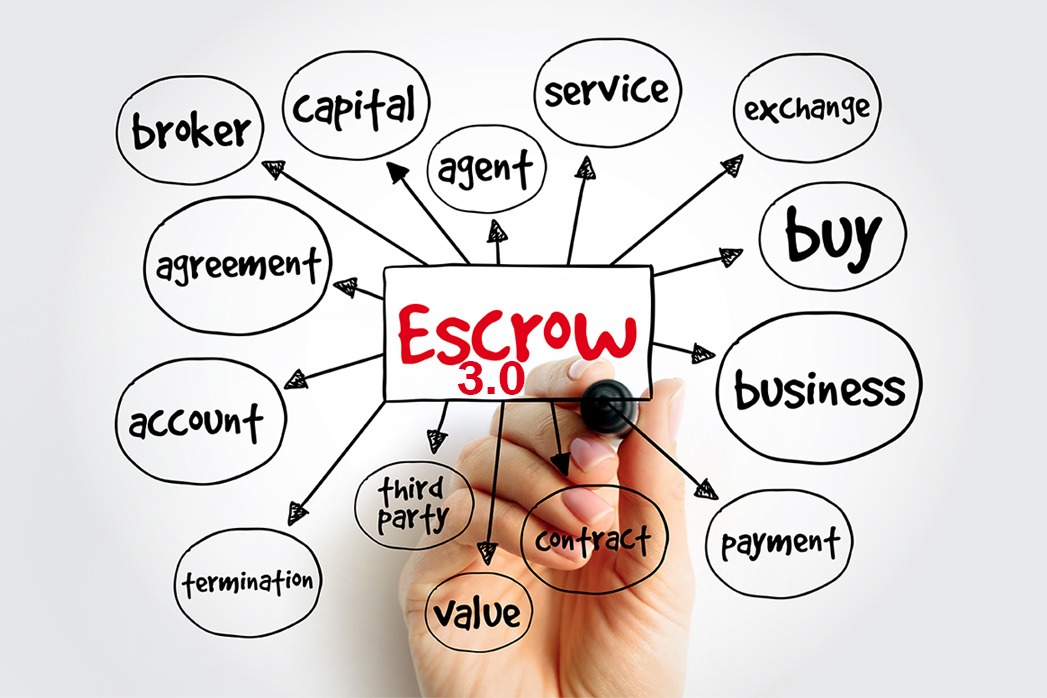
Escrow - arrangement in which a third party receives and disburses money or property for the primary transacting parties, mind map concept for presentations and reports.

Escrow 3.0: Cross-Chain Smart Contracts Without Middlemen

Escrow services have long been the backbone of secure transactions. But in an era of speed, transparency, and borderless interaction, traditional escrow systems are showing their age. Enter Escrow 3.0—a system combining cross-chain smart contracts, Chainlink oracles, and fiat API integrations to eliminate intermediaries while increasing security and efficiency.

How Escrow 3.0 Works

The innovation sits on Hash Time-Locked Contracts (HTLCs)—programmable agreements that automatically execute when predefined conditions are met.

Crypto ↔ Crypto: Two parties lock funds on their respective chains (e.g., ETH and BTC). Upon receipt of a shared secret hash, smart contracts release the funds automatically.

  • Crypto ↔ Fiat: With Chainlink oracles and Open Banking APIs, smart contracts can settle fiat payments on-chain. A freelancer can be paid in stablecoins and receive euros via SEPA, with bank confirmations verified in real time.

Learn more: Smart Contracts for Real-World Transactions.

SmarTrust: Dispute-Resistant & Cross-Chain

SmarTrust, built on the Reactive Network and powered by Reactive Smart Contracts (RSCs), enables milestone-based, recurring, or single-deliverable transactions without custodians.

Features include:

  • – Automated milestone payments upon event confirmation

  • – Dispute escalation to a decentralized adjudicator marketplace

  • – Unified execution on Polygon, Ethereum, and RSK

“By placing Reactive at the core, SmarTrust is enabling scalable trustless mechanisms for clients, freelancers, and adjudicators.” – Emilijus Pranckus, Reactive Network.

Why It Matters for Investors

Escrow 3.0 offers:

  • – Safety: Funds locked in audited smart contracts

  • – Efficiency: No delays or manual intervention

  • – Global Reach: Cross-chain and fiat settlement removes borders

  • – Market Fit: Secure, seamless, automated payments

“This isn’t just a product upgrade—it’s an entirely new financial primitive.” – DNA Crypto Labs.

The Bigger Picture

Reactive Network introduces Inversion of Control (IoC) and event-driven bright contract patterns, allowing contracts to respond across multiple chains. This means unprecedented modularity, reusability, and responsiveness—a true hallmark of decentralized systems. Read more: The Future of Event-Driven Smart Contracts.

Final Word

Escrow 3.0 isn’t just evolution—it’s reimagination. It’s the foundation for a decentralized, global digital labour market powered by automation, transparency, and trustless execution.

Whether you’re building, investing, or freelancing—the smart way forward is trustless.

Image Source: Adobe Stock

Disclaimer: This article is purely for informational purposes. It is not offered or intended to be used for legal, tax, investment or financial advice.

Read more →

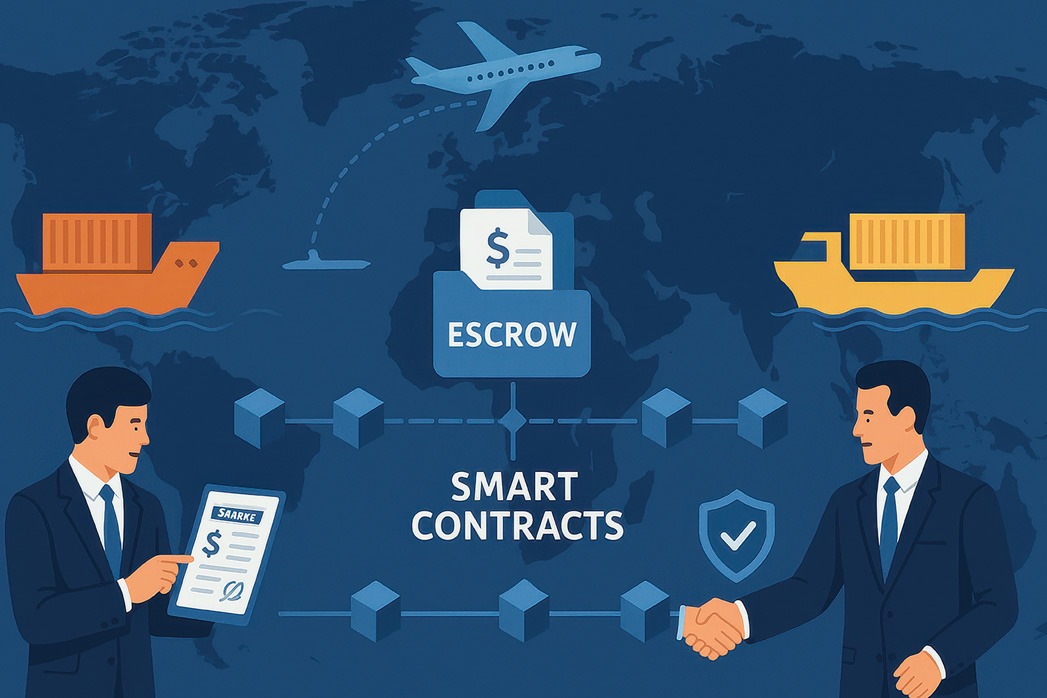
Global trade secured escrow smart contracts with blockchain technology.

The Future of Escrow: How Blockchain and Smart Contracts Will Replace Legacy Intermediaries

Escrow has long been the domain of lawyers, banks, and licensed intermediaries. For centuries, high-value transactions—such as real estate, mergers, art sales, and private capital flows—have relied on slow, expensive, and trust-based systems to settle securely.

Now, blockchain-based escrow is dismantling these barriers.

“Smart contracts transform trust from a lawyer’s word into verifiable code, turning slow settlements into programmable certainty.”
— DNA Crypto Knowledge Hub
Read more on programmable assets

From Legal Trust to Code-Based Certainty

Traditional escrow requires human oversight, cross-jurisdictional document checks, and a tolerance for settlement delays of T+2 to T+5. Each layer adds cost, friction, and the potential for error or fraud.

Blockchain-powered escrow replaces intermediaries with:

– Smart contracts for automated execution

– HTLCs (Hashed Time-Locked Contracts) for conditional, verifiable transactions

– Oracles for real-world data feeds, ensuring external events (title transfers, KYC triggers) finalise payment releases

This means transactions can now settle instantly, globally, and with reduced counterparty risk, particularly in OTC crypto, private capital markets, and cross-border asset deals.

“Code is the new custodian.” — DNA Crypto

Why Smart Escrow Beats Legacy Escrow

Legacy Escrow Smart Contract Escrow
Lawyer-dependent Automated execution
Settlement delays Instant finality
Jurisdictional friction Global, borderless
High fees Minimal on-chain costs
Human error potential Immutable, auditable

Compliance-by-Design: Lawful Automation

Automation does not mean lawlessness.
Platforms like DNA Crypto integrate:

  • – KYC APIs to verify identities before escrow activation

  • – AML monitoring for transaction integrity

  • – Banking APIs for fiat-crypto conversion tied to on-chain conditions

This compliance-by-design approach ensures that smart escrow aligns with regulatory frameworks, such as MiCA, supporting family offices, private banks, and institutional investors seeking crypto exposure with robust safeguards.

“MiCA sets the floor, not the ceiling. For elite investors, it’s only the beginning of due diligence.”
How MiCA Shapes Crypto Custody

Real Estate and High-Value Transactions: The Next Frontier

Smart escrow is a natural fit for real estate, where tokenized property and blockchain-based registries enable programmable settlement:

– Payments are released upon verification of the on-chain title transfer

– Cross-border deals finalized with instant crypto payments

– Smart contracts reduce reliance on costly intermediaries

For art, collectables, private equity secondaries, and cross-border lending, programmable escrow automates authenticity verification, delivery tracking, and payment, minimising default risk.

“Using tokenized assets as collateral turns static wealth into dynamic liquidity.”
Read more

Conclusion: Escrow, Upgraded

Escrow is evolving from trust-based intermediation to code-based, compliance-ready automation. This will define the next era of high-value transactions, from tokenized real estate to cross-border asset transfers.

For institutions and UHNWIs, smart escrow offers:

– Lower costs

– Faster settlements

– Enhanced security

– Cross-border scalability

It’s no longer a question of whether smart escrow will replace traditional models. The question is when you will integrate it into your deal flow.


Image Source:
Adobe Stock

Disclaimer: This article is purely for informational
purposes. It is not offered or intended to be used for legal, tax, Investment
or financial advice.

Read more →

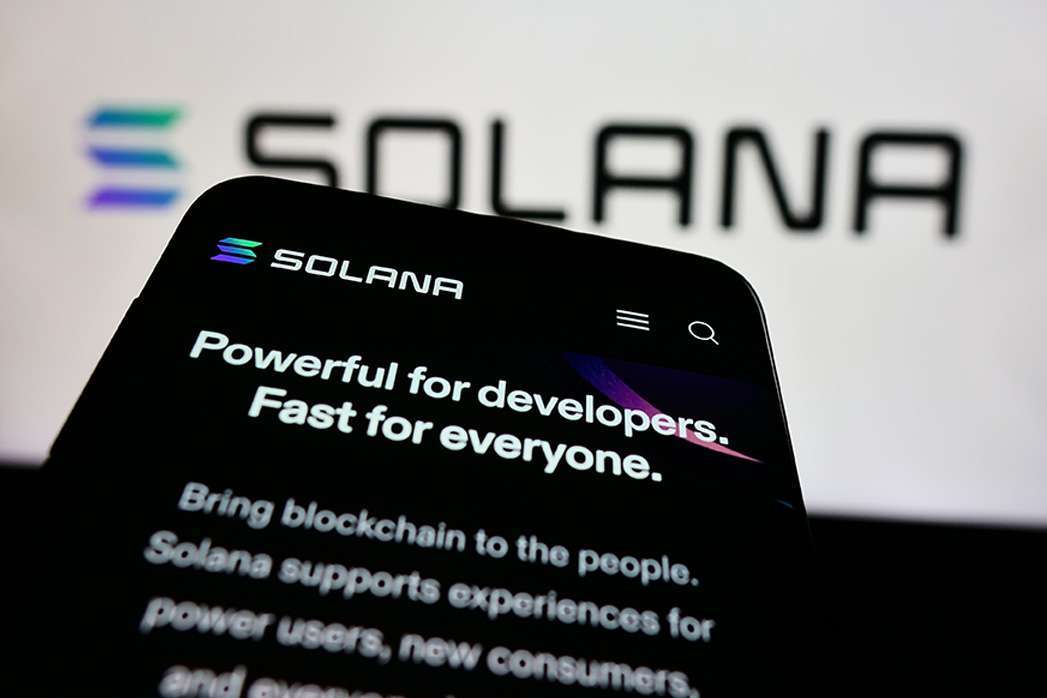
tuttgart, Germany - 08-18-2024: Smartphone with website of blockchain platform company Solana in front of business logo. Focus on top-left of phone display.

Why Solana Could Outshine Ethereum: The Smart Contract Showdown

If you’ve spent time in crypto, you’ve probably encountered the persistent debate: Solana or Ethereum?

Ethereum is the original smart contract platform, serving as the base for DeFi, NFTs, and everything related to Web3. Nonetheless, it can also be expensive, sluggish, and sometimes very exasperating to utilise during peak traffic.

Then there’s Solana—fast, cheap, and built to scale. It’s Ethereum’s younger, flashier cousin that’s here to disrupt. So, does that make Solana the future? Or is Ethereum too big to fail?

Ethereum: The OG with a Few Issues

Ethereum is the reason smart contracts exist. Launched in 2015, it gave developers the tools to build decentralized apps, revolutionising finance, gaming, and art through Blockchain.

But there’s a problem…

Ethereum transactions are slow (think 15 transactions per second slow) and expensive (gas fees that can cost more than the transaction itself). You know the struggle if you’ve ever tried to buy an NFT at peak hours.

Ethereum’s developers are fixing it with upgrades like Ethereum 2.0, which moves from proof-of-work to proof-of-stake, making transactions faster and cheaper. But progress has been slow, and while Ethereum works on getting better, Solana is already here.

Solana: Fast, Cheap, and Built for the Future

Solana debuted in 2020 with the promise of fixing everything wrong with Ethereum. It has a 65,000 transactions-per-second capacity (Ethereum’s is 15), and the transaction cost is a fraction of a cent.

Instead of using Ethereum’s traditional methods, Solana uses a system called Proof-of-History (PoH), which essentially timestamps transactions before they are processed to make processes efficient and quick.

This is a dream for developers: a blockchain that scales without costing users an arm and a leg. No wonder so many new projects are being built on Solana.

So, Why Hasn’t Solana Taken Over?

With all these advantages, you’d think Solana would be the clear winner. But Ethereum still has some significant strengths:

  • – Developers trust it: Ethereum has been around for almost ten years. It has the most significant community, developers, and money locked into its ecosystem.
  • – It’s battle-tested: Ethereum has survived massive hacks, regulatory scrutiny and market crashes. Solana? Not so much.
  • – Solana has had outages: Unlike Ethereum, which runs 24/7, Solana has had multiple network crashes, sometimes taking hours to fix. This is not great if you’re running a financial app that constantly needs to be online.

Decentralization: The Deal breaker?

One of Ethereum’s most significant selling points is decentralization. With over 600,000 validators securing the network, it’s nearly impossible for any single entity to control it.

Solana? Not so much. With around 2,000 validators, it’s way more centralised, meaning fewer people have control over the network. For some, that’s a deal breaker—it raises concerns about security and censorship.

Competition or Coexistence?

So, will Solana replace Ethereum? Probably not. But does that mean Ethereum wins? Also no. Instead of one Blockchain ruling them all, we’re likely heading toward a multi-chain future.

Ethereum will continue to dominate DeFi, high-value transactions, and established dApps. On the other hand, Solana will power things that need speed—think Blockchain gaming, high-frequency trading, and apps where low fees matter.

Both Blockchains are here to stay. The real question is: Which one will you bet on?

Image Source: Adobe Stock

Disclaimer: This article is purely for informational purposes. It is not offered or intended to be used for legal, tax, investment or financial advice.

Read more →