

Pile of Tether Cryptocurrencies.

Everyone Wants To Cash Out USDT. The Real Product May Be Your Bank Account.

“When somebody is willing to pay an extraordinary price to turn digital money into ordinary bank money, the scarce asset may not be the USDT. It may be access to the banking system.” DNA Crypto.

The Offer Sounds Almost Too Easy

There is a particular kind of proposition circulating around the digital asset market that sounds, at first, less like a scam than an unusually profitable piece of business.
Someone has USDT. Sometimes it is $100,000. Sometimes $500,000. Sometimes the number reaches into the millions.

They want pounds, euros or dollars.

They are not especially concerned about achieving the best possible exchange rate. In fact, they may be willing to surrender several percentage points just to complete the transaction. They may offer one per cent, three per cent or considerably more to the person prepared to receive the USDT and send ordinary currency to a bank account.

The offer can sound seductive because the arithmetic is so simple.
Take $1 million of USDT. Keep 3%. Send the balance in fiat.
Thirty thousand dollars for moving money from one form to another.
Before calculating the commission, however, there is a more important question to ask.
Why is somebody prepared to pay $30,000 for something legitimate exchanges and professional OTC desks routinely do for a fraction of that cost?

There can be perfectly legitimate answers. Large transactions sometimes require specialist execution. A corporate client may have banking constraints. A customer may need settlement in a particular jurisdiction or currency. Exchange limits, timing, liquidity and treasury arrangements can all make professional OTC services valuable.
But where the explanation is vague, and the premium is extraordinary, the economics themselves become information.

The person may not really be paying for foreign exchange.

They may be paying for access to a bank account they cannot safely use themselves.

USDT Is Not The Problem

It is worth getting one distinction out of the way immediately.
USDT is not inherently suspicious.

Stablecoins have become useful precisely because they solve legitimate financial problems. They allow value to move rapidly across borders, operate outside conventional banking hours and provide a relatively stable digital settlement asset in markets where Bitcoin and Ether may be too volatile for day-to-day payments.

FATF, the international standard setter for combating money laundering, makes essentially the same point. Its March 2026 report said the stability, liquidity and interoperability that make Stablecoins attractive to legitimate users also make them attractive to criminals. The report cited Chainalysis data indicating that Stablecoins accounted for 84% of identified illicit virtual-asset transaction volume in 2025. That statistic does not mean that 84% of Stablecoin transactions were illicit. It means that, within the crypto activity identified as illicit, Stablecoins had become the dominant instrument. FATF

This is an important distinction because the wrong conclusion would be that USDT itself is the scam… It is not.

The more interesting problem begins when legitimate financial technology meets people who cannot, or do not want to, explain where their money came from.

The Blockchain Is Open. The Banking System Is Not.

A person can create a wallet and receive digital assets without first persuading a bank to open an account. That is one of crypto’s defining characteristics.

Banks operate differently. They have customer identification requirements, transaction monitoring, sanctions controls, fraud systems and obligations to understand suspicious movement through their accounts.

The boundary between those two systems has therefore become enormously valuable.

On one side sits a global market in which Stablecoins can move between wallets quickly and across jurisdictions.
On the other sits the conventional financial system where pounds, euros and dollars can pay salaries, buy property, settle invoices and enter ordinary commercial life.

The bridge between them is the off-ramp.

For a legitimate customer, that bridge is simply financial infrastructure.
For somebody holding proceeds they cannot comfortably take to a regulated exchange or bank, it can be the obstacle standing between digital money and usable wealth. That is where another person’s banking relationship becomes valuable.

The Real Transaction May Be Access

Consider the economics of the unusually generous commission again.
A customer wants €500,000.
They send the equivalent in USDT and are apparently prepared to lose €15,000 simply to receive the remaining €485,000 in a bank account.

Why?

If the funds are legitimate, documented and compatible with the recipient bank’s policies, professional conversion routes exist.
If they are not, the commission looks different.
It may be compensation for somebody else accepting the compliance risk.
The bank account has something the USDT holder needs: a history, an owner, a financial institution willing to accept incoming and outgoing payments and, crucially, a name other than theirs sitting between the crypto and the eventual fiat.
The apparent FX transaction can therefore perform another function.
It adds a layer.

The USDT arrives from Wallet A. A legitimate business converts or accepts it. Fiat then leaves that business’s bank account and goes to Account B.
The person behind Wallet A can now be one transaction further removed from the bank money.
That distance can be the product.

This Is What A Money Mule Does, Even When The Mule Looks Like A Business

The phrase “money mule” often conjures up a young person allowing criminals to use a personal current account in return for a few hundred pounds.
The real market is broader.

The National Crime Agency defines money muling as moving criminal money for somebody else, including by allowing criminals to use a bank account, withdrawing cash for them or buying and selling cryptocurrency on their behalf. The purpose is to help conceal the origin of criminal funds. National Crime Agency
That definition matters because a mule does not have to look criminal.
– The account can belong to an ordinary person.
– It can also belong to a company.

Last week the FCA published the results of a major review of money-mule activity across UK financial firms. It found that firms had closed 238,396 suspected mule accounts in 2025, compared with 184,935 in 2023. The regulator also found evidence of accounts being used repeatedly and across different fraud types, suggesting organised infrastructure rather than isolated opportunism. FCA

Most of those accounts were personal accounts, but business accounts and other legal entities also appeared in the data. FCA

This is where the apparently respectable USDT conversion deal becomes dangerous.
A company doesn’t need to know it is laundering criminal money for the consequences to become serious. It can believe it is simply providing conversion services while its bank sees funds arriving and leaving in a pattern consistent with financial crime.

The customer may disappear… The banking record does not.

Professional Money Laundering Has Become A Service Industry

One reason these approaches can feel surprisingly organised is that modern money laundering increasingly operates as a service.
Criminals who generate money do not necessarily launder it themselves. Specialist networks provide the infrastructure.

Chainalysis estimates that Chinese-language money-laundering networks processed $16.1 billion in 2025, or roughly $44 million a day across more than 1,799 identified active wallets. Its analysis divides that ecosystem into several specialist businesses, including money mules, informal OTC services, brokers and cryptocurrency money-movement operations. Chainalysis

The description of informal OTC activity is particularly revealing.
Chainalysis found vendors advertising supposedly “clean funds” or “White U”, with some exchange rates carrying premiums that reflected the value of circumventing financial controls. Its analysis also found that these informal OTC operators could combine small transactions into larger amounts as funds moved towards integration into the legitimate financial system. Chainalysis

That terminology holds a useful lesson.
In a normal market, customers pay a premium for better service, faster execution or scarce liquidity.
In an illicit market, they may pay a premium for cleaner access.

That is why unusually generous economics should never be treated as free money.
The premium may be pricing a risk the recipient has not yet understood.

Sometimes They Want Your Bank Account. Sometimes They Want Your Reputation.

A functioning company offers more than an IBAN or sort code. It offers legitimacy.

If a company has been incorporated for years, has directors, invoices, a website and a banking history, payments flowing through it can look very different from payments arriving through a newly created personal account.
That makes apparently legitimate businesses attractive to people seeking to obscure financial activity.

Europol’s latest assessment of Europe’s most threatening criminal networks says organised crime increasingly exploits not only cryptocurrencies but also legal business structures to obscure activity and reinvest criminal proceeds. Europol

This means the asset being borrowed may not simply be the bank account.
It can be the company’s credibility.

A criminal counterparty gains a layer of separation.
The legitimate company gains a payment trail it may later struggle to explain.
That is an extremely poor exchange.

The Most Dangerous Deal May Begin With Real USDT

A previous article examined fake USDT, where the apparent payment itself can be counterfeit.
This is a different problem.
Here, the USDT can be completely genuine.
That can make the transaction more dangerous because the recipient checks the blockchain, confirms that real Tether has arrived and concludes that the risk has disappeared.
But authenticity answers only one question: Did real USDT arrive?
It does not answer: Where did the USDT come from?
Genuine Stablecoins can represent proceeds of fraud, ransomware, stolen funds, hacked exchanges, sanctions evasion or other criminal activity.

A Blockchain transaction can be technically perfect and economically toxic.
That is why crypto identity and KYC matter as much as transaction verification. Professional operations have to establish both the authenticity of the asset and the legitimacy of the customer and source of funds.
One without the other is not enough.

Third-Party Payments Should Change The Conversation Immediately

One of the most revealing moments often comes when settlement instructions arrive.
The person sending the USDT is not the person receiving the fiat.
Wallet A may belong to one individual, but you are asked to send euros to a company in another country.
Then the instructions change.

Part of the payment should go to one beneficiary, another portion to a second account and perhaps a final amount somewhere else.

There can be legitimate commercial structures involving agents, counterparties or corporate groups. But they need an explanation that can be documented and independently understood.
Without one, the transaction is no longer a straightforward conversion.
You are moving value between unrelated parties.
That is precisely the functionality professional laundering networks sell.
The NCA’s Operation Destabilise has exposed networks that can collect criminal money in one country and make equivalent value available elsewhere, often by swapping between cash and cryptocurrency. Its 2026 assessment says organised crime groups use these professional laundering networks to move illicit funds and evade the conventional financial sector. National Crime Agency

– No suitcase of cash needs to cross a border.
– Value simply reappears somewhere else.

A USDT-to-fiat transaction involving unrelated senders and beneficiaries can perform a surprisingly similar economic function.

The Fiat Can Be Dirty Too

Another version of the trade is easy to overlook because it seems safer.
The customer offers to send the bank money first.
Only after the fiat arrives are you expected to release USDT.
That sounds reassuring. The money is in the account before the crypto leaves.
– But what if the bank transfer came from somebody else’s compromised account?
– What if it came from a fraud victim?
– What if the person sending the fiat has no connection to the person buying the USDT?
The recipient may release irreversible digital assets and later discover the banking transaction is part of a fraud investigation.

Recent U.S. cases continue to show stolen bank and crypto funds being converted into digital assets as part of account-takeover fraud. On 28 September, federal prosecutors in Massachusetts filed a forfeiture action involving 110,270 USDT allegedly traced from a victim whose crypto account had been compromised through fraudulent messages. The allegations have not yet been adjudicated, but the case illustrates how genuine USDT can sit downstream from an entirely conventional fraud. Department of Justice
Receiving fiat first therefore does not eliminate counterparty risk.
It merely changes which side of the transaction needs explaining.

The Small Test Payment Can Be Part Of The Confidence Trick

Many large OTC approaches begin sensibly.
“Let’s do a test.”
Perhaps $10 or $100 of USDT is sent first. The recipient confirms it arrived. A small amount of fiat is returned. Everything works perfectly.
The larger transaction follows.
– A test transaction is good operational practice. But it should not be mistaken for due diligence.
– A small payment can prove that the wallets work and that the parties can technically settle with each other.
– It proves almost nothing about the economic legitimacy of the $500,000 arriving next.
In fact, a successful small transaction can become part of the social engineering. It creates familiarity. The parties have already done business. The customer behaved correctly. Nobody lost money.
The pressure to apply the same level of scrutiny to the larger trade begins to fall.
That is exactly when it should rise.

Why The Criminal Market Likes USDT

The features that make USDT useful to legitimate global commerce also help explain – its attractiveness in illicit markets.
– It is relatively stable compared with Bitcoin.
– It is liquid.
– It moves quickly.
– It operates across multiple blockchain networks.
– It can be transferred globally without requiring every movement to pass through a bank.

FATF’s 2026 report specifically highlighted stability, liquidity, interoperability and ease of cross-border transfer as characteristics that can make Stablecoins attractive to threat actors as well as legitimate users. FATF

The mistake is to conclude that those characteristics make Stablecoins criminal.
Cash also moves value. Banks can be abused. Companies can be abused.
Financial infrastructure is useful precisely because it moves money.
The important question is who is using it, why and where the value goes next.

The Off-Ramp Has Become One Of The Most Valuable Parts Of The Crypto Economy

In crypto’s earliest years, people focused on the on-ramp.
How do you persuade ordinary people to move fiat into Bitcoin?
That problem has largely been solved. Exchanges, ETFs, brokers and payment applications have created multiple routes into digital assets.
The more sensitive problem today can be the other direction.

How does value leave crypto and re-enter banking?

For legitimate investors, the answer is straightforward enough when customer identity, source of funds and banking relationships are in place.
For someone who can’t meet those requirements, the bottleneck becomes the valuable part.
This creates an uncomfortable inversion.

In a suspicious USDT-to-fiat transaction, the customer may have no shortage of crypto liquidity.
– What they lack is banking permission.
– Your account solves that problem.
– That is why the title of this article matters.
– The apparent product is currency conversion.
– The real product may be the bank account.

What Makes A Transaction Different From Normal OTC Business?

Nothing is inherently suspicious about someone wanting to sell a large amount of USDT.
Professional OTC markets exist because large clients need execution, privacy from public order books, predictable pricing and coordinated settlement.
The difference lies in the behaviour around the transaction.

A professional client should be able to explain who they are, why they own the assets, where the assets came from, why they need the transaction, who will receive the fiat and what commercial relationship exists between all parties.
A suspicious proposition often becomes weaker the more ordinary questions are asked.

  • – The commission is dramatically above normal market economics without a credible commercial reason.
  • – The customer resists KYC or source-of-funds requests despite proposing a very large transaction.
  • – USDT arrives from wallets unrelated to the customer.
  • – Fiat is requested to be sent to third parties with no obvious relationship to the sender.
  • – Settlement instructions repeatedly change.
  • – The customer wants the transaction split across multiple bank accounts, wallets or jurisdictions.
  • – Urgency increases as compliance questions increase.
  • – The customer describes assets as “clean USDT”, “white USDT” or uses similar language implying that provenance itself is a product.
  • – The customer is unusually indifferent to price while being intensely concerned about which bank account will send the fiat.

None of these factors by itself proves criminality.
Together, they can completely change the character of the transaction.

The Commission Is Not Revenue Until The Risk Is Understood

This is perhaps the easiest mistake for a small brokerage or new digital asset business to make.
– A 2% margin on a €1 million trade looks like €20,000 of revenue.
Accounting encourages the mind to see it that way.
– Compliance should interrupt the calculation.
– What is the expected return if the transaction results in the company’s bank account being restricted?
– What happens if the bank asks for customer files and the source-of-funds explanation consists of a Telegram conversation?
– What is the cost of losing access to banking?
– What happens if law enforcement freezes funds while investigating the upstream customer?
– What happens to other customers whose payments are now caught inside the same account?
– The potential loss is not limited to the principal involved in the trade.
– A financial business depends on infrastructure that is difficult to replace quickly: banking, payment rails, compliance relationships and reputation.
– A large commission can be catastrophically cheap if the customer is purchasing access to all of those things.

The UK Data Shows Why Banks Are Nervous

It is easy for crypto businesses to become frustrated with bank compliance because innocent transactions are sometimes delayed or challenged.
But the latest FCA figures explain something of the environment banks are dealing with.

The regulator found that 238,396 suspected mule accounts were offboarded in 2025 across the firms it surveyed. Nearly half of suspected mule accounts in the relevant tenure data had been closed within their first year, while the cases examined by the FCA showed criminals moving fraud proceeds through chains of accounts before cashing out. FCA

Banks therefore do not see a USDT-to-fiat transaction in isolation.

They see it against a wider pattern of professional networks deliberately searching for accounts capable of moving value through the legitimate financial system.
This creates friction for good businesses.

But pretending the underlying problem does not exist will not reduce that friction.
Better controls might.

The Global Laundering Market Is Becoming More Efficient

There is another reason these approaches are unlikely to disappear.
Crime has specialised.

People conducting fraud, cybercrime, or drug trafficking do not necessarily need to build their own international payment infrastructure. Professional networks can provide it.

The NCA says Russian-speaking laundering networks investigated under Operation Destabilise serve numerous organised crime groups and can broker cross-border transactions, converting criminal cash into cryptocurrency and moving value through structures designed to bypass the traditional financial sector. The agency says the investigation has resulted in 129 arrests and more than £25 million seized in cash and cryptocurrency in the UK, alongside further overseas seizures. National Crime Agency

Chainalysis describes another ecosystem operating through Chinese-language networks and informal OTC services. Chainalysis

The networks are different.
The commercial logic is strikingly similar.
– Someone has value in one form or place.
– Someone else needs equivalent value somewhere else.
The laundering network connects them and charges for solving the problem.
Viewed this way, suspicious USDT-to-fiat offers are not necessarily amateur crypto scams.
They can resemble an alternative global settlement market.
That is why they should be taken seriously.

The Blockchain Can Help, But It Cannot Do Compliance For You

One advantage of digital assets is that transaction history can often be analysed in ways that would be impossible with physical cash.
Blockchain analytics can identify exposure to known hacks, sanctioned entities, fraud services, high-risk exchanges and other suspicious activity.
That is valuable.
But it can create false confidence if treated as the entire compliance framework.
A wallet can have no immediately obvious connection to an identified illicit address and still belong to somebody misrepresenting the purpose of the transaction.
– Funds can pass through multiple wallets.
– New addresses can be created instantly.
– The bank beneficiary may be unrelated to the wallet owner.
– The commercial story may simply make no sense.
– On-chain analytics therefore answers part of the question.
– Customer due diligence answers another.
– Transaction behaviour answers another.
– Banking information answers another.

The judgement sits where those pieces meet.
This is why digital asset infrastructure must include trust and compliance, rather than treating them as obstacles bolted on after the technology is built.

Real OTC Business Should Survive Basic Questions

A useful principle is that a legitimate high-value financial transaction should usually become clearer as documentation accumulates.
– Who is the customer?
– Where did the wealth come from?
– Where did these particular assets come from?
– Why is USDT being sold?
– What is the relationship between the wallet owner and the fiat beneficiary?
– Why has this provider been selected?
– Why is the customer willing to pay the quoted price?
– What is the underlying commercial purpose?

The answers may be complex.
Complexity is normal in international finance.
Evasion is different.

If every attempt to understand the transaction produces another wallet, another intermediary, another beneficiary and another explanation, the complexity itself becomes relevant.
The goal of due diligence is not to produce enough paperwork to justify doing the trade. It is to understand the trade.

The Capital Behaviour Shift

A broader financial lesson here reaches beyond crime.
Digital assets have made moving value more open.
Banking remains permissioned.

That difference creates an economic price for crossing from one system into the other.

Most of the time, that price is an ordinary combination of fees, spread, compliance and operational cost.
Sometimes it becomes much larger.

When somebody is prepared to sacrifice several percentage points merely to turn a highly liquid Stablecoin into bank money, the premium can reveal something about where scarcity really sits.
– The Stablecoin may be abundant.
– Compliant banking access is not.
– This is the capital-behaviour shift worth understanding.
– The crypto industry spent years assuming liquidity was the scarce resource.
– In parts of the off-ramp market, legitimacy is scarcer than liquidity.

Why This Matters For The Future Of Stablecoins

None of this diminishes the legitimate case for Stablecoins.
In fact, the opposite is true.
Stablecoins are becoming significant enough that they increasingly sit inside the same financial-crime problems banks and payment networks have dealt with for decades.

FATF’s concern is not that Stablecoins have no legitimate purpose. Its March report explicitly recognises their legitimate utility while calling for stronger controls around illicit use, particularly where unhosted wallets and cross-border transactions make oversight difficult. FATF

The more Stablecoins move into payments, treasury management and global settlement, the less sustainable it becomes to divide the world into “crypto” and “real finance”.

It is all finance once somebody wants dollars in a bank account.

That is where regulation, identity, transaction monitoring and ownership become unavoidable.
The market that understands this early will build stronger infrastructure.
The market that treats every USDT balance as automatically good money will eventually learn the difference the expensive way.

What A Professional Business Should Refuse To Become

A simple line runs through all of this.
A crypto company can legitimately provide conversion.
– It should not become an unexplained bridge between anonymous digital assets and unrelated bank accounts.
– It can provide execution.
– It should not sell its banking relationship.
– It can take commercial risk.
– It should not accept somebody else’s compliance risk simply because the fee looks attractive.

That distinction is fundamental.
The client should be buying a regulated or professionally controlled service.
They should not be buying access to the company’s identity.

Conclusion

Everyone seems to want to cash out USDT.
Most of those transactions may be entirely legitimate. Stablecoins have become an important part of global digital finance, and businesses need credible routes between digital assets and fiat currency.

But unusually generous offers deserve unusually careful questions.
– Why does the customer need you?
– Why are they willing to pay so much?
– Where did the USDT come from?
– Why can they not use an established exchange or OTC provider?
– Who owns the destination bank account?
– Why is the person receiving the fiat different from the person supplying the crypto?
– Why does the transaction become more complicated each time a compliance question is asked?

In crypto, there’s a tendency to think the valuable thing is always the asset being transferred. Sometimes it is not.
– The USDT may be genuine.
– The liquidity may be real.
– The transaction may settle perfectly on-chain.

What the customer may actually need is the thing sitting on the other side: a functioning company, a trusted banking relationship and somebody else willing to place their name between digital money and the financial system.

That is why the extraordinary commission should not be the first number you calculate.
The first calculation is the risk you are being paid to inherit.
Because sometimes the USDT is not the product.
Your bank account is.

Relevant DNACrypto Articles


Image Source: Adobe Stock

Disclaimer: This article is for informational purposes only and does not constitute financial, legal, compliance or investment advice.

Read more →

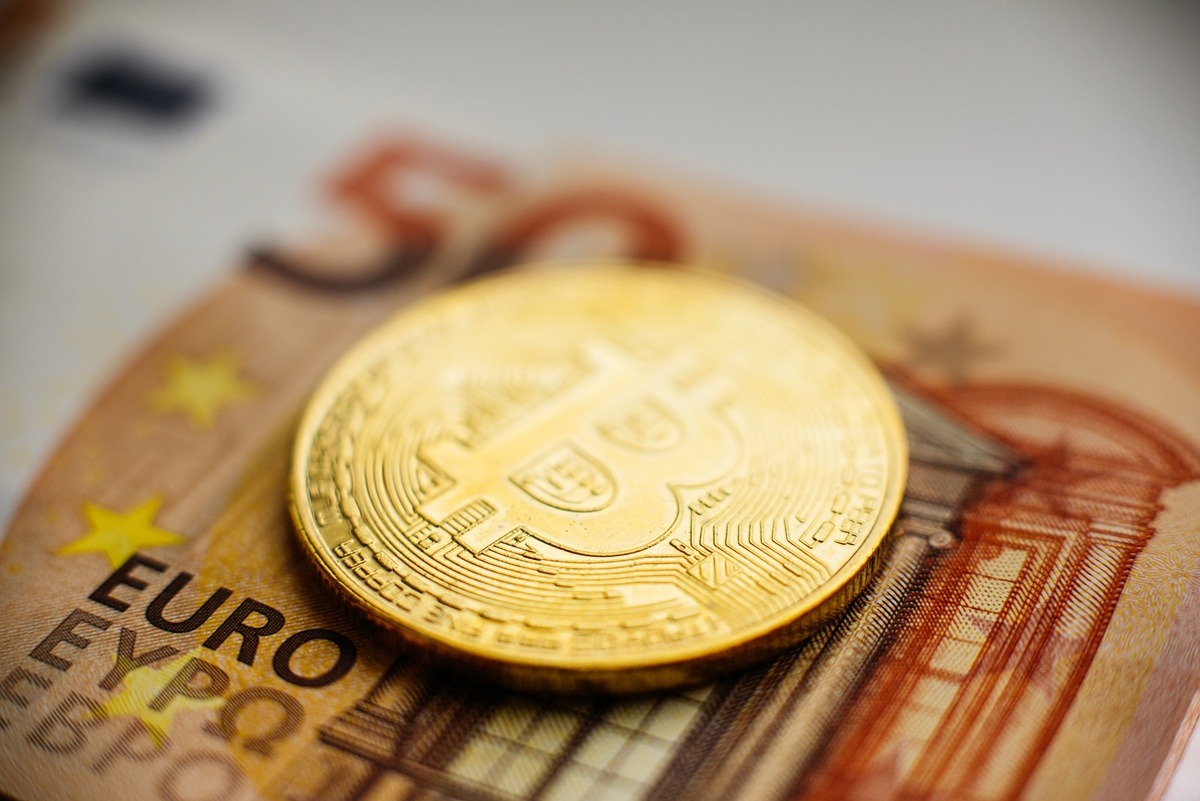
Bitcoin, Currency, digital, finance, economy. Golden bitcoin coin on Euro close up

The ECB Has Entered Tokenised Finance. Stablecoins Now Have To Prove Their Edge

“Stablecoins became important because traditional money could not move at the speed of digital assets. Central banks are now beginning to close that gap.” DNA Crypto.

The Most Important Crypto Story This Week Did Not Come From Crypto

On Monday, one of the world’s most conservative financial institutions quietly moved into territory that, not long ago, would have been described almost entirely in the language of crypto.

The Eurosystem launched Pontes, a new settlement service that allows transactions in tokenised assets to be settled in central bank money. The first participants include some of Europe’s largest financial institutions, among them Deutsche Bank, Santander, Société Générale and the European Investment Bank, alongside market infrastructure providers including Clearstream. The ECB says the service is the first step in a wider programme to make central bank money usable inside an increasingly tokenised financial system.

There were no dramatic claims about replacing finance. No token launch. No promise to democratise every asset class.

That may be precisely why the development matters.

For years, the private digital asset industry has argued that conventional money is badly suited to markets that operate continuously, move across networks and increasingly depend on programmable settlement. Stablecoins became useful because they filled that gap. They allowed something resembling dollars or euros to travel through digital markets without waiting for the banking system to catch up.

Europe has now begun building an institutional answer of its own.

Stablecoins are not disappearing as a result. But their argument has just become more difficult.

Stablecoins Built A Business Around A Missing Piece Of Infrastructure

The remarkable rise of Stablecoins is often explained through crypto trading, but that understates what made them important.

Digital assets could move around the clock. Traditional money generally could not. A token might travel across a blockchain in seconds, while the cash needed to complete the other side of the transaction could still depend on banking hours, correspondent relationships and conventional payment infrastructure.

Stablecoins solved enough of that mismatch to become indispensable.

They created a form of private money that could remain inside digital markets, move between counterparties and support settlement without every transaction having to return to the banking system. Over time, the use case expanded into cross-border payments, treasury operations, working capital and digital commerce.

That is why DNACrypto has consistently treated Stablecoins as financial infrastructure, rather than simply another crypto asset.

But a market built around a missing piece of infrastructure changes when the infrastructure begins to arrive.

That is what Pontes represents.

This Is Not The Retail Digital Euro

An important distinction to make before the story runs away with itself.

Pontes is not the retail digital euro that has attracted years of debate about consumer payments, privacy and the future of cash. The ECB has said separately that it would only decide whether to issue a retail digital euro once the necessary legislation is in place. A pilot process is still being prepared.

Pontes belongs to the wholesale financial system.

Its purpose is to connect distributed ledger platforms used by market participants with the Eurosystem’s existing TARGET infrastructure, allowing tokenised transactions to settle in central bank money.

That may sound technical, but the economic question is straightforward.

When two institutions exchange a tokenised bond, fund interest or other financial asset, what money should sit on the other side of the transaction?

Until now, much of the digital asset market has answered with private money.

The ECB is offering another answer.

Settlement Is Where Tokenisation Becomes Real

The Tokenisation industry has spent years talking about assets. The harder issue has always been the money.

It is relatively easy to demonstrate that a security, fund unit or Real Asset can be represented digitally. The difficulty begins when someone actually wants to buy it. A credible market needs the asset and the payment to move with confidence, preferably without creating unnecessary credit, liquidity or settlement risk between the two sides.

This is one reason tokenised deposits and Stablecoins have become such an important institutional debate.

The ECB has been explicit about the problem. Its earlier work found strong demand from market participants for a risk-free settlement asset as Tokenisation develops. Pontes emerged partly from those trials, which involved transactions worth about €1.6bn across nine jurisdictions.

The implication is significant.

Tokenisation does not become an institutional market merely because the asset is on a blockchain. It becomes a market when ownership, payment and settlement can operate together under conditions large institutions are prepared to trust.

Central bank money has now entered that equation.

The ECB Is Not Merely Watching

What makes this more interesting is that the ECB intends to learn from the market as a participant, not simply as the institution supervising the plumbing.

On the same day Pontes launched, the ECB announced preparations to invest a small portion of its own funds in tokenised securities. The initial focus will be euro-denominated public-sector and European supranational securities, with transactions settled through Pontes in central bank money.

The sums involved are not the point.

The symbolism is.

Central banks are usually associated with caution for good reason. Their job is not to chase financial fashions. When one begins building operational knowledge around tokenised securities, transaction settlement and distributed ledger infrastructure, the question shifts from whether Tokenisation will enter mainstream finance to what form that integration will take.

That is a much more mature conversation than the industry was having even a few years ago.

Stablecoins Now Need A Better Argument Than Speed

For private Stablecoins, this does not amount to an obituary.

It does, however, weaken one of the easiest arguments in their favour.

If central bank money can participate in tokenised wholesale markets, Stablecoins can no longer rely on the proposition that only private digital money can settle digital assets efficiently.

Their future case will need to be broader.

Stablecoins can operate beyond the boundaries of a single wholesale market. They can move through public blockchain networks, support international commerce, reach businesses that do not participate directly in central bank settlement systems and interact with applications far beyond traditional securities infrastructure.

Those advantages matter.

The harder question is whether they remain sufficiently valuable once regulated banks and financial market infrastructures can access digital central bank settlement for the transactions where settlement risk matters most.

That is where the competition becomes interesting.

The Contest Is Not Really Public Money Against Private Money

It would be tempting to turn this into a simple contest between central banks and Stablecoin issuers.

The ECB itself does not describe the future that way.

Its officials have said that private settlement assets will still have a role in a tokenised European financial system, including tokenised commercial bank deposits and euro-denominated Stablecoins. The central bank argues that those forms of private money should operate around a trusted public anchor rather than replacing it.

That is a more plausible outcome.

Today’s financial system already operates through layers of money. Consumers mostly use commercial bank money even though central bank money ultimately anchors the system. Banks create deposits, payment companies provide interfaces, and central banks provide the final settlement foundation beneath them.

Tokenised finance may develop similarly.

Central bank money could settle the highest-trust institutional transactions. Tokenised deposits could serve banking relationships. Stablecoins could dominate areas where portability, cross-border availability and open network access matter more.

Rather than one winner, the future may contain several kinds of money competing for different jobs.

That Competition Could Be Good For Stablecoins

Another way to look at the ECB’s arrival is this:

Competition may force the Stablecoin market to become better.

The first generation of Stablecoins succeeded largely because they were useful. Reserve structures, governance, redemption arrangements and legal rights varied considerably, but the product solved a problem the market urgently had.

That is no longer enough.

As public institutions, regulated banks and payments companies move deeper into digital settlement, private issuers will have to compete on the quality of the money they create. Reserve quality, redemption, governance, interoperability and legal certainty become commercial features rather than compliance footnotes.

This is the argument behind Stablecoins becoming a test of trust.

A digital dollar or euro is only useful for as long as counterparties believe the promise behind it.

In a market where central bank money can also move through tokenised infrastructure, that promise becomes easier to compare.

The Real Prize Is Atomic Settlement

Much of the economic value sits in a phrase that rarely makes headlines: delivery versus payment.

A financial transaction carries settlement risk when one party delivers the asset before receiving the money, or the money moves before the asset does. Traditional market infrastructure has developed elaborate systems to manage that risk.

Tokenised markets make it possible for both sides to move together.

Project Agorá, a collaboration involving major central banks and more than 40 financial institutions, has already demonstrated atomic cross-border settlement using tokenised central bank reserves and tokenised commercial bank deposits. In practical terms, asset and payment legs can be designed to complete together rather than relying on separate processes.

This may turn out to be far more economically important than the fact that the transaction happens on a blockchain.

The value is not the spectacle of Tokenisation.

It is reducing the amount of time during which capital is waiting, exposed or trapped between systems.

That is why settlement speed and interoperability increasingly belong at the centre of the digital finance discussion.

This Is A Liquidity Story Before It Is A Technology Story

A faster settlement system sounds like an operational improvement. For institutions, it can become a balance-sheet question.

Capital tied up waiting for settlement cannot be used elsewhere. Collateral sitting in one system may be difficult to mobilise into another. Reconciliation between platforms creates cost and uncertainty. The more fragmented financial infrastructure becomes, the more liquidity institutions may need to operate safely across it.

Tokenisation has the potential to reduce some of that friction, but only if the money moves as reliably as the assets.

Pontes is therefore best understood as part of a liquidity architecture.

The ECB is trying to preserve central bank money as the settlement anchor while financial assets increasingly move onto new infrastructure. Its wider Appia project is intended to produce a blueprint for a more integrated European tokenised financial ecosystem by 2028.

For investors, that matters because the future value of digital finance may lie less in faster speculative trading and more in reducing the capital trapped between institutions.

That is a much larger market.

The Banks Are Not Waiting For A Crypto Revolution

One of the misconceptions surrounding Tokenisation is that traditional finance must either resist blockchain technology or be replaced by it.

The market is doing something more mundane.

It is absorbing the useful parts.

J.P. Morgan devoted its latest institutional markets discussion to why Tokenisation now feels different from a few years ago, with senior executives from its custody and Kinexys businesses discussing the growing convergence between securities services and blockchain infrastructure.

DTCC has gone further. This month, Ondo became the first Tokenisation company to join Fund/SERV, DTCC’s established processing and distribution network, which handles more than 85% of U.S. mutual fund transaction activity.

These are not signs that traditional finance is surrendering to crypto.

They are signs that the distinction between traditional and digital infrastructure is becoming less useful.

The future market is likely to contain old institutions operating new rails.

Europe Is Also Making A Sovereignty Bet

Pontes has a strategic dimension that should not be ignored.

Europe is not building digital settlement infrastructure in a geopolitical vacuum. Dollar-denominated Stablecoins dominate much of the private digital money market, while many of the world’s largest technology and payment companies are American.

ECB officials have repeatedly linked their digital finance strategy to Europe’s financial autonomy. The argument is that if tokenised European markets depend excessively on foreign-currency settlement assets or infrastructure controlled elsewhere, the region risks importing a new form of financial dependence into the next generation of markets.

This does not make Stablecoins undesirable.

It makes the denomination and governance of Stablecoins strategically important.

A euro Stablecoin issued within European regulation is a different proposition from a market in which virtually all digital settlement eventually depends on dollar-denominated private money.

Tokenisation has therefore become part of a wider argument about who controls the rails beneath capital.

That question is unlikely to become less important.

The Dollar Stablecoin Advantage Is Still Enormous

Europe’s institutional strategy should not be mistaken for an easy victory over private money.

Stablecoins have something central bank infrastructure does not immediately replicate: existing network effects.

Large dollar Stablecoins already move across exchanges, wallets, payment applications, DeFi protocols and international commercial networks. They are familiar to digital asset users and can cross borders without every participant being a direct member of a wholesale central bank system.

That reach matters.

Money becomes more useful when more counterparties accept it.

This is one reason Stablecoin infrastructure may continue growing even as central banks modernise their own settlement rails. Stablecoins do not necessarily need to replace central bank money to remain important. They need to remain more useful than the alternatives in the markets they serve.

The real competition will therefore be over distribution, interoperability and trust.

Not ideology.

The Stablecoin Market Is About To Become More Institutional

The same transition is already visible in the UK.

The Bank of England and FCA are developing a joint framework for Stablecoins that become significant in payments. At the same time, the Bank has set out rules intended to allow regulated sterling systemic Stablecoins to operate from 2027. The UK framework is explicitly focused on redemption, reserve quality and maintaining confidence as private digital money scales.

This is the direction of travel across major markets.

Stablecoins are slowly leaving the category of unusual crypto instruments and entering the much more demanding category of money infrastructure.

That transition changes what investors and businesses should care about.

The number of tokens issued matters less than what stands behind them. Yield matters less if redemption fails. Speed matters less if counterparties do not trust the issuer. A network is only valuable if the money moving through it remains money when markets come under stress.

That is the point at which Stablecoin analysis stops being about crypto and becomes about banking.

Tokenised Assets Now Need To Answer A Second Question

The arrival of public settlement infrastructure also changes the Tokenisation conversation.

For years, issuers have focused on the asset side: can a fund, bond, property interest or commodity be represented digitally?

The market now has to ask a second question.

What money settles it?

That is not a minor operational issue. The settlement asset influences counterparty risk, liquidity, jurisdiction and ultimately whether institutional investors are comfortable using the market.

A tokenised security settled in central bank money is economically different from one settled using an opaque private instrument whose reserves and redemption rights are uncertain.

This is why regulated Tokenisation infrastructure will become more important as the market matures.

The token may be identical.

The trust architecture around the transaction is not.

The Winners May Be The Systems That Connect Everything

Digital finance tempts us to look for a single winning form of money.

That is probably the wrong question.

The more valuable businesses may be those that make several forms of money interoperable.

Imagine a market in which tokenised securities settle in central bank money when institutions require finality, tokenised bank deposits serve corporate clients inside banking networks. Stablecoins move liquidity across borders and public blockchain infrastructure.

The problem then becomes connection.

Can value move between those systems without creating delay, trapped liquidity or unnecessary counterparty exposure?

This is where the financial system becoming a network moves from metaphor to practical market design.

The future is unlikely to be one blockchain replacing banking.

It is more likely to be several forms of regulated and private money moving across increasingly connected infrastructure.

What Should The Market Watch Now?

The launch of Pontes is the beginning, not the end. The more revealing period will come as institutions begin using the infrastructure and Europe decides how far it wants Tokenisation to move into mainstream financial markets.

  • – Whether banks begin settling meaningful volumes of tokenised securities through Pontes
  • – Whether euro Stablecoins develop alongside central bank settlement rather than being crowded out by it
  • – Whether tokenised bank deposits emerge as the preferred private settlement instrument for regulated institutions
  • – Whether cross-border interoperability improves between European infrastructure and public blockchain markets
  • – Whether central bank settlement makes institutions more willing to issue and hold tokenised securities
  • – Whether Stablecoin issuers compete increasingly on governance, redemption and distribution rather than simply transaction speed

Those questions will tell us far more about the future of digital money than another debate about which technology is theoretically superior.

The Capital Behaviour Shift

The most important consequence may be psychological.

Institutional capital has always treated settlement differently from speculation. Investors can tolerate risk in the asset because they chose to take it. They are much less enthusiastic about taking unnecessary risk in the money used to complete the transaction.

That is why central bank money matters.

If institutions become confident that tokenised assets can settle against a form of money they already regard as the safest settlement asset available, Tokenisation becomes easier to approve internally. The technology itself has not suddenly become more valuable. The risk around using it has become easier to explain.

This is the capital behaviour shift.

Adoption may accelerate not when investors become more enthusiastic about blockchain, but when the infrastructure gives them fewer reasons to say no.

The Stablecoin Question Has Changed

For years, the Stablecoin question was whether private digital money could become credible enough to interact with the conventional financial system.

That is no longer the only question.

The conventional financial system is now becoming more digital itself.

The next test is therefore whether Stablecoins can remain useful when central bank money, tokenised deposits and regulated settlement infrastructure begin competing for the same financial activity.

The strongest Stablecoins probably will.

They already possess advantages in portability, open-network reach and global distribution that institutional settlement systems are not designed to replace.

The weaker ones may discover that being digital was never enough.

Conclusion

The ECB has entered tokenised finance, but the important story is not that a central bank has discovered blockchain.

It is that one of the biggest structural advantages enjoyed by private digital money is beginning to narrow.

Stablecoins grew because digital markets needed money that could move with them. Pontes shows that central banks have understood the problem and are beginning to adapt their own infrastructure rather than leaving the field entirely to private issuers.

That does not mean Stablecoins lose.

It means they now have to prove what they are actually better at.

Some will compete through global reach. Others through open networks, cross-border payments or commercial integration. Tokenised bank deposits may dominate elsewhere. Central bank money will remain difficult to beat wherever institutions care most about final settlement and credit risk.

The future of digital money may therefore be less revolutionary than either side once imagined.

Public money is becoming more programmable.

Private money is becoming more regulated.

Tokenised assets are moving closer to mainstream finance.

And the real contest is shifting away from who can create the most interesting token towards something far more consequential: which form of money can move capital most safely, efficiently and credibly through the financial system that comes next.

Relevant DNACrypto Articles

The internal links above are taken from the current DNACrypto article bank.

Image Source: Envato Stock

Disclaimer: This article is for informational purposes only and does not constitute financial, legal, or investment advice.

Read more →

Global networking and international communication. The world map is a symbol of the global network—elements of this image furnished by NASA.

The Financial System Is Becoming a Network

“Financial systems are no longer defined only by institutions. Increasingly, they are defined by networks.” DNA Crypto.

The Structure of Finance Is Quietly Changing

For decades, the global financial system operated through relatively fixed structures. Banks controlled settlement, transactions moved within restricted operating hours, and capital flowed through highly centralised networks tied to national financial infrastructure.

That model is beginning to evolve.

Digital finance is introducing systems where value moves:

  • – Continuously
  • – Globally
  • – Digitally
  • – With fewer geographic limitations

This transition is reshaping how capital behaves, how liquidity flows and how ownership functions across markets.

The financial system is gradually becoming a network rather than a collection of isolated institutions.

Money Is Becoming Programmable

One of the most significant changes within digital finance is that money itself is becoming increasingly programmable.

Historically, financial transactions relied heavily on manual systems, layered intermediaries, and delayed-settlement infrastructure. Blockchain-based systems are changing this dynamic by enabling:

  • – Real-time settlement
  • – Automated transfer mechanisms
  • – Continuous market operation
  • – Cross-border financial interaction

As explored in Stablecoins working capital infrastructure, digital settlement layers are beginning to redefine how liquidity moves globally.

Bitcoin Introduced a Parallel Monetary Network

Bitcoin’s significance increasingly extends beyond price appreciation.

At its core, Bitcoin introduced the concept of a decentralised monetary network that operates independently of traditional banking systems.

This created an infrastructure where:

  • – Ownership can remain independent
  • – Settlement operates continuously
  • – Liquidity moves globally
  • – Access is not tied entirely to national banking structures

As explored in Bitcoin as financial infrastructure, Bitcoin increasingly functions as a digital financial layer rather than simply a speculative asset.

Stablecoins Are Reshaping Capital Movement

Stablecoins are becoming increasingly important because they combine the speed of digital settlement with price-stability mechanisms linked to fiat currencies.

This allows capital to move across markets with:

  • – Reduced settlement friction
  • – Faster transaction speed
  • – Continuous availability
  • – Increased global accessibility

As explored in Stablecoins are becoming the infrastructure of finance, digital settlement infrastructure is increasingly influencing how businesses, investors and institutions manage liquidity.

Tokenisation Connects Real Assets to Digital Infrastructure

Tokenisation is expanding this transition by connecting real-world assets directly to digital financial networks.

Historically, ownership of assets such as property, private investments and alternative assets often involved:

  • – High entry barriers
  • – Operational inefficiencies
  • – Geographic limitations
  • – Slow settlement processes

Tokenisation introduces infrastructure that can improve accessibility and ownership flexibility while integrating real assets into global digital markets.

As explored in real-world asset Tokenisation, this evolution is beginning to reshape how participation in investment markets functions.

Liquidity Is Becoming Continuous

Traditional finance largely evolved around fixed operating schedules and restricted settlement windows.

Digital networks operate differently.

Increasingly, liquidity can move:

  • – Across jurisdictions
  • – Outside banking hours
  • – Through decentralised infrastructure
  • – Without traditional settlement delays

As explored in the context of market price liquidity, liquidity itself is becoming a defining characteristic of modern financial infrastructure.

The Psychology of Finance Is Changing

This transition is not only technological.

It is behavioural.

Investors, institutions and businesses are gradually adapting to systems where:

  • – Ownership becomes more direct
  • – Capital becomes more mobile
  • – Markets operate continuously
  • – Financial participation becomes increasingly global

This changes how investors evaluate:

  • – Risk
  • – Liquidity
  • – Access
  • – Long-term financial resilience

Where DNA Crypto Sits

DNA Crypto operates within this evolving environment by supporting access to digital assets, liquidity infrastructure and Tokenisation frameworks through regulated onboarding and structured participation systems.

This positioning reflects a broader market transition in which finance increasingly operates through connected digital networks rather than isolated financial silos.

The Direction Of Travel

The financial system is not disappearing.

It is evolving.

Increasingly, the future of finance appears likely to operate through interconnected digital infrastructure where capital moves more continuously, ownership becomes more flexible and financial participation becomes more globally accessible.

This transition is still in its early stages.

But the direction of travel is becoming increasingly clear.

Conclusion

The financial system is becoming a network because digital infrastructure is changing how capital moves, how ownership functions and how liquidity operates globally.

Bitcoin, stablecoins, and Tokenisation are not isolated trends.

They are interconnected components of a broader transformation in financial infrastructure itself.

The next phase of finance may not simply digitise existing systems.

It may fundamentally reshape how the system operates altogether.

Relevant DNACrypto Articles

Image Source: Adobe Stock

Disclaimer: This article is for informational purposes only and does not constitute financial, legal, or investment advice.

Register today at DNACrypto.co

Read more →

A glowing wallet displays currency symbols in vibrant colours against a dark, starry background.

Stablecoins Are the Hidden Infrastructure of Finance

“Stablecoins do not replace money. They redefine how it moves.” DNA Crypto.

The Misunderstood Role of Stablecoins

Stablecoins are often described as a supporting tool within crypto markets, primarily used for trading, hedging or short-term capital management. This framing is convenient, but it is increasingly inaccurate.

Stablecoins are not a feature of the system.

They are becoming the system.

What appears to be a simple digital representation of fiat currency is, in reality, a restructuring of how money moves. The distinction matters because infrastructure is rarely recognised while it is being built, only once it becomes essential.

From Trading Tool to Financial Backbone

In their early phase, stablecoins solved a practical problem by allowing traders to move between volatile assets without relying on traditional banking rails. This provided speed and flexibility, particularly in markets that operate continuously.

However, their role has expanded beyond trading.

Stablecoins now facilitate payments, settlement, liquidity provisioning and cross-border transactions. They operate continuously, without the limitations imposed by banking hours or geographic constraints.

As explored in the stablecoins overview, this evolution reflects a deeper transition from financial products to financial infrastructure.

The market is not experimenting with stablecoins.

It is beginning to depend on them.

Why Traditional Money Rails Cannot Compete

Traditional financial systems rely on layered infrastructure involving banks, payment processors and clearing networks. These layers introduce friction, delay and cost, even in well-developed markets.

Stablecoins operate on fundamentally different rails.

Transactions can settle directly between participants, without requiring multiple intermediaries. This reduces complexity and allows capital to move with greater speed and transparency.

As outlined in crypto payments infrastructure, this is not a marginal improvement. It is a structural shift.

The uncomfortable reality for traditional systems is that efficiency is no longer optional. Once a faster rail exists, capital will eventually migrate to it.

Liquidity Is the Real Story

The term “stablecoin” emphasises price stability, but this is not what defines their importance. Stability is expected. Liquidity is what matters.

Stablecoins enable capital to move quickly across markets, assets and jurisdictions. They function as working capital within digital systems, supporting trading, lending and payments simultaneously.

As explored in stablecoins as working capital, this liquidity layer is what allows digital markets to function at scale.

Without stablecoins, crypto markets slow down.

With them, capital flows.

Regulation Is Not Slowing This Down

A common assumption is that regulation will limit the growth of stablecoins. In reality, it is likely to accelerate their adoption.

Frameworks such as MiCA are introducing standards around reserves, governance and transparency. This reduces uncertainty and allows institutions to engage with greater confidence.

As outlined in MiCA and stablecoins, regulated stablecoins are not weaker versions of the original concept. They are stronger, because they are integrated into the financial system.

Regulation does not remove infrastructure.

It legitimises it.

Stablecoins and Banks Are Not Enemies

Stablecoins are often framed as a direct challenge to traditional banking systems. This interpretation is overly simplistic.

Banks remain central to fiat issuance, custody and compliance. Stablecoins extend this system by providing more efficient rails for capital movement.

This creates a hybrid structure rather than a replacement model.

As explored in Stablecoins in Europe, the integration between traditional finance and digital infrastructure is already taking shape.

The future is not a battle between systems.

It is a convergence.

Bitcoin and Stablecoins Serve Different Functions

It is increasingly important to separate the roles of different digital assets within the financial system.

Stablecoins facilitate movement… Bitcoin anchors value.

As outlined in Bitcoin versus Stablecoins, these functions are complementary rather than competitive.

One enables capital to flow. The other provides a long-term reference point for value.

Confusing the two leads to misunderstanding both.

Where DNA Crypto Sits

DNA Crypto operates within this evolving structure by enabling clients to move capital efficiently between fiat systems and digital assets.

This includes:

  • – Facilitating fiat-to-crypto transactions
  • – Enabling Stablecoin-based settlement
  • – Providing structured execution aligned with regulatory frameworks

This positioning reflects a broader market reality.

Access alone is no longer enough.

Movement is what matters.

The Direction Of Travel

Stablecoins will continue to expand beyond crypto markets into payments, corporate treasury and cross-border settlement. As adoption increases, their role as infrastructure will become more visible.

At the same time, regulatory clarity will bring them further into the financial system.

The transition will not be sudden.

But it will be decisive.

Conclusion

Stablecoins are not a niche product within digital markets.

They are the rails that allow capital to move efficiently across systems.

They do not replace money.

They redefine how it operates.

And over time, infrastructure is what determines which systems scale.

Relevant DNACrypto Articles

Image Source: Adobe Stock

Disclaimer: This article is for informational purposes only and does not constitute financial, legal, or investment advice.

Register today at DNACrypto.co

Read more →

Bitcoin physical coin laying on top of 100 Euro bills.

Fiat On-Ramps Are Crypto’s Weakest Link

“The hardest part of digital finance is not moving crypto. It is moving money into it.” DNA Crypto.

The Illusion of Seamless Crypto

Crypto markets present themselves as fast, efficient and always accessible.

Transactions settle quickly, liquidity is visible, and systems operate continuously without traditional market hours. From a digital perspective, the infrastructure appears highly developed.

However, this efficiency exists only within the crypto environment.

The moment capital needs to enter or exit that system, friction reappears. The transition between fiat and digital assets remains one of the least efficient parts of the entire market.

This is where the real constraint sits.

Banking Remains the Gatekeeper

Despite the growth of digital assets, fiat currency still dominates global finance.

Every participant entering the crypto market must pass through the banking system. This introduces dependencies that crypto itself was designed to reduce, but has not eliminated.

Banks control access.

They determine which transactions are permitted, how funds are transferred, and how long settlement takes. Payment providers add additional layers of control, each introducing delays, costs and operational complexity.

This creates an asymmetry.

Crypto operates at network speed. Fiat operates at institutional speed.

Friction Defines the User Experience

For many participants, the most difficult part of engaging with digital assets is not trading or custody. It is onboarding.

Common challenges include:

  • – Delays in bank transfers
  • – Payment rejections or restrictions
  • – Unclear compliance requirements

These issues are not technical failures within crypto systems. They are structural limitations within the fiat system.

As explored in crypto payments infrastructure, the bottleneck is not within blockchain networks, but at the interface between financial systems.

Liquidity Begins With Access

Liquidity is often discussed in terms of trading volume and market depth.

However, liquidity originates earlier in the process.

It begins with access to capital.

If capital cannot enter the system efficiently, liquidity cannot scale. Delays, restrictions and uncertainty at the onboarding stage reduce participation and limit market efficiency.

This has direct implications:

  • – Slower capital inflows
  • – Reduced trading activity
  • – Higher execution costs

Markets cannot grow faster than their access points.

Regulation Is Reshaping Fiat Access

The introduction of regulatory frameworks such as MiCA is beginning to standardise how fiat interacts with digital assets.

While regulation introduces additional requirements, it also creates clarity. Banks and payment providers are more willing to engage with crypto businesses that operate within defined compliance structures.

This leads to a more stable environment for fiat on-ramps, but it also raises the standard for participation.

Access is no longer open by default. It must be structured and compliant.

The Role of the Broker Layer

The complexity of fiat on-ramps creates a need for an intermediary layer that can manage these interactions efficiently.

Brokers operate within this space by coordinating:

  • – Fiat inflows from banking systems
  • – Conversion into digital assets
  • – Settlement across crypto networks

This reduces friction for clients and provides a structured pathway into the market.

Rather than navigating multiple systems independently, participants can access a unified process that manages both compliance and execution.

Where DNA Crypto Sits

DNA Crypto is positioned within this interface between fiat and digital assets.

The focus is on providing a structured, compliant and efficient onboarding process that enables clients to move capital into Bitcoin markets without unnecessary friction.

This includes:

  • – Coordinated fiat transfers through regulated channels
  • – Secure execution of crypto transactions
  • – Transparent processes aligned with AML and KYC requirements

This is not an additional service layer. It is a core part of market infrastructure.

The Constraint Becomes the Opportunity

In developing markets, the weakest point often becomes the most valuable.

Fiat on-ramps represent a constraint today, but they also represent an opportunity for infrastructure providers that can reduce friction and improve access.

As digital assets integrate more deeply with traditional finance, the ability to move capital efficiently between systems will become increasingly important.

This is where long-term value is created.

The Direction Of Travel

Crypto has solved many aspects of digital value transfer.

It has not yet solved the entry point.

The next phase of market development will focus on improving how capital enters and exits digital systems. This will involve closer integration with banking infrastructure, clearer regulatory frameworks and more sophisticated execution layers.

Markets scale when access improves.

Fiat on-ramps are no longer a secondary concern.

They are central to the future of digital finance.

Relevant DNACrypto Articles

Image Source: Adobe Stock

Disclaimer: This article is for informational purposes only and does not constitute financial, legal, or investment advice.

Register today at DNACrypto.co.

Read more →

KYIV, UKRAINE - OCTOBER 9, 2025 USDC cryptocurrency coin sticker on chart values banner. Concept of modern crypto money.

Stablecoins Are Quietly Becoming the World’s Working Capital Layer

“Working capital moves the world. Settlement speed determines who moves first.” DNA Crypto.

The Settlement Reality Businesses Face

Global commerce still runs on legacy settlement architecture. Weekends introduce delays. Cross-border transfers encounter foreign exchange friction. Correspondent banking chains add time, cost, and operational uncertainty. For SMEs, cross-border traders, and treasury teams, these frictions are not theoretical. They affect working capital cycles, supplier payments, and liquidity planning. We explored the broader evolution of payment rails in Money Is Becoming a Network, where verification increasingly replaces institutional gatekeeping. Stablecoins did not emerge as speculative tools. They emerged in response to settlement inefficiencies.

The Stablecoin Advantage

Stablecoins introduce a structural shift in how value moves. They provide:

  • – 24/7 settlement without banking hour restrictions
  • – Programmable transfers aligned with smart contract conditions
  • – Near-instant clearing across jurisdictions
  • – Transparent on-chain verification
  • – Reduced dependency on correspondent banking layers

As outlined in Stablecoins Are the Hidden Infrastructure of Modern Finance, the most durable use case for Stablecoins is operational rather than speculative. They reduce friction in working capital cycles.

Institutional Adoption Is Accelerating

Stablecoin infrastructure is no longer confined to crypto-native firms. Adoption trends now include:

  • – Bank-issued Stablecoin initiatives
  • – Tokenised deposit pilots
  • – SWIFT integration experiments
  • – Corporate treasury usage for cross-border settlement

Europe’s MiCA framework has formalised expectations around Stablecoin issuance, governance, and reserve transparency. This regulatory clarity has strengthened institutional participation rather than limiting it. Our analysis of Stablecoins After MiCA and MiCA and Stablecoins explains how structured regulation is enabling compliance-integrated rails. This is not decentralisation replacing banks. It is an infrastructure upgrade.

Stablecoins as Working Capital Infrastructure

For corporate treasuries, Stablecoins offer a practical function. They can:

  • – Accelerate supplier payments across time zones
  • – Reduce FX conversion friction
  • – Improve liquidity forecasting
  • – Enable programmable escrow arrangements
  • – Integrate with tokenised asset ecosystems

This progression aligns with the broader RWA evolution described in Tokenised Money Market and Private Credit on Chain. Stablecoins serve as the bridge between digital assets and traditional balance sheets.

The Forward View: Hybrid Money

The future of payments is unlikely to be purely decentralised or purely bank-driven. It will be hybrid. Stablecoins will coexist with regulated digital deposits, tokenised treasuries, and evolving CBDC pilots. Compliance-integrated rails will define which systems endure. We examined this convergence across CBDCs, Stablecoins, and DeFi. The working capital layer of global commerce is becoming programmable.

DNACrypto Positioning

At DNACrypto, Stablecoin integration is approached through regulated on- and off-ramp infrastructure. We focus on:

  • – Structured onboarding aligned with European standards
  • – Clear custody processes
  • – Transparent settlement execution
  • – Treasury-aware integration strategies

Stablecoins are not treated as speculative instruments. They are operational tools within disciplined digital asset allocation. Infrastructure readiness determines success.

Conclusion

Stablecoins are not replacing the financial system. They are quietly reinforcing it. By reducing settlement friction and improving working capital efficiency, Stablecoins are becoming part of the global commerce backbone. The businesses that understand this shift will not treat Stablecoins as a trend adoption. They will treat them as infrastructure.

Relevant DNACrypto Articles

Image Source: Adobe Stock

Disclaimer: This article is for informational purposes only and does not constitute financial, legal, or investment advice. Register today at DNACrypto.co.

Read more →

Central Bank Digital Currencies.

CBDCs Are About Resilience, Not Surveillance

“CBDCs are not an experiment in control. They are a response to fragility.” DNA Crypto.

Why This Framing Matters

Most public CBDC discussions collapse into a single fear-based narrative: surveillance. That framing is emotionally powerful, but analytically incomplete. States do not redesign money because they are curious. They do so when existing systems no longer provide sufficient resilience. CBDCs are emerging not as ideological projects, but as defensive infrastructure upgrades in response to structural pressure. This is why dismissing them outright has become increasingly difficult — even for sceptics.

States Innovate Only When Resilience Is Threatened

Central banks are historically conservative institutions. They avoid architectural change unless the cost of inaction exceeds the risk of reform. Across jurisdictions, several pressures have converged:

  • – Fragmentation of payment systems
  • – Rising dependence on private intermediaries
  • – Cross-border settlement inefficiencies
  • – Declining effectiveness of legacy monetary tools

CBDCs are best understood as a response to these constraints, not as an attempt to out-innovate the private sector.

CBDCs Are a Defensive Move, Not a Revolutionary One

CBDCs do not replace commercial banks, cash, or existing market structures overnight. Most pilots are deliberately conservative. Their objectives are narrowly defined:

  • – Ensure continuity of sovereign settlement
  • – Maintain relevance of state money in digital systems
  • – Improve resilience under stress scenarios
  • – Preserve policy transmission in changing markets

This framing aligns closely with findings from early central bank design discussions, including the roles explored in CBDC designers and active experimentation outlined in central bank pilot programmes.

Surveillance Is a Risk, Not the Primary Objective

Concerns about surveillance are not misplaced — but they are not the primary driver. Most CBDC architectures explicitly attempt to balance:

  • – Privacy thresholds
  • – AML and financial integrity obligations
  • – Operational visibility for systemic risk
  • – Legal accountability

This tension already exists in today’s banking system. CBDCs formalise it at the infrastructure layer rather than inventing it anew. The debate is therefore about design trade-offs, not intent.

Why Policymakers Can’t Ignore CBDCs

From a policy perspective, CBDCs answer a question that alternatives do not fully resolve: What happens to sovereign money if settlement migrates entirely to private rails? This issue is explored further in CBDCs and state relevance and CBDCs are a confession. CBDCs are less about expanding control and more about preventing irrelevance.

Bitcoin, Crypto, and CBDCs Can Coexist

The emergence of CBDCs does not negate Bitcoin or decentralised networks. In fact, it clarifies their roles. Bitcoin remains an external, non-sovereign monetary asset. CBDCs remain sovereign settlement instruments. This distinction is explored in CBDCs vs Bitcoin and CBDCs vs crypto. Serious debate emerges when these systems are understood as parallel responses to trust, not competitors in the same lane.

Settlement Speed and Crisis Readiness

One of the least discussed motivations behind CBDCs is crisis response. In stressed environments, settlement speed and certainty matter more than innovation narratives. Articles such as Settlement Speed and Credible Settlement 2026 highlight why states are re-engineering monetary plumbing now, not later.

Why CBDCs Are Inevitable

CBDCs are not inevitable because they are perfect. They are inevitable because doing nothing has become riskier.

  • – Private payment dominance creates systemic dependency
  • – Cross-border settlement remains fragile
  • – Legacy rails struggle with digital velocity
  • – Monetary relevance must be defended, not assumed

This is not a surveillance argument. It is a resilience argument.

Relevant DNA Crypto Articles

Image Source: Envato Stock
Disclaimer: This article is for informational purposes only and does not constitute legal, tax, or investment advice. Register today at DNACrypto.co

Read more →

Various paper currencies.

Money Is No Longer Issued — It Is Engineered

“The future of money isn’t about who issues it. It’s about who designs the rails it runs on.” DNA Crypto.

For most of modern history, money was issued by governments.

It was printed, declared legal tender, and managed through policy discretion. Trust in money was trust in institutions and stewards, and in the assumption that rules could be adjusted responsibly over time.

That model is no longer sufficient to describe how money works today.

Money has moved from issuance to engineering. Its behaviour is now defined less by promises and more by architecture. Rules that once existed only in policy documents are increasingly embedded directly within systems, codebases, and settlement infrastructure.

This is not a philosophical shift. It is an operational one.

From Issuance to Architecture

Issued money depends on judgment. Engineered money depends on design.

In an engineered system, the most important questions are no longer political. They are structural:

  • – Who controls settlement?
  • – What rules are enforced automatically?
  • – What happens under stress?
  • – Which elements can be changed, and which cannot?

Once these rules are embedded, discretion shrinks. Behaviour becomes predictable, sometimes brutally so.

This is why modern financial systems feel more rigid, even as they become more technologically advanced. Flexibility has been traded for reliability.

As one European payments executive put it:

How Modern Money Is Engineered

Understanding today’s monetary landscape requires understanding how different systems are built, not which ideology they represent.

Fiat currencies still exist as issued money, but they now operate inside highly engineered environments. Clearing, settlement, liquidity facilities, and payment rails increasingly determine their real-world behaviour, especially during crises. Policy still matters, but infrastructure decides outcomes.

Bitcoin represents a radically different design choice. It is not adjusted by committees or steered by policy. Its monetary rules are enforced by protocol and protected by decentralisation. This rigidity is precisely what defines its role, as explored in Money Is a Trust System.

Stablecoins are structured instruments. They borrow trust from the traditional financial system while operating on programmable rails. Their success has been quiet because they solve plumbing problems, not ideological ones. Their systemic role is examined in Stablecoins Are the Hidden Infrastructure of Modern Finance.

CBDCs are an engineered policy. They exist because states are losing visibility into settlements, transmission efficiency, and relevance in a world where private capital already moves faster than public systems. This reality is addressed directly in CBDCs Are a Confession.

Tokenised assets are governed capital. Ownership, transferability, compliance, and lifecycle rules are embedded directly into code and legal frameworks. This is why Tokenisation changes how finance operates rather than who controls it, as discussed in Tokenisation Will Change How Finance Wins — Not Who Wins.

Why This Shift Changes Risk, Not Just Technology

When money was issued, failure was slow and political.

When money is engineered, failure is architectural and sudden.

This is why modern financial risk looks different. Markets now price:

  • – Settlement credibility
  • – Custody resilience
  • – Governance clarity
  • – Operational continuity

Yield has become secondary. Performance matters less than whether systems continue to function when assumptions break. This shift is further explored in “Why Dependency, Not Volatility, Is the Biggest Financial Risk.

Bitcoin’s Role Becomes Clearer, Not Smaller

Bitcoin is not weakened by monetary engineering. It is clarified by it.

Bitcoin does not compete on convenience or policy responsiveness. It exists outside adjustable systems entirely. In a world where nearly everything can be paused, modified, or reprogrammed, Bitcoin’s invariance becomes its defining feature.

This is why Bitcoin increasingly functions as infrastructure rather than as a speculative asset, as explored in Bitcoin as Financial Infrastructure. It is not designed to adapt. It is intended to remain unchanged while other systems adapt around it.

The DNACrypto View

Money has not become more ideological.
It has become more technical.

Issuance is no longer the main point of control. Infrastructure is.

Bitcoin, Stablecoins, CBDCs, and Tokenisation are not competing beliefs. They are different engineering responses to the same structural reality.

The institutions and investors who will succeed over the next decade will not be those who argue about narratives, but those who understand how monetary systems are designed, how they settle, and how they fail.

Money is no longer issued… It is engineered.

Image Source: Envato Stock
Disclaimer: This article is for informational purposes only and does not constitute legal, tax or investment advice.
Register today at DNACrypto.co

Supporting DNACrypto Articles

Read more →

Businessmen refuse to accept bribes in signing contracts. The concept of anti-corruption.

CBDCs Are Not a Threat to Bitcoin. They Are a Confession

“When the state rewrites money, it is admitting the old version no longer works.” — DNA Crypto.

CBDCs are not an attack on Bitcoin.
They are an admission that the existing monetary system no longer functions as intended in a digital world.

Why CBDCs Exist at All

Central banks did not wake up and decide to reinvent money out of curiosity.

CBDCs exist because:

  • – Settlement is slow and fragmented
  • – Cross-border payments are inefficient
  • – Private money moved faster than states
  • – Visibility over flows was reduced

Stablecoins proved that programmable digital money could operate globally, instantly and at scale. States are responding to that reality.

This dynamic is explored across Stablecoins and Stablecoins Are the Hidden Infrastructure of Modern Finance.

CBDCs are not innovative… They are a reaction.

Stablecoins Forced the Issue

Stablecoins did not threaten monetary sovereignty by design. They bypassed inefficiency by necessity.

They became the default settlement layer for:

  • – Crypto markets
  • – OTC desks
  • – Tokenised assets
  • – Cross-border digital commerce

DNACrypto has documented this progression in Stablecoins in Europe, Stablecoins in Europe 2025 and Bitcoin vs Stablecoins.

CBDCs exist because private digital money demonstrated what state systems could not deliver fast enough.

CBDCs Do Not Compete with Bitcoin

CBDCs modernise fiat.
Bitcoin replaces trust.

These are different problems.

CBDCs improve:

  • – Settlement efficiency
  • – Monetary policy transmission
  • – Regulatory oversight

Bitcoin addresses:

  • – Sovereignty
  • – Censorship resistance
  • – Independence from state failure

This separation is fundamental and is explored in CBDCs vs Bitcoin and Bitcoin and Sovereignty.

Programmable fiat does not negate non-sovereign money. It confirms the need for it.

Visibility Is Not Control

A key motivation behind CBDCs is visibility.

States lost granular insight into money flows as finance digitised. CBDCs restore observability, not dominance.

This matters politically and operationally, but it does not change Bitcoin’s role.

Bitcoin was never designed to integrate with policy frameworks. It was designed to exist outside them.

This distinction is reinforced in Money Is a Trust System and Bitcoin as Financial Infrastructure.

MiCA Is the European Expression of This Confession

MiCA and CBDCs are not contradictory. They are complementary.

– MiCA formalises Stablecoin dependency.
– CBDCs attempt to reclaim settlement relevance.

DNACrypto has consistently framed this regulatory convergence in MiCA and Stablecoins and Euro Stablecoins Under MiCA.

Regulation arrives when systems become unavoidable.

Why This Framing Matters

Viewing CBDCs as a confession removes unnecessary fear.

– Policymakers can engage without defensiveness.
– Bitcoiners can stop sounding conspiratorial.
– Trad-fi can recognise incentives rather than ideology.

CBDCs acknowledge the limits of state money.
Bitcoin exists because of those limits.

Both can coexist without contradiction.

The DNA Crypto View

CBDCs do not threaten Bitcoin…They validate its premise.

When states rebuild money for the digital age, they admit the analogue version failed to keep up.

Bitcoin does not need to win that race.
It already proved why the race exists.

Image Source: Envato Stock
Disclaimer: This article is for informational purposes only and does not constitute legal, tax or investment advice.
Register today at DNACrypto.co

Read more →

Confident Business Leader with Stock Market Visuals.

Stablecoins Are the Most Successful Financial Innovation Nobody Wants to Admit They Depend On

“The most important systems are often invisible, until they stop working.” — DNA Crypto.

Stablecoins are everywhere.

They sit beneath crypto markets, cross-border payments, OTC desks and tokenised assets. They move billions daily, often unnoticed.

And yet, they are rarely discussed in terms of power.

Stablecoins are treated as plumbing… That is precisely why they matter.

Stablecoins Already Underpin the Digital Financial System

Stablecoins are no longer niche instruments. They serve as the settlement layer for a large share of the digital economy.

They underpin:

  • – Centralised and decentralised crypto markets
  • – Cross-border settlement and remittance flows
  • – OTC trading desks and treasury operations
  • – Tokenised assets and on-chain capital markets

DNACrypto has consistently framed this reality in Stablecoins and Stablecoins in Europe, where Stablecoins are not treated as alternatives but as infrastructure.

Their success is measured not by ideology but by usage.

Why Stablecoins Work

Stablecoins succeed for a simple reason.

They borrow trust from the existing financial system.

They rely on:

  • – Bank-held reserves
  • – Government securities
  • – Regulated custodians
  • – Legal redemption promises

This dependency allows them to feel familiar while operating at internet speed. This is why institutions tolerate them even when they distrust crypto broadly.

This balance is examined in Bitcoin versus Stablecoins, where Bitcoin removes trust entirely, whereas Stablecoins optimise around it.

The Fragility Beneath the Success

Stablecoins work until trust is questioned.

– Reserve opacity.
– Issuer solvency.
– Jurisdictional pressure.
– Redemption restrictions.

These are not hypothetical risks. They are structural ones.

DNACrypto addresses this fragility in Stablecoins after MiCA and the RLUSD Stablecoin, shifting the conversation from innovation to resilience.

Stablecoins do not fail gradually.
They fail suddenly when confidence breaks.

MiCA as a Recognition of Dependency

MiCA is not an attempt to suppress Stablecoins.
It is an admission of dependence.

European regulators recognise that Stablecoins already function as systemic infrastructure. MiCA seeks to formalise, supervise and contain that reality.

This regulatory pivot is explored in Euro Stablecoins Under MiCA, MiCA and Stablecoins and Stablecoins in Europe 2025.

Regulation arrives when a system becomes too important to ignore.

Why Nobody Wants to Talk About It

Stablecoins are uncomfortable.

They expose how much of crypto depends on traditional finance.
They blur the line between private innovation and public trust.
They force regulators to admit reliance before readiness.

This is why they are discussed quietly, operationally, and without fanfare.

Infrastructure rarely receives applause.
It only receives attention when it fails.

Where Stablecoins Sit Relative to Bitcoin

Bitcoin and Stablecoins are often grouped… They should not be.

Bitcoin exists outside trust dependencies… Stablecoins formalise them.

Bitcoin removes intermediaries… Stablecoins reorganise them.

This distinction matters, and DNACrypto has repeatedly highlighted it across Bitcoin Acts as Disaster-Proof Money and Bitcoin as Financial Infrastructure.

Both matter, but for different reasons.

The DNA Crypto View

Stablecoins are the most successful financial innovation of the digital era because they did not try to replace the system.

They integrated with it.

Their strength is also their weakness. They inherit trust, regulation, and fragility from the world to which they connect.

MiCA does not change that reality… It merely acknowledges it.

The future financial system will depend on Stablecoins, whether it admits it or not.

Image Source: Envato Stock

Disclaimer: This article is for informational purposes only and does not constitute legal, tax or investment advice.
Register today at DNACrypto.co

Read more →

Back reserve side detail of American national currency banknote dollars bills.

Money Is Trust, Not Technology: Why Every Monetary System Eventually Fails Its Users

“Money only works while people believe in the system behind it.” — DNA Crypto.

– This article is not about Bitcoin.

– It is not about fiat, CBDCs or DeFi.

– It is about trust.

Every argument about money eventually collapses into the same truth. Money is not a thing. It is an agreement. A shared belief that the system behind it will behave as expected.

When that belief weakens, no amount of technology can save it.

Money Has Never Been About Technology

Throughout history, societies have tried to “fix” money by changing its form. Metal replaced barter. Paper replaced metal. Digital ledgers replaced paper. Blockchains replaced databases.

Each innovation promised permanence. None delivered it.

What failed was never the technology. What failed was trust.

DNACrypto explores this recurring pattern indirectly across multiple themes, including Bitcoin as Disaster-Proof Money, in which failure occurs not when systems are inefficient but when access is revoked.

Fiat Money Failed When Trust Became Political

Fiat money works only as long as users believe institutions will act responsibly. History shows this belief erodes predictably.

– Inflation.
– Capital controls.
– Frozen accounts.
– Policy-driven dilution.

These are not technical failures. They are trust failures.

CBDCs attempt to modernise fiat infrastructure, but they do not resolve this underlying issue. As examined in CBDCs vs Bitcoin and CBDCs and the Private Market, CBDCs enhance control, not credibility.

They solve the settlement. They do not solve belief.

Gold Failed When Custody Replaced Ownership

Gold emerged as a trust response to state money. Scarce. Physical. Durable.

But gold failed users the moment custody replaced possession. Once gold moved into vaults, trust shifted from metal to custodians. Confiscation, revaluation and access restrictions followed.

DNACrypto addresses this transition between Bitcoin and gold, and Between Gold and Bitcoin.

Gold did not fail because it was flawed. It failed because trust was intermediated.

Bitcoin Is Not Perfect. It Is Distrust-Native

Bitcoin does not promise stability. It promises predictability.

Its value proposition is not that it makes money. It is that it removes the need to trust institutions entirely. This is why Bitcoin behaves differently during crises, as explored in Bitcoin Acts as Disaster-Proof Money and Bitcoin and Sovereignty.

Bitcoin does not require belief in governments, banks or custodians. It involves belief in rules.

That distinction matters.

Stablecoins Are a Trust Compromise

Stablecoins attempt to blend efficiency with familiarity. They work until trust is questioned.

Reserves. Issuers. Jurisdiction. Redemption.

DNACrypto consistently frames stablecoins as infrastructure rather than ideology in Stablecoins as Financial Infrastructure and Stablecoins After MiCA.

Stablecoins are not trustless. They are trust-optimised.

DeFi Automates Rules, Not Ethics

DeFi removes intermediaries but not consequences. Code enforces logic, not fairness.

This is why institutions approach DeFi cautiously, a theme explored in DeFi Meets Regulation and DeFi Grows Up.

DeFi reduces human discretion. It does not remove human risk.

Regulation Is the Final Stage of Trust Failure

Regulation always arrives after belief collapses. Not before.

MiCA is not proof that crypto has matured. It is evident that trust erosion has reached a level that warrants enforcement.

DNACrypto documents this transition in MiCA Was Just the Beginning and How MiCA Licensing Gives You an Edge.

Rules appear when belief no longer suffices.

The Uncomfortable Truth

Every monetary system ultimately fails its users.

– Not because people are malicious.
– Not because technology is inadequate.
– But because trust is stretched beyond its limits.

The cycle repeats because humans repeat.

The DNA Crypto View

Money does not collapse when innovation stops. It collapses when belief breaks.

Bitcoin, gold, fiat, CBDCs and DeFi are not solutions. They are responses to trust erosion at different historical moments.

The next system will fail too.

The only advantage is recognising where trust lives before it disappears.

Image Source: Adobe Stock
Disclaimer: This article is for informational purposes only and does not constitute legal, tax or investment advice.
Register today at DNACrypto.co

Read more →