

“When liquidity rotates, narratives ignite. Altseason isn’t hype—it’s strategy.” – DNA Crypto Knowledge Base.
The last major altcoin boom in 2021 saw some tokens rally by more than 400x. New indicators suggest another altcoin season may be forming—but this cycle is shaping up differently.
This time, real fundamentals back the hype:
Explore more: Understanding Altcoin Market Cycles.
Unlike 2021’s speculation-driven surge, today’s rally combines on-chain metrics, institutional adoption, and narrative strength.
Altseason typically follows a sequence:
BTC → ETH → Large Caps → Mid & Small Caps → Full Market Euphoria
Strategic timing matters: whales, funds, and long-term holders are already positioning in sectors like AI, RWA, DePIN, and Layer-2s.
“Altcoins are no longer just a sideshow to Bitcoin—they’re where innovation meets capital.” – CoinDesk Analyst, 2025
Key principles for navigating altcoin cycles:
Rotate with the cycle: Start with BTC & ETH, then large caps, then small caps.
Focus on narratives with substance: AI, RWA, gaming, DePIN, and L2 scaling.
Manage risk: Altcoins can swing by 50% or more in a day. Stop losses and profit targets are essential.
If history rhymes, we may be in the early stages of a primary altcoin season. With stronger fundamentals, narrative alignment, and institutional capital, the next run could be faster and broader than 2021.
The opportunity is real. So is the risk. Strategy is everything.
Image Source: Adobe Stock
Disclaimer: This article is purely for informational
purposes. It is not offered or intended to be used for legal, tax, investment
or financial advice.

“If Bitcoin is the digital gold, tokenised real estate is the digital land—scarce, valuable, and borderless.” – DNA Crypto.Delays, illiquidity, and sky-high capital requirements have plagued traditional real estate investing. Today, Blockchain and Bitcoin are rewriting the rules, unlocking tokenised property ownership and frictionless cross-border transactions for high-net-worth individuals (HNWIs) and institutional investors.
“Learn more: How Smart Contracts Enable Secure Asset Transfers“Smart contracts aren’t just faster—they’re trust written in code.” – DNA Crypto Labs
“Tokenization is the great unlock—bringing prime real estate into the wallets of a global audience.” – World Economic Forum, 2025Jurisdictional Spotlight Poland, with rapidly digitising land registries, is
Register today at DNACrypto.co
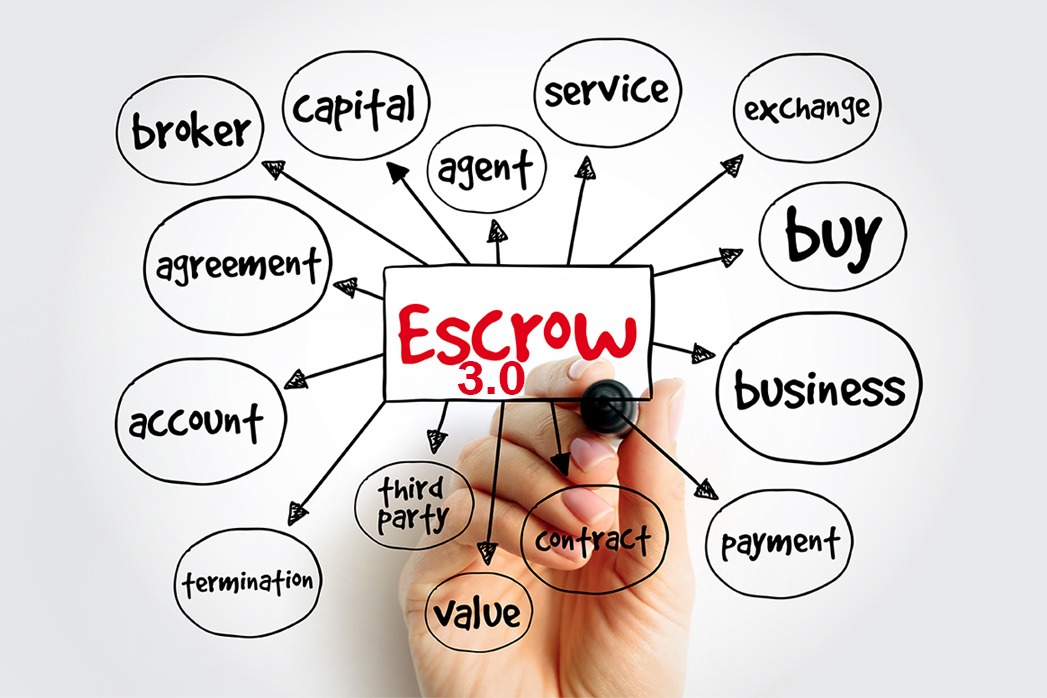
Escrow services have long been the backbone of secure transactions. But in an era of speed, transparency, and borderless interaction, traditional escrow systems are showing their age. Enter Escrow 3.0—a system combining cross-chain smart contracts, Chainlink oracles, and fiat API integrations to eliminate intermediaries while increasing security and efficiency.
The innovation sits on Hash Time-Locked Contracts (HTLCs)—programmable agreements that automatically execute when predefined conditions are met.
Crypto ↔ Crypto: Two parties lock funds on their respective chains (e.g., ETH and BTC). Upon receipt of a shared secret hash, smart contracts release the funds automatically.
Crypto ↔ Fiat: With Chainlink oracles and Open Banking APIs, smart contracts can settle fiat payments on-chain. A freelancer can be paid in stablecoins and receive euros via SEPA, with bank confirmations verified in real time.
Learn more: Smart Contracts for Real-World Transactions.
SmarTrust, built on the Reactive Network and powered by Reactive Smart Contracts (RSCs), enables milestone-based, recurring, or single-deliverable transactions without custodians.
Features include:
– Automated milestone payments upon event confirmation
– Dispute escalation to a decentralized adjudicator marketplace
“By placing Reactive at the core, SmarTrust is enabling scalable trustless mechanisms for clients, freelancers, and adjudicators.” – Emilijus Pranckus, Reactive Network.
Escrow 3.0 offers:
– Safety: Funds locked in audited smart contracts
– Efficiency: No delays or manual intervention
– Global Reach: Cross-chain and fiat settlement removes borders
– Market Fit: Secure, seamless, automated payments
“This isn’t just a product upgrade—it’s an entirely new financial primitive.” – DNA Crypto Labs.
Reactive Network introduces Inversion of Control (IoC) and event-driven bright contract patterns, allowing contracts to respond across multiple chains. This means unprecedented modularity, reusability, and responsiveness—a true hallmark of decentralized systems. Read more: The Future of Event-Driven Smart Contracts.
Escrow 3.0 isn’t just evolution—it’s reimagination. It’s the foundation for a decentralized, global digital labour market powered by automation, transparency, and trustless execution.
Whether you’re building, investing, or freelancing—the smart way forward is trustless.
Image Source: Adobe Stock
Disclaimer: This article is purely for informational purposes. It is not offered or intended to be used for legal, tax, investment or financial advice.

“If Bitcoin is the digital gold, then tokenized real estate is the digital land.” – DNA Crypto Knowledge Base
Delays, low liquidity, and steep capital barriers have long defined conventional real estate investing. Now, blockchain and Bitcoin are unlocking a new frontier—tokenized property ownership and frictionless cross-border transactions—providing smarter access and opportunity for high-net-worth individuals (HNWIs) and institutional investors.
“Blockchain is changing the way we think about ownership. Tokenized real estate is no longer an experiment—it’s the new blueprint for cross-border investment.” – EY Global Real Estate Leader
Smart contracts are the cornerstone of this revolution. These self-executing digital agreements remove intermediaries like brokers and escrow providers, drastically lowering transaction costs and timelines.
Bitcoin meets property: Through escrow-backed smart contracts, Bitcoin holders can acquire real estate assets directly—payments are automated and enforced on-chain once conditions are met. Trust is coded in. Human error is coded out.
Learn more: How Smart Contracts Simplify Asset Transfers
“Smart contracts in real estate are turning legal friction into programmable efficiency. This is trust, evolved.” – CoinDesk Analyst Brief, 2025
DNA Crypto integrates Chainlink oracles to connect smart contracts to off-chain property data (title deeds, valuations, ownership records). This ensures:
Compliance is non-negotiable. KYC/KYB and AML protocols ensure alignment with MiCA regulations for EU-based investors.
“Compliance should be a bridge, not a barrier, to innovation.” – Regulatory Readiness in Web3
Tokenization fractionalizes real estate into digital tokens, each representing a share of ownership. This model is transforming a $50 billion market into a projected $4 trillion industry by 2035.
This innovation removes the liquidity problem in real estate. It brings instant diversification, real-time market access, and democratized investment.
Explore: Fractional Ownership with Blockchain
“Tokenization is not just a trend—it’s the next wave of financial engineering.” – World Economic Forum, Future of Real Estate Report 2025
DNA Crypto is rapidly expanding across the globe, and our strategic footprint reflects where tokenized real estate is gaining real traction.
Europe (including Poland)
With MiCA compliance and rapidly digitising land registries, Europe is becoming a regulatory and technical hub for digital asset investment. Cities like Warsaw and Krakow have embraced blockchain-backed real estate solutions, enabling compliant digital property transactions powered by DNA Crypto’s infrastructure.
Dubai
Dubai continues to lead the way for crypto-backed luxury real estate. With support from blockchain-friendly free zones like DIFC, we are building a launchpad for cross-border transactions in tokenized beachfront villas, branded residences, and commercial real estate. Bitcoin, smart contracts, and Chainlink verification support each secure transfer.
United Kingdom / Jersey
Our UK presence is spearheaded by DeFi Property UK, an entity fully aligned with evolving digital asset regulations. From Jersey’s tax-efficient ecosystem to broader access across the British Isles, we are enabling HNWIs and institutions to acquire high-end property using crypto wealth, with complete legal clarity and financial oversight.
Asia – Philippines and Beyond
DNA Property Corp., our flagship in Southeast Asia, is based in the Philippines. It anchors our operations across Asia and supports future expansion into Singapore, Hong Kong, and Thailand. These markets represent strong demand, digital infrastructure, and progressive regulation—ideal for tokenized real estate. DNA Property Corp. is onboarding early adopters as we roll out localised, compliant solutions.
At DNA Crypto, we’re building the future of real estate investment. Our tokenization platform will launch in Q4 2025, enabling:
We are currently seeking early adopters—both private investors and institutional partners—to shape this next chapter of blockchain finance.
“The future of real estate isn’t brick and mortar—it’s protocol and code.” – DNA Crypto Labs
Learn more about our upcoming launch: DNA Crypto Tokenization Project
Tokenized real estate unlocks a scalable, transparent, and fully digital property market. With blockchain infrastructure, smart escrow, Chainlink verification, and MiCA-ready compliance, the opportunity is not only innovative—it’s investable.
This is the bridge between Bitcoin and real estate, and it’s being built now.
Disclaimer: This article is for informational purposes only. It does not constitute legal, tax, or investment advice.

The numbers tell a story. But the systems behind those numbers are writing the future.
As of mid-2025, Bitcoin is not just weathering economic uncertainty—it’s accelerating through it. Active Bitcoin wallet addresses have surged past 50 million globally, marking one of the sharpest increases in self-custody and decentralised engagement since the asset’s inception.
In parallel, traditional banking is undergoing a structural recalibration. Regional banks are consolidating. Central bank digital currencies (CBDCs) are being piloted. Consumer trust is shifting. And for the first time, digital wallets are becoming the new checking accounts.
This wallet surge isn’t speculative. It’s behavioural. It reflects a foundational change:
Long-term holding trends are rising as more users opt for self-custody.
Layer 2 adoption (like the Lightning Network) is expanding microtransaction use.
Institutional wallet creation is accelerating with custodial integration into treasury systems.
Bitcoin is no longer just a speculative hedge. It’s becoming infrastructure.
Explore wallet trends: The Power of Bitcoin
Meanwhile, traditional banking is under pressure on three fronts:
Centralisation: Large banks are absorbing smaller players, concentrating liquidity and risk.
Regulatory Shifts: Real-time reporting, AI-based fraud detection, and CBDC rollouts are changing core infrastructure.
Trust Erosion: Public trust is shifting towards decentralised alternatives that offer greater transparency and access.
This isn’t a collapse—it’s a pivot.
Related read: The Impact of Crypto on Banking
The lines between a “bank” and a “wallet” are already blurring:
Wallets now provide yield, staking, and cross-border payments.
Banks are launching crypto custody, tokenized asset offerings, and on-chain compliance models.
What separates them is control.
Wallets put users in command. Banks offer users permission.
The rise in Bitcoin wallet activity is more than a metric—it’s a signal. It tells us:
People want sovereignty over their funds.
Technology is providing viable, scalable alternatives.
Legacy systems must adapt or fade.
We are witnessing a two-way transformation:
Bitcoin is becoming a foundation for new financial behaviours.
Traditional banks are evolving into service layers, not gatekeepers.
The address isn’t just where the money lives. It’s where the future is being built.
Disclaimer: This article is for educational purposes only. It does not constitute financial or investment advice.

As the crypto ecosystem matures, Stablecoins 2.0 represent a pivotal evolution in the balance between decentralisation, regulatory oversight, and financial utility. These next-generation Stablecoins are no longer just digital dollars—they’re programmable, compliant, and ready for real-world finance.
Asia remains at the forefront of stablecoin innovation:
– Japan and Singapore have enacted frameworks enabling banks and fintech firms to issue fully regulated fiat-backed Stablecoins.
– Singapore’s MAS is spearheading Project Guardian, integrating tokenised assets with real-world use cases (learn more).
– Hong Kong is rolling out new licensing structures prioritising transparency and reserve audits.
“Stablecoins could redefine Asia’s remittance and trade finance infrastructure,” notes Ravi Menon, former head of MAS.
With the Financial Services and Markets Act 2023, the UK signals that Stablecoins will be regulated for payments under the Bank of England and the FCA.
As global players like Circle and PayPal explore GBP-backed solutions, UK adoption is expected to gain institutional backing.
Explore the UK’s broader fintech positioning on DNA Crypto Insights.
Europe’s MiCA Regulation provides the most comprehensive stablecoin oversight globally:
– Mandatory 1:1 reserve backing
– Daily redemption rights
– Institutional licensing and whitepaper requirements
From 2024, all e-money tokens must be authorised to operate in the EU. MiCA 2.0—covering DeFi and algorithmic Stablecoins—is expected by 2026.
Related: Understand MiCA’s Impact
The U.S. is fragmented—NYDFS regulates fiat-backed coins like USDC, while the Clarity for Payment Stablecoins Act awaits Congressional action.
In Latin America:
– Brazil’s central bank is piloting BRL-backed Stablecoins.
– Colombia and Mexico view Stablecoins as solutions for inflation and financial inclusion.
“In 2024, stablecoin settlement volumes reached $10 trillion, overtaking major card networks in transfer value.”
Stablecoins 2.0 will be:
– Programmable: Enabling payroll, escrow, and supply chain automation.
– Compliant: Adhering to global audit and redemption standards.
– CBDC-compatible: Serving as hybrid bridges in centralised systems.
McKinsey forecasts Stablecoins will represent “10–15% of all cross-border payments by 2028.”
At DNA Crypto, we anticipate where regulation, finance, and crypto converge. We support clients in:
– Deploying Stablecoins for international settlement and liquidity optimisation
– Navigating MiCA, MAS, FCA, and U.S. frameworks
– Designing Tokenisation strategies for real-world assets
For expert advisory on stablecoin integrations, regulatory clarity, and tokenised finance, partner with us at DNACrypto.co.
Image Source: Adobe Stock
Disclaimer: This article is purely for informational purposes. It is not offered or intended to be used for legal, tax, investment or financial advice.

Picture this: Your banker speaks 12 languages, onboards you to a secure crypto platform in minutes, navigates compliance across jurisdictions, and customises investment strategies in real time. No sleep. No salary. No boundaries.
Now imagine this banker isn’t human. It’s an AI-driven avatar, operating on a smart contract backbone, guiding you through the next chapter in digital finance.
Welcome to the Web3 Concierge.
In traditional finance, “white-glove service” was synonymous with marble offices, bespoke portfolios, and multilingual advisors. But today’s elite investors are global, mobile, and digitally fluent. They expect seamless, personalised financial experiences with complete control.
Enter the Web3 Concierge — an AI-powered, blockchain-integrated platform that offers:
Multilingual, customised onboarding
– Real-time portfolio optimisation
– Smart contract-driven investment execution
– Secure digital identity and risk profiling.
– It’s private banking, reinvented for the decentralised era.
Within a Web3 Concierge platform, intelligence is embedded at every layer.
Your always-on financial co-pilot:
– Speaks your native language
– Assists with onboarding, compliance, and asset allocation
– Learns and evolves based on your behaviour
– Aligns with your financial goals and risk tolerance
Smart Contracts with Embedded Logic
Beyond basic transactions, these programmable contracts:
– Allocate capital across DeFi protocols
– Execute trades and rebalancing based on preset conditions
– Trigger alerts when risk levels or market conditions shift
More on smart contract architecture: Understanding Smart Contracts
Web3 Concierge platforms cater to various investor profiles:
– High-net-worth individuals: Access to advanced DeFi strategies, tax optimisation tools, and legal structuring.
– Institutional clients: Integration with tokenized assets, real-world securities, and jurisdiction-aware frameworks.
– Retail users: Curated crypto baskets and educational support.
All powered by:
– AI-enhanced AML/KYC verification
– Real-time jurisdiction matching
– Dynamic risk scoring systems
Related insight: AML & KYC in the Web3 Era
The innovation isn’t just technical. It’s personal.
Imagine:
– AI-driven alerts when yield strategies degrade or new opportunities arise
– A virtual assistant that understands your long-term goals
– Instant wallet creation and portfolio diversification via simple chat interfaces
– Biometric-secured digital vaults and estate transfer protocols
Explore more: Wealth Planning in Web3
In Web3, luxury is not yield. It’s trust.
The Concierge experience ensures:
– Full transparency into AI decision logic
– End-to-end encryption of personal data
– On-chain auditable contracts
– Human override features and programmable safety nets
More here: AI Transparency and Security
Today’s investor is borderless. The Concierge is, too.
– Tailored tax and compliance recommendations by geography
– Cross-border transaction support
– Legal and regulatory syncing in real time
Whether you’re a digital nomad in Lisbon, an asset manager in Dubai, or a DAO founder in Singapore, your AI concierge understands your language—financially, culturally, and legally.
The Web3 Concierge evolves into your digital OS:
– Monitors DeFi strategies and reallocates funds
– Collaborates with DAOs for estate and trust planning
– Manages Web3 memberships, airdrops, and job discovery. Participates in governance voting on your behalf
This isn’t automation for its own sake. It’s machine intelligence aligned with your best financial interests.
This is a new era of financial empowerment. The Web3 Concierge isn’t here to replace human advisors—it augments them. It places autonomy, intelligence, and trust at your fingertips.
Private banking is no longer locked behind glass and granite. It’s on-chain, always-on, and as fluent as you are.
Disclaimer: This article is for informational purposes only and does not constitute legal, tax, or investment advice.
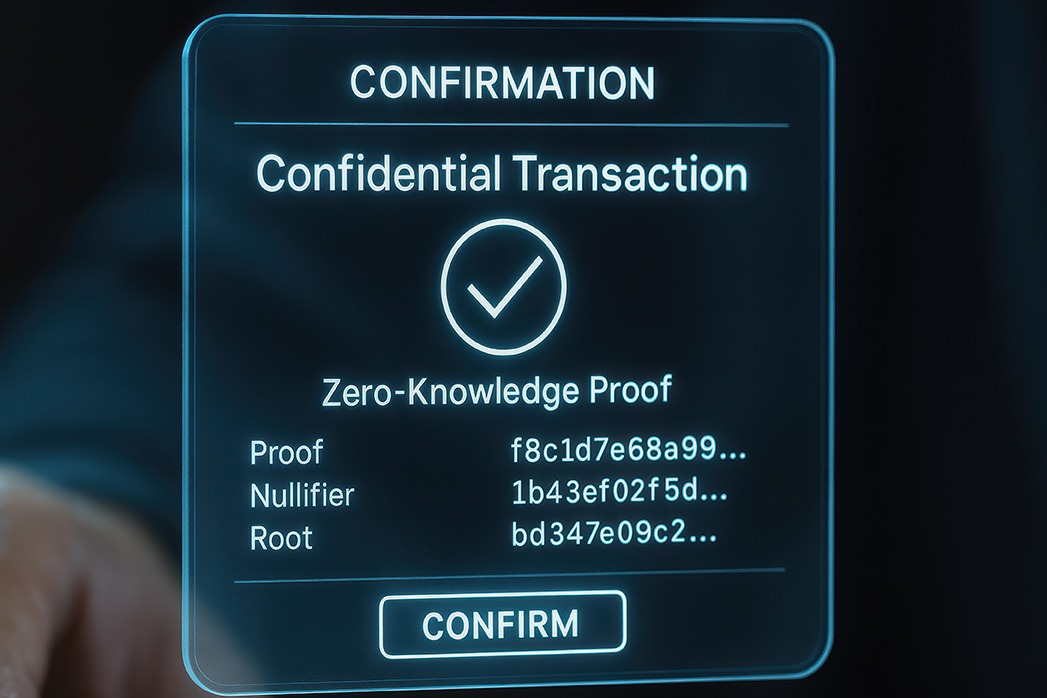
High-net-worth individuals (HNWIs), institutional investors, and sophisticated organizations increasingly demand discretion in financial transactions. Yet in crypto markets—where transparency is the default—achieving both privacy and compliance remains a persistent challenge.
This is where zero-knowledge proofs (ZKPs) and tiered access models come into play.
ZKPs are cryptographic techniques that enable one party (the prover) to verify the truth of a statement to another party (the verifier) without revealing the underlying data.
In practical terms:
– Prove your identity without sharing your passport.
– Verify investor accreditation without disclosing your net worth.
– Demonstrate AML/KYC compliance without exposing your full transaction history.
“ZKPs prove a statement without revealing the actual information behind it, making them ideal for financial applications requiring both compliance and confidentiality.”
— Zero-Knowledge Proofs: The Privacy Backbone of Digital Identity
Over-the-counter (OTC) crypto trading involves large, negotiated transactions—often in tokenized real estate or other high-value assets—executed off-exchange. Confidentiality in these deals helps:
– Mitigate reputational risk.
– Protect wealth, privacy, and strategic business data.
– Prevent front-running and price slippage.
Yet, regulators require identity verification and auditability. The key is enabling oversight without overexposure.
The EU’s Markets in Crypto-Assets Regulation (MiCA) imposes strict requirements on crypto asset service providers (CASPs), reinforced by the Transfer of Funds Regulation (TFR) and Travel Rule. These require identity data for transactions over certain thresholds.
“ZK technology offers a way to share only the necessary data for compliance—no more, no less.”
— Zero-Knowledge Compliance: The Future of KYC in DeFi
ZKPs help bridge this gap by enabling selective disclosure.
Use cases include:
– Proving AML-screened status without exposing the full transaction graph.
– Verifying wallet control without revealing behavioural patterns.
– Providing regulators with audit trails on a strict need-to-know basis.
A single-level permission model is not suitable for high-stakes deals. Tiered access systems, powered by ZK credentials, provide differentiated transparency based on verified roles.
Example tiers:
-Public: General offer summaries only.
– Accredited Investors: Full deal data upon ZK verification.
– Institutional: Full access post-NDA and advanced credential checks.
“We believe access control isn’t just about compliance—it’s about building trust while respecting data boundaries.”
— Confidential OTC Markets: Tiered Access and ZK Credentials
This framework supports:
– Luxury real estate tokenization.
– Institutional OTC desks.
– Private DeFi vaults and DAOs.
DNA Crypto and its partners are already integrating real-world ZKP solutions into financial infrastructure:
– zk-SNARKs: Succinct, non-interactive proofs.
– zk-ID frameworks: Privacy-preserving identity layers.
– Decentralized Identifiers (DIDs): Self-sovereign login systems.
– Private smart contracts: Logic execution without public data exposure.
“Confidentiality doesn’t mean opacity—it means precision.”
— Private Smart Contracts: How They Work in Web3
Post-MiCA, compliance is non-negotiable—but that doesn’t mean discretion must be sacrificed. With ZKPs and tiered access, platforms like DNA Crypto can offer:
– Cryptographic audit logs, not open ledgers.
– “KYC-once, prove-anywhere” frameworks.
– Private participation in sensitive, high-value deals.– Role-based permissions that evolve with user verification.
In regulated crypto markets, privacy isn’t just an ethical stance—it’s a strategic necessity. Investors aren’t seeking anonymity. They want assurance that their sensitive data is shielded while remaining compliant.
ZKPs and tiered access models create a new gold standard: access verified, compliance fulfilled, privacy preserved.
This is not just the future of investing—it’s the luxury of privacy.
Image credit: Adobe Stock
Disclaimer: This article is for informational purposes only and does not constitute legal, tax, investment, or financial advice.

“When property meets Bitcoin, capital becomes both productive and portable.” — DNA Crypto.Today, Bitcoin is no longer merely a speculative bubble or digital gold; actual purchasing power is becoming a reality. There is no better place to draw from than the property market, where early adopters exchange SATs in square footage, and the governments are catching up. We are in a new world of crypto-fuelled real estate, where luxury, legality and liquidity intersect. But to which three jurisdictions, you may ask? Let’s examine Poland, the UK, and Dubai, where purchasing property using Bitcoin is both possible and a smart move.
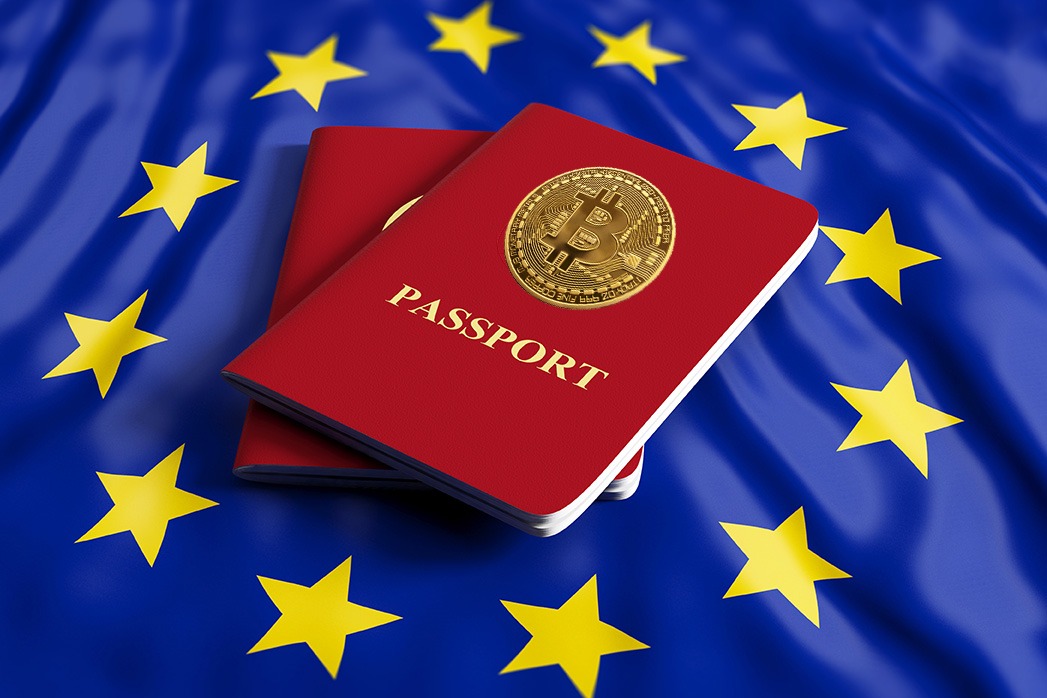
The Markets in Crypto-Assets Regulation (MiCA) is set to reshape the financial landscape across Europe. More than a regulatory milestone, it presents a unique opportunity for platforms that bridge crypto and real assets, such as DeFi Property, to unlock cross-border capital flows in the EU’s $17 trillion single market.
“MiCA is not merely a set of rules—it is the foundation for pan-European crypto scalability,” explains DNAcrypto.co. “It gives investors trust, platforms legitimacy, and start-ups a license to grow.”
MiCA introduces a unified licensing regime—the MiCA passport—allowing Crypto Asset Service Providers (CASPs) to operate across all EU member states under a single license. For DeFi Property and similar platforms, this transforms the game:
– List tokenized assets EU-wide with one authorisation.
– Onboard investors in Milan, Berlin, or Athens under one AML/KYC flow.
– Streamline capital deployment using digital euros or stablecoins.
“MiCA eliminates the fragmentation that stifled innovation in crypto finance. It offers the clarity institutional capital needs,” states a recent DNAcrypto article.
| Region | Regulation | Key Challenges |
|---|---|---|
| EU | MiCA Passport | Harmonised rules, capital buffers |
| UK | FCA-led regime | Fragmented licensing |
| USA | SEC/CFTC divide | Enforcement-first, unclear jurisdiction |
| Asia | Mixed clarity | Singapore/HK lead, others uncertain |
While the US still grapples with litigation and state-by-state licensing, and the UK advances cautiously with its policies, Europe is taking a leadership stance with MiCA.
Historically, real estate has been illiquid, siloed, and local. But tokenization—by converting properties into programmable digital assets—removes those frictions. Now, with MiCA:
– Properties in Lisbon or Warsaw can be tokenized and made accessible to any EU investor.
– Compliance is automated, borderless, and fast.
– Investments settle in minutes using blockchain rails and stablecoins.
“The tokenization of property, supported by MiCA, could be Europe’s answer to unlocking dormant real estate value,” says DNAcrypto in its analysis of real estate tokenization.
– Minimum Capital: €50K–€150K depending on services.
– Operational Buffer: 25% of the previous year’s fixed costs.
– Insurance & Flexibility: Risk-mitigation options for startups.
This financial architecture is strengthened by DORA (Digital Operational Resilience Act) and TFR (Transfer of Funds Regulation), ensuring:
Resilient IT and cybersecurity infrastructure.
AML compliance through the “travel rule” for crypto transfers.
Together, they turn Europe into a safe and regulated home for institutional crypto investors.
Early adoption of MiCA gives DeFi Property an advantage as both a licensed gateway and asset manager:
– Partner with developers to bring tokenized projects to market.
– Attract institutional capital seeking transparent, yield-generating assets.
– Serve global investors from the Middle East, Asia, and the Americas, via a trusted EU regulatory framework.
MiCA is Europe’s digital passport to innovation. It’s about borderless compliance, yes—but it’s also about borderless credibility.
“Firms that treat compliance as strategy—not obligation—will become tomorrow’s market leaders,” reads the DNAcrypto position on regulatory readiness in The End of Anonymous Trading.
Image Source: Adobe Stock
Disclaimer: This article is purely for informational purposes. It is not offered or intended to be used for legal, tax, investment or financial advice.

As the crypto industry matures, the era of anonymous trading is quickly giving way to a new paradigm: risk-aware, transparent, and regulation-aligned markets.
With Europe’s MiCA regulation coming into force and global AML directives gaining momentum, the pressure on exchanges and platforms to implement advanced compliance frameworks has never been greater.
“Compliance is no longer an operational hurdle—it’s a foundation for trust and institutional adoption.” — Read more
The existing AML infrastructure—designed for traditional finance—relied on centralized control, local jurisdictions, and one-size-fits-all onboarding. But in the DeFi era, such rigidity is ineffective. Pseudonymous wallets, global liquidity pools, and borderless transactions challenge the traditional methods of detecting and preventing financial crime.
That’s why the industry is now looking toward AML 2.0—a model that’s dynamic, risk-based, and powered by real-time analytics.
At DNA Crypto, we are closely exploring a roadmap that would elevate compliance and enhance user security across every touchpoint. Some of the capabilities under consideration include:
Real-Time Wallet Sanctions Screening:
Automatically detect blacklisted, sanctioned, or high-risk addresses using integrations with global databases.
Tiered Risk-Based KYC:
Design onboarding tiers aligned with transaction volume and jurisdictional risk. For example:
– Tier 1: Basic onboarding for low-volume users
– Tier 2: Enhanced verification
– Tier 3: Full due diligence and source of funds
Continuous On-Chain Monitoring:
Utilise tools to flag high-risk behaviour (e.g., mixer usage, abnormal flows, private token transfers) and apply automated escalation protocols.
“We don’t just want to meet the MiCA standard—we want to exceed it.” — DNAcrypto.co vision
Major financial institutions, sovereign entities, and large OTC desks are demanding stricter controls, especially with USDT minting reaching new highs and institutional flows into Bitcoin accelerating. At the same time, the latest “Genesis” legislative proposals in the U.S. signal that regulatory scrutiny is only going to intensify.
“The platforms that thrive in this next cycle will be those that see compliance as an enabler, not a blocker.” — MiCA’s Blind Spots
As the market grows, so does the demand for privacy. The next step is compliance models that respect user rights while satisfying regulators, such as zero-knowledge proofs, selective disclosure, and decentralized ID frameworks.
These technologies are being evaluated globally, and DNA is actively watching and learning how they might be implemented responsibly.
Explore related thought leadership from DNAcrypto’s Knowledge Hub:
– Will MiCA Make Europe Safer for Crypto Investors?
Image Source: Adobe Stock
Disclaimer: This article is purely for informational purposes. It is not offered or intended to be used for legal, tax, investment or financial advice.
European financial regulators have drawn a clear line in the sand: the future of Stablecoins is regulated, transparent, and compliant. The Markets in Crypto-Assets Regulation (MiCA) officially recognises E-Money Tokens (EMTs) and Asset-Referenced Tokens (ARTs)—not USDT or algorithmic Stablecoins.
Quote for emphasis:
“With MiCA now active, only EMTs and ARTs offer the legal certainty, redemption rights, and institutional appeal needed to integrate with Europe’s financial system.” – Read more on MiCA’s role in stablecoin reform
Despite regulatory uncertainty, Tether (USDT) remains the world’s largest stablecoin, with a circulation of over $112 billion. USDT continues to dominate trading volume, particularly in emerging markets. In early 2024, Tether minted over $6 billion in USDT, primarily to meet demand from crypto-native users, including institutional buyers and nation-state actors, who accumulated BTC.
“USDT minting spiked significantly in Q1 2024, feeding into Bitcoin reserves for ETFs, hedge funds, and sovereign wealth strategies.”
But that power may come at a cost. Under MiCA, unregulated Stablecoins face usage restrictions within the EU for licensed platforms, tokenization projects, and financial services providers.
Circle’s EUROC and USDC are actively preparing for MiCA compliance. Meanwhile, Societe Generale’s EURCV is the first bank-issued EMT under French law. These tokens offer the exact qualities MiCA demands:
– Transparent reserves
– 1:1 Fiat redemption
– Issuance by licensed institutions
“MiCA is reshaping the stablecoin race, and for the first time, compliance is more valuable than scale.” – Explore how MiCA is shaping custody and token rules.
Relevant links from DNAcrypto’s knowledge section:
Image Source: Adobe Stock
Disclaimer: This article is purely for informational purposes. It is not offered or intended to be used for legal, tax, or investment purposes
or financial advice.