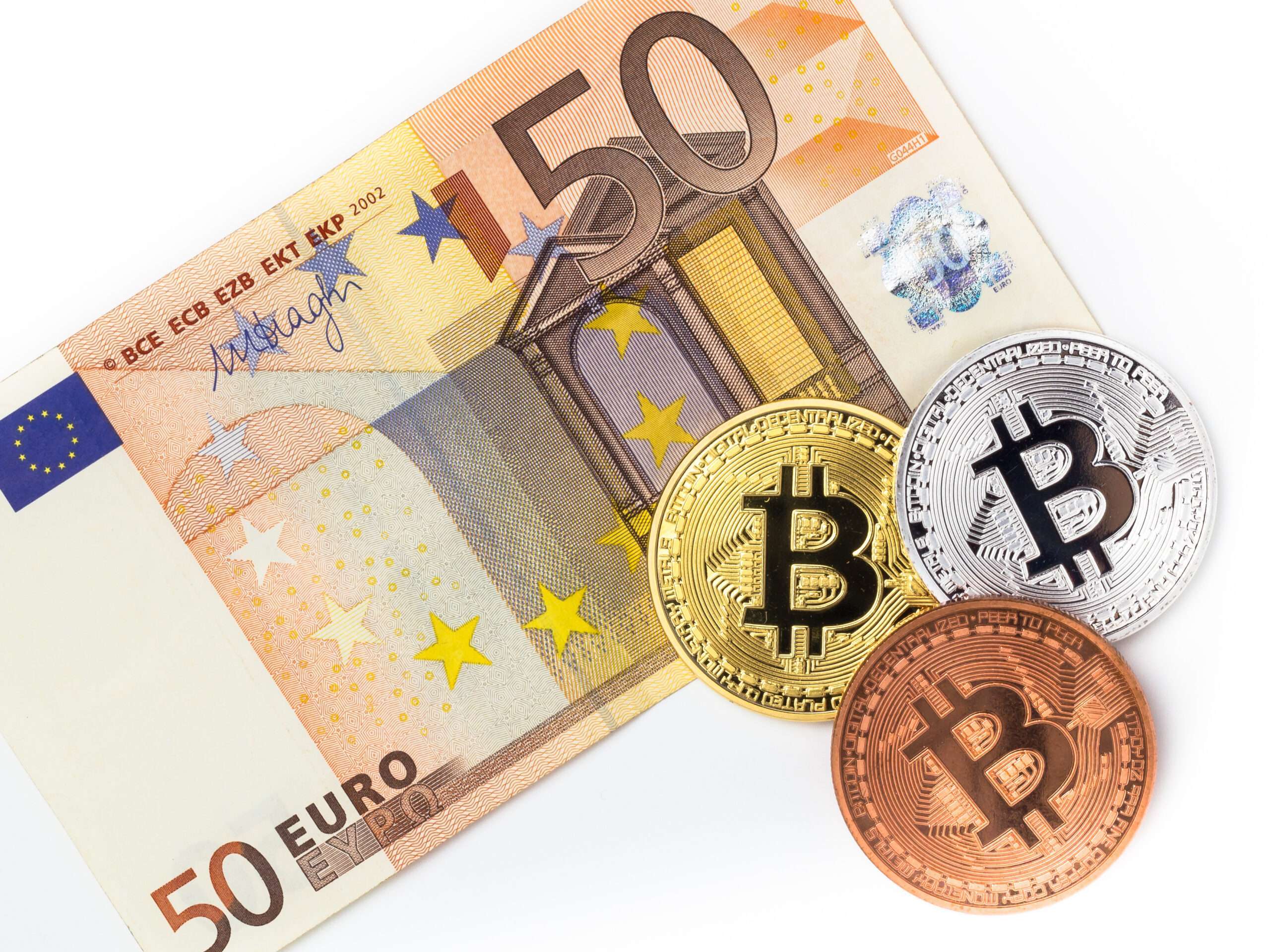

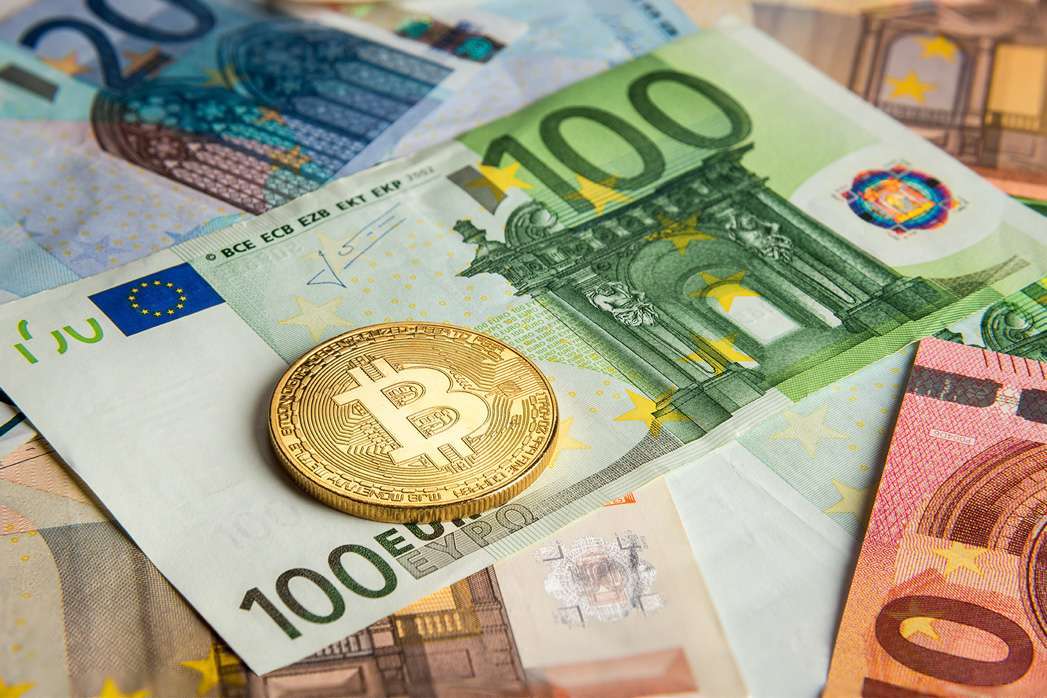
Gold Bar and Bitcoin

The Future Value of Bitcoin: Retail’s Impact on the Cryptocurrency Market

Bitcoin has shown a steady but unpredictable journey throughout its development history. At the time of this writing, Bitcoin trades at €77,000, down from its all-time high of €105,000 in January 2025. While institutional investors play a crucial role, retail demand continues to shape Bitcoin’s trajectory, particularly in Europe.

  • “Bitcoin is a technological tour de force.”Bill Gates

  • “In the long run, the market always reflects value. Bitcoin is no different.”Michael Saylor

  • “Bitcoin is the monetary revolution of our time, and its adoption is only just beginning.”Saifedean Ammous

Retail investors influence Bitcoin’s trading volume and usage directly, let alone direct market sentiment. The enduring market interest suggests that Bitcoin’s rise will depend on macroeconomic forces and adoption.

Retail Demand and Market Stability

Retail investors continue to participate steadily in Bitcoin even though its price is very volatile. Analysts examining the Bitcoin network show a minor 2% withdrawal in retail transaction volume while the January decline reached 20% levels. The market reconstruction does not discourage retail investors because they remain actively involved.

The hedging strategy institutional players adopt dramatically differs from that of retail investors. These investors follow market momentum by betting on rising prices, improving market stability. With all factors constant, retail investors could stabilise Bitcoin’s exchange value by producing long-term price floors.

Regional Trends: Asia’s Rising Influence

Europe has retained its consistent adoption of Bitcoin retail trading, while the Asia-Pacific has become the top market for Bitcoin retail transactions. Countries like Japan, South Korea, and Singapore support fintech innovations to boost crypto transactions.  

Decentralised transactions in Asia are proliferating, suggesting a future expansion of interest toward European markets with better regulatory frameworks in place. The US market shows slower Bitcoin adoption due to unclear regulatory situations, which gives Asia-Pacific and European markets a better position for adoption.

Regulatory Landscape: A Double-Edged Sword

Bitcoin continues to achieve widespread acceptance mainly due to proper regulation standards. Also, European regulatory bodies have inconsistent standards for Bitcoin. Switzerland has adopted friendly policies, while other regions continue to remain cautious.

Asia is developing new regulatory systems in which Singapore leads progressive crypto policies and South Korea and Japan enforce strict compliance measures. The ECB was conflicted about whether to adopt liberal policies or maintain separate approaches toward Bitcoin, which led to the birth of Markets in Crypto-Assets MiCA. Typically, retail adoption of Bitcoin could increase through better regulatory standards that build investor trust.

Retail and Cryptocurrency Liquidity

Bitcoin’s liquidity relies heavily on retail investors significantly shaped by decentralised finance (DeFi). The staking process, decentralised trading, and liquidity network obligations are standard activities for Bitcoin retail investors as they contribute to decentralised exchanges.

Continuous transactions enable the market to achieve efficiency and accessibility. Increased retail participation in Bitcoin transactions will expand its liquidity pool, supporting its use in payment and financial systems.

Bitcoin Adoption and Digital Banking

Bitcoin integration with digital banking systems is becoming more widespread. European financial technology organisations are expanding their Bitcoin-based products across the spectrum, including deposit accounts and payment transaction services. Continued growth in retail demand will lead businesses to adopt Bitcoin as their standard payment protocol. Rate reductions of transaction costs and volatility must occur for this trend to take effect.

What Does the Future Hold for Bitcoin?

Retail participation in Bitcoin indicates a steady market since price volatility has only necessary readjusted from previous highs. Bitcoin’s future direction will depend on how regional adoption rates, regulatory shifts, and retail investments combine and integrate. European adoption of balanced financial regulations and fintech development will establish the region as a premier force in Bitcoin’s evolving market.

Image Source: Adobe Stock

Disclaimer: This article is purely for informational purposes. It is not offered or intended to be used for legal, tax, investment or financial advice.

Read more →

Global Crypto Stacks on Vintage Map.

Global Trade Wars: The Battle Over Bitcoin Reserves

If you have been around long enough, you know how countries have fought for gold, oil, and land for centuries. Wars have been waged, deals have been made, and fortunes have been won. But here’s the plot twist, the war today is virtual and Bitcoin is the price.

At its infancy, Bitcoin seemed like a niche invention and just another way of buying things online. However, it has tremendously developed. It is a tool that can shift financial power, challenge the banking system, and even reshape global politics. We can safely call it a disruptor.

Some governments are quietly buying it. Others are banning it outright. Either way, Bitcoin is now at the centre of economic conflicts, especially on matters of sanctions and financial control.

So why does Bitcoin matter so much? And what happens when governments start treating it like a weapon?

Why Bitcoin is Different

Bitcoin isn’t like regular money. First, it’s limited—there can only ever be 21 million Bitcoins available. No one can print extra, no matter how much they might want to.

Also, it doesn’t rely on banks. With traditional money, banks and governments control transactions. They can freeze accounts, block payments, and decide who can access their system. Bitcoin is different. It allows people to send and receive money directly without any institution’s approval.

And here’s the real game-changer: Bitcoin is borderless. You can send it anywhere in the world without asking for permission. That makes it especially useful in places with strict financial rules or economic sanctions.

Some governments see this as a threat. Others see an opportunity…

China: From Leader to Crackdown

For years, China dominated Bitcoin mining, producing more than half of the world’s supply. Then, in 2021, the government suddenly banned it. Mining companies shut down overnight or moved elsewhere.

At first, it seemed like China wanted nothing to do with Bitcoin. However, some believe the government still holds large amounts of it, possibly as a hedge against the global financial system. At the same time, China has been pushing its digital currency—the digital yuan—which it fully controls. Unlike Bitcoin, this currency gives the government total oversight of every transaction.

Europe: Optimism and Regulatory Challenges

Europe received Bitcoin with mixed reactions. Where institutional investors and fintech companies are eager and willing to take a deep dive into this digital asset, on the other side, regulators remain cautious, with some sharing the same sentiments, eyeing the benefits of Bitcoin. Contrastingly, other policymakers fear for the euro and the overall financial stability of the EU.

China’s crackdown opened doors for other parts of the world and parts of Europe with favourable energy policies. However, with the current dynamics and stringent regulations, it remains to be seen whether regulations and evolving EU legislation could determine the future of Bitcoin in the region.

What’s Next?

Bitcoin’s part in global power conflicts is only becoming larger. Some countries will start buying Bitcoin and hand-holding it like they do gold—a reserve asset in case traditional currencies fail. At the same time, governments will try to regulate it more to control its use.

Government-backed digital currencies will continue to surface, giving governments more control of financial networks and competing with Bitcoin. Bitcoin is changing money all over the world. Some countries see it as a threat to their power. Others see it as the future.

As of March 2025, several countries have accumulated significant Bitcoin reserves through various means, including asset seizures, mining operations, and strategic investments. The following is an overview of notable national Bitcoin holdings:​

 
Country Estimated Bitcoin Holdings Approximate USD Value (March 2025) Acquisition Method
United States
207,189 BTC
$17.6 billion
Primarily through asset seizures related to criminal investigations.
China
194,000 BTC
$16.5 billion
Mainly acquired via confiscations from illicit activities.
United Kingdom
61,000 BTC
$5.2 billion
Obtained through law enforcement seizures.
Ukraine
46,351 BTC
$3.9 billion
Accumulated through various governmental initiatives.
Bhutan
13,029 BTC
$1.1 billion
Generated via state-run hydroelectric-powered mining operations.
El Salvador
6,003 BTC
$510 million
Purchased as part of a national strategy to adopt Bitcoin as legal tender.
North Korea
13,580 BTC
£886 million (approximately $1.1 billion)
Accumulated largely through cyber-hacking activities conducted by the Lazarus Group.

These developments reflect a growing trend among nations to explore and, in some cases, adopt Bitcoin as part of their financial strategies, each influenced by unique economic, technological, and geopolitical factors.

The question is: Will Bitcoin be the world’s future monetary standard, or can governments stop it? One thing is certain: the fight over Bitcoin has only just begun.

Image Source: Adobe Stock

Disclaimer: This article is purely for informational purposes. It is not offered or intended to be used for legal, tax, investment or financial advice.

 

Read more →

Bitcoin coin with flag of European Union.

Taxation and Reporting Standards: DAC8 and CARF

The expansion of the crypto-asset market undoubtedly drives governments to strengthen their tax compliance efforts. In April 2021, the G20 commissioned the OECD to establish a system for fully automated reporting regarding crypto-asset tax information. Later, the Crypto-Asset Reporting Framework (CARF) was approved in…

Read more →

Hand holding Bitcoin with digital real estate icons in background

Bitcoin or Real Estate? Time to Change How We Think About Wealth

“Property built empires in the past. Bitcoin is building them now.” – DNA Bitcoin Broker Knowledge Base.

For decades, real estate was the cornerstone of wealth.
But in 2025, a quiet rotation is underway.

Institutional investors, family offices, and private funds are shifting their focus from property portfolios to digital assets like Bitcoin and tokenised real estate.

As traditional property markets stagnate and global liquidity tightens, Bitcoin is emerging not as speculation, but as the new reserve asset of the digital economy.

Learn more: What Is Bitcoin and Why It Matters

The Changing Economics of Real Estate

For generations, property ownership was synonymous with safety.
But the post-2020 decade has changed the equation.

High interest rates, stricter lending rules, and falling yields have reshaped real estate’s reputation as a “stable” store of value:

  • – Global housing prices declined by an average of 8% between 2022–2024 (OECD).

  • – Commercial real estate faces the biggest downturn in 30 years as remote work reduces demand.

  • – Rental yields in prime European cities hover between 2–3%, far below inflation-adjusted targets.

In short, real estate remains illiquid, slow, and dependent on central bank policy.

By contrast, Bitcoin’s fixed supply and global accessibility are increasingly attractive to wealth managers seeking returns that are uncorrelated with fiat-based assets.

Explore: Institutional Bitcoin Adoption

Bitcoin: The New Asset of Scarcity

Since 2020, Bitcoin has outperformed nearly every major asset class, including gold and real estate.
Key data points in 2025:

  • Bitcoin ETFs globally hold over $65 billion in assets, led by U.S. approvals.

  • – The number of Institutional wallets holding >1,000 BTC has doubled since 2022.

  • – Post-halving supply issuance has reduced new Bitcoin flow to just 450 coins per day.

In an age of money printing and negative real yields, Bitcoin’s mathematical scarcity has become its moat.

And with global property markets struggling to deliver above-inflation returns, Bitcoin’s liquidity and portability make it the modern equivalent of land — borderless and incorruptible.

See: Bitcoin Market Dynamics

The Rise of Tokenised Real Estate

The story doesn’t end with competition — it’s also convergence.
Through blockchain Tokenisation, real estate itself is entering the crypto era.

Tokenisation platforms are fractionalising ownership of property portfolios, enabling investors to trade real estate-backed tokens with instant settlement and full transparency.

According to Boston Consulting Group, real-world asset (RWA) Tokenisation could exceed $16 trillion by 2030 — making property the largest on-chain asset class after Bitcoin.

At DNA Bitcoin Broker, we see the future not as “Bitcoin vs Real Estate” but Bitcoin + Tokenised Real Estate — where digital scarcity meets tangible value.

Explore: Institutional Tokenisation

Liquidity, Mobility, and Tax Efficiency

One of Bitcoin’s greatest strengths is mobility — you can move billions across borders in seconds.
Real estate, on the other hand, is the most illiquid asset on earth.

Even tokenised property cannot yet match Bitcoin’s liquidity or ease of diversification.
Additionally, institutional investors are realising that crypto taxation frameworks in the EU (under MiCA) and Asia-Pacific now provide greater clarity than real estate’s opaque tax systems and depreciation schedules.

In 2025, Bitcoin offers not just growth, but structural efficiency — fast, auditable, and global.

Learn more: Global Impact of MiCA

DNA Bitcoin Broker: Where Digital Wealth Meets Real Assets

At DNA Crypto, we help investors bridge traditional wealth with the new era of tokenised finance.
Our institutional brokerage provides:

  • – Direct Bitcoin trading and custody under MiCA regulation

  • – Access to tokenised real estate and RWAs

  • – Cross-border liquidity solutions for property-backed assets

  • – Portfolio diversification strategies that combine tangible and digital wealth

The next generation of investors isn’t choosing between Bitcoin and real estate — they’re using both to build balanced, borderless portfolios.

Explore: Crypto Custody Solutions

The Bottom Line

Real estate built yesterday’s empires.
Bitcoin is building tomorrow’s.

As the world transitions to digital value, Bitcoin is redefining what it means to own, hold, and grow wealth — while tokenised property transforms illiquid assets into liquid networks.

The question isn’t Bitcoin or real estate.
It’s how to make both work together — in a world where digital ownership defines prosperity.

Image Source: Adobe Stock
Disclaimer: This article is for informational purposes only and does not constitute legal, tax, or investment advice.

Read more →

Concept for rising Bitcoin price, green coin, crypto currency background, stock market chart or exchange with copy space.

Green Cryptocurrencies and Why Are They Important?

As you explore the ever-evolving world of Cryptocurrency, you may have encountered a new player in this field: green cryptocurrencies. These new digital assets are designed with sustainability in mind.

Primarily, the concept deals with environmental concerns of traditional Cryptocurrencies using green technology and energy-efficient mining processes. In their way, they symbolize the gradual acceptance of sustainability and longevity in digital economies.

Understanding Green Cryptocurrencies

As opposed to conventional Cryptocurrencies that use intense power and depend on Proof-of-Work (PoW) mechanisms, green cryptocurrencies have developed ingenious alternatives aimed at less energy consumption and tilt toward sustainability.

Green cryptocurrencies mostly use Proof of Stake (PoS). This uses a validator selection mechanism based on the number of coins each holds from a single crypto wallet instead of a tedious calculation of mathematical problems by miners. No more energy-consuming mining is required.

Proof of Space (PoSpace) is an alternative method that utilizes unused storage capacity to secure the network—Chia, a Cryptocurrency that utilizes unoccupied disk space, hence more energy-efficient operations.

Some green Cryptocurrency initiatives enhance their sustainability measures by incorporating renewable energy sources into their operations or by supporting carbon offset programs. These efforts guarantee that any remaining emissions from their networks are reduced.

Why Green Cryptocurrencies Matter

The significance of green Cryptocurrency is found in its capacity to tackle the environmental deficiencies of conventional Cryptocurrency while preserving the advantages of blockchain technology.

To begin with, they directly address the significant energy usage linked to mining. It is believed that Bitcoin uses energy equivalent to that of some small countries each year and carries an equally substantial carbon footprint. Eco-friendly Cryptocurrencies reduce this impact significantly by keeping in line with global climate goals within the crypto domain.

In addition, the growing concern around sustainability has placed different industries on accountability for their carbon emissions. Green Cryptocurrencies are perennial in recognition of some sustainability goals, supported by the sustainable future of Blockchain technology.

Investors are beginning to pay attention as well. Environmental, social, and governance (ESG) investing is becoming mainstream and thus puts sustainability rather at the forefront of financial decisions. Eco-friendly Cryptocurrencies attract environmentally conscious investors and companies, appealing to more newcomers.

Therefore, the result is a generation of green Cryptocurrencies. which brings about more creativity. It creates an opportunity for all technological ingeniousness that gives room for the practicality, usefulness, and efficiency of Blockchain networks to improve the crypto space as a whole further.

Popular Eco-Friendly Cryptocurrencies to Keep an Eye On include:

  • – Chia (XCH): Chia harnesses idle computer storage in a standard desktop environment. It minimizes energy requirements for the operation of other typical Blockchain networks by solving Proof of Space and Time.
  • Cardano (ADA): Cardano is based on a Proof of Stake framework; this means energy efficiency and long-term sustainability.
  • – Nano (NANO): Nano’s lightweight and extremely efficient block-lattice structure eliminates mining and severely limits energy needs.
  • – Algorand (ALGO): This Blockchain is carbon-neutral by design, with sustainability woven into its very fabric.

Challenges and Opportunities

Although they hold potential, green cryptocurrencies encounter several obstacles. Adoption continues to be a major obstacle since numerous crypto enthusiasts and miners are deeply rooted in conventional systems. Moreover, there are ongoing discussions regarding the safety and decentralisation of alternative methods, such as Proof of Stake in relation to Proof of Work.

Nonetheless, these obstacles can be overcome. As awareness of climate change rises and regulatory pressures increase, the need for sustainable Blockchain solutions is expected to grow. Eco-friendly Cryptocurrencies are poised to spearhead this transition, providing a framework for responsible and progressive progress.

The rise of eco-friendly Cryptocurrencies represents more than a fad—it’s an essential progression. As Blockchain technology continues to grow its impact, the sector must evolve to address the environmental and social issues we face today.

As the movement expands, the inquiry is no longer about whether green Cryptocurrencies will influence the future but how swiftly they will become the norm.

Image Source: Adobe Stock

Disclaimer: This article is purely for informational purposes. It is not offered or intended to be used for legal, tax, investment, or financial advice.

Read more →

The raise of the Bitcoin, digital crypto currency boom on the market, chart symbolizes tremendous rise in value of the cyber coin and other digital cryptocurrencies.

How Institutions Can Invest in Bitcoin Under Europe’s MiCA Regulations

Indeed, Bitcoin has always been a bit of a rebel – thriving outside traditional finance, resisting regulation, and attracting excitement and scepticism. But in Europe, things are shifting. The Markets in Crypto-Assets (MiCA) regulation is stepping in to bring structure to the chaos, offering institutions a straightforward way to invest in Bitcoin without legal headaches.

So, if you’re a bank, hedge fund, or investment firm looking to get in on Bitcoin, how do you do it without stepping on regulatory landmines?

MiCA: The Rulebook Bitcoin Never Had

For years, investing in Bitcoin was like playing in the Wild West – some countries embraced it, others banned it, and many had no idea what to do with it. MiCA changes that.

The regulation sets the rules for crypto across the EU, making it easier and safer for institutions to enter. Bitcoin, under MiCA, is categorised as a crypto-asset, not a currency or security, just its own thing. Institutions don’t have to worry about things like capital reserves (which Stablecoin issuers do), but they still have to follow some strict rules.

Institutions must begin by choosing a MiCA-compliant custodian or exchange. They cannot use just about any platform and must be selective. A regulated custodian is secure and compliant, but self-custody gives them more control at a higher level of responsibility. Institutions can keep Bitcoin in-house if they want but must have strict security and risk controls to keep it in place.

Once an institution acquires Bitcoin, compliance becomes a key focus. MiCA enforces strict know-your-customer (KYC) and anti-money-laundering (AML) controls; transactions must be transparent, and counterparties must be known. Anonymity in transactions is no longer an option, and financial institutions must maintain accurate records regarding their dealings in Bitcoin to avoid penalties. Transparency does not stop there- financial institutions must report transactions and holdings upon inquiry, ensuring crypto transactions are above board.

For those not comfortable holding Bitcoin outright, MiCA makes investing possible via supervised financial products like Bitcoin ETPs and crypto funds. The latter offers exposure to Bitcoin price movements without complexity and with direct compliance.

With these steps in place, financial institutions can safely enter MiCA’s Bitcoin market in a secure and predictable investing environment without being deterred by uncertainty in regulations.

Why MiCA is Good for Institutional Bitcoin Investment

Some investors see regulation as a buzzkill. But here is the thing: MiCA makes Bitcoin more attractive to institutions.

Many firms have avoided Bitcoin for years because of fraud, hacking risks, and regulatory uncertainty. Now, MiCA removes doubt by ensuring safety. It forces crypto exchanges to follow strict security guidelines, reduces the risk of shady market manipulation, and ensures that institutions can invest without worrying about a legal crackdown.

Another big plus? Market stability. With better oversight, institutions can finally trust the crypto market. That means fewer rug pulls and scams and a more predictable investment environment.

MiCA isn’t just another regulation. The framework gives institutions a clear, structured path to investing in Bitcoin. What was once a volatile and uncertain market has matured, making it accessible beyond just retail traders and crypto enthusiasts.

With MiCA, institutions no longer have to navigate regulatory grey areas or worry about compliance risks. The rules are set, and the guardrails are in place. The crypto revolution isn’t coming – it’s already here.

Image Source: Adobe Stock

Disclaimer: This article is purely for informational purposes. It is not offered or intended to be used for legal, tax, investment or financial advice.

Read more →

Bitcoin gold coin on euro banknotes.

MiCA and Stablecoins – What’s the Real Risk for Crypto Traders?

“Stablecoins do not disappear under regulation — they become infrastructure.” — DNA Crypto.

The European Union’s Markets in Crypto-Assets (MiCA) regulation provides oversight and stability while establishing clarity in the fast-evolving field of digital assets. The core purpose of MiCA is to protect investors while promoting financial stability. Yet its approach to stablecoins has stirred significant controversy, as it links their value to conventional currencies and specific commodities. The tightening regulatory measures have crypto traders questioning both the implications of MiCA for stablecoins and the forthcoming risks.

So, what does MiCA regulation mean for Stablecoins, and what possible risks should you expect?

The Conundrum Around Stablecoin

Stablecoins connect cryptocurrency platforms and the conventional financial sector. During periods of intense market volatility, Stablecoins provide traders with a reliable asset that maintains a stable value. Yet the rising popularity of Stablecoins makes regulators uneasy about potential market risks which stem from liquidity concerns, redemption issues, and reserve fund withdrawals.

Under MiCA, Stablecoin companies must meet extensive requirements, including minimum asset reserves, disclosure standards, and transaction-volume restrictions for selected Stablecoins. The regulatory measures seek to prevent destabilising events such as the TerraUSD collapse from recurring. Despite reducing overall market risks, the new regulatory framework introduces operational hurdles for traders who rely on Stablecoins for daily trading.

Stringent market reserve guidelines may increase Stablecoin expenses, which could be passed on to end users through service fees. Volume caps may limit the market expansion potential of selected Stablecoins, thereby reducing their suitability for large transactions.

Will Stablecoin Restrictions Create New Opportunities for Bitcoin?

New restrictions on Stablecoins under MiCA regulations could benefit decentralised Cryptocurrencies and Bitcoin. Historically, Stablecoins have served as an entry point for new investors into the crypto market, enabling access to trading exchanges. The reduced appeal of Stablecoins subsequently leads investors to allocate capital to well-known decentralised assets such as Bitcoin, Ethereum, and other blockchain-based currencies.

Bitcoin is the principal beneficiary among digital currencies that stand to gain from intermittent market shifts in the Cryptocurrency market. Bitcoin operates outside centralised control, providing traders with regulatory freedom and immunity from governmental oversight. During periods of extreme economic turmoil, institutional investors rely on Bitcoin as a valuable store of value because its limited supply and growing user base attract funds for wealth protection in uncertain financial conditions.

Numerous challenges will arise throughout the transition to this alternative method. Furthermore, price volatility makes it difficult for cryptocurrency traders to rely on Bitcoin, as it lacks the operational principles of Stablecoins. The growing popularity of Bitcoin will likely exacerbate processing speed issues and simultaneously increase transaction costs. The future of Bitcoin as an asset-class leader depends on addressing core defects, even though MiCA-related market reforms could positively affect its short-term position.

How Can Businesses Prepare for Liquidity Issues Under MiCA?

  • Diversify Stablecoin Exposure: Businesses can reduce reliance on a single Stablecoin by using multiple MiCA-compliant and decentralised Stablecoins to mitigate risks.
  • – Strengthen Liquidity Buffers: Investors can maintain enough fiat or liquid asset reserves and conduct regular stress tests to address potential liquidity constraints.
  • – Adopt Bitcoin and Other Cryptocurrencies: Businesses can also choose to explore Bitcoin and crypto-based financial products as alternative payment and settlement solutions.
  • – Stay Informed and Engage with Regulators: Investors should keep up with MiCA regulations, engage with regulators, and monitor global regulatory developments.
  • – Invest in Compliance and Technology: Robust, compliant systems and technology solutions would help meet MiCA requirements and ensure operational resilience.

What are the Possible Risks for Crypto Traders?

For some time now, Cryptocurrency traders have benefited from the flexibility and accessibility of stablecoins. They have used them as a haven and medium for speedy transactions across crypto exchanges.

However, MiCA’s stringent rules could mean:

  • – Reduced Availability of Stablecoins: Some issuers may exit the EU market due to MiCA compliance challenges, which will limit Stablecoin options.
  • – Increased Costs and Friction: Compliance costs may lead to higher fees, lower yields, and slower transaction processing.
  • – Market Volatility and Uncertainty: MiCA’s transition phase could cause instability, affecting liquidity and pegging of major Stablecoins.
  • – Geographic Fragmentation: MiCA’s EU-only scope may create regulatory inconsistencies, impacting cross-border trading and compliance.
  •  

Overall, the absolute risk for crypto traders lies not in regulations but in failing to adapt to changing conditions. Those who anticipate shifts, diversify strategically, and prioritise compliance will emerge stronger—and perhaps even thrive—in the post-MiCA era.

Image Source: Adobe Stock

Disclaimer: This article is purely for informational purposes. It is not offered or intended to be used for legal, tax, investment or financial advice.
Register today at DNACrypto.co

Read more →

finance, BTC, crypto and stock prices and chart showing stock market

What Are Over-the-counter (OTC) Derivatives?

Over-the-counter derivatives are financial instruments that receive their value through direct private agreements between market participants instead of through traditional exchange marketplaces. Exchange-traded instruments differ from these contracts as OTC derivatives receive private negotiation treatments between counterparties, allowing them to customise their terms. The…

Read more →

Bitcoins and fifty euro banknote. Financial concept with Bitcoins on fifty euro banknote. Traditional money vs cryptocurrency concept.

MiCA’s Hidden Opportunities for Bitcoin Investors

The European Union directed The Markets in Crypto-Assets (MiCA) to establish clear financial regulations and enhance consumer protection within the Cryptocurrency market. Evidently, some view MiCA as a mere, strict regulatory policy, yet it provides major investment opportunities, especially for institutional investors who have an eye for Bitcoin.


This write-up evaluates how regulatory clarity through MiCA affects institutional Bitcoin adoption and Bitcoin’s role as a valuable investment amid stringent Cryptocurrency regulation.


Regulatory Clarity and Institutional Adoption


Typically, the European Union spearheaded the necessary regulatory clarity by introducing MiCA for Cryptocurrencies. MiCA establishes precise rules for digital assets that help institutional investors understand Cryptocurrency operations and, as a result, do away with the usual historical market entry barriers.  


MiCA basics include:


– Whitepaper Publication: Crypto-assets issuers must publish a whitepaper with detailed information about the project.

-Disclosure and Transparency: Disclosure of financial information and transparent business practices from time to time.

– Capital Requirements: Service providers, such as exchanges and wallet providers, must meet specific capital thresholds and insurance provisions to operate.


Thanks to MiCA, the clear framework enables institutional investors to perform proper assessments while adding Bitcoin and other Cryptocurrencies to their investment portfolios. The decline of regulatory risks makes Bitcoin more attractive to investors who view it as digital gold and a shield against inflation while bypassing market volatility


Is Bitcoin Safe in a Regulated Environment?


Note that Bitcoin’s dominance and longevity contribute to its perception as the safest bet within the Crypto space. One may wonder how.


– Market Capitalization: Bitcoin has the largest market capitalization among all cryptocurrencies. It goes without saying that this is a result of its widespread acceptance and lower volatility compared to altcoins.

– Network Security: The Bitcoin network’s superior hash rate guarantees safety, making its Blockchain impermeable.

– Regulatory Recognition: As regulatory frameworks like MiCA take shape in Europe and beyond, Bitcoin is getting mileage as a legitimate asset class thanks to its transparency, decentralization and scarcity.

Bitcoin features attract institutional investors towards digital assets because they want low-risk exposure in a regulated environment. Better security alongside regulatory legitimacy helps Bitcoin maintain its dominant position.


The Take Home


The Cryptocurrency market’s advancement heavily depends on MiCA, which aims to bolster innovation and consumer protection. The new regulatory framework improves the Bitcoin investment environment by reducing uncertainties and convincing institutions to join the bandwagon. The financial landscape that works with digital assets has identified Bitcoin as its foundation of stability while creating opportunities for mainstream adoption in the worldwide financial sector.


Image Source: Adobe Stock


Disclaimer: This article is purely for informational purposes. It is not offered or intended to be used for legal, tax, investment or financial advice

Read more →

MiCA or Markets in Crypto Assets concept. Stacked cryptocurrency coins and wooden blocks with text.

What is MiCA and Why Does It Matter?

Blockchain technology and Cryptocurrency both present tremendous opportunity and unavoidable regulatory ambiguity as this space experiences quick, intermittent development.  One crucial piece of legislation regulates all businesses working in the European Union or targeting its market: Markets in Crypto-Assets (MiCA) regulation.

MiCA became a turning point for crypto services through its complete regulatory establishment for cross-bloc crypto-asset operations in Europe’s 27 members. Failure to recognise and properly prepare is necessary for businesses operating within or targeting this complex market to survive and succeed.

MiCA: A New Era for Crypto in Europe

Before MiCA entered into force, the EU crypto regulation space consisted of various distinctive national rules or no special ones. The then-market fragmentation prevented businesses from expanding their operations, while consumers lacked assurance about embracing new technological solutions.

MiCA achieves its goal by establishing a unified regulatory platform for crypto asset service providers operating throughout the EU. The uniform EU requirements for crypto-asset service providers enable pan-EU market participation and create better market conditions, better customer regulation, and financial stability.

Indeed, the implications are profound. MiCA establishes itself beyond typical bureaucratic legislation. The established framework will guide European crypto industry development for years to come. The new regulatory framework provides much-needed legitimacy to crypto assets, enabling institutional organisations and ordinary people to accept them as mainstream financial instruments.

What Investors Need to Understand

MiCA is a complex piece of legislation, but its core principles can be broken down into:

Authorisation and Licensing

To legally provide crypto-assets or access to associated services within the EU market, an entity must acquire authorisation approval from a designated national authority. Exchange services, custodians, and additional supporting providers must seek authorisation from relevant national authorities.

The application process demands proof of fulfilment of capital limitations, operational reliability standards, and anti-money laundering procedures. The authorisation process has barriers yet maintains operational standards that guarantee user security.

Consumer Protection

The safety of consumers stands as the primary concern under MiCA legislation. These regulatory rules establish standards for transparent business practice disclosure requirements and marketing communication instructions. All crypto-asset issuers must issue white papers that clearly show asset information, risk analysis, and explanations of ownership rights to their product holders.

Under these requirements, consumers gain sufficient details to help them make informed purchasing decisions when dealing with crypto. Under MiCA, the issuing organisations become responsible for any inaccuracies in their published white papers. The issuance of deceptive or insufficient information would lead to severe legal penalties.

Stablecoins

MiCA focuses on Stablecoins as a type of crypto-asset which strives to keep its value equal to traditional currencies or other assets. Because Stablecoins pose risks to financial stability, they must fulfil more strict requirements like operational limitations and complete reserve requirements.

The successful issuance of Stablecoins demands issuers keep enough liquid reserve assets to guarantee they can fulfil redemption orders. Stablecoin risk mitigation calls for strict requirements to ensure responsible ownership of crypto assets and their proper use.

Market Abuse

MiCA’s provisions stop market manipulation and insider trading activities involving crypto-assets. The crypto market governance protocol implements financial market-related standards that cement the crypto market integrity, which builds trust and helps attract institutional investors.

Environmental Sustainability

Also, MiCA set out proper requirements for assessing consensus mechanisms’ environmental impact, particularly those running on Proof-of-Work (PoW) systems. Under MiCA regulations, CASPs must report their energy usage and environmental impact to their clientele. The EU demonstrates strong environmental concern regarding crypto-assets, indicating upcoming new rules for the industry.

Preparing for MiCA: A Call to Action

MiCA regulations come into effect in phases, with some provisions becoming applicable much sooner than others. Here are some key steps that companies should take: 

– Understand the requirements.

– Conduct a gap analysis.

– Develop a compliance Plan.

– Invest in technology that can automate processes and manage risk.

– Engage with regulators and seek clarification on any ambiguities.

The demanding journey to compliance leads to market stability and increased crypto adoption, making all the hard work worthwhile. MiCA regulation begins a lasting and responsible evolution in crypto innovation.

Image Source: Adobe Stock

Disclaimer: This article is purely for informational purposes. It is not offered or intended to be used for legal, tax, investment or financial advice.
Register today at DNACrypto.co

Read more →

Concept of various financial investment options.

Bonds and Stocks vs. Cryptocurrency

Today, investing means entering into an infinitely expanding pool of various opportunities full of perks and risks. For the longest time, bonds and stocks have been conventional investment products with reliability and possible capital gains. But again, everyone has started trading Cryptocurrencies, a brand-new…

Read more →

Outlook for 2025 | Bitcoin bull takes off unstoppably

Top Three Crypto Tokens to Invest in 2025

The 2025 Cryptocurrency market is poised for another transformative season, especially with exchange-traded funds (ETFs) set to continue to dominate the industry. Suffice it to say the launch of spot Bitcoin ETFs in early 2024 was a game-changer. It resulted in massive price surges…

Read more →