
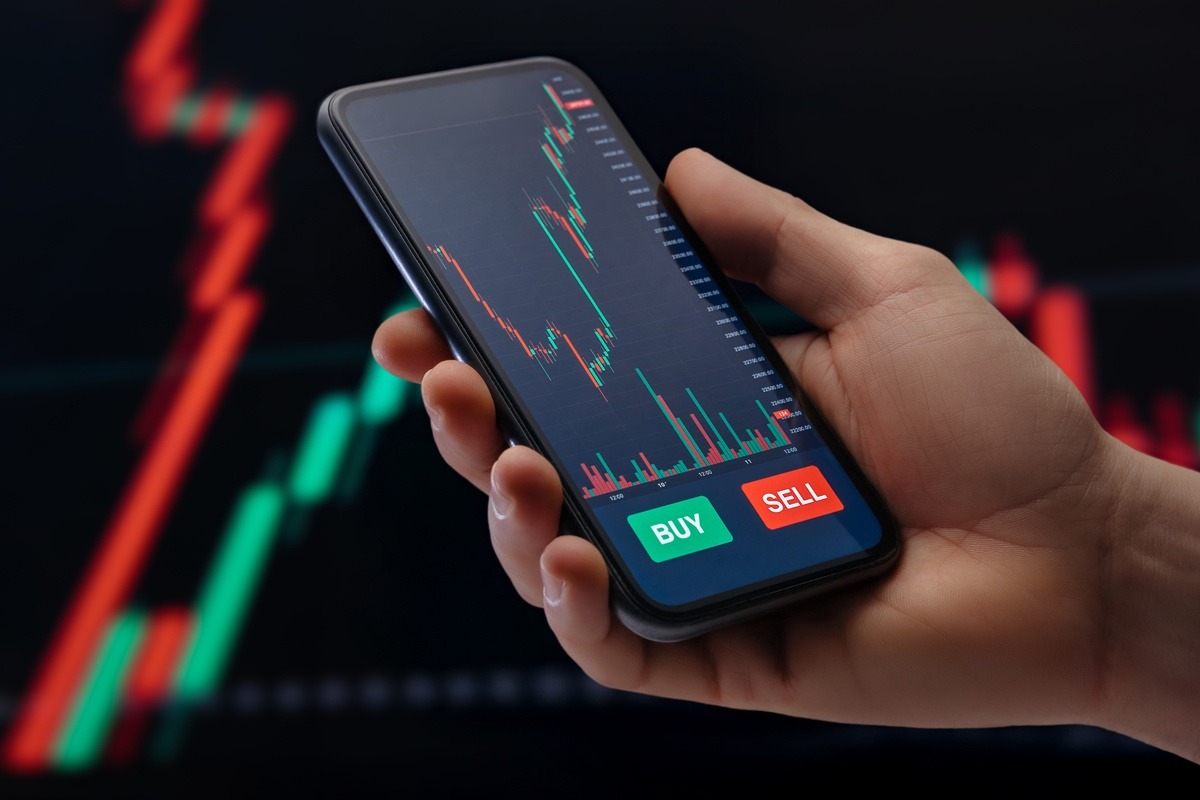
Wall Street Is Learning To Live Without The Closing Bell
“The closing bell once told investors when the market stopped. Tokenisation is beginning to ask why it needs to stop at all.” DNA Crypto.
The Closing Bell Is More Than A Bell
At four o’clock each afternoon in New York, one of finance’s most familiar rituals takes place. The closing bell sounds, the day’s official trading session ends and Wall Street pauses, however briefly, before doing it all again the following morning.
The ceremony has survived electronic trading, algorithmic markets, globalisation and the smartphone. It belongs to an era in which exchanges were physical places, traders needed to be present, and financial markets were organised around the working day.
That arrangement is increasingly peculiar.
Crypto markets never adopted it. Bitcoin does not close for Thanksgiving. Stablecoins do not wait for Monday morning. A blockchain does not recognise the difference between Sunday afternoon and Tuesday at 10am.
That expectation is now beginning to travel in the opposite direction, from crypto into traditional finance.
On 17 September, the US Securities and Exchange Commission created a five-year conditional framework allowing limited on-chain trading of tokenised shares listed on America’s national exchanges. Less than three weeks later, a joint venture between crypto exchange OKX and Intercontinental Exchange, the owner of the New York Stock Exchange, filed plans for a platform intended to offer tokenised trading in more than 60 US-listed companies around the clock.
This is not another experiment involving synthetic shares that merely imitate the price of Apple or Microsoft.
The SEC framework requires tokenised securities offered through these venues to carry the same rights and privileges as the conventional shares they represent. Issuers can object to their inclusion, smart contracts have to be auditable, and trading must stop if the underlying stock is halted on its primary exchange.
That distinction changes the story’s significance.
Tokenisation is no longer asking whether a share can be copied onto a blockchain.
It is beginning to ask whether the market around the share still needs to keep bankers’ hours.
The Real Story Is Time
Most discussion of Tokenisation still begins with the asset. Property can be fractionalised. Funds can be represented digitally. Bonds can settle on-chain. Securities can move across new networks.
But the more profound change may concern something investors rarely think of as financial infrastructure at all: time.
Financial markets have always rationed time. There are opening hours, closing hours, settlement windows, cut-off times, bank holidays, weekends and overnight periods in which the official market is either unavailable or considerably thinner.
Those conventions did not arise because capital naturally sleeps. They arose because the infrastructure needed people, institutions and systems to coordinate around predictable operating periods.
Digital markets challenge that assumption.
If ownership can be recorded continuously, assets can be transferred continuously and money can settle continuously, then the question becomes obvious: why should the ability to trade stop because a clock in Manhattan reaches four?
This is a more consequential version of the argument explored in Tokenisation infrastructure. The technology becomes interesting not when an asset looks digital, but when the operating assumptions around that asset begin to change.
Removing time as a constraint would be one such change.
Wall Street Was Already Moving Before Tokenisation Arrived
It is worth avoiding one easy exaggeration. Tokenisation did not invent extended-hours equity trading.
US stocks already trade outside the traditional session, and the market has been moving towards longer hours for several years. The SEC held a dedicated roundtable on 17 September examining preparations for 24-hour markets, including overnight surveillance, clearing, settlement, liquidity and investor protection. Commissioner Hester Peirce noted that extended trading is already evolving towards a 23-hour, five-day model.
But the same SEC data also exposes the gap between offering longer hours and creating a real market during those hours.
Overnight trading still accounts for less than 1% of total trading in US-listed shares and is heavily concentrated in a small number of stocks.
That matters because an exchange can technically remain open without possessing the depth, pricing or resilience investors associate with a mature market.
The lights being on is not the same as liquidity being there.
A Market That Never Closes Is Not Automatically A Better Market
This is where the Tokenisation story requires more scepticism than the industry usually gives it.
A 24/7 market sounds self-evidently superior. Investors can respond immediately to news. Asian investors no longer have to structure their day around New York. Capital is no longer trapped by arbitrary opening hours. Trading becomes more global and theoretically more accessible.
All of those things may be true.
But continuous trading creates a different set of problems.
FINRA has long warned investors that trading outside conventional hours can involve lower liquidity, higher volatility, wider bid-ask spreads and prices that differ across unconnected venues. News released when market depth is low can also have a disproportionately large effect on prices. :chatgpt-content-reference{index=”4″}
The SEC is asking similar questions as markets push towards longer hours. Regulators are considering whether liquidity becomes more evenly distributed or simply spread too thin, what happens to clearing and collateral systems overnight, how firms staff surveillance continuously and whether cyber resilience needs to change when there is no obvious period in which systems can pause.
Those are not objections to 24/7 trading.
They are reminders that removing a constraint does not automatically remove the risks the constraint was helping the market manage.
The Closing Bell Creates Concentration
Traditional trading hours have an underappreciated economic advantage.
They force buyers and sellers into the same place at roughly the same time.
That concentration can produce deeper liquidity and stronger price discovery. A large number of investors, market makers, brokers and institutional desks all know when the main session begins and ends, so capital naturally congregates around it.
If trading becomes genuinely continuous, some of that concentration may disperse.
An investor selling at 3am may technically have access to the market, but access is only useful if somebody is prepared to take the other side at a competitive price.
This is why Tokenisation and liquidity should never be treated as synonyms.
A token can move every second of every day.
That does not mean a buyer exists every second of every day.
Crypto Has Already Run This Experiment
Traditional finance does not have to imagine what an always-open market looks like. Crypto has been operating one for years.
There are genuine advantages. Investors can respond to events when they happen rather than waiting for Monday morning. Capital moves between jurisdictions without first consulting an exchange calendar. A market participant in Singapore, London or New York does not have to organise their entire trading day around the same opening bell.
There are also lessons.
Crypto liquidity is not constant merely because the market never closes. Depth changes according to geography, time of day and market conditions. Weekend trading can look very different from weekday trading. Thin liquidity can exaggerate price moves. A technically continuous market remains economically uneven.
Equity Tokenisation therefore inherits an important warning from crypto.
Continuous access is not continuous liquidity.
That may become one of the most important distinctions for the next generation of financial markets.
The SEC Has Chosen A Controlled Experiment
The structure of the SEC’s Innovation Exemption suggests regulators understand these tensions.
The exemption is temporary and conditional, not an unrestricted permission slip. Tokenised Securities Venues are subject to limits on the number of securities and trading volume they can support. The tokenised shares must provide equivalent shareholder rights, including economic and governance rights. Issuers have a route to object when an unaffiliated third party proposes tokenising their stock.
The smart contracts themselves must be publicly auditable and deployed on a public, permissionless distributed ledger. The venue must also halt trading when trading in the conventional underlying share is stopped.
This last condition is revealing.
The SEC is allowing the market to experiment with a new operating layer without pretending the old market has ceased to matter.
If the conventional share stops, the token stops.
That tells us something important about where Tokenisation currently sits.
It is not yet replacing the traditional securities market.
It is being grafted onto it.
The First Serious Question Is What The Token Actually Owns
This is also why the rights attached to tokenised stocks matter more than the fact that they are on-chain.
The Tokenisation market has spent too much time using the same word for very different products. A token might represent direct ownership, a beneficial interest, a contractual claim, a synthetic exposure or merely a price-linked instrument.
Those structures should not be treated as equivalent.
The SEC’s framework explicitly requires the tokenised NMS stocks covered by the exemption to provide the same rights and privileges as their conventional counterparts. The distinction between a real share represented through new infrastructure and a synthetic product tracking its price is fundamental.
It also reinforces an argument DNACrypto has made repeatedly through transparent tokenised assets: a digital representation only becomes useful when the investor can understand the legal and economic relationship between the token and the asset underneath it.
The blockchain can record ownership.
It cannot compensate for unclear ownership rights.
The NYSE Connection Makes This Harder To Dismiss
The involvement of Intercontinental Exchange is what makes the latest proposal particularly difficult to dismiss as another crypto experiment.
ICE owns the New York Stock Exchange, one of the great institutions of conventional capital markets. Its 50-50 joint venture with OKX, known as OKXICE, has filed to establish an around-the-clock tokenised securities venue initially covering more than 60 US-listed companies. The proposal follows directly from the SEC’s new framework.
This is not the New York Stock Exchange announcing that its main market will suddenly operate seven days a week, and it should not be described that way.
But the symbolism remains important.
The company behind the most recognisable physical exchange in the world is participating in an attempt to build a market in which the physical idea of opening and closing becomes less relevant.
Finance rarely changes by destroying its old institutions.
More often, those institutions absorb whatever becomes useful.
The Bigger Change Is Happening Behind The Trade
If the story ended with longer trading hours, it would be interesting but not transformational.
The reason Article 81 matters is that the trading layer is changing at the same time as the machinery beneath it.
DTCC, which sits at the centre of US post-trade infrastructure, has already completed production transactions using tokenised assets held at its Depository Trust Company subsidiary. The July programme included US Treasury repo, Treasury purchases and sales, equity transactions, collateral pledges and cross-chain transfers, involving roughly 40 firms.
DTC holds more than $114tn of securities and has said it plans to launch its Tokenization Service in October. The service is designed so DTC-custodied assets can gain a tokenised representation while preserving the ownership rights and protections of the conventional security.
That scale changes the discussion.
The important Tokenisation market may not be created by taking obscure assets and putting them on-chain.
It may be created by taking the enormous pools of assets already sitting inside established financial infrastructure and making them capable of moving in new ways.
This is the argument behind why Tokenisation may change how finance wins rather than who wins.
The institutions are not necessarily disappearing.
Their infrastructure is changing.
The Back Office Is Beginning To Catch The Front Office
This matters for 24/7 trading.
A market cannot become genuinely continuous if only the trading screen operates continuously.
Something must happen after the buyer presses buy.
The asset has to change ownership. Cash or another settlement asset has to move. Collateral has to be managed. Records have to reconcile. Corporate actions have to reach the correct owner. Regulators and intermediaries have to know where responsibility sits.
If these processes remain confined to traditional operating windows, a 24/7 front end simply pushes transactions into a queue waiting for the rest of finance to wake up.
That is why the less glamorous work around regulated Tokenisation infrastructure matters more than the visual novelty of a tokenised stock.
For a genuinely continuous market, the back office eventually has to learn to stay awake as well.
The Industry Is Starting To Connect The Old And The New
There are already signs of this convergence elsewhere.
In September, Ondo Finance became the first Tokenisation company to join DTCC’s Fund/SERV network. That system processes more than 85% of US mutual fund transaction activity, giving tokenised fund products a route into an established distribution and processing infrastructure rather than requiring the market to build everything again from the ground up.
This is a useful clue about what institutional Tokenisation may ultimately look like.
The blockchain may be new.
The fund administrator, custodian, transfer agent, market maker and distribution network may be familiar.
That combination may disappoint anyone who expected Tokenisation to replace traditional finance.
For investors, it may be precisely what makes Tokenisation usable.
The Real Prize May Be Capital Mobility
The strongest case for always-on markets is not that retail investors can buy a stock at 2am.
It is what happens when assets can move more freely through the wider financial system.
If ownership can be transferred outside conventional operating windows, collateral could eventually become more mobile. Investors might move assets between venues more quickly. Settlement cycles could become less dependent on geography. Capital that currently waits overnight or over a weekend may become more productive.
This is where tokenised capital control becomes more important than the trading gimmick.
– A financial asset is not valuable only because somebody can buy or sell it.
– It is valuable because of what its owner can do with it.
– Tokenisation becomes economically interesting when it changes those possibilities.
But There Is A Cost To Removing The Pause
The financial industry should also be careful what it wishes for.
Markets have always used quiet periods for operational work. Systems are maintained. Positions reconcile. Risk teams review exposures. Corporate actions are processed. People go home.
A market that never closes requires the infrastructure around it to become much more resilient.
Cybersecurity cannot depend on a convenient maintenance window. Surveillance has to operate when New York is asleep. Liquidity providers need models for hours that may attract far fewer participants. Clearing and settlement processes need to cope with transactions that arrive continuously. Risk management becomes a permanent activity rather than one arranged around the trading session.
The SEC has explicitly raised these issues, asking how payment, collateral, clearing, settlement, default management, staffing and failover systems should operate in an overnight market.
The closing bell may look old-fashioned.
The pause it creates is not economically meaningless.
What Happens At 3 am When A CEO Resigns?
This is where a continuous equity market becomes more complicated than a continuous Bitcoin market.
Bitcoin has no chief executive. It does not publish quarterly earnings. It does not announce an acquisition or issue a profit warning.
Companies do.
Listed businesses frequently release material information outside regular trading hours precisely because the market is largely closed. Investors have time, however limited, to digest the information before the main session begins.
In a genuinely continuous market, there may be no such pause.
A chief executive resignation, regulatory investigation, or earnings surprise released in the middle of the night could immediately enter a thinly traded market. The first price reaction might be violent not because the information is more important, but because fewer buyers and sellers are available to process it.
FINRA’s longstanding warnings about extended-hours trading specifically highlight this combination of news announcements, lower liquidity and greater volatility.
This does not mean markets should remain closed.
It means market design matters.
Global Investors Will Ask Why America Still Sleeps
A competitive reason also makes it unlikely the direction of travel will reverse.
American companies are owned globally. An investor in Singapore currently experiences the US trading day very differently from one in New York. The opening bell arrives late in the evening. The close arrives after midnight.
Crypto altered expectations by showing investors that a global asset does not necessarily need a home time zone.
Tokenised US equities could gradually create the same expectation around conventional securities.
If markets elsewhere begin allowing investors to trade high-quality assets continuously, the question will not only be whether the American system prefers longer hours.
It will be whether America can afford to insist that global capital waits.
Commissioner Mark Uyeda made a related point at the SEC’s September roundtable: the world already contains a 24-hour securities marketplace because US shares and related instruments trade in different places around the globe. The policy question is increasingly about where that activity occurs and which markets remain attractive to investors.
Tokenisation could make that competition considerably more visible.
Europe Is Not Standing Still
The United States is not developing this market in isolation.
Europe already operates a distributed ledger technology pilot regime for tokenised securities, while the European Central Bank’s new settlement infrastructure is designed to connect tokenised markets with central bank money. Recent debate in Europe has focused increasingly on whether the region can scale those experiments quickly enough as the US begins opening more of its own market structure to tokenised securities.
This creates a different kind of financial competition.
The question is no longer which jurisdiction talks most enthusiastically about blockchain.
It is which one can build an environment where ownership, settlement, liquidity and investor protection work well enough for capital to move at scale.
This is where Tokenisation and the future of capital control becomes a geopolitical issue as much as a technical one.
What Investors Should Watch
The next stage should be judged less by the number of stocks that receive a token and more by whether the market around those stocks actually improves.
- – Whether tokenised stocks develop meaningful liquidity outside conventional US market hours.
- – Whether bid-ask spreads remain competitive when the traditional market is closed.
- – Whether token holders consistently receive the same voting, dividend and corporate-action rights as conventional shareholders.
- – Whether custody, settlement and ownership records can operate continuously rather than simply extending trading hours.
- – Whether several tokenised venues fragment liquidity or successfully connect it.
- – Whether issuers become comfortable with their shares trading through new on-chain market structures.
- – Whether institutional investors use the new infrastructure for capital mobility, collateral and settlement rather than merely additional trading.
Those questions will tell us whether this becomes a new market or simply a new screen.
The Capital Behaviour Shift
The most important change is not that investors will suddenly want to trade continuously.
It is that the existence of continuous markets changes the value of waiting.
In traditional finance, an investor often has no choice when a market closes. Capital is effectively locked into the timetable of the infrastructure. In a continuously accessible market, waiting becomes a decision rather than a technical necessity.
That can alter behaviour.
Investors can respond faster. Collateral may eventually move faster. Global portfolios can become less dependent on one financial centre’s working day. At the same time, investors may become less patient, market reactions may become more immediate and liquidity could become spread across hours in ways that make individual sessions less deep.
Tokenisation does not simply make assets move faster. It changes when capital is allowed to make a decision.
That could prove much more consequential.
The Closing Bell May Survive Even If The Market Does Not Close
The closing bell itself could survive all of this.
Finance likes ceremony. The New York Stock Exchange could operate within a world of continuous digital markets and still invite executives to ring a bell at four o’clock.
But its meaning would change.
Instead of telling the world that trading has ended, the bell might simply mark the end of the day’s deepest and most liquid session before capital continues moving elsewhere.
That may be the more realistic future.
Not a world in which the traditional market disappears, but one in which the traditional session becomes one particularly important period inside a market that no longer truly stops.
Conclusion
Tokenised stocks are often presented as another chapter in the blockchain story.
That may underestimate what is happening.
The more interesting change is that one of finance’s oldest organising principles, the trading day itself, is beginning to loosen.
The SEC has created a controlled route for tokenised US-listed shares. A joint venture involving OKX and the owner of the New York Stock Exchange has filed plans for a 24/7 tokenised securities venue. DTCC is preparing infrastructure that can give DTC-held securities a tokenised form while preserving the rights attached to the conventional assets. :chatgpt-content-reference{index=”17″}
None of this proves that 24/7 equity markets will be better.
They could create greater access, faster movement and more globally responsive capital. They could also spread liquidity too thin, make operational resilience harder and expose investors to prices formed in periods when very little capital is actually present.
That tension is exactly why the story matters.
The real breakthrough in Tokenisation will not be the moment somebody can buy a digital version of a stock at three in the morning.
It will be the moment ownership, settlement, liquidity and investor rights can operate reliably enough that nobody finds the fact remarkable.
For more than a century, the closing bell has told Wall Street that the day’s market is over.
Tokenisation is beginning to suggest that the bell may eventually mark something much less important: the moment New York goes home while capital carries on.
Relevant DNACrypto Articles
- – Tokenisation Infrastructure
- – Regulated Tokenisation Infrastructure
- – Tokenisation Liquidity
- – Tokenised Capital Control
- – Tokenisation Future Of Capital Control
- – Transparent Tokenised Assets
- – Why Tokenisation Changes How Finance Wins, Not Who Wins
- – The Real Value Of Tokenisation
- – Tokenised Money Market
Image Source: Envato Stock
Disclaimer: This article is for informational purposes only and does not constitute financial, legal, or investment advice.