Bitcoin Is Still The Starting Point For Digital Ownership
“Bitcoin is still the starting point for digital ownership because it forces the market to ask who really controls value.” DNA Crypto.
The Market Needs A Stronger Starting Point
Digital assets have become crowded with narratives. Every cycle brings a new phrase, a new sector, a new platform and a new promise. Some of those ideas matter. Many do not last.
Bitcoin still matters because it remains the cleanest starting point for the digital ownership conversation.
It is not just another asset inside the crypto market. It is the original test of whether value can be held directly in digital form, transferred across a network and protected without relying entirely on the traditional account-based financial system.
That does not make Bitcoin simple. It does not remove volatility, custody risk, tax considerations, regulatory questions or operational responsibility. But it does explain why Bitcoin remains foundational.
Before the market can properly understand Tokenisation, Stablecoins, digital settlement or Real Asset infrastructure, it needs to understand the ownership question that Bitcoin introduced.
Bitcoin Changed The Question From Access To Control
Most financial products are built around access. A client accesses a bank account, a brokerage account, a fund platform, a payment app or an exchange. The experience may feel like ownership, but control usually sits inside a wider system of intermediaries, policies, permissions and operating procedures.
Bitcoin changed that question.
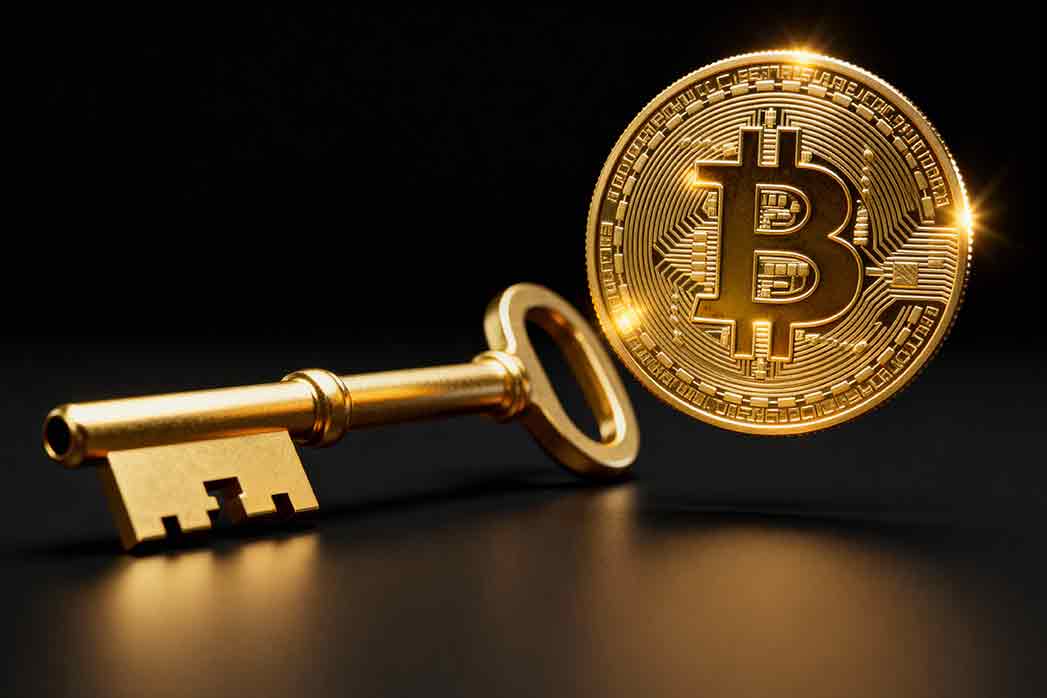
It asked whether someone could hold value directly, control access through private keys and move that value across a network without depending on a central account provider. That was a major shift because it moved the conversation from control access.
This is why Bitcoin ownership is still such an important theme. The asset matters, but the deeper question is who controls it, how it is held and what ownership really means when value becomes digital.
That question continues to shape the wider digital asset market.
Ownership Without Custody Is Incomplete
Bitcoin makes custody impossible to ignore. If someone owns Bitcoin but does not understand how it is held, controlled or recovered, the ownership position is incomplete.
This is where many investors still make mistakes. They focus on the purchase but not the custody model. They think about price but not access. They ask whether Bitcoin should be in a portfolio, but not how the asset will be secured, governed and protected over time.
Self-custody gives the holder direct control, but it also creates direct responsibility. Institutional custody may provide processes, governance, reporting and recovery options, but it introduces reliance on a provider. Multi-signature models, hardware wallets, qualified custodians and treasury policies all sit inside this broader custody decision.
That is why Bitcoin custody infrastructure is not a back-office detail. It is one of the core foundations of digital ownership.
A weak custody model can turn a good investment thesis into an operational risk.
Bitcoin Teaches Financial Responsibility
Bitcoin carries a lesson that traditional finance often softens: ownership requires responsibility.
In traditional systems, many operational questions are hidden from the user. Institutions process transfers. Account access is recovered through service teams. Mistakes may sometimes be reversed. Custody, records and settlement are handled behind the scenes.
Bitcoin exposes those functions.
The holder has to think about keys, wallets, recovery, counterparties, execution routes, fraud risk, inheritance, treasury process and security discipline. For some people, that is uncomfortable. For others, it is the reason Bitcoin matters.
This does not mean everyone should self-custody everything. It means investors need to understand where responsibility sits.
The future of digital ownership will not be built on slogans about freedom alone. It will be built on better education, better custody design and clearer control.
Bitcoin Is Financial Protection, Not Just Market Exposure
Bitcoin is often reduced to price performance. That is understandable, because markets create attention. But price is not the whole story.
For many holders, Bitcoin is also a form of financial protection. It offers a way to hold value outside the traditional banking system, outside a single currency, outside a single jurisdiction and outside the balance sheet of a financial intermediary.
That does not make it risk-free. Bitcoin is volatile, and volatility matters. But volatility is not the only risk in finance. Dependency is also a risk. Counterparty exposure is a risk. Currency debasement is a risk. Account restriction is a risk. Settlement failure is a risk. Institutional fragility is a risk.
This is why Bitcoin financial protection remains a serious theme. The point is not that Bitcoin removes all risk. The point is that it changes where some risks sit.
That is why the asset continues to matter beyond speculation.
Liquidity Is Part Of The Bitcoin Case
Bitcoin also matters because it is one of the most liquid digital assets in the world. For serious investors, liquidity is not a side issue. It is part of capital behaviour.
An asset can be attractive but difficult to exit. Another asset can look stable but become illiquid when conditions change. Bitcoin is volatile, but it also has deep global markets, continuous trading, broad recognition and established infrastructure around execution and settlement.
That gives Bitcoin a distinct role in the digital asset market.
It can act as a liquidity reserve, collateral reference point, treasury asset or long-term holding, depending on the investor’s strategy and risk appetite. None of those roles should be treated casually, but all of them require the market to understand Bitcoin as more than a price chart.
Bitcoin sits close to the question of how capital moves under stress.
The Trust Question Has Not Disappeared
Bitcoin was designed to reduce reliance on trusted intermediaries, but the market around Bitcoin still requires trust decisions.
Most people and institutions do not interact with Bitcoin in a purely technical way. They use exchanges, brokers, custodians, wallets, OTC providers, banks, accountants, advisers and reporting tools. Each layer introduces questions.
Who can be trusted? Who controls the keys? How is the asset safeguarded? How does execution happen? What records exist? What happens if a provider fails? How does the investor recover access?
This is why who can be trusted with Bitcoin remains one of the most important questions in the market.
Bitcoin may reduce the need for some forms of trust, but it does not eliminate the need for judgement.
Institutions Need Bitcoin Infrastructure, Not Bitcoin Slogans
Institutional investors do not approach Bitcoin in the same way as retail markets. They need governance, custody, reporting, risk management, investment policy, accounting treatment, legal review, execution quality and operational continuity.
This changes the conversation.
An institution may believe in the long-term role of Bitcoin, but belief is not enough. The asset has to fit inside a professional operating model. That means deciding how exposure is approved, who can move assets, how custody is monitored, how risk is reported and how liquidity is managed.
This is where digital asset infrastructure becomes central. Institutions do not only need access. They need a controlled route through the market.
The future of institutional Bitcoin will be decided less by slogans and more by process.
Bitcoin Is The Foundation, Tokenisation Is The Expansion
Bitcoin is not the whole future of digital assets, but it remains the foundation. Tokenisation is one of the clearest examples of how the original ownership question expands into the real economy.
Bitcoin proved that digital ownership could exist. Tokenisation asks whether digital ownership logic can improve how investors access Real Assets, property, private markets, income streams and cross-border opportunities.
That is a natural progression.
The market should not treat Bitcoin and Tokenisation as unrelated themes. Bitcoin starts the conversation about control, custody and ownership. Tokenisation applies those questions to assets with legal rights, cash flows, documentation, transfer rules and investor reporting.
The bridge between them is infrastructure.
Digital Ownership Needs Better Language
One reason the market struggles is that digital ownership is often described badly. It is either reduced to speculation or wrapped in technical language that most investors find unhelpful.
The better language is simpler.
What do you own? Who controls it? How is it secured? How can it move? What happens if something goes wrong? How does it fit into a broader financial strategy?
Bitcoin forces these questions earlier than most assets. That is why it remains the training ground for digital ownership. Anyone who understands Bitcoin properly is better prepared to understand custody, Tokenisation, Stablecoins, settlement, and Real-Asset infrastructure.
That is why Bitcoin should remain central to DNA Crypto’s educational and infrastructure narrative.
Why This Matters For DNA Crypto
DNA Crypto started from the belief that digital assets matter because they change how people think about value, ownership, access and financial resilience. That belief remains intact.
The business is now moving into a more focused infrastructure phase. That means Bitcoin education, custody understanding, Tokenisation, Real Assets, Stablecoin settlement, escrow thinking, cross-border capital and institutional advisory.
Bitcoin remains the starting point because it holds the clearest version of the ownership question.
For DNA Crypto, the next phase is not about chasing every crypto narrative. It is about building around the infrastructure of digital ownership, with Bitcoin as the foundation and Tokenisation as the expansion.
That is a stronger and more positive direction.
The Market Maker Opportunity
Liquidity still matters, especially for firms, investors and counterparties looking for cleaner digital asset access. If you are a market maker or liquidity provider able to offer institutional-quality pricing, execution support or discounted routes where appropriate, DNA Crypto is open to relevant conversations.
The aim is not to build noise around trading. The aim is to understand where trusted liquidity, execution quality and digital asset infrastructure can support the next stage of the market.
For appropriate discussions, please reach out through DNACrypto.co.
The Capital Behaviour Shift
Capital behaves differently when confidence is scarce. In early markets, capital often follows momentum. In mature markets, capital asks where control sits, how assets are protected and whether the route into the opportunity can withstand stress.
Bitcoin sits at the centre of that shift because it forces the investor to confront ownership directly.
The question is not only whether Bitcoin has value. The question is whether the holder understands custody, liquidity, counterparty risk, security and long-term control.
That is where Bitcoin becomes more than an asset.
It becomes a discipline.
The Direction Of Travel
The direction of travel is clear. Digital assets are moving from access towards ownership infrastructure.
Bitcoin remains the first and most important example of direct digital ownership. Tokenisation extends the idea into Real Assets. Stablecoins support settlement. Custody protects control. Escrow may improve transaction confidence. Advisory helps investors understand the route.
This is the positive story now.
The market does not need more empty crypto language. It needs better infrastructure around the assets that matter.
Bitcoin is still the starting point.
Conclusion
Bitcoin is still the starting point for digital ownership because it forces the market to ask who really controls value.
It introduced digital scarcity, direct ownership, custody responsibility, settlement finality and financial protection in a way no previous asset had done. That makes it more than a speculative instrument. It makes it the foundation of the wider digital asset infrastructure conversation.
For DNA Crypto, Bitcoin remains the beginning of the story, not the end of it.
The next chapter is Tokenisation, Real Assets, Stablecoin settlement, custody education, escrow infrastructure and institutional advisory.
But the starting point remains Bitcoin.
Because before capital can trust digital ownership, it has to understand what ownership really means.
Relevant DNACrypto Articles
- – Bitcoin Ownership
- – Bitcoin Custody Infrastructure
- – Bitcoin Financial Protection
- – Who Can Be Trusted With Bitcoin
- – Digital Asset Infrastructure
Image Source: Adobe Stock
Disclaimer: This article is for informational purposes only and does not constitute financial, legal, or investment advice.