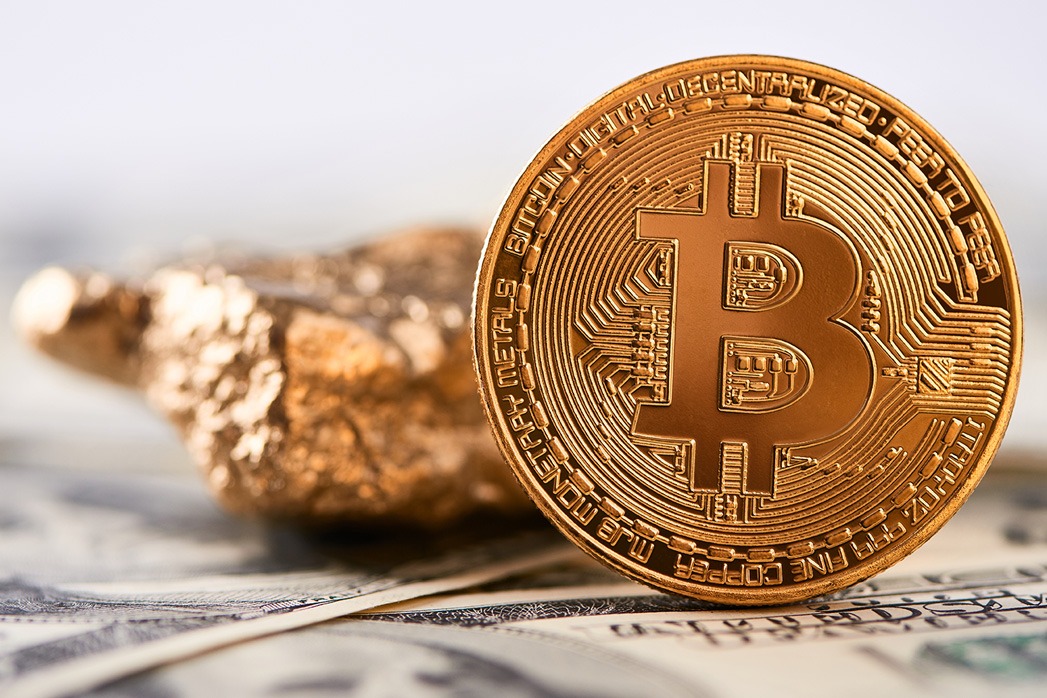
Bitcoin and Gold on scales

Bitcoin vs. Inflation: A Comparative Analysis with Gold

“Gold proved value through time. Bitcoin proves value through code.” – DNA Crypto Knowledge Base.

Amidst concerns about inflation, prudent investors are turning to alternative assets to preserve their purchasing power and long-term financial stability. Gold, a time-tested haven, now has a serious contender: Bitcoin. Examining the period from 2020 to 2025, both of these sought-after assets have gained traction as inflation hedges.

In this write-up, we examine the performance and volatility of key economic indicators, such as the CPI and real yields, to help you determine which asset is better suited for these changing financial times.

Performance Overview (2020–2025)

Bitcoin (BTC)


Gold (XAU)

  • Price Growth: Gold increased from around €1,300 per ounce in early 2020 to circa €3,000 by May 2025, a 122% surge.
  • Volatility: This precious metal maintained a more stable annualised volatility, ranging between 12% and 15%.

Inflation and Real Yields

CategoryPeriodDetails
Consumer Price Index (CPI)2020Inflation spiked to 7.0% due to the COVID-19 pandemic.
 2021–2022Maintained at 6.5% in 2022.
 2023–2025Gradually declined to 2.4% by March 2025, aligning with the European Central Bank’s target.
Real Yields (10-Year Treasury)2020–2021Real yields were negative, reaching lows of around -1.0%, due to aggressive monetary easing.
 2022–2025The shift was positive, climbing to approximately 1.67% by April 2025, particularly with the implementation of tighter monetary policy.

Comparative Insights

1.     What is the Effectiveness of Inflation Hedging?

It is safe to say that Gold demonstrated a strong positive correlation with inflation, further reinforcing its role as a traditional hedge. In contrast, Bitcoin exhibited inconsistent behaviour in response to inflationary pressures. This is especially true with performance influenced more by market sentiment and liquidity conditions.

2.     Market Liquidity and Adoption

We can conclude that gold benefits from deep liquidity and widespread acceptance among central banks and institutional investors. On the other hand, Bitcoin’s liquidity has tremendously improved, especially with the introduction of ETFS and increased institutional adoption. However, it still faces regulatory uncertainties.

3.     Utility and Use Cases

Gold serves industrial, ornamental, and monetary purposes, including central bank reserves. In contrast, Bitcoin is primarily a digital asset used in decentralised Finance (DeFi), cross-border transactions, and Blockchain-based applications.

Investor Comparison Table (2020–2025)

CriteriaGoldBitcoinInvestor Insight
Return on Investment~122%~1,300%Bitcoin outperformed in returns but with higher volatility.
Volatility (Annualised)12–15%60–80%Gold offers stability; Bitcoin entails higher risk.
Inflation HedgeStrong positive correlationMixed behaviourGold remains a reliable hedge; Bitcoin’s role is uncertain.
Liquidity & AdoptionDeep, globally acceptedGrowing, yet evolvingGold is established; Bitcoin is gaining traction.
UtilityIndustrial, monetary usesDigital finance applicationsGold is traditional; Bitcoin is innovative.

BTC-to-Gold Ratio Analysis

The BTC-to-Gold ratio has had its fair share of fluctuations. This shows the dynamic nature of these two classes of assets. Additionally, the ratio has formed an inverted head and shoulders pattern since 2016, with key lows in 2020 and 2023. A breakout above the 40 levels would signal a surge in Bitcoin prices.

In a Nutshell

In the last decade or so, Bitcoin and Gold have both been leveraged against inflation, each with distinct characteristics:

  • Gold: Offers stability, lower volatility and a proven track record as a safe-haven asset.
  • Bitcoin: Provides higher returns with greater risk, appealing to investors seeking growth and exposure to digital assets.

Overall, investors should consider their risk tolerance, investment goals, and portfolio diversification when choosing between these assets.

Image Source: Adobe Stock

Disclaimer: This article is purely for informational purposes. It is not offered or intended to be used for legal, tax, Investment or financial advice.

Read more →

Bitcoin in the Cloud: Digital Currency's Rise.

The Power of Bitcoin for Personal Financial Freedom

Amidst rising inflation, unstable monetary policy, and economic uncertainty across Europe, more people are asking: Where can I store my money safely?

No, it’s not a magic solution—and yes, it has its ups and downs—but in the long run, Bitcoin offers a unique form of financial independence, as no government controls it. Also, it can’t be inflated at will, giving you more control over your money.

Why Inflation Is Everyone’s Problem

Inflation isn’t just about rising prices; it’s about your money gradually losing value.

– Savings lose value: If inflation is 5%, your bank gives you 2%, which means you’re losing 3% every year just by holding cash.

– Central banks print more money: In recent years, we’ve seen a surge in money supply in the eurozone and globally. Significantly, this can fuel inflation and reduce the value of what you already have.

– The working class are the most hit: If your income goes to rent, food, and transport, inflation catches up with you faster than someone with wealth stored in assets.

Traditionally, people turned to gold or property to preserve value; Bitcoin is changing today’s narrative.

“Despite tightening measures, inflation in the euro area remains above target at 3.4%—with core inflation still sticky due to rising service sector costs.” — Christine Lagarde, ECB President, March 2025

What Makes Bitcoin Different?

Bitcoin is a digital currency, unlike anything that came before it. There’s no central authority, and no government can “print” more of it. Again, the rules are written into the code and are known to everyone.

Key traits:

– Decentralised: No one controls Bitcoin—not a government, not a company.

– Limited supply: Only 21 million bitcoins will ever exist.

 – Transparent: All transactions are public and recorded on a Blockchain. No hidden activity or backroom deals.

As a result, Bitcoin is often likened to gold, hence the phrase “digital gold.”

How Bitcoin Can Give You More Control

Here’s how Bitcoin can be valuable beyond just speculation:

1. Protection from Inflation

– Bitcoin’s capped supply makes it fundamentally deflationary.

– It’s increasingly seen as a hedge, like gold, but easier to store and send.

2. Self-Custody and Freedom

 – Store it in your wallet, i.e., no banks required.

– Transfer it globally without intermediaries or high fees.

– Access your funds 24/7. No waiting for long hours for approvals.

3. Low Barrier to Entry

– You don’t need to buy a whole Bitcoin. You can even start with €5 or €10.

– No wealth declaration requirements. You are good to go as long as you have a phone and internet.

– It is ideal for underserved people or folks fed up with traditional banking systems.

What About the Risk?

Bitcoin isn’t perfect. It’s volatile, but here’s how to approach it like a pro:

– Diversify: Don’t go all-in; Bitcoin can be part of a broader financial plan.

– Think long-term: Day-to-day swings matter less if your horizon is years.

– Use ECA, which stands for ‘euro-cost averaging.’ Invest small, regular amounts. This method smooths out the ups and downs.

  • Stay informed: Know what you’re buying, understand how it works and indulge with knowledge and confidence.

Real-World Examples

In Argentina and Venezuela, Bitcoin is their lifeline. Local currency collapses drive people to use Bitcoin, which enables them to protect their savings and seamlessly execute cross-border money transfers.

“Crypto usage in high-inflation economies like Turkey, Nigeria, and Argentina continues to rise, with Bitcoin often functioning as a daily store of value.” — Chainalysis, 2025 Global Adoption Index.

“Over the past five years, 17 currencies have lost more than 50% of their value against the US dollar.” — IMF Financial Stability Report, Q4 2024

Traditional banking systems in Europe are becoming more restrictive and costly, which makes Bitcoin an appealing, global, open alternative for users.

“Retail banking fees in the eurozone have increased 18% year-over-year, driven by higher regulatory compliance costs and interest rate volatility.” — Bank for International Settlements, EU Banking Report 2024

Getting Started with Bitcoin

Interested but not sure where to begin?

  1. Learn first – Don’t just follow influencers.
  2. Pick a reputable exchange – Stick to regulated platforms in the EU.
  3. Start small – Buy a little to get a feel for it.
  4. Move it to your wallet – Store it outside the exchange if you want complete control.
  5. Secure it – Use 2fa hardware wallets, and never share your private keys.

If that is not enough or you have questions, please get in touch with us and speak to an expert.

Final Thought

Bitcoin empowers users by restoring their financial independence. It provides a financial option in a world dominated by central banks and political and economic decisions that often do not benefit the masses.

Now get this: it won’t solve everything, but anyone in Europe who desires long-term financial security, a hedge against uncertainty, and enhanced control over their money should consider Bitcoin.

Bitcoin operates continuously without scheduled closures and differs from traditional bank institutions.

And unlike banks, Bitcoin doesn’t close on Fridays.

Image Source: Adobe Stock

Disclaimer: This article is purely for informational purposes. It is not offered or intended to be used for legal, tax, investment or financial advice.

Read more →

Global Tariff Impact on International Trade and Currencies.

Bitcoin in a Tariff-Tangled World: A Neutral Asset for Uncertain Times

When If countries start imposing tariffs on each other, markets get jittery. Global trade flows twist, fiat currencies do a little nervous dance, and investors start asking that age-old question: Where’s safe?

Traditionally, the answer might have been gold, government bonds, or a strong, stable currency like the US dollar. But in an increasingly unpredictable, tariff-happy world, a new contender is quietly sliding into the ring — one that doesn’t belong to any nation, isn’t tied to any economy, and never needs a passport: Bitcoin.

Tariffs, Tantrums and Tumbling Trust

Tariffs are essentially taxes on imports. Sometimes, they’re about safeguarding local jobs; other times, they’re just geopolitics flexing its muscles. But like most economic tools wielded under pressure, tariffs tend to come with unintended consequences.

Slap tariffs on another country’s goods, and they’re likely to retaliate. Before you know it, prices are rising, supply chains are tangling, and everyone’s central bank is stress-baking spreadsheets.

“The U.S. is considering new tariffs on Chinese electric vehicles and batteries, raising fresh concerns over a resurgence in trade tensions.”
Reuters, April 2024

Fiat currencies can feel the heat fast because they are deeply tied to their respective national economies. Especially in emerging markets, currency volatility often follows trade tensions like a moody shadow.

“Emerging market currencies have experienced their worst quarter since the pandemic, largely due to fears around global tariffs and slowing trade.”
Bloomberg, Q1 2024

This environment is like trying to play chess during an earthquake for investors. It’s no wonder they start looking beyond borders.

Bitcoin: The Stateless Safe Haven?

Bitcoin doesn’t care about your tariffs. Or your inflation. Or your three-hour-long trade negotiations. It runs on its network, unaffected by geopolitical drama — a feature, not a bug.

This neutrality makes Bitcoin appealing in a world where traditional financial systems feel the strain of nationalist policies. Bitcoin isn’t pegged to any government. It doesn’t rely on central bank decisions. And its supply is famously capped, meaning it can’t be inflated on a whim.

“We’re seeing more institutional interest in Bitcoin as a macro hedge — not instead of gold, but alongside it.”
Rick Rieder, CIO, BlackRock, January 2024

In other words, while the moods of their mother countries drag fiat currencies along, Bitcoin just keeps humming along in the background: decentralised, transparent, and blissfully indifferent.

Bitcoin in the Real World

This isn’t just crypto daydreaming. We’ve already seen hints of Bitcoin playing the safe-haven role in the wild.

The 2019 trade wars between the US and China led to Bitcoin’s price movements and echoed tensions in the Yuan and US dollar, suggesting that investors were at least toying with the idea of Bitcoin as a hedge.

More recently, with tariff threats re-emerging and uncertainty swirling around global supply chains, Bitcoin’s narrative as “digital gold” is gaining traction again.

“Bitcoin surged past $70,000 in March 2024 amid rising geopolitical tensions and renewed interest in non-sovereign stores of value.”
CoinDesk, March 2024

“In times of economic or political stress, Bitcoin often behaves more like digital gold than a tech stock.”
JPMorgan Global Markets Strategy Note, February 2024

Unlike gold, though, it’s easier to store, move, and verify, which, in a digitised world, is more than just a bonus.

The Caveats

Now, let’s not get carried away. Bitcoin is still volatile. It’s also not universally adopted nor fully understood by most investors.

And unlike traditional hedges, Bitcoin’s correlation to major market moves isn’t always consistent. Sometimes, it behaves like a risk asset; sometimes like a haven; and occasionally, like a sleepy cat who does what it wants, when it wants.

Still, in a landscape shaped by tariffs and shifting alliances, having a tool outside the usual systems is worth considering. Especially one that’s proven it can operate and thrive on its terms.

“Tariffs and protectionist policies are leading companies to rethink global supply chains, a trend that’s driving capital into decentralized and digital assets.”
The Economist, April 2024

As governments joust with trade policies and fiat currencies sway in the breeze of uncertainty, Bitcoin is quietly making its case.

It’s not perfect—it’s not even fully mature—but it is neutral, borderless, and resistant to the whims of any single economy. And in today’s tangled global web, that’s starting to look less like a novelty and more like a necessity.

Image Source: Adobe Stock

Disclaimer: This article is purely for informational purposes. It is not offered or intended to be used for legal, tax, investment or financial advice.

Read more →

Bitcoin cryptocurrency blockchain technology futuristic digital finance concept with chains and locks Decentralized virtual currency secure financial transactions and innovative cryptographic code.

Escrow for Large OTC BTC Transactions: What Is It and How Does It Work?

People dealing with large Bitcoin transactions through over-the-counter (OTC) networks often rely on escrow services. Yet, if you are buying or selling large amounts of Bitcoin through OTC channels, you may have heard of escrow, as it is the core concept enabling such transactions.

Typically, trust is all-encompassing in high-value Cryptocurrency transactions, particularly those done over the counter in the OTC market. An escrow system is an impartial safeguard between buyers and sellers that offers protection during large crypto transactions by ensuring reduced risk coupled with safety while maintaining end-of-deal responsibilities for both parties.

What Is Bitcoin Escrow?

Bitcoin escrow is a trust-oriented third-party holding service. The buyer sends their funds to an escrow provider instead of directing them straight to the seller during Bitcoin transactions. The seller obtains Bitcoin payment only after fulfilling their contractual commitment.

Basically, escrow guarantees confidence by protecting both sides where Buyers won’t be scammed, and Sellers are reassured that the buyer actually has the funds and will release them once the deal is done.

How Does It Work?

Here’s how a typical Bitcoin escrow transaction goes:

  1. Terms are agreed upon– Both sides define the deal. Timelines and the BTC to be transacted confirmation.
  2. Buyer deposits BTC – Funds are sent to the escrow agent or locked in a smart contract.
  3. Seller delivers – This could be fiat, services, goods or whatever was agreed upon.
  4. Buyer confirms – Once both parties are satisfied, the escrow releases the Bitcoin to the seller.

In case of a dispute, the escrow agent acts as a mediator and helps settle the issues based on the agreed terms. Notably, there are three main parties in any escrow transaction:

  • – Buyer.
  • – Seller.
  • – Escrow provider, which can be a trusted third party or a smart contract.


This setup works to provide structure, transparency and security for large OTC trades—especially when the parties are strangers.

In 2024, over $9.2 billion in digital assets were locked in smart contract-based escrow agreements globally, reflecting the rise of DeFi and programmable trust
(source: DeFiLlama).

Escrow Models: Centralised vs Decentralised

Depending on unique needs, there are several types of Bitcoin escrow services available:

  • – Traditional Third-Party Escrow: A neutral company or individual holds the BTC. Simple, but requires intermediary trust, which may lead to a central point of failure.
  • – Multi-signature Escrow: Uses a wallet that requires multiple private keys to release funds (e.g. 2-of-3 signatures from buyer, seller and escrow agent), thus reducing single-point risk.
  • – Smart Contract-Based Escrow: A transparent and fully automated contract on the Blockchain that releases BTC once pre-set conditions are met.


Why Use Escrow in Large Bitcoin Trades?

Especially in Europe—where regulations, taxes, and compliance are complex—escrow can:

  • – Protect users from fraud.
  • – Ensure smooth settlements without the need for total trust between parties.
  • – Clear dispute resolution process.
  • – Boost confidence for both crypto veterans and institutional players.

It’s especially vital for peer-to-peer settings where anonymity is profound and direct trust is a risk in itself.

Are There Risks?

Absolutely! Even escrow isn’t bulletproof.

  • – When centralised, escrow can still be compromised, let alone biased.
  • – Smart contracts can be hacked and or coded with errors.
  • – Bitcoin’s volatility during the process can cause disagreements.

  • Collusion
    between parties and the escrow provider is rare but possible.

These and many more are the reasons why choosing the right partner—or the right technology—is important.

“In 2023 alone, crypto investors lost over $78 million to fraudulent escrow schemes pretending to be legitimate OTC facilitators” (source: Chainalysis).

Always verify licensing, reputation, and regulatory compliance before engaging in large escrow transactions.

What About Platforms Like Coinbase?

Major crypto exchange platforms, including Coinbase, do not enable traditional escrow transactions. Such platforms are solely for retail crypto trading purposes other than high-volume OTC transactions with adjustable terms. You will need either a dedicated escrow solution specially designed for substantial BTC transactions, or you should consider implementing a secure smart contract framework.

The Future of Bitcoin Escrow in Europe

The continuous development of decentralised finance (DeFi) and DAOs with upgraded smart contract tools point to future implementations of advanced yet secure, trustless escrow systems. The implementation of these solutions may potentially eliminate the need for human involvement in transactions altogether.

European crypto regulations like MiCA (Markets in Crypto-Assets) are expected to enhance transaction clarity regarding big crypto deals, thus strengthening the importance of escrow services.

Final Word

All in all, escrow services protect individuals, businesses, and Bitcoin holders who need to perform big Cryptocurrency transactions. The decentralised ecosystem depends on trust, which requires practical tools to enable reliable large-scale Bitcoin transactions.

Entities in Europe need to perform thorough research while picking escrow options and plan strategically for big Bitcoin transfers.


Image Source: Adobe Stock

Disclaimer: This article is purely for informational purposes. It is not offered or intended to be used for legal, tax, investment or financial advice.

Read more →

A bitcoin coin with a financial chart in the background showing market volatility and investment risks.

Bitcoin Volatility: Why Bitcoin Prices Bounce Around So Much

If you have ever taken a deep look at a Bitcoin chart, even for a few minutes, you’ve probably noticed something odd. The price doesn’t just move—it jumps. One minute, it’s climbing fast; the next, it’s crashing just as quickly. That kind of movement is called volatility.

When it comes to Bitcoin, volatility is what makes trading exciting but also what makes it dangerous. So, what causes these price swings? And how do people deal with them?

With a volatile asset like Bitcoin, the price can change dramatically in a short period, moving up and down frequently. Something that is not very volatile, like a government bond, will move slowly and gradually.

Bitcoin is one of the most volatile assets you can buy or sell. It can go up or down by 10% or more within a day. That sounds like a fantastic way to get rich quickly, but it is also a swift way to be liquidated.

Why Is Bitcoin So Volatile?

There isn’t just one reason. It’s a mix of things that all feed into each other. They may include:

Bitcoin is Still New

Compared to traditional money or gold, Bitcoin hasn’t been around long. That means people are still trying to figure out their way around it, let alone its worth. When a market is unsure, prices tend to move more wildly.

Smaller Market Equals Bigger Moves

The crypto market is much smaller than stock markets. That means one big trade, or even a rumour, can shift the price much more than in other markets.

News and Tweets Matter

Bitcoin reacts quickly to what’s going on in the world. A tweet from someone famous or news about a country changing its crypto rules can cause a price jump or a crash. The market doesn’t wait around. It reacts fast.

There’s Only So Much to Go Around

Bitcoin has a hard limit—there will only ever be 21 million. So when demand suddenly increases, there’s no way to “make more”. The price goes up fast. But if people get nervous and start selling? The cost can fall just as quickly.

How Do People Trade Around It?

Believe it or not, many traders like volatility. Big price swings mean chances to make money. But they don’t just dive in and hope for the best; they have strategies.

Some use stop-loss orders, automatically selling their Bitcoin if the price drops past a certain point, limiting their losses. Others look at price charts and trends, trying to determine when to buy or sell. Some trade often, while others sit back and wait for the right moment.

Historical Volatility Numbers

Bitcoin’s annualized volatility has historically ranged from 50% to over 150%, compared to around 15%-20% for stocks and less than 5% for government bonds.


Whale Influence

Around 2% of Bitcoin wallets control over 90% of the total Bitcoin supply. These large holders, or “whales,” can cause massive price shifts if they buy or sell in volume.


Is Volatility a Bad Thing?

Not really. It depends on what you’re doing. If you’re a long-term investor, the ups and downs can feel stressful, but they don’t mean much if you’ve been holding for a while (relative). If you’re a short-term trader, volatility is the whole point. It’s what creates opportunity.

The key is knowing your goal. Are you planning to hold on for the long term, or are you just looking for short-term gains? Either way, you’ve got to manage your risk and not get caught up in the drama.

So whether you’re just curious about crypto or thinking about trading, remember this: Volatility is just part of the ride. The trick is learning how to stay in your seat and remain profitable.

Scarcity Drives Hype

Bitcoin’s “halving” event happens every 4 years, reducing the number of new bitcoins created. Historically, halvings have triggered bull runs, adding to the volatility.

Image Source: Adobe Stock

Disclaimer: This article is purely for informational purposes. It is not offered or intended to be used for legal, tax, investment or financial advice.

Read more →

Happy man winning with bitcoin, holder earns money.

Top Bitcoin Holders in 2025

Bitcoin remains the most valuable and well-known cryptocurrency in the world. Despite its reputation for decentralization, large holders — known as “whales“—including individuals, corporations, governments, and funds—control substantial amounts of BTC.

But who holds the most Bitcoin in 2025, and why does it matter?

Who Are Bitcoin Whales?

Bitcoin’s total supply is capped at 21 million coins. As of April 2025, about 19.6 million BTC were in circulation. Whales are entities—whether individuals, companies, or governments—that hold a disproportionately large amount of Bitcoin. Their influence on the market is significant due to their ability to drive or dampen price action through major trades.

Moreover, whales impact liquidity — the ability to buy or sell Bitcoin without significant price fluctuations. Deep-pocketed holders contribute to a more stable market through large buy and sell orders, although their actions can also cause short-term volatility.

Nikita Buzov, CEO and Founder of Solace, commented:

“Understanding the flow of liquidity and where it is positioned allows one to read sentiment, predict price movements, and anticipate imminent large-scale liquidations.”

Who Owns the Most Bitcoin in 2025?

According to the most recent data:

Satoshi Nakamoto

Still the largest known BTC holder, the anonymous Bitcoin creator is estimated to hold approximately 1.1 million BTC across more than 22,000 addresses—untouched since its creation.

BlackRock (iShares Bitcoin Trust – IBIT)

BlackRock now holds over 350,000 BTC through its ETF and is on track to overtake Satoshi as the largest BTC holder by late 2025.

MicroStrategy

Led by Bitcoin advocate Michael Saylor, MicroStrategy now holds around 461,000 BTC as of Q1 2025, at an average price of $63,610 per coin.

Binance

The world’s largest crypto exchange reportedly controls around 550,000 BTC across multiple wallets.

United States Government

The U.S. government holds approximately 213,246 BTC, largely acquired through asset seizures.

China and North Korea

China holds around 190,000 BTC, while North Korea — through cyber-hacking units such as the Lazarus Group — holds an estimated 13,580 BTC, reportedly used to fund state programs.

Grayscale and Fidelity

Grayscale’s GBTC trust holds roughly $20.6 billion in BTC, while Fidelity’s FBTC fund manages about $18.4 billion in assets.

5 Largest Individual Bitcoin Billionaires (2025)

  • Satoshi Nakamoto – 1.1M BTC (unmoved)
  • Michael Saylor – Over 17,000 BTC personally, plus 461,000 BTC via MicroStrategy
  • Brian Armstrong – CEO of Coinbase
  • Changpeng Zhao (CZ) – Former CEO of Binance
  • Tim Draper – Acquired 30,000 BTC via U.S. government auction


Biggest Celebrity Bitcoin Owners (Updated for 2025)

  • Elon Musk – Still holds Bitcoin as part of personal and Tesla holdings
  • Jack Dorsey – Continues to be a vocal Bitcoin maximalist
  • Mike Tyson – Early advocate, still involved in crypto ventures
  • Maisie Williams, Snoop Dogg, Kanye West – Publicly declared their BTC holdings


Top 10 Companies Holding the Most BTC (2025)

  1. MicroStrategy – 461,000 BTC
  2. Tesla – 9,720 BTC
  3. Robinhood – 136,755 BTC
  4. Marathon Digital Holdings
  5. Galaxy Digital Holdings
  6. Hut 8 Mining
  7. Coinbase (Treasury Holdings)
  8. Square (Block, Inc.)
  9. Voyager Digital
  10. Bit Digital Inc.

Top 5 Crypto Exchanges Holding BTC (2025)

  1. Binance – 550,000 BTC
  2. Bitfinex – 180,000 BTC
  3. OKX – 62,000 BTC
  4. Crypto.com – 24,000 BTC
  5. BitMEX – 13,000 BTC

Note: These figures may fluctuate as exchanges manage hot/cold wallets and custodial services.

Which Countries Hold the Most Bitcoin?

  • United States – Leading with over 213,000 BTC in government reserves
  • China – Estimated at 190,000 BTC
  • North Korea – Holds 13,580 BTC
  • El Salvador – Continues to purchase BTC for national reserves
  • Central African Republic – Maintains BTC as legal tender

In a significant shift, the U.S. has launched a Strategic Bitcoin Reserve, similar to its strategic oil reserves, signalling Bitcoin’s rising importance as a national asset.

Why This Matters

Bitcoin’s supply is fixed. Knowing where large portions are held reveals necessary market behaviour, liquidity, and decentralization dynamics. Whether it’s institutional funds like BlackRock or nation-states like the U.S., consolidating BTC into fewer hands may contradict Bitcoin’s decentralized ideal — but it also signifies growing mainstream and governmental confidence.

Image Source: Adobe Stock

Disclaimer: This article is provided for informational purposes only. It is not offered or intended to be used for legal, tax, investment or financial advice.

Read more →

A digital world map with Bitcoin symbols highlighting global adoption, various continents illuminated, symbolizing the widespread impact of cryptocurrency.

Global Bitcoin Ownership at 4%: Adoption Just Beginning

A recent Bitcoin analytics firm, River Financial, reports that Bitcoin ownership resides with less than 4% of the world population. The data suggests that Bitcoin possesses vast development potential and adoption rates throughout wealthy regions.

The report shows that Bitcoin adoption has only reached 3% of its theoretical full potential at the time of writing. It is just beginning since its current state is comparable to the early Internet adoption in 1990.

Bitcoin Adoption: Regional Disparities and the Potential for Growth

The study shows significant differences in Bitcoin possession quantity between different geographic areas, tending to be highest in North America, where ownership reaches 14% and with only 1% ownership in Africa.

The study does not specify Europe’s position directly, but data indicates a heavy adoption, especially with the new MiCA-friendly regulations. This pattern reflects a broader trend: Bitcoin adoption is higher in wealthier areas where financial literacy, digital infrastructure and access to Cryptocurrency platforms are more advanced.

Global Bitcoin adoption stands to gain momentum based on the report’s recommendations, which rely on institutional and government-backed initiatives. Bitcoin holds approximately 0.5% of worldwide assets alongside extremely low institutional investment.

Barriers to Adoption

Multiple obstacles prevent Bitcoin adoption, with a lack of knowledge and concerns about secure platform acquisition being the most significant issues. Sequentially, Bitcoin adoption continues to face resistance as some people do not understand its value, and others doubt its validity because of how volatile it is and the speculation around trading this asset class. Crypto adoption rates are slow in areas that do not provide adequate financial awareness.

However, this is changing. Expanding digital asset infrastructure and increased availability of trustworthy Bitcoin trading platforms will further drive its adoption. Bitcoin ETFs continue to rise while governments and regulators provide more clarity and movements, strengthening this trajectory.

“The biggest hurdle for Bitcoin is education. Once people understand its value proposition, adoption is inevitable.”Andreas Antonopoulos, Bitcoin advocate and author

Europe’s Role in the Bitcoin Adoption Curve

With substantial financial systems and a tech-savvy population, Europe is well-positioned to lead Bitcoin adoption. The recent push for regulatory frameworks, such as the Markets in Crypto-Assets (MiCA) regulation, aims to provide clarity and security for investors, thus creating a more stable environment for Bitcoin growth.

While Bitcoin adoption in Europe is still in its early stages, increasing institutional involvement and public awareness could push the region towards greater integration of digital assets into mainstream finance.

“With regulatory clarity, Europe has the chance to become a global leader in digital assets.”Christine Lagarde, President of the European Central Bank

The Take Home

The report stipulates that with only 4% of the global population owning Bitcoin and institutions largely underinvested, Bitcoin is still in its infancy. However, the growth potential is immense. As crypto financial literacy advances, digital asset accessibility increases, and institutional investments rise, Bitcoin adoption will surely accelerate across the globe.

In Europe, the coming years are vital for determining whether the region will lead the next wave of financial innovation or watch from the sidelines as others drive Bitcoin’s mainstream adoption forward.

Image Source: Adobe Stock

Disclaimer: This article is purely for informational purposes. It is not offered or intended to be used for legal, tax, investment or financial advice.

Read more →

Bitcoin Coin cryptocurrency In Sand On Beach. Freelance, stock exchange BTC sign Concept mining.

Bitcoin Halving 2024: Impact, Market Trends, and What to Expect in 2025

The Bitcoin halving event is a pivotal occurrence in the cryptocurrency’s lifecycle, designed to control its supply and potentially influence its market value. As of March 2025, the most recent halving took place on April 20, 2024, reducing the block reward from 6.25 BTC to 3.125 BTC.

Understanding Bitcoin Halving

Bitcoin halving occurs approximately every four years, or every 210,000 blocks mined. This event halves the reward that miners receive for adding new blocks to the blockchain, effectively decreasing the rate at which new bitcoins are generated. This mechanism ensures a finite supply of 21 million bitcoins, reinforcing its scarcity and deflationary nature.

Impact of the 2024 Halving

The 2024 halving was significant as it was the first to occur after the approval of Bitcoin spot ETFs by the U.S. Securities and Exchange Commission on January 10, 2024.

Historically, halving events have increased attention and speculation in the cryptocurrency market, often resulting in price volatility. Following the 2024 halving, Bitcoin’s price experienced notable fluctuations, reflecting the market’s response to the reduced supply of new coins.

Market Dynamics in 2025

Entering 2025, Bitcoin’s market dynamics continue to evolve. The reduction in block rewards has heightened the competition among miners, leading to increased operational costs and a focus on efficiency. Investors are closely monitoring these developments, as the decreased rate of new Bitcoin issuance could influence supply-demand dynamics. Some analysts suggest that the reduced supply may contribute to price appreciation, while others caution about potential market corrections. 

Looking Ahead

The next Bitcoin halving will occur in 2028, reducing the block reward to 1.5625 BTC. As the cryptocurrency landscape matures, each halving event reminds us of Bitcoin’s unique economic model and its implications for miners, investors, and the broader financial ecosystem.

Please note that the cryptocurrency market is highly volatile and subject to rapid changes. Before making investment decisions, it’s essential to conduct thorough research and consult with financial experts.

Image Source: Adobe Stock

Disclaimer: This article is purely for informational purposes. It is not offered or intended to be used for legal, tax, investment or financial advice.

Read more →

Bitcoin coin on top of a stack of gold coins, with an upward green arrow and a blurred background of gold coins. The image represents the growth of cryptocurrency.

The Future Value of Bitcoin: Retail’s Impact on the Cryptocurrency Market

Bitcoin has shown a steady but unpredictable journey throughout its development history. At the time of this writing, Bitcoin trades at €77,000, down from its all-time high of €109,000 in January 2025. While institutional investors play a crucial role, retail demand continues to shape Bitcoin’s trajectory, particularly in Europe.

Retail investors exercise direct influence over trading volume and usage of Bitcoin, let alone direct market sentiment. The enduring market interest suggests that Bitcoin’s rise will depend on macroeconomic forces and adoption.

Retail Demand and Market Stability

Retail investors continue to participate steadily in Bitcoin, despite its highly volatile price. Analysts examining the Bitcoin network have observed a minor 2% decline in retail transaction volume, while the January decline reached 20% levels. The market reconstruction does not discourage retail investors because they remain actively involved.

The hedging strategy institutional players adopt greatly differs from that of retail investors. These investors follow market momentum by betting on rising prices and improving market stability. With all factors constant, retail investors could stabilise Bitcoin’s exchange value by producing long-term price floors.

Regional Trends: Asia’s Rising Influence

Europe has maintained its consistent adoption of Bitcoin retail trading, while the Asia-Pacific region has become the leading market for Bitcoin retail transactions. Countries like Japan, South Korea, and Singapore are supporting fintech innovations to boost cryptocurrency transactions.  

Decentralized transactions in Asia are proliferating, suggesting a future expansion of interest toward European markets with better regulatory frameworks in place. The US market shows slower Bitcoin adoption due to unclear regulatory situations, which gives Asia-Pacific and European markets a better position for adoption.

Regulatory Landscape: A Double-Edged Sword

Bitcoin continues to achieve widespread acceptance, mainly due to the implementation of proper regulatory standards. Also, European regulatory bodies have inconsistent standards for Bitcoin. Switzerland has adopted friendly policies, while other regions continue to remain cautious.

Asia is developing new regulatory systems, with Singapore leading the way in progressive crypto policies, while South Korea and Japan enforce strict compliance measures. ECB was conflicted about whether to adopt liberal policies or maintain separate approaches toward Bitcoin, which led to the birth of Markets in Crypto-Assets MiCA. Typically, retail adoption of Bitcoin could increase through better regulatory standards that build investor trust.

Retail and Cryptocurrency Liquidity

Bitcoin’s liquidity relies heavily on retail investors, who are especially shaped by decentralized finance (DeFi). The staking process, decentralized trading, and liquidity network obligations are standard activities for Bitcoin retail investors as they contribute to decentralized exchanges.

Continuous transactions enable the market to achieve efficiency and accessibility. Increased retail participation in Bitcoin transactions will expand its liquidity pool, supporting its use in payment and financial systems.

Bitcoin Adoption and Digital Banking

The integration of Bitcoin with digital banking systems is becoming increasingly widespread. European financial technology organisations are expanding their Bitcoin-based products across the spectrum, including deposit accounts and payment transaction services. Continued growth in retail demand will lead businesses to adopt Bitcoin as their standard payment protocol. Rate reductions of transaction costs and volatility must occur for this trend to take effect.

What Does the Future Hold for Bitcoin?

Retail participation in Bitcoin indicates a steady market, as price volatility has only necessitated readjustments from previous highs. Bitcoin’s future direction will depend on how regional adoption rates, regulatory shifts, and retail investments combine and integrate. European adoption of balanced financial regulations and fintech development will establish the region as a premier force in Bitcoin’s evolving market.

Image Source: Adobe Stock

Disclaimer: This article is purely for informational purposes. It is not offered or intended to be used for legal, tax, investment or financial advice.

Read more →

Gold Bar and Bitcoin

The Future Value of Bitcoin: Retail’s Impact on the Cryptocurrency Market

Bitcoin has shown a steady but unpredictable journey throughout its development history. At the time of this writing, Bitcoin trades at €77,000, down from its all-time high of €105,000 in January 2025. While institutional investors play a crucial role, retail demand continues to shape Bitcoin’s trajectory, particularly in Europe.

  • “Bitcoin is a technological tour de force.”Bill Gates

  • “In the long run, the market always reflects value. Bitcoin is no different.”Michael Saylor

  • “Bitcoin is the monetary revolution of our time, and its adoption is only just beginning.”Saifedean Ammous

Retail investors influence Bitcoin’s trading volume and usage directly, let alone direct market sentiment. The enduring market interest suggests that Bitcoin’s rise will depend on macroeconomic forces and adoption.

Retail Demand and Market Stability

Retail investors continue to participate steadily in Bitcoin even though its price is very volatile. Analysts examining the Bitcoin network show a minor 2% withdrawal in retail transaction volume while the January decline reached 20% levels. The market reconstruction does not discourage retail investors because they remain actively involved.

The hedging strategy institutional players adopt dramatically differs from that of retail investors. These investors follow market momentum by betting on rising prices, improving market stability. With all factors constant, retail investors could stabilise Bitcoin’s exchange value by producing long-term price floors.

Regional Trends: Asia’s Rising Influence

Europe has retained its consistent adoption of Bitcoin retail trading, while the Asia-Pacific has become the top market for Bitcoin retail transactions. Countries like Japan, South Korea, and Singapore support fintech innovations to boost crypto transactions.  

Decentralised transactions in Asia are proliferating, suggesting a future expansion of interest toward European markets with better regulatory frameworks in place. The US market shows slower Bitcoin adoption due to unclear regulatory situations, which gives Asia-Pacific and European markets a better position for adoption.

Regulatory Landscape: A Double-Edged Sword

Bitcoin continues to achieve widespread acceptance mainly due to proper regulation standards. Also, European regulatory bodies have inconsistent standards for Bitcoin. Switzerland has adopted friendly policies, while other regions continue to remain cautious.

Asia is developing new regulatory systems in which Singapore leads progressive crypto policies and South Korea and Japan enforce strict compliance measures. The ECB was conflicted about whether to adopt liberal policies or maintain separate approaches toward Bitcoin, which led to the birth of Markets in Crypto-Assets MiCA. Typically, retail adoption of Bitcoin could increase through better regulatory standards that build investor trust.

Retail and Cryptocurrency Liquidity

Bitcoin’s liquidity relies heavily on retail investors significantly shaped by decentralised finance (DeFi). The staking process, decentralised trading, and liquidity network obligations are standard activities for Bitcoin retail investors as they contribute to decentralised exchanges.

Continuous transactions enable the market to achieve efficiency and accessibility. Increased retail participation in Bitcoin transactions will expand its liquidity pool, supporting its use in payment and financial systems.

Bitcoin Adoption and Digital Banking

Bitcoin integration with digital banking systems is becoming more widespread. European financial technology organisations are expanding their Bitcoin-based products across the spectrum, including deposit accounts and payment transaction services. Continued growth in retail demand will lead businesses to adopt Bitcoin as their standard payment protocol. Rate reductions of transaction costs and volatility must occur for this trend to take effect.

What Does the Future Hold for Bitcoin?

Retail participation in Bitcoin indicates a steady market since price volatility has only necessary readjusted from previous highs. Bitcoin’s future direction will depend on how regional adoption rates, regulatory shifts, and retail investments combine and integrate. European adoption of balanced financial regulations and fintech development will establish the region as a premier force in Bitcoin’s evolving market.

Image Source: Adobe Stock

Disclaimer: This article is purely for informational purposes. It is not offered or intended to be used for legal, tax, investment or financial advice.

Read more →

Global Crypto Stacks on Vintage Map.

Global Trade Wars: The Battle Over Bitcoin Reserves

If you have been around long enough, you know how countries have fought for gold, oil, and land for centuries. Wars have been waged, deals have been made, and fortunes have been won. But here’s the plot twist, the war today is virtual and Bitcoin is the price.

At its infancy, Bitcoin seemed like a niche invention and just another way of buying things online. However, it has tremendously developed. It is a tool that can shift financial power, challenge the banking system, and even reshape global politics. We can safely call it a disruptor.

Some governments are quietly buying it. Others are banning it outright. Either way, Bitcoin is now at the centre of economic conflicts, especially on matters of sanctions and financial control.

So why does Bitcoin matter so much? And what happens when governments start treating it like a weapon?

Why Bitcoin is Different

Bitcoin isn’t like regular money. First, it’s limited—there can only ever be 21 million Bitcoins available. No one can print extra, no matter how much they might want to.

Also, it doesn’t rely on banks. With traditional money, banks and governments control transactions. They can freeze accounts, block payments, and decide who can access their system. Bitcoin is different. It allows people to send and receive money directly without any institution’s approval.

And here’s the real game-changer: Bitcoin is borderless. You can send it anywhere in the world without asking for permission. That makes it especially useful in places with strict financial rules or economic sanctions.

Some governments see this as a threat. Others see an opportunity…

China: From Leader to Crackdown

For years, China dominated Bitcoin mining, producing more than half of the world’s supply. Then, in 2021, the government suddenly banned it. Mining companies shut down overnight or moved elsewhere.

At first, it seemed like China wanted nothing to do with Bitcoin. However, some believe the government still holds large amounts of it, possibly as a hedge against the global financial system. At the same time, China has been pushing its digital currency—the digital yuan—which it fully controls. Unlike Bitcoin, this currency gives the government total oversight of every transaction.

Europe: Optimism and Regulatory Challenges

Europe received Bitcoin with mixed reactions. Where institutional investors and fintech companies are eager and willing to take a deep dive into this digital asset, on the other side, regulators remain cautious, with some sharing the same sentiments, eyeing the benefits of Bitcoin. Contrastingly, other policymakers fear for the euro and the overall financial stability of the EU.

China’s crackdown opened doors for other parts of the world and parts of Europe with favourable energy policies. However, with the current dynamics and stringent regulations, it remains to be seen whether regulations and evolving EU legislation could determine the future of Bitcoin in the region.

What’s Next?

Bitcoin’s part in global power conflicts is only becoming larger. Some countries will start buying Bitcoin and hand-holding it like they do gold—a reserve asset in case traditional currencies fail. At the same time, governments will try to regulate it more to control its use.

Government-backed digital currencies will continue to surface, giving governments more control of financial networks and competing with Bitcoin. Bitcoin is changing money all over the world. Some countries see it as a threat to their power. Others see it as the future.

As of March 2025, several countries have accumulated significant Bitcoin reserves through various means, including asset seizures, mining operations, and strategic investments. The following is an overview of notable national Bitcoin holdings:​

 
Country Estimated Bitcoin Holdings Approximate USD Value (March 2025) Acquisition Method
United States
207,189 BTC
$17.6 billion
Primarily through asset seizures related to criminal investigations.
China
194,000 BTC
$16.5 billion
Mainly acquired via confiscations from illicit activities.
United Kingdom
61,000 BTC
$5.2 billion
Obtained through law enforcement seizures.
Ukraine
46,351 BTC
$3.9 billion
Accumulated through various governmental initiatives.
Bhutan
13,029 BTC
$1.1 billion
Generated via state-run hydroelectric-powered mining operations.
El Salvador
6,003 BTC
$510 million
Purchased as part of a national strategy to adopt Bitcoin as legal tender.
North Korea
13,580 BTC
£886 million (approximately $1.1 billion)
Accumulated largely through cyber-hacking activities conducted by the Lazarus Group.

These developments reflect a growing trend among nations to explore and, in some cases, adopt Bitcoin as part of their financial strategies, each influenced by unique economic, technological, and geopolitical factors.

The question is: Will Bitcoin be the world’s future monetary standard, or can governments stop it? One thing is certain: the fight over Bitcoin has only just begun.

Image Source: Adobe Stock

Disclaimer: This article is purely for informational purposes. It is not offered or intended to be used for legal, tax, investment or financial advice.


Read more →

Bitcoin coin with flag of European Union.

Taxation and Reporting Standards: DAC8 and CARF

The expansion of the crypto-asset market undoubtedly drives governments to strengthen their tax compliance efforts. In April 2021, the G20 commissioned the OECD to establish a system for fully automated reporting regarding crypto-asset tax information. Later, the Crypto-Asset Reporting Framework (CARF) was approved in…

Read more →