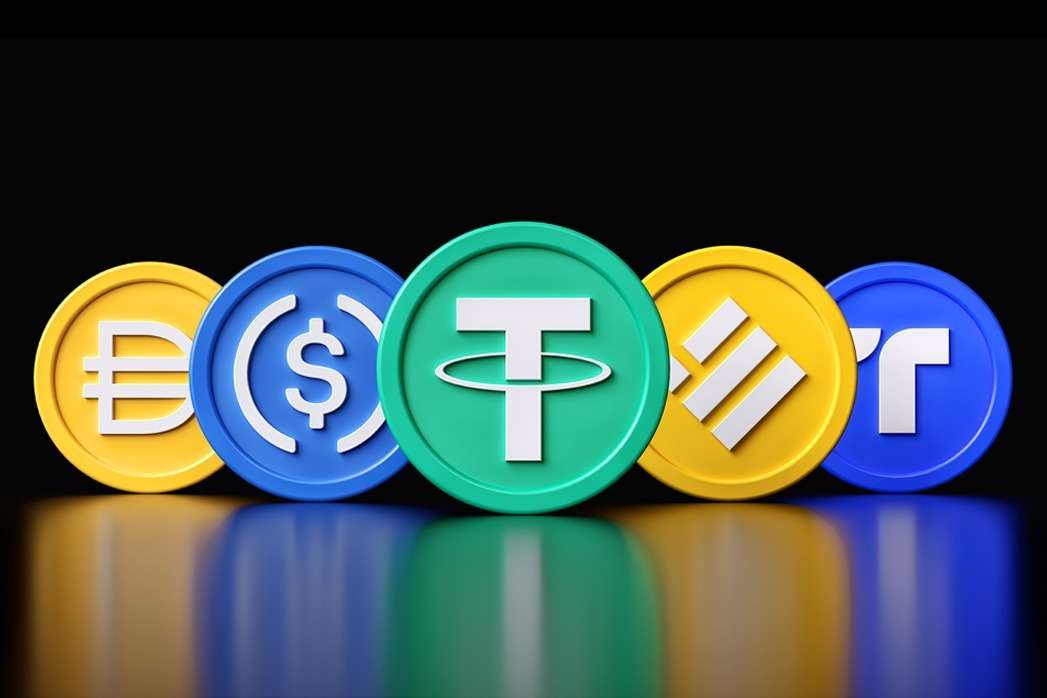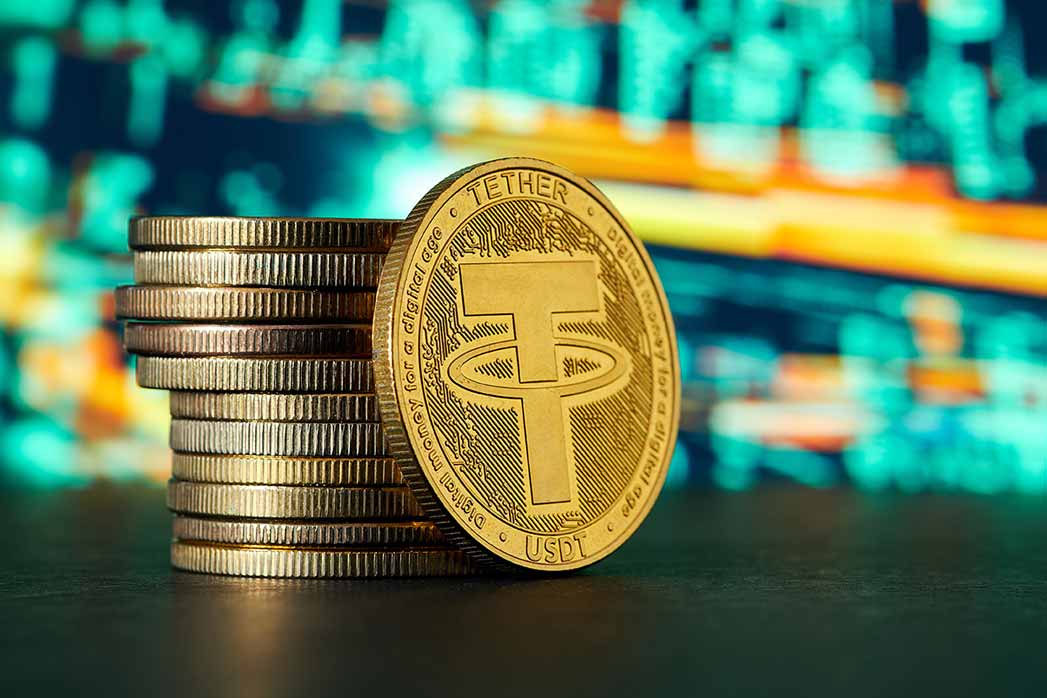
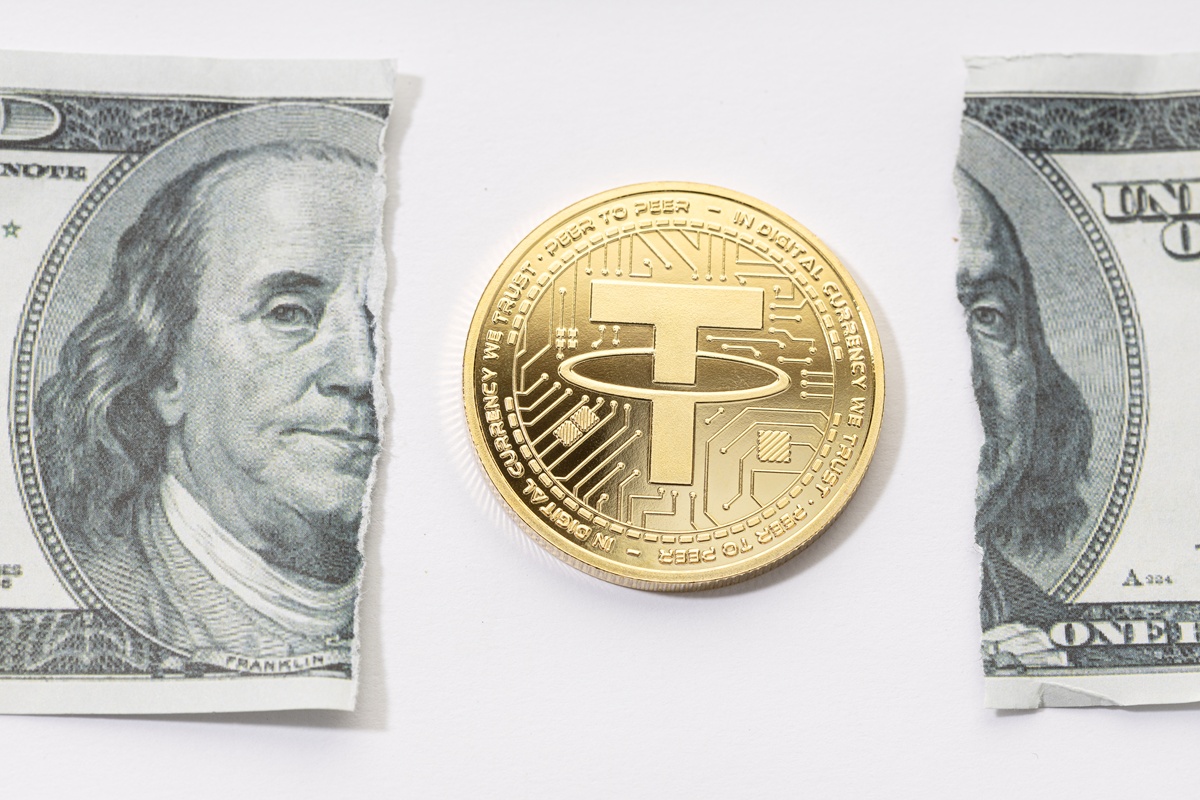
The USDT In Your Wallet May Not Be USDT
“In digital finance, a screen is not proof of payment. The asset, the contract and the transaction all have to be real.” DNA Crypto.
The Payment Looks Completely Normal
Imagine somebody owes you $100,000.
They ask for your wallet address. A few moments later, they send a screenshot. The familiar Tether branding is there. The transaction says completed. Your wallet may even appear to show 100,000 USDT, perhaps with something close to $100,000 displayed underneath.
The sender is already asking when the euros will be released.
Everything appears to have happened.
Except you may not have been paid at all.
This is what makes fake USDT scams effective. The fraudster does not necessarily need to compromise Tether, break a blockchain or gain control of the victim’s wallet. In some cases, they need the recipient to believe that one digital token is another.
The blockchain may be working perfectly.
The wallet may also be displaying exactly what the blockchain tells it to display.
The deception sits in the assumption that a token carrying a familiar name and symbol must therefore be the genuine asset.
As stablecoins move into OTC settlement, international payments, and commercial transactions, disciplined verification procedures become essential to ensure trust and security.
A Token Called USDT Is Not Automatically Tether
One misunderstanding behind this type of fraud is that people assume cryptocurrency names work like protected bank account numbers.
They do not.
On many blockchain networks, somebody creating a token can choose its name and ticker symbol. A token can therefore be designed to display the letters USDT even though it has no relationship with Tether.
That identifies the genuine asset not just by the displayed ticker, but by verifying the actual token contract address on the blockchain, which is crucial for accurate verification.
The key to confirming authenticity is examining the underlying contract or asset identifier on the blockchain using tools like Etherscan or similar explorers, which helps ensure the token is genuine.
That creates a simple but important distinction.
Two tokens can both display USDT.
They can use similar branding. They can sit inside the same wallet. To somebody glancing at the screen, they may look almost identical.
If they come from different contracts, they are different assets.
One may represent genuine Tether.
The other may be economically worthless.
The Wallet Is An Interface, Not An Auditor
Most people experience crypto through an interface. They look at a wallet, an exchange account or another application and understandably assume that what appears there has already been authenticated.
That is not necessarily what the interface is doing.
A wallet’s basic job is to let the user view and interact with blockchain assets associated with an address. It is not automatically certifying the economic legitimacy of every token that reaches that address.
This matters because visual familiarity can be extremely persuasive.
A victim who sees an unfamiliar token may investigate it immediately.
A victim who sees:
100,000 USDT
may assume the investigation has already been done.
If a wallet also displays a dollar value alongside the token, confidence can rise even further.
The scammer’s real advantage is therefore not technical sophistication.
It is familiarity.
People believe they already know what they are looking at.
“Flash USDT” Should Immediately Trigger Questions
Another phrase appears frequently around informal Telegram groups, peer-to-peer markets and questionable OTC propositions: “flash USDT”.
The description varies, but the proposition usually suggests that a special type of USDT can be sent to a wallet, displayed as genuine money, perhaps transferred for a period of time and then later disappears or expires.
That should immediately cause concern.
Genuine USDT does not need a mysterious temporary version to function. Legitimate Tether tokens are issued on supported blockchain networks and can be identified through the appropriate official contract or asset information.
The phrase “flash USDT” is therefore often useful to the scammer because it creates a technical story around something the victim does not understand.
The underlying fraud may involve a counterfeit token, manipulated payment evidence, a misleading interface or some combination of those elements.
The important question is not whether a balance appears temporarily in a wallet.
It is whether genuine USDT was transferred to the recipient’s address through the correct token contract and confirmed on the relevant blockchain.
If that cannot be established, the visual balance means very little.
The Screenshot Is Where The Social Engineering Begins
The technology is only one part of the fraud.
The other part is pressure.
A typical transaction starts with apparent proof. The counterparty sends a screenshot showing payment. There may be a transaction reference, wallet balance or message saying the transfer is complete.
Then the urgency begins.
The customer needs their euros immediately. A supplier is waiting. A property transaction is about to close. The banking day is ending. Their director is becoming impatient. They have already sent the crypto, so why is the fiat being delayed?
That pressure has a purpose.
Verification takes time.
Fraud works best when the recipient can be persuaded not to take it.
A screenshot is particularly useful because it gives the victim something visually convincing while providing almost no independent evidence. Images can be altered. Interfaces can be manipulated. A screen controlled by the sender proves only what appears in the sender’s environment.
A genuine blockchain payment offers something much more useful.
Genuine blockchain payment proof, such as an independent record, provides a more reliable way to verify transactions than images, building confidence in authenticity.
A Transaction Hash Is Better, But It Is Not Enough
People who know not to trust screenshots often ask for the transaction hash.
That is a better start, but it does not finish the job.
A fraudster can make a genuine blockchain transfer of a worthless token.
The transaction hash can therefore be real. The block can be real. The recipient address can be correct. The transaction can have confirmations.
What still matters is which asset actually moved.
If you review the transaction hash and blockchain records, focus on which asset was transferred by checking the contract address associated with the transaction, ensuring it matches the genuine Tether contract.
It has not authenticated them as Tether.
There is no blockchain failure in that scenario.
A real transaction involves the wrong asset.
This is where trust infrastructure becomes important. Transparency only protects the user if the right thing is being verified.
There Is More Than One Way To Create The Illusion Of Payment
Fake USDT schemes do not always follow the same pattern.
Several broad approaches can create the same outcome:
- – A counterfeit token is created with a familiar name or symbol and genuinely transferred on-chain.
- A wallet or custom network is configured in a way that makes the counterfeit balance appear more convincing.
- – Screenshots or fabricated payment confirmations are used instead of independently verifiable blockchain evidence.
- – Fake explorer pages or misleading links are sent to make a non-existent transaction appear genuine.
- – Address-poisoning or similar techniques are used to confuse the victim about which address belongs to the real counterparty.
These methods differ technically, but the psychological weakness is the same.
The victim trusts what the interface appears to say before verifying the underlying asset and transaction independently.
The Perfect Victim May Be A Legitimate OTC Desk
This becomes especially serious for brokers, OTC desks, payment companies and businesses converting crypto into fiat.
Suppose a customer wants to sell 500,000 USDT for euros.
The economics look attractive. Perhaps the business keeps 1%. Perhaps the customer seems unusually relaxed about pricing. The crypto is sent first, which gives the broker additional confidence.
A balance appears in the receiving wallet.
The broker then sends €495,000 through the banking system.
If the tokens are counterfeit, one side of the transaction is now very real. The fiat has left the bank account.
The supposed $500,000 received in return may be worthless.
The broker has not lost money because the price of USDT collapsed.
The broker has lost because USDT never arrived.
This is why a professional crypto operation cannot treat a visible wallet balance as settlement.
Settlement must be authenticated before fiat, goods, or another digital asset is released.
A Small Test Transaction Does Not Solve The Problem
Test transactions are a sensible practice, but they can create false comfort if you’re testing the wrong thing.
Imagine the customer first sends 10 USDT.
The recipient sees ten tokens arrive and sends the small amount of fiat back. Everything appears to work. The customer then proposes the $500,000 trade.
If nobody verified the token contract during the test, the test proved only one thing:
The counterparty can send ten of the same counterfeit tokens.
This pattern recurs in financial fraud. A small successful transaction creates credibility for a much larger one.
The test becomes part of the social engineering.
A proper test is not simply about whether something arrives.
It is about confirming what arrived.
Genuine USDT Has A Verifiable Identity
This is where blockchain transparency becomes genuinely useful.
Real USDT exists on supported blockchain networks and has a known contract or asset identity. A professional recipient can therefore verify that identity independently rather than relying on the sender’s screenshot, token symbol or wallet description.
The principle is simple:
- – Confirm which blockchain network is being used.
- – Obtain the genuine USDT contract or asset identifier from an authoritative source.
- – Open the transaction independently through the recognised explorer for that blockchain.
- – Confirm that the recipient address belongs to you or your business.
- – Confirm that the token transferred is the genuine USDT asset on that network.
- – Confirm the amount and required network confirmations before releasing the other side of the trade.
This should not be treated as a technical exercise reserved for developers.
For any business accepting Stablecoins as settlement, it is basic payment verification.
The Counterparty Should Not Control The Evidence
A broader principle applies.
The person asking you to release money should not also be the only source of evidence that they have paid you.
That sounds obvious in traditional finance. A business does not normally release goods because a customer sends a screenshot of their online banking page.
The business checks its own bank account.
Crypto should be treated the same way.
The recipient should verify the transaction independently through systems they control or sources they trust.
That means screenshots are supporting information, not settlement evidence.
Sender-provided explorer links should not be relied on without checking the destination independently.
Token names and logos should not be accepted as proof of token identity.
The purpose of independent verification is to remove the counterparty from the evidence chain.
That is what makes the evidence useful.
Real USDT Can Still Be High Risk
There is another important distinction for professional businesses.
Confirming that the token is genuine does not prove that the transaction itself is legitimate.
Real USDT can still be connected to fraud, theft, hacks, sanctioned entities, high-risk services or other illicit activity.
Payment verification therefore has two different layers.
The first asks:
Is the asset genuine?
The second asks:
Is the transaction acceptable?
The second question brings in customer identification, source of funds, sanctions screening, blockchain analytics and transaction monitoring.
This is why crypto identity and KYC cannot be separated from settlement.
A business that verifies only the token contract may protect itself from a counterfeit asset while still accepting genuine proceeds from fraud.
Both risks matter.
Why The Scam Works So Well
Fake USDT works partly because USDT has become familiar.
That familiarity is valuable. Stablecoins are now used across exchanges, wallets, payments, OTC markets and international digital asset transactions.
But familiarity also creates complacency.
If a wallet suddenly displayed 100,000 units of an unknown token called XQZ, most people would immediately ask what it was.
Put the letters USDT beside the same balance, and many users feel they already know the answer.
The scammer is not really counterfeiting the blockchain.
They are counterfeiting recognition.
That is an old fraud technique applied to new infrastructure.
This Is A Trust Scam, Not A Technology Breakthrough
Descriptions of “flash USDT software” and similar schemes can make the fraud sound technically extraordinary.
Often it is not.
Open blockchain networks allow digital tokens to be created. Wallets can display those tokens. Scammers exploit the gap between what the token claims to be and what it actually represents.
There is no reason to believe in a secret class of temporary institutional USDT that can be created cheaply, moved like genuine money and then expires.
No legitimate economic reason exists for someone to acquire large quantities of real USDT for a tiny fraction of its market value because the tokens allegedly disappear later.
Those stories work because technical language gives an ordinary confidence trick the appearance of financial innovation.
The technology can be real.
The value is not.
How A Professional Business Should Verify USDT
For a professional operator, verification should be a standard process performed independently of whatever evidence the sender provides.
- – Agree on the blockchain network before the transaction begins.
- – Use the current official contract or asset information for USDT on that network.
- – Check the transaction using a recognised blockchain explorer reached independently.
- – Verify the destination wallet address character by character or through an approved internal address record.
- – Confirm the genuine token contract, not merely the ticker symbol or logo.
- – Confirm the amount and required confirmations before releasing fiat, crypto, goods or escrow.
- – Treat screenshots, wallet displays and sender-supplied links as supporting material only.
- – Complete separate AML, sanctions and source-of-funds checks after authenticity has been established.
For high-value transactions, this should not be an improvised check conducted while a customer pressures staff through WhatsApp or Telegram.
It should be part of the operating procedure.
Verification Is More Important As Transactions Become Faster
This is a broader financial lesson.
Digital assets have made value faster to move, but speed changes behaviour.
When counterparties expect settlement to happen in minutes rather than hours or days, the commercial pressure to reduce verification increases.
Fraudsters understand this.
The weakness they are exploiting may not be the smart contract.
It may be the person who doesn’t want to make a valuable customer wait another five minutes.
That is how a 30-second wallet check can become the weakest point in a transaction worth hundreds of thousands of euros.
As Stablecoins become more important to global settlement, professional capital will have to become less impressed by how quickly value appears to move and more disciplined about proving that the value is actually there.
The Capital Behaviour Shift
This creates a subtle shift in financial responsibility.
In conventional banking, businesses largely outsource payment authentication to banks. The bank tells the merchant whether funds have arrived through recognised banking infrastructure.
In digital asset markets, the recipient may increasingly have to understand the asset-level evidence directly.
That means knowing the network, understanding the token identity, verifying settlement and distinguishing between genuine payment and something that merely resembles one.
This is the capital-behaviour shift.
Faster settlement gives businesses more control.
It also gives them more responsibility.
The technology removes some intermediaries.
It does not remove the need for judgement.
Why This Matters For Stablecoins
Fake USDT does not make genuine USDT fraudulent.
In many ways, the existence of counterfeit versions tells us the opposite.
Counterfeiters imitate things that have recognised value.
The scale and familiarity of USDT make it attractive to fraudsters for the same reason criminals historically preferred to counterfeit well-known currencies rather than inventing banknotes nobody recognised.
But this also creates a responsibility for the wider Stablecoin ecosystem.
Wallets need better identity signals. Exchanges need reliable deposit validation. OTC desks need disciplined settlement procedures. Businesses accepting Stablecoins need staff who understand that ticker symbols are not proof of asset identity.
Stablecoins cannot become serious global financial infrastructure if businesses cannot confidently distinguish the real asset from an imitation.
This is why Stablecoins are becoming a test of trust in a wider sense than reserve backing alone.
Trust begins before the transaction is economically useful.
It begins with knowing what was actually received.
What Businesses Should Never Accept As Proof
For practical purposes, several things should never be treated as sufficient evidence of settlement on their own:
- – A screenshot showing a wallet balance.
- – A screenshot claiming that a transaction has been completed.
- – The fact that the wallet displays the ticker USDT.
- – The presence of a familiar logo.
- – A transaction hash without checking which token contract actually moved.
- – A successful earlier test transaction where the token itself was never authenticated.
- – A sender-provided explorer page that has not been independently verified.
All of these can form part of a legitimate transaction.
None of them, alone, proves that genuine USDT has been received.
Conclusion
The most dangerous fake USDT transaction may be the one that looks completely ordinary.
The wallet can display USDT. The amount can be correct. The screenshot can look convincing. There can even be a genuine transaction recorded on a real blockchain.
None of those facts, by themselves, prove that Tether changed hands.
You still have to identify the underlying asset.
That is the weakness fake-token scams exploit. The fraudster knows most people look at the name, the logo, and the balance before they look at the contract behind them.
For a small personal transaction, that mistake can be expensive.
For an OTC desk releasing hundreds of thousands of euros, it can be catastrophic.
The lesson is not that blockchain payments cannot be trusted. In many respects, public blockchain records make independent verification easier than it would be with physical cash or screenshots of conventional banking transactions.
The lesson is that you have to read the record correctly.
– A screenshot is not settlement.
– A wallet balance is not authentication.
– And a token labelled USDT is not necessarily Tether.
In digital finance, the screen tells you what something claims to be.
– Verification tells you what it actually is.
Relevant DNACrypto Articles
- – Stablecoins Are Becoming A Test Of Trust
- – Stablecoins Infrastructure
- – Crypto Safety
- – Trust Infrastructure
- – Crypto Identity And KYC
- – Digital Asset Infrastructure
- – Digital Asset Escrow
- – Smart Contracts Need Real-World Trust
Image Source: Envato Stock
Disclaimer: This article is for informational purposes only and does not constitute financial, legal, compliance or investment advice.