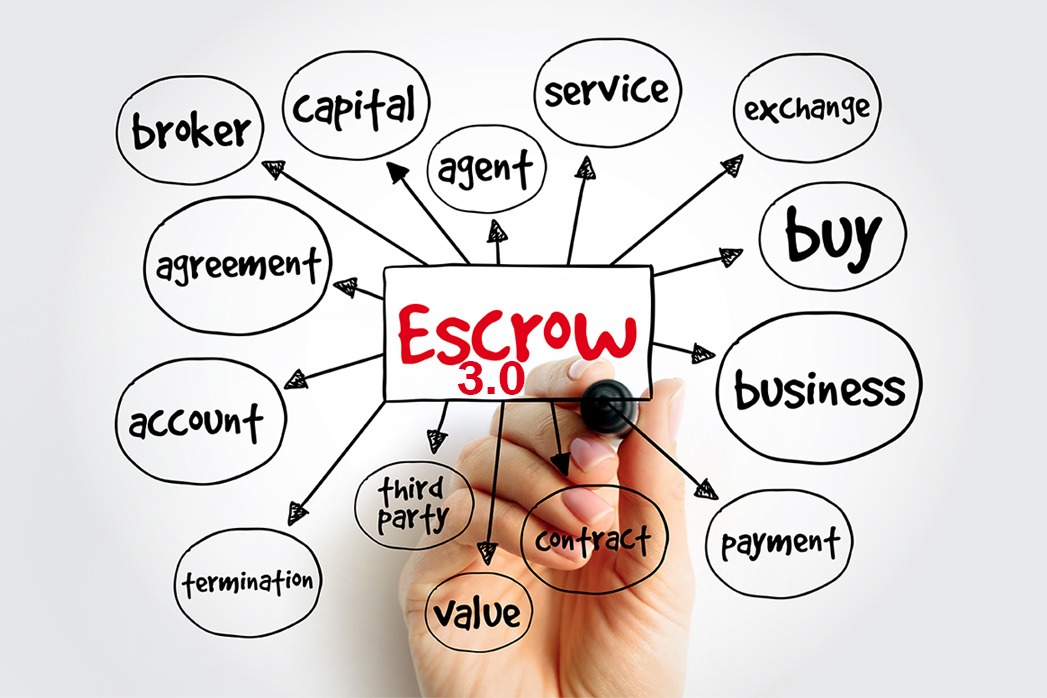
Escrow - arrangement in which a third party receives and disburses money or property for the primary transacting parties, mind map concept for presentations and reports.

Escrow 3.0: Cross-Chain Smart Contracts Without Middlemen

Escrow services have long been the backbone of secure transactions. But in an era of speed, transparency, and borderless interaction, traditional escrow systems are showing their age. Enter Escrow 3.0—a system combining cross-chain smart contracts, Chainlink oracles, and fiat API integrations to eliminate intermediaries while increasing security and efficiency.

How Escrow 3.0 Works

The innovation sits on Hash Time-Locked Contracts (HTLCs)—programmable agreements that automatically execute when predefined conditions are met.

Crypto ↔ Crypto: Two parties lock funds on their respective chains (e.g., ETH and BTC). Upon receipt of a shared secret hash, smart contracts release the funds automatically.

  • Crypto ↔ Fiat: With Chainlink oracles and Open Banking APIs, smart contracts can settle fiat payments on-chain. A freelancer can be paid in stablecoins and receive euros via SEPA, with bank confirmations verified in real time.

Learn more: Smart Contracts for Real-World Transactions.

SmarTrust: Dispute-Resistant & Cross-Chain

SmarTrust, built on the Reactive Network and powered by Reactive Smart Contracts (RSCs), enables milestone-based, recurring, or single-deliverable transactions without custodians.

Features include:

  • – Automated milestone payments upon event confirmation

  • – Dispute escalation to a decentralized adjudicator marketplace

  • – Unified execution on Polygon, Ethereum, and RSK

“By placing Reactive at the core, SmarTrust is enabling scalable trustless mechanisms for clients, freelancers, and adjudicators.” – Emilijus Pranckus, Reactive Network.

Why It Matters for Investors

Escrow 3.0 offers:

  • – Safety: Funds locked in audited smart contracts

  • – Efficiency: No delays or manual intervention

  • – Global Reach: Cross-chain and fiat settlement removes borders

  • – Market Fit: Secure, seamless, automated payments

“This isn’t just a product upgrade—it’s an entirely new financial primitive.” – DNA Crypto Labs.

The Bigger Picture

Reactive Network introduces Inversion of Control (IoC) and event-driven bright contract patterns, allowing contracts to respond across multiple chains. This means unprecedented modularity, reusability, and responsiveness—a true hallmark of decentralized systems. Read more: The Future of Event-Driven Smart Contracts.

Final Word

Escrow 3.0 isn’t just evolution—it’s reimagination. It’s the foundation for a decentralized, global digital labour market powered by automation, transparency, and trustless execution.

Whether you’re building, investing, or freelancing—the smart way forward is trustless.

Image Source: Adobe Stock

Disclaimer: This article is purely for informational purposes. It is not offered or intended to be used for legal, tax, investment or financial advice.

Read more →

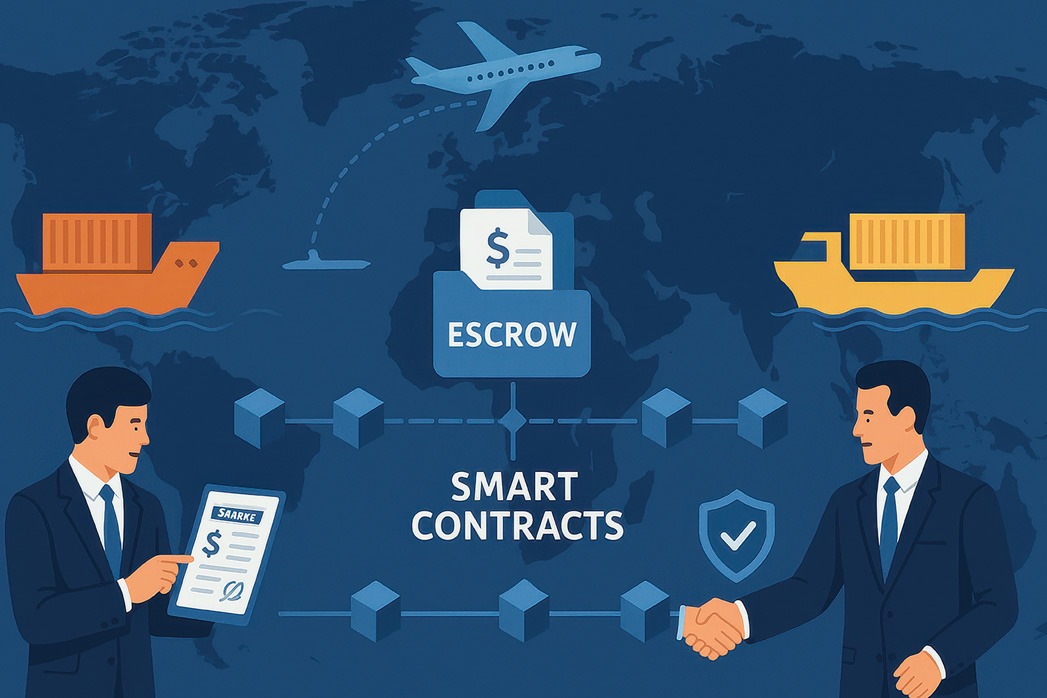
Global trade secured escrow smart contracts with blockchain technology.

The Future of Escrow: How Blockchain and Smart Contracts Will Replace Legacy Intermediaries

Escrow has long been the domain of lawyers, banks, and licensed intermediaries. For centuries, high-value transactions—such as real estate, mergers, art sales, and private capital flows—have relied on slow, expensive, and trust-based systems to settle securely.

Now, blockchain-based escrow is dismantling these barriers.

“Smart contracts transform trust from a lawyer’s word into verifiable code, turning slow settlements into programmable certainty.”
— DNA Crypto Knowledge Hub
Read more on programmable assets

From Legal Trust to Code-Based Certainty

Traditional escrow requires human oversight, cross-jurisdictional document checks, and a tolerance for settlement delays of T+2 to T+5. Each layer adds cost, friction, and the potential for error or fraud.

Blockchain-powered escrow replaces intermediaries with:

– Smart contracts for automated execution

– HTLCs (Hashed Time-Locked Contracts) for conditional, verifiable transactions

– Oracles for real-world data feeds, ensuring external events (title transfers, KYC triggers) finalise payment releases

This means transactions can now settle instantly, globally, and with reduced counterparty risk, particularly in OTC crypto, private capital markets, and cross-border asset deals.

“Code is the new custodian.” — DNA Crypto

Why Smart Escrow Beats Legacy Escrow

Legacy Escrow Smart Contract Escrow
Lawyer-dependent Automated execution
Settlement delays Instant finality
Jurisdictional friction Global, borderless
High fees Minimal on-chain costs
Human error potential Immutable, auditable

Compliance-by-Design: Lawful Automation

Automation does not mean lawlessness.
Platforms like DNA Crypto integrate:

  • – KYC APIs to verify identities before escrow activation

  • – AML monitoring for transaction integrity

  • – Banking APIs for fiat-crypto conversion tied to on-chain conditions

This compliance-by-design approach ensures that smart escrow aligns with regulatory frameworks, such as MiCA, supporting family offices, private banks, and institutional investors seeking crypto exposure with robust safeguards.

“MiCA sets the floor, not the ceiling. For elite investors, it’s only the beginning of due diligence.”
How MiCA Shapes Crypto Custody

Real Estate and High-Value Transactions: The Next Frontier

Smart escrow is a natural fit for real estate, where tokenized property and blockchain-based registries enable programmable settlement:

– Payments are released upon verification of the on-chain title transfer

– Cross-border deals finalized with instant crypto payments

– Smart contracts reduce reliance on costly intermediaries

For art, collectables, private equity secondaries, and cross-border lending, programmable escrow automates authenticity verification, delivery tracking, and payment, minimising default risk.

“Using tokenized assets as collateral turns static wealth into dynamic liquidity.”
Read more

Conclusion: Escrow, Upgraded

Escrow is evolving from trust-based intermediation to code-based, compliance-ready automation. This will define the next era of high-value transactions, from tokenized real estate to cross-border asset transfers.

For institutions and UHNWIs, smart escrow offers:

– Lower costs

– Faster settlements

– Enhanced security

– Cross-border scalability

It’s no longer a question of whether smart escrow will replace traditional models. The question is when you will integrate it into your deal flow.


Image Source:
Adobe Stock

Disclaimer: This article is purely for informational
purposes. It is not offered or intended to be used for legal, tax, Investment
or financial advice.

Read more →

tuttgart, Germany - 08-18-2024: Smartphone with website of blockchain platform company Solana in front of business logo. Focus on top-left of phone display.

Why Solana Could Outshine Ethereum: The Smart Contract Showdown

If you’ve spent time in crypto, you’ve probably encountered the persistent debate: Solana or Ethereum?

Ethereum is the original smart contract platform, serving as the base for DeFi, NFTs, and everything related to Web3. Nonetheless, it can also be expensive, sluggish, and sometimes very exasperating to utilise during peak traffic.

Then there’s Solana—fast, cheap, and built to scale. It’s Ethereum’s younger, flashier cousin that’s here to disrupt. So, does that make Solana the future? Or is Ethereum too big to fail?

Ethereum: The OG with a Few Issues

Ethereum is the reason smart contracts exist. Launched in 2015, it gave developers the tools to build decentralized apps, revolutionising finance, gaming, and art through Blockchain.

But there’s a problem…

Ethereum transactions are slow (think 15 transactions per second slow) and expensive (gas fees that can cost more than the transaction itself). You know the struggle if you’ve ever tried to buy an NFT at peak hours.

Ethereum’s developers are fixing it with upgrades like Ethereum 2.0, which moves from proof-of-work to proof-of-stake, making transactions faster and cheaper. But progress has been slow, and while Ethereum works on getting better, Solana is already here.

Solana: Fast, Cheap, and Built for the Future

Solana debuted in 2020 with the promise of fixing everything wrong with Ethereum. It has a 65,000 transactions-per-second capacity (Ethereum’s is 15), and the transaction cost is a fraction of a cent.

Instead of using Ethereum’s traditional methods, Solana uses a system called Proof-of-History (PoH), which essentially timestamps transactions before they are processed to make processes efficient and quick.

This is a dream for developers: a blockchain that scales without costing users an arm and a leg. No wonder so many new projects are being built on Solana.

So, Why Hasn’t Solana Taken Over?

With all these advantages, you’d think Solana would be the clear winner. But Ethereum still has some significant strengths:

  • – Developers trust it: Ethereum has been around for almost ten years. It has the most significant community, developers, and money locked into its ecosystem.
  • – It’s battle-tested: Ethereum has survived massive hacks, regulatory scrutiny and market crashes. Solana? Not so much.
  • – Solana has had outages: Unlike Ethereum, which runs 24/7, Solana has had multiple network crashes, sometimes taking hours to fix. This is not great if you’re running a financial app that constantly needs to be online.

Decentralization: The Deal breaker?

One of Ethereum’s most significant selling points is decentralization. With over 600,000 validators securing the network, it’s nearly impossible for any single entity to control it.

Solana? Not so much. With around 2,000 validators, it’s way more centralised, meaning fewer people have control over the network. For some, that’s a deal breaker—it raises concerns about security and censorship.

Competition or Coexistence?

So, will Solana replace Ethereum? Probably not. But does that mean Ethereum wins? Also no. Instead of one Blockchain ruling them all, we’re likely heading toward a multi-chain future.

Ethereum will continue to dominate DeFi, high-value transactions, and established dApps. On the other hand, Solana will power things that need speed—think Blockchain gaming, high-frequency trading, and apps where low fees matter.

Both Blockchains are here to stay. The real question is: Which one will you bet on?

Image Source: Adobe Stock

Disclaimer: This article is purely for informational purposes. It is not offered or intended to be used for legal, tax, investment or financial advice.

Read more →