Man crypto investor. Guy with tablet is studying USDC tech. Crypto investor exchanges fiat dollar for USDC. Man trader uses USDC stablecoin. Electronic American dollar USD. Stablecoin, blockchain.

Stablecoins 2.0: The Evolving Global Landscape Across Asia, the UK, Europe, and the Americas

As the crypto ecosystem matures, Stablecoins 2.0 represent a pivotal evolution in the balance between decentralisation, regulatory oversight, and financial utility. These next-generation Stablecoins are no longer just digital dollars—they’re programmable, compliant, and ready for real-world finance.

Asia: The Regulatory Innovation Engine

Asia remains at the forefront of stablecoin innovation:

  • – Japan and Singapore have enacted frameworks enabling banks and fintech firms to issue fully regulated fiat-backed Stablecoins.

  • – Singapore’s MAS is spearheading Project Guardian, integrating tokenised assets with real-world use cases (learn more).

  • – Hong Kong is rolling out new licensing structures prioritising transparency and reserve audits.

“Stablecoins could redefine Asia’s remittance and trade finance infrastructure,” notes Ravi Menon, former head of MAS.

The United Kingdom: A Cautious Embrace

With the Financial Services and Markets Act 2023, the UK signals that Stablecoins will be regulated for payments under the Bank of England and the FCA.

As global players like Circle and PayPal explore GBP-backed solutions, UK adoption is expected to gain institutional backing.

Explore the UK’s broader fintech positioning on DNA Crypto Insights.

Europe: MiCA’s Strategic Framework

Europe’s MiCA Regulation provides the most comprehensive stablecoin oversight globally:

  • – Mandatory 1:1 reserve backing

  • – Daily redemption rights

  • – Institutional licensing and whitepaper requirements

From 2024, all e-money tokens must be authorised to operate in the EU. MiCA 2.0—covering DeFi and algorithmic Stablecoins—is expected by 2026.

Related: Understand MiCA’s Impact

Americas: Diverging Paths

The U.S. is fragmented—NYDFS regulates fiat-backed coins like USDC, while the Clarity for Payment Stablecoins Act awaits Congressional action.

In Latin America:

  • – Brazil’s central bank is piloting BRL-backed Stablecoins.

  • – Colombia and Mexico view Stablecoins as solutions for inflation and financial inclusion.

“In 2024, stablecoin settlement volumes reached $10 trillion, overtaking major card networks in transfer value.”

Future Outlook: Convergence and Competition

Stablecoins 2.0 will be:

  • – Programmable: Enabling payroll, escrow, and supply chain automation.

  • – Compliant: Adhering to global audit and redemption standards.

  • – CBDC-compatible: Serving as hybrid bridges in centralised systems.

McKinsey forecasts Stablecoins will represent “10–15% of all cross-border payments by 2028.”

DNA Crypto’s Strategic Position

At DNA Crypto, we anticipate where regulation, finance, and crypto converge. We support clients in:

  • – Deploying Stablecoins for international settlement and liquidity optimisation

  • – Navigating MiCA, MAS, FCA, and U.S. frameworks

  • – Designing Tokenisation strategies for real-world assets
     

For expert advisory on stablecoin integrations, regulatory clarity, and tokenised finance, partner with us at DNACrypto.co.

Image Source: Adobe Stock

Disclaimer: This article is purely for informational purposes. It is not offered or intended to be used for legal, tax, investment or financial advice.

Read more →

Money Laundering in cryptocurrency and Real Estate. Washed Euro note and bitcoin on drying. A house and one hundred 100 euros banknotes are drying on a clothesline. Money Laundering Risks in Real Estate.

The End of Anonymous Trading? How AML 2.0 and Risk-Based Onboarding Could Shape the Future of Crypto Compliance

As the crypto industry matures, the era of anonymous trading is quickly giving way to a new paradigm: risk-aware, transparent, and regulation-aligned markets.

With Europe’s MiCA regulation coming into force and global AML directives gaining momentum, the pressure on exchanges and platforms to implement advanced compliance frameworks has never been greater.

“Compliance is no longer an operational hurdle—it’s a foundation for trust and institutional adoption.” — Read more

Legacy AML 1.0 Can’t Handle Web3

The existing AML infrastructure—designed for traditional finance—relied on centralized control, local jurisdictions, and one-size-fits-all onboarding. But in the DeFi era, such rigidity is ineffective. Pseudonymous wallets, global liquidity pools, and borderless transactions challenge the traditional methods of detecting and preventing financial crime.

That’s why the industry is now looking toward AML 2.0—a model that’s dynamic, risk-based, and powered by real-time analytics.

What AML 2.0 Could Look Like for DNAcrypto.co

At DNA Crypto, we are closely exploring a roadmap that would elevate compliance and enhance user security across every touchpoint. Some of the capabilities under consideration include:

  • Real-Time Wallet Sanctions Screening:
    Automatically detect blacklisted, sanctioned, or high-risk addresses using integrations with global databases.

  • Tiered Risk-Based KYC:
    Design onboarding tiers aligned with transaction volume and jurisdictional risk. For example:

    • – Tier 1: Basic onboarding for low-volume users

    • – Tier 2: Enhanced verification

    • – Tier 3: Full due diligence and source of funds

  • Continuous On-Chain Monitoring:
    Utilise tools to flag high-risk behaviour (e.g., mixer usage, abnormal flows, private token transfers) and apply automated escalation protocols.

“We don’t just want to meet the MiCA standard—we want to exceed it.” — DNAcrypto.co vision

Why It Matters

Major financial institutions, sovereign entities, and large OTC desks are demanding stricter controls, especially with USDT minting reaching new highs and institutional flows into Bitcoin accelerating. At the same time, the latest “Genesis” legislative proposals in the U.S. signal that regulatory scrutiny is only going to intensify.

“The platforms that thrive in this next cycle will be those that see compliance as an enabler, not a blocker.” — MiCA’s Blind Spots

Compliance with Privacy

As the market grows, so does the demand for privacy. The next step is compliance models that respect user rights while satisfying regulators, such as zero-knowledge proofs, selective disclosure, and decentralized ID frameworks.

These technologies are being evaluated globally, and DNA is actively watching and learning how they might be implemented responsibly.

Learn More:

Explore related thought leadership from DNAcrypto’s Knowledge Hub:

– Will MiCA Make Europe Safer for Crypto Investors?

Image Source: Adobe Stock

Disclaimer: This article is purely for informational purposes. It is not offered or intended to be used for legal, tax, investment or financial advice.

Read more →

Illustration Representing the GENIUS Act, First US Legislative Bill to Regulate Stablecoins.

MiCA Is Reshaping Stablecoin Power—Will Tether Catch Up or Be Left Behind?

European financial regulators have drawn a clear line in the sand: the future of Stablecoins is regulated, transparent, and compliant. The Markets in Crypto-Assets Regulation (MiCA) officially recognises E-Money Tokens (EMTs) and Asset-Referenced Tokens (ARTs)—not USDT or algorithmic Stablecoins.

Quote for emphasis:

“With MiCA now active, only EMTs and ARTs offer the legal certainty, redemption rights, and institutional appeal needed to integrate with Europe’s financial system.” – Read more on MiCA’s role in stablecoin reform

Tether’s Position and Market Power

Despite regulatory uncertainty, Tether (USDT) remains the world’s largest stablecoin, with a circulation of over $112 billion. USDT continues to dominate trading volume, particularly in emerging markets. In early 2024, Tether minted over $6 billion in USDT, primarily to meet demand from crypto-native users, including institutional buyers and nation-state actors, who accumulated BTC.

“USDT minting spiked significantly in Q1 2024, feeding into Bitcoin reserves for ETFs, hedge funds, and sovereign wealth strategies.”

But that power may come at a cost. Under MiCA, unregulated Stablecoins face usage restrictions within the EU for licensed platforms, tokenization projects, and financial services providers.

The Rise of EMTs: Circle and Societe Generale Lead

Circle’s EUROC and USDC are actively preparing for MiCA compliance. Meanwhile, Societe Generale’s EURCV is the first bank-issued EMT under French law. These tokens offer the exact qualities MiCA demands:

  • – Transparent reserves

  • – 1:1 Fiat redemption

  • – Issuance by licensed institutions

“MiCA is reshaping the stablecoin race, and for the first time, compliance is more valuable than scale.” – Explore how MiCA is shaping custody and token rules.

Article Linking Suggestions

Relevant links from DNAcrypto’s knowledge section:

Read more →

Gavel Bitcoin on European flag. Legal framework, blockchain regulation concept, finance, law, international trade, governance in EU. Digital cryptocurrency, crypto, asset, market, stock exchange.

How MiCA Licensing Gives You an Edge: Investing Through Compliant Platforms Across the EU

The Markets in Crypto-Assets Regulation (MiCA), which came into effect in December 2024, is reshaping how digital assets are issued, traded, and managed across the EU’s 27 member states. For investors, token issuers, and crypto service providers (CASPs), MiCA is more than a regulatory framework; it is a competitive advantage for those who understand it.

What MiCA Changes

MiCA cuts through fragmented national rules, replacing them with unified guidelines that enable compliant operators to scale confidently across the EU.

Key changes include:

  • – Token Issuer Licensing: Issuers of all crypto-assets (including Stablecoins and utility tokens) must publish regulator-approved whitepapers and meet disclosure standards.

  • – Supervised CASPs: Crypto-asset service providers are required to register and demonstrate robust capital, governance, cybersecurity, and risk management frameworks.

  • – EU Passporting: Once licensed in one EU country, CASPs can operate across the entire European Economic Area without additional national licenses.

  • – Market Integrity and Investor Protection: MiCA enforces anti-market manipulation policies, insider trading restrictions, and rigorous AML/KYC obligations.

“MiCA sets the floor, not the ceiling. For sophisticated investors, it’s the entry point into secure, scalable crypto investing.”
DNA Crypto Knowledge Hub

Why MiCA Matters for Investors

For HNWIs and institutional investors, MiCA brings:

  • – Reduced Risk: Dishonest actors are eliminated as compliance becomes mandatory.

  • – Legal Clarity: Clear roles and responsibilities for CASPs and investors alike.

  • – Cross-Border Access: A single license unlocks EU-wide crypto investment and trading.

  • – Regulatory Confidence: Seamless alignment with tax, AML, and reporting requirements.

MiCA offers a stable bridge between traditional wealth management and the evolving crypto economy.

DNA Crypto: A MiCA-Ready Investment Gateway

Platforms that align with MiCA will define the next phase of crypto investing. DNA Crypto is positioned to lead by providing:

  • – Licensed Digital Asset Services: MiCA-compliant listings, secure custody, and trading under full EU regulatory approval.

  • – Cross-Border Investment Support: Enabling seamless digital asset investing across EU markets.

  • – Institutional-Grade Compliance: From advanced KYC/KYB onboarding to AML monitoring and real-time reporting.

  • – Custom HNWI and Institutional Services: Including white-glove onboarding, treasury management, and compliant crypto portfolio solutions.

“Institutional crypto adoption will be built on compliant, transparent infrastructure.”
Read how MiCA shapes tokenized real estate investing

Practical Implications for Investors

Whether you are in France, Germany, or the UK, MiCA enables you to:

  • Invest confidently through compliant platforms like DNA Crypto.

  • Access regulated digital asset products across EU markets.

  • Diversify portfolios in a legally clear, standardised environment.

  • Streamline tax and regulatory reporting.

For UK investors post-Brexit, leveraging EU-licensed platforms ensures future-proof positioning as regulatory divergence continues.

MiCA: Your Competitive Edge

MiCA has arrived not just to regulate, but to empower. It offers forward-thinking investors a secure, scalable, and compliant path to participate in the crypto economy while safeguarding wealth in a regulated, growth-oriented environment.

As a MiCA-ready platform, DNA Crypto positions its clients to invest with confidence, capturing opportunities across a rapidly maturing European crypto market.

“MiCA isn’t just regulation. It’s the architecture for Europe’s next wave of tokenization.”
DNA Crypto Knowledge Hub

Image Source: Adobe Stock

Disclaimer: This article is for informational purposes only and does not constitute legal, tax, investment, or financial advice.

Read more →

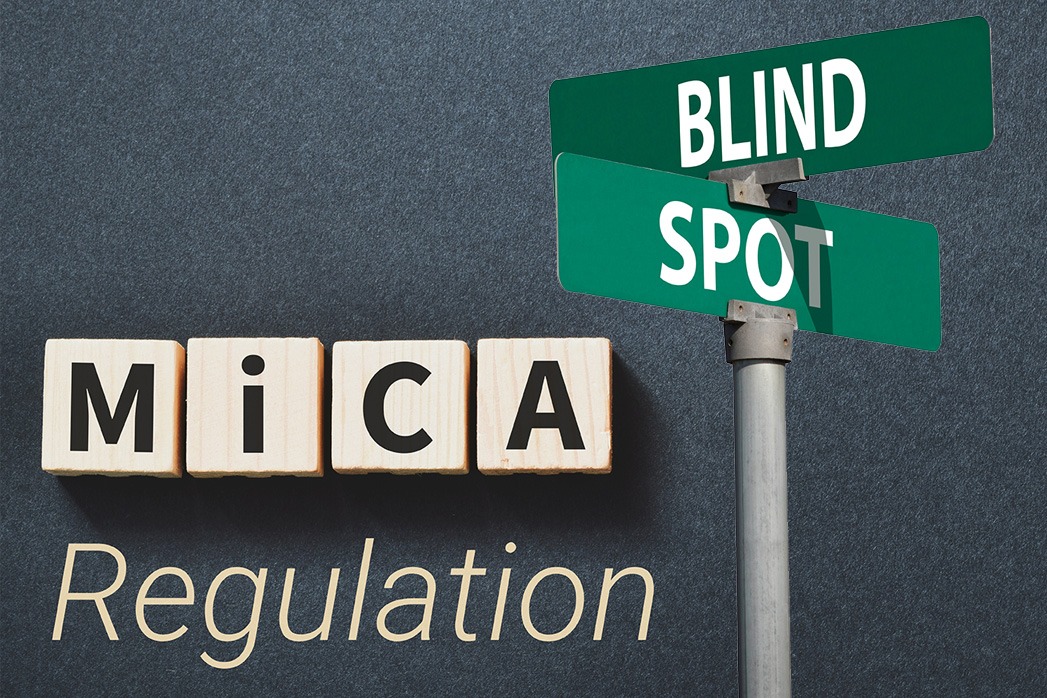
Markets in Crypto-Assets (MiCA) Regulation inscription on wooden blocks on dark background.

MiCA’s Blind Spots: What Wealthy Investors Must Know About DeFi, NFTs, and Cross-Border Risks

The introduction of the Markets in Crypto-Assets Regulation (MiCA) in Europe is a significant step toward protecting investors That said, there are still risks, especially when HNWIs engage with DeFi, NFTs, or sought-after international markets.

After MiCA officially took effect in December 2024 across Europe, it was widely seen as a much-needed framework for digital assets. It clarified how Stablecoins, centralized exchanges, and custodial service providers are handled. However, a loophole exists in the development of technologies such as DeFi, NFTs, and DAOs.

So, if you plan to invest significant amounts in crypto, mainly in other countries, learn these key points about MiCA.

1. DeFi and DAOs Are Outside MiCA — For Now

MiCA regulates custodial service providers, exchanges, and Stablecoin issuers, but does not apply to fully decentralised systems. Recital 22 of MiCA clearly states that protocols without intermediaries are not covered, yet it leaves the definition of “decentralised” open.

This grey area is especially relevant when investing in protocols like Aave, Uniswap, or Curve, where:

  • – There’s no clear investor protection.
  • – There’s no legal recourse in the event of an exploit.
  • – MiCA can’t intervene if your funds are lost or hacked.
“MiCA does not regulate decentralised finance (DeFi). This remains an open frontier for both innovation and exposure.”
— European Securities and Markets Authority (ESMA) Public Report, 2024

Related Read: How MiCA Is Shaping Stablecoin and Custody Rules in Europe

2. DeFi Yields and Regulatory Ambiguity

Yield farming, staking, and algorithmic liquidity may promise double-digit returns, but they raise key legal questions:
  • – Is the return considered income?
  • – Does it involve unregistered securities?
  • – What happens when protocols dissolve with no disclosures?
Tax authorities in Germany, France, and the Netherlands are now treating DeFi earnings as taxable income, regardless of the protocol’s place of origin.
“For tax authorities, DeFi gains are fair game. Jurisdictional arbitrage is fading fast.”
— European Blockchain Observatory, 2025

3. NFTs: High Value, Zero Clarity – More Than Just Art, But Still Unregulated

While MiCA covers asset-referenced tokens and e-money tokens, NFTs are largely excluded. They become apparent when they’re fractionalized or used as financial instruments.

This opens a Pandora’s box for wealthy collectors and investors:

  • – Using NFTs as loan collateral.
  • – Tying NFT ownership to real-world assets (e.g., real estate).
  • – Buying from offshore marketplaces with no KYC.
  •  

Without IP guarantees, custodianship requirements, or trading limits, you could be exposed to reputational or regulatory risk.

“Just because it’s digital art doesn’t mean it’s exempt from securities law.” — EU Legal Tech Forum 2025

Recommended Context: Will MiCA Make Europe Safer for Crypto Investors?

4. Cross-Border Exposure: Still Risky

MiCA harmonises rules within the EU, but does not protect European investors operating via DeFi DAOs in Singapore, NFT markets in the Bahamas, or tokenised gold projects in Dubai.

If something goes wrong outside MiCA’s legal reach, there’s no guaranteed path to recovery.

“Offshore activity is outside MiCA’s jurisdiction. If you move assets abroad, you move beyond its shield.”
— EU Commission Briefing, 2024

5. Institutional Adoption ≠ of Regulatory Safety

You might think that if a European bank, crypto fund, or prime broker uses a specific protocol, it must be compliant. But it is worth noting that most institutional players are still “testing the waters.”

Key questions to ask before allocating capital:

  • – Is the protocol audited and legally incorporated?
  • – Are governance mechanisms stress-tested?
  • – Are there risk disclosures or enforceable contracts?
“Silence from institutions is not validation. It’s a warning to ask better questions.” — DNA Crypto Editorial Team.

Often, the answer is no. In DeFi, there is a thin line between innovation and exposure. And MiCA’s current scope isn’t sharp enough to catch the difference.

Final Thoughts: Regulation ≠ Immunity

MiCA lays a solid foundation—but it is not bulletproof, especially for investors beyond mainstream platforms. It does not cover DeFi, does not regulate most NFTs, and does not protect cross-border holdings.

Smart Investor Checklist:

  • Vet every protocol, jurisdiction, and counterparty.
  • Don’t assume MiCA coverage unless there’s an EU-based custodian or intermediary.
  • Monitor regulatory updates in 2026, when the EU will reassess the definition of decentralisation.

Explore More:

Image Source: Adobe Stock

Disclaimer: This article is purely for informational purposes. It is not offered or intended to be used for legal, tax, investment, or financial advice.

Read more →

Central Bank Digital Currencies (CBDCs): Transforming Financial Systems. banking, finance, digital wallets, transactions. Government-Backed Cryptocurrencies, financial inclusion, regulatory frameworks.

CBDCs vs. Bitcoin: A Clash of Civilizations or Complementary Tools for the Elite?

“CBDCs digitise state money. Bitcoin digitises monetary sovereignty.” — DNA Crypto. CBDCs are transforming how money is made, controlled and transferred. At the same time, they could signal a significant shift away from traditional surveillance and capital controls. It is valuable information for high-net-worth investors and a sound investment strategy. There are two very distinct ideas when digitising money. One group is the government’s CBDCs, designed to streamline transactions and improve tracking. On the other hand, Bitcoin is a peer-to-peer network that gives users complete control over their funds. CBDCs could facilitate faster, more efficient payments for many people. But for those with significant funds and institutional investors, the future of finance is in question: will it rely on informative programming or on private, permissionless systems? Let’s further discuss what this means for elite investors. 1. CBDCs: Programmability or Surveillance by Design? Central banks around the world—from the European Central Bank to the People’s Bank of China—are advancing CBDC pilots and frameworks with admirable goals:
  • – Improving payment systems.
  • – Lowering transaction costs.
  • – Ensure monetary sovereignty in a digital world.
But dig deeper, and you’ll find programmability and surveillance baked into the architecture:
  • Programmable Money: Picture this: stimulus money that expires in 30 days or food allowances that can’t be spent on “luxury” goods. Yes! Governments may go in that direction.
  • – Capital Controls: High-net-worth individuals may be unable to move funds freely during periods of geopolitical instability or regime change due to transfer limits.
  • – Zero Privacy by Default: Unlike crypto, every CBDC transaction will be tied to an identity, offering governments a real-time ledger of personal finances.
This is not hearsay, as China’s digital yuan already restricts certain transactions. Nigeria’s eNaira rollout was paired with cash withdrawal limits and strict financial monitoring. For the elite, CBDCs are not just money but policy tools with remote controls. 2. Bitcoin: A Parallel System for Financial Autonomy As opposed to CBDCs, Bitcoin is:
  • – Decentralised and borderless.
  • – Resistant to censorship.
  • – Transparent, yet pseudonymous.
  • – Scarce by design (only 21 million will ever exist).
In today’s world, wealth surveillance has become normalised, and Bitcoin has become the go-to remedy for an insurance policy against financial overreach. For sophisticated investors:
  • Bitcoin enables capital mobility without reliance on banking intermediaries.
  • It allows for hedging against currency debasement, especially in high-inflation or politically unstable jurisdictions.
  • It opens up non-correlated exposure in portfolios dominated by traditional fiat-denominated assets.
As central banks move toward “surveillance money,” Bitcoin becomes the layer of freedom. 3. CBDCs and Bitcoin: Tools in a Dual-Track Strategy Is it a zero-sum game?
Use Case CBDC Bitcoin
Instant settlement of payroll or pensions ✅ Fast and efficient ❌ Volatile, less practical for salaries
Cross-border transfers under scrutiny ✅ Traceable, compliant ⚠️ Risk of restrictions or delays
Wealth preservation under inflation or capital controls ❌ Subject to policy risk ✅ Decentralised and deflationary
Anonymous large purchases ❌ Fully traceable ✅ Pseudonymous
Censorship-resistant donations ❌ Can be blocked ✅ Permissionless
Intergenerational wealth transfer ❌ Subject to probate & reporting ✅ Easily transferable via multisig
The future may not be about choosing one over the other, but knowing which asset perfectly suits your needs as an investor. 4. What CBDCs Could Mean for High-Value International Transfers Over time, large money transfers have relied on SWIFT or correspondent banking, both of which are time-consuming and costly. Typically, CBDCs could facilitate rapid cross-border transactions between central banks. It also means that countries have better control over investments. Imagine:
  • – Transfer limits on outbound CBDC transactions without prior approval.
  • – Allowed” counterparties only—reducing flexibility.
  • – Asset freezes for regulatory or political reasons are applied at the protocol level.
Yet, Bitcoin can move across borders 24/7 without needing any third party. This makes it a critical tool in estate planning and international diversification, serving as an effective hedge against crises. 5. The Big Picture: Control vs. Autonomy The battle between CBDCs and Bitcoin is a contest of both technology and philosophy. CBDCs are top-down tools of governance, whereas Bitcoin is a bottom-up system that empowers individuals. Both can be useful, but only one defends your autonomy when the system breaks. As governments gain more power through digital currencies, the wealthy must ask themselves: “What happens when control turns coercive?” If all comes to worst, and if history is of any guide, the elite won’t abandon the system—but they’ll want an exit ramp. Bitcoin is that ramp. Choose Your Financial Future CBDCs are on the horizon. Bitcoin has officially entered the market. Additionally, because these two worlds intersect, those who understand finance must trust their investments and the systems that support them. Wise investors remain impartial. They pick a strategy. Image Source: Adobe Stock Disclaimer: This article is purely for informational purposes. It is not offered or intended to be used for legal, tax, investment, or financial advice. Register today at DNACrypto.co
Read more →

man software engineer cyberpunk crypto market bitcoin trading bitcoin logo glasses.

Will MiCA Make Europe a Safer Place for Crypto Investors?

With the growth of the cryptocurrency industry, the European Union has taken a significant step forward in enhancing investor protection, market transparency, and clarity in laws with the introduction of the Markets in Crypto-Assets (MiCA) regulation.

MiCA has been officially in effect since December 2024, and it promises to introduce uniform rules for the European crypto space—a much-needed update from the patchy and disparate national legislation that preceded it. But does this regulation make Europe safer for crypto investors? Let’s find out.

EU-Wide Licensing: One Market, One License

The most significant change made by MiCA is the development of a unified licensing regime for Crypto Asset Service Providers (CASPs). Previously, crypto firms had to navigate a maze of inconsistent national laws, often facing regulatory barriers and high operational costs.

Now, any CASP that obtains a licence in one EU member state can “passport” its services across the entire EU. This harmonisation ensures market access, reduces friction, and protects consumers under shared standards.

To obtain and retain a license, CASPs must:

  • – Establish a registered office within the EU.

  • – Implement strong cybersecurity and governance controls.

  • – Submit comprehensive documentation on ownership, AML practices, and governance.

  • – Pass integrity screenings for shareholders and executives.

“MiCA will give crypto-asset service providers access to the single market, with clear rights and obligations.”
— Mairead McGuinness, European Commissioner for Financial Services

Importantly, CASPs serving over 15 million users will face enhanced oversight by EU regulators to ensure institutional-grade stability and scalability.

Investor Protection: From Whitepapers to Stability

MiCA mandates complete transparency from token issuers. Projects must publish a regulator-approved whitepaper disclosing the token’s use case, structure, and risks. No promotions are allowed before this approval, reducing the chance of investor manipulation.

This transparency helps consumers make informed choices and protects them from speculative or misleading projects that dominated past market cycles.

“The crypto sector must live up to the standards expected of mainstream finance — MiCA is Europe’s answer to that challenge.”
— Verena Ross, Chair of the European Securities and Markets Authority (ESMA)

For Stablecoins, MiCA imposes strict rules:

  • – 1:1 reserves in Fiat held in liquid, segregated accounts.

  • – An e-money license for circulation and issuance.

  • – A daily transaction cap of €200 million to preserve the euro’s role as a sovereign currency.

  • AML Rules: Closing the Loopholes

    MiCA incorporates stringent anti-money laundering (AML) requirements into its licensing framework. All CASPs are required to:

    • – Perform customer due diligence (CDD),

    • – Monitor transactions for red flags,

    • – File reports with national AML agencies.

    Regulators are empowered to revoke licenses if a CASP is found to be non-compliant or linked to illicit financial activity.

    “Crypto should not become a haven for criminals — MiCA puts the EU’s AML shield firmly in place.”
    — Christine Lagarde, President of the European Central Bank

    Background checks on shareholders and executives further prevent bad actors from entering the space under regulatory radar.

  • This approach effectively
    Harmonises crypto with mainstream financial sector compliance requirements and eliminates a safe haven for illicit actors.

  • Is Europe Safer for Crypto Investors?

    Yes — MiCA does more than set rules. It establishes a legal foundation designed to foster innovation and enforce accountability simultaneously.

    Its key contributions:

    • – One license across the EU

    • – Required whitepapers and disclosures

    • – Strong AML rules

    • – Stablecoin reserve and transaction mandates

    While MiCA doesn’t yet cover DeFi or NFTs, it lays the groundwork for a trust-based digital asset ecosystem within the EU’s financial framework.

    “We’re witnessing the end of crypto’s Wild West — MiCA represents the beginning of maturity for the digital finance sector.”
    — Markus Ferber, Member of the European Parliament, ECON Committee

  • Final Thoughts

    MiCA may not solve every challenge, but it marks a transformational step for investor safety, regulatory clarity, and crypto legitimacy in Europe. By emphasising risk controls and compliance, it provides crypto firms with a credible, long-term framework in one of the world’s largest economies.

    As MiCA continues to roll out, one thing is clear: the future of crypto in Europe will be safer, smarter, and more accountable.

    Image Source: Adobe Stock
    Disclaimer: This article is purely for informational purposes. It is not offered or intended to be used for legal, tax, investment or financial advice.

Read more →

Advanced robotic arm holding a futuristic lock filled with crypto coins, symbolizing the intersection of artificial intelligence and financial security.

How MiCA is Shaping Crypto Custody and Stablecoin Rules in Europe

In light of cryptocurrency’s permanence in the global economy, the European Union has taken an innovative step to regulate this dynamic area by introducing the Markets in Crypto-Assets (MiCA) framework. With full implementation as of 30th December 2024, MiCA delivers the most comprehensive governance structure for digital assets to date, specifically targeting Asset-Referenced Tokens (ARTs) and E-Money Tokens (EMTs), the EU’s regulatory vision for Stablecoins.

“MiCA is the most comprehensive crypto regulation globally and puts Europe ahead of the pack.”
— Verena Ross, Chair of the European Securities and Markets Authority (ESMA)

MiCA brings legal precision and financial certainty to a market that has historically been fragmented and volatile. In this write-up, we examine how MiCA is reshaping Stablecoin rules and custodial responsibilities, raising the standards for crypto service providers across Europe.

ARTs and EMTs under MiCA

MiCA categorises crypto assets into three segments:

  • – Asset-Referenced Tokens (ARTs) – pegged to multiple assets like currencies, commodities, or crypto.
  • – E-Money Tokens (EMTs) – backed by a single fiat currency.
  • – Other Crypto-Assets – including utility tokens and other digital representations.

These classifications aren’t just technical—they define the reserve requirements, operating mandates, and compliance conditions for all crypto issuers and custodians in the EU.

These rules reflect the EU’s caution regarding private tokens that could potentially undermine national monetary policies.

MiCA’s framework for ART and EMT issuers is among its most significant achievements:

  • – 1:1 Reserve Ratio – EMTs must maintain reserves fully backed by liquid assets in segregated accounts at licensed institutions.
  • – Independent Custody – Regulated custodians must manage reserves.
  • – Transaction Limits – ARTs used broadly as payment instruments are capped at €200 million in daily transaction volume.

“Stablecoins must not interfere with monetary sovereignty. MiCA ensures the euro remains the only legal tender in the EU.”
— Fabio Panetta, Member of the Executive Board, European Central Bank

Authorisation and Compliance Obligations

MiCA prohibits ARTs and EMTs from being issued in the EU without prior approval. Issuers must:

  • – Submit detailed whitepapers.
  • – Undergo AML/CFT due diligence.
  • – Obtain an e-money license for EMTs.
  • – Partner with licensed custodians.

– Non-compliance can result in license revocation and a ban on distribution.

Raising the Standards

– MiCA introduces demanding operational criteria for Crypto Asset Service Providers (CASPs):

  • – Registered office within the EU.
  • – Subject to supervision by ESMA and national authorities.
  • – Robust internal controls and risk frameworks.

– Larger platforms (with 15 million+ users) face additional oversight, including real-time monitoring and external audits.

“MiCA is pushing crypto toward the compliance standard of banking.”
— Markus Ferber, Member of the European Parliament, ECON Committee

Real-World Impact

The first effects of MiCA implications are already being felt across the industry.

  • Coinbase removed Tether (USDT) from certain regions due to insufficient clarity regarding its reserves.
  • Kraken has reinforced its licensing and custodian relationships to align with MiCA’s compliance tier.

“The new EU rules are a wake-up call. Compliant crypto businesses will be the ones left standing.”
— Brian Armstrong, CEO of Coinbase

While doing so, exchanges like Kraken actively comply with MiCA, encouraging strong licensing and transparent stablecoin governance. This marks a larger trend toward institutional-grade compliance in the European cryptocurrency landscape.

A Blueprint for Global Crypto Regulation

MiCA positions the EU at the forefront of digital asset regulation. With clearly defined reserve, custody, and licensing rules, crypto finance ensures that it respects monetary policy while maturing into a secure and scalable sector.

For crypto firms, aligning with MiCA is more than regulatory box-ticking—it’s a gateway to long-term credibility in the world’s third-largest economic bloc.

Is your crypto project MiCA-ready?
Before launching or scaling in Europe, audit your token mechanics, custody setup, and regulatory posture to ensure compliance with local regulations.

Image Source: Adobe Stock

Disclaimer: This article is purely for informational purposes. It is not offered or intended to be used for legal, tax, investment or financial advice.

Read more →

Padlock over EU map, GDPR, DSA or DMA metaphor.

MiCA Regulation vs. Other Jurisdictions

Regulatory clarity has become a strategic advantage as the digital asset industry grows. While jurisdictions worldwide still debate the best frameworks to govern crypto markets, Europe has taken a decisive lead with its Markets in Crypto-Assets (MiCA) regulation. MiCA may propel Europe to the forefront of global digital finance by establishing the most comprehensive and harmonised legal structure to date.

MiCA: From Wild West to Financial Legitimacy

The European Union’s MiCA regulation was fully effective on 30 December 2024. It provides a passportable framework across EU states for crypto-asset service providers (CASPs), addressing Stablecoins, exchanges, wallet providers, and more.

According to Verena Ross, Chair of the European Securities and Markets Authority (ESMA):

“The entry into force of the MiCA regime from 30 December 2024 marks a significant step towards having a regulatory framework for the crypto market in place.”

MiCA introduces bank-like licensing requirements, strict anti-money laundering (AML) standards, and investor protections. Supporting acts like the Digital Operational Resilience Act (DORA) and Transfer of Funds Regulation (TFR) ensure a broad legal shield.

Despite upfront compliance costs—licensing fees from €50,000 to €150,000, legal structuring, and advisory costs—MiCA offers one thing the market long craved: predictability.

“MiCA imposes high costs and forces startups to allocate excessive early-stage capital toward regulatory compliance.”
said Erwin Voloder, Head of Policy at the European Blockchain Association.

Nonetheless, major platforms such as Crypto.com and OKX obtained MiCA licenses through Malta in January 2025—an early vote of confidence in Europe’s framework.

United States: Innovation Over Infrastructure

In contrast, the U.S. has pivoted away from enforcement-heavy oversight under the Trump administration. Former SEC Chair Gary Gensler’s crackdown era has ended. Repealing Biden-era crypto task forces, the U.S. now fosters a light-touch, innovation-friendly stance.

This approach supports the development of Blockchain and Stablecoins while actively opposing central bank digital currencies (CBDCs). But without a unified law, fragmentation reigns.

“The US relied on existing agencies like the SEC instead of building a unified crypto law… That generates legal doubt that drives many projects abroad,”
said Manouk Termaaten, Founder of Vertical Studio AI.

This ambiguity may benefit early-stage ventures but creates regulatory inconsistency, discouraging institutional investment and long-term planning.

United Kingdom: Vision Without Volume

The UK has declared ambitions to be a global crypto hub post-Brexit. The Financial Conduct Authority (FCA) has started to regulate Stablecoins and token promotions, but the framework lacks the legal cohesiveness of MiCA.

As Konstantinos Adamos, Group Lead Legal Counsel for Crypto at Revolut, commented:

“Unfortunately, the UK has remained behind… I am optimistic as it seems that the FCA is working at pace and has a very ambitious agenda.”

Still, with only 4 of 29 crypto firm applications approved as of early 2025, progress is slow.

Asia: Innovation in a Mosaic

In Asia, regulation is uneven and regionalised. Countries like Singapore and Japan have implemented clear licensing regimes and launched CBDC pilots.

Meanwhile, Hong Kong made headlines in April 2024 by launching the first spot Bitcoin and Ether ETFs, further solidifying its bid to be the region’s digital asset hub (source).

Conversely, China remains firmly anti-crypto, banning almost all decentralized crypto activity while investing in its digital yuan.

This mix of liberal and restrictive policies makes Asia a fertile but fragmented landscape for cross-border blockchain ventures.

Why the EU Is Pulling Ahead

MiCA’s real advantage lies in clarity and scale. Unlike the policy volatility in the U.S. or the ongoing development in the UK and Asia, MiCA sets enforceable rules across a multi-trillion-dollar economic bloc.

“The EU treats crypto as part of its traditional financial system—it’s cautious, centralized, and prioritises regulation through MiCA and the upcoming digital euro.”
observed Termaaten.

This certainty is attracting companies seeking stability. As highlighted by DNA Crypto, a regulated Virtual Asset Service Provider (VASP) in Poland, compliance with MiCA and AML laws is now a defining asset in brand trust and user adoption.

MiCA also paves the way for the EU’s next steps: a retail-ready digital euro, interlinked with EU-wide cyber resilience, payment standardization, and transaction transparency goals.

The Takeaway

The battle for regulatory leadership in digital finance is no longer about speed but infrastructure. Europe’s MiCA, DORA, and TFR offer a model that balances regulatory certainty with innovation readiness.

While the U.S. remains a cradle for agile startups and Asia continues to drive creative blockchain uses, Europe now leads in institutional credibility and policy maturity. The next wave of crypto adoption—whether via tokenized assets, institutional DeFi, or CBDCs—may well be shaped in Brussels, not Silicon Valley.

“The MiCA regime represents a new era for crypto in Europe. It’s a playbook others will now be watching very closely.”
Verena Ross, ESMA


Related Resources:

Read more →

Explore the intricate relationship between cryptocurrency and European regulations with this captivating image showcasing a Bitcoin tethered to a chain against the backdrop of the European Union flag

MiCA Explained: What Every Crypto Investor in the EU Needs to Know

Markets in Crypto-Assets Regulation (MiCA) of the European Union is the key to developing the Digital Assets regulation. MiCA is important for investors, token issuers, exchanges, and custodians who operate within the EU as the crypto industry progresses.

What is MiCA?

MiCA is a broad regulatory mechanism the European Union implements to govern the crypto-assets market. It creates legal clarity, protecting investors and guaranteeing stability in finances through regulating crypto aspects like:

  • Crypto-assets: Utility tokens, Stablecoins, and other digital assets not classified as financial instruments under existing EU laws.
  • Public offerings: Entails offering of crypto-assets to the public.
  • Market abuse: Activities perceived as market abuse.
  • Crypto Asset Service Providers (CASPs): Exchanges, wallet providers, and other intermediaries.

Timeline of Application

MiCA’s implementation is phased to allow for a smooth transition:

  • June 30, 2024: Provisions concerning asset-referenced tokens (ARTs) and e-money tokens (EMTs) became applicable, setting requirements for issuers of these Stablecoins.
  • December 30, 2024: The remaining provisions came into effect. This included regulations for other crypto-assets, CASPs, to curb market abuse. Also, registered Virtual Asset Service Providers (VASPs) must have valid licenses before then.


“As of June 2024, all issuers of asset-referenced and e-money tokens operating in the EU must comply with MiCA’s stringent disclosure, reserve, and redemption requirements.”European Securities and Markets Authority (ESMA)

Impact on Token Issuers

Token issuers must adhere to specific requirements under MiCA:

  • – Legal Entity Registration: Issuers must be registered as legal entities within the EU.
  • – White Paper Publication: A detailed white paper outlining the project, associated risks, and technology used must be developed and submitted to authorities.
  • – Risk Communication: Clear communication of risks associated with the crypto-assets is mandatory.


Exemptions from these obligations include:

  • – Offers targeted only to qualified investors.

  • – Offers under €1 million over a 12-month period.

  • – Tokens offered as rewards for maintaining blockchain infrastructure.

  • – Free distributions (i.e., airdrops) not involving any form of consideration.

“White papers under MiCA must contain fair, clear, and not misleading information and be notified to national competent authorities before public offering.”Official Journal of the European Union, Regulation (EU) 2023/1114

Impact on Exchanges and Custodians

Crypto Asset Service Providers (CASPs), including exchanges and custodians, are subject to licensing requirements:

  • – Mandatory Licensing: CASPs must obtain a license from a competent national authority.

  • – Passporting Rights: A license granted in one EU member state is valid throughout the entire EU and EEA, streamlining cross-border operations.

  • – Substance Requirements: CASPs must have a local presence, with sufficient human and technical resources in the licensing state.


“MiCA introduces a harmonized licensing regime for crypto-asset service providers, enabling seamless operation across EU markets via passporting.”European Commission, MiCA Legislative Proposal

Conclusion

Through MiCA, corporate synergism exists for the crypto business within the EU, intending to achieve better investor protection and market integrity. Crypto investors, token issuers, exchanges, and custodians will be better positioned to manoeuvre in the ever-transforming digital asset waters by understanding and adhering to the provisions under MiCA.


Image Source: Adobe Stock

Disclaimer: This article is purely for informational purposes. It is not offered or intended to be used for legal, tax, investment or financial advice.

Read more →

Smartphone with website of crypto company Tether Operations Limited on screen in front of business logo. Focus on top-left of phone display.

Why USDT is Buying Bitcoin in a World of Regulation and Uncertainty

When the crypto market starts getting hit with regulatory changes, it is no surprise that investors begin to get nervous. From delistings to government crackdowns, the rules are changing, and it feels like nobody is safe.

Amidst this regulatory frenzy, Stablecoins like Tether (USDT) often find their place as reliable, predictable options — until they don’t.

Tether’s Response to Regulation

Tether, the world’s largest Stablecoin, has been facing regulatory heat lately. Several major exchanges, including Crypto.com and Binance, have faced pressure from European regulators due to new rules requiring Stablecoins to meet stricter guidelines.

“Crypto.com has already announced it will delist USDT for EEA users by July 2024, citing MiCA compliance concerns.”Crypto.com press release, January 2024

“Binance is evaluating its stablecoin offerings across the EU in light of MiCA, with delistings of non-compliant tokens expected to follow.”Binance EU Strategy Team, March 2024

While some exchanges have responded by suspending or delisting USDT on specific platforms, Tether remains one of the most widely used Stablecoins globally. As governments flex their muscles, crypto companies must either adapt or risk being left behind.

“Under MiCA regulations, unregulated stablecoins like USDT are increasingly being pushed out of European markets due to transparency and reserve backing requirements.”European Securities and Markets Authority (ESMA), 2024 policy brief

In the past, when regulations started to tighten, the answer was simple: adjust and move on. But Tether’s response is a bit more interesting. Rather than just hunkering down and hoping things settle, Tether is making a bold move: They are buying Bitcoin—a lot of it.

Why Bitcoin?

Simple. It doesn’t care about tariffs, inflation, or whether a government thinks it should exist. Bitcoin operates on its own, outside the reach of any central bank, and it’s not tied to any one country’s political whims.

Today, Stablecoins like USDT are subject to shifting government policies, and Bitcoin’s neutrality becomes an appealing asset. Tether is betting that diversifying into Bitcoin can create a buffer against the unpredictable nature of global regulations.

“Tether’s delisting in Europe marks the start of a geopolitical shift where stablecoins must prove they are more than shadow dollars.”Dr. Patrick Hansen, EU crypto policy expert

While traditional financial assets are often at the mercy of political moods, Bitcoin continues to operate independently, regardless of the news.

In other words, Bitcoin offers financial freedom that traditional currencies, even stable ones like USDT, can’t match. And that’s precisely what Tether needs right now.

“Europe’s regulatory shift is not just about Tether—it’s about redefining the very foundation of what digital money means in a post-MiCA world.”Clara Duro, Head of Digital Assets Regulation, Frankfurt School of Finance

Bitcoin’s Role in a Shifting Landscape

This isn’t some wild theory or a crypto pipe dream. Bitcoin has already proven its worth as a kind of hedge during times of economic uncertainty. Consider the trade wars between the US and China, which have been ongoing for about a decade. Tensions between the two countries saw Bitcoin surge in interest, as people turned to it as a potential haven, much in the same way investors flock to gold during uncertain times.

Tether’s bet on Bitcoin comes as global supply chains and trade relationships are again being tested. With tariffs becoming more common and countries reevaluating their trade policies, Bitcoin is starting to resemble digital gold — an asset that’s easy to store, move, and trade, even in a digital-first world.

“With the European Union cracking down on stablecoins that don’t meet their asset reserve and audit standards, Tether’s hold on the continent is weakening.”Reuters Financial, February 2025

What’s the Catch?

Of course, there are a few things to keep in mind. Bitcoin’s volatility is no secret. While its adoption is growing, it remains a less popular choice for many investors. Some still see it as too risky, and others don’t fully understand it.

And, unlike traditional safe havens like gold or government bonds, Bitcoin’s relationship with market movements isn’t always clear. On some days, it behaves like a high-risk asset; on other days, it acts like a refuge. It’s unpredictable and difficult to predict.

But in a world where everything seems to be up in the air, having an asset that’s not tied to any country’s economy is a real advantage. Bitcoin has demonstrated its ability to function independently, and that’s why Tether is incorporating it into its plan. Tether is still figuring out how to navigate a world where regulations change almost daily, but its decision to invest in Bitcoin shows that it’s thinking ahead. It’s not a perfect solution, but it’s a smart one.

Image Source: Adobe Stock

Disclaimer: This article is purely for informational purposes. It is not offered or intended to be used for legal, tax, investment or financial advice.

Read more →

Cardano launched Veridian.

Cardano’s New Solutions, Offering and Identity?

On April 3rd, Cardano launched Veridian, an open-source digital identity platform that puts individuals, not corporations, in control of their personal data. For a while now, there has been a growing concern surrounding data privacy in Europe. As a result, Veridian is here to provide a timely response, ensuring secure and decentralised identity solutions.

“Veridian gives individuals, not corporations, complete control over their digital identity.”

What is Veridian?

In Europe, internet users have become more conscious about who can access their data. GDPR is one driver among many recent breaches that make businesses face stronger demands for improved data protection practices. Veridian addresses the problem by granting complete digital identity control to its users.

The system operates under KERI (Key Event Receipt Infrastructure) and ACDC (Authentic Chained Data Container) credentials, allowing users to authenticate their identities without centralised intermediaries. 

“With Veridian, nothing moves without your consent—every data-sharing choice is yours alone.”

You are responsible for every choice about sharing data and for selecting your sharing audience. Nothing will happen without your consent.

Built on Cardano: Extra Security Without Centralised Gatekeepers

Veridian is a standalone tool that operates while connected to Cardano’s Blockchain for enhanced trust functionality. At the same time, the platform functions independently but enables Cardano’s trust framework to ensure secure, decentralised credential verification.

The emphasis on openness and trust remains essential in Europe rather than mere advertising, as these principles represent European societal expectations. Through Veridian + Cardano, you can verify and secure identity proofing and service submissions without giving authority to outside parties.

The Veridian Wallet

Veridian Wallet is a mobile app that enables users to securely store digital IDs, credentials, and qualifications on a single secure platform. Your device retains complete control of all data, and you decide when and where to use it.

“The Veridian Wallet stores IDs, credentials, and qualifications in one secure place—your device.”

The solution operates across educational and employment sectors, healthcare services, etc. Users can streamline service delivery through a system that gives full control over how and when their credentials are shared.

Bringing Bitcoin into the Picture

The Veridian system is part of a broader organisational plan. In April last year, Cardano founder Charles Hoskinson made clear his intentions to unite Bitcoin with Cardano’s decentralised finance (DeFi) network.

“Charles Hoskinson’s vision is to merge Bitcoin with Cardano DeFi in just three years.”

Integrating Bitcoin with Cardano smart contracts will be possible through Hydra and Aiken programming languages, facilitating Bitcoin operations within the Cardano framework. The project represents a bold effort to develop financial products that eliminate traditional intermediaries for better user control. Hoskinson says adopting Bitcoin-based DeFi solutions through the Cardano Blockchain will take three years.

“Cardano’s plan to integrate Bitcoin into its DeFi network could redefine financial autonomy.”

What This Means for ADA

The forthcoming advancements in Cardano will directly affect the fundamental value of its native cryptocurrency, ADA. It has recently experienced strong fluctuations after its value fell 13% to €0.60 over the past few weeks. Based on future positive market trends, Analyst Jonathan Carter predicted ADA would reach €0.59 before rising again to around €1.

Typically, Cardano is still in its active development cycle. The organisation is constructing an open-source chain of decentralised products, including Veridian wallet and Bitcoin integration strategies. Controlling how you manage your identity and financial tools continues to be the primary objective of such systems, which seek to place control back into your hands.

“Open-source, user-controlled, and trust-focused—Veridian is Cardano’s response to Europe’s privacy crisis.”

Image Source: Adobe Stock

Disclaimer: This article is purely for informational purposes. It is not offered or intended to be used for legal, tax, investment or financial advice.

Read more →