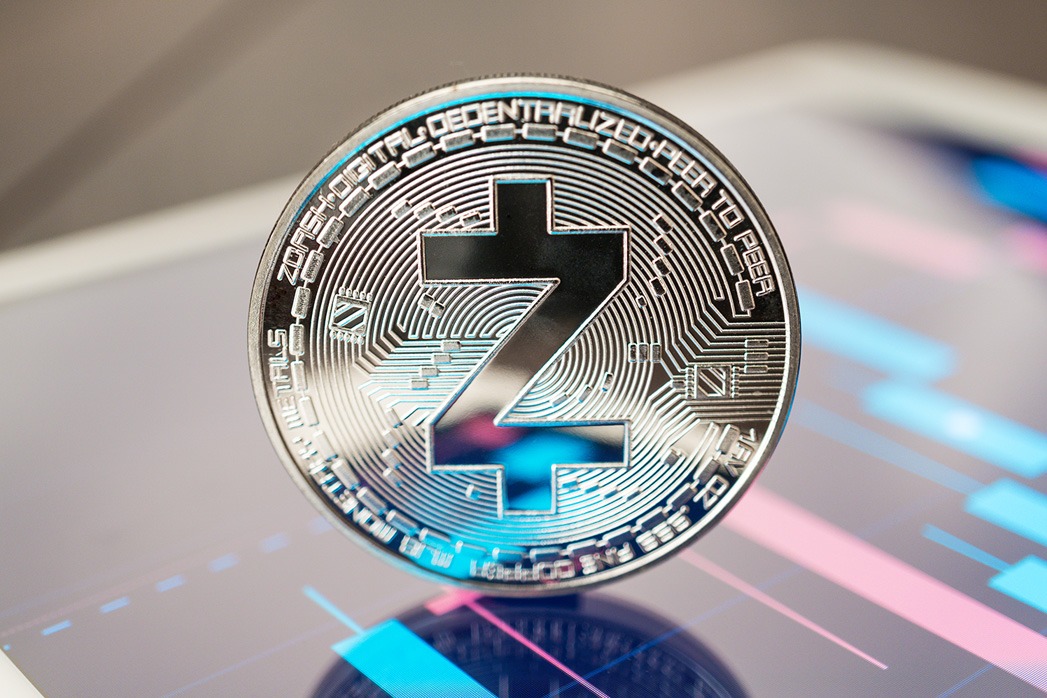

Zcash Cryptocurrency On The Tablet.

The Uprising of Zcash: Privacy, Regulation, and the Next Wave of Digital Finance

“In a world obsessed with transparency, true freedom begins with privacy.” – DNA Bitcoin Broker Knowledge Base.

For years, Bitcoin defined the frontier of financial independence.
But in 2025, as regulation tightens and surveillance expands, a quiet movement is rising behind a new principle: financial privacy as a human right.

That movement is called Zcash.

Built on advanced cryptography and zero-knowledge proofs, Zcash is not just another cryptocurrency — it’s a statement of resistance and innovation, now finding fresh relevance in a world where digital identity, privacy, and sovereignty intersect.

Learn more: Bitcoin Market Dynamics

A Decade in the Shadows

Launched in 2016 as a fork of Bitcoin, Zcash (ZEC) was designed to solve Bitcoin’s biggest contradiction: its ledger is transparent, not private.

While Bitcoin records every transaction publicly, Zcash introduced zero-knowledge proofs (zk-SNARKs) — a breakthrough that allows transactions to be verified without revealing who sent or received funds.

For years, privacy coins like Zcash and Monero lived on the fringes of crypto, labelled as “dark” or “untraceable.”
But times have changed.

In an era of CBDCs, data leaks, and financial monitoring, privacy is no longer a niche — it’s a necessity.

See: Global Impact of MiCA

2025: Privacy Comes Back into Focus

Over the last year, Zcash’s resurgence has mirrored a broader shift in sentiment across crypto and finance.

  • – Institutional attention: Zero-knowledge cryptography is now used by enterprises and blockchains (like Ethereum and Polygon) for compliance-grade privacy.

  • – Regulatory dialogue: Zcash has pivoted toward compliant privacy, engaging policymakers to demonstrate that privacy does not equal anonymity.

  • – Technological upgrade: The Halo 2 and Halo Arc upgrades removed trusted setups and enabled scalable, recursive proofs, paving the way for institutional-grade applications.

  • – Rising demand: With AI-era data harvesting and transaction tracking at record highs, investors are rediscovering privacy assets as portfolio hedges.

Zcash isn’t just surviving regulatory scrutiny — it’s reshaping the definition of ethical privacy in digital finance.

Explore: DeFi and MiCA Regulation

How Zcash Fits in the Regulated Era

The tension between privacy and compliance has defined Zcash’s evolution.

Under Europe’s MiCA regulation, privacy coins face challenges related to anti-money laundering (AML) disclosure requirements.
But instead of retreating, Zcash is pioneering selective disclosure — allowing verified entities to reveal transaction data when required, while keeping private users protected.

This approach aligns with the “regulated privacy” vision, gaining traction among financial institutions:
A balance between individual freedom and institutional accountability.

As governments worldwide test programmable CBDCs that track every transaction, Zcash offers a counterweight — programmable privacy for the digital age.

Learn more: Institutional Bitcoin Adoption

Technology that Redefines Trust

Zcash’s power lies in its mathematics.
Using zk-SNARKs, transactions are verified cryptographically without revealing inputs or outputs.

2025’s advances now include:

  • – Unified addresses for seamless interoperability between shielded and transparent accounts.

  • – Private smart contracts under development through Zcash’s new network upgrades.

  • – Layer-2 integration with Ethereum, allowing private cross-chain transactions for DeFi.

In an age when every transaction, message, and location is tracked, Zcash is restoring the balance between transparency and autonomy — trust through encryption, not exposure.

See: Crypto Custody Solutions

The Institutional Perspective

Privacy is often misunderstood as secrecy — but for institutions, it means data protection, competitive confidentiality, and regulatory resilience.

Banks, corporates, and Fintechs now explore ZK-based networks to secure payments, protect customer data, and comply with GDPR while maintaining cryptographic auditability.

Zcash’s research and technology have become foundational to enterprise-grade systems.
Its cryptography now underpins everything from private identity systems to tokenised asset protocols.

Zcash is no longer just a coin — it’s the proving ground for the next generation of secure, compliant digital systems.

DNA Crypto: Bridging Privacy and Regulation

At DNA Crypto, we recognise privacy not as opposition to regulation, but as its evolution.

We support institutions, family offices, and corporates exploring privacy-respecting digital assets under frameworks like MiCA and AMLD6.
Our approach combines regulatory integrity, technology literacy, and secure infrastructure.

Our services include:

  • – MiCA-aligned digital asset brokerage and custody

  • – OTC execution for privacy-enabled assets

  • – Advisory for regulated Tokenisation and privacy integration

  • – Cross-chain settlement solutions with full audit transparency

We believe the next financial paradigm will be transparent enough for compliance and private sufficient for freedom.

See: Global Impact of MiCA

The Bottom Line

Zcash began as an experiment in mathematical freedom.
Seventeen years after Bitcoin’s whitepaper, its mission feels more relevant than ever.

As the world races toward centralised digital currencies and AI-driven surveillance, Zcash stands as a reminder that privacy is not the absence of transparency — it’s the protection of choice.

And in the age of programmable money, that choice may be the ultimate form of wealth.


Disclaimer: This article is for informational purposes only and does not constitute legal, tax, or investment advice.

Read more →

Closeup image of people holding and exchange or convert bitcoins to dollars banknotes.

What’s the Best Way for Institutions to Purchase Bitcoin?

In 2025, Bitcoin is no longer a fringe asset — it’s a strategic reserve for institutions.
From asset managers to corporate treasuries, institutions are now integrating Bitcoin exposure into diversified portfolios.

But buying Bitcoin at scale is not like placing a retail trade on an exchange.
It requires confidential execution, price protection, and regulatory compliance — which is precisely where Over-the-Counter (OTC) brokerage comes in.

At DNA Crypto, we provide institutions with an OTC service that combines liquidity, security, and precision — designed to protect both capital and reputation.

Learn more: Institutional Bitcoin Adoption

Why Institutions Prefer OTC Over Exchanges

While public exchanges offer liquidity, they’re built for retail, not scale.
Large institutional orders can move the market, exposing positions and affecting execution.

OTC trading eliminates those risks through discreet, bilateral execution.

Key advantages include:

  • – Preferential Pricing: Access deep global liquidity pools for the best execution rates.

  • – Minimal Market Impact: Large trades are executed off-exchange to avoid slippage and price spikes.

  • – Tailored Settlement: Flexible options for trade timing, counterparties, and settlement currency.

  • – Full Privacy: Transactions are handled discreetly with full audit trails and regulatory oversight.

For institutions managing millions in exposure, these details are critical — turning a simple purchase into a strategic operation.

Explore: Bitcoin Market Dynamics

MiCA Compliance: The Regulatory Advantage

Europe’s Markets in Crypto-Assets (MiCA) regulation has set the global standard for crypto compliance and investor protection.
Under MiCA, all virtual asset service providers (VASPs) must meet strict AML, custody, reporting, and client verification standards.

As a MiCA-aligned brokerage, DNA Crypto ensures every OTC trade meets the highest levels of:

  • Regulatory transparency

  • – Capital protection

  • – Data confidentiality

  • – Cross-border legality

This makes our OTC desk a trusted partner for banks, funds, and corporates expanding into Bitcoin under a fully compliant framework.

See: DeFi and MiCA Regulation

Institutional-Grade Security

When it comes to Bitcoin, custody is as essential as the purchase.

DNA Crypto provides institutional-grade storage and post-trade security through:

  • – Multi-signature cold wallets for maximum protection

  • – Insurance-backed custody solutions

  • – Dedicated account segregation for institutional clients

  • – 24/7 monitoring and secure withdrawal protocols

Our infrastructure combines traditional financial controls with next-generation blockchain verification — creating a custody model built for institutional confidence.

Learn more: Crypto Custody Solutions

Expert Support at Every Stage

Institutional Bitcoin acquisition involves more than buying — it’s about strategy, timing, and compliance.
That’s why DNA Crypto assigns every client a dedicated digital asset specialist, ensuring:

  • – Strategic trade execution planning

  • – Pre-trade risk and liquidity analysis

  • – Tailored settlement and reconciliation support

  • – Ongoing regulatory reporting assistance

We manage the complexity so institutions can focus on the outcome — secure Bitcoin exposure without operational friction.

Explore: Global Impact of MiCA

Why DNA Crypto’s OTC Desk Leads the Market
Our institutional OTC service provides:

Preferential pricing through global liquidity aggregation
Minimal market impact with discreet execution
Tailored settlement options across currencies and time zones
MiCA-aligned compliance and AML integrity
Dedicated support from trade to custody

At DNA Crypto, precision, security, and transparency are built into every transaction.
We don’t just execute trades — we execute trust.

The Bottom Line

The best way for institutions to purchase Bitcoin isn’t through an app or an exchange — it’s through a regulated, private, and strategic OTC desk.

As Bitcoin matures into a global reserve asset, institutional access must evolve too.
That’s where DNA Crypto stands apart: discreet execution, compliant infrastructure, and expert support — from order to ownership.

Image Source: Envato Stock
Disclaimer: This article is for informational purposes only and does not constitute legal, tax, or investment advice.

Read more →

Bitcoin On A One Hundred Dollar Bills.

The Great Reset and Cryptocurrency: How Digital Assets Are Rewiring Global Finance

“The financial reset isn’t coming — it’s already underway. Blockchain is just the transparent part.” – DNA Crypto Knowledge Base.

In 2025, the term “Great Reset” no longer feels theoretical.
From digital currencies to programmable money, the global financial system is undergoing a once-in-a-century restructuring — one built on data, decentralisation, and digital sovereignty.

While governments pursue Central Bank Digital Currencies (CBDCs) and global regulatory alignment through frameworks like MiCA, investors and institutions are turning toward Bitcoin and tokenised assets as parallel systems of value and security.

Learn more: Institutional Tokenisation

A New Monetary Era: From Policy to Protocol

The idea of a “Great Reset” gained traction after the 2020 pandemic era, when supply chain shocks, inflation, and monetary expansion exposed systemic fragilities.
Now, five years later, the reset is not political — it’s technological.

Key shifts driving the transformation include:

  • – Digitalisation of Money: CBDCs are operational in over 30 jurisdictions, including China, India, and pilot programs in the EU.

  • – Institutional Blockchain Adoption: Banks and asset managers now use tokenised systems for settlement and liquidity.

  • – Monetary Transparency: Real-time payment visibility through ISO 20022 and blockchain audits.

  • – Tokenised Reserves: Governments and institutions increasingly hold Bitcoin and Stablecoins as part of diversified liquidity pools.

Explore: Global Impact of MiCA

CBDCs: The State’s Digital Reset

CBDCs represent governments’ answer to blockchain innovation — centralised, programmable money with built-in compliance and traceability.

By 2025:

  • – The European Central Bank is testing the Digital Euro for cross-border and retail use.

  • – The Bank of England is evaluating a “Britcoin” pilot through ISO 20022-compatible rails.

  • – The People’s Bank of China (PBoC) has integrated the Digital Yuan into its Belt and Road digital payment network.

CBDCs are bringing the efficiency of crypto with the control of central banking — effectively reshaping monetary policy into software.

See: Digital Euro Overview

Bitcoin and Decentralisation: The Counter-Reset

As states digitise their currencies, Bitcoin’s relevance has intensified.
Its finite supply and decentralised governance make it the monetary alternative to programmable, policy-driven CBDCs.

Institutions and family offices increasingly view Bitcoin as a reserve-grade asset, insulated from inflation, censorship, and fiscal policy manipulation.

In 2025:

  • – Global ETF inflows have surpassed $60 billion since approval.

  • – Bitcoin’s market capitalisation exceeds €1.6 trillion, making it one of the ten most significant global assets.

  • – Emerging markets use Bitcoin and Stablecoins as parallel payment networks amid currency instability.

Learn more: What Is Bitcoin and Why It Matters.

DNA Crypto: Building the Bridge Between Systems

As a VASP-licensed brokerage in Poland, DNA Crypto operates at the intersection of institutional finance and digital sovereignty.
Its infrastructure connects:

  • CBDCs and Stablecoins: Supporting regulated liquidity flows between fiat and digital currency.

  • Bitcoin and Tokenised Assets: Offering custody, brokerage, and DeFi connectivity under European compliance frameworks.

  • Institutional Onboarding: Enabling funds and corporates to integrate blockchain finance with traditional banking.

DNA Crypto is not choosing between centralisation and decentralisation — it’s building bridges that enable both to function together securely.

Explore: Crypto Custody Solutions

The Bottom Line

The “Great Reset” isn’t a conspiracy — it’s a convergence.
CBDCs, Bitcoin, and tokenised assets are all part of the same global evolution toward digitised value, programmable money, and transparent capital markets.

The next decade won’t be defined by centralisation or decentralisation — but by interoperability.
DNA Crypto stands at the frontier, translating this new monetary order into real-world financial infrastructure.

Image Source: Envato Stock

Disclaimer: This article is for informational purposes only and does not constitute legal, tax, or investment advice.

Read more →

Concept for rising Bitcoin price, green coin, crypto currency background, stock market chart or exchange with copy space.

Green Cryptocurrencies and Why Are They Important?

As you explore the ever-evolving world of Cryptocurrency, you may have encountered a new player in this field: green cryptocurrencies. These new digital assets are designed with sustainability in mind.

Primarily, the concept deals with environmental concerns of traditional Cryptocurrencies using green technology and energy-efficient mining processes. In their way, they symbolize the gradual acceptance of sustainability and longevity in digital economies.

Understanding Green Cryptocurrencies

As opposed to conventional Cryptocurrencies that use intense power and depend on Proof-of-Work (PoW) mechanisms, green cryptocurrencies have developed ingenious alternatives aimed at less energy consumption and tilt toward sustainability.

Green cryptocurrencies mostly use Proof of Stake (PoS). This uses a validator selection mechanism based on the number of coins each holds from a single crypto wallet instead of a tedious calculation of mathematical problems by miners. No more energy-consuming mining is required.

Proof of Space (PoSpace) is an alternative method that utilizes unused storage capacity to secure the network—Chia, a Cryptocurrency that utilizes unoccupied disk space, hence more energy-efficient operations.

Some green Cryptocurrency initiatives enhance their sustainability measures by incorporating renewable energy sources into their operations or by supporting carbon offset programs. These efforts guarantee that any remaining emissions from their networks are reduced.

Why Green Cryptocurrencies Matter

The significance of green Cryptocurrency is found in its capacity to tackle the environmental deficiencies of conventional Cryptocurrency while preserving the advantages of blockchain technology.

To begin with, they directly address the significant energy usage linked to mining. It is believed that Bitcoin uses energy equivalent to that of some small countries each year and carries an equally substantial carbon footprint. Eco-friendly Cryptocurrencies reduce this impact significantly by keeping in line with global climate goals within the crypto domain.

In addition, the growing concern around sustainability has placed different industries on accountability for their carbon emissions. Green Cryptocurrencies are perennial in recognition of some sustainability goals, supported by the sustainable future of Blockchain technology.

Investors are beginning to pay attention as well. Environmental, social, and governance (ESG) investing is becoming mainstream and thus puts sustainability rather at the forefront of financial decisions. Eco-friendly Cryptocurrencies attract environmentally conscious investors and companies, appealing to more newcomers.

Therefore, the result is a generation of green Cryptocurrencies. which brings about more creativity. It creates an opportunity for all technological ingeniousness that gives room for the practicality, usefulness, and efficiency of Blockchain networks to improve the crypto space as a whole further.

Popular Eco-Friendly Cryptocurrencies to Keep an Eye On include:

  • – Chia (XCH): Chia harnesses idle computer storage in a standard desktop environment. It minimizes energy requirements for the operation of other typical Blockchain networks by solving Proof of Space and Time.
  • Cardano (ADA): Cardano is based on a Proof of Stake framework; this means energy efficiency and long-term sustainability.
  • – Nano (NANO): Nano’s lightweight and extremely efficient block-lattice structure eliminates mining and severely limits energy needs.
  • – Algorand (ALGO): This Blockchain is carbon-neutral by design, with sustainability woven into its very fabric.

Challenges and Opportunities

Although they hold potential, green cryptocurrencies encounter several obstacles. Adoption continues to be a major obstacle since numerous crypto enthusiasts and miners are deeply rooted in conventional systems. Moreover, there are ongoing discussions regarding the safety and decentralisation of alternative methods, such as Proof of Stake in relation to Proof of Work.

Nonetheless, these obstacles can be overcome. As awareness of climate change rises and regulatory pressures increase, the need for sustainable Blockchain solutions is expected to grow. Eco-friendly Cryptocurrencies are poised to spearhead this transition, providing a framework for responsible and progressive progress.

The rise of eco-friendly Cryptocurrencies represents more than a fad—it’s an essential progression. As Blockchain technology continues to grow its impact, the sector must evolve to address the environmental and social issues we face today.

As the movement expands, the inquiry is no longer about whether green Cryptocurrencies will influence the future but how swiftly they will become the norm.

Image Source: Adobe Stock

Disclaimer: This article is purely for informational purposes. It is not offered or intended to be used for legal, tax, investment, or financial advice.

Read more →

Close-up view of dollars and bitcoin in hands of thief

Money Laundering and Terrorism Financing in Crypto

Today, Bitcoin and Ethereum are constantly making headlines. The world has witnessed a new era in finance, a decentralized disruptor that knows no boundaries. But again, with new ideas and technology, myriad complexities exist. The most significant areas of concern are crypto money laundering and how to counter terrorism financing. Cryptocurrencies in terrorism financing are increasingly becoming a worrying trend.

In this write-up, we see why Cryptocurrency has become so appealing for illegal activities and talk about what regulators and the crypto community are doing to address these risks. Cryptocurrencies in terrorism financing present unique challenges that need addressing.

Who Uses Cryptocurrency?

Cryptocurrencies appeals to investors looking to have more control over their finances—it’s also an essential tool for members hoping to stay under the radar.

Here’s why:

1. Privacy and Anonymity

Thanks to Blockchain technology, Cryptocurrencies offer more sophisticated and privacy levels than traditional financing. As opposed to regular bank transactions, crypto transactions are riddled with anonymity. As a result, this makes it trickier for authorities to monitor illegal activities and their proceeds. This uncontrolled access to privacy may lead to predestined financial flows thanks to ill-intended actions, including cryptocurrencies in terrorism financing.

2. Decentralization

The mere fact that digital currencies are decentralized means there’s no central authority monitoring every transaction. Typically, lack of oversight attracts users who wish to escape government scrutiny, giving room for money laundering and terrorism financing. This decentralization factor also facilitates cryptocurrencies in terrorism financing due to minimal regulatory checks.

Money Laundering with Cryptocurrency

Money laundering is a three-stage process of making ill-acquired funds seem legitimate.

Placement: Ill-gotten money is placed into financial systems through crypto exchanges.
Layering: These funds are shuffled through multiple transactions to obscure their origin.
Integration: The laundered money is reintegrated into the economy, often through high-value purchases.

From 2011 to 2017, authorities found BTC-e, a crypto exchange, guilty of facilitating money laundering. The exchange processed over $9 billion in illicit funds. Binance also faced charges for failing to prevent money laundering and ultimately settled a $4 billion fine with the US Department of Justice. Cases like these show just how tighter regulations and better monitoring are necessary in the financial sector.

Terrorism Financing in Cryptocurrency

Cryptocurrencies’ decentralized, global nature also makes them an effective tool for funding terrorist operations. With crypto, funds can be transferred across borders with minimal risk of detection—a feature currently exploited by several groups. Cryptocurrencies in terrorism financing is becoming a significant topic of concern amongst regulatory authorities.

In 2019, Hamas allegedly used Bitcoin donations to finance its activities. The group even shared QR codes on social media to encourage people to send Bitcoin directly. The following year, US authorities seized millions of dollars in Cryptocurrency linked to terrorist groups, showing their growing connection to terror financing.

How Are Governments Responding?

Regulatory bodies worldwide are at the forefront of addressing these ethical concerns:

KYC and AML: Crypto exchanges will now follow Know Your Customer (KYC) and Anti-Money Laundering (AML) protocols which helps verify users’ identities and monitoring transactions to spot suspicious activity.

FATF Guidelines: The Financial Action Task Force (FATF) has set guidelines for Virtual Asset Service Providers (VASPs) to comply with AML and combating the financing of terrorism (CFT) standards.

Ethical Dilemmas for the Crypto Community

The crypto world needs to decisively strike a balance between maintaining user privacy and enhancing security. While too much Crypto regulation could undermine Cryptocurrency’s core principles of decentralization and autonomy, unchecked freedom could lead to increased misuse. More crypto adoption demands more user privacy and security in a bid to curtail money laundering.

Solutions for Fighting Terrorism Financing

Criminal activity is decreasing day by day.  

Here’s how:

Blockchain Analytics: Chainalysis and Elliptic have developed tools regulators and financial institutions can use to trace transactions on public ledgers. This helps in detecting suspicious activities. Improved Security Protocols: Newer protocols integrate advanced features like zero-knowledge proofs, which help protect user privacy and, at the same time, ensure regulatory compliance when necessary.

Ultimately, Cryptocurrency offers incredible promise for the future of finance. But with that comes the responsibility to address associated proceeds of crime. Money laundering and terrorism financing need a collaborative approach. Through bespoke regulatory oversight, technological advances, and ethical implications, the crypto industry has overcome these challenges and drives innovation. Cryptocurrencies in terrorism financing require constant vigilance and regulation for safer adoption.

Image Source: Adobe Stock

Disclaimer: This article is provided for informational purposes only. It is not offered or intended to be used for legal, tax, investment or financial advice.

Read more →

Bitcoin, Litecoin and Ripple cryptocurrency and Visa, MasterCard debit cards. Visa and MasterCard worldwide is an American multinational financial services corporation against cryptocurrency.

VISA Integrates with Pi Blockchain

Digital finance space continues to make history with the latest being how VISA has Integrated with Pi Blockchain. A core factor that will lead to the strengthening of the Global Crypto Ecosystem. This new development is expected to revolutionise the future of Cryptocurrencies. It…

Read more →