
bitcoin cryptocurrency with Visa credit card and dollars, money. Visa - American multinational company providing services of payment operations. Moscow, Russia.

50 Million Wallets, One Direction: Why Bitcoin Is Overtaking Banks in 2025

The numbers tell a story. But the systems behind those numbers are writing the future.

As of mid-2025, Bitcoin is not just weathering economic uncertainty—it’s accelerating through it. Active Bitcoin wallet addresses have surged past 50 million globally, marking one of the sharpest increases in self-custody and decentralised engagement since the asset’s inception.

In parallel, traditional banking is undergoing a structural recalibration. Regional banks are consolidating. Central bank digital currencies (CBDCs) are being piloted. Consumer trust is shifting. And for the first time, digital wallets are becoming the new checking accounts.

Bitcoin Wallets: The Quiet Boom

This wallet surge isn’t speculative. It’s behavioural. It reflects a foundational change:

  • Long-term holding trends are rising as more users opt for self-custody.

  • Layer 2 adoption (like the Lightning Network) is expanding microtransaction use.

  • Institutional wallet creation is accelerating with custodial integration into treasury systems.

Bitcoin is no longer just a speculative hedge. It’s becoming infrastructure.

Explore wallet trends: The Power of Bitcoin

Banking Systems: Realignment in Real Time

Meanwhile, traditional banking is under pressure on three fronts:

  1. Centralisation: Large banks are absorbing smaller players, concentrating liquidity and risk.

  2. Regulatory Shifts: Real-time reporting, AI-based fraud detection, and CBDC rollouts are changing core infrastructure.

  3. Trust Erosion: Public trust is shifting towards decentralised alternatives that offer greater transparency and access.

This isn’t a collapse—it’s a pivot.

Related read: The Impact of Crypto on Banking

From Custodians to Code: What’s Next

The lines between a “bank” and a “wallet” are already blurring:

  • Wallets now provide yield, staking, and cross-border payments.

  • Banks are launching crypto custody, tokenized asset offerings, and on-chain compliance models.

What separates them is control.

Wallets put users in command. Banks offer users permission.

A System Redrawn by Addresses

The rise in Bitcoin wallet activity is more than a metric—it’s a signal. It tells us:

  • People want sovereignty over their funds.

  • Technology is providing viable, scalable alternatives.

  • Legacy systems must adapt or fade.

Final Thoughts

We are witnessing a two-way transformation:

  • Bitcoin is becoming a foundation for new financial behaviours.

  • Traditional banks are evolving into service layers, not gatekeepers.

The address isn’t just where the money lives. It’s where the future is being built.

Disclaimer: This article is for educational purposes only. It does not constitute financial or investment advice.

Read more →

Wealthy person's silhouette against a backdrop of skyscrapers, yachts, and private jets, emphasising their influence, power, and the heights of success they have achieved.

Web3 Concierge: Redefining Private Banking with AI and Smart Contracts

Picture this: Your banker speaks 12 languages, onboards you to a secure crypto platform in minutes, navigates compliance across jurisdictions, and customises investment strategies in real time. No sleep. No salary. No boundaries.

Now imagine this banker isn’t human. It’s an AI-driven avatar, operating on a smart contract backbone, guiding you through the next chapter in digital finance.

Welcome to the Web3 Concierge.

The AI Revolution Meets Crypto

In traditional finance, “white-glove service” was synonymous with marble offices, bespoke portfolios, and multilingual advisors. But today’s elite investors are global, mobile, and digitally fluent. They expect seamless, personalised financial experiences with complete control.

Enter the Web3 Concierge — an AI-powered, blockchain-integrated platform that offers:

  • Multilingual, customised onboarding

  • – Real-time portfolio optimisation

  • – Smart contract-driven investment execution

  • – Secure digital identity and risk profiling.

– It’s private banking, reinvented for the decentralised era.

From Smart Contracts to Smart Agents

Within a Web3 Concierge platform, intelligence is embedded at every layer.

AI-Powered Avatars

Your always-on financial co-pilot:

  • – Speaks your native language

  • – Assists with onboarding, compliance, and asset allocation

  • – Learns and evolves based on your behaviour

  • – Aligns with your financial goals and risk tolerance

Smart Contracts with Embedded Logic

Beyond basic transactions, these programmable contracts:

  • – Allocate capital across DeFi protocols

  • – Execute trades and rebalancing based on preset conditions

  • – Trigger alerts when risk levels or market conditions shift

More on smart contract architecture: Understanding Smart Contracts


Tiered Access and Streamlined Compliance

Web3 Concierge platforms cater to various investor profiles:

All powered by:

  • – AI-enhanced AML/KYC verification

  • – Real-time jurisdiction matching

  • – Dynamic risk scoring systems

Related insight: AML & KYC in the Web3 Era


Human-Centric Design for a Post-Banking World

The innovation isn’t just technical. It’s personal.

Imagine:

  • – AI-driven alerts when yield strategies degrade or new opportunities arise

  • – A virtual assistant that understands your long-term goals

  • – Instant wallet creation and portfolio diversification via simple chat interfaces

  • – Biometric-secured digital vaults and estate transfer protocols

Explore more: Wealth Planning in Web3


Trust and Transparency: The New White Glove

In Web3, luxury is not yield. It’s trust.

The Concierge experience ensures:

  • – Full transparency into AI decision logic

  • – End-to-end encryption of personal data

  • – On-chain auditable contracts

  • – Human override features and programmable safety nets

More here: AI Transparency and Security


A Concierge for the Global Crypto Citizen

Today’s investor is borderless. The Concierge is, too.

  • – Tailored tax and compliance recommendations by geography

  • – Cross-border transaction support

  • – Legal and regulatory syncing in real time

Whether you’re a digital nomad in Lisbon, an asset manager in Dubai, or a DAO founder in Singapore, your AI concierge understands your language—financially, culturally, and legally.


What’s Next: Personal Operating Systems for Wealth

The Web3 Concierge evolves into your digital OS:

  • – Monitors DeFi strategies and reallocates funds

  • – Collaborates with DAOs for estate and trust planning

  • – Manages Web3 memberships, airdrops, and job discovery. Participates in governance voting on your behalf

This isn’t automation for its own sake. It’s machine intelligence aligned with your best financial interests.


Final Thoughts

This is a new era of financial empowerment. The Web3 Concierge isn’t here to replace human advisors—it augments them. It places autonomy, intelligence, and trust at your fingertips.

Private banking is no longer locked behind glass and granite. It’s on-chain, always-on, and as fluent as you are.


Disclaimer: This article is for informational purposes only and does not constitute legal, tax, or investment advice.

Read more →

Gold bitcoin symbol and credit card master cards on the table.

Solana Joins PayPal: Crypto Moves Mainstream

In a world where legacy banks are racing to stay relevant, PayPal’s addition of Solana (SOL) and Chainlink (LINK) to its crypto offering marks a defining moment in the convergence of traditional finance and decentralized infrastructure.

As of early 2025, PayPal and Venmo users in the U.S. can now buy, sell, hold, and transfer Solana and Chainlink directly within their wallets. This move, though limited geographically for now, represents something much larger: the normalisation of blockchain-native tokens within global payment ecosystems.

“We’re at an inflexion point where financial institutions must ask themselves: adapt to digital assets or become irrelevant.”
— Caitlin Long, CEO, Custodia Bank

Why Solana, Why Now?

Solana isn’t just another token. It’s a high-performance blockchain known for near-instant transaction finality, low fees, and strong developer traction in DeFi, NFTs, and Web3 gaming. Its inclusion by PayPal underscores growing institutional confidence in scalable Layer 1 alternatives.

“Adding Solana to PayPal validates what developers already know: high-speed, low-cost blockchains are the infrastructure of digital finance.”
— Anatoly Yakovenko, Co-Founder, Solana Labs

For millions of PayPal and Venmo users, many of whom are unfamiliar with traditional cryptocurrency exchanges, Solana’s availability brings a new level of mainstream exposure and access.

The Broader Banking Shift

PayPal’s move isn’t occurring in isolation. Central global banks are quickly expanding their blockchain strategies, acknowledging that crypto-native rails are here to stay.

  • JPMorgan’s JPM Coin now handles daily institutional settlements worth over $1 billion, with plans to scale further via its Onyx blockchain division.
    (Source: Bloomberg)

  • Societe Generale launched a MiCA-compliant euro stablecoin (EURCV) on Ethereum, making it one of the first banks to embrace Europe’s new regulatory framework for digital assets.
    (Source: CoinDesk)

  • Standard Chartered is exploring tokenized cross-border settlement in collaboration with Ripple and Zodia Markets, signalling further integration of blockchain into interbank flows.
    (Source: Ripple)

“It’s not the blockchain that’s volatile—it’s the banks’ refusal to innovate.”
— Nic Carter, Partner, Castle Island Ventures
(Source: Harvard Blockchain Conference)

Regulatory Readiness: Europe in Focus

While PayPal’s crypto functionality is currently U.S.-only, Europe is poised for a similar evolution, especially with MiCA (Markets in Crypto-Assets Regulation) now in force.

The European Central Bank has backed MiCA as a pivotal development, offering both investor protection and business clarity.

“The crypto sector must live up to the standards expected of mainstream finance — MiCA is Europe’s answer to that challenge.”
— Verena Ross, Chair, ESMA
(Source: ECB)

Platforms like DNAcrypto.co and licensed crypto-asset service providers (CASPs) across the EU are now uniquely positioned to scale under this new compliant framework.

What Comes Next

PayPal’s listing of Solana is a strong signal to the broader financial world: the rails of digital money are no longer experimental—they’re operational.

As central banks research CBDCs, traditional banks explore tokenization, and stablecoin issuance becomes regulated, the line between crypto and finance is vanishing.

Solana joining PayPal isn’t just about retail access—it’s about infrastructural commitment to the next generation of programmable money.

Further Reading:

Read more →

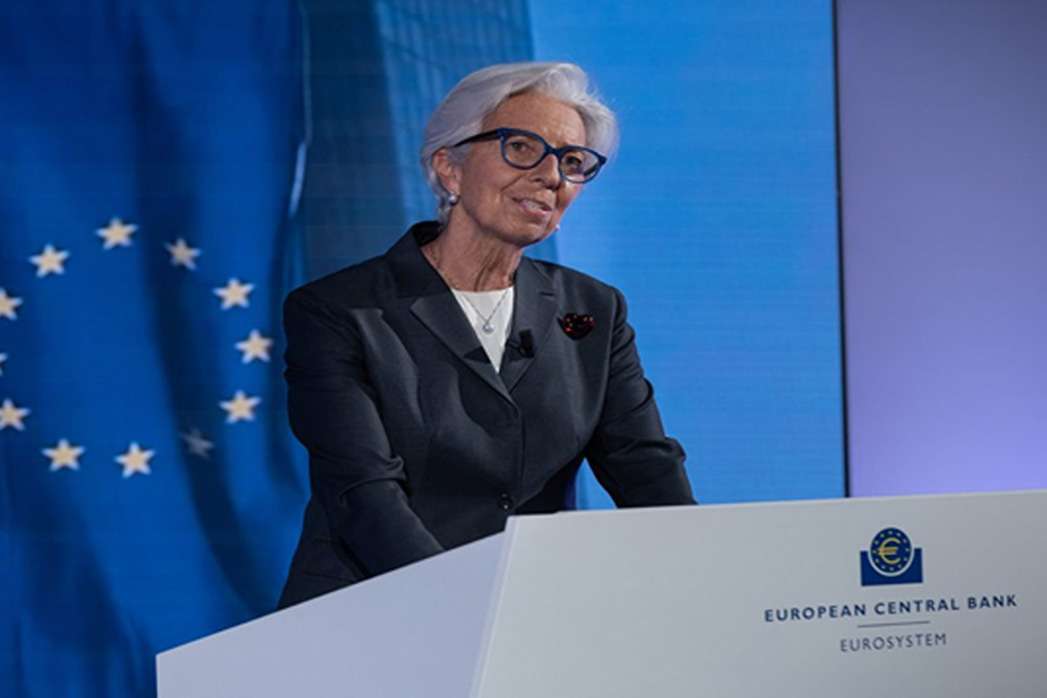
Christine Lagarde's Shift on CBDCs

Christine Lagarde’s Shift on CBDCs: The European Central Bank’s New Strategy Unveiled

In a recent address at the 25th ECB and Its Watchers conference in Frankfurt, Christine Lagarde, President of the European Central Bank (ECB), outlined a significant shift in the institution’s approach to Central Bank Digital Currencies (CBDCs). Lagarde emphasised agility, clarity, and a renewed commitment to price stability amid an evolving geopolitical and economic landscape. Her speech signalled a turning point in the ECB’s strategy regarding digital currencies, reflecting the broader challenges posed by inflation volatility, trade disruptions, and technological advancements.

At the 25th ECB and Its Watchers conference in Frankfurt, Christine Lagarde highlighted the European Central Bank (ECB) ‘s transformation toward the Central Bank Digital Currency (CBDC). According to ECB Chief Christine Lagarde, price stability, agility, and clarity are now the essential priorities under the current changes in geopolitics and economics. The speech indicated a new direction for ECB digital currency strategies, which stemmed from the multiple challenges of price instability and trade complications.

A New Direction for CBDCs

Central Bank Digital Currencies (CBDCs) have long been a topic of interest at the ECB. Lagarde’s address marked a shift in ECB policy by supporting digital currencies, which help maintain financial stability and robust monetary policy. She stated that the ECB’s digital euro project now needs implementation because digital payment platforms have brought financial transactions to rapid digitalisation.

The ECB understands that European digital financial sovereignty needs immediate attention because non-EU financial institutions expand their payment sector presence while digital payments become more prevalent. According to Lagarde, a digital euro can function as a secure substitute for private digital money while helping to implement monetary policy better, thus safety during these unpredictable times.

Geopolitical and Economic Pressures

According to Lagarde, monetary policy faces adjustments due to growing international trade barriers, rising political risks, and changing price levels. Traditional monetary policy tools have fallen short due to the economic insecurity resulting from global trade policy changes and evolving economic alliance dynamics.

“In a more uncertain environment, larger and possibly more persistent shocks, the way we have formulated our inflation target matters – that is, we aim for 2% inflation, our target is symmetric, and we work to achieve it over the medium term.” She added.

The ECB emphasises CBDCs’ fundamental role in overcoming present and future market obstacles. The adequately organised digital euro system solves payment breakdown issues while offering secure financial support compared to private digital currencies and altcoins.

Balancing Innovation and Stability

Further, Lagarde also recognised the importance of maintaining equilibrium. The ECB’s approach to CBDC develops the need to establish mechanisms that prevent existing banking operations from destruction. Bank run and capital flight pose a significant challenge to traditional systems. Lagarde outlined that the ECB plans to put transaction caps along with varied payment methods to stop customers from relocating significant funds from banking institutions to digital euro systems.

She also highlighted the need for privacy and security during the development of CBDCs. The digital euro system must preserve user privacy while still fulfilling all requirements of anti-money laundering standards. The anonymity vs transparency factor must find optimal equilibrium for digital euro adoption and achieving public trust.

Clarity in Policy Communication

Lagarde aspires to decrease market uncertainties and strengthen financial stability. The central bank will stay connected with commercial banks’ regulatory bodies and the general public to establish an approach for digital euro implementation that enhances instead of replaces existing monetary systems.

Through her speech, Christine Lagarde highlights the fundamental transformation of how the ECB will handle Central Bank Digital Currencies. The digital euro is a central component in the ECB’s strategy to manage market volatility while the economy remains unstable. The ECB has strategically moved to update its monetary instruments due to geopolitical instability, rising inflation, and changes in the digital financial systems worldwide.

In summary, innovation must coexist with financial stability for future development. The digital euro’s success depends on the ECB’s capability to inspire confidence in the public and seamlessly integrate systems while establishing monetary stability as the key foundation for future financial operations in the EU.

Image Source: Adobe Stock

Disclaimer: This article is purely for informational purposes. It is not offered or intended to be used for legal, tax, investment or financial advice.


Read more →

https://dnabitcoinbroker.com/

The Digital Euro: The Most Private Electronic Payment Option?

The European Central Bank is in stages launching the digital euro. Yet, this move has sparked debates and queries on the integrity and privacy of CBDC. In addition, Maarten Daman, data protection officer at the ECB, believes the digital euro’s development will be as an option that represents the “highest privacy level of electronic payments”.

The Digital Euro Journey

The digital euro has been in the works for some time now:

    • – October 2020: The ECB released a foundational report on the digital euro.

    • – October 2021: The investigation phase began.

    • – November 2023: Entered the preparation phase.

    • – Q4 2024: Possible legislative adoption expected.

    • – November 2025: Potential implementation of use cases.

But still, the road to full implementation is long. Subsequently, the ECB Governing Council will deliberate on decisions on further preparations after reaching certain milestones.

Addressing Privacy Concerns

The digital euro has experienced intermittent pushback on this new ECB innovation, with the main concerns revolving around privacy.

Daman of ECB emphasises that “We have nothing to hide”. This direction is fundamental because, according to the information obtained in the recent survey by the Deutsche Bundesbank, 59% of the respondents had no idea of the existence of the digital euro, while the rest ascribed different degrees of the need for privacy.

The ECB’s Privacy Strategy

To address these concerns, the ECB is exploring several approaches:

    1. Minimal data collection: The ECB aims to process only the minimum personal data required to fulfil its objectives.
    2. Pseudonymisation: This technique replaces identity attributes with fictitious ones, thus enhancing privacy while maintaining data usefulness.
    3. Segregated data streams: Payment Service Providers will handle citizens’ data separately from the Eurosystem, making it impossible to identify end-users directly.

Safeguards and Oversight

The ECB has emphasised on several mechanisms to prevent potential government overreach on CBDCs:

    • – Legal prohibitions on processing personal data to identify users directly.

    • – Oversight by the European Data Protection Supervisor.

    • – A possible intervention by the European Court of Justice if laws are breached.

Nevertheless, some critics still do not share the same sentiments. An independent German MP, Joana Cotar, has been critical of the ECB’s reliance, asserting that laws are amendable and could be altered or eliminated.

Josh Swihart, the CEO of Electric Coin Company, also notes that privacy is not an on-or-off thing and raises questions about the ability of governments to regulate the issuance of money.

The Future of Digital Euro

To this end, what started as a concept is now getting closer to becoming a reality. The ECB is now in a dilemma of how to heed the calls for privacy while at the same time implementing the regulations and innovations. The success of this CBDC will mainly lie in gaining credible and sustainable public confidence vis-à-vis effective and proper privacy measures.

The coming months and years will tell whether the digital euro truly will be the most private electronic payment method as it is to become or whether the critics will have their way.

Lastly, do you think the digital euro is capable of achieving the goal of becoming the most private electronic payment method?

Let’s have your thoughts below!

Image Source: Adobe Stock

Disclaimer: This article is provided for informational purposes only. It is not offered or intended to be used for legal, tax, investment or financial advice.

Read more →

Euro currency icon and EUR money symbol digital concept 3d illustration

The Digital Euro’s Impact on Banking

With traditional fiat currencies increasingly challenged by new and popular virtual currencies, the ECB evaluates the feasibility of a digital supra-national currency, CBDC, that can act in parallel with physical money. Sequentially, this write-up explores the advent, adoption, and future of the digital Euro…

Read more →

Regulations in the EU ensure sound banking practices and government budgeting standards.

EU’s MiCA Stablecoin Regulations

The EU Markets in Crypto-assets Regulation (MiCA) has started taking a toll on Cryptocurrencies. This comes after partial implementations across the sector. This milestone creates a new approach to regulating Electronic Money Instruments and Stablecoins as digital assets in the EU. MiCA Stablecoin Focus…

Read more →

The logo for cbdc central bank digital currency incorporates elements of blockchain technology and utilises the concept of NFTs.

What is CBDC? Digital Currency Explained

State money evolves slowly. Financial rails evolve fast.” — DNA Crypto.

Central bank digital currency (CBDC) is a type of fiat currency that doesn’t exist as banknotes or coins but exists only as digital data. Digital currencies are stored in digital wallets. Typically, its definition is inseparable from that of a “central bank.”

What Exactly is Central Bank Digital Currency?

Central Bank Digital Currency, CBDC, is the digital equivalent of physical cash that can be transferred into circulation by central banks. Just as CBDCs use the current infrastructure to move physical cash between bank accounts, blockchain technology could be used to enable these transfers digitally. The main questions surrounding this topic are: why we need this and what the implications are for central banking. In the UK, the Bank of England is the central bank, and it’s currently working closely with HM Treasury to bolster digital currency across the UK.

How CBDC Differs from Cryptocurrency?

CBDCs and crypto assets are both digital currencies, but they differ in key ways. Crypto assets are decentralised, peer-to-peer virtual currencies that can be traded independently of central banks or governments, with the most well-known crypto asset being bitcoin. Central banks issue CBDCs as a substitute for cash, meaning they can be used to make payments just like physical notes and coins. They may also be used to make payments between financial institutions. In contrast, crypto assets are typically transacted privately between two parties, with no involvement from the issuing bank or government institution.

Why is the UK Considering a Central Bank Digital Currency?

Change is inevitable, and we must be willing to adapt with the times. The challenges facing the global economy are immense, but so is the opportunity. Cash has been steadily declining in importance since the introduction of ATMs and contactless cards in the 1990s and 2000s. Today, only about 15% of all payments in the UK are made in cash – down from 40% two decades ago – and many businesses no longer accept it. This trend is expected to continue as more people adopt digital payments and other non-cash methods, such as QR codes and mobile wallets, gain traction. But there are still concerns about whether we have sufficient cash available in emergencies or during bank holidays when banks aren’t open. Surely, this is food for thought.

What are the Chances CBDC will replace Cash?

Despite the potential official adoption of digital currency by governments, cash remains a popular payment method, and it’s essential to many people. The Bank of England will continue issuing money in the UK as long as people want to use it, and has no plans to stop providing notes and coins within the next decade. Ultimately, central bank digital currency has the potential to promote a cashless society. This will likely take time to achieve, but the push toward further adoption of digital currencies is inevitable. Stay tuned, as this technology will undoubtedly be the next big thing in financial services.


Image Source: Adobe Stock

Disclaimer: This article is provided for informational purposes only. It is not offered or intended to be used as legal, tax, investment, financial, or other advice.

Read more →