
euro notes with magnifier on white background.

Privacy, Surveillance & Money: Why Bitcoin’s Design Matters More Than Ever in a Digital-Everything World

“Bitcoin isn’t about secrecy. Bitcoin is about safety.” — DNA Crypto.

The future of finance is digital — but digital doesn’t always mean free.

Governments, banks, and payment platforms are rapidly building systems of programmable, trackable, and fully monitored money.

In this new paradigm, Bitcoin remains the only globally accessible system where privacy is the default, not the exception.

This isn’t just a debate about tech. It’s a question of freedom.

The Rise of Financial Surveillance

Today, nearly every financial system collects user data:

  • – Banks
  • – Card networks
  • – Fintech apps
  • – Digital wallets
  • – Remittance services

Every swipe, tap, and send leaves a digital footprint — and that data is monetised, analysed, and increasingly used for compliance.

Central Bank Digital Currencies (CBDCs) take this further, introducing programmable controls and total visibility into financial activity.

This shift is not theoretical. It’s already underway.

Bitcoin’s Counterbalance

Bitcoin offers a radically different financial structure:

  • – Open, peer-to-peer architecture
  • – No identity or KYC requirements at the protocol level
  • – No permission needed to transact
  • – Transparent but pseudonymous ledger
  • – Predictable issuance — no policy-driven inflation
  • – Global, borderless operation

Bitcoin is not built for surveillance. It is built for autonomy.

As we’ve explored in Bitcoin vs Digital Euro, this contrast between control and freedom is accelerating.

Privacy Is Not Secrecy — It’s Safety

Financial privacy protects more than transactions. It protects:

  • – Where you live
  • – Who you support
  • – How you move value
  • – What you believe

Without privacy, financial freedom is always conditional — subject to oversight, revocation, or denial.

Bitcoin enables safety through:

  • – Self-custody
  • – Coin control tools
  • – The Lightning Network for private payments

– It’s not just a feature — it’s a foundational right.

Learn more in Bitcoin as a Treasury Strategy, where we outline why self-custody and transparency work hand-in-hand for privacy-conscious users.

Why This Matters in Europe

Europe is on the frontline of financial digitisation:

  • – The digital euro is in pilot phase
  • – KYC/AML regulations are expanding
  • – Payment data consolidation is rising
  • – Compliance burdens are increasing

Bitcoin is Europe’s counterbalance:

  • – Neutral settlement
  • – Borderless by design
  • – Outside traditional banking infrastructure

This matters not just for individuals — but for businesses, NGOs, and any entity seeking autonomy.

See also: Bitcoin vs Digital Euro: What’s at Stake for Privacy?

The Path Forward

Privacy is not a luxury. It’s a baseline for financial dignity.

The next decade will determine whether programmable money serves people — or programs them.

Bitcoin’s design preserves optionality:

  • – No freeze buttons
  • – No blacklist filters
  • – No intermediaries

Bitcoin is not slowing down. Privacy-forward finance is just beginning.

Image Source: Adobe Stock
Disclaimer: This article is for informational purposes only and does not constitute legal, tax, or investment advice.

Further Reading from the DNA Crypto Archives

 For readers exploring Bitcoin’s role in privacy, regulation, and institutional strategy, we recommend these key articles:

  1. Bitcoin as a Treasury Strategy: Why Europe’s CFOs Are Paying Attention
    How European CFOs are building structured, compliant treasury policies around Bitcoin.

  2. Discreet Bitcoin Accumulation: How Institutions Build Positions Without Moving Markets
    Why large players prefer OTC channels and long-term DCA strategies — without triggering price movements.

  3. Why Institutions Prefer OTC Trading Over Exchanges
    A deep dive into execution, custody, and compliance advantages for professional BTC acquisition.

  4. Europe’s Quiet Bitcoin Revolution: From Regulation to Infrastructure
    How MiCA, banking adoption, and clean energy mining position Europe as Bitcoin’s next superpower.

  5. What Bitcoin ETFs Mean for Corporate Europe
    A breakdown of how ETFs are accelerating institutional participation and treasury allocation.

  6. Bitcoin vs Digital Euro: Privacy, Power and the Future of Money in Europe
    A comparative look at centralised digital currencies versus Bitcoin’s decentralised, borderless model.

Read more →

European Union flag on a façade of the building.

Bitcoin Treasuries 2.0: How European Corporates Use BTC to Hedge Inflation, FX Risk, and Macro Volatility

“Bitcoin is no longer a trade — it’s a treasury tool.” — DNA Crypto.

Corporate Bitcoin adoption in Europe is maturing.

We’ve moved from “Should we buy Bitcoin?” to “How do we integrate BTC into treasury policy with governance, compliance, and strategic intent?”

Europe is entering its second phase of Bitcoin treasury development — a phase defined by regulation, inflation pressure, and Bitcoin’s emergence as a macro reserve asset.

In this environment, corporate treasuries are quietly adding Bitcoin to hedge against:

  • – Euro depreciation
  • – FX exposure
  • – Cash erosion
  • – Macro uncertainty

Why Bitcoin Belongs in Treasury Strategy

European corporates operate across fragmented currency zones and volatile macro cycles. Bitcoin adds resilience to the balance sheet in several key ways:

Inflation hedge
Eurozone inflation remains structurally high. Bitcoin’s finite supply offers long-term protection.

FX-neutral asset
Bitcoin is globally priced and instantly settled — ideal for absorbing cross-border currency shocks.

Balance-sheet diversification
Cash-heavy reserves are increasingly seen as fragile in today’s environment.

Cross-border settlement
Bitcoin and Lightning offer real-time, low-cost settlement with no banking delay.

Digital sovereignty
BTC is politically neutral and globally transferable — ideal for post-sovereign monetary risk.

Explore more in Bitcoin for Treasury Strategy.

How Treasuries Accumulate Bitcoin Today

Based on our experience across European OTC and institutional desks, treasury managers typically use:

  • – Regulated OTC brokers like DNA Crypto
  • – MiCA-compliant custodians with insurance
  • – Board-approved acquisition frameworks
  • – Gradual allocation (1–3% of reserves)
  • – Slow dollar-cost averaging over quarters
  • – Cold storage with multi-signature security
  • – Rebalancing policies every quarter or half-year

This mirrors the approach used by sovereigns, insurers, and long-duration asset managers — as we covered in Discreet Bitcoin Accumulation.

MiCA Changed Everything

For the first time, European corporates have:

  • – Regulated brokers they can trust
  • – Licensed custodians who pass the audit
  • – Clear reporting obligations
  • – Transaction flows that meet compliance checks
  • – Legal frameworks that eliminate guesswork

This clarity is why institutional adoption is accelerating.

See Why Institutions Prefer OTC Trading for more insights.

The Treasury Strategy Framework

A modern Bitcoin treasury allocation includes:

1. Reserve Allocation
1–3% of corporate reserves are held in cold storage for long-term preservation.

2. FX Volatility Hedge
BTC’s uncorrelated nature offers a buffer during significant currency swings.

3. Strategic Liquidity Layer
Lightning integration allows for rapid, borderless payments when needed.

4. Monetary Insurance
If fiat devalues over time, BTC preserves purchasing power.

Bitcoin Treasury 2.0: Policy Over Price

Treasury managers are moving beyond hype. The focus now is:

  • – Policy and governance
  • – Custody architecture
  • – Risk-adjusted entry plans
  • – MiCA-aligned reporting

Bitcoin now sits beside gold, FX reserves, and long-term strategic assets.

Headlines won’t lead the next adoption wave.
It will come from CFOs, boardrooms, and treasury desks.

Bitcoin is no longer speculative… It’s structural.

Image Source: Adobe Stock
Disclaimer: This article is for informational purposes only and does not constitute legal, tax, or investment advice.

Further Reading from the DNA Crypto Archives

For readers exploring Bitcoin’s role in treasury, regulation, and institutional strategy, we recommend these key articles:

  1. Bitcoin as a Treasury Strategy: Why Europe’s CFOs Are Paying Attention

  2. Discreet Bitcoin Accumulation: How Institutions Build Positions Without Moving Markets

  3. Why Institutions Prefer OTC Trading Over Exchanges

  4. Europe’s Quiet Bitcoin Revolution: From Regulation to Infrastructure

  5. What Bitcoin ETFs Mean for Corporate Europe

  6. Bitcoin vs Digital Euro: Privacy, Power and the Future of Money in Europe

Each piece is designed to equip decision-makers with practical, regulated, and forward-thinking insights for integrating Bitcoin into their financial strategy.

Read more →

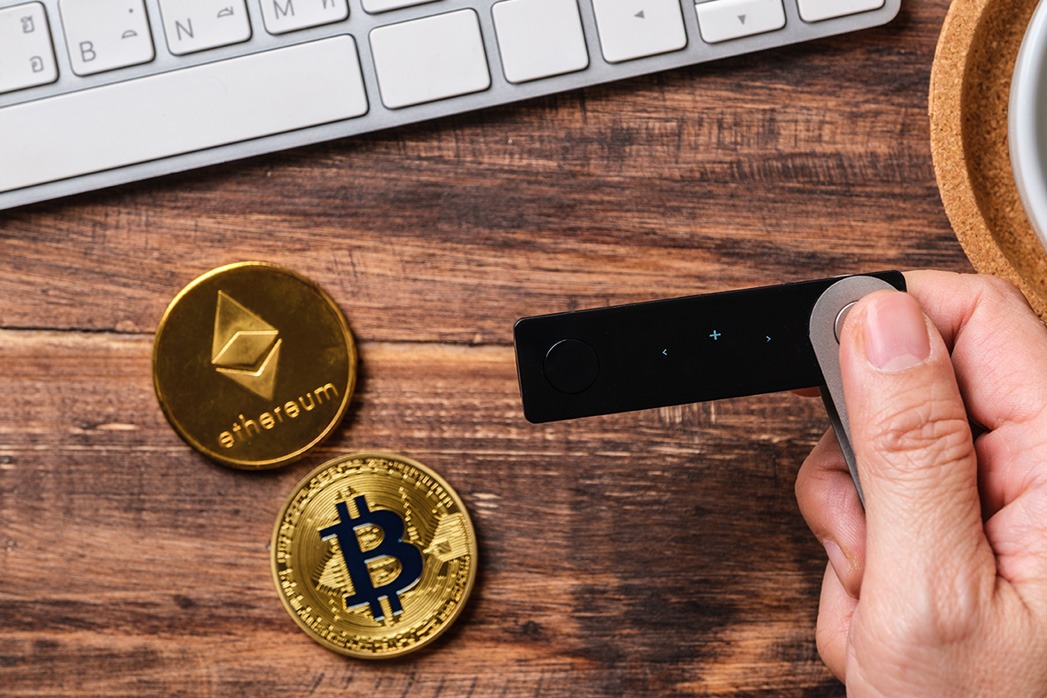
Hand holding a hardware wallet, transferring Bitcoin and Ethereum to it for safety.

The Great Bitcoin Divide: Why Self-Custody and Institutional Custody Must Coexist

“Self-custody protects the ethos. Institutional custody expands the network. Bitcoin wins by enabling all three.” — DNA Crypto.

There is no debate in Bitcoin more emotional, more ideological, or more misunderstood than the question of custody.
Self-custody is sacred to Bitcoin’s origins.
Institutional custody is essential for Bitcoin’s global adoption.

– Both are growing.
– Both are necessary.
– Both are misunderstood.

The future of Bitcoin will not be determined by one custody model replacing the other.
The coexistence of both will shape it — each serving a different class of users, investors, and institutions.

Why Self-Custody Matters

Self-custody is the foundation of Bitcoin’s philosophy — the idea that individuals can control their wealth without intermediaries.

The benefits are clear:

  • – You hold your private keys
  • – You eliminate custodial risk
  • – You escape freezes, seizures, or restrictions
  • – You become your own bank
  • – You gain complete financial freedom

Self-custody protects individuals from:

  • – Bank failures
  • – Political overreach
  • – Capital controls
  • – Payment censorship
  • – Asset monitoring

For many Bitcoiners, self-custody isn’t optional — it’s the whole point of Bitcoin.

We’ve written more on this in Bitcoin and Financial Autonomy.

Why Institutional Custody Matters

But large-scale adoption cannot rely solely on individuals securing their own keys.
Institutions, corporations, funds, and high-net-worth offices require:

  • – Insurance
  • – Audited controls
  • – Regulated custodial frameworks
  • – Multi-signature governance
  • – Disaster recovery systems
  • – Regulatory reporting compliance

For these entities, self-custody is not viable.

Institutional custody enables Bitcoin to:

  • – Enter regulated financial markets
  • – Be held on corporate balance sheets
  • – Be included in ETFs and retirement funds
  • – Be safeguarded at an industrial scale
  • – Be audited in compliance with EU frameworks

Institutional custody doesn’t dilute Bitcoin — it expands its reach.

This transition is detailed further in Bitcoin for Treasuries and Why Institutions Prefer OTC Custody.

Why Both Sides Often Misunderstand Each Other

Self-custody advocates fear:

  • – Centralisation
  • – Custodial failure
  • – Government capture
  • – Re-creation of the old financial system

Institutional users fear:

  • – Human error
  • – Loss of private keys
  • – Compliance breaches
  • – Audit issues
  • – Operational risk

Both sides are right — and both sides are wrong.

Bitcoin was built for everyone.
– Not just individuals.
– Not just institutions.
– Everyone.

Europe’s Unique Advantage

Under MiCA, Europe now defines clear rules for:

  • – Qualified custodians
  • – Safeguarding of digital assets
  • – Capital requirements
  • – Audit standards
  • – Insurance expectations
  • – Reporting obligations

This regulatory clarity means institutional custody in Europe is safer and more transparent than anywhere else in the world.

At the same time, Europe preserves the legal right to self-custody — something not guaranteed in all jurisdictions.

Europe may become the global leader precisely because it supports both models.

The Real Future: A Hybrid Custody Paradigm

Three parallel custody systems will shape Bitcoin’s global future:

Self-Custody
For individuals, sovereignty, and long-term savings.

Institutional Custody
For corporates, funds, ETFs, and large entities.

Federated & Multi-Signature Models
Blending self-custody with shared, decentralised governance.

The future isn’t either-or.
The future is “yes, both.”

What Bitcoiners Must Understand

Bitcoin does not need one winner.
Bitcoin’s strength comes from redundancy, optionality, and resilience.

  • – Self-custody protects the ethos
  • – Institutional custody expands the network
  • – Hybrid models create flexibility

Bitcoin wins by enabling all three.

Image Source: Envato Stock
Disclaimer: This article is for informational purposes only and does not constitute legal, tax, or investment advice.

Read more →

European union flag and Bitcoin. Europe cryptocurrency, digital gold finance investment regulation.

Bitcoin as Digital Gold 2.0: How Europe’s Institutions Are Rewriting the Rule Book

“Bitcoin isn’t an alternative asset — it’s an alternate foundation.” — DNA Crypto.

For more than a decade, Bitcoin has been compared to gold. What began as a metaphor, “digital gold, is now becoming a structural investment thesis inside boardrooms, sovereign funds, treasury departments, and regulated institutions across Europe.

But the story is bigger than Bitcoin competing with gold. It’s about how Europe is rethinking the entire idea of a reserve asset, of financial resilience, and of what money will look like in the next era of economic sovereignty.

This shift is accelerating faster than anyone predicted.

Why Europe Is Moving Toward Bitcoin

Institutional investors in the EU historically leaned on gold, government bonds, and blue-chip equities for stability. But with persistent inflation, currency debasement across multiple economies, and geopolitical strain on traditional reserves, European firms have begun exploring alternative stores of value.

Several macro forces are converging:

1. Inflation-resistant balance sheets
Eurozone inflation may have cooled, but monetary expansion hasn’t reversed. Institutions are seeking assets that cannot be printed.

2. MiCA has created predictable regulation
With MiCA entirely in effect, Bitcoin is now the most clearly regulated digital asset in Europe. This alone has unlocked institutional participation that wasn’t possible under fragmented national rules.

3. ETFs have normalised Bitcoin for professionals
The US and Europe have now mainstreamed Bitcoin ETFs. Even if firms do not yet buy spot BTC, the ETF market has reframed Bitcoin as an institutional-grade asset.

4. Sovereign accumulation has changed the narrative
As documented by global news outlets and reinforced in our Bitcoin education hub, the US, El Salvador, Bhutan, and others hold formal Bitcoin reserves. Large economies could follow.

When sovereign nations start buying, corporate adoption follows.

Europe’s “Digital Gold” Moment

While gold maintains its role as the world’s oldest store of value, Bitcoin offers three advantages that modern institutions increasingly prefer:

1. Absolute scarcity, 21 million forever
No central bank can dilute Bitcoin’s supply. This has never existed in financial history.

2. Programmable portability
Bitcoin moves across borders in minutes, without settlement intermediaries.

3. Deepening liquidity and institutional rails
OTC brokers, custodians, and compliant infrastructure, including firms such as DNA Crypto, now provide institutions with safe, insured, regulated ways to acquire and store Bitcoin.

Gold and Bitcoin are not competitors. They are complementary tools for different eras. Gold protects the past. Bitcoin protects the future.

How Institutions in Europe Are Accumulating

From our observational data and conversations across the DNA Crypto OTC desk, institutional strategies fall into four categories:

Dollar cost averaging via regulated brokers, Balance sheet diversification (1–5% exposure),
Hedging inflation or FX risk via Bitcoin, Strategic long-term reserves held in cold storage

Many of these techniques mirror the approach taken by European wealth managers, as explored in recent content on our Knowledge Hub, including articles such as How to Accumulate Bitcoin Privately, Why Institutions Prefer OTC Trading, and Bitcoin for Treasury Diversification, especially on topics such as Discreet Bitcoin Accumulation and Why Institutions Prefer OTC Trading.

What This Means for the Future

As Europe tightens compliance and clarifies regulatory parameters, Bitcoin is transitioning from a speculative asset into a structured financial instrument.

– It is no longer a bet.
– It is insurance.
– It is digital sovereignty.

And institutions across the continent are finally treating it that way.

Image Source: Adobe Stock
Disclaimer: This article is for informational purposes only and does not constitute legal, tax, or investment advice.

Register today at DNACrypto.co

Read more →

A playful cow purchases a stylish cowboy hat with Bitcoin, donning it while frolicking in the fields, its jovial expression as it tips its hat, closeup.

Trading in the Wild West: Why Chasing “Bitcoin Deals” Can Cost You Everything

In every gold rush, more fortunes are lost to shortcuts than to the price of gold.” – DNA Bitcoin Broker Knowledge Base.

Bitcoin’s price continues to rise, institutional demand is exploding, and millions of new investors want exposure.
But where there is hype, there is danger — and in 2025, a new frontier of unregulated Bitcoin trading has emerged: the so-called “Bitcoin deals.”

– High-discount offers.
– Off-market allocations.
– Special bulk pricing.
– Secret OTC sellers.
– Foreign brokers with “inside access.”

It sounds tempting.
In reality, it’s the new Wild West of digital finance, and the risks are far greater than most traders realise.

Learn more:
MiCA & Regulated Digital Assets

The Myth of the “Cheap Bitcoin Deal”

Every week, traders are approached by WhatsApp brokers, Telegram groups, or offshore “liquidity providers” claiming they can sell Bitcoin at a discount.

The pitch is always the same:

  • – “We can offer Bitcoin 3–5% below market.”
  • – “We have miners selling directly.”
  • – “We represent a distressed fund.”
  • – “We can bypass exchange fees.”
  • – “Minimum transaction: $250k+.”

Here’s the truth:

There are NO genuine discounted Bitcoin deals.

Not from miners.
Not from OTC desks.
Not from international brokers.
Not from “private markets.”

Every professional trader and institution knows this:
Bitcoin is one of the most liquid assets on earth.
There is no such thing as “below market price” — only below market safety.

The Real Risks Behind These Deals

1. Fake wallets and fake escrow

Buyers are often shown blockchain “proof of funds” or “locked wallets.”
In most scams, the wallets don’t belong to the seller, and no Bitcoin will ever move.

2. False OTC desks

Unregulated entities pretend to be licensed trading desks.
They use fake certificates, logos, and even spoofed domain names.

3. Irreversible payments

Victims are pressured into using:

  • USDT transfers
  • SEPA instant
  • Unregulated Stablecoins
  • Peer-to-peer remittance systems

Once funds leave, they cannot be recovered.

4. Layered fraud rings

Some operations involve 5–10 intermediaries — all earning “fees” while the buyer receives nothing.

5. No regulatory protection

MiCA now governs digital asset transactions across Europe.
But only regulated entities are covered.
Unlicensed brokers = zero protection, zero legal recourse.

See: Global Impact of MiCA

Why Serious Traders Don’t Touch These Deals

Professional traders, funds, family offices, and corporates NEVER buy Bitcoin through:

– Telegram
– WhatsApp
– Instagram
– LinkedIn DMs
– Offshore “OTC sellers”

Why?

Because serious traders prioritise:

  • – Liquidity reliability
  • – Counterparty risk control
  • – Regulatory compliance
  • – Transparent execution
  • – Proof-of-reserve custody
  • – MiCA-compliant settlement methods

“Wild West deals” fail on every point.

The Institutional Standard: Price Isn’t the Risk — Counterparty Is

Banks and regulated brokers don’t compete on discounts.
They compete on:

  • – security
  • – execution
  • – custody
  • – reporting
  • – compliance
  • – insurance
  • – liquidity depth
  •  
  • The premium you think you save in a dodgy deal is nothing compared to the price of:
    • – frozen funds
    • – lost capital
    • – reputational damage
    • – regulatory violations

    Smart traders don’t look for bargains.
    They look for certainty.

  • DNA Crypto: Safe, Regulated, Institutional Trading

    At DNA Crypto, we provide the infrastructure serious traders rely on:

    • – MiCA-aligned execution
    • – Deep OTC liquidity at institutional spreads
    • – Fully segregated custody accounts
    • – Audited proof-of-reserve systems
    • – EU-regulated Stablecoin settlements
    • – Zero-slippage execution for large blocks

    Whether you’re a corporate treasury, HNWI, or active trader, we ensure your purchase is:
    Legitimate, compliant, secure, and delivered.

  • Learn more:
    Crypto Custody Solutions
  • The Bottom Line

    The Wild West era of Bitcoin trading is still alive — and growing.
    But today, the stakes are far higher: institutional capital, regulatory enforcement, and market maturity have raised the bar. If someone offers you Bitcoin at a discount, they aren’t offering you an opportunity.
    They’re offering you an exit from your own money. 
    In the new era of digital finance, professional traders win not by hunting shortcuts but by operating with clarity, compliance, and credible partners. At DNA Crypto, we ensure you trade with all three.

  • Image Source: Adobe Stock
    Disclaimer: This article is for informational purposes only and does not constitute legal, tax, or investment advice.

Read more →

Golden symbolic coin Bitcoin on banknotes of one hundred dollars. Exchange bitcoin cash for a dollars. Cryptocurrency on US dollar bills.

Bitcoin-Backed Loans: The Good, the Bad, and the Ugly Truth About Crypto Collateral

“When your money earns yield instead of dust, the system starts to pay attention.” – DNA Crypto Knowledge Base.

Bitcoin-backed loans were once a niche idea whispered in crypto circles.
Today, they sit at the intersection of traditional finance and digital innovation, attracting banks, funds, and corporates seeking liquidity without liquidation.

From Goldman Sachs to Fidelity Digital Assets, the institutional embrace of Bitcoin collateral marks a turning point in financial history — but it’s not without its risks.

Learn more: Institutional Bitcoin Adoption

The Good: A New Era of Collateralised Finance

Bitcoin-backed lending allows holders to borrow against their crypto without selling it — unlocking liquidity while maintaining exposure to long-term appreciation.

In 2025, the market for crypto-collateralised loans will exceed $25 billion, driven by institutional lenders and Fintechs expanding into digital asset finance.

Key advantages:

  • – No asset sale required: Borrowers retain upside exposure.
  • – Instant liquidity: Loans settled within hours, not days.
  • – Global access: Borderless lending independent of traditional credit systems.

For companies and funds, Bitcoin-backed loans offer an alternative to traditional credit markets—one where trust is enforced by code rather than paperwork.

Explore: Crypto Custody Solutions

The Institutional Turn: From Goldman Sachs to Global Banks

In 2024, Goldman Sachs, Nomura, and Standard Chartered’s Zodia Custody quietly began piloting Bitcoin-backed lending products.
Their goal: to offer regulated credit lines secured by digital collateral.

These loans work like traditional repo agreements:

  1. Borrowers pledge Bitcoin as collateral.
  2. Custodians hold assets in segregated, insured storage.
  3. Loans are issued in fiat or Stablecoins.
  4. Collateral is released upon repayment.

For institutions, this is a compliance-first model that aligns with MiCA regulations, unlocking access to digital liquidity within a familiar legal framework.

The Bad: Volatility Never Sleeps

Bitcoin’s volatility remains its greatest double-edged sword.

During bull markets, collateral values surge, offering unmatched flexibility.
But when markets dip, lenders issue margin calls — forcing borrowers to post more Bitcoin or risk liquidation.

In 2022 and 2023, many retail borrowers learned this lesson the hard way as major lenders like Celsius and BlockFi collapsed under extreme leverage.

In today’s market, regulation and institutional oversight have improved, but risks persist:

  • – Sudden price drops can trigger automatic liquidations.
  • – Borrowers face taxable events when forced to repay or sell.
  • – Collateral held by third parties introduces counterparty exposure.

Crypto lending can offer an opportunity—but it requires risk management, not blind optimism.

The Ugly: The Illusion of Easy Credit

Not all Bitcoin-backed loans are created equal.
Some unregulated platforms still promise unsustainable yields, misprice risk, or operate without adequate collateral verification.

In 2025, there has been a surge in offshore and DeFi lending protocols offering high LTV (Loan-to-Value) ratios, tempting borrowers with excessive leverage.

The reality?
When the market turns, high LTV becomes high risk, and borrowers lose both their collateral and confidence.

DNA Bitcoin Broker urges institutions and individuals alike to scrutinise counterparties, ensure MiCA-aligned custody, and work only with licensed digital asset lenders.

Learn more: Institutional Tokenisation

The Regulatory Reset: MiCA and the Future of Crypto Lending

Europe’s Markets in Crypto-Assets (MiCA) regulation has changed the rules of the game.
Under MiCA, digital lending platforms must:

  • – Hold regulated custody of collateral assets.
  • – Maintain transparency over reserves and lending terms.
  • – Adhere to AML/KYC and consumer protection frameworks.

This shift is driving the next generation of regulated Bitcoin credit markets, where institutions can lend, borrow, and manage risk within a trusted, auditable ecosystem.

MiCA may limit speculation — but it unlocks sustainable innovation for the long term.

Explore: Global Impact of MiCA

DNA Crypto: Building Trust in Bitcoin-Backed Credit

At DNA Crypto, we help clients access liquidity securely through regulated, MiCA-compliant lending channels.

Our services include:

  • – Institutional-grade custody for pledged Bitcoin and digital assets.
  • – OTC liquidity solutions for fiat and Stablecoin loans.
  • – Credit advisory and risk assessment for corporate borrowers.
  • – Cross-border settlement with transparent counterparties.

We bridge the worlds of digital collateral and traditional finance—combining blockchain transparency with institutional trust.

See: Crypto Custody Solutions

The Bottom Line

Bitcoin-backed loans are among the most powerful—and misunderstood—innovations in modern finance.

The good: instant liquidity and global access.
The bad: volatility and liquidation risk.
The ugly: unregulated leverage masquerading as innovation.

But when done right, under regulated frameworks like MiCA, they embody the future of credit — programmable, borderless, and transparent.

At DNA Crypto, we believe Bitcoin isn’t just collateral.
It’s a cornerstone of the new financial architecture — where code, compliance, and confidence finally align.

Image Source: Adobe Stock
Disclaimer: This article is for informational purposes only and does not constitute legal, tax, or investment advice.

Read more →

Shiny golden bitcoin and gold lump put on dollar banknote and represent new financial trends.

Bitcoin or Gold: The 2025 Battle for the New Wealth Standard

“Gold protected wealth for 5,000 years. Bitcoin is doing it in real time.” – DNA Crypto Knowledge Base.

For millennia, gold was the ultimate store of value — tangible, scarce, and globally recognised.
But in 2025, the narrative is shifting.

As inflation persists, debt piles grow, and global markets fracture, investors are rebalancing between the old haven — gold — and the new one — Bitcoin.

The question is no longer “Which will survive?”
It’s the question that will define the next era of money.

Learn more: What Is Bitcoin and Why It Matters

The Golden Legacy: Trust Forged in Scarcity

Gold has anchored human value systems for over 5,000 years.
From ancient kingdoms to modern central banks, it has symbolised permanence and power.

In 2025, gold remains relevant — but not immune to modern pressures.

  • – Central banks now hold over 38,000 tonnes of gold, the highest reserves since the 1970s.

  • – China and Russia have increased their holdings to reduce U.S. dollar exposure.

  • – Gold ETFs globally manage over $220 billion, though growth has slowed since 2023.

While gold’s physical nature offers reassurance, its immobility and high storage costs make it less practical for an age where money moves at the speed of light.

Explore: Institutional Bitcoin Adoption

Bitcoin: The Digital Metal of the 21st Century

Seventeen years after its creation, Bitcoin has emerged as “digital gold” — a borderless, programmable asset built on mathematics instead of metallurgy.

In 2025, Bitcoin’s fundamentals speak louder than any headline:

  • – Market cap: $1.6 trillion (up 180% since early 2023)

  • – ETF inflows: Over $65 billion in the U.S. and Europe combined

  • – New issuance: Only 450 BTC/day after the April 2024 halving

  • – Institutional holdings: Over 14% of total supply now sits in fund and corporate treasuries

Bitcoin’s predictable scarcity — 21 million coins, forever — mirrors gold’s physical limit, but with exponential advantages: instant transferability, perfect divisibility, and verifiable transparency.

As gold stays locked in vaults, Bitcoin circulates across borders and blockchains, powering a new monetary network built on proof, not promise.

Explore: Bitcoin Market Dynamics

Macro Shifts: Why Institutions Are Choosing Bitcoin

The 2020s are reshaping the global store-of-value narrative.
Central banks are diversifying into gold — but private institutions are adopting Bitcoin.

Three major shifts define the 2025 landscape:

  1. Yield and Liquidity: Gold earns nothing. Bitcoin can be yield-bearing via regulated on-chain finance and ETFs.

  2. Transparency: Every Bitcoin can be verified on-chain. Gold ownership still relies on trust in custodians.

  3. Accessibility: Bitcoin trades 24/7, across borders, with no intermediaries—gold moves by trucks and paperwork.

Even legacy giants like BlackRock, Fidelity, and BNY Mellon now hold Bitcoin in regulated ETFs and custody products.
The signal is clear: Bitcoin is not replacing gold — it’s modernising it.

See: Global Impact of MiCA

Europe’s Edge: Regulation Meets Innovation

Europe’s Markets in Crypto-Assets (MiCA) regulation has transformed Bitcoin from a speculative instrument into a compliant institutional asset.
MiCA’s clear framework enables brokers like DNA Crypto to offer regulated Bitcoin trading, custody, and liquidity services, with full auditability.

This regulatory clarity gives Europe a first-mover advantage in building a dual reserve system — physical gold and digital Bitcoin — under a unified, transparent standard.

Learn more: DeFi and MiCA Regulation.

DNA Crypto: The Bridge Between Gold and Code

At DNA Crypto, we understand that the future of wealth isn’t about choosing sides — it’s about integration.

We help clients secure both forms of value — tangible and digital — through:

  • MiCA-pre-regulated Bitcoin brokerage and custody

  • – Cross-border liquidity services for tokenised gold and stable assets

  • – Advisory for institutions rebalancing portfolios into digital reserves

  • – Research and education for investors navigating the digital store-of-value revolution

Gold defined the past.
Bitcoin defines the future.
At DNA Crypto, we build the bridge between them.

See: Crypto Custody Solutions

The Bottom Line

Gold proved that scarcity creates trust.
Bitcoin proved that transparency creates truth.

Both assets share the same DNA — finite, global, and beyond government control — but only one was built for the digital age.

In 2025, investors aren’t asking whether Bitcoin will replace gold.
They’re asking how much Bitcoin belongs in their reserve strategy.

The answer?
Enough to ensure that when the old world loses trust, your wealth still holds value.

Image Source: Adobe Stock

Disclaimer: This article is for informational purposes only and does not constitute legal, tax, or investment advice.

Read more →

Golden bitcoins. Cryptocurrency.

Bitcoiner: The New American Investor

“In every generation, Americans redefine freedom. In this one, they’re buying Bitcoin.” – DNA Crypto Knowledge Base.

Across the United States, a new kind of investor is emerging — part contrarian, part visionary.
They distrust inflation, question centralisation, and prefer wallets to Wall Street.
They are the new Bitcoiners — and they’re quietly reshaping what it means to build and protect wealth in America.

In 2025, being a Bitcoiner isn’t a rebellion anymore. It’s financial self-determination.

Learn more: What Is Bitcoin and Why It Matters

From the Gold Rush to the Bitcoin Boom

America has always rewarded pioneers — from miners who chased gold in California to innovators who built Silicon Valley.
Bitcoin is simply the next chapter in that story.

Just as the 19th-century gold rush built new industries, the 21st-century Bitcoin movement is driving new frontiers of finance, technology, and policy.
Today, Bitcoiners aren’t speculators — they’re builders of a decentralised financial system that reflects the nation’s oldest ideals: liberty, transparency, and opportunity.

Explore: Institutional Bitcoin Adoption

Why Americans Are Turning to Bitcoin

The post-2020 decade has transformed how Americans view money.
Persistent inflation, political gridlock, and the digitisation of everything have accelerated demand for independent, borderless stores of value.

Bitcoin answers that demand through:

  • – Finite Supply: Only 21 million will ever exist.

  • – Transparency: Every transaction is verifiable, every coin traceable.

  • – Sovereignty: No government can print, freeze, or censor it.

For millions of Americans, that’s not speculation — that’s security.

See: Bitcoin Market Dynamics

The Broker’s Hunt for “Unicorn” Coins

While Bitcoin remains the benchmark, U.S. brokers and retail investors are also chasing the next “unicorn” altcoin — undervalued digital assets with breakout potential.

This hunt for high-reward projects has created two clear investor archetypes:

  • – The Builders: Those who accumulate Bitcoin for long-term stability.

  • – The Hunters: Those who speculate on early-stage assets before institutional capital arrives.

But the narrative is shifting. In 2025, even professional brokers are recognising that the real unicorn might not be another altcoin — it’s Bitcoin itself, now institutionalised through ETFs, regulatory frameworks, and treasury adoption.

“The further brokers chase speculation, the clearer Bitcoin’s strength becomes.” – DNA Bitcoin Broker

Learn more: Institutional Tokenisation

The USDT Exodus: From Stablecoin to Store of Value

One of the biggest trends in 2025 is the mass movement of U.S. investor funds from USDT (Tether) — the world’s largest stablecoin — into Bitcoin.

Why?
Because confidence is shifting from pegged stability to sovereign scarcity.

After several global regulatory inquiries and shifting sentiment in U.S. markets, American investors and OTC desks are opting for transparent, audit-verifiable assets like Bitcoin instead of relying on offshore stablecoin issuers.

This capital migration has three major effects:

  1. Bitcoin Demand Surge: Increased spot buying pressure is driving new price floors.

  2. Liquidity Realignment: Capital once tied to synthetic dollars is now fuelling Bitcoin’s organic liquidity.

  3. Global Signal: The U.S. capital rotation into Bitcoin is reshaping global reserve psychology — reinforcing digital scarcity over synthetic stability.

Explore: Crypto Custody Solutions

The Institutional Ripple Effect

What began as a grassroots movement is now reshaping Wall Street itself.
In 2025, Bitcoin ETFs, custodial funds, and regulated derivatives will have brought digital assets into mainstream portfolios.

Major firms — from BlackRock to Fidelity — are onboarding clients into Bitcoin exposure, while small businesses use Lightning Network payments to reduce fees and reach global customers.

For American investors, Bitcoin now represents both inflation protection and technological participation — a 21st-century hedge backed by 20th-century principles.

See: Global Impact of MiCA

DNA Bitcoin Broker: The Bridge Between Freedom and Finance

At DNA Bitcoin Broker, we understand that proper wealth protection requires both stability and sovereignty.
Our services connect traditional finance to the new digital order through:

  • – Regulated Bitcoin brokerage and custody under MiCA-aligned frameworks

  • – Cross-border liquidity and OTC solutions

  • – Portfolio diversification strategies combining Bitcoin and tokenised assets

DNA Bitcoin Broker stands for financial independence with institutional integrity — helping investors move from trust-based wealth to proof-based ownership.

Learn more: DeFi and MiCA Regulation

The Bottom Line

Bitcoiners are the next generation of American investors — independent, pragmatic, and globally connected.
They’re shifting from paper-backed promises to cryptographically secured ownership, reshaping both U.S. markets and global liquidity.

The flight from Stablecoins into Bitcoin signals a new kind of financial awakening — one that doesn’t reject the system but redefines it.

In the end, the American dream was never about money.
It was about freedom — and in 2025, that freedom is increasingly written in code.


Disclaimer: This article is for informational purposes only and does not constitute legal, tax, or investment advice.

Read more →

World in 2030 or a later future with Bitcoin BTC.

Bitcoin by the Numbers: Predicting 2030

“Bitcoin doesn’t promise stability — it delivers inevitability.” – DNA Crypto Knowledge Base.

As the decade advances, Bitcoin’s path to 2030 appears increasingly defined by data, rather than speculation.
Institutional integration, global regulation, and technological scaling are turning Bitcoin from a disruptive idea into a systemic financial instrument — one that could underpin the next phase of global monetary evolution.

What do the numbers reveal about Bitcoin’s trajectory toward 2030?

Learn more: Institutional Bitcoin Adoption

1. 21 Million – The Immutable Cap Meets Demand Shock

By 2030, the total mined supply of Bitcoin is expected to approach 20.8 million BTC, or nearly 99% of its maximum issuance.
The final Bitcoin won’t be mined until 2140 — but the effective scarcity will be felt long before that.

As more coins move into institutional custody, lost wallets, and long-term reserves, the circulating supply may fall below 14 million by 2030.

Scarcity isn’t a theory anymore — it’s the economic law driving Bitcoin’s value proposition.

Explore: Bitcoin Market Dynamics

2. Institutional Ownership: From 10% to 25%

As of 2025, institutions hold an estimated 10–12% of the total Bitcoin supply, led by ETFs, corporate treasuries, and sovereign wealth funds.
By 2030, analysts project this figure could exceed 25%, as more nations and funds seek non-sovereign digital reserves.

The next phase isn’t just Wall Street — it’s global adoption by banks and state-backed digital infrastructures.

See: Global Impact of MiCA

3. €300,000–€400,000 – The Long-Term Price Band

Most credible institutional models — from Fidelity Digital Assets to ARK Invest — forecast Bitcoin’s 2030 price range between €300,000 and €400,000, assuming:

  • – Continued ETF inflows

  • – Limited new issuance

  • – Gradual global regulatory convergence

  • – Expansion of tokenised markets and cross-chain liquidity

Under an aggressive scenario — where Bitcoin reaches gold’s $14 trillion market cap — the theoretical upper band rises above €600,000 per BTC.

Read: MiCA and Investor Protections

4. 2 Billion Users – The Adoption Curve Accelerates

Bitcoin’s global user base is projected to grow from 500 million in 2025 to 2 billion by 2030, primarily driven by:

  • – Seamless integration in payment apps and bank APIs

  • – Bitcoin-backed Stablecoins and remittance networks

  • – Adoption across emerging markets where inflation undermines fiat trust

As access becomes frictionless, Bitcoin shifts from speculative asset to everyday monetary infrastructure.

Learn more: DeFi and MiCA Regulation

5. 25,000+ Nodes – The Decentralisation Dividend

Bitcoin’s network is expected to surpass 25,000 active full nodes by 2030, reinforcing the decentralisation that underpins its credibility.
Node diversity — spanning individuals, institutions, and independent validators — ensures that Bitcoin remains resilient, borderless, and censorship-proof.

This decentralisation isn’t ideological — it’s infrastructural.

Explore: Crypto Custody Solutions

6. Tokenisation & Interoperability

By 2030, Bitcoin’s role will extend beyond store of value.
Layer-2 and cross-chain solutions will integrate Bitcoin into tokenised economies:

  • – Used as collateral in DeFi and RWA markets

  • – Settled across interoperable blockchains

  • – Represented as wrapped BTC (wBTC, tBTC) in institutional finance


DNA Crypto’s institutional models forecast Bitcoin acting as the reserve asset for digital markets, similar to how the dollar underpins global trade.

More: Institutional Tokenisation

Read more →

Bitcoin NFT displayed on a background featuring lines and graphs.

Bitcoin Price Prediction 2025–2026: Navigating the Next Cycle

“Bitcoin doesn’t follow markets — it defines them.” – DNA Crypto Knowledge Base.

After one of the most turbulent but transformative periods in financial history, Bitcoin has entered a new stage.
With the 2024 halving, MiCA regulation, and the approval of spot Bitcoin ETFs across the US and Europe, the asset once seen as speculative is now being reclassified as institutional-grade digital gold.

As Bitcoin adoption accelerates, analysts and investors are asking the same question:
What’s next for Bitcoin’s price — and how high could it go by 2026?

Learn more: Institutional Bitcoin Adoption

The Current Market Landscape (2025)

As of Q2 2025, Bitcoin trades between €78,000 and €94,000, consolidating after record ETF inflows and post-halving volatility.
Institutional demand remains strong, with daily trading volumes surpassing $40 billion, driven by:

  • ETF accumulation from BlackRock, Fidelity, and VanEck

  • European institutional onboarding under MiCA

  • Global macro uncertainty and currency hedging

Bitcoin’s fundamentals — fixed supply, high liquidity, and increasing network security — remain intact.

Explore: Bitcoin Market Dynamics

The Drivers Behind Bitcoin’s Next Move

Several structural catalysts will shape Bitcoin’s trajectory through 2026:

  1. Institutional Liquidity: ETFs have turned Bitcoin into a capital market instrument, driving sustained inflows.

  2. Regulatory Clarity: MiCA and similar frameworks globally provide the foundation for cross-border compliance.

  3. Macroeconomic Factors: As inflation moderates but debt remains high, Bitcoin continues to attract capital as a hedge.

  4. Technological Expansion: Layer-2 scaling, Tokenisation, and cross-chain bridges are deepening network utility.

  5. Emerging Markets: Adoption in Africa, Latin America, and Southeast Asia continues to expand as users seek digital stability.

Read: Global Impact of MiCA

2025–2026 Price Scenarios

Scenario
Drivers
Estimated Range (EUR)
Outlook
Bull Case
ETF growth, institutional reserves, and macro tailwinds
€140k–€180k
Bitcoin becomes a mainstream alternative asset.
Base Case
Steady adoption and moderate ETF inflows
€100k–€130k
Controlled growth within sustainable demand.
Bear Case
Global liquidity squeeze or ETF outflows
€70k–€90k
Consolidation and market recalibration.

While short-term volatility remains high, long-term directional bias remains upward, driven by scarcity, regulation, and institutional capital.

See: MiCA and Investor Protections

The Institutional Factor

2025 marks the point where Bitcoin became an institutional asset, not a retail experiment.
Family offices, hedge funds, and corporates now allocate small but strategic portions of treasury reserves to Bitcoin.

DNA Crypto’s own analysis shows a shift in portfolio models, where Bitcoin plays the role of digital collateral — bridging the gap between fiat, Stablecoins, and tokenised assets.

More: Crypto Custody Solutions

Key Risks to Watch

  • – ETF saturation leading to short-term consolidation

  • – Regulatory enforcement against non-compliant exchanges

  • – Global monetary tightening is reducing speculative inflows

  • – Custody concentration risk among large institutions

Despite these challenges, network resilience and market depth suggest that Bitcoin’s macro thesis remains strong heading into 2026.

Explore: Institutional Tokenisation

The Bottom Line

Bitcoin’s journey from digital experiment to global asset class is now complete.
The next chapter is about integration — with institutional adoption, regulatory maturity, and multi-chain innovation driving sustained value creation.

As DNA Crypto observes across Europe’s regulated markets:
Bitcoin is no longer just a hedge against inflation — it’s a hedge against centralisation itself.

Image Source:  Adobe Stock

Disclaimer: This article is for informational purposes only and does not constitute legal, tax, or investment advice.

Read more →

An hourglass filled with gold coins and a Bitcoin symbol, representing the intersection of time, wealth, and cryptocurrency.

Bitcoin at a Crossroads: Will 2025 Cement Its Role as the World’s Reserve Digital Asset?

“Bitcoin’s scarcity is no longer just an economic feature—it’s becoming a geopolitical weapon.” – DNA Crypto Knowledge Base.

In 2025, Bitcoin is no longer simply a speculative asset. It’s stepping into the heart of sovereign policy, treasury reserves, and global finance. The question is not whether institutions will adopt Bitcoin—it’s how fast governments will follow.

From Gold to Digital Gold: Strategic Bitcoin Reserves

For centuries, nations have held gold, oil, and foreign currency reserves as insurance against shocks. Today, Bitcoin is being positioned alongside these assets.

Why?

    • – Fixed Supply: Capped at 21 million, Bitcoin mirrors gold’s scarcity.
    • – Decentralisation: No central authority can seize it without access to private keys.
    • – Global Liquidity: Bitcoin trades 24/7 on borderless markets.
    • Bitcoin as a Sovereign Reserve Asset
“Strategic Bitcoin Reserves could define monetary sovereignty in the 21st century.” – CoinDesk Markets, 2025

The US Bitcoin Reserve

In March 2025, President Trump signed an executive order establishing the US Strategic Bitcoin Reserve and United States Digital Asset Stockpile.

Key features:

End of Auctions: Forfeited Bitcoin will no longer be liquidated but stockpiled.

Cold Storage Security: Treasury-managed assets secured under military-grade custody.

Legislative Backing: The proposed BITCOIN Act (Senator Cynthia Lummis) aims to acquire up to 1 million BTC over five years, locked away for at least two decades.

Why State-Level Bitcoin Reserves Matter

This is the first time a major economy has classified Bitcoin as more than speculative—it’s a national safeguard.

Implications for Europe

Europe has focused heavily on MiCA regulation, but has not yet embraced a Bitcoin reserve strategy. Meanwhile, U.S. policy changes create pressure:

    • – Sanctions resilience: Sovereign BTC reserves reduce reliance on vulnerable foreign assets.
    • – Market pressure: Government accumulation may shrink exchange supply, pushing prices higher.
    • Legitimacy: Sovereign adoption accelerates acceptance among central banks, hedge funds, and treasuries.
    • Explore: What is MiCA and Why It Matters
“The U.S. has fired the first shot in a digital reserve arms race. Europe must decide if it will lead, follow, or lag.” – Financial Times, April 2025

Risks and Challenges

Bitcoin’s march toward reserve status is not without risk:

Price volatility remains a challenge for treasuries.

Custody security—a lost private key could mean permanent state-level loss.

Regulatory complexity—incorporating BTC into sovereign frameworks is uncharted territory.

Bitcoin and Global Digital Sovereignty

Why 2025 Is the Turning Point

The creation of the U.S. Strategic Bitcoin Reserve may be remembered as the moment Bitcoin crossed the Rubicon—from speculation to sovereign-grade financial asset.

The question for Europe is stark:
Will the EU watch from the sidelines, or integrate Bitcoin into its long-term resilience strategy?

Image Source: Adobe Stock

Disclaimer: This article is purely for informational purposes. It is not offered or intended to be used for legal, tax, investment or financial advice.

Read more →

Bitcoin and Gold on scales

Bitcoin vs. Inflation: A Comparative Analysis with Gold

“Gold proved value through time. Bitcoin proves value through code.” – DNA Crypto Knowledge Base.

Amidst concerns about inflation, prudent investors are turning to alternative assets to preserve their purchasing power and long-term financial stability. Gold, a time-tested haven, now has a serious contender: Bitcoin. Examining the period from 2020 to 2025, both of these sought-after assets have gained traction as inflation hedges.

In this write-up, we examine the performance and volatility of key economic indicators, such as the CPI and real yields, to help you determine which asset is better suited for these changing financial times.

Performance Overview (2020–2025)

Bitcoin (BTC)


Gold (XAU)

  • Price Growth: Gold increased from around €1,300 per ounce in early 2020 to circa €3,000 by May 2025, a 122% surge.
  • Volatility: This precious metal maintained a more stable annualised volatility, ranging between 12% and 15%.

Inflation and Real Yields

CategoryPeriodDetails
Consumer Price Index (CPI)2020Inflation spiked to 7.0% due to the COVID-19 pandemic.
 2021–2022Maintained at 6.5% in 2022.
 2023–2025Gradually declined to 2.4% by March 2025, aligning with the European Central Bank’s target.
Real Yields (10-Year Treasury)2020–2021Real yields were negative, reaching lows of around -1.0%, due to aggressive monetary easing.
 2022–2025The shift was positive, climbing to approximately 1.67% by April 2025, particularly with the implementation of tighter monetary policy.

Comparative Insights

1.     What is the Effectiveness of Inflation Hedging?

It is safe to say that Gold demonstrated a strong positive correlation with inflation, further reinforcing its role as a traditional hedge. In contrast, Bitcoin exhibited inconsistent behaviour in response to inflationary pressures. This is especially true with performance influenced more by market sentiment and liquidity conditions.

2.     Market Liquidity and Adoption

We can conclude that gold benefits from deep liquidity and widespread acceptance among central banks and institutional investors. On the other hand, Bitcoin’s liquidity has tremendously improved, especially with the introduction of ETFS and increased institutional adoption. However, it still faces regulatory uncertainties.

3.     Utility and Use Cases

Gold serves industrial, ornamental, and monetary purposes, including central bank reserves. In contrast, Bitcoin is primarily a digital asset used in decentralised Finance (DeFi), cross-border transactions, and Blockchain-based applications.

Investor Comparison Table (2020–2025)

CriteriaGoldBitcoinInvestor Insight
Return on Investment~122%~1,300%Bitcoin outperformed in returns but with higher volatility.
Volatility (Annualised)12–15%60–80%Gold offers stability; Bitcoin entails higher risk.
Inflation HedgeStrong positive correlationMixed behaviourGold remains a reliable hedge; Bitcoin’s role is uncertain.
Liquidity & AdoptionDeep, globally acceptedGrowing, yet evolvingGold is established; Bitcoin is gaining traction.
UtilityIndustrial, monetary usesDigital finance applicationsGold is traditional; Bitcoin is innovative.

BTC-to-Gold Ratio Analysis

The BTC-to-Gold ratio has had its fair share of fluctuations. This shows the dynamic nature of these two classes of assets. Additionally, the ratio has formed an inverted head and shoulders pattern since 2016, with key lows in 2020 and 2023. A breakout above the 40 levels would signal a surge in Bitcoin prices.

In a Nutshell

In the last decade or so, Bitcoin and Gold have both been leveraged against inflation, each with distinct characteristics:

  • Gold: Offers stability, lower volatility and a proven track record as a safe-haven asset.
  • Bitcoin: Provides higher returns with greater risk, appealing to investors seeking growth and exposure to digital assets.

Overall, investors should consider their risk tolerance, investment goals, and portfolio diversification when choosing between these assets.

Image Source: Adobe Stock

Disclaimer: This article is purely for informational purposes. It is not offered or intended to be used for legal, tax, Investment or financial advice.

Read more →