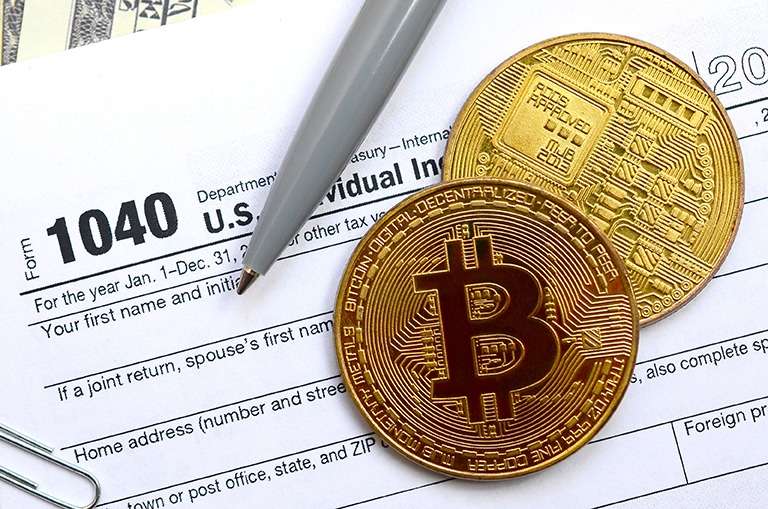

A group of btc coins, showcasing the wonders of blockchain technology, are elegantly arranged on a pristine white background.

3 Things to Consider Before You Buy Cryptocurrency

So, you want to invest in cryptocurrency? The blockchain-based, encrypted digital assets are taking the world of finance by storm. Bitcoin, Ethereum and Litecoin have all seen huge gains over the couple of years, and they’re not alone. There are now more than 1,500 different cryptocurrencies out there — and many of them are skyrocketing in value right now.

But before you gamble with your savings on a new form of “digital gold” that may or may not pay off as an investment, consider a few factors. While it’s possible to make a fortune from cryptocurrency investing, it’s extremely risky. You can also lose a lot of money. Generally speaking, you should only invest money that you can afford to lose.

Learn About Cryptocurrency

Cryptocurrency is a new and exciting asset class. Before you buy cryptocurrency, make sure you’re familiar with the basics. You’ll want to understand how blockchain technology works and the reasons behind the mining of cryptocurrencies. Before you start trading, you’ll want to understand how different cryptocurrencies work and how to avoid the most common pitfalls. Explore your options.

Put Safeguards in Place to Protect Yourself from Financial Setbacks

Before you buy crypto, ensure to have a plan for what to do if the value of your crypto falls to zero. There is a good chance that will happen. Even if Bitcoin is not a bubble, bubbles can form in individual altcoins. The risk of losing everything is real. It’s not just that some people might have been so unlucky as to buy near a peak and then sell near a valley; more likely, it’s that many people will have bought near a peak and then lost the password or lost interest or lost their ability to remember the keys.

There are risks even if you don’t lose your keys or sell your coins. If you leave your coins on an exchange, there’s always the risk of theft by hackers. If you hold your coins in software on your computer or phone, there’s always the risk of forgetting your keys or getting rid of your computer without remembering to take out the wallet file. There has been at least one spectacular case where someone dumped a drive with keys worth over $100 million in Bitcoins.

Make Saving for Future plans a Priority

You may be new to cryptocurrency, but you’re not new to saving and investing. Before buying crypto, it’s important to know the basics of building a portfolio that is balanced and diversified.

When you save for something, you want to achieve in the future, you usually make regular deposits over time into an account that earns interest (like an online savings account). When you invest money, your goal is usually to earn more than you would in an account that only pays interest. Investing can be riskier than saving because there is the potential to lose some or all of your initial investment. But it can also be more rewarding since investments have the potential to grow faster than savings accounts.

To get started on building a well-balanced portfolio, start by setting clear financial goals and breaking them down into short-term, medium-term and long-term goals. Then determine what kinds of accounts make sense for each one of those goals.

Image Source: Adobe Stock

Disclaimer: This article is provided for informational purposes only. It is not offered or intended to be used as legal, tax, investment, financial, or other advice.

Read more →

A gold coin sits on top of a stack of gold bars in the world of blockchain.

Bitcoin or Gold? The Best Inflation Hedge

Inflation rates continue to soar high above the limits set over the previous years, forcing investors to search for anything that will reduce the effects of the soaring inflation rates on their portfolios. Over the years, investors turned to commodities such as gold to…

Read more →

Bitcoin coins on a dark background.

A Comforting Prospect as Bitcoin Returns to Green

The price undercurrents of cryptocurrency are typically analysed using linear regression and Granger causality analysis. Price undercurrents are generally represented by the following four types: news-based, chart-technical, momentum, and volume. Although both the news-based and chart-technical approaches are powerful for analysing cryptocurrency price movements,…

Read more →

Bitcoin myths bitcoin image on background of trueful words.

The Biggest Bitcoin Myths, Debunked

Ever since 2009 when Satoshi Nakamoto unleashed Bitcoin: A Peer-to-Peer Electronic Cash System,” his whitepaper that introduced the world to Bitcoin (BTC), it has revolutionised how people perceive money and currency; decentralised, secure, and anonymous.

“It’s a Ponzi scheme.” “It’s the currency of drug dealers and the dark web.” “It costs more to make than it’s worth.” “It’ll never go mainstream.” “It lacks stability and is subject to fluctuation.” These are just a few of the myths people tend to have about Bitcoin and other cryptocurrencies—and there’s some truth behind these statements.

Myth 1# Bitcoin Gains Aren’t Taxed

This is only partially correct. It depends on how you use your Bitcoins. Generally, if you use your Bitcoins for purchases or sales of goods or services, then any capital gains or losses are taxable events that must be reported on your tax return.

This is done regardless of whether you received cash or other property in exchange for your Bitcoins. If you hold onto Bitcoins hoping they will appreciate over time, then any capital gains are not taxed until you sell or exchange them for other property.

Myth 2# Bitcoin Is a Bubble

While it’s true that some people buy Bitcoin as investors seeking a big payout, the digital currency itself is not a bubble. Bubbles are economic cycles characterised by a rapid fall in the market.

The dot-com bubble was driven by the rapid rise of companies like Amazon and Google, which were still in their early stages when they went public. By contrast, cryptocurrencies are still relatively new, with many projects not yet ready for mass adoption or even having any real-world use cases.

Myth 3# Bitcoin Is Too Volatile to Be Useful as Money

Bitcoin has proven to be highly stable compared to traditional currencies over time. But it still fluctuates widely in value relative to the dollar and other fiat currencies, such as the euro and the Japanese yen.

This volatility makes it difficult for companies to accept Bitcoin as payment without incurring a loss on every transaction. As more merchants begin accepting Bitcoin, its volatility will decrease significantly, making it a more attractive alternative currency.

Myth 4# Bitcoin Has No Real-World Uses

Critics like to claim that Bitcoin isn’t valuable in the real world and is only used by criminals. This is false. While it is true that Bitcoin can be used for illegal purchases, that’s not its primary use case.

Bitcoin is a digital currency that can be exchanged for goods and services just like any other currency. Many people are using Bitcoin to pay for everyday things like coffee or pizza at restaurants and grocery stores around the world. Even more, Airbnb allows hosts to accept payment in Bitcoin; Dish Network accepts BTC for services like satellite TV equipment installation; and the U.S. Federal Election Commission allows political donations in BTC.

Myth 5# Bitcoin Transactions Are Anonymous

Some critics claim that Bitcoin transactions are anonymous because they don’t require any personal information from users during purchase (like credit cards do). However, this is not entirely true.

When you send someone money through a cryptocurrency exchange or wallet service provider like Coinbase, they will know your public key address (a string of random numbers and letters) as well as the amount of BTC you sent.

Myth 6# Bitcoin is Bad for the Environment

Bitcoin mining is an energy-intensive process. But determining the environmental impact is hard. For another thing, we don’t know how much energy would be used if Bitcoin didn’t exist — or if it did exist but wasn’t mined using computers.

Finally, it’s important to remember that Bitcoin mining is only one part of a larger ecosystem that includes exchanges, payment processors and users like you and me. Some people argue that these other parts are more important than mining in terms of the overall impact on global warming because they’re larger than mining operations.

Parting Shot

Despite Bitcoin being a legal currency for exchange, many countries remain hesitant to accept it. This hesitation has led to many rumours about Bitcoin’s legality. The use of Bitcoins in online transactions is already taking off and will continue to do so as its popularity increases, thus rendering these myths false. It isn’t easy to imagine that any country would be able to stop its use.

Image Source: Adobe Stock

Disclaimer: This article is provided for informational purposes only. It is not offered or intended to be used as legal, tax, investment, financial, or other advice.

Read more →