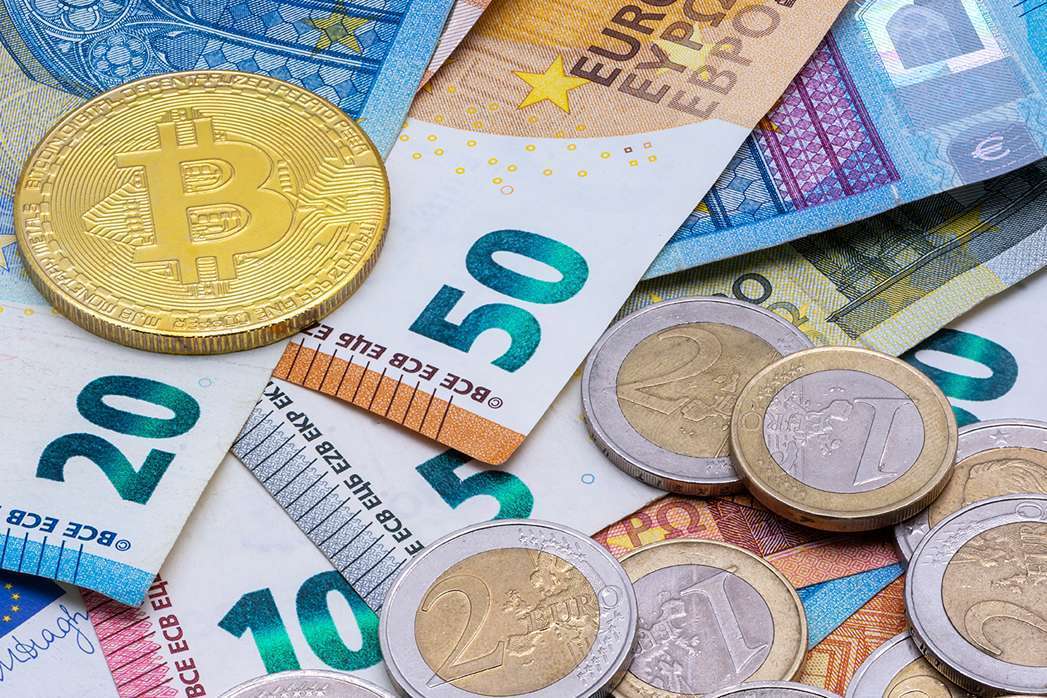

Bitcoin CBDC with dollar background and binance chart.

Bitcoin as a Catalyst for Central Bank Digital Currency (CBDC) Payments

“CBDCs and Bitcoin are often compared, but they are designed to solve entirely different problems within the global monetary system.” — DNA Crypto.

Is CBDC Bitcoin the next big thing? Blockchain technology has truly shaken up the financial landscape, paving the way for direct transactions between peers, thereby eliminating the need for intermediaries. Now, the arrival of central bank digital currency (CBDC) gives blockchain an exciting twist, promising a transformative impact on how businesses and individuals handle payments.

Contrary to fears, Bitcoin won’t overthrow the US dollar or the GBP, for that matter. Instead, it might transform into a GBP equivalent, complete with the controls and restrictions that any CBDC issuer could envision. I can almost hear the protests, but I chuckle at the irony of profound ignorance alongside Bitcoin’s price surge.

Rethinking Bitcoin’s Potential

Well, here’s the deal – your take on Bitcoin might need a tweak. It’s not a one-size-fits-all kind of deal; it’s pretty much whatever we decide to make of it. It’s a tech marvel, much like the internet, which, let’s be pragmatic, we’ve turned into a super-efficient surveillance wizard. Crazy, right?

Now, here’s where it gets interesting. There’s this bunch of folks, let’s call them single-issue voters, diving headfirst into the Bitcoin world. They’re so laser-focused on their ideology that they might miss the bigger picture.

Let’s break it down!

Bitcoin is like a digital creature thriving online. If there are new laws about how we communicate, they’ll also affect how we use Bitcoin. Some rules are straightforward, but others are way complex, often focusing on four major issues: terrorism, child pornography, drugs, and human trafficking.

Now, here’s the scoop – there’s this idea of “ban encryption to save the kids,” or “we need backdoors to stop al-Qaida.” When someone’s shouting about Bitcoin, especially in the style of recent UK political candidates, it’s wise to check where they stand on the tech-related issues. Trust me, it’s not as appealing as Stalin’s grandma in a nightdress, and you definitely wouldn’t want her snooping around your transaction history.

When governments start brewing up their own digital currencies, they often crave extensive surveillance and occasional censorship, just like eager folks in a trailer park looking for a fix. While we might easily brush off the key ingredients of these CBDCs, we tend to forget that there’s no clear blueprint on how they’ll function.

Imagine Bitcoin playing a role, not as a government-issued currency, but perhaps backing the Sterling Pound at HM Treasury, or even becoming legal tender through Lightning-issued Stablecoins to meet M1 supply. I can almost hear the protests, “No way! The UK government can’t issue Bitcoin!” And you’re right – it can’t. But that doesn’t mean it can’t find a new purpose.

Think of CBDCs like programmable money, just like Bitcoin. However, there’s a crucial difference: CBDCs focus on features such as controlled purchases, location-based restrictions, expiring transactions, and holding limits. Interestingly, all these features can be applied to Bitcoin-anchored Stablecoins. Yet most of these features become possible at the base layer when mining is sufficiently centralised.

Privacy Paradox

By default, Bitcoin lacks privacy. Every transaction is recorded, tracked, and scrutinised, making it the most potent tool for financial surveillance in history. Still, access to our financial transactions is far more efficient than any surveillance camera outside our door. 

Simply put, as Burrows v. Superior Court 1974 says, “Indeed, the totality of bank records provides a virtual current biography.” 

Access to financial records can reveal everything from habits and opinions to political views and medical histories. While a surveillance camera captures a snapshot of our lives at a specific moment, financial surveillance exposes our entire lives without constitutional protections and without being constrained by time or space.

In the right conditions, Bitcoin can actually serve as a solid alternative to CBDCs. Imagine opening your wallet app, and voila! There’s the Stablecoin creature riding on the back of Bitcoin. Fantastic, right? Well, it’s freedom money, but with a twist – it’s entirely censorable. We might have pumped our market cap, but it’s like dressing up an authoritarian dream in the guise of transaction freedom.

Can Bitcoin Survive CBDC? 

Well, it’s uncertain, but feasible. To prevent Bitcoin from becoming a CBDC alternative, a somewhat unpopular opinion is to vote for presidential candidates who aren’t exactly Bitcoin enthusiasts. An example is Elizabeth Warren, who would undoubtedly put the brakes on Bitcoin in the U.S. As a result, there’s a better chance that the network will spread globally and become more resistant to censorship. So, what’s your call? Digital gold or permissionless money? For what could be a historic moment, the choice is yours. 

Image Source: Adobe Stock

Disclaimer: This article is provided for informational purposes only. It is not offered or intended to be used as legal, tax, investment, financial, or other advice.

Read more →

Recession Fears Loom in 2024: Will Bitcoin or Gold Prevail as the Ultimate Safe Haven?

Bitcoin or Gold in 2024?

The looming economic recession in 2024 will be unlike any financial crisis in recent times. Uncertainty is swarming the world economy. Investors are hurrying to find safe havens. On the other hand, Gold and Bitcoin are the two major players in this rush.  Through many market crises,…

Read more →

Defi Open Finance illustration with options. Titles, Stablecoins, Payments, Derivatives, Investments

Understanding DeFi and its Benefits to the Banking Sector

“Banks do not adopt DeFi to decentralise finance, but to improve efficiency within controlled frameworks.” — DNA Crypto.

From 2020, banks and other financial institutions have increasingly engaged with Web3 services in the UK. This move also applies to DeFi, as several potential cases that could trigger a new wave of innovation have emerged. 

What is Institutional DeFi?

Institutional DeFi refers to the use of DeFi protocols by major institutions to tokenise tangible assets with institutional-level controls for consumer protection and regulatory compliance, rather than to expand institutional investments in DApps and DeFi protocols. 

One question often asked is: What extra advantages does DeFi provide to online banking?


    • – Automated business logic.

    • – Transparent ledgers.

    • – Tokens guarantee liquidity.

    • Use of interoperable and operable DeFi protocols.

Banking used to involve physical labour, paper-based transactions, and a network of institutions for communication, not too long ago. Thanks to digitisation, efficiency has increased, reducing workloads for bank branches and enabling automation. 

However, even after banks were digitised, data remained dispersed, making reconciliation difficult. Although transactions occurred online, bookkeeping had to be performed independently. DeFi alters this by uniting bookkeeping and transaction execution on the same network. Thus, an edge over conventional digitising.

Regulatory Compliance for Institutional DeFi

Banks undergo extensive scrutiny before providing their services to their customers. Stress situations are used to test its vulnerability, but, more importantly, a keen eye is kept on behavioural problems.

For example, if interest rates on lending products are incredibly high, they may be misrepresented to customers and therefore subject to scrutiny.

Today, some DeFi instruments wouldn’t withstand the typical level of due diligence that banks perform. Unprecedented in traditional financial services, several DeFi platforms compensate their liquidity suppliers with three- to four-digit annual percentage rates.

Legal Framework for Smart Contracts

The significance of Smart contracts in DeFi cannot be overstated. Despite their importance, smart contracts remain a relatively novel technology. As a result, regulatory and legal bodies worldwide have begun to guide on this issue. 

An example is Nevada in the United States, where the legal enforceability of smart contracts has been established. Yet, as with yesterday, a broader agreement among nations is needed to establish a comprehensive legal framework that provides a sound legal foundation for financial services using programmable money.

Data Privacy

DeFi applications have relied on the transparency of on-chain transactions to understand market dynamics. For instance, these apps track whale activity to assess market behaviour. The openness of on-chain transactions has given rise to models such as automated market making (AMM) in DeFi, enabling protocols to use real-time supply-and-demand data to calculate asset prices. 

However, veteran capital market players value transaction privacy. Brokers often act as intermediaries for institutions executing large market orders, which ensures anonymity. To achieve the success of institutional DeFi, a balance between DeFi and the privacy of traditional capital markets is essential. 

Banks have previously experimented with DeFi using permissioned blockchains, which allowed only specific participants to join. However, institutional investors have recently become more receptive to the idea, as evidenced by JPMorgan’s collaboration with Polygon. The challenge lies in achieving transaction privacy while providing on-chain information for AMM algorithms. 

AML and KYC Controls

Strong KYC and AML procedures are essential to banks and financial services companies. Banks employ between 10% and 15% of their workforce to ensure compliance and that risk standards can meet regulatory requirements.

On the other hand, in the first quarter of 2022, approximately $10 billion (£7.9 billion) in cryptocurrency was held in illicit addresses, according to recent Chainalysis research. According to the estimate, fraudsters laundered approximately $8.6 billion (GBP 7.1 billion) in cryptocurrency in 2021.

Once more, a compromise must be found that allows institutional DeFi participants to authenticate themselves through robust KYC procedures. Additionally, users must comply with any AML restrictions and on-chain analytics requirements imposed by the institutions to use the DeFi services they offer.

Disclaimer: This article is provided for informational purposes only. It is not offered or intended to be used as legal, tax, investment, financial, or other advice.

Read more →

PayPal PYUSD image with a Bitcoin logo. PayPal Stablecoin.

PayPal, Payments and PYUSD

Money is powerful when it is used, but not when it is just sitting around. Every day, billions of transactions occur worldwide, and payments are the most regular and tangible use of money. But again, payments are more than just a means of exchanging…

Read more →

Gold Cardano (ADA) coin on a black background.

Understanding the Cardano Roadmap

With a commitment to openness and high assurance of formal development technology, Cardano (ADA) is not your typical cryptocurrency. The Cardano Roadmap outlines the unique features and developments that set it apart from others. What is Cardano? Created in 2015 and launched in 2017, Cardano…

Read more →

Dogecoin crypto coins, meme coins, on a green candle trading chart Bull run background.

Dogecoin DOGE: The Meme Cryptocurrency

Like Bitcoin and Ethereum, Dogecoin is also one of the top cryptocurrencies, although, it comes with a whole different vibe. Basically, Dogecoin was formed as a result of a mere joke, typically, a meme by crypto enthusiasts.

What is Dogecoin?

Dogecoin (DOGE) is a cryptocurrency that operates on a peer-to-peer, open-source network. Introduced in December 2013, it’s often categorized as an altcoin and sports the adorable Shiba Inu dog as its emblem. Derived from Litecoin, Dogecoin’s blockchain boasts commendable technology.


Bespoke aspects of Dogecoin include:

Its use of the Scrypt algorithm (pronounced ess-crypt)

It’s wallet-friendly price

It’s unlimited Supply

So, what is unique about Dogecoin? Elon Musk. He the mastermind behind Tesla and SpaceX, has a knack for turning the crypto world into his own playground, especially, Dogecoin. With a tweet here and a remark there, he’s like the pied piper for cryptocurrency, leading the market on a rollercoaster ride.

His words aren’t just tweets; they’re financial seismic events that shake up the prices and grab everyone’s attention. Move over, fortune tellers; we’ve got Elon and his X crystal ball predicting Dogecoin’s next move.

How Does Dogecoin Work?

The Dogecoin blockchain functions on a proof-of-work consensus mechanism. Miners employ computers to tackle intricate mathematical problems, facilitating the processing of transactions and their subsequent recording on the blockchain. In return for their role in sustaining the blockchain, miners receive additional Dogecoin, allowing them to either retain or trade it on the open market.

While Dogecoin is usable for transactions, it could serve as a more effective store of value. This limitation stems from the absence of a lifetime cap on the total number of Dogecoins that can be mined, resulting in a highly inflationary nature for cryptocurrency.

The blockchain generates millions of new Dogecoins daily to compensate miners for their efforts. This constant influx makes it challenging for speculative price increases in Dogecoin to maintain stability over a longer period.

Dogecoin vs Bitcoin

Ostensibly, Dogecoin is more of a lighthearted alternative to Bitcoin, sporting a Shiba Inu dog as its mascot as its informal and playful vibe resonated well with the emerging crypto community. Its utilization of the Scrypt algorithm and the availability of an unlimited supply made a case for a faster, more adaptable, and user-friendly counterpart to Bitcoin.

As opposed to the “deflationary” nature of Bitcoin, Dogecoin is considered an “inflationary coin.” Unlike Bitcoin, which has a capped limit on the total number of existing coins, Dogecoin doesn’t impose such constraints. Bitcoin undergoes a halving process every four years, reducing the mining rewards and its inflation rate by half until all coins are circulated. This sets Dogecoin apart as a cryptocurrency with a different approach to supply dynamics.

Is Dogecoin a Good Investment?

Since Dogecoin doesn’t have a limit on its total supply, and millions of new coins are added daily, there needs to be more incentive to hold it for the long term. Unlike Bitcoin, which gains value due to its capped supply, Dogecoin is designed more as a spending currency, just like DASH or Bitcoin Cash, according to White.

The historical value of Dogecoin per coin has been quite low, around $0.003 for much of 2020, making it more disposable for many. According to Grey, platforms like Reddit, X, and Facebook see users using Dogecoin to tip or reward each other for content.

All in all, Dogecoin is a cryptocurrency that operates on a peer-to-peer, open-source network and came into existence in 2013, initially conceived as a playful commentary on the world of cryptocurrency. The project’s charm lies in its technical aspects and the humour embedded in the community and development efforts, which likely contributes to its longevity compared to other cryptocurrencies.

Image: Adobe Stock

Disclaimer: This article is provided for informational purposes only. It is not offered or intended to be used as legal, tax, investment, financial, or other advice.


Read more →