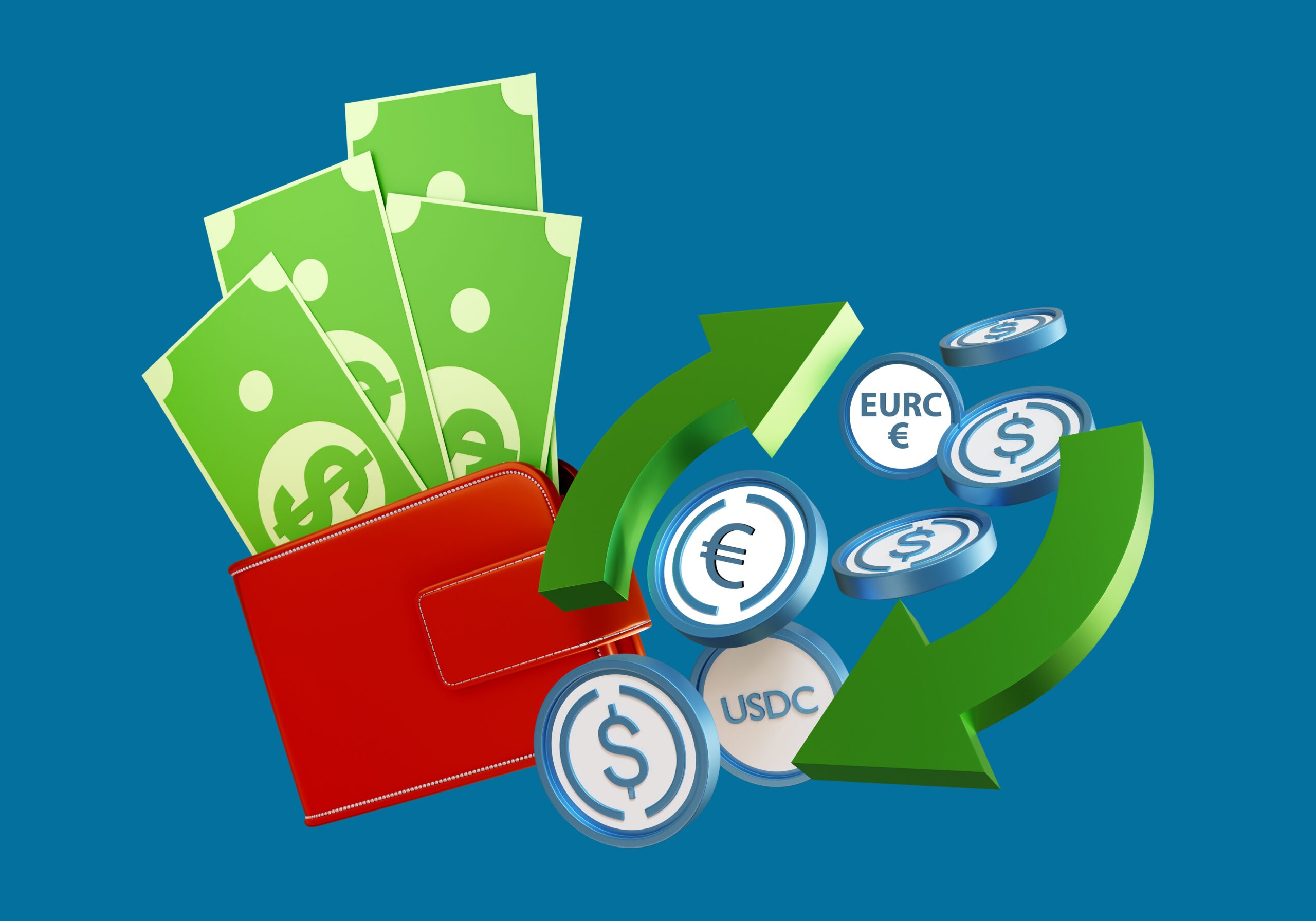
Global Currency Exchange Network with Digital Payment and Multi-Currency Integration.

Why Stablecoins Are Becoming The Settlement Layer Of Digital Finance

“Stablecoins are becoming important not because they are exciting, but because they may make value move with less friction.” DNA Crypto.

Stablecoins Are Moving Beyond Crypto Trading

Many investors first understood stablecoins as a tool for crypto trading. They allowed capital to move between exchanges, reduce exposure to volatility and remain inside digital asset markets without constantly returning to traditional banking rails. That use case remains important, but it no longer explains the full strategic value of Stablecoins.

The more important shift is that Stablecoins are increasingly being understood as settlement infrastructure. Their value comes from their ability to move money quickly, support liquidity and operate across borders in markets where traditional banking can be slow, expensive or difficult to access. This places Stablecoins inside a wider conversation about how value moves through digital finance.

The Real Use Case Is Settlement

The most important feature of Stablecoins is not price movement. It is a settlement. In traditional finance, settlement can be slow, fragmented and dependent on banking hours, intermediaries and jurisdictional limits. That creates friction for businesses, investors and international operators who need capital to move efficiently.

Stablecoins offer a different model by allowing value to move more quickly across digital networks. This can support liquidity management, cross-border payments, OTC transactions and digital asset platforms that need faster operating rails. The deeper point is that Stablecoins are not mainly about speculation. They are about the practical movement of money.

Why Liquidity Matters

Liquidity is one of the most important themes in digital finance because it determines whether capital can move when it needs to move. In periods of uncertainty, liquidity becomes more valuable because investors and businesses need flexibility, speed and optionality. Stablecoins sit squarely within that theme because they allow capital to remain liquid while operating within digital asset markets.

This connects closely to the argument in Markets, Price, and Liquidity. Capital does not only seek returns. It searches for movement, resilience and confidence. Stablecoins matter because they may improve how quickly and reliably that movement can happen.

Cross-Border Finance Needs Better Rails

Cross-border payments remain one of the clearest areas where financial infrastructure is still inefficient. Businesses can face delays, high fees, banking restrictions, FX friction and uncertainty around when funds will arrive. These issues are not theoretical. They affect working capital, supplier payments, investor flows and international settlement.

Stablecoins do not solve every problem, nor do they eliminate the need for compliance. But they can create a more flexible settlement route where value needs to move across jurisdictions quickly and transparently. For firms operating internationally, this can be important because clients, suppliers, investors and counterparties may all sit in different markets.

That does not make Stablecoins a replacement for all banking relationships. It makes them a possible additional rail in a more connected financial system.

Stablecoins Need Trust To Scale

The market should be careful not to confuse usefulness with trust. A Stablecoin may be fast and convenient, but that does not automatically make it suitable for serious capital. For Stablecoins to scale properly, users need confidence in the issuer, reserve structure, redemption process, liquidity, governance and regulatory treatment.

They also need service providers that can support onboarding, monitoring, transaction controls and settlement discipline. This is where Stablecoins become part of the wider digital asset infrastructure story. As discussed in Bitcoin Custody Infrastructure, confidence in digital assets is not created only by the asset itself. It is created by the systems that allow people to access, hold, move and protect value.

Stablecoins are no different. Their long-term role depends on the quality of the surrounding infrastructure.

Compliance Is Not Optional

Stablecoins may make value move faster, but faster movement also increases the importance of compliance. A serious Stablecoin settlement model requires strong controls over onboarding, AML checks, sanctions screening, transaction monitoring, and source-of-funds review. Without those controls, Stablecoin activity can create regulatory, operational and reputational risk.

This is why regulation matters. The development of frameworks such as MiCA crypto regulation reflects a wider shift in the market. Digital asset firms are no longer judged solely on access, speed, or innovation. They are being judged on governance, client protection and operational resilience.

For Stablecoins, that shift is important because their future depends not only on adoption. It depends on whether market participants can trust how they are issued, used, and settled.

OTC Markets Benefit From Better Settlement

Stablecoins are particularly relevant to OTC digital asset trading because OTC depends on execution, liquidity, counterparty confidence and settlement discipline. A transaction may be agreed commercially, but the real risk often lies in how funds and assets move between parties. Poor settlement can undermine a good price because operational failure can create risk after the trade has already been agreed.

In this context, Stablecoins can help support cleaner settlement workflows when used within the right compliance framework. They may reduce some of the friction associated with cross-border transfers and allow capital to move more efficiently between counterparties. This links directly to the wider role of trusted Bitcoin and digital asset access, because clients do not only need a price. They need a process that makes the full transaction credible.

Stablecoins can support that process, but only when the service provider has the controls in place to use them properly.

Working Capital Is Becoming A Strategic Use Case

One of the most important long-term use cases for Stablecoins may be working capital. Businesses need to manage cash, payments, suppliers, customer receipts and international flows. In many cases, the speed and cost of moving money can affect how efficiently a business operates.

Stablecoins may help businesses manage value more flexibly, especially where traditional payment systems are slow or fragmented. This does not mean every company will hold Stablecoins on its balance sheet. It means some businesses may use Stablecoin rails as part of a broader treasury and settlement strategy.

That distinction matters. The value is not necessarily in holding Stablecoins as an investment. The value may be in using them as infrastructure.

Stablecoins And Tokenisation Are Connected

Stablecoins may also play an important role in the future of Tokenisation. If Real Assets, private markets or income-generating assets become tokenised, those markets will still need reliable settlement, distributions and liquidity mechanisms. Digital ownership records alone are not enough if the payment and settlement layer remains inefficient.

This is why Stablecoins and Tokenisation are connected. Tokenised markets need a settlement layer, and Stablecoins may become a practical tool to support it. As explored in Why Most Tokenised Assets Will Never Reach Institutional Capital, institutional participation depends on more than access. It depends on liquidity, custody, governance, rights and confidence.

Stablecoins may help with part of that structure, but they cannot replace the need for proper market design.

The Risk Is Poor Infrastructure

The main risk for Stablecoins is not that the use case is weak. The use case is clear. The risk is that the infrastructure around them is not strong enough. If Stablecoins are used without proper controls, they can create problems related to fraud, sanctions, unclear counterparties, weak redemption confidence, and regulatory exposure.

These risks do not disappear because settlement is faster. In some cases, speed can make weak controls more dangerous because value can move before a problem is fully understood. This is why serious Stablecoin adoption will depend on the quality of the firms providing access, monitoring transactions and managing settlement processes.

Speed is useful, but trust is what makes speed commercially valuable.

Where DNA Crypto Fits

DNA Crypto’s focus on Bitcoin, Stablecoins, OTC rails, secure onboarding, compliance foundations, Tokenisation planning and future escrow infrastructure reflects where digital finance appears to be moving. Stablecoins are important in this regard because they bridge digital assets and practical finance.

They can support settlement, liquidity, cross-border movement and operational flexibility, but only when used within a trusted framework. The opportunity is not simply to provide access to Stablecoins. The opportunity is to support the infrastructure around them in a way that is secure, controlled and commercially useful.

That is where the next phase of digital finance will be built.

The Direction Of Travel

Stablecoins are becoming part of the financial infrastructure conversation because they address a real market need: value needs to move more efficiently. That need exists across OTC trading, cross-border payments, digital asset platforms, tokenisation, and international business activity.

The market will not be won by speed alone. It will be shaped by the firms that can combine speed with trust, liquidity with controls and settlement with governance. Stablecoins may become one of the most important rails in digital finance, but rails only matter when people trust where they lead.

Conclusion

Stablecoins are becoming important because they solve a practical problem. They can help value move faster, support liquidity, improve settlement and create new options for cross-border finance. But their long-term value will not depend only on adoption. It will depend on infrastructure.

That means compliant access, transaction monitoring, reliable liquidity, strong counterparties, settlement discipline and clear governance. Without those elements, Stablecoins remain useful but limited. With them, they may become one of the settlement layers of digital finance.

The next phase of Stablecoins will not be about whether they are convenient. It will be about whether they can be trusted.

Relevant DNACrypto Articles

Image Source: Adobe Stock

Disclaimer: This article is for informational purposes only and does not constitute financial, legal, or investment advice.

Register today at DNACrypto.co

Read more →

A glowing wallet displays currency symbols in vibrant colours against a dark, starry background.

Stablecoins Are the Hidden Infrastructure of Finance

“Stablecoins do not replace money. They redefine how it moves.” DNA Crypto.

The Misunderstood Role of Stablecoins

Stablecoins are often described as a supporting tool within crypto markets, primarily used for trading, hedging or short-term capital management. This framing is convenient, but it is increasingly inaccurate.

Stablecoins are not a feature of the system.

They are becoming the system.

What appears to be a simple digital representation of fiat currency is, in reality, a restructuring of how money moves. The distinction matters because infrastructure is rarely recognised while it is being built, only once it becomes essential.

From Trading Tool to Financial Backbone

In their early phase, stablecoins solved a practical problem by allowing traders to move between volatile assets without relying on traditional banking rails. This provided speed and flexibility, particularly in markets that operate continuously.

However, their role has expanded beyond trading.

Stablecoins now facilitate payments, settlement, liquidity provisioning and cross-border transactions. They operate continuously, without the limitations imposed by banking hours or geographic constraints.

As explored in the stablecoins overview, this evolution reflects a deeper transition from financial products to financial infrastructure.

The market is not experimenting with stablecoins.

It is beginning to depend on them.

Why Traditional Money Rails Cannot Compete

Traditional financial systems rely on layered infrastructure involving banks, payment processors and clearing networks. These layers introduce friction, delay and cost, even in well-developed markets.

Stablecoins operate on fundamentally different rails.

Transactions can settle directly between participants, without requiring multiple intermediaries. This reduces complexity and allows capital to move with greater speed and transparency.

As outlined in crypto payments infrastructure, this is not a marginal improvement. It is a structural shift.

The uncomfortable reality for traditional systems is that efficiency is no longer optional. Once a faster rail exists, capital will eventually migrate to it.

Liquidity Is the Real Story

The term “stablecoin” emphasises price stability, but this is not what defines their importance. Stability is expected. Liquidity is what matters.

Stablecoins enable capital to move quickly across markets, assets and jurisdictions. They function as working capital within digital systems, supporting trading, lending and payments simultaneously.

As explored in stablecoins as working capital, this liquidity layer is what allows digital markets to function at scale.

Without stablecoins, crypto markets slow down.

With them, capital flows.

Regulation Is Not Slowing This Down

A common assumption is that regulation will limit the growth of stablecoins. In reality, it is likely to accelerate their adoption.

Frameworks such as MiCA are introducing standards around reserves, governance and transparency. This reduces uncertainty and allows institutions to engage with greater confidence.

As outlined in MiCA and stablecoins, regulated stablecoins are not weaker versions of the original concept. They are stronger, because they are integrated into the financial system.

Regulation does not remove infrastructure.

It legitimises it.

Stablecoins and Banks Are Not Enemies

Stablecoins are often framed as a direct challenge to traditional banking systems. This interpretation is overly simplistic.

Banks remain central to fiat issuance, custody and compliance. Stablecoins extend this system by providing more efficient rails for capital movement.

This creates a hybrid structure rather than a replacement model.

As explored in Stablecoins in Europe, the integration between traditional finance and digital infrastructure is already taking shape.

The future is not a battle between systems.

It is a convergence.

Bitcoin and Stablecoins Serve Different Functions

It is increasingly important to separate the roles of different digital assets within the financial system.

Stablecoins facilitate movement… Bitcoin anchors value.

As outlined in Bitcoin versus Stablecoins, these functions are complementary rather than competitive.

One enables capital to flow. The other provides a long-term reference point for value.

Confusing the two leads to misunderstanding both.

Where DNA Crypto Sits

DNA Crypto operates within this evolving structure by enabling clients to move capital efficiently between fiat systems and digital assets.

This includes:

  • – Facilitating fiat-to-crypto transactions
  • – Enabling Stablecoin-based settlement
  • – Providing structured execution aligned with regulatory frameworks

This positioning reflects a broader market reality.

Access alone is no longer enough.

Movement is what matters.

The Direction Of Travel

Stablecoins will continue to expand beyond crypto markets into payments, corporate treasury and cross-border settlement. As adoption increases, their role as infrastructure will become more visible.

At the same time, regulatory clarity will bring them further into the financial system.

The transition will not be sudden.

But it will be decisive.

Conclusion

Stablecoins are not a niche product within digital markets.

They are the rails that allow capital to move efficiently across systems.

They do not replace money.

They redefine how it operates.

And over time, infrastructure is what determines which systems scale.

Relevant DNACrypto Articles

Image Source: Adobe Stock

Disclaimer: This article is for informational purposes only and does not constitute financial, legal, or investment advice.

Register today at DNACrypto.co

Read more →

Worldwide digital payment network showing secure financial transactions. Digital payment supports transfer, digital payment ensures security, boosts convenience, drives global finance.

Tokenised Deposits vs Stablecoins

“Digital money is not competing on technology. It is competing for control.” DNA Crypto.

The Evolution of Digital Money

The first phase of digital money has already happened.

Stablecoins proved that value could move instantly, globally, and outside of traditional banking rails.

That phase is now complete.

A second phase is emerging, led by banks.

Tokenised deposits are the response.

Stablecoins Established the Model

Stablecoins solved a critical problem.

They enabled digital dollars to exist on-chain, allowing capital to move without relying on legacy settlement systems.

This unlocked:

  • – Continuous liquidity across markets
  • – Real-time settlement between counterparties
  • – A global trading infrastructure independent of banking hours

As explored in “Stablecoins as infrastructure,” their real value lies in institutional liquidity.

However, stablecoins rely on issuers.

They introduce counterparty risk and regulatory dependency.

Tokenised Deposits Are the Banking Response

Banks are replicating this model within their own systems.

Tokenised deposits are digital representations of bank deposits, issued by regulated institutions and integrated into existing financial infrastructure.

They provide:

  • – Regulatory clarity under frameworks such as MiCA
  • – Direct connection to banking liquidity
  • – Alignment with compliance structures

They are not external innovation. They are internal evolution.

The Real Difference Is Control

At a technical level, both systems appear similar.

The difference is structural.

  • – Stablecoins operate outside banking
  • – Tokenised deposits operate within it

This defines control.

As highlighted in MiCA and stablecoins, regulation is shaping this divide.

The Scale of the Opportunity

Global deposits exceed one hundred trillion dollars.

Stablecoins represent only a small portion of this.

Tokenisation of deposits has the potential to transform the scale of on-chain finance.

This is why institutions are investing heavily.

Interoperability Becomes the Constraint

Tokenised deposits create fragmentation.

Each institution operates its own system.

Without interoperability:

  • – Liquidity remains siloed
  • – Settlement becomes conditional
  • – Network effects weaken

As explored in crypto payments infrastructure, connectivity will define success.

Where Bitcoin Sits in This System

Stablecoins and tokenised deposits operate above Bitcoin.

They depend on trust structures.

Bitcoin does not.

As outlined in Bitcoin as financial infrastructure, it remains the neutral settlement layer.

The Role of the Broker Layer

Fragmentation creates demand for execution.

Capital must move between systems efficiently.

This requires:

  • – Fiat to crypto access
  • – Compliant onboarding
  • – Efficient trade execution

DNA Crypto operates within this layer, connecting fragmented liquidity.

The System Is Expanding, Not Converging

There will not be a single dominant system.

Stablecoins and tokenised deposits will coexist.

The real competition lies in how they connect.

Relevant DNACrypto Articles

Image Source: Adobe Stock

Disclaimer: This article is for informational purposes only and does not constitute financial, legal, or investment advice.

Register today at DNACrypto.co.

Read more →

Close-up of a mobile screen displaying the European Central Bank website, highlighting the concept and design of the digital euro.

Stablecoins Under MiCA: The Hidden Opportunity for Treasury, Cross-Border Business, and Institutional Flow

“Regulation does not slow infrastructure. It clarifies who can use it.” DNA Crypto.

MiCA Has Changed the Stablecoin Conversation

Stablecoins in Europe are no longer regulatory grey zones. Under the Markets in Crypto-Assets (MiCA) framework, stablecoins fall into clearly defined categories, including Asset-Referenced Tokens (ARTs) and E-Money Tokens (EMTs). This classification transforms stablecoins from experimental payment tools into compliance-ready financial instruments. We previously outlined the regulatory shift in MiCA and Stablecoins and expanded on European developments in Stablecoins in Europe 2025. MiCA does not eliminate stablecoins. It formalises them. For treasury managers and CFOs, that distinction matters.

MiCA Stablecoin Classifications: Why It Matters

Under MiCA:

  • – E-Money Tokens (EMTs) must be fully backed and redeemable at par value
  • – Asset-Referenced Tokens (ARTs) require diversified reserve oversight
  • – Issuers face capital, governance, and transparency obligations
  • – Cross-border issuance must meet EU supervisory standards

This is not cosmetic compliance. It establishes legal clarity for balance sheet integration. As discussed in Euro Stablecoins Under MiCA, regulated euro-denominated stablecoins now offer a compliant alternative to traditional FX settlement layers. Stablecoins are becoming financial instruments, not payment experiments.

Treasury Use Cases: Beyond Payments

Stablecoins under MiCA enable structured treasury strategies. For SMEs and corporates, this includes:

  • – Holding euro- or dollar-pegged stablecoins for working capital flexibility
  • – Reducing FX conversion friction for international suppliers
  • – Managing short-duration liquidity between invoice cycles
  • – Deploying programmable escrow for conditional payments

These use cases align with our thesis that stablecoins are working capital infrastructure. Working capital management is not speculative. It is operational efficiency. Stablecoins provide programmable liquidity without abandoning regulatory oversight.

Cross-Border Business: A Structural Advantage

Cross-border commerce still suffers from:

  • – Multi-day correspondent banking delays
  • – FX spread inefficiencies
  • – Cut-off times and settlement windows
  • – Intermediary dependency risk

MiCA-compliant stablecoins enable regulated entities to settle cross-border transactions with continuous availability and transparent on-chain confirmation. This shift complements the broader transition discussed in Money Is Becoming a Network. Stablecoins do not replace banks. They upgrade settlement rails.

Institutional Flow and Structured Integration

Institutional adoption accelerates when compliance uncertainty declines. Recent coverage in Stablecoins After MiCA and Stablecoins as Infrastructure highlights how regulatory clarity increases enterprise integration. Institutional flows require:

  • – Clear redemption rights
  • – Reserve transparency
  • – Defined governance oversight
  • – Integration with reporting systems

MiCA provides that framework. Stablecoins now fit within portfolio governance structures rather than sitting outside them.

Compliance Wrap-Up: What Serious Businesses Should Ask

Before integrating stablecoins, treasury teams should evaluate:

  • – Is the stablecoin MiCA-compliant?
  • – Who is the licensed issuer?
  • – How are reserves structured and disclosed?
  • – What reporting obligations apply?
  • – How does it integrate with existing accounting frameworks?

This is not a speculative checklist. It is an operational one. We explored similar compliance dynamics in Crypto Payments Infrastructure.

DNACrypto Positioning

DNACrypto operates within regulated onboarding and execution frameworks aligned with European standards. We provide:

  • – Structured KYC and KYB onboarding
  • – Regulated on and off ramps
  • – Transparent execution
  • – Treasury-aware settlement design

Stablecoins under MiCA are not abstract policy developments. They are infrastructure tools. Used correctly, they can reduce friction in treasury planning and cross-border business while maintaining compliance discipline.

Conclusion

MiCA has reshaped the European digital asset landscape. Stablecoins are no longer informal instruments. They are compliance-ready rails for treasury utilisation, cross-border settlement, and institutional capital flow. For CFOs and treasury managers, the opportunity is not ideological. It is operational. Stablecoins under MiCA are not disrupting the financial system. They are becoming part of it.

Relevant DNACrypto Articles

Image Source: Adobe Stock

Disclaimer: This article is for informational purposes only and does not constitute financial, legal, or investment advice. Register today at DNACrypto.co

Read more →

KYIV, UKRAINE - OCTOBER 9, 2025 USDC cryptocurrency coin sticker on chart values banner. Concept of modern crypto money.

Stablecoins Are Quietly Becoming the World’s Working Capital Layer

“Working capital moves the world. Settlement speed determines who moves first.” DNA Crypto.

The Settlement Reality Businesses Face

Global commerce still runs on legacy settlement architecture. Weekends introduce delays. Cross-border transfers encounter foreign exchange friction. Correspondent banking chains add time, cost, and operational uncertainty. For SMEs, cross-border traders, and treasury teams, these frictions are not theoretical. They affect working capital cycles, supplier payments, and liquidity planning. We explored the broader evolution of payment rails in Money Is Becoming a Network, where verification increasingly replaces institutional gatekeeping. Stablecoins did not emerge as speculative tools. They emerged in response to settlement inefficiencies.

The Stablecoin Advantage

Stablecoins introduce a structural shift in how value moves. They provide:

  • – 24/7 settlement without banking hour restrictions
  • – Programmable transfers aligned with smart contract conditions
  • – Near-instant clearing across jurisdictions
  • – Transparent on-chain verification
  • – Reduced dependency on correspondent banking layers

As outlined in Stablecoins Are the Hidden Infrastructure of Modern Finance, the most durable use case for Stablecoins is operational rather than speculative. They reduce friction in working capital cycles.

Institutional Adoption Is Accelerating

Stablecoin infrastructure is no longer confined to crypto-native firms. Adoption trends now include:

  • – Bank-issued Stablecoin initiatives
  • – Tokenised deposit pilots
  • – SWIFT integration experiments
  • – Corporate treasury usage for cross-border settlement

Europe’s MiCA framework has formalised expectations around Stablecoin issuance, governance, and reserve transparency. This regulatory clarity has strengthened institutional participation rather than limiting it. Our analysis of Stablecoins After MiCA and MiCA and Stablecoins explains how structured regulation is enabling compliance-integrated rails. This is not decentralisation replacing banks. It is an infrastructure upgrade.

Stablecoins as Working Capital Infrastructure

For corporate treasuries, Stablecoins offer a practical function. They can:

  • – Accelerate supplier payments across time zones
  • – Reduce FX conversion friction
  • – Improve liquidity forecasting
  • – Enable programmable escrow arrangements
  • – Integrate with tokenised asset ecosystems

This progression aligns with the broader RWA evolution described in Tokenised Money Market and Private Credit on Chain. Stablecoins serve as the bridge between digital assets and traditional balance sheets.

The Forward View: Hybrid Money

The future of payments is unlikely to be purely decentralised or purely bank-driven. It will be hybrid. Stablecoins will coexist with regulated digital deposits, tokenised treasuries, and evolving CBDC pilots. Compliance-integrated rails will define which systems endure. We examined this convergence across CBDCs, Stablecoins, and DeFi. The working capital layer of global commerce is becoming programmable.

DNACrypto Positioning

At DNACrypto, Stablecoin integration is approached through regulated on- and off-ramp infrastructure. We focus on:

  • – Structured onboarding aligned with European standards
  • – Clear custody processes
  • – Transparent settlement execution
  • – Treasury-aware integration strategies

Stablecoins are not treated as speculative instruments. They are operational tools within disciplined digital asset allocation. Infrastructure readiness determines success.

Conclusion

Stablecoins are not replacing the financial system. They are quietly reinforcing it. By reducing settlement friction and improving working capital efficiency, Stablecoins are becoming part of the global commerce backbone. The businesses that understand this shift will not treat Stablecoins as a trend adoption. They will treat them as infrastructure.

Relevant DNACrypto Articles

Image Source: Adobe Stock

Disclaimer: This article is for informational purposes only and does not constitute financial, legal, or investment advice. Register today at DNACrypto.co.

Read more →

Pile of Tether Cryptocurrencies.

Stablecoins Didn’t Break the System. They Exposed How Slow It Was.

“Stablecoins didn’t disrupt finance. They embarrassed it.” DNA Crypto.

Stablecoins are often described as disruptive.
That framing is misleading.

They did not invent a new demand for faster money. They revealed how slow the existing system already was.

For decades, global finance tolerated delays because no credible alternative existed. Settlement took days. Cross-border transfers were expensive and opaque. Treasury teams accepted friction as structural.

Stablecoins did not break that system… They exposed it.

Speed Was Always the constraint.

When Stablecoins emerged, they did not arrive with a new ideology. They came with a practical improvement.

They moved value:

  • – instantly
  • – globally
  • – continuously
  • – without banking hours

Once that capability existed, inefficiency became impossible to ignore.

Clients who experienced near-instant settlement did not become anti-bank. They became impatient. This shift is explored in Stablecoins Are the Hidden Infrastructure of Modern Finance, which frames Stablecoins as plumbing rather than ideology.

Speed did not create demand.
Speed revealed demand that already existed.

Stablecoins Succeeded by Solving the Boring Problems

Stablecoins gained traction because they solved operational bottlenecks that banks had learned to work around rather than fix.

They improved:

  • – settlement time
  • – cross-border liquidity
  • – treasury visibility
  • – operational predictability

This is why Stablecoins now underpin crypto markets, OTC desks, and tokenised assets, as outlined in the Stablecoins report.

Their success was not viral… It was functional.

Banks Are Not Losing Because Stablecoins Exist

This is the critical misunderstanding.

Banks are not losing relevance because of the emergence of Stablecoins. They are losing relevance because clients prefer faster payments and realise that delays are optional.

Once clients experienced:

  • – 24/7 settlement
  • – transparent balances
  • programmable transfers

The old model began to feel arbitrary.

This does not mean banks disappear. It indicates that the baseline for acceptable performance has shifted. That transition is examined in Stablecoins in Europe, where institutional use is framed as an evolution rather than a rebellion.

Regulation Did Not Kill Stablecoins. It Normalised Them.

MiCA did not arrive to suppress Stablecoins. It came because they had already become systemically relevant.

By introducing:

  • – reserve requirements
  • – disclosure standards
  • – redemption guarantees

MiCA acknowledges that Stablecoins are now part of the financial infrastructure. This regulatory shift is analysed in MiCA and Stablecoins, where Europe is positioned as formalising reality rather than resisting it.

Regulation follows usage, not ideology.

Why Bitcoin Is Different and Why That Matters

Stablecoins optimise speed inside the system.
Bitcoin opts out of the system entirely.

This distinction matters.

Stablecoins depend on issuers, reserves, and legal frameworks. Bitcoin relies on none of these. As explored in Bitcoin vs Stablecoins, the two serve different roles and are not competing for the same function.

Stablecoins accelerate settlement.
Bitcoin removes settlement dependency.

The market increasingly needs both.

The DNACrypto View

Stablecoins did not change human behaviour. They changed expectations.

Once faster settlement became possible, slowness became unacceptable. The institutions that adapt will remain relevant. The ones that rely on inertia will not.

This is not a revolution… It is a recalibration.

Supporting DNACrypto Articles

Stablecoins Are the Hidden Infrastructure of Modern Finance

Image Source: Envato Stock
Disclaimer: This article is for informational purposes only and does not constitute legal, tax or investment advice.
Register today at DNACrypto.co

Read more →

Confident Business Leader with Stock Market Visuals.

Stablecoins Are the Most Successful Financial Innovation Nobody Wants to Admit They Depend On

“The most important systems are often invisible, until they stop working.” — DNA Crypto.

Stablecoins are everywhere.

They sit beneath crypto markets, cross-border payments, OTC desks and tokenised assets. They move billions daily, often unnoticed.

And yet, they are rarely discussed in terms of power.

Stablecoins are treated as plumbing… That is precisely why they matter.

Stablecoins Already Underpin the Digital Financial System

Stablecoins are no longer niche instruments. They serve as the settlement layer for a large share of the digital economy.

They underpin:

  • – Centralised and decentralised crypto markets
  • – Cross-border settlement and remittance flows
  • – OTC trading desks and treasury operations
  • – Tokenised assets and on-chain capital markets

DNACrypto has consistently framed this reality in Stablecoins and Stablecoins in Europe, where Stablecoins are not treated as alternatives but as infrastructure.

Their success is measured not by ideology but by usage.

Why Stablecoins Work

Stablecoins succeed for a simple reason.

They borrow trust from the existing financial system.

They rely on:

  • – Bank-held reserves
  • – Government securities
  • – Regulated custodians
  • – Legal redemption promises

This dependency allows them to feel familiar while operating at internet speed. This is why institutions tolerate them even when they distrust crypto broadly.

This balance is examined in Bitcoin versus Stablecoins, where Bitcoin removes trust entirely, whereas Stablecoins optimise around it.

The Fragility Beneath the Success

Stablecoins work until trust is questioned.

– Reserve opacity.
– Issuer solvency.
– Jurisdictional pressure.
– Redemption restrictions.

These are not hypothetical risks. They are structural ones.

DNACrypto addresses this fragility in Stablecoins after MiCA and the RLUSD Stablecoin, shifting the conversation from innovation to resilience.

Stablecoins do not fail gradually.
They fail suddenly when confidence breaks.

MiCA as a Recognition of Dependency

MiCA is not an attempt to suppress Stablecoins.
It is an admission of dependence.

European regulators recognise that Stablecoins already function as systemic infrastructure. MiCA seeks to formalise, supervise and contain that reality.

This regulatory pivot is explored in Euro Stablecoins Under MiCA, MiCA and Stablecoins and Stablecoins in Europe 2025.

Regulation arrives when a system becomes too important to ignore.

Why Nobody Wants to Talk About It

Stablecoins are uncomfortable.

They expose how much of crypto depends on traditional finance.
They blur the line between private innovation and public trust.
They force regulators to admit reliance before readiness.

This is why they are discussed quietly, operationally, and without fanfare.

Infrastructure rarely receives applause.
It only receives attention when it fails.

Where Stablecoins Sit Relative to Bitcoin

Bitcoin and Stablecoins are often grouped… They should not be.

Bitcoin exists outside trust dependencies… Stablecoins formalise them.

Bitcoin removes intermediaries… Stablecoins reorganise them.

This distinction matters, and DNACrypto has repeatedly highlighted it across Bitcoin Acts as Disaster-Proof Money and Bitcoin as Financial Infrastructure.

Both matter, but for different reasons.

The DNA Crypto View

Stablecoins are the most successful financial innovation of the digital era because they did not try to replace the system.

They integrated with it.

Their strength is also their weakness. They inherit trust, regulation, and fragility from the world to which they connect.

MiCA does not change that reality… It merely acknowledges it.

The future financial system will depend on Stablecoins, whether it admits it or not.

Image Source: Envato Stock

Disclaimer: This article is for informational purposes only and does not constitute legal, tax or investment advice.
Register today at DNACrypto.co

Read more →

Crypto trading. Cryptocurrency USDC. Exchange dollars for USDC. Buying digital dollar. Exchange fiat currency for crypto. USDC money on blue.

Stablecoins as Financial Infrastructure: Why Institutions Treat Them as Digital Cash

“Stablecoins are not crypto instruments. They are payment infrastructure.” — DNA Crypto.

For years, Stablecoins were grouped loosely under the label “crypto”. That framing is now outdated. Institutions are increasingly treating Stablecoins not as speculative instruments, but as financial plumbing. Quietly and deliberately, they are being integrated into treasury systems, settlement rails and cross-border payment flows.

This shift mirrors how executives already think about money, not as an asset to speculate on, but as infrastructure that must move efficiently, reliably and continuously.

Stablecoins vs Bank Deposits vs Money Market Funds

From an institutional perspective, Stablecoins increasingly compete with traditional short-term cash instruments.

Bank deposits offer safety but are constrained by banking hours, jurisdictional friction and counterparty risk. Money market funds provide yield and liquidity but settle slowly and operate within market hours. Stablecoins introduce a third model.

They offer programmable, always-on liquidity with near-instant settlement. When issued under regulated frameworks, Stablecoins increasingly resemble digital cash equivalents rather than crypto assets.

This distinction is explored in Bitcoin vs Stablecoins, where DNACrypto highlights why institutions separate settlement tools from long-term stores of value.

Why Corporations Use Stablecoins in Practice

Corporations are not adopting Stablecoins for ideological reasons. They adopt them because they solve real operational problems.

Stablecoins are now used for:

  • – Treasury management, allowing balances to move instantly without waiting for bank cut-off times

  • – Intra-group transfers enable multinational companies to shift liquidity between subsidiaries efficiently

  • – Cross-border settlement, reducing reliance on correspondent banking and SWIFT delays

  • – 24/7 liquidity, ensuring funds are available outside traditional market hours

These use cases are detailed further in Stablecoins as Financial Infrastructure and Stablecoins in Europe.

In this context, Stablecoins function less like crypto tokens and more like programmable settlement layers.

How MiCA Changes the Risk Profile of Stablecoins

Europe’s MiCA framework represents a turning point. It introduces precise requirements for reserve backing, custody, redemption rights and reporting. This dramatically alters how risk is assessed.

Under MiCA, compliant Stablecoins must demonstrate transparency, asset segregation, and operational resilience. For institutions, this moves Stablecoins closer to regulated financial instruments rather than experimental technology.

DNACrypto has analysed this shift in depth in MiCA and Stablecoins and Stablecoins After MiCA.

For European institutions, MiCA reduces legal ambiguity and unlocks broader adoption.

Why Euro Stablecoins Matter Strategically

Euro-denominated Stablecoins are becoming strategically important. They allow European corporates to settle natively in euros while maintaining global reach and round-the-clock liquidity.

This matters for treasury teams that want to avoid excessive dollar exposure and FX friction. Euro Stablecoins support regional monetary sovereignty while still operating on global digital rails.

The strategic implications are explored in Euro Stablecoins Under MiCA and Stablecoins in Europe 2025.

In Europe, euro-stablecoins are not a niche product. They are a competitive necessity.

Why Banks Are Quietly Building Stablecoin Rails

Perhaps the strongest signal of all is coming from banks themselves. Across Europe and beyond, banks are building Stablecoin rails behind the scenes.

They understand that instant settlement, tokenised deposits and programmable liquidity are becoming table stakes. Stablecoins allow banks to modernise infrastructure without replacing the existing system overnight.

This quiet convergence between traditional finance and Stablecoin infrastructure is reshaping payments at the base layer.

The DNA Crypto View

Stablecoins are no longer best understood as crypto assets. They are digital cash instruments embedded into modern financial systems. For institutions, their value lies in efficiency, availability and integration.

Under MiCA, regulated Stablecoins become safer, more transparent and more usable for European corporates. This does not replace banks. It upgrades them.

Bitcoin remains the long-term reserve asset. Stablecoins remain the settlement layer. Understanding the difference is now essential for executives.

For further reading, see Stablecoins in Europe and Bitcoin vs Stablecoins.

Image Source: Adobe Stock
Disclaimer: This article is for informational purposes only and does not constitute legal, tax or investment advice.
Register today at DNACrypto.co

Read more →

Euro coin on stock chart. Financial investment concept.

Euro Stablecoins Are Coming: How EURC and EMTs Will Transform Payments in Europe

“As MiCA unfolds, euro-denominated Stablecoins will be the most tightly regulated digital cash instruments on the planet. Europe isn’t just catching up — it’s creating a safer, more compliant foundation for the future of money.” — DNA Crypto.

Europe’s Stablecoin Moment Has Arrived

For years, the Stablecoin market has been dominated by USD-pegged tokens. But in a region with the world’s second-largest currency, that’s about to change. With the Markets in Crypto-Assets Regulation (MiCA) now in effect, euro-backed Stablecoins — known as E-Money Tokens (EMTs) — are poised to redefine digital payments across the continent.

The arrival of EURC and other MiCA-compliant tokens marks a turning point for European fintech, banking, and blockchain adoption.

Why Europe Needs Euro Stablecoins

European commerce currently runs on:

  • – SEPA and SWIFT transfers
  • – Card networks
  • – Traditional settlement rails


These systems are:

  • – Not borderless
  • – Not 24/7
  • – Not cost-efficient

Euro Stablecoins solve this with real-time, programmable payments that cross borders and bypass bank delays.

Further reading: What Bitcoin ETFs Mean for Corporate Europe

MiCA: Building the World’s Safest Stablecoin Market

MiCA defines strict rules for EMTs:

  • – 1:1 reserve backing
  • – Daily issuance and redemption audits
  • – Redemption at par value
  • – Segregated client funds
  • – Issuance by licensed EU institutions


This makes EURC and its competitors structurally safer than any USD Stablecoin operating today. It also builds public trust in a euro-native digital payment layer.

Further reading: Bitcoin vs Digital Euro

Who Will Use Euro Stablecoins?

Adoption will come fastest from:

  • – E-commerce and payment processors
  • – Payroll platforms and remote teams
  • – B2B suppliers and invoice finance firms
  • – Remittance and cross-border payments
  • – Crypto exchanges and on/off-ramp providers

These users want stability, speed, and euro-denominated liquidity.

Why Bitcoin and Euro Stablecoins Work Together

Some see Stablecoins as a threat to Bitcoin. We don’t. At DNA Crypto, we see a complementary system taking shape:

  • – Bitcoin as a reserve asset
  • – Euro Stablecoins as the transactional layer


This enables:

  • – Seamless BTC to EUR flows
  • – More liquidity for Bitcoin users
  • – New on-chain commerce models
  • – Greater euro-zone participation in digital assets

Further reading: Bitcoin as Digital Gold 2.0

The New European Stack: Bitcoin + EURC

What gold + cash were to the 20th century, Bitcoin + Stablecoins will be to the 21st.

  • – Bitcoin for savings, settlement, and sovereignty
  • – EURC for instant commerce, payroll, and payments

Together, they offer the first genuine alternative to the legacy banking stack in Europe.

Further Reading from the DNA Crypto Archives

For more insight into treasury strategy and digital asset evolution, explore:


Image source: Envato Stock

Disclaimer: This article is for informational purposes only and does not constitute legal, tax, or investment advice.

Read more →

Bitcoin, Currency, digital, finance, economy. Golden Bitcoin coin on us dollars close up.

Bitcoin vs Digital Euro: Privacy, Power and the Future of Money in Europe

“Bitcoin is not just a hedge against inflation. It is a hedge against centralised control.” — DNA Crypto.

The global financial system is undergoing its fastest transformation in more than half a century. Across the European Union, central banks are building the digital euro, a state-controlled programmable currency designed to modernise the monetary system. At the same time, Bitcoin continues its rise as a sovereign, borderless alternative built on decentralisation, transparency, and open participation.

Both systems will shape the future of European money. But they could not be more different.

The Bitcoin community — including many speakers at conferences across Europe — is vocal about the consequences of this shift: privacy, financial autonomy, regulatory control, and the clash between permissioned and permissionless money.

Understanding these contrasts is essential for policymakers, businesses, and everyday citizens.

The Digital Euro: Modernisation with Trade-Offs

The digital euro is not simply “cash on your phone.” It is a central bank digital currency (CBDC) with programmable features, traceability, and built-in compliance systems.

Supporters argue that CBDCs will bring:

  • – Instant payments across Europe

  • – Reduced reliance on foreign payment networks

  • – Banking access for unbanked citizens

  • – Better tax and fraud prevention

  • – More efficient monetary policy

But Bitcoin educators, privacy advocates, and monetary economists warn that CBDCs introduce significant risks:

1. Total transaction visibility
Every payment could be monitored in real time by state or institutional systems.

2. Programmable money controls
Payments could, in theory, be authorised or restricted in line with policy aims.

3. Centralisation of financial power
Citizens’ spending, saving, and financial behaviour become dependent on centralised digital infrastructure.

4. Fragility in times of crisis
Digital-only money increases systemic risk if systems go down or are manipulated.

As we outlined in Bitcoin vs CBDCs, a CBDC is not an evolution of cash — it is a replacement with weaker privacy and stronger oversight.

Bitcoin: A Financial Counterweight

Bitcoin approaches money from the opposite direction. Whereas CBDCs centralise control, Bitcoin decentralises it.
Where CBDCs create programmable compliance, Bitcoin creates mathematically guaranteed monetary rules.
Where CBDCs give governments granular visibility, Bitcoin operates transparently but pseudonymously.

Bitcoin offers:

  • – A fixed supply

  • – Neutral global accessibility

  • – Resistance to censorship

  • – Permissionless entry

  • – Settlement without intermediaries

  • – A transparent monetary policy

Bitcoin is not money for governments.
It is money for people, institutions, markets, and open networks.

Learn more in Bitcoin as a Tool for Sovereignty.

Why Privacy Has Become the Battleground

In Europe, financial privacy is not a fringe topic — it is a human rights principle.
Yet the direction of modern finance is to reduce privacy rather than preserve it.

  • – Banking records are monitored

  • – Payments are surveyed

  • – Third-party intermediaries collect behavioural data

  • – KYC/AML systems expand with every regulatory cycle

Bitcoin is the first global monetary network designed to operate without requiring personal data for permission to transact.

This is why many Bitcoin speakers emphasise that privacy is not about secrecy — it is about safety and autonomy.

We explore this further in Bitcoin and Financial Autonomy.

Coexistence: A Future with Two Monetary Systems

The future of European money will not be “Bitcoin or CBDC.”
It will be Bitcoin and CBDC, each serving a different purpose.

The digital euro
Designed for efficiency, taxation, public infrastructure, and compliance.

Bitcoin
Designed for freedom, global commerce, savings, and financial self-sovereignty.

They are not rivals. They are opposites — and each will grow.
The digital euro will serve governments.
Bitcoin will serve everyone else.

Why This Matters for the Bitcoin Community

For Bitcoin advocates, Europe’s move toward digital money highlights the importance of:

  • Self-custody

  • – Privacy-preserving tools

  • – Decentralised payment infrastructure

  • – Censorship-resistant savings

  • – Clear education on monetary alternatives

As the financial system becomes more programmable, Bitcoin becomes more essential.

Explore this more deeply in Regulation, Sovereignty and Sound Money.

Image Source: Adobe Stock

Disclaimer: This article is for informational purposes only and does not constitute legal, tax, or investment advice.

Read more →

USDC and USDT logo.

The Stablecoin Era: How Regulation, Innovation, and Digital Currencies Are Reshaping Finance in 2025

“In digital finance, stability isn’t the absence of risk — it’s the presence of transparency.” – DNA Crypto Knowledge Base.

In 2025, Stablecoins have become the backbone of the digital economy.
Once dismissed as a niche crypto tool, they now move over $10 trillion annually across global blockchains — powering remittances, institutional settlements, and central bank pilots.

But as the industry matures, new questions emerge:
Which Stablecoins will survive Europe’s new MiCA regulation?
Can Euro-backed coins challenge the dollar’s digital dominance?
And how are regulators balancing innovation with control?

Learn more: Stablecoins and MiCA Regulation

From Experiment to Infrastructure

Stablecoins began as an elegant solution to crypto’s volatility — a digital representation of fiat currency backed 1:1 by reserves.
Today, they’re the settlement layer for blockchain-based finance, linking DeFi, exchanges, and real-world commerce.

In 2025, more than $160 billion in Stablecoins will be in circulation.

  • – USDT (Tether) remains the global leader, with over $110B supply.

  • – USDC (Circle) dominates regulated markets and corporate payments.

  • – EUROC and EURCV are defining the next frontier — Euro-backed digital money under MiCA supervision.

Stablecoins have evolved from crypto’s convenience to a core liquidity instrument in finance.

Explore: Stablecoins: The Digital Dollar of the Blockchain Economy

The European Turning Point: MiCA Changes Everything

Europe’s Markets in Crypto-Assets (MiCA) regulation, enforced in 2024, marked the world’s first legal framework for Stablecoins.

Under MiCA, issuers of Asset-Referenced Tokens (ARTs) and E-Money Tokens (EMTs) must:

  • – Hold full fiat reserves, audited and segregated.

  • – Provide real-time redemption rights for users.

  • – Operate under strict transparency and capital standards.

This regulation effectively outlawed unlicensed coins like USDT in the EU market — a headline move that forced exchanges and institutions to pivot toward regulated alternatives.

See: USDT Banned in Europe

The result? Europe has become the most stablecoin-compliant market in the world, paving the way for institutional integration across banking and fintech sectors.

Learn more: Global Impact of MiCA

Euro Coin 2025: Europe’s Answer to the Digital Dollar

While the U.S. dollar dominates global stablecoin markets, Europe is catching up fast.
The launch of Euro Coin (EUROC) and Circle’s MiCA-aligned EURCV gives institutions a compliant option for on-chain Euro settlements.

In 2025, Euro stablecoin adoption is accelerating:

  • – Over €5 billion in monthly transactions across major European exchanges.

  • – Integration with SEPA Instant for real-time Euro conversions.

  • – Pilot programs by European banks exploring on-chain settlements.

Euro Coin bridges traditional finance with Web3 infrastructure — ensuring the Euro remains relevant in an increasingly digital global economy.

Learn more: Euro Coin 2025

The Dollar, The Euro, and the Battle for Digital Dominance

The stablecoin market now reflects global monetary politics.
USDC and USDT continue to represent the dollar’s digital reach, while Euro-backed tokens are Europe’s strategic response.

Key dynamics in 2025:

  • – The U.S. dominates liquidity, with USD Stablecoins accounting for over 85% of global on-chain settlement value.

  • – The EU is building regulatory credibility with MiCA as a global model for oversight.

  • – Asia and the Middle East are launching sovereign-backed tokens tied to gold, oil, and CBDCs.

In essence, Stablecoins are becoming the new reserve instruments of the internet economy — programmable, borderless, and politically symbolic.

See: Bitcoin Market Dynamics

Institutional Adoption: From Treasury to Transactions

Stablecoins are no longer just for crypto traders.
They’re transforming corporate treasury operations and cross-border liquidity management.

  • – Global Fintechs now use Stablecoins to settle remittances instantly at near-zero cost.

  • – Corporations use Euro- and USD-backed tokens for B2B payments and intra-group transfers.

  • – Banks and brokers leverage Stablecoins to execute digital asset trades without exposure to volatility.

According to the BIS 2025 report, 72% of major financial institutions now test or use Stablecoins for settlement efficiency.

Institutional Bitcoin Adoption

DNA Crypto: Connecting Regulation, Liquidity, and Trust

At DNA Bitcoin Broker, we help institutions navigate the stablecoin landscape with precision and compliance.

Our services include:

  • – MiCA-aligned Stablecoin brokerage and custody

  • – OTC liquidity for USD, EUR stable assets

  • – Cross-border settlement advisory for corporates and Fintechs

  • Portfolio diversification with regulated digital assets

We operate where innovation meets oversight — bridging the stability of fiat with the efficiency of blockchain.

See: Crypto Custody Solutions

The Bottom Line

Stablecoins have evolved from convenience tokens to the core rails of the new financial system.
MiCA has set the standard, the Euro is catching up, and global institutions are finally ready to participate.

In this new era, Stablecoins are not replacing money — they’re upgrading it.

And as the world’s liquidity moves on-chain, DNA Crypto stands ready to deliver what every institution now needs most: stability, compliance, and trust.

Image: Adobe Stock
Disclaimer: This article is for informational purposes only and does not constitute legal, tax, or investment advice.

Read more →

Pretty Young Woman Sitting And Throwing Money.

Why Stablecoins Are the New Institutional Entry Point into Crypto

“Stability is the bridge between traditional finance and digital freedom.” – DNA Crypto Knowledge Base.

In 2025, Stablecoins became the fastest-growing sector of digital assets, accounting for more than $160 billion in global circulation.
Once viewed as a niche tool for traders, they are now the institutional entry point into crypto, powering cross-border payments, treasury operations, and regulated liquidity solutions — especially in Europe’s MiCA-driven markets.

For institutions, Stablecoins represent the missing link between the speed of blockchain and the stability of fiat currency.

Learn more: Global Impact of MiCA

What Are Stablecoins?

Stablecoins are digital assets pegged to stable reserves such as the euro, U.S. dollar, or commodities like gold.
They are designed to maintain consistent value while enabling instant, low-cost global transfers — making them ideal for businesses and financial institutions entering blockchain markets.

There are three main categories:

  • – Fiat-backed Stablecoins – backed 1:1 by reserves (e.g., USDT, USDC, EURC).

  • – Crypto-collateralised Stablecoins – secured by on-chain assets (e.g., DAI).

  • – Algorithmic Stablecoins – maintained via supply algorithms (mostly phased out after 2022).

In today’s market, regulated, fiat-backed Stablecoins dominate institutional adoption, with MiCA and PSD3 compliance providing new legal certainty across Europe.

Explore: DeFi and MiCA Regulation

How Institutions Use Stablecoins

Stablecoins are now essential for institutional crypto operations, bridging the old and new financial worlds.

1. Cross-Border Payments
Corporations and Fintechs use Stablecoins to settle global transactions 24/7, bypassing SWIFT delays and intermediary fees.
In Europe, EURC (Euro Coin) has become a preferred payment token under MiCA-aligned custody models.

2. Treasury Management
Hedge funds and asset managers use Stablecoins for instant liquidity and on-chain diversification, enabling seamless capital movement between exchanges and DeFi protocols.

3. Tokenisation & Yield
Stablecoins provide the base layer for tokenised real-world assets (RWAs) — including bonds, property, and carbon credits — with transparent, programmable yields.

4. Settlement Layer for Exchanges
Exchanges and brokers increasingly use Stablecoins for instant collateral and fiat off-ramps, reducing counterparty risk while increasing liquidity.

See: Institutional Tokenisation

Stablecoins in Europe: The Regulation Advantage

Europe is now one of the most stable environments for regulated stablecoin growth.
The Markets in Crypto-Assets Regulation (MiCA) — implemented in 2024 and expanding through 2025 — introduced clear classifications:

  • – ARTs (Asset-Referenced Tokens): Pegged to a basket of currencies or assets.

  • – EMTs (E-Money Tokens): Pegged to a single fiat currency (e.g., EURC, USDC).

Under MiCA, issuers must:

  • – Hold verifiable reserves.

  • – Provide transparent audits.

  • – Register with the European Securities and Markets Authority (ESMA).

This regulatory clarity is attracting banks, fintechs, and payment providers to integrate Stablecoins as regulated liquidity tools rather than speculative assets.

Explore: MiCA and Investor Protections

DNA Crypto: Powering Institutional Stablecoin Access

As a VASP-licensed brokerage in Poland, DNA Crypto connects traditional institutions to compliant stablecoin infrastructure.

We support:

  • – EURC and USDC settlements for institutional clients.

  • – Cross-border liquidity services for tokenised payments and treasury flows.

  • – Secure, insured custody aligned with MiCA and EU AMLD frameworks.

  • – Advisory services for corporates exploring tokenised payment rails.

At DNA Crypto, Stablecoins are more than trading tools — they’re the connective tissue of the new digital economy.

Learn more: Crypto Custody Solutions

The Bottom Line

Stablecoins are no longer a crypto side product — they’re the main entry point for institutions into blockchain finance.
With MiCA providing legal certainty and infrastructure maturing across Europe, Stablecoins are set to become the digital cash layer of the global economy.

For businesses, the message is simple:
Stablecoins are not just stable — they’re strategic.

Image Source: Envato Stock

Disclaimer: This article is for informational purposes only and does not constitute legal, tax, or investment advice.

Read more →