
A woman analyses data on the cost of capital in the company.

Capital Doesn’t Chase Ideology. It Chases Optionality

“Capital survives by keeping doors open, not by choosing sides.” — DNA Crypto.

Most financial debates are framed as belief systems.

– Bitcoin versus fiat.
– Gold versus crypto.
– DeFi versus banks.
– CBDCs versus freedom.

Serious capital does not participate in these arguments.

Capital does not chase ideology… It chases optionality.

How Capital Actually Thinks

Professional allocators are not rewarded for conviction. They are rewarded for resilience.

They do not ask what narrative will win.
They ask what keeps choices open when assumptions fail.

This is why portfolios rarely reflect belief purity. They reflect uncertainty management.

DNACrypto has explored this mindset across Markets Don’t Price Truth. They Price Exits and Why Dependency, Not Volatility, Is the Biggest Financial Risk.

Optionality is not indecision… It is intelligence.

Bitcoin as Optionality, Not Ideology

Bitcoin is often framed as a referendum on the future of money.

Capital treats it differently.

Bitcoin functions as an option on:

  • – Monetary governance failure
  • – Sovereign settlement risk
  • – Financial censorship
  • – Systemic confidence breakdown

This is why allocations remain small but persistent, a pattern documented in Family Offices Are Turning to Bitcoin and Bitcoin Treasury 2.0.

Bitcoin does not need to replace fiat to matter.
It only needs to remain available when trust fragments.

Gold’s Enduring Role

Gold survives every technological cycle because it plays the same role.

– It is not efficient.
– It is not innovative.
– It is not scalable.

It is an option in response to a policy error.

This logic is explored in Gold and Bitcoin and Bitcoin vs Gold.

Gold and Bitcoin are not competitors.
They are parallel expressions of optionality across time horizons.

Stablecoins as Operational Optionality

Stablecoins rarely feature in ideological debates. That is precisely why they succeed.

They offer optionality at the settlement layer:

  • – Cross-border movement
  • – 24/7 liquidity
  • – Reduced banking friction

DNACrypto frames Stablecoins as infrastructure in Stablecoins Are the Hidden Infrastructure of Modern Finance and Stablecoins Have Already Changed Finance.

Capital uses Stablecoins not because it believes in them, but because they preserve flexibility.

Tokenisation as Capital Optionality

Tokenisation is not about ownership revolution.
It is about capital control.

Tokenised structures allow:

  • – Faster capital formation
  • – Optional exits
  • – Dynamic allocation
  • – Reduced lock-ups

This reality is examined in Why Tokenisation Changes How Finance Wins, Not Who Wins and Real-World Asset Tokenisation.

Tokenisation does not challenge power.
It gives capital more leverage.

DeFi and CBDCs Through the Same Lens

DeFi and CBDCs appear oppositional at the ideological level.

Capital views them functionally.

DeFi offers programmability and permissionless access, as discussed in DeFi Grows Up and DeFi vs. TradFi.

CBDCs offer flexibility in settlement efficiency and policy transmission, as explored in “CBDCs Are a Confession” and “CBDCs and the Private Market.”

Neither replaces the other.
Each addresses a different uncertainty.

Why This Reframes the Entire Debate

Once optionality becomes the lens, tribal arguments collapse.

– Bitcoin is no longer a belief.
– Gold is no longer outdated.
– Stablecoins are no longer temporary.
– Tokenisation is no longer hype.

Each survives because it preserves choices under different failure modes.

This is why capital holds contradictions without discomfort.

The DNA Crypto View

Capital does not chase ideology.

It chases optionality because optionality survives uncertainty.

Bitcoin, gold, Stablecoins, and tokenisation are not competing visions. They are tools for navigating governance failure, liquidity shocks and trust erosion.

The smartest portfolios are not the most certain… They are the most adaptable.

Image Source: Envato Stock

Disclaimer: This article is for informational purposes only and does not constitute legal, tax or investment advice.

Register today at 
DNACrypto.co

Read more →

Defi Open Finance illustration with options. Titles, Stablecoins, Payments, Derivatives, Investments

DeFi Grows Up: How Regulation Is Separating Infrastructure from Experiments

“Finance does not reject innovation. It rejects uncertainty.” — DNA Crypto.

DeFi is no longer a single category. That distinction matters.Early narratives treated decentralised finance as one broad movement. Institutions never accepted that framing. They recognised something more nuanced. DeFi encompasses experimentation, infrastructure, and institutional tools, all under the same label.

Regulation is now forcing clarity.

As outlined in What Is DeFi, decentralised finance began as an experiment. What is emerging today looks very different.

The Three Faces of DeFi

Understanding DeFi now requires separating it into functional layers.

– Speculative DeFi prioritises yield, incentives and rapid iteration. It attracts capital quickly and loses it just as fast.
– Infrastructure DeFi focuses on settlement, liquidity routing and protocol reliability. It resembles financial plumbing.
– Institutional DeFi integrates compliance, governance and permissioned access while retaining smart contract efficiency.

Only one of these categories attracts institutional capital.

Why Compliance Layers Are Inevitable

Institutions do not oppose decentralisation. They oppose legal ambiguity.

KYC, AML and permissioned access are not ideological concessions. They are operational requirements. Banks, asset managers and custodians cannot interact with systems that lack enforceable controls.

This reality is explored in DeFi Meets Regulation and DeFi Within the Banking Sector, where smart contracts coexist with regulatory frameworks.

Permissioned access does not remove decentralisation. It defines accountability.

How MiCA and Global Regulation Are Forcing Maturity

MiCA is accelerating DeFi’s separation into viable and non-viable segments. Protocols unable or unwilling to integrate compliance will be excluded from institutional flows.

This pressure mirrors trends discussed in MiCA’s Blind Spots, in which regulation does not ban DeFi but instead filters it.

Globally, similar frameworks are emerging. Regulatory convergence rewards protocols that behave like infrastructure rather than experiments.

Why Institutions Do Not Fear DeFi

Institutions do not fear smart contracts. They fear interfaces without accountability.

This distinction is critical. Smart contracts offer automation, transparency and efficiency. Unregulated front ends introduce risk.

DNACrypto explores this tension in DeFi vs Traditional Finance and DeFi vs TradFi, where infrastructure succeeds only when trust models are explicit.

Institutional DeFi removes ambiguity without sacrificing efficiency.

What DeFi 2.0 Looks Like in Practice

DeFi 2.0 is not louder. It is quieter.

It operates through permissioned pools, compliant liquidity, identity-aware wallets and regulated interfaces. Yield is earned through real activity, not emissions.

Examples include regulated lending, tokenised collateral management and on-chain settlement integrated with banking systems. These trends align with themes in Transforming Finance with dApps and DeFi and Private Banking with AI and Smart Contracts.

This is DeFi as infrastructure.

The DNA Crypto View

DeFi is not being replaced. It is being refined.

Speculative experimentation will continue at the edges. Institutional DeFi will grow at the centre. Regulation is the sorting mechanism.

The future of DeFi belongs to protocols that understand finance as a system, not a game.

Image Source: Adobe Stock
Disclaimer: This article is for informational purposes only and does not constitute legal, tax or investment advice.
Register today at DNACrypto.co

Read more →

Licensed Save to Library Preview Crop Find Similar File #: 435668760 Avalanche AVAX isometric token symbol of the DeFi project in digital circle on blue background. Cryptocurrency coin icon. Decentralized finance programs.

Chainlink Data Streams Goes Live on Avalanche

The DeFi industry has yet again made headlines with the just concluded Chainlink integration Data Streams service onto Avalanche. This information was made public through Chainlink’s official Twitter handle and could be a turning point for the two platforms by linking Chainlink and Avalanche…

Read more →

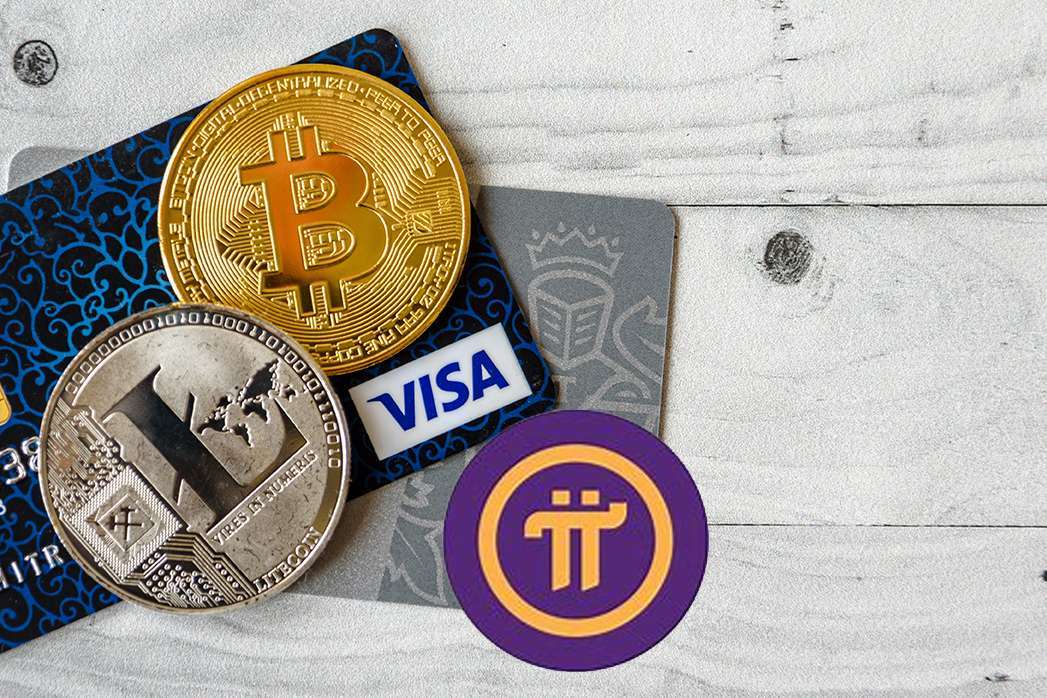
Bitcoin, Litecoin and Ripple cryptocurrency and Visa, MasterCard debit cards. Visa and MasterCard worldwide is an American multinational financial services corporation against cryptocurrency.

VISA Integrates with Pi Blockchain

Digital finance space continues to make history with the latest being how VISA has Integrated with Pi Blockchain. A core factor that will lead to the strengthening of the Global Crypto Ecosystem. This new development is expected to revolutionise the future of Cryptocurrencies. It…

Read more →

Eigenlayer-Defi

Eigenlayer Wants to Challenge Ethereum

The Crypto world has become much more diverse, and Ethereum has stepped in as one of the leading players, respectfully trailing Bitcoin. Thanks to these innovations, the last trend shaping both potential investors and the whole Crypto space is the protocol called “Eigen-Eigenlayer,” which…

Read more →

Words fake ico of black cubes and silver coin dark .

ICO Scams in the Cryptocurrency World

“Unregulated capital formation always attracts abuse before it attracts discipline.” — DNA Crypto.

In the bustle and hustle of digital finance, the Initial Coin Offerings (ICOs) concept shines bright. However, it is essential to stay aware of ICO Scams in the Cryptocurrency World. As a finance and technology hub, the UK has been fertile ground for the Cryptocurrency boom, offering opportunities for creativity and innovation.

Yet, where there is treasure, there are also traps. ICO scams in the Cryptocurrency world have become a scourge that investors must now approach with caution.

Cryptocurrency uses a peer-to-peer system to regulate coin creation and verify fund transfers through encryption. It operates outside of the traditional banking system and government oversight. A move that empowers users while also exposing them to unique risks.

What is an ICO?

An Initial Coin Offering can be compared to the Wild West of crowdfunding. An emerging business proposes a new coin (Cryptocurrency), project or service and offers it to the public. 

Interested individuals can invest by trading cryptocurrency or cash for new tokens. The general appeal of ICOs in Crypto is the opportunity to be an early adopter in the conceptual stages of a new idea or product and realise high returns as the project grows. In the last few years, the rise of ICO scams in the Cryptocurrency world has made investors wary.

The Allure of ICOs

Stories of overnight millionaires have attracted many to ICOs. Investors are always looking and waiting to be on the front line of the next big thing. Also, most investors favour supporting disruptive technology. 

The concept is similar to stocks: secure a share in a newly launched enterprise and watch its value rise as the project takes off. This promise of decentralised trading with Cryptocurrency and democratized investment opportunities has been magnetic.

The prevalence of ICO scams in the cryptocurrency world often overshadows the allure of possible gains in Crypto ICOs

ICO Risks and the Dark Underbelly

Scams have marred ICOs due to minimal regulation and the anonymity of crypto transactions.

Entities have disappeared, along with the hopes and investments of their backers. These scams often take many forms.


    • – Overstated promises of astronomical returns.

    • – Non-existent teams or fabricated credentials.

    • – Poorly defined or fake product roadmaps.

    • – Aggressive and misleading marketing.

Identifying ICO Scams

The UK crypto enthusiast must be vigilant. Below are some red flags that scream ‘scam’:


    • Opaque Team Structure: Ideally, genuine projects have a transparent, accessible team structure. 

    • Unrealistic Returns: Any promise of guaranteed, sky-high profits within a short time frame should ring alarm bells.

    • Weak Community Backing: A credible ICO will have a robust community and endorsements from known industry figures.

    • Vague Product Roadmap: Legitimate operations will have a clear plan with achievable milestones for product development.

How to Protect in the Crypto Wild West

Before you brandish your digital wallet, shield yourself with the following:


    • Do Your Homework: Research the ICO’s background, team expertise and proposal viability. 

    • Check Compliance: Be keen on projects that follow UK regulatory standards, as this adds a layer of legitimacy.

    • Diversify: Much like traditional investment advice, don’t put all your Crypto coins in one basket. Spread the risk.

The Evolution of Crypto Trading and the Law

The future of Cryptocurrency trading in the UK and beyond looks more structured than ever. As regulators catch up, the ICO field is destined for a rigorous purification process that will weed out the shady offerings. 

Always Keep a Clear Head During Crypto Rush

As the thrill around Cryptocurrency rapidly increases, so too should your caution. The ICO space has been likened to a gold rush, filled with opportunity yet rife with scams. ICO scams in the Cryptocurrency world are something to watch for. With loads of knowledge, due diligence and a dash of scepticism, the British investor can navigate the ICO frontier like a pro.

Image Source: Adobe Stock

Disclaimer: This article is provided for informational purposes only. It is not offered or intended to be used as legal, tax, investment, financial, or other advice.

Read more →