
The logo for cbdc central bank digital currency incorporates elements of blockchain technology and utilises the concept of NFTs.

What is CBDC? Digital Currency Explained

State money evolves slowly. Financial rails evolve fast.” — DNA Crypto.

Central bank digital currency (CBDC) is a type of fiat currency that doesn’t exist as banknotes or coins but exists only as digital data. Digital currencies are stored in digital wallets. Typically, its definition is inseparable from that of a “central bank.”

What Exactly is Central Bank Digital Currency?

Central Bank Digital Currency, CBDC, is the digital equivalent of physical cash that can be transferred into circulation by central banks. Just as CBDCs use the current infrastructure to move physical cash between bank accounts, blockchain technology could be used to enable these transfers digitally. The main questions surrounding this topic are: why we need this and what the implications are for central banking. In the UK, the Bank of England is the central bank, and it’s currently working closely with HM Treasury to bolster digital currency across the UK.

How CBDC Differs from Cryptocurrency?

CBDCs and crypto assets are both digital currencies, but they differ in key ways. Crypto assets are decentralised, peer-to-peer virtual currencies that can be traded independently of central banks or governments, with the most well-known crypto asset being bitcoin. Central banks issue CBDCs as a substitute for cash, meaning they can be used to make payments just like physical notes and coins. They may also be used to make payments between financial institutions. In contrast, crypto assets are typically transacted privately between two parties, with no involvement from the issuing bank or government institution.

Why is the UK Considering a Central Bank Digital Currency?

Change is inevitable, and we must be willing to adapt with the times. The challenges facing the global economy are immense, but so is the opportunity. Cash has been steadily declining in importance since the introduction of ATMs and contactless cards in the 1990s and 2000s. Today, only about 15% of all payments in the UK are made in cash – down from 40% two decades ago – and many businesses no longer accept it. This trend is expected to continue as more people adopt digital payments and other non-cash methods, such as QR codes and mobile wallets, gain traction. But there are still concerns about whether we have sufficient cash available in emergencies or during bank holidays when banks aren’t open. Surely, this is food for thought.

What are the Chances CBDC will replace Cash?

Despite the potential official adoption of digital currency by governments, cash remains a popular payment method, and it’s essential to many people. The Bank of England will continue issuing money in the UK as long as people want to use it, and has no plans to stop providing notes and coins within the next decade. Ultimately, central bank digital currency has the potential to promote a cashless society. This will likely take time to achieve, but the push toward further adoption of digital currencies is inevitable. Stay tuned, as this technology will undoubtedly be the next big thing in financial services.


Image Source: Adobe Stock

Disclaimer: This article is provided for informational purposes only. It is not offered or intended to be used as legal, tax, investment, financial, or other advice.

Read more →

An illustration of a building with a Bitcoin logo on it, representing the convergence of cryptocurrencies and decentralized finance (DeFi) in the emerging crypto landscape.

Central Banks Are Pushing for CBDC Projects

“Central banks are pushing CBDC projects not because the system is broken, but because the plumbing of money is no longer fit for a digital-first economy.” — DNA Crypto.

It is no secret that central banks worldwide are collaborating with companies such as Ripple to launch their own CBDCs.

According to the IMF, more than 110 central banks have stepped toward CBDC development. At the same time, Ripple Labs Inc., a blockchain payments company, released a report stating that approximately 90% of central banks are actively developing their own digital currencies.
It is important to note that CBDCs are not entirely new; surprisingly, they have been around for almost three years. In 2020, China spearheaded the CBDC concept by conducting a broad-based retail test of the Chinese digital Yuan. The report titled “The Future of Fiat” by Ripple gives several reasons why it believes many central banks will embrace CBDCs. One of the firm’s main reasons highlighted was improved payment efficiency.
Today, digital payment methods are rapidly replacing cash payments, especially in developed nations. The advent of blockchain technology exposed shortcomings in digital payment methods, including high transaction costs and slow processing times. Typically, an overseas transaction via digital payment takes days to complete, and, worse still, a cash payment takes longer.
However, with blockchain technology, these transactions typically take seconds to minutes to complete. Given its significant advantages, it has been difficult for users to reject blockchain technology and thus threaten legal tender in many nations. CBDCs can improve a country’s overall payment landscape, particularly given recent global advancements.

Ripple has reported that the introduction of CBDCs will improve national competitiveness. In addition, the firm believes CBDCs will help financial institutions reposition themselves and build greater trust among citizens.

Ripple and CBDCs: How?

Over the years, Ripple has grown into one of the most dominant blockchain payment ecosystems in the market. Throughout its lifetime, the firm has developed a simple, engaging solution built on XRPLedger. Central banks can use this ledger to deploy their own CBDCs. Ripple claims its CBDC hosting platform will offer stability, resilience, and security. The firm adds that central banks can use its XRP-proven ledger to build trust. This will ensure consistent top performance and enforce privacy and security. Moreover, Ripple announced that XRPLedger would enable CBDCs to create wholesale products for use by banks, the public, and fintech.

Another significant benefit for central banks adopting XRPLedger is interoperability and overlay services. The CBDC development will also be sustainable as it will be based on Ripple’s energy-efficient protocol. After highlighting its ability to support CBDC and Stablecoin development efficiently, Ripple noted its strategic plan with Bhutan to create the digital Ngultrum. Currently, Ripple competes with firms such as Visa and Mastercard, which are actively seeking solutions to support central banks in CBDC development.

Image Source: Adobe Stock
Disclaimer: This article is provided for informational purposes only. It is not offered or intended to be used as legal, tax, investment, financial, or other advice.
Read more →

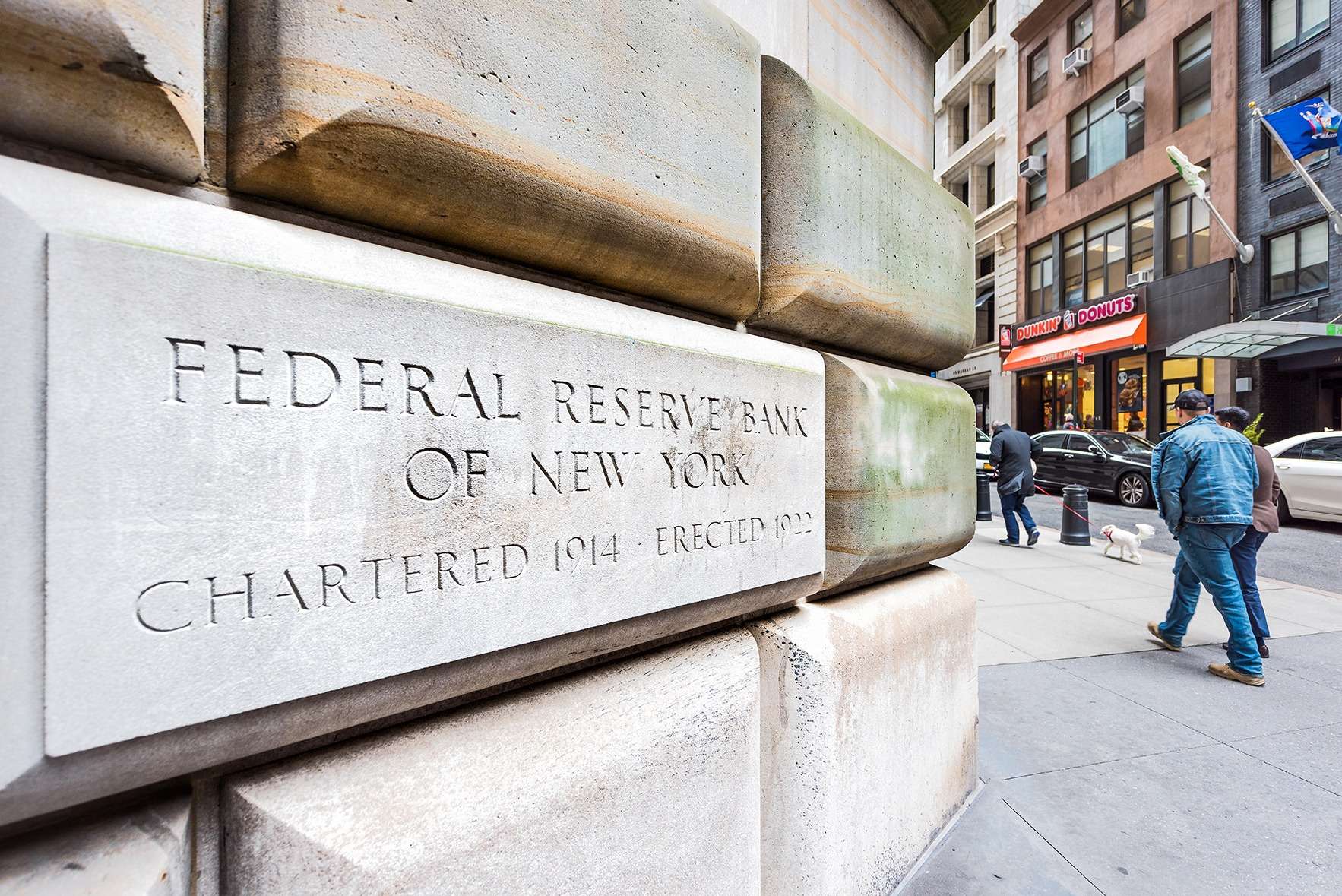
The Federal Reserve Bank of New York plays a crucial role in the financial system of the United States. As one of the 12 regional Reserve Banks, it is responsible for executing monetary policy and maintaining financial

The New York Federal Reserve Launches A 3-Month CBDC Pilot Program

“CBDC pilots are about infrastructure readiness, not public rollout.” — DNA Crypto.

Central Banks in the United States, including Citi, BNY Mellon, and Wells Fargo, have partnered with the NY Fed to conduct a 12-week pilot program on CBDC. In the pilot study, these banks will issue tokens and settle transactions through simulated Central Bank reserves.

On November 15, NY’s Federal Reserve Bank announced that it would launch a three-month pilot study in collaboration with other central banks in the country. According to the New York Institute of Credit, the pilot study aimed to assess the feasibility of an interoperable network linking the Central Bank’s total sale of digital money and commercial banks’ digital money, operating on a shared multi-entity distributed ledger within a regulated liability network.

NYIC director Von Zelowitz said the organisation was happy to work with central banks across the country to conduct this pilot program. He added that researching asset Tokenisation and future financial markets was vital, given that money and banking systems are constantly evolving.

The pilot study is a proof-of-concept program designed to test the technical viability, legal capability, and business applicability of distributed ledger technology. The project is also intended to simulate tokens and explore various regulatory structures. Von also mentioned the likelihood of extending the project to other currencies and regulated Stablecoins.

Just before NYIC announced the launch of the pilot program, the centre released research on its wholesale central bank digital currency. Project Cedar, which was the first CBDC trial, aimed at testing whether the adoption of blockchain technology would;

  • – Improve transaction speed.
  • – Boost transaction speed.
  • – Increase the ease of cross-border access to payments.

It is important to note that Federal regulators in the United States have yet to agree on launching a digital dollar. However, several agencies and private investors in the country have been exploring the possibility. Lawmakers in the United States have raised concerns about Congress’s role in enacting legislation to support the launch of CBDC. These concerns follow United States President Joe Biden’s executive order establishing a framework for regulating digital assets.

The pilot study announced by the NYIC director on Tuesday has a solid financial lineup. The move by NYIC to launch a three-month pilot study on Tokenisation and CBDC comes at a time when many central banks worldwide are considering launching digital versions of their currencies. An example of such a Bank is the Central Bank of India, which announced that it would conduct a wholesale CBDC pilot at the beginning of November. The Bank added that a retail version would closely follow the wholesale.

The first CBDC was introduced in Finland

It is important to note that CBDC is a concept that has been introduced previously. It has been around for almost 30 years. The first CBDC was introduced in Finland. The Finnish Central Bank launched the Avant smart card, a cash-like electronic payment card. Although it was launched in the 2000s, the Avant smart can be considered the first CBDC.

The Biden administration has shown a severe interest in adopting a digital dollar. Michelle Neal, the NY Fed’s market group head, announced at the beginning of November that a central bank digital currency could be invaluable, especially for boosting transaction speeds.

Image Source: Adobe Stock

Disclaimer: This article is provided for informational purposes only. It is not offered or intended to be used as legal, tax, investment, financial, or other advice.

Read more →

The cbdc logo on a blue background showcases its connection with blockchain technology.

CBDCs Designers in Europe Battling Confidentiality Problems

“Experts have warned Europe’s Central Bank Digital Currency CBDC) designers that the recent design models being adopted could make privacy difficult to achieve. – DNA Crypto.”

No formal policy decision has been made to issue the euro in digital form; however, significant speculation has fuelled the idea. The matter was to be discussed effectively by the Euro finance ministers, and advice was to be > obtained from the European Commission.

Last year, a European Central Bank consultation found that ensuring the digital euro protects citizens’ privacy is its top priority. An individual’s spending habits may reveal private information, including lifestyle, political affiliations, and tastes.

However, as things stand, privacy issues don’t seem to concern European CBDC designers. Emphasis has been placed on other concerns citizens might have, e.g., global acceptance and safety. In addition, Fabio Panetta, a European Central Bank board member, recently added a “Trade-off” to those objectives.

A policy intended to inform the finance minister’s meeting on the issue argued that a fully anonymous digital currency would raise serious concerns.

Queries on Privacy

The policy says that the European Central Bank would be granted access to all transactions to fulfil its duties. These duties include settling payments and overseeing financial transactions, among others. In addition, the policy states that payment data should be made available to all central entities for oversight.

Panetta dismissed the state’s claims that snooping was the motive for this policy. He added that the European Central Bank has no interest in using the data provided for commercial gain.

Panetta said that, unlike firms whose only motive is profit, the ECB would follow the policy to the letter. According to Panetta, privacy is more of a political issue than a technical problem. He made this statement in response to a suggestion to process small transactions and payments offline and keep them confidential. He added that this was a matter for governments and lawmakers, not central bankers.

However, experts have warned against Panetta’s characterisation, arguing that an over-centralised financial system makes it almost impossible to attain and maintain high levels of privacy. Marina Niforos, a professor at HEC Paris Business School, told CoinDesk that citizens had a right to worry about the extent of government control over data. She also dismissed Panetta’s claims that privacy concerns were tools of profit-driven firms. Niforos warned that the move was not as easy as it sounded. It requires an intensive ecosystem remaking that some nations were not prepared for.

A study by the ECB found that many people are unaware of what a digital euro is or how it would be used; this is one of Panetta’s primary obstacles. Faustine Fleuret, the CEO of ADAN, told CoinDesk that the digital euro posed more risk than opportunity. He added that the digital euro could hinder innovation by displacing euro Stablecoins, which require fluid rules to sustain decentralised finance.

Image Source: Adobe Stock

Disclaimer: This article is provided for informational purposes only. It is not offered or intended to be used as legal, tax, investment, financial, or other advice.

Read more →