Christine Lagarde's Shift on CBDCs

Christine Lagarde’s Shift on CBDCs: The European Central Bank’s New Strategy Unveiled

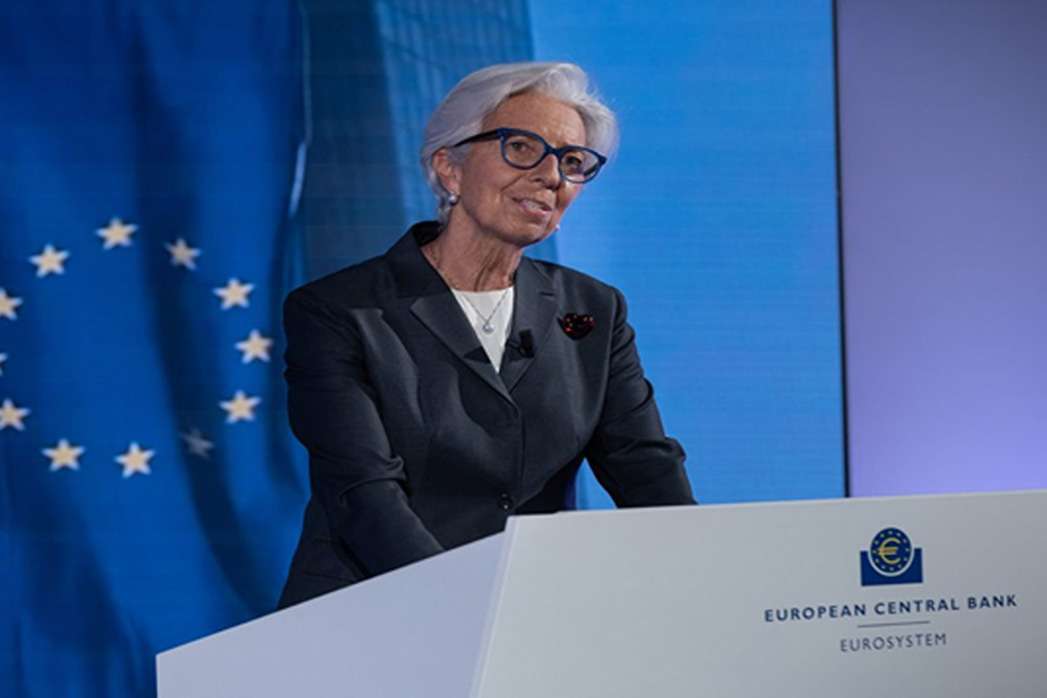
In a recent address at the 25th ECB and Its Watchers conference in Frankfurt, Christine Lagarde, President of the European Central Bank (ECB), outlined a significant shift in the institution’s approach to Central Bank Digital Currencies (CBDCs). Lagarde emphasised agility, clarity, and a renewed commitment to price stability amid an evolving geopolitical and economic landscape. Her speech signalled a turning point in the ECB’s strategy regarding digital currencies, reflecting the broader challenges posed by inflation volatility, trade disruptions, and technological advancements.

At the 25th ECB and Its Watchers conference in Frankfurt, Christine Lagarde highlighted the European Central Bank (ECB) ‘s transformation toward the Central Bank Digital Currency (CBDC). According to ECB Chief Christine Lagarde, price stability, agility, and clarity are now the essential priorities under the current changes in geopolitics and economics. The speech indicated a new direction for ECB digital currency strategies, which stemmed from the multiple challenges of price instability and trade complications.

A New Direction for CBDCs

Central Bank Digital Currencies (CBDCs) have long been a topic of interest at the ECB. Lagarde’s address marked a shift in ECB policy by supporting digital currencies, which help maintain financial stability and robust monetary policy. She stated that the ECB’s digital euro project now needs implementation because digital payment platforms have brought financial transactions to rapid digitalisation.

The ECB understands that European digital financial sovereignty needs immediate attention because non-EU financial institutions expand their payment sector presence while digital payments become more prevalent. According to Lagarde, a digital euro can function as a secure substitute for private digital money while helping to implement monetary policy better, thus safety during these unpredictable times.

Geopolitical and Economic Pressures

According to Lagarde, monetary policy faces adjustments due to growing international trade barriers, rising political risks, and changing price levels. Traditional monetary policy tools have fallen short due to the economic insecurity resulting from global trade policy changes and evolving economic alliance dynamics.

“In a more uncertain environment, larger and possibly more persistent shocks, the way we have formulated our inflation target matters – that is, we aim for 2% inflation, our target is symmetric, and we work to achieve it over the medium term.” She added.

The ECB emphasises CBDCs’ fundamental role in overcoming present and future market obstacles. The adequately organised digital euro system solves payment breakdown issues while offering secure financial support compared to private digital currencies and altcoins.

Balancing Innovation and Stability

Further, Lagarde also recognised the importance of maintaining equilibrium. The ECB’s approach to CBDC develops the need to establish mechanisms that prevent existing banking operations from destruction. Bank run and capital flight pose a significant challenge to traditional systems. Lagarde outlined that the ECB plans to put transaction caps along with varied payment methods to stop customers from relocating significant funds from banking institutions to digital euro systems.

She also highlighted the need for privacy and security during the development of CBDCs. The digital euro system must preserve user privacy while still fulfilling all requirements of anti-money laundering standards. The anonymity vs transparency factor must find optimal equilibrium for digital euro adoption and achieving public trust.

Clarity in Policy Communication

Lagarde aspires to decrease market uncertainties and strengthen financial stability. The central bank will stay connected with commercial banks’ regulatory bodies and the general public to establish an approach for digital euro implementation that enhances instead of replaces existing monetary systems.

Through her speech, Christine Lagarde highlights the fundamental transformation of how the ECB will handle Central Bank Digital Currencies. The digital euro is a central component in the ECB’s strategy to manage market volatility while the economy remains unstable. The ECB has strategically moved to update its monetary instruments due to geopolitical instability, rising inflation, and changes in the digital financial systems worldwide.

In summary, innovation must coexist with financial stability for future development. The digital euro’s success depends on the ECB’s capability to inspire confidence in the public and seamlessly integrate systems while establishing monetary stability as the key foundation for future financial operations in the EU.

Image Source: Adobe Stock

Disclaimer: This article is purely for informational purposes. It is not offered or intended to be used for legal, tax, investment or financial advice.


 

Read more →

https://dnabitcoinbroker.com/

The Digital Euro: The Most Private Electronic Payment Option?

The European Central Bank is in stages launching the digital euro. Yet, this move has sparked debates and queries on the integrity and privacy of CBDC. In addition, Maarten Daman, data protection officer at the ECB, believes the digital euro’s development will be as an option that represents the “highest privacy level of electronic payments”.

The Digital Euro Journey

The digital euro has been in the works for some time now:

    • – October 2020: The ECB released a foundational report on the digital euro.

    • – October 2021: The investigation phase began.

    • – November 2023: Entered the preparation phase.

    • – Q4 2024: Possible legislative adoption expected.

    • – November 2025: Potential implementation of use cases.

But still, the road to full implementation is long. Subsequently, the ECB Governing Council will deliberate on decisions on further preparations after reaching certain milestones.

Addressing Privacy Concerns

The digital euro has experienced intermittent pushback on this new ECB innovation, with the main concerns revolving around privacy.

Daman of ECB emphasises that “We have nothing to hide”. This direction is fundamental because, according to the information obtained in the recent survey by the Deutsche Bundesbank, 59% of the respondents had no idea of the existence of the digital euro, while the rest ascribed different degrees of the need for privacy.

The ECB’s Privacy Strategy

To address these concerns, the ECB is exploring several approaches:

    1. Minimal data collection: The ECB aims to process only the minimum personal data required to fulfil its objectives.
    2. Pseudonymisation: This technique replaces identity attributes with fictitious ones, thus enhancing privacy while maintaining data usefulness.
    3. Segregated data streams: Payment Service Providers will handle citizens’ data separately from the Eurosystem, making it impossible to identify end-users directly.

Safeguards and Oversight

The ECB has emphasised on several mechanisms to prevent potential government overreach on CBDCs:

    • – Legal prohibitions on processing personal data to identify users directly.

    • – Oversight by the European Data Protection Supervisor.

    • – A possible intervention by the European Court of Justice if laws are breached.

Nevertheless, some critics still do not share the same sentiments. An independent German MP, Joana Cotar, has been critical of the ECB’s reliance, asserting that laws are amendable and could be altered or eliminated.

Josh Swihart, the CEO of Electric Coin Company, also notes that privacy is not an on-or-off thing and raises questions about the ability of governments to regulate the issuance of money.

The Future of Digital Euro

To this end, what started as a concept is now getting closer to becoming a reality. The ECB is now in a dilemma of how to heed the calls for privacy while at the same time implementing the regulations and innovations. The success of this CBDC will mainly lie in gaining credible and sustainable public confidence vis-à-vis effective and proper privacy measures.

The coming months and years will tell whether the digital euro truly will be the most private electronic payment method as it is to become or whether the critics will have their way.

Lastly, do you think the digital euro is capable of achieving the goal of becoming the most private electronic payment method?

Let’s have your thoughts below!

Image Source: Adobe Stock

Disclaimer: This article is provided for informational purposes only. It is not offered or intended to be used for legal, tax, investment or financial advice.

Read more →

Euro currency icon and EUR money symbol digital concept 3d illustration

The Digital Euro’s Impact on Banking

With traditional fiat currencies increasingly challenged by new and popular virtual currencies, the ECB evaluates the feasibility of a digital supra-national currency, CBDC, that can act in parallel with physical money. Sequentially, this write-up explores the advent, adoption, and future of the digital Euro…

Read more →

Dates falling dollar on white background.

The Digital Dollar Faces Opposition in the US

In a recent development, a group of US senators has positioned themselves to squarely reject the Biden administration’s ambition to introduce a central bank digital currency (CBDC). In this case, a digital version of the US dollar. This move holds particular interest for UK citizens…

Read more →

Bitcoin CBDC with dollar background and binance chart.

Bitcoin as a Catalyst for Central Bank Digital Currency (CBDC) Payments

“CBDCs and Bitcoin are often compared, but they are designed to solve entirely different problems within the global monetary system.” — DNA Crypto.

Is CBDC Bitcoin the next big thing? Blockchain technology has truly shaken up the financial landscape, paving the way for direct transactions between peers, thereby eliminating the need for intermediaries. Now, the arrival of central bank digital currency (CBDC) gives blockchain an exciting twist, promising a transformative impact on how businesses and individuals handle payments.

Contrary to fears, Bitcoin won’t overthrow the US dollar or the GBP, for that matter. Instead, it might transform into a GBP equivalent, complete with the controls and restrictions that any CBDC issuer could envision. I can almost hear the protests, but I chuckle at the irony of profound ignorance alongside Bitcoin’s price surge.

Rethinking Bitcoin’s Potential

Well, here’s the deal – your take on Bitcoin might need a tweak. It’s not a one-size-fits-all kind of deal; it’s pretty much whatever we decide to make of it. It’s a tech marvel, much like the internet, which, let’s be pragmatic, we’ve turned into a super-efficient surveillance wizard. Crazy, right?

Now, here’s where it gets interesting. There’s this bunch of folks, let’s call them single-issue voters, diving headfirst into the Bitcoin world. They’re so laser-focused on their ideology that they might miss the bigger picture.

Let’s break it down!

Bitcoin is like a digital creature thriving online. If there are new laws about how we communicate, they’ll also affect how we use Bitcoin. Some rules are straightforward, but others are way complex, often focusing on four major issues: terrorism, child pornography, drugs, and human trafficking.

Now, here’s the scoop – there’s this idea of “ban encryption to save the kids,” or “we need backdoors to stop al-Qaida.” When someone’s shouting about Bitcoin, especially in the style of recent UK political candidates, it’s wise to check where they stand on the tech-related issues. Trust me, it’s not as appealing as Stalin’s grandma in a nightdress, and you definitely wouldn’t want her snooping around your transaction history.

When governments start brewing up their own digital currencies, they often crave extensive surveillance and occasional censorship, just like eager folks in a trailer park looking for a fix. While we might easily brush off the key ingredients of these CBDCs, we tend to forget that there’s no clear blueprint on how they’ll function.

Imagine Bitcoin playing a role, not as a government-issued currency, but perhaps backing the Sterling Pound at HM Treasury, or even becoming legal tender through Lightning-issued Stablecoins to meet M1 supply. I can almost hear the protests, “No way! The UK government can’t issue Bitcoin!” And you’re right – it can’t. But that doesn’t mean it can’t find a new purpose.

Think of CBDCs like programmable money, just like Bitcoin. However, there’s a crucial difference: CBDCs focus on features such as controlled purchases, location-based restrictions, expiring transactions, and holding limits. Interestingly, all these features can be applied to Bitcoin-anchored Stablecoins. Yet most of these features become possible at the base layer when mining is sufficiently centralised.

Privacy Paradox

By default, Bitcoin lacks privacy. Every transaction is recorded, tracked, and scrutinised, making it the most potent tool for financial surveillance in history. Still, access to our financial transactions is far more efficient than any surveillance camera outside our door. 

Simply put, as Burrows v. Superior Court 1974 says, “Indeed, the totality of bank records provides a virtual current biography.” 

Access to financial records can reveal everything from habits and opinions to political views and medical histories. While a surveillance camera captures a snapshot of our lives at a specific moment, financial surveillance exposes our entire lives without constitutional protections and without being constrained by time or space.

In the right conditions, Bitcoin can actually serve as a solid alternative to CBDCs. Imagine opening your wallet app, and voila! There’s the Stablecoin creature riding on the back of Bitcoin. Fantastic, right? Well, it’s freedom money, but with a twist – it’s entirely censorable. We might have pumped our market cap, but it’s like dressing up an authoritarian dream in the guise of transaction freedom.

Can Bitcoin Survive CBDC? 

Well, it’s uncertain, but feasible. To prevent Bitcoin from becoming a CBDC alternative, a somewhat unpopular opinion is to vote for presidential candidates who aren’t exactly Bitcoin enthusiasts. An example is Elizabeth Warren, who would undoubtedly put the brakes on Bitcoin in the U.S. As a result, there’s a better chance that the network will spread globally and become more resistant to censorship. So, what’s your call? Digital gold or permissionless money? For what could be a historic moment, the choice is yours. 

Image Source: Adobe Stock

Disclaimer: This article is provided for informational purposes only. It is not offered or intended to be used as legal, tax, investment, financial, or other advice.

Read more →

Defi Open Finance illustration with options. Titles, Stablecoins, Payments, Derivatives, Investments

Understanding DeFi and its Benefits to the Banking Sector

“Banks do not adopt DeFi to decentralise finance, but to improve efficiency within controlled frameworks.” — DNA Crypto.

From 2020, banks and other financial institutions have increasingly engaged with Web3 services in the UK. This move also applies to DeFi, as several potential cases that could trigger a new wave of innovation have emerged. 

What is Institutional DeFi?

Institutional DeFi refers to the use of DeFi protocols by major institutions to tokenise tangible assets with institutional-level controls for consumer protection and regulatory compliance, rather than to expand institutional investments in DApps and DeFi protocols. 

One question often asked is: What extra advantages does DeFi provide to online banking?


    • – Automated business logic.

    • – Transparent ledgers.

    • – Tokens guarantee liquidity.

    • Use of interoperable and operable DeFi protocols.

Banking used to involve physical labour, paper-based transactions, and a network of institutions for communication, not too long ago. Thanks to digitisation, efficiency has increased, reducing workloads for bank branches and enabling automation. 

However, even after banks were digitised, data remained dispersed, making reconciliation difficult. Although transactions occurred online, bookkeeping had to be performed independently. DeFi alters this by uniting bookkeeping and transaction execution on the same network. Thus, an edge over conventional digitising.

Regulatory Compliance for Institutional DeFi

Banks undergo extensive scrutiny before providing their services to their customers. Stress situations are used to test its vulnerability, but, more importantly, a keen eye is kept on behavioural problems.

For example, if interest rates on lending products are incredibly high, they may be misrepresented to customers and therefore subject to scrutiny.

Today, some DeFi instruments wouldn’t withstand the typical level of due diligence that banks perform. Unprecedented in traditional financial services, several DeFi platforms compensate their liquidity suppliers with three- to four-digit annual percentage rates.

Legal Framework for Smart Contracts

The significance of Smart contracts in DeFi cannot be overstated. Despite their importance, smart contracts remain a relatively novel technology. As a result, regulatory and legal bodies worldwide have begun to guide on this issue. 

An example is Nevada in the United States, where the legal enforceability of smart contracts has been established. Yet, as with yesterday, a broader agreement among nations is needed to establish a comprehensive legal framework that provides a sound legal foundation for financial services using programmable money.

Data Privacy

DeFi applications have relied on the transparency of on-chain transactions to understand market dynamics. For instance, these apps track whale activity to assess market behaviour. The openness of on-chain transactions has given rise to models such as automated market making (AMM) in DeFi, enabling protocols to use real-time supply-and-demand data to calculate asset prices. 

However, veteran capital market players value transaction privacy. Brokers often act as intermediaries for institutions executing large market orders, which ensures anonymity. To achieve the success of institutional DeFi, a balance between DeFi and the privacy of traditional capital markets is essential. 

Banks have previously experimented with DeFi using permissioned blockchains, which allowed only specific participants to join. However, institutional investors have recently become more receptive to the idea, as evidenced by JPMorgan’s collaboration with Polygon. The challenge lies in achieving transaction privacy while providing on-chain information for AMM algorithms. 

AML and KYC Controls

Strong KYC and AML procedures are essential to banks and financial services companies. Banks employ between 10% and 15% of their workforce to ensure compliance and that risk standards can meet regulatory requirements.

On the other hand, in the first quarter of 2022, approximately $10 billion (£7.9 billion) in cryptocurrency was held in illicit addresses, according to recent Chainalysis research. According to the estimate, fraudsters laundered approximately $8.6 billion (GBP 7.1 billion) in cryptocurrency in 2021.

Once more, a compromise must be found that allows institutional DeFi participants to authenticate themselves through robust KYC procedures. Additionally, users must comply with any AML restrictions and on-chain analytics requirements imposed by the institutions to use the DeFi services they offer.

Disclaimer: This article is provided for informational purposes only. It is not offered or intended to be used as legal, tax, investment, financial, or other advice.

Read more →