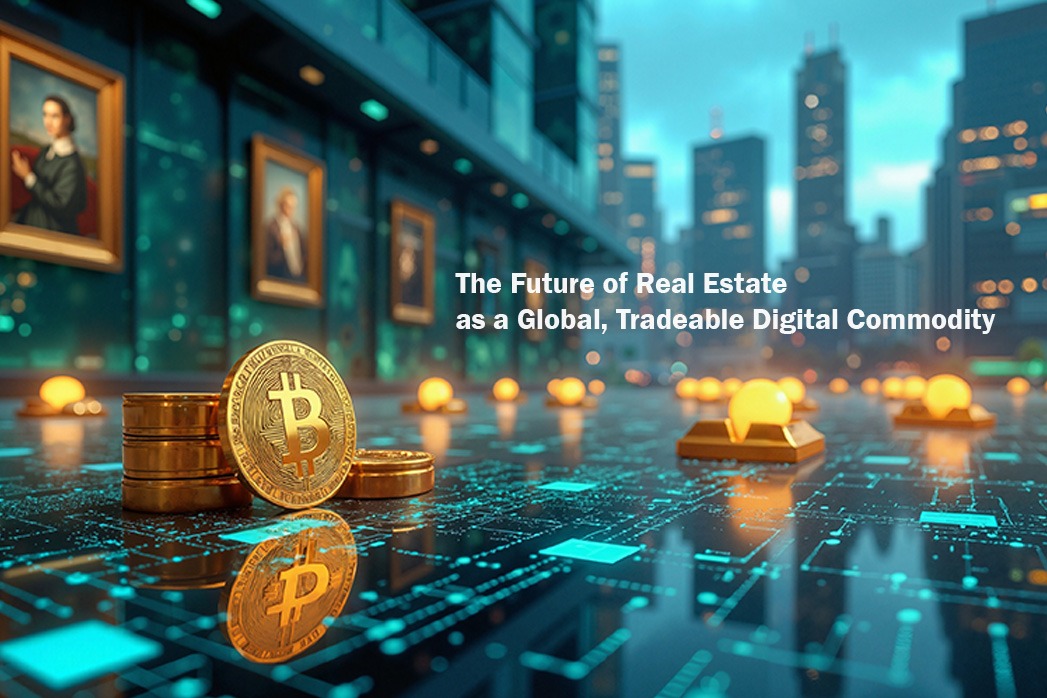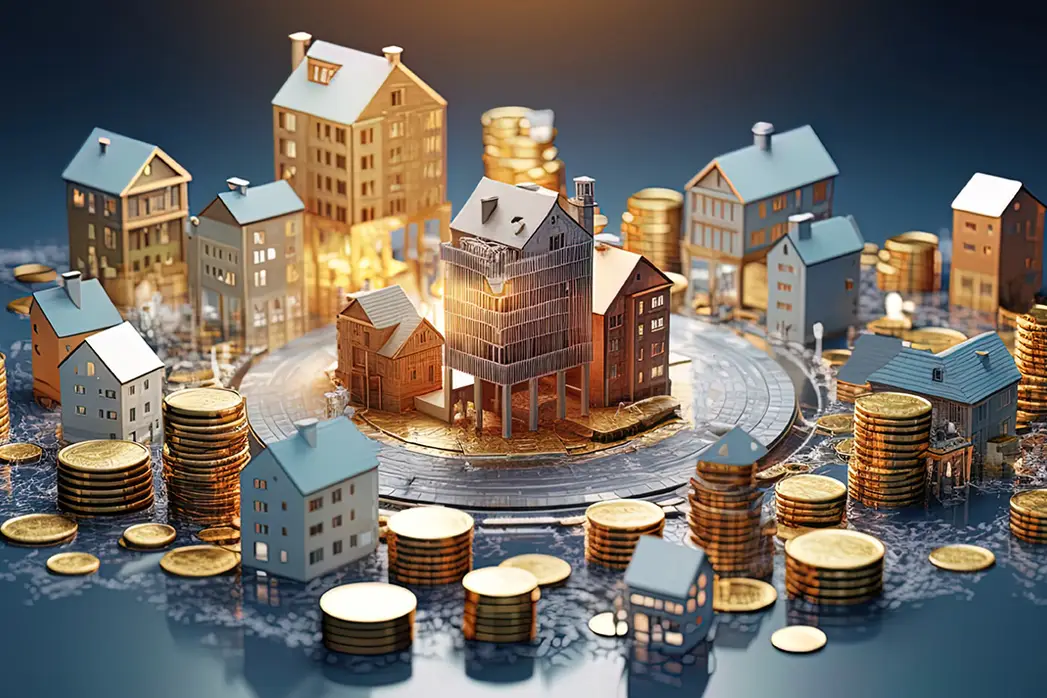

A golden house surrounded by Bitcoins highlighting the intersection of real estate and cryptocurrency investments.

BlackRocks $10 Trillion Tokenization Vision

The global investment environment stands on the brink of phenomenal change. This shift is driven by digital-age innovation and the boldness of financial institutions. Leading this revolution is BlackRock, the world’s largest asset manager, which aims to tokenise $10 trillion in physical instruments (RWA) under its $10 Trillion Tokenisation Vision.

How does it have the distinct potential to change the strategic landscape of investing? And how does it align with BlackRock’s $10 Trillion Tokenization Vision?

Tokenisation

Real-world asset tokenisation is a relatively new practice that involves turning assets such as bonds, equities, real estate, and even art into tokens on a Blockchain. This digital transformation is not only a complex engineering achievement. It also opens the door to absolute freedom of funds, clear asset provenance, and greater openness. BlackRock’s $10 Trillion Tokenization Vision fully encompasses this change.

Who are the Primary benefactors?

Mainstream investors will be able to tap into investment avenues previously considered inaccessible.

In March 2024, BlackRock announced the launch of its first tokenised fund: a specific version of the BlackRock USD Institutional Digital Liquidity Fund already available on the Ethereum Blockchain. Robert Mitchnick, BlackRock’s Head of Digital Assets, described this as a historic moment. He called it “the latest evolution of our digital asset strategy.” We are actively building solutions in the digital asset market to solve real-world problems for our clients. We’re thrilled to partner with Securitise to realise BlackRock’s $10 Trillion Tokenization Vision.

Security Tokens and Utility Tokens

Business Tokenisation gets interesting with real estate Tokenisation. By unlocking security and utility token configurations, we may witness an influx of liquidity. This could open up new pathways of ownership. It creates a world where fractional participation is not only viable but flourishing. This can help increase property investment by making ownership, trading, and use of such properties more liquid, adaptable, and less costly.

Security Tokens

Security tokens are digital instruments that serve as an electronic proxy for the underlying asset or its shares and are subject to strict regulatory oversight. Translating this into the real estate context means that property share transactions resemble stock trading, with property share horizons that enable additional income generation and asset appreciation.

Utility Tokens

These are the pellets that create the foundation of a new form of asset engagement. While regulations categorise them separately from security tokens, utility tokens confer full ownership rights. They are like simultaneously getting a slice of the pie and the whole dessert. Moreover, NFTs, including RWA NFTs, can be securitised as tangible assets, and a single person can own each piece.

The Ripple Effect

The debate reflects a growing interest and expectancy for a definitive wave of asset digitisation. Just as we stand on the edge of a substantial change, the potential is virtually endless – taking down barriers hampering investment, unspooling new advancements and bringing a semblance of democracy to the investment world, all integral to BlackRock’s $10 Trillion Tokenization Vision.

Having BlackRock and Securitise in the cockpits, their track is firmly under the global lens. If their idea is to fly, the investment landscape could shift into a new generation in which waves of digital integration intermingle with the tides of conventional corporate earnings, creating a matrix of positive function, efficiency, and clarity. The effort to ‘tokenise’ $10 trillion isn’t just about money – its goal proves the strength of innovation to transform the financial world through BlackRock’s $10 Trillion Tokenization Vision.

As we shift our focus to this new world, change is on the horizon. Will it lead us to a new horizon where democratisation and digitalisation shape our investment paths? Only time can tell.

Image Source: Adobe Stock

Disclaimer: This article is provided for informational purposes only. It is not offered or intended to be used for legal, tax, investment, financial or other advice.

Register today at DNACrypto.co.

Read more →

Transforming Finance with dApps and DeFi.

Transforming Finance with dApps and DeFi

Decentralized finance (DeFi) and decentralized applications (dApps) are, without a doubt, the financial landscape. Just how exactly are they doing this? Basically, what these revolutionary technologies are trying to do is provide value and improve utility for consumers across the globe.  Essentially, dApps are web services built…

Read more →

A Blockchain wormhole represents a cutting-edge concept in the blockchain space.

Wormhole: The Interoperable Cross-Chain Bridge

Blockchain technology has brought about exciting advancements in the world of finance and asset ownership. However, the inability to transfer assets across different blockchain networks has been a major limitation. That’s where wormhole comes in – a solution that enables seamless transfer of tokens and…

Read more →

Tokenization is crucial in enabling computers to process and analyse textual data efficiently.

What is Tokenization?

Simply put, tokenization is like giving sensitive data a secret identity by swapping it with special codes. These codes still carry all the essential details but without putting the data at risk. 

Small and midsize businesses are embracing Tokenization to increase security in credit card and online transactions. It’s a smart move that safeguards sensitive information and reduces the hassle and expenses associated with following industry rules and government regulations.

What Does Tokenization Entail?

Tokenization technology is broad, extending from protective mechanisms to various types of sensitive data and from bank transactions and medical records to criminal histories, driver information, loan applications, stock trading, and voter registration, asserting its versatile nature. 

Typically, any system that can use a non-sensitive proxy to stand in for sensitive details stands to benefit from Tokenization

Vis-à-vis payment processing, Tokenisation safeguards credit card data and other sensitive information. It’s the silent protector for various scenarios, including mobile wallets like:

  • – Google Pay and Apple Pay.
  • – E-commerce platforms. 
  • – Businesses securely hold onto customers’ card details. 

With Tokenization, these applications protect sensitive data from threats and unforeseen breaches.

How Tokenization Works

Tokenization is like a digital disguise for sensitive information, where the actual details are swapped with substitute data known as a token that comes to life in different modes:

  1. Reversible Encryption: Think of it like a secret code that can be cracked with the right key.
  2. Non-reversible Functions: This is more like a one-way street, using functions like hash functions that don’t go backwards.
  3. Index Functions or Random Numbers: Tokens can also be born from these methods.

Now, the token becomes the public face of the information, while the sensitive details it represents are kept in a central server called a token vault, where the original info can be reconnected with its token companion.

History of Tokenization

Tokenization isn’t a new concept – it’s been around since the early days of fiat currencies. Please think of the coin tokens people used back when they replaced actual coins and bills. You’ve probably seen it with subway tokens or in the glittery world of casinos, where they stand for real cash. It’s the same idea, whether we’re talking about physical tokens or their digital counterparts – they’re standing in for something more precious.

Now, Tokenization’s digital side made its debut in the 1970s. Back then, it was a neat trick to keep sensitive data separate from the rest in the databases of the time.

Fast-forward to more recent times, and Tokenization has become integrated into the card payment industry. It stepped in as the superhero to shield highly sensitive cardholder data and adhere to the industry’s rules. A group called TrustCommerce is the brains behind the concept, introducing tokenization in 2001 to keep payment card information safe and secure.

Types of Tokens

According to the SEC, there exist three main types of tokens:

  1. Asset/Security Tokens: These are like financial whiz-kids, offering a promise of profit. Think of them as the economic counterparts of bonds and stocks.
  2. Utility Token: Now, these tokens are multitaskers. They’re not just about paying the bills; they can unlock access to a product or platform or snag you a discount on future goodies and services. They add extra value to how things work.
  3. Currency/Payment Token: These tokens are born to be spenders. They exist to be the money in transactions for stuff outside the platform they call home.

And when it comes to payments, there’s a tremendous difference between high-value tokens and their low-value counterparts. This came when the FCA in the UK recently approved using tokenized shares for investment purposes.

The Perks of Tokenization

Why is Tokenization the cool kid on the block? Well, here’s the lowdown:

  • Friendlier with Legacy Systems: Unlike encryption, Tokenization plays nice with the older systems-no need for a tech overhaul.
  • Light on Resources: Tokenization doesn’t hog resources like encryption does. It’s like going for a jog instead of lifting weights.
  • Less Fallout in a Breach: If the worst happens and there’s a data breach, Tokenization minimises the mess: less damage control and more peace of mind.
  • Boosts Convenience in Payments: Tokenisation is the driving force behind innovations like mobile wallets, one-click payments, and more, even dipping its toes into the world of cryptocurrency. Customers and investors love it because it’s both secure and convenient.
  • PCI DSS Compliance Made Easier: Dealing with PCI DSS regulations becomes simpler for merchants. Tokenization streamlines the process, making everyone’s life easier.

Tokenization and PCI DSS

The Payment Card Industry (PCI) rules are clear: no credit card numbers should be stored on those point-of-sale terminals or in the merchant’s databases once the customer completes their transaction.

So, if a merchant wants to play by the rules and be PCI-compliant, they have a couple of options. One, they can invest in sophisticated end-to-end encryption systems. Two, they can take the easier route and hand over their payment processing to a service provider that incorporates tokenization into the mix. That way, the service provider ensures the cardholder data remains secure. 

Tokenization and Blockchain

In the blockchain world, tokenization refers to converting real-world assets into digital tokens, also known as security or asset tokens. These tokens represent physical assets, such as property or currency, in a digital form.

Unlike the traditional approach, where big banks kept track of transactions, blockchain empowers individuals. People using cryptography, rather than a significant central authority, confirm the integrity of each transaction.

How does it work? All these cryptocurrency tokens are connected to a blockchain, a digital ledger of transactions. This chain creates an unchangeable record of transactions, with each new set (or block) depending on the previous ones for verification.

The cool part is that authorised individuals can trace a tokenised asset in the blockchain back to the real-world asset it represents. And all this happens securely because every block in the chain has to make sense. It’s like a digital paper trail that keeps everything in check.

Image stock: Adobe Stock

Disclaimer: This article is provided for informational purposes only. It is not intended to be used as legal, tax, investment, financial, or other professional advice.

Read more →