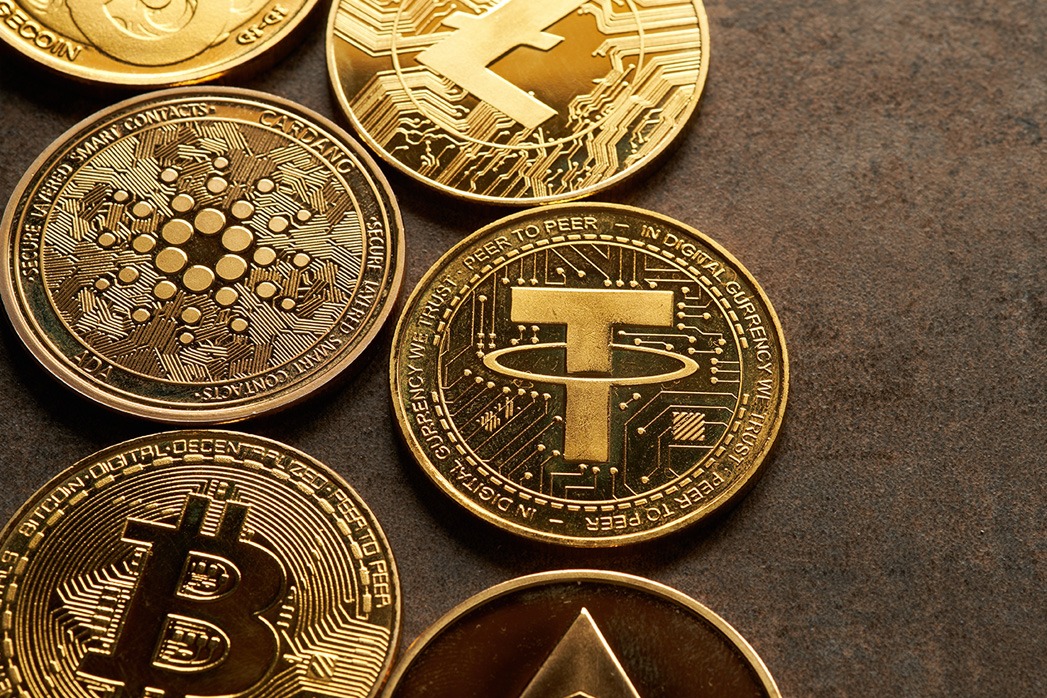

Euro and USD Sign.

Stablecoin Wars: EURC vs USDC – Who Will Power Europe’s Digital Economy?

“In the battle for trust, transparency wins.” – DNA Crypto Knowledge Base.

In 2025, Europe’s digital payments revolution is no longer theoretical — it’s happening in real time.
At the centre of it all are two Stablecoins vying for dominance: EURC (Euro Coin) and USDC (USD Coin).

While the United States leads in crypto ETF adoption, Europe leads in regulation — and under MiCA, Stablecoins have become the compliant backbone of cross-border crypto payments.
The question now isn’t whether Stablecoins will dominate digital finance — it’s which one will power the next phase of Europe’s economy.

Learn more: Global Impact of MiCA

Why Stablecoins Matter More Than Ever

Stablecoins represent the convergence of crypto technology and traditional finance.
They provide digital payment systems that combine the speed of blockchain with the stability of fiat, creating a new layer of liquidity for global trade, Tokenisation, and treasury management.

In 2025, global stablecoin settlement volume exceeds $12 trillion annually, rivalling traditional remittance systems.
Europe’s share is expanding rapidly, thanks to clarity around MiCA, instant payment rails, and growing corporate adoption.

Explore: DeFi and MiCA Regulation

USDC: The Global Standard

Issued by Circle, USDC remains the most recognised and widely integrated stablecoin across both institutional and retail markets.

Key strengths include:

  • – Transparency: Monthly attestations and complete reserve audits.

  • – Banking Access: Reserves held in U.S. Treasuries and regulated banks.

  • – Interoperability: Supported by multiple blockchains, including Ethereum, Solana, and Polygon.

  • – Institutional Partnerships: Integration with Visa, Stripe, and BlackRock tokenised liquidity pilots.

However, MiCA’s Eurozone-specific licensing requirements mean that USDC’s euro-denominated counterpart (EURC) is increasingly positioned to capture regional market share — particularly in regulated payment flows.

Read: Institutional Tokenisation

EURC: Europe’s Answer to USDC

Launched in partnership with Circle and compliant under the EU’s Markets in Crypto-Assets (MiCA) framework, EURC (Euro Coin) is the first fully regulated Euro-pegged stablecoin to gain significant institutional traction.

Its advantages are uniquely European:

  • – MiCA-Ready Compliance: Fully aligned with EU licensing and reporting rules.

  • – Euro Settlement: Direct compatibility with SEPA and cross-border euro payments.

  • – Bank Partnerships: Integrated with European fintech platforms for on-chain B2B payments.

  • – Lower FX Exposure: Eliminates USD volatility for European corporates and investors.

As banks, Fintechs, and payment providers across Europe test tokenised euro liquidity, EURC is quietly building an ecosystem of regulatory-first digital finance.

Explore: MiCA and Investor Protections

The Institutional Perspective: Europe’s Unique Advantage

For institutional investors, Europe’s approach to Stablecoins provides something the U.S. market still lacks — regulatory certainty.
MiCA’s licensing and transparency requirements have created a framework that enables banks, funds, and corporates to legally hold, issue, and transact with Stablecoins under supervision.

Key benefits for institutional users include:

  • – Regulated liquidity operations

  • – Cross-border payment efficiency

  • – Instant euro-denominated settlements

  • – Programmable cash for tokenised securities

Europe’s fintech infrastructure — supported by DNA Crypto and other licensed brokers — is therefore becoming a magnet for compliant digital payments.

See: Crypto Custody Solutions

DNA Crypto: Enabling Institutional Stablecoin Access

As a VASP-licensed brokerage in Poland, DNA Crypto provides secure, compliant access to EURC and USDC for institutions and corporates.

Our platform supports:

  • – Regulated cross-border stablecoin settlements

  • – On-chain treasury management solutions

  • – Tokenised liquidity provisioning

  • – Education and compliance advisory for MiCA-aligned adoption

At DNA Crypto, we help clients choose the right stablecoin for their jurisdiction, balance sheet, and risk appetite — bridging regulation with innovation.

Learn more: Global Impact of MiCA

The Bottom Line

The stablecoin wars aren’t about competition — they’re about convergence.
USDC provides global reach. EURC provides regulatory depth.

Together, they are laying the foundations of a digitally native financial system — one where institutions can transact globally with instant settlement, low cost, and full compliance.

And at the centre of that future stands DNA Crypto, connecting Europe’s new stablecoin ecosystem to the global economy.

Image Source: Envato Stock
Disclaimer: This article is for informational purposes only and does not constitute legal, tax, or investment advice.

Read more →

Anonymous Creator: Bitcoin was introduced in 2009 by an entity using the pseudonym Satoshi Nakamoto.

Satoshi Nakamoto: The Disappearance That Defined a Decade

“Some legends disappear. Others decentralise.” – DNA Crypto Knowledge Base.

In 2025, more than sixteen years after Bitcoin’s creation, Satoshi Nakamoto remains the most famous mystery in finance.
Was Satoshi a visionary individual, a team of cryptographers, or an intelligence experiment in monetary independence?
The truth may never be known — and that may be precisely what makes Bitcoin work.

As Bitcoin now anchors ETFs, powers global payments, and drives regulatory reform under frameworks like MiCA, the world continues to debate:
Did Satoshi truly vanish, or is their influence still shaping the system they set free?

Learn more: What Is Bitcoin and Why It Matters

The Creation: Bitcoin’s Genesis Moment

In January 2009, the Bitcoin network went live, following the publication of Satoshi Nakamoto’s whitepaper: “Bitcoin: A Peer-to-Peer Electronic Cash System.”

The timing wasn’t accidental.
Just weeks earlier, the global economy was collapsing under the 2008 financial crisis. The first block (the Genesis Block) carried a hidden message:

“The Times 03/Jan/2009 Chancellor on brink of second bailout for banks.”

This wasn’t just a timestamp — it was a protest.
Satoshi’s invention offered a new kind of trust: not in governments or banks, but in mathematics and open-source transparency.

Explore: Institutional Bitcoin Adoption

The Disappearance: When the Creator Walked Away

Between 2009 and 2011, Satoshi collaborated with early developers, exchanged hundreds of emails, and wrote nearly 100 posts on public forums.
Then, without warning, the messages stopped.

In April 2011, Satoshi’s final known correspondence read:

“I’ve moved on to other things. It’s in good hands with Gavin and everyone.”

No farewell press conference. No digital goodbye.
Just silence — the ultimate act of decentralisation.

Since then, the 1 million Bitcoin reportedly mined by Satoshi have never been moved, spent, or proven compromised.

See: Crypto Custody Solutions

Theories in 2025: The Legend Evolves

Over the years, hundreds have claimed to be Satoshi Nakamoto — from engineers to entrepreneurs to AI researchers.
Yet none have successfully verified control of Satoshi’s original cryptographic keys, the only undeniable proof.

Recent developments include:

  • – AI Analysis Projects: Advanced linguistic models in 2024 linked Satoshi’s writing style to several early cypherpunk contributors but found no conclusive match.

  • – Legal and IP Claims: Ongoing international court cases over the “ownership” of Satoshi’s identity continue, but none have produced blockchain evidence.

  • – New Communications: In early 2025, blockchain forensics teams detected dormant activity in early Bitcoin addresses — later confirmed to be unrelated dust transactions.

The result?
Satoshi’s myth grows, but Bitcoin’s independence strengthens.

Explore: Global Impact of MiCA

Satoshi’s Continued Existence: A System That Outlived Its Creator

The genius of Satoshi’s design is that Bitcoin doesn’t need its founder.
Every node, miner, and developer acts as a piece of Satoshi’s legacy — distributed and resilient.

“If you can’t find the centre, you can’t control it.” – DNA Crypto Knowledge Base.

Bitcoin has survived government bans, exchange collapses, and competing technologies. It has been declared “dead” over 400 times — yet remains alive and expanding.

Satoshi’s disappearance wasn’t an ending. It was the decentralisation of identity itself.

Learn more: DeFi and MiCA Regulation

Why It Still Matters in 2025

Today, as Bitcoin evolves into a mainstream financial infrastructure, Satoshi’s mystery continues to serve a purpose:
it keeps Bitcoin leaderless, neutral, and trustless.

For institutions, that means predictable governance through protocol, not politics.
For individuals, it means true financial sovereignty — the ability to own, hold, and move value without permission.

DNA Crypto views Satoshi’s disappearance as the original proof of concept for decentralised resilience — a self-sustaining economy built on open code, not charisma.

Read: Institutional Tokenisation

DNA Crypto: Preserving Satoshi’s Vision, Regulated for Today

At DNA Crypto, we connect Satoshi’s ideals with modern regulatory frameworks.
Our infrastructure bridges Bitcoin’s decentralised foundation with MiCA-compliant transparency, enabling:

  • – Secure institutional custody and brokerage

  • – Cross-border liquidity services for Bitcoin and tokenised assets

  • – Regulatory readiness for future digital money systems

The world may never find Satoshi.
But their principles — transparency, scarcity, sovereignty — remain encoded in everything we build.

Explore: Crypto Custody Solutions

The Bottom Line

Satoshi Nakamoto’s absence gave Bitcoin its permanence.
Their silence turned a protocol into a philosophy, one that now underpins a multi-trillion-dollar digital economy.

As Bitcoin grows from code to culture, the question isn’t who Satoshi was — it’s how far their idea will go.

For DNA Crypto and the global blockchain community, the answer is clear:
Satoshi isn’t gone. They’ve just been decentralised.

Image: Envato Stock

Disclaimer: This article is for informational purposes only and does not constitute legal, tax, or investment advice.

Read more →

Golden bitcoins. Cryptocurrency.

Bitcoiner: The New American Investor

“In every generation, Americans redefine freedom. In this one, they’re buying Bitcoin.” – DNA Crypto Knowledge Base.

Across the United States, a new kind of investor is emerging — part contrarian, part visionary.
They distrust inflation, question centralisation, and prefer wallets to Wall Street.
They are the new Bitcoiners — and they’re quietly reshaping what it means to build and protect wealth in America.

In 2025, being a Bitcoiner isn’t a rebellion anymore. It’s financial self-determination.

Learn more: What Is Bitcoin and Why It Matters

From the Gold Rush to the Bitcoin Boom

America has always rewarded pioneers — from miners who chased gold in California to innovators who built Silicon Valley.
Bitcoin is simply the next chapter in that story.

Just as the 19th-century gold rush built new industries, the 21st-century Bitcoin movement is driving new frontiers of finance, technology, and policy.
Today, Bitcoiners aren’t speculators — they’re builders of a decentralised financial system that reflects the nation’s oldest ideals: liberty, transparency, and opportunity.

Explore: Institutional Bitcoin Adoption

Why Americans Are Turning to Bitcoin

The post-2020 decade has transformed how Americans view money.
Persistent inflation, political gridlock, and the digitisation of everything have accelerated demand for independent, borderless stores of value.

Bitcoin answers that demand through:

  • – Finite Supply: Only 21 million will ever exist.

  • – Transparency: Every transaction is verifiable, every coin traceable.

  • – Sovereignty: No government can print, freeze, or censor it.

For millions of Americans, that’s not speculation — that’s security.

See: Bitcoin Market Dynamics

The Broker’s Hunt for “Unicorn” Coins

While Bitcoin remains the benchmark, U.S. brokers and retail investors are also chasing the next “unicorn” altcoin — undervalued digital assets with breakout potential.

This hunt for high-reward projects has created two clear investor archetypes:

  • – The Builders: Those who accumulate Bitcoin for long-term stability.

  • – The Hunters: Those who speculate on early-stage assets before institutional capital arrives.

But the narrative is shifting. In 2025, even professional brokers are recognising that the real unicorn might not be another altcoin — it’s Bitcoin itself, now institutionalised through ETFs, regulatory frameworks, and treasury adoption.

“The further brokers chase speculation, the clearer Bitcoin’s strength becomes.” – DNA Bitcoin Broker

Learn more: Institutional Tokenisation

The USDT Exodus: From Stablecoin to Store of Value

One of the biggest trends in 2025 is the mass movement of U.S. investor funds from USDT (Tether) — the world’s largest stablecoin — into Bitcoin.

Why?
Because confidence is shifting from pegged stability to sovereign scarcity.

After several global regulatory inquiries and shifting sentiment in U.S. markets, American investors and OTC desks are opting for transparent, audit-verifiable assets like Bitcoin instead of relying on offshore stablecoin issuers.

This capital migration has three major effects:

  1. Bitcoin Demand Surge: Increased spot buying pressure is driving new price floors.

  2. Liquidity Realignment: Capital once tied to synthetic dollars is now fuelling Bitcoin’s organic liquidity.

  3. Global Signal: The U.S. capital rotation into Bitcoin is reshaping global reserve psychology — reinforcing digital scarcity over synthetic stability.

Explore: Crypto Custody Solutions

The Institutional Ripple Effect

What began as a grassroots movement is now reshaping Wall Street itself.
In 2025, Bitcoin ETFs, custodial funds, and regulated derivatives will have brought digital assets into mainstream portfolios.

Major firms — from BlackRock to Fidelity — are onboarding clients into Bitcoin exposure, while small businesses use Lightning Network payments to reduce fees and reach global customers.

For American investors, Bitcoin now represents both inflation protection and technological participation — a 21st-century hedge backed by 20th-century principles.

See: Global Impact of MiCA

DNA Bitcoin Broker: The Bridge Between Freedom and Finance

At DNA Bitcoin Broker, we understand that proper wealth protection requires both stability and sovereignty.
Our services connect traditional finance to the new digital order through:

  • – Regulated Bitcoin brokerage and custody under MiCA-aligned frameworks

  • – Cross-border liquidity and OTC solutions

  • – Portfolio diversification strategies combining Bitcoin and tokenised assets

DNA Bitcoin Broker stands for financial independence with institutional integrity — helping investors move from trust-based wealth to proof-based ownership.

Learn more: DeFi and MiCA Regulation

The Bottom Line

Bitcoiners are the next generation of American investors — independent, pragmatic, and globally connected.
They’re shifting from paper-backed promises to cryptographically secured ownership, reshaping both U.S. markets and global liquidity.

The flight from Stablecoins into Bitcoin signals a new kind of financial awakening — one that doesn’t reject the system but redefines it.

In the end, the American dream was never about money.
It was about freedom — and in 2025, that freedom is increasingly written in code.


Disclaimer: This article is for informational purposes only and does not constitute legal, tax, or investment advice.

Read more →

Ripple coin on a blurred background.

XRP ETFs: The Next Big Shift in Institutional Payments?

“If Bitcoin built the bridge, XRP might be the network that runs across it.” – DNA Crypto Knowledge Base.

In 2025, the world of digital assets is entering its next institutional phase.
After the success of Bitcoin and Ethereum ETFs, the spotlight has shifted to XRP — the blockchain designed not for speculation, but for speed, liquidity, and settlement efficiency.

As cross-border finance evolves, institutions are asking a new question:
Could XRP’s global payment infrastructure finally gain recognition in traditional markets through the launch of XRP exchange-traded funds (ETFs)?

Learn more: Institutional Tokenisation

Why XRP Matters to Institutions

Unlike Bitcoin or Ethereum, XRP wasn’t built as a store of value or smart contract platform. It was designed for instant cross-border payments — solving the decades-old inefficiency of international money transfers.

Through RippleNet, banks and financial institutions use XRP as an on-demand liquidity bridge, enabling:

  • – Instant global settlements without pre-funded accounts

  • – Low-cost remittances compared to SWIFT and correspondent banking

  • – Programmable transaction routing through blockchain messaging

In short, XRP does for payments what Bitcoin did for decentralisation — it redefines speed, trust, and interoperability.

Explore: Global Impact of MiCA

Why Institutions Are Interested

The institutional case for XRP rests on its utility-first design and banking partnerships.

1. Global Settlement Speed
Transactions settle in 3–5 seconds, far outpacing traditional systems and most blockchain competitors.

2. Cost Efficiency
Average transaction costs remain below $0.001—an attractive feature for institutions managing high-frequency settlements.

3. Regulatory Maturity
Following years of scrutiny, Ripple’s transparent engagement with regulators positions XRP as one of the most compliant large-cap assets.

4. Strategic Partnerships
RippleNet now connects over 300 financial institutions worldwide, from regional banks to remittance giants like Santander and Tranglo.

MiCA and the European Advantage

Europe continues to lead the global charge toward regulated crypto finance.
Under the Markets in Crypto-Assets (MiCA) framework, XRP operates in full compliance as a transferable digital asset used for payments and liquidity management.

MiCA provides:

  • – Legal certainty for issuers and brokers.

  • – Defined custody and reporting obligations.

  • – Clear rules for digital asset investment vehicles such as ETFs.

This environment gives Europe — and firms like DNA Bitcoin Broker — a head start in offering XRP-related investment products and regulated institutional trading services.

See: MiCA and Investor Protections

Cross-Border Liquidity and Tokenised Payments

As Tokenisation transforms capital markets, XRP’s On-Demand Liquidity (ODL) model is now being tested for tokenised fiat settlements and institutional liquidity hubs.

  • – Financial institutions can bridge national currencies via XRP without holding pre-funded accounts.

  • – Smart contract integrations are extending ODL into stablecoin and CBDC networks.

  • – Ripple’s partnerships with central banks in Asia and the Middle East signal global scalability.

In short, XRP is quietly becoming the interoperability layer for multi-asset digital settlements.

Learn more: Crypto Custody Solutions

DNA Bitcoin Broker: Connecting Institutions to the XRP Ecosystem

At DNA Bitcoin Broker, we help institutions access and understand the infrastructure behind XRP and digital payment networks.

Our services include:

  • – MiCA-aligned brokerage for XRP and major assets

  • – OTC trading with preferential pricing and low market impact

  • – Custody and settlement solutions for institutional clients

  • – Strategic advisory on tokenised payment integration and treasury diversification

We operate where compliance meets innovation — helping financial institutions adopt digital payment technologies with full regulatory confidence.

Read: DeFi and MiCA Regulation

The Bottom Line

XRP’s story is shifting from controversy to credibility.
With regulatory clarity, proven payment adoption, and growing institutional curiosity, the prospect of an XRP ETF is more than speculation — it’s strategy.

For investors, this marks the transition from digital assets as stores of value to blockchain networks as infrastructure investments.
And as the lines blur between banking and blockchain, XRP could be the currency that finally connects them.

Image Source: Envato Stock

Disclaimer: This article is for informational purposes only and does not constitute legal, tax, or investment advice.

Read more →

Bitcoin coins stacked on blocks of Gold bars as the background.

Gold and Bitcoin: The Dual Pillars of the New Wealth Standard

“Sound money never goes out of style — it just changes form.” – DNA Crypto.

Gold for security. Bitcoin for sovereignty. Together, they define modern wealth.

For centuries, gold has symbolised security, stability, and trust — the asset of kings, nations, and prudent investors.
But in the 21st century, a new contender has emerged: Bitcoin, the digital mirror of gold’s principles — finite, verifiable, and borderless.

In 2025, the conversation isn’t about gold vs. Bitcoin — it’s about how both assets now coexist as the foundation of the new global wealth standard.

Learn more: Institutional Bitcoin Adoption

The Return of Hard Assets

Decades of monetary expansion, rising debt, and currency dilution have revived investor appetite for tangible and scarce assets.
Gold remains the world’s ultimate reserve, held by central banks as a hedge against instability.

Yet as markets digitise and trust shifts toward transparent systems, Bitcoin has risen as digital hard money — offering the scarcity of gold with the mobility of code.

Together, they form a dual-asset hedge:

  • – Gold defends against inflation and policy missteps.
  • – Bitcoin defends against debasement and digital overreach.

Explore: Global Impact of MiCA

Gold: The Timeless Anchor

Gold’s strength lies in its universality.
Across thousands of years, empires have fallen, and currencies have collapsed — yet gold has preserved purchasing power and trust.

Even today, global reserves exceed 35,000 tonnes, with central banks adding to their holdings amid de-dollarisation trends.
In a world of fiat volatility, gold remains the ultimate collateral — a stabilising asset immune to political whim.

Read: Institutional Tokenisation

Bitcoin: The Digital Successor

Bitcoin builds upon gold’s legacy — but scales it for the digital age.
It is finite (21 million coins), verifiable, and transferable in real time across borders.
While gold sits in vaults, Bitcoin moves at the speed of data.

In 2025, institutions will hold over $60 billion in Bitcoin ETFs, while emerging economies will use it as an alternative reserve and payment network.
Bitcoin doesn’t replace gold — it extends its principles into the realm of programmable money.

See: What Is Bitcoin and Why It Matters

Why Investors Now Hold Both

Forward-thinking investors no longer see gold and Bitcoin as competitors — but as complementary stores of value.
Gold protects wealth within the traditional system.
Bitcoin protects wealth outside of it.

Their combined benefits form a modern macro-portfolio:

  • – Gold: Low volatility, institutional-grade collateral
  • – Bitcoin: High growth, liquidity, and decentralised resilience
  • – Together: Stability meets sovereignty

Explore: MiCA and Investor Protections

DNA Crypto: Bridging the Old and the New

At DNA Crypto, we recognise that modern wealth requires both heritage and innovation.
Our platform provides institutions and high-net-worth investors with:

  • – Bitcoin brokerage and custody under MiCA regulation
  • – Tokenised precious metals with real-time settlement
  • – Cross-market liquidity connecting physical and digital stores of value

DNA Crypto stands at the intersection of gold’s history and Bitcoin’s future, uniting them within a single, regulated digital wealth infrastructure.

Learn more: Crypto Custody Solutions

The Bottom Line

– Gold represents trust built over time.
– Bitcoin represents trust built on code.
– Together, they create the new wealth standard — sound, scarce, and sovereign.

In an era where money is becoming programmable, one truth endures:
Real wealth is measured not in speculation but in scarcity and integrity.

Image Source: Envato Stock

Disclaimer: This article is for informational purposes only and does not constitute legal, tax, or investment advice.
Register today at DNACrypto.co

Read more →

Bitcoin, Currency, digital, finance, economy. Golden bitcoin coin on us dollars close up.

What Is a Milli-Satoshi? The Smallest Unit in Bitcoin’s Digital Economy

“Precision isn’t a limitation — it’s the foundation of trustless finance.” – DNA Crypto Knowledge Base.

Bitcoin’s evolution has always been defined by precision — from its 21 million coin limit to its eight decimal places of divisibility.
But with the rise of the Lightning Network and the global expansion of microtransactions, Bitcoin has introduced something even smaller: the milli-satoshi (msat).

In 2025, milli-satoshis power streaming payments, decentralised apps (dApps), and real-time settlement across the Bitcoin economy. They represent the frontier where technology, finance, and mathematics intersect to redefine value transfer.

Learn more: Bitcoin Market Dynamics

Breaking Down Bitcoin’s Units

To understand milli-satoshis, we need to revisit Bitcoin’s unit structure:

  • – 1 Bitcoin (BTC) = 100,000,000 satoshis (sats)

  • – 1 satoshi (sat) = 0.00000001 BTC

  • – 1 milli-satoshi (msat) = 0.001 satoshi = 1/1000 of a satoshi

That means:
1 Bitcoin = 100 billion milli-satoshis (100,000,000,000 msats)

These sub-divisions enable Bitcoin to handle microscopic financial interactions, essential for next-generation use cases like AI-driven payments, IoT microtransactions, and real-time data streaming.

Explore: Institutional Bitcoin Adoption

Why the Milli-Satoshi Exists

The base Bitcoin blockchain can only handle divisions down to 1 satoshi.
But on the Lightning Network, Bitcoin transactions are handled off-chain, allowing greater flexibility.

A milli-satoshi is a virtual sub-unit used in Lightning’s internal accounting system — enabling more accurate routing, payment splitting, and liquidity balancing.

In simple terms:
Milli-satoshis make micro-payments and payment channels smoother, faster, and cheaper — unlocking use cases impossible on the main Bitcoin chain.

See: Crypto Custody Solutions

Real-World Applications of Milli-Satoshis

  1. Streaming Money:
    Platforms like Wavlake, Zebedee, and Fountain use Lightning microtransactions to pay content creators in real-time — often sending fractions of a satoshi per second.

  2. Machine-to-Machine Payments:
    IoT networks now exchange small payments for data access, computing power, or bandwidth, all powered by milli-satoshis.

  3. AI Integration:
    Lightning APIs enable AI models to charge for responses, energy usage, or data queries — priced dynamically at the milli-satoshi level.

  4. Global Micropayments:
    In emerging markets, milli-satoshis make it feasible to transact in amounts below €0.001 — breaking the final barrier of inclusion.

Read: Global Impact of MiCA

Milli-Satoshis and the Lightning Network

The Lightning Network uses milli-satoshis internally to ensure precise routing and fee management.
Each payment channel maintains its own balance in msats, which allows:

  • – Granular fee adjustments for network reliability

  • – Exact value forwarding between nodes

  • – Improved settlement accuracy across multi-hop transactions

This level of precision has made the Lightning Network one of the most efficient payment systems in the world, capable of processing millions of microtransactions per second with negligible cost.

Explore: DeFi and MiCA Regulation

DNA Crypto: Supporting Bitcoin’s Micro-Liquidity Future

At DNA Crypto, scalability and precision go hand in hand.
As a VASP-licensed brokerage, DNA integrates Bitcoin and Lightning capabilities into its MiCA-compliant trading and custody frameworks, supporting:

  • – Institutional-grade Lightning settlement

  • – Automated micro-liquidity channels for clients and platforms

  • – Cross-border micropayment infrastructure for regulated markets

Milli-satoshis represent more than decimal points — they are the atomic units of tomorrow’s programmable money.

Learn more: Institutional Tokenisation

The Bottom Line

The milli-satoshi is proof that Bitcoin’s evolution is far from complete.
As the Lightning Network continues to scale globally, sub-satoshi precision ensures Bitcoin remains not just a store of value — but a platform for real-time digital commerce.

Milli-satoshis may be small, but they power the most considerable shift in monetary efficiency since Bitcoin’s creation.

Image Source: Envato Stock

Disclaimer: This article is for informational purposes only and does not constitute legal, tax, or investment advice.

Read more →

A lightning bolt illuminating a Bitcoin, showcasing the Scalability Solution.

Bitcoin’s Scalability: How the Network Is Adapting for the Next Billion Users

“Bitcoin was never meant to be fast — it was meant to last. Scalability made it both.” – DNA Crypto Knowledge Base.

Fifteen years after launch, Bitcoin has proven its durability as a decentralised financial system.
Now, in 2025, the focus has shifted from survival to scalability — how to process millions of transactions securely, efficiently, and globally without compromising the integrity of the network.

Thanks to Layer-2 innovations, sidechains, and new cryptographic efficiencies, Bitcoin is finally achieving the performance required to serve billions of users while maintaining its trustless foundation.

Learn more: Bitcoin Market Dynamics

The Scalability Challenge

Bitcoin’s base layer — the blockchain — processes roughly seven transactions per second (TPS), compared to Visa’s 24,000+.
This difference sparked years of debate and experimentation around how to scale without centralising.

The challenge remains fundamental:

  • – Increasing throughput often risks security and decentralisation.

  • – Adding layers must preserve auditability and transparency.

Bitcoin’s solution has been evolutionary, not revolutionary — scaling off-chain, while keeping the base layer immutable.

Explore: Crypto Custody Solutions

Layer 2: The Lightning Network Revolution

At the heart of Bitcoin’s scalability breakthrough is the Lightning Network — a Layer-2 protocol enabling near-instant, low-cost micropayments.
In 2025, Lightning capacity surpassed 6,000 BTC, with daily transactions up 300% year-over-year, largely driven by:

  • – Integration with exchanges and wallets (including Coinbase, Cash App, and Bitnob)

  • – Corporate payment adoption for cross-border transactions

  • – Emerging market utility for remittances and small-value transfers

Lightning enables instant settlement, privacy, and programmability, making Bitcoin more usable for day-to-day finance.

See: Institutional Bitcoin Adoption

Beyond Lightning: Sidechains and Scaling Protocols

Several complementary technologies are reshaping Bitcoin’s scalability ecosystem:

  • – Liquid Network (Blockstream): A federated sidechain designed for faster, confidential settlements between exchanges and institutions.

  • – Rootstock (RSK): A smart contract platform pegged to Bitcoin, bringing DeFi and Tokenisation capabilities to the network.

  • – Ark and Fedimint Protocols: Privacy-preserving, community-based systems improving custody and local financial inclusion.

Together, these innovations allow Bitcoin to maintain decentralisation while scaling functionality — bridging institutional-grade finance and open-source systems.

More: Institutional Tokenisation

Institutional Integration: The MiCA Era

As the MiCA regulatory framework comes into force across Europe, Bitcoin’s scalability isn’t just a technical issue — it’s an operational requirement for institutional finance.

DNA Crypto supports this transition by offering:

  • – MiCA-compliant Bitcoin custody with insured, segregated accounts

  • – Lightning-powered settlement channels for rapid cross-border transactions

  • – Tokenised BTC collateral solutions for liquidity management

These developments transform Bitcoin from a speculative asset into a regulatable, scalable, and interoperable financial instrument.

Explore: MiCA and Investor Protections

Scalability and Security: The Balance Point

Every improvement in scalability introduces new variables for security and governance.
The Bitcoin ecosystem continues to manage these through:

  • – Taproot and Schnorr signatures for privacy and transaction efficiency

  • – Dynamic fee markets ensuring block space remains valuable and secure

  • – Open-source auditability, with community-driven consensus guiding upgrades

This decentralised governance model ensures Bitcoin’s resilience, even as it adapts to institutional and global demand.

Learn more: Global Impact of MiCA

The Bottom Line

Scalability was once seen as Bitcoin’s most significant limitation — now it’s its greatest evolution.
Through Lightning, sidechains, and regulation-ready infrastructure, Bitcoin is expanding from digital gold to digital rails for a new global economy.

DNA Crypto remains committed to building compliant, scalable bridges — where Bitcoin’s technology meets real-world financial systems.

Image Source: Adobe Stock
Disclaimer: This article is for informational purposes only and does not constitute legal, tax, or investment advice.

Read more →

World in 2030 or a later future with Bitcoin BTC.

Bitcoin by the Numbers: Predicting 2030

“Bitcoin doesn’t promise stability — it delivers inevitability.” – DNA Crypto Knowledge Base.

As the decade advances, Bitcoin’s path to 2030 appears increasingly defined by data, rather than speculation.
Institutional integration, global regulation, and technological scaling are turning Bitcoin from a disruptive idea into a systemic financial instrument — one that could underpin the next phase of global monetary evolution.

What do the numbers reveal about Bitcoin’s trajectory toward 2030?

Learn more: Institutional Bitcoin Adoption

1. 21 Million – The Immutable Cap Meets Demand Shock

By 2030, the total mined supply of Bitcoin is expected to approach 20.8 million BTC, or nearly 99% of its maximum issuance.
The final Bitcoin won’t be mined until 2140 — but the effective scarcity will be felt long before that.

As more coins move into institutional custody, lost wallets, and long-term reserves, the circulating supply may fall below 14 million by 2030.

Scarcity isn’t a theory anymore — it’s the economic law driving Bitcoin’s value proposition.

Explore: Bitcoin Market Dynamics

2. Institutional Ownership: From 10% to 25%

As of 2025, institutions hold an estimated 10–12% of the total Bitcoin supply, led by ETFs, corporate treasuries, and sovereign wealth funds.
By 2030, analysts project this figure could exceed 25%, as more nations and funds seek non-sovereign digital reserves.

The next phase isn’t just Wall Street — it’s global adoption by banks and state-backed digital infrastructures.

See: Global Impact of MiCA

3. €300,000–€400,000 – The Long-Term Price Band

Most credible institutional models — from Fidelity Digital Assets to ARK Invest — forecast Bitcoin’s 2030 price range between €300,000 and €400,000, assuming:

  • – Continued ETF inflows

  • – Limited new issuance

  • – Gradual global regulatory convergence

  • – Expansion of tokenised markets and cross-chain liquidity

Under an aggressive scenario — where Bitcoin reaches gold’s $14 trillion market cap — the theoretical upper band rises above €600,000 per BTC.

Read: MiCA and Investor Protections

4. 2 Billion Users – The Adoption Curve Accelerates

Bitcoin’s global user base is projected to grow from 500 million in 2025 to 2 billion by 2030, primarily driven by:

  • – Seamless integration in payment apps and bank APIs

  • – Bitcoin-backed Stablecoins and remittance networks

  • – Adoption across emerging markets where inflation undermines fiat trust

As access becomes frictionless, Bitcoin shifts from speculative asset to everyday monetary infrastructure.

Learn more: DeFi and MiCA Regulation

5. 25,000+ Nodes – The Decentralisation Dividend

Bitcoin’s network is expected to surpass 25,000 active full nodes by 2030, reinforcing the decentralisation that underpins its credibility.
Node diversity — spanning individuals, institutions, and independent validators — ensures that Bitcoin remains resilient, borderless, and censorship-proof.

This decentralisation isn’t ideological — it’s infrastructural.

Explore: Crypto Custody Solutions

6. Tokenisation & Interoperability

By 2030, Bitcoin’s role will extend beyond store of value.
Layer-2 and cross-chain solutions will integrate Bitcoin into tokenised economies:

  • – Used as collateral in DeFi and RWA markets

  • – Settled across interoperable blockchains

  • – Represented as wrapped BTC (wBTC, tBTC) in institutional finance


DNA Crypto’s institutional models forecast Bitcoin acting as the reserve asset for digital markets, similar to how the dollar underpins global trade.

More: Institutional Tokenisation

Read more →

Close Up Of Hand Holding Tablet Computer With Creative Glowing Polygonal Euro City Hologram On.

CBDCs and the Private Market: Can the Digital Euro Coexist with Bitcoin?

“Digital money isn’t about replacing systems — it’s about connecting them.” – DNA Crypto Knowledge Base.

As the European Central Bank (ECB) accelerates plans for a Digital Euro, the financial world stands at a crossroads.
Central Bank Digital Currencies (CBDCs) are moving from policy theory to technical reality, while Bitcoin and decentralised assets continue to expand globally.

The question for 2025 isn’t whether the two can coexist — it’s how they will function together within a unified, regulated ecosystem.

Learn more: Digital Euro Overview

The Digital Euro: From Pilot to Policy

The Digital Euro is designed as a programmable, sovereign digital currency issued and backed by the ECB. Its primary goals are to:

  • Preserve monetary sovereignty in a digital economy
  • Improve cross-border payment efficiency
  • Provide a secure, state-backed alternative to private Stablecoins

By 2025, the ECB is expected to have completed multiple pilot programs involving retail payments, cross-border settlements, and offline usability. ECB board member Piero Cipollone confirmed the target launch window by 2029, as infrastructure moves into the implementation phase.

Notably, the ECB has reiterated that the digital euro will complement, not replace, cash, distributed through regulated intermediaries such as commercial banks and licensed payment providers.

Explore: MiCA and Investor Protections

Bitcoin: The Decentralised Counterpart

While the digital euro embodies regulation and centralisation, Bitcoin represents the opposite: decentralisation, independence, and scarcity.
Its algorithmic supply of 21 million coins and open-source nature make it an antidote to monetary inflation and policy risk.

To investors, Bitcoin serves as a store of value and inflation hedge.
To developers, it remains the foundation of decentralised finance (DeFi) — a global network operating without intermediaries.

Yet despite these differences, Bitcoin and CBDCs aren’t necessarily rivals. They represent two layers of the same financial evolution — one public, one open.

Read: What Is Bitcoin and Why It Matters

Coexistence Through Infrastructure

The key to coexistence isn’t ideology — it’s interoperability.
If the underlying infrastructure enables secure and compliant interaction, CBDCs and crypto assets can coexist, enhancing liquidity, efficiency, and inclusion.

This is where regulated brokers, custodians, and Tokenisation platforms will play an essential role — ensuring both public and private digital assets operate within legal, auditable frameworks.

See: Institutional Tokenisation

DNA Crypto: Bridging the Divide

As a VASP-licensed brokerage headquartered in Poland, DNA Crypto is building the foundation for interoperability between CBDCs, Stablecoins, and decentralised assets.

Key pillars of DNA Crypto’s infrastructure include:

  • – Multi-Asset Custody: Regulated wallets capable of holding both crypto and future CBDC assets, secured through multi-signature technology.
  • – Regulatory Alignment: Full compliance with MiCA and Polish law, ensuring transparent governance.
  • – Brokerage and Settlement Services: OTC access to Bitcoin and other digital assets, alongside planned support for Digital Euro settlement.
  • – Strategic Advisory: Guidance for family offices, funds, and institutional clients exploring hybrid digital finance models.

DNA Crypto is shaping a financial bridge — one where monetary policy and decentralised innovation coexist safely under regulation.

Learn more: Crypto Custody Solutions

What It Means for Investors and Institutions

  1. Diversified Liquidity:
    CBDCs will provide low-risk, government-backed liquidity, while Bitcoin offers long-term asymmetrical upside.
  2. Regulatory Compliance:
    Brokers like DNA ensure investors can engage with both asset classes while maintaining full MiCA and AML compliance.
  3. Strategic Positioning:
    Institutions can use digital euros for payments and Bitcoin for reserves, merging utility and value preservation in a single portfolio.

Explore: Global Impact of MiCA

The Bottom Line

The digital euro and Bitcoin represent two sides of digital finance’s evolution — one defined by policy, the other by independence.
They are not competitors, but complements — together forming the architecture of tomorrow’s financial system.

DNA Crypto remains neutral, regulated, and prepared to guide institutions through this convergence — helping them embrace both sovereign digital money and open blockchain value within a single, compliant framework.

Image Source: Adobe Source
Disclaimer: This article is for informational purposes only and does not constitute legal, tax, or investment advice.

Read more →

Bitcoin On A One Hundred Dollar Bills.

The Great Reset and Cryptocurrency: How Digital Assets Are Rewiring Global Finance

“The financial reset isn’t coming — it’s already underway. Blockchain is just the transparent part.” – DNA Crypto Knowledge Base.

In 2025, the term “Great Reset” no longer feels theoretical.
From digital currencies to programmable money, the global financial system is undergoing a once-in-a-century restructuring — one built on data, decentralisation, and digital sovereignty.

While governments pursue Central Bank Digital Currencies (CBDCs) and global regulatory alignment through frameworks like MiCA, investors and institutions are turning toward Bitcoin and tokenised assets as parallel systems of value and security.

Learn more: Institutional Tokenisation

A New Monetary Era: From Policy to Protocol

The idea of a “Great Reset” gained traction after the 2020 pandemic era, when supply chain shocks, inflation, and monetary expansion exposed systemic fragilities.
Now, five years later, the reset is not political — it’s technological.

Key shifts driving the transformation include:

  • – Digitalisation of Money: CBDCs are operational in over 30 jurisdictions, including China, India, and pilot programs in the EU.

  • – Institutional Blockchain Adoption: Banks and asset managers now use tokenised systems for settlement and liquidity.

  • – Monetary Transparency: Real-time payment visibility through ISO 20022 and blockchain audits.

  • – Tokenised Reserves: Governments and institutions increasingly hold Bitcoin and Stablecoins as part of diversified liquidity pools.

Explore: Global Impact of MiCA

CBDCs: The State’s Digital Reset

CBDCs represent governments’ answer to blockchain innovation — centralised, programmable money with built-in compliance and traceability.

By 2025:

  • – The European Central Bank is testing the Digital Euro for cross-border and retail use.

  • – The Bank of England is evaluating a “Britcoin” pilot through ISO 20022-compatible rails.

  • – The People’s Bank of China (PBoC) has integrated the Digital Yuan into its Belt and Road digital payment network.

CBDCs are bringing the efficiency of crypto with the control of central banking — effectively reshaping monetary policy into software.

See: Digital Euro Overview

Bitcoin and Decentralisation: The Counter-Reset

As states digitise their currencies, Bitcoin’s relevance has intensified.
Its finite supply and decentralised governance make it the monetary alternative to programmable, policy-driven CBDCs.

Institutions and family offices increasingly view Bitcoin as a reserve-grade asset, insulated from inflation, censorship, and fiscal policy manipulation.

In 2025:

  • – Global ETF inflows have surpassed $60 billion since approval.

  • – Bitcoin’s market capitalisation exceeds €1.6 trillion, making it one of the ten most significant global assets.

  • – Emerging markets use Bitcoin and Stablecoins as parallel payment networks amid currency instability.

Learn more: What Is Bitcoin and Why It Matters.

DNA Crypto: Building the Bridge Between Systems

As a VASP-licensed brokerage in Poland, DNA Crypto operates at the intersection of institutional finance and digital sovereignty.
Its infrastructure connects:

  • CBDCs and Stablecoins: Supporting regulated liquidity flows between fiat and digital currency.

  • Bitcoin and Tokenised Assets: Offering custody, brokerage, and DeFi connectivity under European compliance frameworks.

  • Institutional Onboarding: Enabling funds and corporates to integrate blockchain finance with traditional banking.

DNA Crypto is not choosing between centralisation and decentralisation — it’s building bridges that enable both to function together securely.

Explore: Crypto Custody Solutions

The Bottom Line

The “Great Reset” isn’t a conspiracy — it’s a convergence.
CBDCs, Bitcoin, and tokenised assets are all part of the same global evolution toward digitised value, programmable money, and transparent capital markets.

The next decade won’t be defined by centralisation or decentralisation — but by interoperability.
DNA Crypto stands at the frontier, translating this new monetary order into real-world financial infrastructure.

Image Source: Envato Stock

Disclaimer: This article is for informational purposes only and does not constitute legal, tax, or investment advice.

Read more →

Riple, stock market trend abstract concept, vector illustration.

ISO 20022: The Global Payment Standard Connecting Banks, Blockchains, and Digital Assets

“True financial transformation doesn’t come from competition — it comes from connection.” – DNA Crypto Knowledge Base.

After two decades of planning, ISO 20022 — the international messaging standard for financial transactions — has become the backbone of modern payments.
In 2025, more than 85% of global high-value payments are expected to be routed through ISO 20022-compliant networks, marking a new era of interoperability among banks, fintechs, and digital asset providers.

This upgrade isn’t just about efficiency — it’s about making money programmable, preparing the financial world for digital currencies, tokenised assets, and blockchain integration.

Learn more: Institutional Tokenisation

What Is ISO 20022 and Why It Matter

ISO 20022 is a unified messaging standard that enables the exchange of richer, structured data across financial systems.
Unlike legacy SWIFT MT formats, it allows each payment to carry metadata, compliance tags, and contextual information — essential for automation, analytics, and regulatory transparency.

Key advantages:

  • – Speed & Clarity: Faster cross-border settlements with detailed data fields.

  • – Compliance: Enhanced AML/KYC transparency and traceability.

  • – Interoperability: Bridges traditional systems with blockchain-based payment rails.

ISO 20022 is not just a technology shift — it’s a universal financial language connecting banks, Stablecoins, and CBDCs.

Explore: Global Impact of MiCA

UK and European Banks: Full Integration by 2025

The UK’s major clearing systems — CHAPS, FPS, and BACS — are now fully ISO 20022-compliant.
The Bank of England completed its multi-year migration in early 2025, aligning with the European Central Bank’s TARGET2 and TIPS systems.

For businesses and consumers, this means:

  • – Instant settlement data visibility

  • – Automated reconciliation for corporates and fintechs

  • – Cross-border compatibility between UK, EU, and U.S. systems

Together, these integrations represent a new interoperable payment zone for digital assets and regulated institutions alike.

See: MiCA and Investor Protections

Crypto and ISO 20022: A Perfect Fit

As banks modernise their messaging, blockchain networks are adopting the same logic — structured, verifiable data exchange.
ISO 20022-compatible cryptocurrencies, including XRP (Ripple), XLM (Stellar), and ALGO (Algorand), are now positioned as bridges between fiat and digital liquidity.

Key developments in 2025:

  • – RippleNet: Now fully aligned with ISO 20022, facilitating real-time settlement with compliant metadata.

  • – Stellar and MoneyGram: Integrating ISO 20022 message formats for remittance reporting.

  • – Algorand & CBDC Pilots: Supporting tokenised payments with ISO-conformant APIs for central banks.

These integrations create a world where blockchains can “speak” the same language as banks, paving the way for regulated crypto settlement and tokenised money markets.

Read: DeFi and MiCA Regulation

DNA Crypto: Building the ISO 20022 Bridge

As a VASP-licensed brokerage in Poland, DNA Crypto sits at the intersection of regulated banking and digital asset infrastructure.
Its systems are already structured around ISO 20022-compatible messaging — enabling:

  • – Institutional-grade reporting for crypto transactions

  • – Real-time data synchronisation with banking partners

  • – Compliance-ready settlement flows for tokenised assets

DNA Crypto’s integration approach turns compliance into a competitive advantage — giving clients transparency, interoperability, and speed.

More: Crypto Custody Solutions

Looking Ahead: ISO 20022 and the Future of Money

By 2026, ISO 20022 will underpin every central payment system worldwide — from cross-border settlements to CBDCs and Stablecoins.
It is becoming the connective tissue of the financial world — linking regulated fiat rails with digital liquidity and tokenised value.

In short, ISO 20022 is not the end of the banking system — it’s the start of a universal financial ecosystem where data, compliance, and value flow seamlessly together.

Image Source: Adobe Stock
Disclaimer: This article is for informational purposes only and does not constitute legal, tax, or investment advice.

Read more →

Bitcoin sign made of numbers on top of background from a large amount of square columns.

Bitcoin’s Key Numbers 2025: The Data Behind the World’s Digital Reserve Asset

“Numbers don’t predict Bitcoin — they reveal its logic.” – DNA Crypto Knowledge Base.

As Bitcoin continues its post-halving cycle in 2025, the world’s first decentralised digital asset is once again proving why it remains the benchmark for trustless, programmable money.
Every new cycle brings noise — but Bitcoin’s fundamentals remain anchored in mathematics, scarcity, and adoption.

Below are the key numbers defining Bitcoin’s 2025 market landscape — and what they tell us about where the asset may be heading next.

Learn more: Institutional Bitcoin Adoption

1. 21 Million – The Immutable Supply Cap

Bitcoin’s maximum supply of 21 million coins will never change.
As of April 2025, over 19.68 million BTC (about 93.7%) have been mined. That leaves fewer than 1.32 million BTC yet to enter circulation — a pace that will continue to slow every four years through the halving cycle.

This scarcity is what makes Bitcoin antifragile — the harder it is to obtain, the stronger its demand becomes.

Explore: Bitcoin Market Dynamics

2. 2024 Halving – Supply Cut, Demand Surge

The fourth Bitcoin halving, completed in April 2024, reduced block rewards from 6.25 BTC to 3.125 BTC.
This event halved the rate of new supply, creating a structural imbalance between shrinking issuance and rising institutional demand through spot ETFs.

Historically, Bitcoin has seen its strongest price performance 12–18 months after halving, setting the stage for a potential new all-time high by late 2025 or early 2026.

Read: Global Impact of MiCA

3. 1 Million+ – Daily Active Wallets

The number of active Bitcoin wallets now exceeds 1 million per day, the highest since 2021.
Growth is being driven by:

  • Institutional participants using custodial cold wallets

  • Retail users adopting Layer-2 payment solutions

  • Stablecoin interoperability via cross-chain bridges

Bitcoin’s network activity reflects real economic use, not speculation.

See: Crypto Custody Solutions

4. €92,000 – Current Trading Range (Q2 2025)

As of May 2025, Bitcoin is trading between €78,000 and €92,000, consolidating after strong Q1 ETF-driven gains.
Despite volatility, Bitcoin has outperformed gold, equities, and most fiat currencies in the post-halving period — reinforcing its position as a macro hedge and liquidity reserve.

Institutions remain net buyers, signalling long-term conviction in its store-of-value thesis.

More: MiCA and Investor Protections

5. $60 Billion – ETF Holdings (as of April 2025)

Spot Bitcoin ETFs have accumulated over $60 billion in holdings since their launch.
This shift marks a new era of regulated institutional access to Bitcoin, with ETF inflows now serving as a key market indicator — similar to the transformation of gold after the introduction of the first US gold ETFs in 2004.

ETF accumulation also smooths volatility by introducing structured, compliant liquidity into the market.

Learn more: MiCA Licensing Explained

6. 18,000+ – Global Bitcoin Nodes

Bitcoin remains the most decentralised financial network ever built, with over 18,000 nodes active worldwide.
Each node enforces the consensus rules independently — verifying every transaction, every block, and every wallet.

This decentralisation is Bitcoin’s core defence against censorship and centralisation — the principle that keeps it borderless and incorruptible.

Explore: DeFi and MiCA Regulation

7. €1.6 Trillion – Market Capitalisation

As of Q2 2025, Bitcoin’s market cap has surpassed €1.6 trillion, making it the 10th-largest asset globally — ahead of Meta and just behind silver.
This ranking reinforces Bitcoin’s transformation from a speculative technology to a global monetary network, recognised by investors, institutions, and even governments.

Read: Institutional Tokenisation

The Bottom Line

Bitcoin’s story continues to be written in numbers — scarcity, decentralisation, adoption, and resilience.
While markets fluctuate, the math behind Bitcoin remains unchanged: fixed supply, rising demand, and transparent governance.

The longer institutions hold, the more those numbers begin to resemble not just market data, but monetary law.

Image Source: Adobe Stock
Disclaimer: This article is for informational purposes only and does not constitute legal, tax, or investment advice.

Read more →