
Bitcoins and Crypto Finance.

The Pros and Cons of Cryptocurrency

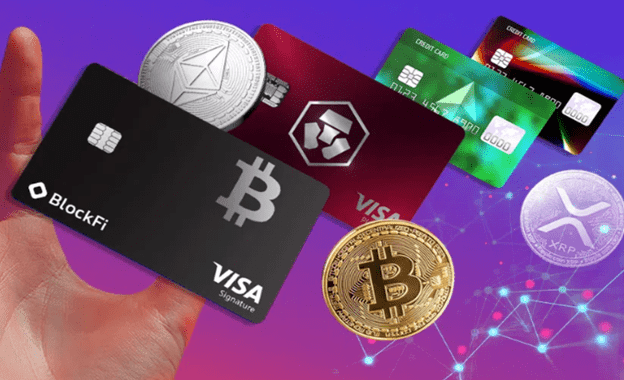
The Pros and Cons of Cryptocurrency Disruption of the financial industry and its structures has been an ongoing conversation for a while, and cryptocurrency has been a part of this discussion. There are several reasons why some people believe cryptocurrency is a transformational technology,…

Read more →

The words goldman sachs on a background of bitcoin.

Goldman Sachs Backed Loans as a Result of Cryptocurrency

Goldman Sachs Backed Loans as a Result of Cryptocurrency

Giant Investment bank Goldman Sachs has allowed its clients to borrow cash using Bitcoin as collateral. The Bitcoin-backed loan model was granted using a special lending department within the bank. According to experts, the move could spur greater involvement by the financial sector in the cryptocurrency market.

Typically, large banks’ acceptance of a new asset class is viewed as a significant indicator of industry progress. The launch of over-the-counter bitcoin options is a considerable achievement for Goldman Sachs, which is among the first financial institutions of its kind.

The bank’s spokesperson told CoinDesk that they recently secured a lending facility, which is now used to lend collateralised BTC, with the borrower retaining ownership of the Bitcoin. All these credit procedures are structured in line with the 24/7/365-day risk management guidelines.

What is a Bitcoin Backed Loan?

A Bitcoin-backed loan allows anyone to take advantage of the volatility of the cryptocurrency market by borrowing fiat currencies such as US Dollars, Sterling Pounds, Euros, and more. The loans are initiated by individuals who deposit their BTC into a Cryptopay account as collateral. In exchange, they receive a loan in their desired currency, which they can spend as they please. Backed Loans enable margin lending on the blockchain and exemplify a decentralised financial system built on Ethereum.

Such loans allow borrowers to obtain fiat currency by fronting their Bitcoin (or other cryptocurrency) as collateral, without having to sell.

As Goldman Sachs (GS) continues to lay the groundwork for its highly anticipated entrance into the cryptocurrency market, a new report finds that banking giants are steadily increasing their involvement in virtual assets, with many firms already participating in initial coin offerings (ICOs), buying and selling cryptocurrencies, and exploring the possibility of launching their own crypto products.

BlackRock, the world’s largest asset manager with $10 trillion in assets under management, announced the launch of a blockchain-focused exchange-traded fund (ETF). Under a $ 400 million funding arrangement, the company will also partner with the blockchain company Circle.

Effects of The Giant Investment Bank’s Loaning Actions

Propy, the blockchain real estate platform, announced a partnership with Abra to enable its customers to access home loans using cryptocurrency holdings as collateral. This new feature is included in all real estate purchases on the Propy platform.

Just last month, a new homeowner purchased an apartment in Austin, Texas, via USDC.homes, which is powered by Decentralised Title, Time and Location (DTTL) technology. USDC.homes is a platform where buyers can purchase properties from sellers who use the platform’s DTTL technology. In this case, the seller who sold the property on the USDC.The home’s platform is the previous owner of the apartment.

El Salvador is currently raising funds for its Bitcoin-backed bonds, which aim to raise $1 billion for the development of BTC City and to increase the size of the country’s BTC reserves.

Image Source: Adobe Stock

Disclaimer: This article is provided for informational purposes only. It is not offered or intended to be used as legal, tax, investment, financial, or other advice.
Read more →

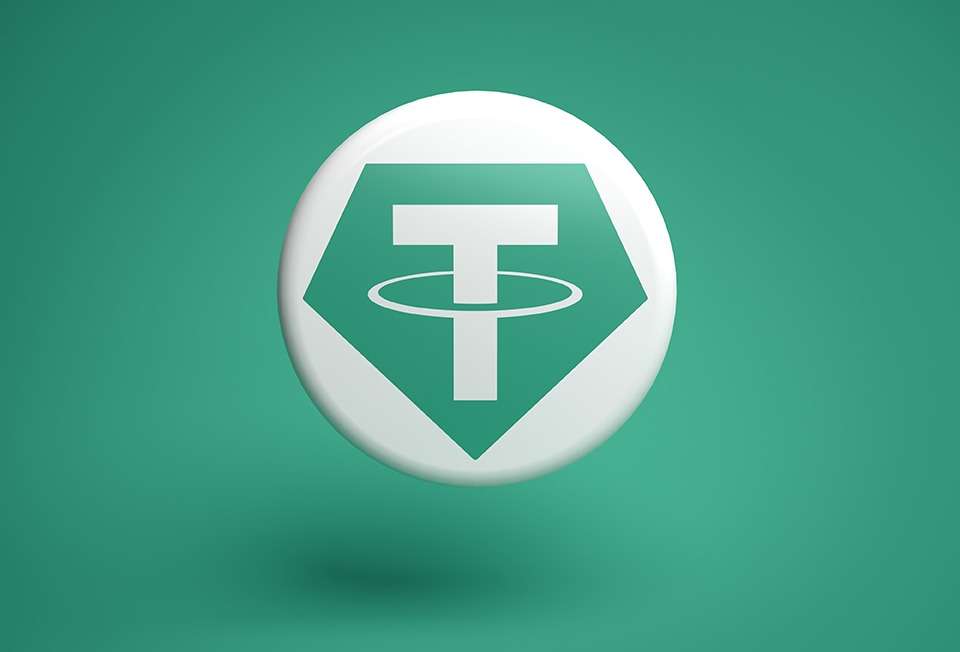
Top five cryptocurrency stablecoin tokens by market capitalization on March 2022. Tether, Usd Coin, Binance Usd, Terra Usd and Dai. High quality 3D

Stablecoins – What are They? How Do They Work?

A Stablecoin is a cryptocurrency whose value is pegged to an external asset, such as fiat currency or gold, to maintain a stable value. Some cryptocurrencies offer several benefits; the most notable is that they do not require a central authority to process transactions, thereby enabling their use worldwide. However, crypto’s crucial debit is that crypto prices fluctuate frequently.

Therefore, these assets are complex for the public to use. Typically, people want to know how much money they have to make financial decisions. The inherently unpredictable nature of crypto contrasts with the price stability enjoyed by money. The value of currency, e.g., the U.S. dollar, is also affected by changes in value, but to a lesser extent than cryptocurrencies.

Stablecoin Overview

Stablecoins aim to mitigate value fluctuations by pegging crypto to a stable external reference – typically fiat currencies. Fiat is a currency issued by the government and used in daily transactions. Examples include the United States dollar ($), the pound sterling (£), and the Euro (€).

Generally, the reality propelling Stablecoin will comprise a” reserve “where it steadily stores the asset or basket of means supporting Stablecoin. They are pegged to tangible – world assets. Whenever a Stablecoin holder withdraws their assets, the total value of the withdrawal is subtracted from the standby cash reserve.

An intricate type of Stablecoin is collateralised with cryptocurrencies other than fiat currencies, yet it is still designed to track a conventional asset.

Maker is a renowned Stablecoin supplier that uses this medium and achieves this milestone using the “Vault, which locks up a holder’s crypto security. As soon as the intelligent contract proves that the guarantee is in place, the contract makes the holder eligible for a DAI loan.

Algorithmic Stablecoins are another class of Stablecoins. It is not collateralised. They are either burned or minted to preserve the coin’s value.

Categories of Stablecoin Collateral

  • Fiat: It is the most common collateral for Stablecoin; the most popular being the U.S dollar.
  • Precious metals: Some cryptocurrencies are pegged to precious metals, e.g., gold & Silver.
  • Cryptocurrencies Some Stablecoins use the likes of Ether, Ethereum’s network native coin, as security.

Common Stablecoins

  • Tether (USDT): Tether is one of the most widely used Stablecoins, pegged to the value of the US dollar. It is known for its high liquidity and is widely used for trading and transactions in the cryptocurrency space.
  •  
  • USD Coin (USDC): USDC is another primary Stablecoin pegged to the US dollar and is supported by several major cryptocurrency exchanges. It’s known for its transparency and regulatory compliance.
  •  
  • DAI: DAI is unique compared to other Stablecoins as it is decentralised and maintains its value by using smart contracts and collateral on the Ethereum blockchain. It is not pegged to any specific fiat currency but aims to maintain a stable value around $1 USD.
  •  
  • Binance USD (BUSD): Binance USD is a stablecoin issued by Binance and pegged to the US dollar. It’s backed by reserves of US dollars held by Paxos Trust Company.
  •  
  • TrueUSD (TUSD): TrueUSD is a USD-backed stablecoin that operates similarly to USDC and USDT, aiming to provide stability and transparency through regular audits and a reserve-backed system.
  •  
  • Paxos Standard (PAX): Paxos Standard is a regulated USD-backed Stablecoin issued by Paxos Trust Company. It’s designed to be fully collateralised by US dollars held in FDIC-insured banks.
  •  
  • HUSD: HUSD is an ERC-20 Stablecoin that is backed by multiple Stablecoins, aiming to provide users with a diversified and balanced portfolio.

Finally, there are some drawbacks to Stablecoins, mainly due to their typical structure. Hence, it presents distinct challenges compared with other cryptocurrencies. 

Cryptocurrency was designed to replace third-party firms that manage users’ funds. These third-party firms can block certain transactions. However, some Stablecoins can also block certain transactions.

Disclaimer: This article is provided for informational purposes only. It is not offered or intended to be used as legal, tax, investment, financial, or other advice.

Read more →

Nigel Farage, a man in a suit and tie, is making a gesture while expressing his belief that Bitcoin is the best anti-lockdown asset.

Nigel Farage Believes Blockchain is The Best Anti-Lockdown Asset

Nigel Farage, a UK-based broadcaster and leader of  the UK Independence Party from 2006 to around 2009, has recently announced that he has gone “full crypto.” It does not come as a surprise, as experts and journalists had foretold that Nigel would eventually make this move. Farage, who led the Brexit Party from 2019 to 2021, discussed with an editor from Southbank Investment Research, Sam Volkering. In this conversation, Nigel Farage discussed all things crypto, giving some in-depth understanding of Blockchain technology.

Farage on Blockchain Technology

In the interview, Nigel told Sam Volkering that the British government’s “fake money” is being printed rapidly in the United Kingdom. According to Farage, this is a move to help the government keep up with the economic crisis that has struck the globe due to the coronavirus outbreak.

In the interview, Farage, who helped lead the Brexit campaign, said that the conversation about cryptocurrencies was all over the nation, from the richest to the poorest. Nigel thinks that the main reason cryptocurrency is famous is that citizens are afraid of what might happen to their money investments, as governments are debasing their currencies. Is this the way to go?

Additionally, the interview included an in-depth discussion between the two about the fundamentals of cryptocurrencies. They gave answers to several questions about cryptocurrencies such as Bitcoin. Some of the questions they answered included where the money one invests in crypto goes.

Should the Masses Learn about the Distributed Ledger?

Nigel admitted that he had been somewhat lazy in learning how Bitcoin and cryptocurrencies work, and that he was no crypto expert. He added that he resorted to self-education with a book written by Sam Volkering. Nigel continued to say that individuals had already made a lot of money and suffered losses in the crypto business. According to him, as far as our future is concerned, cryptocurrency is a fundamental topic.

Moreover, he stated that because Fiat currency is crumbling globally, including in the United States, the public needs to understand Blockchain technology better—the ways it can be used as a payment method in day-to-day transactions.

Notably, Nigel Farage referred to Bitcoin as the best possible “anti-lockdown asset.”

Nigel Farage launched his Reform UK party recently in the country. Among other objectives, Nigel launched the party to compete with major political parties in the country, including the Conservatives and Labour.

The video interview on Friday also revealed that Nigel Farage was writing a book called “Crypto Revolution.”

What does the Future Hold?

Nigel Farage did not clarify if he owned Bitcoins himself. However, there have been rumours that this move to pivot towards Bitcoin is due to poor Bitcoin performance. Over the past few weeks, Bitcoin’s performance has fallen due to its enduring attributes. For example, unlike other national fiat currencies with infinite supplies, Bitcoin’s supply is finite. Nonetheless, Bitcoin performed better than any other asset, including gold. Due to this attribute, Bitcoin is the best asset for preserving value.


Image Source: Adobe Stock

Disclaimer: This article is provided for informational purposes only. It is not offered or intended to be used as legal, tax, investment, financial, or other advice.
Read more →

Defi image of a man with tools showing hes running the world.

What is DeFi?

“Removing intermediaries does not remove risk — it redistributes it.” — DNA Crypto.

The history of finance is long and complex. You can better understand the new idea of adding the term ‘Decentralised’ by briefly reviewing the history mentioned. In the very beginning, finance had no say in human society. The basic needs were food, shelter, and, to some extent, survival. However, as time progressed, the need for human interaction became essential; to facilitate this, trade emerged. Trading during this period was basic: you exchanged what you had in abundance for what you lacked.

The Downside

However, the problem with this trading method was the absence of clear criteria for determining the value of goods. As the variety of goods continued to expand, the desire for clear criteria also grew, thereby prompting the development of money systems around 600BC. Unfortunately, the narrative doesn’t end with this happy ending. A new problem has emerged: who should control the money systems? Having money under the control of a single entity. i.e., the government has one primary concern: the unrestricted printing of money. The invention of cryptocurrencies such as Bitcoin marked the first step in providing people with a reliable financial system. However, this can still not be considered decentralised finance, as most cryptocurrency financial transactions are conducted through centralised exchanges.

What is DeFi?

DeFi (version 2.0) is a rapidly growing sector in the crypto industry, comprising numerous projects across various blockchains. Most services provided by traditional financial systems can be performed through DeFi without the involvement of third parties, such as banks. This is the most prolific feature of DeFi. Most people believe that DeFi is the future of financial systems; these are some of the reasons that support this view: Error-free. The mismanagement of central banks and third-party intermediaries has caused a significant crisis in the current financial system. However, the introduction of smart contracts seeks to eliminate these day-to-day errors.

A Fast And Permanent Access

In the traditional financial system, obtaining a loan is a lengthy and often frustrating process. You must be available to complete several documents at specific times. However, for DeFi, it is quite different. You can easily get a loan from anywhere, anytime, as long as you are connected to the internet.

Healthier System.

The outbreak of the Coronavirus exposed the vulnerability of our current financial systems. Centralised financial systems depend on interpersonal contact. For DeFi, the percentage of contact required for a financial transaction is zero. Freedom: In traditional financial systems, you must obtain permission from intermediaries to conduct any financial transaction. In DeFi, users can interact with financial services without asking for permission.

However, like any other system, DeFi also has its risks and disadvantages. Here are some of the challenges that DeFi projects face.

  1. Uncertainty – Suppose the blockchain that powers the DeFi project is not stable; the project also becomes unstable.
  2. Scalability – Either a transaction process takes too long to be confirmed, or the cost is too high during congestion.
  3. Issues with smart contracts – If a flaw occurs in a contract, however minor it might be, funds might be lost.

Other disadvantages of DeFi include low liquidity, over-collateralization, limited interoperability, and the absence of insurance.

Image Source: Adobe Stock

Disclaimer: This article is provided for informational purposes only. It is not offered or intended to be used as legal, tax, investment, financial, or other advice

Read more →