
Crypto and bitcoin self custody cold storage or hardware wallet for digital assets personal keys and Spot ETF funds digital finance concept.

Custody Will Define Crypto Winners

“In digital finance, ownership is not defined by access. It is defined by control.” DNA Crypto.

The Market Is Moving From Access To Control

The early phase of crypto markets was built around access. Investors focused on how to acquire digital assets, which platforms to use, and how quickly transactions could be executed. Exchanges became the dominant gateway, and ease of access drove adoption.

As the market has matured, this focus has shifted. The question is no longer how to buy assets, but how those assets are secured, governed and protected over time. This reflects a broader evolution in investor behaviour, where capital is no longer purely speculative but increasingly strategic.

Control, rather than access, is now the defining factor.

Custody As A Requirement For Institutional Capital

Institutional capital operates under fundamentally different constraints. Risk frameworks, governance requirements and fiduciary responsibility drive allocation decisions. Assets must be held in a way that ensures security, auditability and clear ownership.

Without these structures, participation at scale is not possible.

As outlined in institutional Bitcoin custody, custody is not an operational detail. It is a prerequisite for participation. The absence of robust custody limits institutions’ ability to engage with digital assets, regardless of market opportunity.

Ownership Versus Exposure

A critical distinction in digital assets is the difference between ownership and exposure. In traditional markets, these concepts are often treated as equivalent. In crypto, they are not.

Holding assets on an exchange provides exposure to price movements, but it does not necessarily provide full control. True ownership is defined by the ability to control access, typically through custody structures and private key management.

As explored in Bitcoin ownership versus exposure, this distinction has direct implications for risk. Without proper custody, investors are exposed to factors beyond market performance.

Custody As Financial Infrastructure

Custody is increasingly becoming a core layer of financial infrastructure rather than a supporting function. It encompasses secure storage, governance frameworks and integration with execution systems.

This evolution reflects a broader shift in how capital is managed. Institutions prioritise the security and control of assets as much as, if not more than, the mechanisms used to trade them.

As discussed in custody as a core financial layer, control of assets is emerging as a primary determinant of capital allocation.

Regulation Is Elevating Custody Standards

Regulatory developments are reinforcing the importance of custody by introducing clear requirements around asset protection and operational transparency. Frameworks such as MiCA are establishing standards that define how custody must be structured and managed.

This raises the baseline for participation.

As outlined in MiCA crypto custody regulation, firms that cannot meet these standards will face limitations in accessing capital and operating at scale.

Custody is therefore becoming embedded within both the regulatory and operational structure of the market.

Managing Counterparty Risk

While blockchain technology reduces reliance on intermediaries, it does not eliminate counterparty risk. Many participants continue to rely on exchanges, platforms, and third-party service providers, each of which introduces potential points of failure.

Custody provides a framework for managing this risk by separating asset storage from execution environments. This allows investors to maintain access to liquidity while reducing dependency on individual platforms.

As explored in Bitcoin counterparty risk, understanding where risk sits is essential to building resilient portfolios.

Integration With Execution And Liquidity

Custody must function in conjunction with execution and liquidity layers. Assets need to remain secure while still being accessible for trading, allocation and settlement.

This creates a balance between control and flexibility.

As outlined in the crypto broker infrastructure, the interaction between custody and execution defines how effectively capital can move within digital markets.

Where DNA Crypto Sits

DNA Crypto operates within this evolving structure by focusing on secure access and execution aligned with institutional standards.

The approach is designed to ensure that clients can engage with Bitcoin markets through:

  • – Structured onboarding aligned with AML and KYC requirements
  • – Secure execution through OTC liquidity
  • – Access to regulated custody solutions

This positioning reflects the broader direction of the market, where control and governance are becoming as important as access.

The Market Will Consolidate Around Custody

As digital asset markets mature, custody will become a defining factor in market structure. Firms that can provide secure, regulated and scalable custody solutions will attract capital, while those that cannot will face increasing constraints.

This mirrors the evolution of traditional financial systems, in which custody is at the core of asset management.

The same pattern is now emerging in digital assets.

Conclusion

Crypto markets are transitioning towards a model defined by control, governance and long-term asset security. Custody sits at the centre of this transition, shaping how assets are owned and how risk is managed.

The firms that establish strong custody infrastructure will define the next phase of digital finance. In this environment, control is not a secondary consideration. It is the foundation of the market.

Relevant DNACrypto Articles

Image Source: Adobe Stock

Disclaimer: This article is for informational purposes only and does not constitute financial, legal, or investment advice.

Register today at DNACrypto.co

Read more →

Bitcoin Crash: Falling Crypto Market, Broken Piggy Bank, and Red Downward Trend

Where Risk Actually Sits in Crypto

“Crypto does not remove risk. It changes where it sits.” DNA Crypto.

Reframing The Concept Of Risk

Crypto is widely described as a high-risk asset class. While this perception is not entirely incorrect, it is often imprecise. Risk is frequently equated with volatility, which creates an incomplete understanding of how losses actually occur.

In practice, volatility is only one component of a broader risk framework. Many losses in digital assets are not driven by price movements alone, but by structural weaknesses and behavioural decisions.

Understanding this distinction is essential. Without it, investors cannot accurately assess exposure or build a framework for managing it.

Volatility Is Misunderstood

Volatility is the most visible characteristic of crypto markets. Prices move quickly, often without warning, and this attracts attention. However, volatility itself does not create losses. It simply creates movement within the market.

Losses occur when participants respond to that movement without a clear strategy or risk framework.

As explored in Bitcoin volatility, price fluctuations are a natural feature of emerging financial systems. The key is not to avoid volatility, but to understand how to operate within it.

Risk Sits In Structure

A significant portion of risk in crypto markets is structural. This includes custody arrangements, counterparty exposure and the reliability of platforms used for trading and storage.

Failures in these areas can result in losses that are entirely independent of market performance.

As outlined in Bitcoin ownership versus exposure, the distinction between holding assets directly and relying on third-party platforms is fundamental. Without proper custody structures, ownership remains incomplete, and risk increases significantly.

Counterparty And Platform Risk

Despite the decentralised nature of blockchain technology, many participants continue to operate through centralised platforms. These platforms introduce dependencies that must be carefully evaluated.

Counterparty risk arises when control of assets is placed in the hands of a third party. If that party fails, access to those assets may be compromised.

As explored in Bitcoin counterparty risk, understanding who controls assets and how they are managed is critical to assessing exposure.

Behavioural Risk

Behavioural risk is often underestimated, yet it plays a central role in determining outcomes.

Crypto markets operate continuously, without closing hours or enforced pauses. This creates an environment in which decisions are made impulsively, often in response to short-term price movements.

Without a structured approach, participants are more likely to react rather than plan. This leads to inconsistent decision-making and increased loss exposure.

In many cases, behaviour, rather than technology, is the primary driver of poor outcomes.

Liquidity And Execution

Liquidity and execution quality also influence risk in meaningful ways. Poor execution can result in slippage, delayed trades and unfavourable pricing, particularly during periods of high volatility.

As outlined in market price liquidity, access to efficient liquidity is a key factor in managing exposure. The ability to enter and exit positions effectively reduces unnecessary risk.

A Structured Approach To Risk

Managing risk in crypto requires a structured, multi-layered approach. This includes understanding how custody is managed, where counterparty exposure exists, how trades are executed and how decisions are made.

Each of these elements contributes to the overall risk profile of a portfolio.

Focusing solely on price volatility provides an incomplete picture. Effective risk management requires a broader perspective that accounts for both structural and behavioural factors.

Where DNA Crypto Sits

DNA Crypto operates within this framework by focusing on execution, structure and access.

The objective is not to remove risk, but to manage it more effectively through:

  • – Structured onboarding and compliance
  • – Secure execution through OTC liquidity
  • – Clear processes aligned with institutional standards

This approach reflects the evolving nature of the market, where understanding and managing risk is more important than attempting to avoid it entirely.

Conclusion

Crypto does not eliminate risk. It redistributes it across different layers of the financial system.

Understanding where that risk sits is the first step towards managing it effectively. Without this understanding, decisions are made without a framework, increasing the likelihood of poor outcomes.

In a market defined by constant access and rapid movement, clarity is essential. Risk is not something to avoid. It is something to understand and manage.

Relevant DNACrypto Articles

Image Source: Adobe Stock

Disclaimer: This article is for informational purposes only and does not constitute financial, legal, or investment advice.

Register today at DNACrypto.co

Read more →

The Future of Real Estate Investing blue background.

Why Crypto Investors Are Moving Into Property

“Crypto capital is no longer chasing volatility. It is seeking stability, yield, and real-world backing.” DNA Crypto.

The Shift Is Already Happening

Crypto markets have created significant wealth over the past decade.

Early participants focused on access, growth and market timing. Returns were driven by volatility, and success was often measured by the ability to navigate cycles.

That dynamic is changing.

As portfolios mature, investor behaviour is evolving. The question is no longer how to generate returns, but how to protect and compound capital over time.

This shift reflects a broader transition from speculative participation to structured allocation, similar to the patterns observed in traditional financial markets.

As outlined in the crypto narrative cycle, markets naturally move from hype-driven growth to infrastructure-driven stability.

The Problem With On-Chain Yield

Decentralised finance introduced new ways to generate yield.

Liquidity provision, staking, and lending created opportunities for returns previously unavailable. However, these models are inherently unstable.

Yield farming is inconsistent, often driven by incentives rather than underlying economic value. Smart contract risk introduces exposure that is difficult to quantify, and platform failures continue to demonstrate structural weaknesses.

Returns are rarely predictable.

Crypto created liquidity, but not stability.

As explored in DeFi evolution and infrastructure separation, the market is already distinguishing between sustainable financial systems and experimental yield models.

Why Property Is The Natural Destination

As capital seeks stability, it moves towards assets that generate consistent income and retain long-term value.

Property has historically fulfilled this role.

It provides:

  • – Predictable rental income
  • – Tangible asset backing
  • – Protection against inflation
  • – Long-term appreciation potential

This makes it a natural destination for maturing crypto capital.

As outlined in real-world asset tokenisation, the integration of digital capital with real assets is not a trend, but a structural evolution.

Property is where capital settles.

The Problem With Traditional Property

Despite its advantages, traditional property investment remains inaccessible to many investors.

High entry thresholds, often exceeding six figures, limit participation. Liquidity is constrained, transactions are slow, and asset management introduces additional complexity.

This creates a disconnect.

While property offers stability, it lacks flexibility.

Capital becomes locked, costs remain high, and exit strategies are limited.

These constraints have historically prevented broader participation.

Tokenised Property Changes Everything

Tokenisation removes many of these barriers.

By representing property ownership digitally, investors can access real estate markets with lower capital requirements, improved liquidity and simplified management structures.

This enables:

  • – Lower entry points for global investors
  • – Monthly income distributions in digital currencies
  • – Reduced operational complexity
  • – Greater flexibility in portfolio allocation

As explored in the context of tokenised real estate liquidity, the shift is not about digitising assets. It is about improving how capital interacts with them.

Crypto is no longer the asset. It is the infrastructure.

Why The Philippines Is Emerging

Certain markets are positioned to benefit earlier from this transition.

The Philippines, and Cebu in particular, presents a combination of strong fundamentals and early-stage pricing. Demand for rental property continues to grow, driven by population expansion, tourism and foreign investment.

At the same time, supply remains constrained in key locations, supporting both yield and long-term value.

This creates an environment where income-producing assets can be accessed at valuations that are not yet fully aligned with global demand.

Unlike more mature markets such as London or Dubai, the opportunity remains asymmetric.

Timing Matters More Than Ever

Capital flows do not wait for full market maturity.

They move ahead of it.

Property markets that are still priced locally, but increasingly influenced by global capital, present the strongest opportunities. As demand increases and access improves, pricing adjusts accordingly.

This creates a window.

Positioning early allows investors to capture both yield and appreciation, while late entry reduces return asymmetry.

Timing, in this context, is not about short-term speculation. It is about structural positioning.

The New Investor Mindset

Investor behaviour is evolving in a clear direction.

  • – From speculation to allocation
  • – From trading to income generation
  • – From volatility to stability

This shift reflects a broader understanding of capital management.

Returns are no longer measured solely by growth. They are measured by consistency, resilience and long-term performance.

This is the mindset that defines institutional participation.

Where This Is Going

Tokenisation will continue to expand.

Property will become more accessible, more liquid and more integrated with digital financial systems. Investors will be able to allocate capital globally, without the traditional constraints of geography or scale.

At the same time, crypto will evolve into a supporting layer.

It will provide the infrastructure through which capital moves, rather than the primary destination for that capital.

As explored in tokenisation and the global property cycle, the convergence of digital assets and real estate is already underway.

The Bridge Between Systems

This transition creates a clear role for infrastructure providers.

DNA Crypto and Defi Property operate at the intersection of digital capital and real-world assets, enabling investors to move between systems efficiently and securely.

This includes:

  • – Access to Bitcoin and digital asset markets
  • – Structured onboarding aligned with regulatory standards
  • – Entry into tokenised real estate opportunities

The opportunity is not within either system.

It is the bridge between them.

Conclusion

Crypto created wealth.

Property preserves and compounds it.

The next phase of digital capital is not defined by volatility, but by allocation into assets that generate income and retain value.

The opportunity lies in connecting these two worlds.

The next phase of digital capital is not virtual.

It is real.

Relevant DNACrypto Articles

Image Source: Adobe Stock

Disclaimer: This article is for informational purposes only and does not constitute financial, legal, or investment advice.

Register today at DNACrypto.co

Read more →

Bitcoin physical coin laying on top of 100 Euro bills.

Fiat On-Ramps Are Crypto’s Weakest Link

“The hardest part of digital finance is not moving crypto. It is moving money into it.” DNA Crypto.

The Illusion of Seamless Crypto

Crypto markets present themselves as fast, efficient and always accessible.

Transactions settle quickly, liquidity is visible, and systems operate continuously without traditional market hours. From a digital perspective, the infrastructure appears highly developed.

However, this efficiency exists only within the crypto environment.

The moment capital needs to enter or exit that system, friction reappears. The transition between fiat and digital assets remains one of the least efficient parts of the entire market.

This is where the real constraint sits.

Banking Remains the Gatekeeper

Despite the growth of digital assets, fiat currency still dominates global finance.

Every participant entering the crypto market must pass through the banking system. This introduces dependencies that crypto itself was designed to reduce, but has not eliminated.

Banks control access.

They determine which transactions are permitted, how funds are transferred, and how long settlement takes. Payment providers add additional layers of control, each introducing delays, costs and operational complexity.

This creates an asymmetry.

Crypto operates at network speed. Fiat operates at institutional speed.

Friction Defines the User Experience

For many participants, the most difficult part of engaging with digital assets is not trading or custody. It is onboarding.

Common challenges include:

  • – Delays in bank transfers
  • – Payment rejections or restrictions
  • – Unclear compliance requirements

These issues are not technical failures within crypto systems. They are structural limitations within the fiat system.

As explored in crypto payments infrastructure, the bottleneck is not within blockchain networks, but at the interface between financial systems.

Liquidity Begins With Access

Liquidity is often discussed in terms of trading volume and market depth.

However, liquidity originates earlier in the process.

It begins with access to capital.

If capital cannot enter the system efficiently, liquidity cannot scale. Delays, restrictions and uncertainty at the onboarding stage reduce participation and limit market efficiency.

This has direct implications:

  • – Slower capital inflows
  • – Reduced trading activity
  • – Higher execution costs

Markets cannot grow faster than their access points.

Regulation Is Reshaping Fiat Access

The introduction of regulatory frameworks such as MiCA is beginning to standardise how fiat interacts with digital assets.

While regulation introduces additional requirements, it also creates clarity. Banks and payment providers are more willing to engage with crypto businesses that operate within defined compliance structures.

This leads to a more stable environment for fiat on-ramps, but it also raises the standard for participation.

Access is no longer open by default. It must be structured and compliant.

The Role of the Broker Layer

The complexity of fiat on-ramps creates a need for an intermediary layer that can manage these interactions efficiently.

Brokers operate within this space by coordinating:

  • – Fiat inflows from banking systems
  • – Conversion into digital assets
  • – Settlement across crypto networks

This reduces friction for clients and provides a structured pathway into the market.

Rather than navigating multiple systems independently, participants can access a unified process that manages both compliance and execution.

Where DNA Crypto Sits

DNA Crypto is positioned within this interface between fiat and digital assets.

The focus is on providing a structured, compliant and efficient onboarding process that enables clients to move capital into Bitcoin markets without unnecessary friction.

This includes:

  • – Coordinated fiat transfers through regulated channels
  • – Secure execution of crypto transactions
  • – Transparent processes aligned with AML and KYC requirements

This is not an additional service layer. It is a core part of market infrastructure.

The Constraint Becomes the Opportunity

In developing markets, the weakest point often becomes the most valuable.

Fiat on-ramps represent a constraint today, but they also represent an opportunity for infrastructure providers that can reduce friction and improve access.

As digital assets integrate more deeply with traditional finance, the ability to move capital efficiently between systems will become increasingly important.

This is where long-term value is created.

The Direction Of Travel

Crypto has solved many aspects of digital value transfer.

It has not yet solved the entry point.

The next phase of market development will focus on improving how capital enters and exits digital systems. This will involve closer integration with banking infrastructure, clearer regulatory frameworks and more sophisticated execution layers.

Markets scale when access improves.

Fiat on-ramps are no longer a secondary concern.

They are central to the future of digital finance.

Relevant DNACrypto Articles

Image Source: Adobe Stock

Disclaimer: This article is for informational purposes only and does not constitute financial, legal, or investment advice.

Register today at DNACrypto.co.

Read more →

Financial exchange. A person is happy about the fall/rise of shares. Crypto traders, investors, analysts, and brokers analyse stock market charts. Stock trading.

The Rise of the Crypto Broker

“Markets do not scale through platforms. They scale through execution.” DNA Crypto.

The Evolution Beyond Exchanges

Exchanges drove the early growth of crypto markets.

They provided access, price discovery and liquidity for a new asset class that lacked formal structure. For retail participants, exchanges remain the primary entry point.

However, this model does not scale effectively for institutional capital.

As the market matures, the limitations of exchange-based trading are becoming increasingly visible. Execution quality, liquidity fragmentation and counterparty exposure create constraints that larger participants cannot ignore.

The next phase of the market requires a different layer.

Execution Becomes The Priority

Institutional trading is not defined by access. It is defined by execution.

Large orders cannot be placed in open markets without affecting the price. Liquidity must be sourced, aggregated and managed carefully. Timing, pricing and discretion become critical factors.

This shifts the focus away from platforms and towards execution capability.

Brokers operate within this layer.

They provide access to multiple liquidity sources, structure transactions efficiently, and ensure that execution aligns with client objectives rather than market limitations.

As explored in crypto OTC trading, this model is already established in traditional finance and is now becoming standard in digital assets.

Liquidity Is Not Where It Appears

One misconception in crypto markets is that liquidity is on exchanges.

In reality, visible order books represent only a fraction of available liquidity. Larger pools exist off-exchange, distributed across counterparties, market makers and institutional desks.

Accessing this liquidity requires relationships, infrastructure and execution capability.

Brokers act as the interface between clients and these deeper liquidity pools. They aggregate supply, manage counterparties and optimise execution across fragmented markets.

This is not simply a service layer… It is infrastructure.

The Shift Towards OTC And Structured Trading

As capital flows increase, trading behaviour changes.

Institutions prioritise:

  • – Price certainty over speed
  • – Execution quality over visibility
  • – Risk management over convenience

This leads to a growing reliance on over-the-counter trading and structured execution.

Transactions are negotiated, liquidity is sourced discreetly, and settlement is managed with greater control.

This approach reduces market impact and aligns more closely with institutional requirements.

Trust And Counterparty Risk

Trust remains a central issue in digital asset markets.

Exchange failures, liquidity shocks, and operational risks have demonstrated that access alone is insufficient. Participants need confidence in how transactions are executed and how assets are handled.

Brokers introduce a structured layer of accountability.

They manage counterparty exposure, provide transparency around execution and operate within defined compliance frameworks.

This reduces risk and creates a more predictable environment for capital allocation.

The Integration With Regulation

The rise of the broker model is closely aligned with regulatory developments such as MiCA.

As markets become regulated, execution must also align with compliance requirements. This includes:

  • – Verified onboarding processes
  • – Transparent transaction reporting
  • – Clear operational governance

Brokers are naturally positioned within this framework because they operate as intermediaries between clients and markets.

They facilitate access while ensuring that regulatory standards are met.

This positions them as a critical component of compliant digital finance infrastructure.

Bridging Fiat And Digital Assets

One of the most persistent challenges in crypto markets is the movement of capital between fiat systems and digital assets.

This transition introduces friction at multiple points, including access to banking, payment processing, and settlement timing.

Brokers play a central role in managing this transition.

They coordinate fiat inflows, execute digital asset transactions, and ensure efficient settlement across both environments.

This bridging function becomes increasingly important as traditional finance and digital assets converge.

Where DNA Crypto Sits

DNA Crypto operates within this execution layer as a European broker focused on secure, compliant and efficient access to Bitcoin markets.

The model is built around:

  • – Structured onboarding aligned with AML and KYC requirements
  • – Access to deep liquidity through OTC execution
  • – Transparent pricing and controlled settlement processes

This positioning reflects the direction of the market.

Not towards more platforms, but towards stronger infrastructure.

The Market Will Consolidate Around Execution

As digital asset markets mature, competition will shift away from user interfaces and towards execution capability.

Firms that can provide reliable access to liquidity, manage risk effectively and operate within regulated environments will attract capital.

Those that rely solely on platform-based models will face increasing pressure.

This is consistent with the evolution of traditional financial markets, where execution layers play a central role in facilitating institutional participation.

The Direction Of Travel

Crypto markets are transitioning from access-driven growth to infrastructure-driven scale.

Exchanges will continue to play a role, particularly for retail participation and price discovery. However, the flow of institutional capital will increasingly move through brokers.

This is not a shift in preference.

It is a requirement of scale.

The next phase of digital finance will be defined by execution.

Relevant DNACrypto Articles

Image Source: Adobe Stock

Disclaimer: This article is for informational purposes only and does not constitute financial, legal, or investment advice.

Register today at DNACrypto.co

Read more →

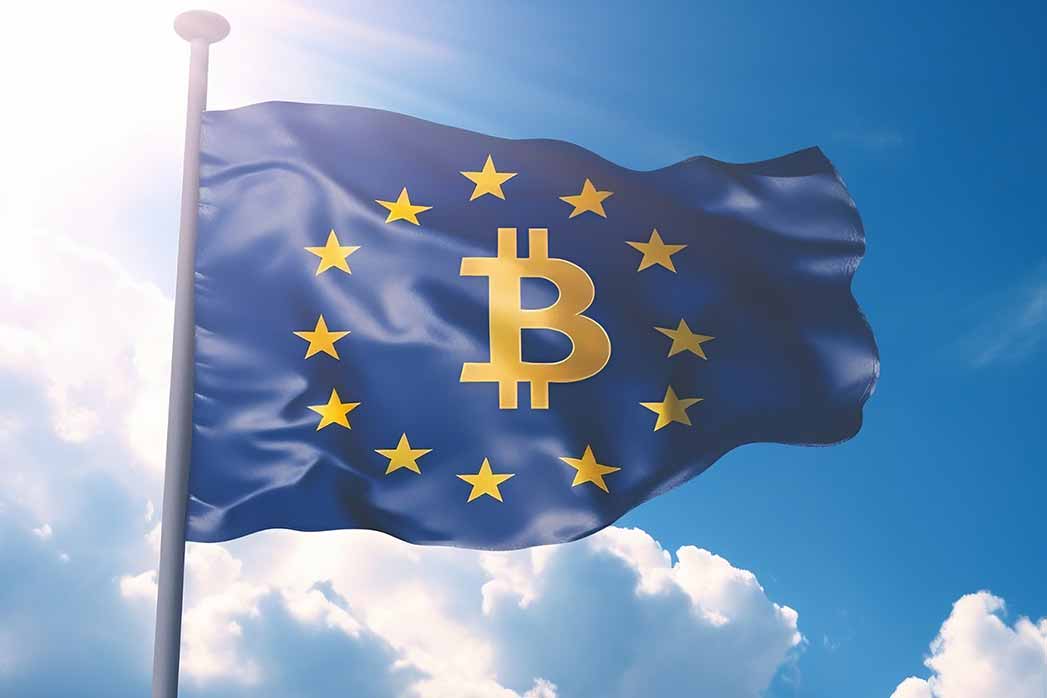
Flag of European Union with Bitcoin logo

MiCA Will Reshape the Crypto Industry

“Regulation does not slow markets. It decides who is allowed to stay in them.” DNA Crypto.

Regulation Is No Longer The Risk

For much of its development, the crypto market operated under the assumption that regulation would slow innovation and restrict growth. That assumption is no longer valid.

The industry has reached a stage where the greater risk is not regulation itself but its absence. Institutional capital cannot operate in uncertain environments, and without clear frameworks, participation remains limited.

MiCA fundamentally changes this dynamic. It does not constrain the market. It restructures it into a system that can support scale.

MiCA Introduces A New Standard

The Markets in Crypto-Assets regulation establishes a unified legal framework across the European Union. For the first time, digital asset businesses are required to operate within clearly defined parameters covering licensing, governance and operational conduct.

This includes:

  • – Licensing requirements for crypto asset service providers
  • – Capital adequacy and governance standards
  • – Defined obligations around custody, reporting and transparency

As outlined in what MiCA means for crypto markets, the significance of MiCA is structural rather than administrative. It creates consistency where previously there was fragmentation.

Most Crypto Companies Are Not Built For This

A large proportion of crypto businesses were built during a period where speed of execution mattered more than operational resilience. Growth was prioritised over governance, and access was often prioritised over control.

MiCA reverses those priorities.

Operating within a regulated framework requires formal governance structures, clearly defined compliance processes and transparent operational models. These are not incremental adjustments. They are fundamental changes to how businesses must be structured.

As a result, a clear divide is emerging between firms that can operate within regulated systems and those that cannot.

Compliance Becomes A Competitive Advantage

Compliance has historically been treated as a cost centre. Under MiCA, it becomes a differentiator.

Institutional participants require regulated counterparties, predictable processes and enforceable protections. Without these elements, capital does not enter the system at scale.

MiCA provides a framework that enables this transition. As explored in the discussion of how MiCA licensing creates an advantage, regulatory alignment becomes a signal of credibility rather than a barrier to growth.

Liquidity Will Follow Regulation

Capital allocation is driven by clarity.

As regulatory structures solidify, liquidity begins to concentrate within environments that offer transparency and protection. This pattern is consistent across all mature financial markets and is now emerging within digital assets.

Under MiCA:

  • – Regulated entities gain access to institutional capital
  • – Unregulated entities face increasing constraints
  • – Liquidity consolidates around compliant infrastructure

This represents a structural shift rather than a temporary trend.

Custody And Control Become Central

One of the most significant aspects of MiCA is its emphasis on custody.

The safeguarding of assets must be clearly defined, auditable and secure. This elevates custody from a technical function to a central component of financial infrastructure.

As highlighted in MiCA crypto custody regulation, the ability to operate within a regulated custody framework will determine which firms can scale.

Control of assets is no longer an operational detail. It is a strategic requirement.

The End Of Regulatory Arbitrage

Historically, crypto firms could operate across jurisdictions with minimal oversight, selecting favourable environments to optimise costs and speed.

MiCA reduces this flexibility within Europe by introducing consistent standards across member states. This limits regulatory arbitrage and forces firms to compete on structure, governance and trust rather than location.

The competitive landscape becomes more transparent, and the margin for operational shortcuts narrows significantly.

Where DNA Crypto Sits

DNA Crypto is positioned within this evolving structure as a regulated European broker focused on compliant execution and secure access to digital asset markets.

This includes structured onboarding aligned with AML and KYC requirements, transparent execution processes and alignment with European regulatory standards.

This positioning is not reactive. It reflects a model built to operate within regulated financial systems from the outset.

The Market Will Consolidate

MiCA will not reduce activity in the crypto sector. It will concentrate it.

Weaker firms will exit the market, others will be acquired, and some will adapt to meet regulatory requirements. The result will be a smaller number of stronger participants operating within a clearly defined framework.

This mirrors the evolution of every mature financial market.

The Direction Of Travel

Digital assets are moving towards integration with traditional finance. That integration requires trust, and trust requires structure.

MiCA provides that structure.

The next phase of the market will be defined by the ability to operate within regulated systems while maintaining access to digital asset liquidity. Firms that can bridge both environments will define the industry’s future.

Relevant DNACrypto Articles

Image Source: Adobe Stock

Disclaimer: This article is for informational purposes only and does not constitute financial, legal, or investment advice.

Register today at DNACrypto.co

Read more →

Worldwide digital payment network showing secure financial transactions. Digital payment supports transfer, digital payment ensures security, boosts convenience, drives global finance.

Tokenised Deposits vs Stablecoins

“Digital money is not competing on technology. It is competing for control.” DNA Crypto.

The Evolution of Digital Money

The first phase of digital money has already happened.

Stablecoins proved that value could move instantly, globally, and outside of traditional banking rails.

That phase is now complete.

A second phase is emerging, led by banks.

Tokenised deposits are the response.

Stablecoins Established the Model

Stablecoins solved a critical problem.

They enabled digital dollars to exist on-chain, allowing capital to move without relying on legacy settlement systems.

This unlocked:

  • – Continuous liquidity across markets
  • – Real-time settlement between counterparties
  • – A global trading infrastructure independent of banking hours

As explored in “Stablecoins as infrastructure,” their real value lies in institutional liquidity.

However, stablecoins rely on issuers.

They introduce counterparty risk and regulatory dependency.

Tokenised Deposits Are the Banking Response

Banks are replicating this model within their own systems.

Tokenised deposits are digital representations of bank deposits, issued by regulated institutions and integrated into existing financial infrastructure.

They provide:

  • – Regulatory clarity under frameworks such as MiCA
  • – Direct connection to banking liquidity
  • – Alignment with compliance structures

They are not external innovation. They are internal evolution.

The Real Difference Is Control

At a technical level, both systems appear similar.

The difference is structural.

  • – Stablecoins operate outside banking
  • – Tokenised deposits operate within it

This defines control.

As highlighted in MiCA and stablecoins, regulation is shaping this divide.

The Scale of the Opportunity

Global deposits exceed one hundred trillion dollars.

Stablecoins represent only a small portion of this.

Tokenisation of deposits has the potential to transform the scale of on-chain finance.

This is why institutions are investing heavily.

Interoperability Becomes the Constraint

Tokenised deposits create fragmentation.

Each institution operates its own system.

Without interoperability:

  • – Liquidity remains siloed
  • – Settlement becomes conditional
  • – Network effects weaken

As explored in crypto payments infrastructure, connectivity will define success.

Where Bitcoin Sits in This System

Stablecoins and tokenised deposits operate above Bitcoin.

They depend on trust structures.

Bitcoin does not.

As outlined in Bitcoin as financial infrastructure, it remains the neutral settlement layer.

The Role of the Broker Layer

Fragmentation creates demand for execution.

Capital must move between systems efficiently.

This requires:

  • – Fiat to crypto access
  • – Compliant onboarding
  • – Efficient trade execution

DNA Crypto operates within this layer, connecting fragmented liquidity.

The System Is Expanding, Not Converging

There will not be a single dominant system.

Stablecoins and tokenised deposits will coexist.

The real competition lies in how they connect.

Relevant DNACrypto Articles

Image Source: Adobe Stock

Disclaimer: This article is for informational purposes only and does not constitute financial, legal, or investment advice.

Register today at DNACrypto.co.

Read more →

Currency exchange, digital symbols of global currencies.

Bitcoin as the Global Settlement Layer

“Bitcoin is not competing with money. It is redefining how value settles.” DNA Crypto.

The Shift from Speculation to Settlement

For over a decade, Bitcoin has been framed as a speculative asset.

That framing is now outdated.

The market is shifting away from price narratives and towards function. What matters is not volatility, but reliability. Not short-term movement, but long-term settlement integrity.

Bitcoin is increasingly being understood as infrastructure.

Not as an alternative currency, but as the base layer where value can ultimately settle without dependency on counterparties.

This is the shift that serious capital is responding to.

Why Finance Needs a Neutral Settlement Layer

Traditional financial systems rely on layered trust.

Banks, clearing houses, custodians and central banks all sit between counterparties. Each layer introduces friction, cost and risk.

Settlement is not instant. It is conditional.

Bitcoin removes this structure.

It provides a system where the final settlement is:

  • – Direct
  • – Verifiable
  • – Independent of intermediaries

This is not a theoretical improvement. It is a structural one.

As explored in Bitcoin as financial infrastructure, the real value of Bitcoin lies not in transactional speed but in settlement certainty.

Institutional Capital Is Aligning Around Bitcoin

Institutional adoption is often misunderstood.

It is not driven by retail demand or market cycles. It is driven by risk management, custody, and capital preservation.

Bitcoin offers:

  • – A neutral asset with no issuer
  • – A globally recognised store of value
  • – A settlement layer that does not depend on trust in counterparties

Family offices, asset managers and sovereign entities are increasingly allocating not because of upside potential, but because of structural necessity.

As highlighted in family offices turning to Bitcoin, allocation decisions are shifting from opportunistic to strategic.

Bitcoin Versus the New Forms of Digital Money

The financial system is evolving rapidly.

Stablecoins, tokenised deposits and central bank digital currencies are all emerging as new forms of digital money. Each serves a function within the system.

However, none of them operates as neutral settlement layers.

  • – Stablecoins rely on issuers and reserves
  • – Tokenised deposits remain within banking systems
  • – CBDCs are extensions of state-controlled money

Bitcoin sits outside of all three.

It does not replace them. It anchors them.

As explored in CBDCs vs Bitcoin, the distinction is structural.

The Role of Custody and Access

If Bitcoin is the settlement layer, custody becomes critical.

Owning Bitcoin is not the same as controlling it. Institutional participation depends on secure, compliant custody solutions and reliable execution.

Without institutional-grade custody, allocation cannot scale. Without trusted execution, liquidity cannot deepen.

As outlined in the context of institutional Bitcoin custody, the custody layer is becoming one of the most important battlegrounds in digital finance.

DNA Crypto operates within this layer, providing secure access, compliant onboarding and execution.

Liquidity, Not Narrative, Will Define the Market

Markets do not evolve based on narratives.

They evolve based on liquidity.

Bitcoin’s role is strengthening as liquidity consolidates around it. It is becoming the asset that capital moves into when certainty matters.

As explored in market price liquidity, capital flows reveal where trust is placed.

The Settlement Layer Thesis

Bitcoin does not need to replace existing systems to win.

It only needs to sit beneath them.

Stablecoins can operate for payments. Banks can continue to manage deposits. Tokenised assets can expand access to capital markets.

But when final settlement matters, the system requires a neutral base.

Bitcoin is becoming that base.

Relevant DNACrypto Articles

Image Source: Adobe Stock

Disclaimer: This article is for informational purposes only and does not constitute financial, legal, or investment advice.

Register today at DNACrypto.co

Read more →

Global Green Fintech 3D conceptual illustration of network on digital infrastructure linking sustainable finance with eco-investment nodes powering future ESG systems.

Interoperability Will Decide Digital Finance Winners

“Financial systems do not scale through innovation. They scale through connection.” DNA Crypto.

The Fragmentation Problem

Digital finance is expanding rapidly.

Stablecoins, tokenised deposits, blockchain networks and traditional banking systems are all evolving at the same time. Each is building its own infrastructure, rules, and liquidity pools.

At first glance, this appears to be progress.

In reality, it is fragmentation.

Capital is distributed across systems that do not naturally interact. Liquidity is trapped within networks. Settlement depends on intermediaries bridging gaps between platforms.

This creates inefficiency at scale.

Liquidity cannot scale in Isolation.

Markets function on liquidity.

Without it, pricing breaks down. Execution slows. Confidence weakens.

In traditional finance, liquidity is deep because systems are connected. Capital can move between institutions, markets and jurisdictions with relative efficiency.

Digital finance does not yet operate this way.

  • – Blockchain networks operate independently
  • – Banks control internal tokenised systems
  • – Stablecoins are tied to specific issuers

Each system holds liquidity.

Very few can share it.

Interoperability Becomes Infrastructure

Interoperability is often described as a technical feature.

It is not.

It is infrastructure.

The ability for systems to communicate, settle and transfer value across boundaries is what enables scale.

Without interoperability:

  • – Liquidity remains fragmented
  • – Capital movement becomes conditional
  • – Network effects are limited

As explored in crypto payments infrastructure, the next phase of digital finance is defined by how systems connect, not how they are built.

The Emerging Network Competition

The market is not moving towards a single dominant system.

It is moving towards multiple interconnected systems.

This changes the nature of competition.

It is no longer:

Blockchain versus blockchain
Bank versus crypto

It becomes:

Network versus network

The systems that enable seamless interaction will attract liquidity. The systems that remain isolated will lose relevance.

This is how financial infrastructure has always evolved.

Bitcoin as the Neutral Anchor

As systems expand, a neutral reference point becomes more important.

Bitcoin provides this.

It does not depend on any single network, institution or jurisdiction. It operates as a base layer where value can ultimately settle without reliance on intermediaries.

As outlined in Bitcoin as financial infrastructure, its role is not to replace systems, but to anchor them.

This creates a structure where:

  • – Bitcoin acts as a settlement
  • – Tokenised systems provide access
  • – Interoperability enables movement

The Cost of Not Connecting

Systems that fail to integrate face structural limitations.

Liquidity becomes trapped within closed environments. Capital cannot move efficiently. Pricing becomes inconsistent across markets.

This leads to:

  • – Reduced institutional participation
  • – Higher execution costs
  • – Slower adoption

Markets reward connectivity.

They penalise isolation.

The Role of the Execution Layer

As fragmentation increases, execution becomes more complex.

Capital needs to move between fiat systems, crypto networks and tokenised environments. Each transition introduces friction.

This creates demand for an intermediary layer focused on execution.

A layer that can:

  • – Bridge disconnected systems
  • – Access multiple liquidity sources
  • – Provide compliant onboarding across jurisdictions

DNA Crypto operates within this layer.

Not as a competing network, but as infrastructure enabling interaction between networks.

The Winners Will Be Connectors

Innovation alone will not determine success.

The most advanced systems can still fail if they remain isolated.

The winners in digital finance will be those who:

  • – Enable seamless capital movement
  • – Integrate across multiple systems
  • – Reduce friction between networks

Connectivity becomes an advantage.

Not technology in isolation.

The Direction of Travel

Digital finance is not converging into a single system.

It is expanding into a connected ecosystem.

Stablecoins, tokenised deposits, traditional banking systems and blockchain networks will all continue to exist.

Their success will depend on how effectively they interact.

Interoperability is no longer optional.

It is the condition for scale.

Relevant DNACrypto Articles

Image Source: Adobe Stock

Disclaimer: This article is for informational purposes only and does not constitute financial, legal, or investment advice.

Register today at DNACrypto.co
Read more →

Golden Cityscape on Earth: A conceptual representation of the earth, embellished with a golden cityscape that embodies ambition, economic prosperity, and urban.

Tokenised Property: The First Truly Global Asset Market

“Real estate has always been global in value. Tokenisation may finally make it global in access.” DNA Crypto.

From Local Markets to Global Capital

Real estate has always been one of the most important asset classes in the global economy. Capital flows into property across continents, driven by population growth, economic expansion, and long-term wealth preservation.

Yet access to those opportunities has remained constrained by geography. Jurisdictional constraints, local regulations, and operational complexity typically limit investors. Even large institutions face friction when allocating capital across borders.

As a result, real estate has remained a globally valuable asset class that operates through locally fragmented markets.

Tokenisation introduces the possibility of changing that structure.

The Structural Barriers in Traditional Property Investment

Several long-standing constraints shape traditional real estate investment.

  • – Geographic limitations that restrict cross-border participation
  • – High capital requirements that concentrate ownership
  • – Illiquid structures that slow entry and exit

These barriers have been accepted as part of property investing because the underlying infrastructure has not evolved at the same pace as global capital markets.

This is why property remains difficult to access, slow to trade, and highly dependent on local systems.

As explored in Property Exit Mechanics, even sophisticated investors often struggle to model exit timelines effectively.

Tokenisation as Market Infrastructure

Tokenisation does not change the value of property. It changes how ownership is structured and transferred.

By representing property interests digitally, tokenisation allows real estate to interact more efficiently with global capital markets.

This can enable:

  • – Fractional ownership that lowers entry barriers
  • – Participation from international investors
  • – Transparent ownership records
  • – Structured secondary market frameworks

These dynamics are explored in Real World Asset Tokenisation and Tokenised Real World Assets, where tokenisation is framed as financial infrastructure rather than a technology trend.

The significance lies not in digitisation itself, but in the ability to connect capital with assets more efficiently.

The Emergence of a Global Property Market

If structured correctly, tokenised real estate could allow property to function as a globally accessible asset class.

Investors in the United Kingdom could allocate to development projects in Asia. European capital could participate in emerging markets. International investors could diversify property exposure without relying on local presence.

This shift is already being explored in Cross-Border Property Tokenisation and Tokenisation Is Powering the Next Global Property Cycle, where infrastructure is enabling capital to move across jurisdictions more efficiently.

Tokenisation does not remove legal or economic realities. It provides a framework that allows capital to navigate them more effectively.

Where Global Opportunities Are Expanding

The development of a global tokenised property market is most visible in areas where traditional structures are constrained.

These include:

  • – Emerging markets that require access to international capital
  • – Development projects that benefit from diversified funding sources
  • – Cross-border investment strategies that seek geographic diversification

In these segments, tokenisation acts as a bridge between opportunity and capital.

This trend aligns with broader shifts discussed in Asia and Tokenised Real Estate Leadership, where regional growth and capital demand are driving innovation in property investment structures.

Liquidity Remains the Defining Constraint

While tokenisation introduces new possibilities, it does not automatically create a global market.

Liquidity remains the critical factor.

Without governance, investor protections, and structured exit mechanisms, tokenised assets risk replicating the illiquidity challenges found in traditional property markets.

This is examined in Tokenised Real Estate and Frozen Capital and Liquidity Governance, where liquidity is shown to depend on design rather than technology.

The success of tokenised property will depend on whether markets can support:

  • – Defined entry and exit structures
  • – Governance over capital movement
  • – Credible secondary market participation

Building the Infrastructure Layer

The transition from local markets to global property infrastructure requires disciplined investment design.

Projects associated with DNA Property Corp and Defi Property focus on building this layer.

The objective is not to issue tokens for the sake of innovation. It is to create structured investment frameworks that connect global capital with real assets through:

  • – Regulated structures
  • – Transparent governance
  • – Professional asset management
  • – Cross-border accessibility

By aligning tokenisation with institutional standards, these platforms aim to create markets that are both accessible and credible.

A Structural Shift in Property Markets

Real estate has always been economically significant globally, but access has been fragmented.

Tokenisation introduces the possibility of aligning property markets with the way capital already operates across borders.

It does not replace traditional investment structures. It evolves them.

Conclusion

Tokenised property represents more than a technological development.

It signals the potential emergence of the first truly global property market.

The outcome will depend on governance, regulation, and liquidity design rather than technology alone.

If these elements are built correctly, tokenisation could reshape how capital flows through real estate.

In the future, property may no longer be defined solely by location.

It may be defined by access.

Relevant DNACrypto Articles

Image Source: Adobe Stock

Disclaimer: This article is for informational purposes only and does not constitute financial, legal, or investment advice.

Register today at DNACrypto.co

Read more →

Membership and recurring payment system on Web3.

Tokenisation 2047: When Digital Assets Become the Core of Global Finance

“Tokenisation is not a product cycle. It is the gradual digitisation of how capital moves.” DNA Crypto.

The Shift Is Structural, Not Fashionable

Most commentary around tokenisation still treats it as an extension of the crypto sector. That framing is becoming too narrow.

Tokenisation is no longer best understood as financial experimentation at the edge of the system. It is increasingly part of a broader transition in which the infrastructure of finance itself becomes digital, programmable, and more directly connected to the assets it represents.

That is why the long-term horizon matters. By 2047, the most important question may no longer be whether tokenisation succeeded as a technological innovation. The more relevant question may be whether global finance could continue to function efficiently without it.

From Crypto Narrative to Financial Architecture

The first phase of digital assets was largely narrative-driven. Markets focused on tokens, exchanges, price discovery, and new forms of speculation. The current phase is different.

Institutional attention is shifting toward infrastructure. Real-world assets, tokenised deposits, and central bank digital currencies are increasingly discussed not as isolated products but as components of a new financial architecture.

This progression is consistent with themes developed in Real World Asset Tokenisation, Tokenised Money Market, and BlackRock’s Tokenization Vision.

The market is gradually moving from token speculation toward digital representation of value across the financial system itself.

What a Tokenised Financial System Actually Means

A tokenised financial system does not mean everything becomes a crypto asset in the conventional retail sense. It means ownership, settlement, and transfer increasingly move onto digital rails that are more transparent, programmable, and interoperable than legacy systems.

In practice, that future would likely include:

  • – Real-world assets represented digitally with clearer ownership logic
  • – Tokenised deposits functioning as programmable cash within institutional systems
  • – CBDCs acting as state-backed settlement layers in specific jurisdictions
  • – Cross-border capital moving through regulated digital frameworks rather than paper-heavy intermediated processes

This is not a single product trend. It is a reorganisation of financial plumbing.

Why RWAs Matter in That Future

Real-world asset tokenisation is one of the clearest bridges between traditional finance and digital infrastructure. Property, private credit, money market products, and fund interests are already being tested as tokenised formats because they expose a simple truth: many existing assets are valuable, but operationally inefficient.

As discussed in Why Tokenisation Changes How Finance Wins, Not Who Wins and Tokenised Real World Assets, tokenisation matters when it reduces friction in capital formation, ownership transfer, reporting, and liquidity design.

RWAs matter because they connect digital systems to the global economy’s actual balance sheet.

CBDCs and Tokenised Deposits Are Part of the Same Story

CBDCs and tokenised deposits are often discussed separately from tokenised assets, but over a longer horizon, they are part of the same structural development.

If assets become digitally represented while money remains slow, fragmented, and operationally constrained, the system will remain inefficient. Tokenised assets require compatible settlement layers.

That is why developments in CBDCs and tokenised deposits are relevant. They represent attempts to modernise the money side of the ledger, while tokenised assets modernise the asset side.

This convergence is already visible in discussions developed across CBDCs and the Private Market, Money Is Becoming a Network, and Engineered Money.

The future system is unlikely to be fully public or fully private. It is more likely to be a hybrid, in which state-backed money, private banking infrastructure, and tokenised assets coexist on digitally compatible rails.

Why Property Sits at the Centre of the Transition

Property remains one of the most obvious sectors where tokenisation can become foundational rather than experimental. Real estate is globally valuable, but structurally burdened by friction, high capital thresholds, fragmented ownership, and slow transfer processes.

As explored in Tokenised Real Estate Liquidity, Tokenised Real Estate Infrastructure, and Global Tokenised Property Market, tokenisation has the potential to make property more globally accessible while preserving governance and institutional discipline.

That makes real estate a particularly powerful example of how financial infrastructure evolves. It is not being transformed because the property itself has changed. It is being transformed because capital increasingly demands better rail infrastructure.

Why Institutional Readers Should Care Now

Family offices, institutional investors, property allocators, and macro thinkers do not need to assume a dramatic overnight transformation to understand the significance of tokenisation. The relevant shift is gradual.

What matters is that the direction of travel is becoming clearer. Markets are moving toward:

  • – More direct asset representation
  • – Better visibility of ownership and transfer rights
  • – Increased programmability around liquidity and governance
  • – Reduced dependence on slow, fragmented legacy infrastructure

This is why tokenisation has become more than a theme. It is becoming a lens through which investors interpret the future structure of financial markets.

The DNACrypto, Defi Property, and DNA Property Corp Position

This is where DNACrypto, Defi Property, and DNA Property Corp can be positioned credibly as infrastructure builders rather than trend followers.

The strategic role is not to treat tokenisation as a marketing layer atop existing assets. It is to develop frameworks where digital ownership, regulated access, governance standards, and cross-border participation can work together.

That includes:

  • – Connecting global investors with real assets through structured rails
  • – Treating tokenisation as capital infrastructure rather than token issuance
  • – Building for a system where digital settlement, real assets, and regulated participation converge

This is a long-horizon position. It signals seriousness by focusing on the architecture of the future system rather than the excitement of the current cycle.

Clarity About the Future

The most important value of understanding tokenisation now is not prediction. It is clarity.

The financial system is changing in a way that increasingly links crypto infrastructure, property markets, digital money, and institutional settlement into one broader direction of travel.

Something structural is changing.

By 2047, digital assets may no longer sit outside the financial system as a specialised category. They may form part of the core logic through which global capital is issued, moved, settled, and governed.

Conclusion

Tokenisation is not ultimately about crypto innovation.

It is about the gradual digitisation of financial infrastructure.

Real-world assets, CBDCs, and tokenised deposits all point to the same conclusion: the future of global finance is likely to be more digital, more programmable, and more directly connected to the movement of capital itself.

The institutions that understand this early will not simply participate in the next market cycle.

They will help build the next market system.

Relevant DNACrypto Articles

Image Source: Adobe Stock

Disclaimer: This article is for informational purposes only and does not constitute financial, legal, or investment advice.

Register today at DNACrypto.co

Read more →

A serious man stares ahead with digital glasses holding a bitcoin with red and blue lights in the background in a futuristic scene.

Why Serious Investors No Longer Leave Bitcoin on Exchanges

“If you do not control the keys, you do not control the asset.” DNA Crypto.

The Lesson Investors Learned the Hard Way

Over the past decade, Bitcoin investors have experienced a repeated pattern. Periods of growth and optimism are followed by events that expose weaknesses in the infrastructure surrounding the asset rather than the asset itself. 

Two of the most significant examples remain Mt Gox and FTX. In both cases, the Bitcoin network continued to function exactly as designed. The failures occurred at the platform level, where custody, governance, and operational controls proved inadequate. These events reshaped how serious investors think about risk. The question is no longer only whether Bitcoin is a viable asset. It is whether the way it is held introduces unnecessary exposure.

The Hidden Risk of Exchange Custody

Leaving Bitcoin on an exchange is often the default choice for convenience. Trading is immediate, liquidity is accessible, and portfolio management appears simple. However, this convenience comes with a structural trade-off. Exchange custody means that the platform controls the private keys associated with the assets. This creates several layers of dependency:

  • – Counterparty risk if the platform fails
  • – Operational risk if withdrawals are restricted
  • – Regulatory risk if access is limited by jurisdictional changes
  • – Governance risk if internal controls are insufficient

These risks are not theoretical. They have already materialised in previous market cycles. As discussed in Bitcoin Counterparty Risk, the greatest vulnerability in digital assets often lies not within the protocol but within the intermediaries that sit between investors and their holdings.

Ownership Versus Access

One of the most important distinctions in Bitcoin markets is the difference between ownership and access. Investors holding Bitcoin on exchanges often believe they own the asset. In practice, they hold a claim on the platform that manages it. This concept is explored in Bitcoin Ownership vs Exposure, where the difference between direct control and conditional access becomes clear. True ownership in Bitcoin requires control of private keys. Without that control, access to the asset depends on the reliability and policies of a third party. This distinction becomes critical during periods of market stress, when liquidity conditions tighten, and platforms may impose restrictions.

The Shift Toward Secure Custody

In response to these risks, investor behaviour is evolving. Serious participants are moving away from exchange-based custody toward more secure and controlled storage solutions. This shift includes:

  • – Cold storage solutions that remove assets from online exposure
  • – Regulated custody providers offering institutional safeguards
  • – Segregated wallets that separate client assets from platform balances

The goal is not simply to protect assets from theft. It is to reduce dependency on single points of failure within the financial system. This transition is discussed in The Bitcoin Custody Game and Bitcoin Custody Defines Allocation, where custody is positioned as a defining factor in institutional Bitcoin allocation.

Institutional Custody Models

Institutional custody has developed to meet the needs of professional investors who require both security and operational control. These custody models typically include:

  • – Multi-signature wallet architecture to distribute control
  • – Segregated client accounts for asset clarity
  • – Governance frameworks for transaction approvals
  • – Audit-ready reporting for compliance and oversight

These features allow Bitcoin to be integrated into professional investment structures without compromising security or control. Institutional custody is not simply about storage. It is about ensuring that assets remain accessible, verifiable, and protected under a defined governance framework.

The Role of Infrastructure Providers

As Bitcoin adoption grows, specialised custody providers have become an essential part of the ecosystem. BitGo is widely recognised as one of the leading providers of institutional digital asset custody, offering infrastructure designed for large-scale investors. For clients working with DNACrypto, custody is not treated as a separate consideration. It is integrated into a broader framework that includes liquidity access, execution, and operational oversight. This approach allows investors to engage with Bitcoin in a way that aligns with institutional standards rather than relying on retail-oriented platforms.

Why This Shift Matters Now

The movement away from exchange custody reflects a broader maturation of the Bitcoin market. Early adoption cycles prioritised access and participation. As the market evolves, the focus is shifting toward control, governance, and long-term asset security. This transition mirrors developments in other financial markets, where infrastructure eventually becomes more important than access. As explored in Bitcoin Custody and Continuity, custody is no longer a technical detail. It is a strategic decision that determines how assets behave under stress.

Conclusion

The lesson from the past decade is clear. Bitcoin itself has proven resilient. The infrastructure surrounding it has not always done the same. Investors who rely on exchanges for custody introduce unnecessary dependencies into their portfolios. Those who prioritise secure custody gain greater control over their assets. In Bitcoin markets, ownership is defined by control of private keys. Without that control, ownership remains conditional.

Relevant DNACrypto Articles

Image Source: Adobe Stock 

Disclaimer: This article is for informational purposes only and does not constitute financial, legal, or investment advice. Register today at DNACrypto.co

Read more →