
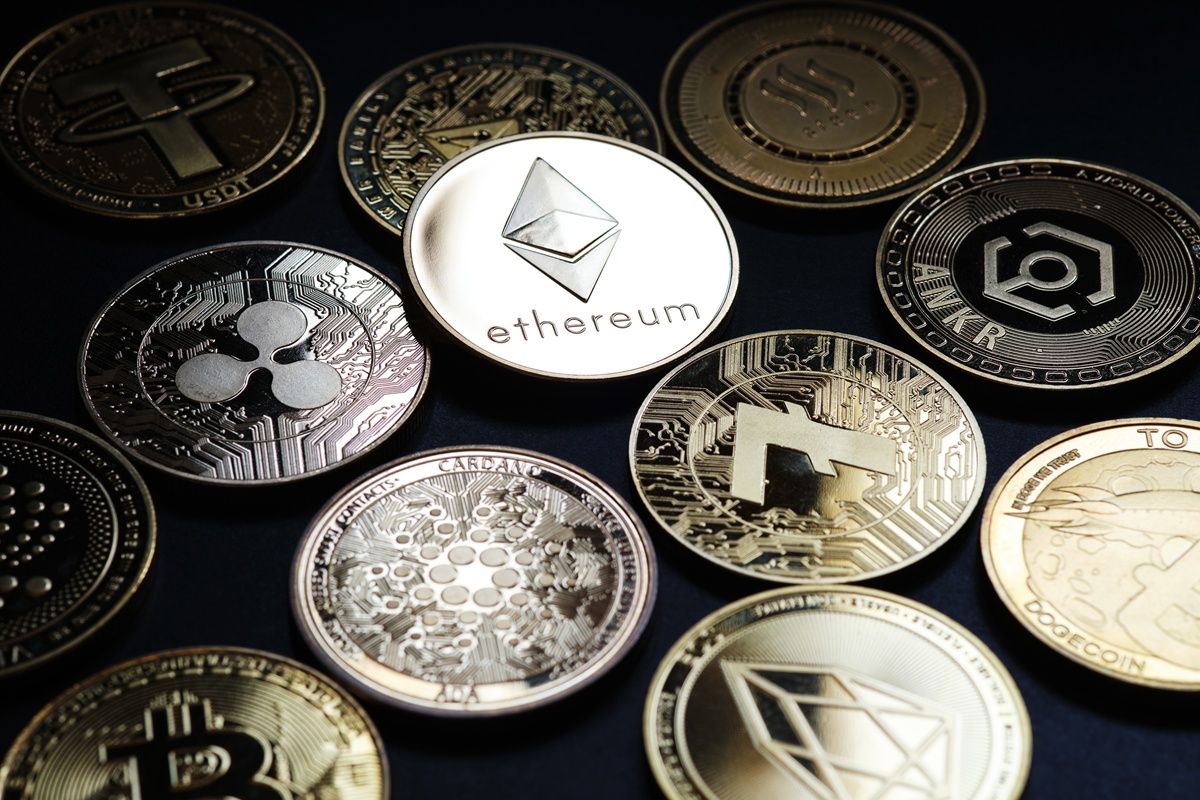
Digital currency of coins.

Why The Future Of Crypto Will Be Built Around Trust Infrastructure

“Louder narratives will not win the next phase of crypto. It will be won by the infrastructure that makes digital value trusted, usable and investable.” DNA Crypto.

The Market Is Moving Beyond The Noise

Crypto has never lacked attention. It has had cycles of excitement, fear, speculation, collapse, recovery and reinvention. Each cycle has produced new language, new products, new platforms and new promises.

But the market is now moving into a more serious phase.

The next stage will not be defined by noise. It will be defined by whether digital value can become trusted enough to use, hold, transfer, settle, collateralise and connect to the real economy.

That requires infrastructure.

Not just technology infrastructure, but trust infrastructure: custody, settlement, onboarding, compliance, escrow, reporting, Tokenisation, authorised routes, investor communication and counterparty discipline.

This is where the future of crypto becomes more interesting. It becomes less about selling exposure and more about building the conditions that allow capital to participate with confidence.

Trust Is The Missing Layer

The crypto market has solved many technical problems, but it has not fully solved the trust problem.

Bitcoin showed that digital ownership could exist. Stablecoins showed that value could move across digital rails. Tokenisation showed that Real Assets could potentially be represented and administered in new ways. Exchanges created market access. Wallets created new forms of control.

But serious capital still asks the same fundamental questions.

Who controls the asset? How is ownership proven? Where does settlement happen? What rights does the investor hold? Who is responsible if something fails? How are funds checked? How are assets protected? How does liquidity work? What happens during stress?

These are not secondary questions. They are the infrastructure questions that determine whether digital assets remain speculative or become durable parts of financial markets.

Bitcoin Started The Trust Conversation

Bitcoin remains central because it changed the meaning of digital ownership. It allowed value to be held directly, transferred across a network and secured through cryptographic control rather than only through a traditional account-based system.

That was a breakthrough, but it also introduced a major responsibility.

If someone can hold value directly, then custody becomes critical. If assets can move without traditional intermediaries, then settlement discipline becomes critical. If ownership depends on private keys, then security, recovery and governance become critical.

This is why Bitcoin custody infrastructure remains one of the most important foundations in digital assets. Bitcoin did more than create a new asset. It forced the market to confront what trust means when ownership becomes digital.

That lesson now extends across the wider digital asset market.

Custody Is Not A Back Office Issue

Custody is one of the clearest examples of trust infrastructure. It is often discussed as an operational detail, but it is much more important than that.

Custody defines how digital assets are controlled, protected, accessed, recovered and governed. For individuals, this may involve self-custody, hardware wallets, seed phrases and personal security. For institutions, it may involve qualified custodians, multi-signature controls, internal approvals, audit trails, insurance considerations and treasury governance.

The market cannot mature if custody remains misunderstood.

A client may believe they have bought Bitcoin, a tokenised asset or another digital instrument, but the quality of that ownership depends heavily on how the asset is held. Weak custody turns digital ownership into operational risk.

Strong custody turns digital ownership into infrastructure.

Settlement Is Where Trust Becomes Practical

Settlement is where promises become real.

A trade, investment or transfer does not matter only because it is agreed. It matters because value moves, records update, counterparties perform and ownership changes in a way that can be trusted.

This is why settlement infrastructure is central to the next phase of digital assets. Bitcoin settlement, Stablecoin settlement, OTC settlement and Tokenisation settlement all raise different questions, but they share one theme: the market needs reliable ways to move value with confidence.

Fast settlement is useful, but speed alone is not enough. Settlement also needs clarity, controls, records, counterparties and responsibility.

A market that settles quickly but unclearly is not mature.

A market that settles efficiently, transparently and with proper controls becomes investable.

Stablecoins Are Part Of The Trust Stack

Stablecoins are often discussed as liquidity tools, but their deeper role is settlement infrastructure.

They can help value move across platforms, borders and markets more efficiently than some traditional payment rails. They may support trading, working capital, cross-border payments, income distribution and Tokenisation workflows.

But Stablecoins only become trusted infrastructure when the framework around them is credible.

That includes issuer quality, reserve confidence, redemption mechanics, transaction monitoring, AML controls, sanctions screening, counterparty management and clear records. Without those layers, Stablecoins may move value quickly but not necessarily safely.

This is why Stablecoins infrastructure is becoming central to the next phase of digital finance. The opportunity is not speed for its own sake.

The opportunity is a settlement that serious capital can understand and trust.

Tokenisation Needs More Than A Token

Tokenisation will be one of the most important parts of the next phase, but only if the market stops confusing tokens with assets.

A token is not the property. It is not an infrastructure project. It is not the income stream. It is not a private market asset. It is a digital representation of rights connected to an underlying structure.

If that structure is weak, the token is weak.

This is why Tokenisation infrastructure requires legal clarity, investor rights, documentation, custody, settlement, reporting, transfer restrictions, valuation, income treatment and exit planning.

Tokenisation becomes powerful when it makes Real Assets easier to access, administer and understand. It becomes dangerous when it is used to make unclear assets look more modern than they really are.

The future of Tokenisation will be decided by structure, not packaging.

Real Assets Raise The Standard

Real Assets bring digital infrastructure closer to the real economy. Property, infrastructure, private credit, land and income-producing assets all create opportunities for Tokenisation and digital ownership.

But Real Assets also raise the standard.

Investors need to know what they own, how rights are enforced, how income is paid, how assets are valued, how transfers work and how exits may happen. Asset owners need confidence that investors are properly onboarded and that the structure will not create future disputes. Partners need confidence that records, settlement and reporting are reliable.

Real Assets cannot be treated like speculative tokens.

They require a higher degree of discipline because the underlying value is connected to legal rights, physical assets, cash flows and long-term capital.

That is why trust infrastructure matters more as crypto moves closer to the real economy.

Escrow May Become A Critical Trust Layer

Escrow plays an important role because many digital asset and Real Asset transactions require conditions to be met before value can move.

Buyers need confidence before releasing funds. Sellers need confidence before transferring rights. Platforms need confidence that documentation, onboarding and settlement conditions are complete. Investors need confidence that transactions are not dependent only on informal promises.

This is where digital asset escrow becomes strategically relevant. It can help organise trust by creating clearer conditions around when value is released and when rights are transferred.

In digital asset markets, escrow may support OTC transactions, Tokenisation workflows, property access, staged settlement, investor protection and cross-border transactions.

Escrow is not glamorous, but serious infrastructure rarely is.

It is useful because it reduces uncertainty at the point where trust matters most.

Compliance Is Not The Enemy Of Infrastructure

Compliance is often treated as the opposite of innovation. That is a weak way to understand the next phase of digital assets.

Compliance does not make digital assets valuable on their own, but it helps create the conditions for trust. It supports onboarding, investor eligibility, transaction monitoring, sanctions screening, recordkeeping, reporting, and responsibility.

For serious capital, those conditions matter.

A family office, institution, asset owner or cross-border investor does not only ask whether an opportunity exists. They ask whether the route into the opportunity is credible, documented and controlled.

This is why compliance becomes part of trust infrastructure. It is not the whole product, but without it, the product becomes difficult to scale responsibly.

The future belongs to firms that can make compliance feel like quality, not friction.

Authorised Routes Will Matter More

As the market matures, authorised routes will matter more. Not every business needs to become every type of regulated provider, but each business needs to know where its role begins and ends.

A firm may focus on education, advisory, Tokenisation strategy, investor communication, infrastructure planning or cross-border capital. Where regulated execution, custody, or other authorised services are required, those services must be provided by the appropriate partners.

That is not a limitation if handled properly. It is a more professional operating model.

The strongest businesses will be clear about which services they provide directly, which services are delivered through authorised providers and how clients should understand the difference.

Clarity is not a legal footnote.

It is part of the product.

The Investor Experience Has To Improve

Trust infrastructure is also about experience. Many digital asset journeys remain confusing for clients and investors. Onboarding can be inconsistent. Custody can be difficult to understand. Transaction routes can be unclear. Reporting can be weak. Responsibilities can be blurred.

That cannot remain the standard if digital assets are going to attract serious capital.

The next generation of digital asset businesses needs to make the investor journey clearer. Clients should understand what they are accessing, how it works, who is responsible, what risks exist and how records are maintained.

This is not about simplifying complex products until the risk disappears. The risk does not disappear.

It is about making the route through the risk more transparent.

That is how trust is built.

Infrastructure Thinkers build the Future Will

The next phase of crypto will not be led only by traders, promoters or token issuers. Infrastructure thinkers will shape it.

These are the people and businesses asking harder questions about how value should be held, how capital should move, how rights should be recorded, how assets should be protected, how investors should be onboarded and how digital ownership should connect to the real economy.

That is not as loud as a market cycle.

But it is more durable.

Infrastructure thinkers understand that the asset is only one part of the system. The wider system includes custody, settlement, compliance, reporting, liquidity, documentation, authorised partners, investor communication and transaction protection.

That is where long-term value is likely to be built.

What This Means For DNA Crypto

For DNA Crypto, this is the clearest direction.

The business started with the belief that digital assets matter because they change how people think about ownership, value, access and financial resilience. That belief remains intact.

The next phase is not about chasing every market narrative. It is about focusing on the infrastructure of digital ownership.

That means Bitcoin as the foundation, Tokenisation as the expansion, Real Assets as the anchor, Stablecoins as part of the settlement layer, escrow as a trust mechanism, custody as an ownership discipline and advisory as the interpretation layer that helps clients understand the market.

This is why digital asset infrastructure is now the correct strategic language for DNA Crypto. It is more precise, more positive and more aligned with where serious capital is going.

The Europe And Growth Market Opportunity

Trust infrastructure also bridges Europe and growth markets.

Europe brings regulatory discipline, governance expectations, investor protection and institutional scrutiny. Growth markets put pressure on adoption, property demand, remittance flows, cross-border capital needs, and practical gaps in financial infrastructure.

The opportunity is not to choose one over the other. It is to understand both.

Digital asset infrastructure can be useful where capital needs better routes, where property markets need clearer access, where settlement is slow, where ownership records are fragmented and where investors need confidence at a distance.

For DNA Crypto, this can become a distinctive strategic position: European discipline, international relevance, and a focus on the infrastructure that makes digital ownership useful beyond theory.

The Capital Behaviour Shift

Capital behaves differently when trust becomes scarce.

In the early market, capital may chase access, novelty or momentum. In a more mature market, capital asks whether the opportunity can withstand scrutiny. It looks at custody, settlement, structure, counterparties, documentation, liquidity, governance and reporting.

This shift is important because it changes what wins.

The asset will not win the future with the loudest story alone. It will be won by the route that capital trusts enough to use.

That is why trust infrastructure is not a defensive theme. It is a growth theme.

It is the layer that allows digital assets to move from interest to adoption.

The Direction Of Travel

The direction of travel is clear. Digital assets are becoming more connected to the real economy, but that connection will only work if the infrastructure is credible.

Bitcoin remains the foundation of digital ownership. Stablecoins support the settlement conversation. Tokenisation connects digital assets to Real Assets. Custody protects control. Escrow supports transaction confidence. Compliance supports responsible access. Advisory helps interpret the system.

Together, these layers create the next financial architecture.

This is where the positive story now sits.

The market does not need more noise. It needs more trust.

Conclusion

The future of crypto will be built around trust infrastructure.

Not because narratives no longer matter, but because narratives alone cannot carry serious capital. The market needs custody, settlement, Tokenisation, Stablecoins, escrow, compliance, reporting, authorised routes and better investor communication.

Bitcoin started the conversation by changing what digital ownership could mean. The next phase is about building the infrastructure that makes digital ownership usable across more assets, more markets and more forms of capital.

For DNA Crypto, this is the right direction.

Bitcoin is the foundation. Tokenisation is the expansion. Real Assets are the anchor. Infrastructure is the bridge.

The next chapter is not about louder crypto.

It is about trusted digital ownership.

Relevant DNACrypto Articles

Image Source: Envato Stock

Disclaimer: This article is for informational purposes only and does not constitute financial, legal, or investment advice.


Read more →

Close Up Of Businessman Hand Holding Construction Model.

Tokenisation Is The Bridge Between Digital Assets And The Real Economy

“Bitcoin proved digital ownership could exist. Tokenisation asks how that ownership logic can reach property, Real Assets and the wider economy.” DNA Crypto.

The Next Phase Needs A Bridge

Digital assets have spent years proving that value can move, settle and be held in new ways. Bitcoin introduced digital scarcity and direct ownership. Stablecoins showed how value could move across digital rails with greater speed and flexibility. Crypto markets demonstrated that global liquidity could form around new assets at an extraordinary pace.

But the next phase needs a bridge.

That bridge is Tokenisation.

Tokenisation connects the digital asset market with the real economy. It asks whether the same infrastructure that changed how people think about digital ownership can also improve access to property, private markets, infrastructure, income-producing assets and cross-border capital.

This is where the conversation becomes more serious. The question is no longer only whether digital assets can exist. The question is whether digital infrastructure can make real economic value easier to access, administer, settle and understand.

Tokenisation Is Not Just A Crypto Story

Tokenisation is often placed inside the crypto category, but that is too narrow. The most important Tokenisation opportunities may not look like crypto at all.

They may include property investment, private credit, infrastructure finance, asset-backed income, international investor access, fund administration, escrow processes, settlement workflows, and ownership records.

That matters because the strongest use cases are not built around speculation. They are built around practical market friction.

Many assets are difficult to access. Many private markets are administratively heavy. Many property investments are capital-intensive. Many cross-border transactions are slowed by documentation, banking, settlement and trust issues.

Tokenisation becomes interesting when it helps solve those problems.

Not when it simply puts a token on top of them.

The Token Is Not The Asset

The most important discipline in Tokenisation is remembering that the token is not the asset.

A token is a representation of rights, ownership, access, or entitlement associated with an underlying structure. If that structure is weak, the token does not improve the investment. It may simply make a weak structure appear more modern.

Investors need to know what they own, how rights are documented, who controls the asset, how income is distributed, how transfers are handled, how custody works and what happens if liquidity does not appear.

This is why serious Tokenisation starts with substance, not technology.

The asset comes first. The legal structure comes next. Investor rights must be clear. Custody and settlement must be reliable. The tokenised layer should then support the structure, not replace it.

Real Assets Give Tokenisation Its Strongest Foundation

Real Assets provide Tokenisation with a stronger foundation because they are linked to tangible economic value. Property, infrastructure, land, private credit and income-producing assets are easier for serious capital to understand than abstract token narratives.

This does not make them simple. Real Assets carry legal, valuation, operational, tax, liquidity and jurisdictional complexity. But they do provide something the digital asset market often needs: substance.

An investor can understand a building, a rental stream, a secured credit position, a development project or an infrastructure asset. The challenge is not explaining why the asset exists. The challenge is improving how capital accesses it.

That is where Tokenisation can become useful.

It can support fractional access, clearer records, improved administration, faster settlement, better reporting and more efficient transfer processes where the structure allows.

Property May Become The First Serious Test

Property is one of the clearest test cases for Tokenisation because the asset class is familiar, valuable, and rife with friction. Many investors want property exposure, but direct ownership can be expensive, slow and administratively complex.

For international investors, the friction is even greater. They may need to understand local laws, banking, taxes, documentation, ownership structures, settlement procedures, currency movements, and exit options from a distance.

Tokenisation can help, but only if it is built carefully.

A tokenised property interest must explain the rights behind the token. Is the investor holding equity, debt, income participation, a fund interest, a company share or another structured exposure? How is the asset valued? How is income paid? How can the investor exit? Who manages the property? Who controls the records?

These questions are not obstacles to Tokenisation. They are the work.

Ownership Infrastructure Matters More Than Distribution

A common mistake is treating Tokenisation as a distribution tool first. The argument is often that more investors can access an asset because it has been divided into smaller digital units.

That may be useful, but it is not enough.

Distribution without trust creates risk. If more investors can access an asset but fewer understand the structure, the market becomes weaker, not stronger.

The better approach is to treat Tokenisation as ownership infrastructure. That means focusing on documentation, investor records, transfer rules, settlement flows, custody arrangements, communication and reporting.

Access matters, but trust determines whether access becomes valuable.

This is why the future of Tokenisation will not be won by platforms that make assets easier to buy. It will be won by platforms and advisers that make ownership easier to understand.

Cross-Border Capital Needs Better Infrastructure

Cross-border capital is one of the most powerful reasons Tokenisation matters. Many investors want access to assets outside their home country, and many asset owners want access to international capital.

The friction between those two groups is significant.

There are banking delays, compliance requirements, currency considerations, local documentation, unfamiliar counterparties, settlement timing, legal differences and reporting expectations. These issues can slow investment, reduce confidence and limit participation.

Digital infrastructure can improve parts of that process. It can organise onboarding, provide clearer ownership records, support faster settlement, improve investor reporting and create better transaction history.

But the goal should not be to make cross-border capital less disciplined.

The goal should be to make it more trusted.

Stablecoins May Support The Settlement Layer

Stablecoins can play an important role in Tokenisation because settlement is a key friction point in private markets and cross-border transactions.

If investors are subscribing into a tokenised asset, receiving income, transferring ownership or exiting a position, payment infrastructure matters. Traditional banking rails can be slow, expensive or fragmented, especially when investors and assets are in different jurisdictions.

Stablecoins may help support faster settlement, but only when they are subject to appropriate controls. That includes onboarding, AML checks, sanctions screening, transaction monitoring, reliable counterparties and clear records.

Stablecoins are not the whole answer, but they may become part of the Tokenisation stack.

The more serious the asset, the more important the settlement discipline.

Escrow Can Strengthen The Trust Layer

Escrow is another important part of the Tokenisation conversation. Many Real Asset transactions require that conditions be met before value, rights, or ownership records are released.

Investors may want confirmation that documentation is complete. Asset owners may want confirmation that funds have arrived. Platforms may need to verify compliance, transfer restrictions and investor eligibility before a transaction settles.

Escrow infrastructure can help organise these steps.

It can support transaction confidence by creating clearer conditions, staged release, audit trails and counterparty protection. That matters because Tokenisation is not only about faster transfer. It is about a safer and more controlled transfer.

For Real Assets, the trust layer may be just as important as the digital layer.

Liquidity Has To Be Designed With Honesty

Tokenisation is often associated with liquidity, but liquidity is not automatic.

A tokenised asset is not liquid simply because it is digital. Liquidity depends on demand, pricing, transfer rules, investor eligibility, compliance processes, market access, asset quality and credible exit routes.

This is especially true for Real Assets. Property and private-market assets are less liquid than listed equities. Tokenisation may improve administration and transferability, but it cannot guarantee buyers.

The market needs more honest language around this point.

The strongest Tokenisation models will not promise instant liquidity. They will design realistic liquidity pathways and clearly explain the limits.

That approach is more credible, and credibility is what serious investors need.

Institutional Adoption Requires More Than Technology

Institutional adoption of Tokenisation will not happen because the technology exists. It will happen when the surrounding infrastructure is strong enough for professional capital.

That means legal clarity, governance, custody, reporting, investor eligibility, settlement processes, accounting treatment, tax understanding, transfer controls and risk management.

Institutions do not adopt infrastructure because it is fashionable. They adopt it when it reduces friction, improves transparency, creates efficiency or opens a credible route to opportunity.

This is why the Tokenisation conversation has to move beyond technology.

The institutions that matter will not ask only how the token works. They will ask what the structure is, who is responsible, how rights are enforced and how the asset behaves under stress.

Those are the questions that define real adoption.

Tokenisation Can Make Private Markets More Understandable

One of the most valuable roles of Tokenisation may be improving how private markets are understood.

Private market investing can be opaque. Information may be hard to access. Reporting can be inconsistent. Transfers can be slow. Minimum investment sizes can be high. Exit routes may be unclear.

Tokenisation can help address some of these problems by enabling better records, clearer investor communication, more efficient administration, and more structured transfer processes.

This does not remove risk. It does not make private markets suitable for everyone. It does not replace professional advice or legal structure.

But it can make certain assets easier to administer and understand.

That is a more mature promise than saying Tokenisation opens everything to everyone.

Why This Matters For DNA Crypto

For DNA Crypto, Tokenisation is a natural next pillar, as it connects the original digital-asset thesis to a more practical economic opportunity.

Bitcoin remains the foundation because it teaches the market about digital ownership, custody and financial resilience. Tokenisation is the expansion because it applies digital-ownership thinking to Real Assets, property, income, private markets, and cross-border capital.

That is a more constructive story for the next phase.

DNA Crypto is moving beyond old brokerage language and towards the infrastructure of digital ownership. That means Bitcoin education, Tokenisation, Real Asset access, Stablecoin settlement, escrow thinking, custody awareness, cross-border capital and institutional advisory.

This gives the business a clearer purpose.

It is not about making Real Assets look like crypto.

It is about making digital infrastructure useful to the real economy.

The Europe And Growth Market Connection

Tokenisation also creates a bridge between regulated markets and growth markets.

Europe brings regulatory discipline, investor-protection expectations, governance standards, and institutional scrutiny. Growth markets may bring property demand, infrastructure needs, remittance flows, mobile finance adoption and international capital interest.

A serious Tokenisation strategy can connect these two worlds if it respects both sides.

It should not treat growth markets as a way around regulation. It should treat them as places where better investment infrastructure may have real-world value.

For DNA Crypto, this is a distinctive direction. The business can speak to European discipline while also recognising the opportunity in international markets where access to capital and ownership infrastructure still need improvement.

That combination is more interesting than generic crypto commentary.

The Capital Behaviour Shift

Capital is moving away from token narratives without substance and towards structures it can evaluate. Investors want to understand the asset, rights, cash flows, risks, custody route, settlement process, and exit plan.

Tokenisation becomes valuable when it helps answer those questions better than the existing system.

Capital does not move because something has been digitised. It moves when the opportunity becomes more understandable, more accessible, more transparent or more efficient.

That is the capital behaviour shift.

Tokenisation will win when it becomes useful infrastructure, not when it remains a marketing term.

The Direction Of Travel

The direction of travel is clear. Digital assets are becoming more connected to the real economy.

Bitcoin remains the foundation of digital ownership. Stablecoins are developing the settlement layer. Tokenisation is building the bridge to Real Assets. Custody, escrow, compliance and advisory are becoming the trust infrastructure around the market.

This is where the positive story sits.

The next phase is not about chasing every new token. It is about building better systems around assets that already matter.

That is why Tokenisation can become one of the most important bridges in finance.

Conclusion

Tokenisation is the bridge between digital assets and the real economy.

It connects the ownership logic introduced by Bitcoin with the practical needs of property, Real Assets, private markets, settlement and cross-border capital.

But Tokenisation will only matter if it is built with discipline. The token is not the asset. The structure matters. The rights matter. The custody route matters. The settlement layer matters. The investor experience matters.

For DNA Crypto, this is the next chapter: Bitcoin as the foundation, Tokenisation as the expansion and infrastructure as the bridge.

That is a constructive direction.

It moves the conversation away from hype and towards ownership, trust, capital formation and real economic value.

Relevant DNACrypto Articles

Image Source: Envato Stock

Disclaimer: This article is for informational purposes only and does not constitute financial, legal, or investment advice.

Read more →

Ransomware attack with chains binding a glowing data vault symbolising bitcoin security, blockchain encryption, cyber protection, and cryptocurrency risk.

Why Bitcoin Still Sits At The Centre Of Digital Asset Infrastructure

“Bitcoin still sits at the centre of digital asset infrastructure because it changed the question from price to ownership.” DNA Crypto.

The Market Needs To Return To First Principles

Digital assets have been the subject of many narratives. Trading, speculation, exchanges, tokens, DeFi, NFTs, Stablecoins, Tokenisation, regulation and institutional adoption have all taken their turn at the centre of attention.

But underneath those narratives, Bitcoin still matters.

Not because every conversation in digital assets needs to start and end with Bitcoin. It does not. The market is broader now, and the next phase will include Tokenisation, Real Assets, Stablecoins, custody, settlement, compliance and cross-border capital.

Bitcoin still matters because it posed the first serious question digital assets have asked of the financial system: What does it mean to own value directly in digital form?

That question has not gone away. If anything, it has become more important as the market matures.

Bitcoin Was Never Only A Price Story

Bitcoin is often discussed in terms of price, cycles, and market performance. That is understandable, but it is not enough.

The deeper importance of Bitcoin is that it created a new model of digital ownership. It showed that value could exist outside a traditional account-based system, move across borders, be held directly and settle through a network rather than through the usual financial intermediaries.

That does not make every use case simple. It does not remove risk. It does not mean clients should ignore custody, regulation, taxation, security or market volatility.

But it does explain why Bitcoin remains foundational.

Bitcoin is not just another digital asset. It is the reference point for custody, scarcity, self-sovereignty, settlement finality and financial independence in the digital asset market.

Ownership Is The Core Innovation

The most important word in Bitcoin is not speculation. It is ownership.

Bitcoin made digital ownership feel real in a way that previous systems did not. A person or institution could hold a digitally scarce asset, control access through private keys and move value without relying entirely on the permission structure of traditional finance.

That idea was radical because most digital finance before Bitcoin remained account-based. Value sat inside banks, brokers, platforms, payment networks or other intermediaries. Access depended on credentials, policies, jurisdictions and operating hours.

Bitcoin changed the mental model.

It made ownership portable, programmable and directly controllable. That is why it remains central to the digital asset conversation even as the market expands into Tokenisation and Real Assets.

Custody Is The Real Bitcoin Question

Bitcoin also made custody impossible to ignore. If ownership can be direct, then responsibility becomes more direct as well.

That is both Bitcoin’s strength and its challenge.

Self-custody gives the holder control, but it also creates operational risk. Institutional custody can improve governance, recovery procedures and reporting, but it introduces trust in a service provider. Multi-signature arrangements, hardware wallets, qualified custodians, and corporate treasury policies all fall within this custody conversation.

This is why Bitcoin custody is not a side issue. It is one of the central infrastructure questions in digital assets.

Clients do not only need to ask whether they want exposure to Bitcoin. They need to ask how that exposure is held, who controls it, what protections exist, what happens if access is lost and how ownership can be verified.

The quality of custody often determines the quality of the Bitcoin experience.

Bitcoin Teaches The Market About Responsibility

Bitcoin carries an uncomfortable lesson for modern finance. Ownership without responsibility is fragile.

Traditional financial systems often separate users from the operational reality of ownership. Assets appear inside accounts. Institutions handle transfers. Mistakes may be reversed. Platforms mediate access.

Bitcoin forces a different discipline.

It asks the holder to understand keys, wallets, recovery, security, counterparties, settlement and personal or institutional processes. For some people, that is too much responsibility. For others, it is precisely the point.

This is why Bitcoin education remains important. The market does not need more slogans about freedom. It needs a better understanding of what financial control actually requires.

That is infrastructure thinking, not hype.

Bitcoin As A Liquidity Reserve

Bitcoin also has a role in the liquidity conversation. For some investors, Bitcoin is not only a speculative asset. It is a form of liquid digital reserve that can be held, transferred, collateralised, sold or moved across markets more easily than many traditional assets.

That does not mean Bitcoin is risk-free. It is volatile, and volatility matters. But liquidity and volatility are not the same issue.

A highly liquid asset can still move sharply in price. A stable-looking asset can still be difficult to exit under stress. Serious investors need to understand both.

Bitcoin’s role as a liquidity reserve comes from its market depth, global recognition, settlement model and independence from many traditional financial rails. In uncertain markets, those characteristics remain important.

This is why Bitcoin continues to mirror capital behaviour, not just crypto culture.

Institutions Still Need To Understand Bitcoin

Institutional adoption has changed the Bitcoin conversation, but it has not made Bitcoin simple. Large investors still need to understand custody, governance, investment policy, accounting treatment, counterparty risk, execution, reporting and liquidity management.

For institutions, Bitcoin is not only a question of belief. It is a question of the operating model.

Can the asset be held securely? Can exposure be governed properly? Can risk be reported? Can transactions be executed cleanly? Can the asset sit within a wider treasury, portfolio or long-term capital strategy?

These questions are not anti-Bitcoin. They are the questions that appear when Bitcoin moves from individual conviction into professional capital.

That transition is one reason Bitcoin infrastructure remains important.

Bitcoin Is The Foundation, Not The Whole Building

Bitcoin may sit at the centre of digital asset infrastructure, but it is not the whole market.

Stablecoins are reshaping settlement. Tokenisation is the process of connecting digital infrastructure to Real Assets. Custody providers are professionalising asset protection. Escrow models may improve transaction confidence. Cross-border capital is looking for better rails. Institutional advisory is becoming more important as the market becomes more complex.

The point is not to reduce every conversation about digital assets to Bitcoin.

The point is to recognise that Bitcoin established the foundation: digital scarcity, direct ownership, network settlement and custody responsibility.

The rest of the market is now building around, beside and beyond that foundation.

Tokenisation Builds On The Ownership Question

Tokenisation is one of the clearest examples of how Bitcoin’s original ownership question has expanded.

Bitcoin proved that digital ownership could exist without being merely a database entry controlled by a central institution. Tokenisation now asks whether digital ownership infrastructure can be applied to Real Assets, property, private markets, income streams and other forms of economic value.

That is a different market, but the philosophical connection is clear.

The question is still ownership. What does the investor own? How are rights recorded? How is transfer handled? How is custody managed? How does settlement work? What happens when something goes wrong?

Tokenisation will not succeed by pretending every asset is Bitcoin. It will succeed by applying digital ownership principles to assets that need better access, administration and liquidity design.

Stablecoins Extend The Settlement Conversation

Stablecoins also connect to the Bitcoin infrastructure conversation because they focus on settlement. Bitcoin introduced a new form of value transfer, but Stablecoins have become important because they connect digital rails to fiat-denominated liquidity.

That makes them useful in areas such as trading, cross-border payments, working capital, settlement and digital asset transactions. But Stablecoins also require discipline. They need controls around issuers, reserves, counterparties, transaction monitoring and regulatory treatment.

This is where the market becomes more mature.

Bitcoin taught the market about independent digital value. Stablecoins are teaching the market about digital settlement. Tokenisation is teaching the market about digital ownership of Real Assets.

Together, they form parts of the infrastructure story.

Why Bitcoin Still Matters To DNA Crypto

Bitcoin remains central to DNA Crypto because it is where the original digital ownership thesis begins.

The company’s first phase was shaped by the need to help people understand access, custody, liquidity and the practical realities of holding digital assets. That work still matters, even as the business now moves towards infrastructure, Tokenisation, institutional advisory and Real Asset access.

Bitcoin gives the business a clear foundation. It is the asset that forces the strongest questions about financial protection, custody, ownership, liquidity and trust.

Those questions remain relevant whether the next article is about Tokenisation, Stablecoins, escrow, cross-border capital, or Real Assets.

Bitcoin is not the whole future of DNA Crypto, but it remains the reference point for why the business exists.

The Business Is Moving From Access To Infrastructure

The next phase for DNA Crypto is not about returning to old brokerage language. It is about building a clearer position around the infrastructure of digital ownership.

That includes Bitcoin education, custody understanding, Tokenisation, Real Assets, Stablecoin settlement, escrow thinking, cross-border capital and institutional advisory.

This is a more positive direction because it is not defined by what the business cannot do. It is defined by what the market still needs.

The market still needs a trusted explanation. It still needs better ownership infrastructure. It still needs practical thinking around how capital moves, how assets are held and how investors can understand digital value without being pulled into hype.

That is where DNA Crypto can contribute.

The Capital Behaviour Shift

Capital behaves differently when markets mature. In the early phase, capital may chase novelty, price movement and momentum. In the later phase, capital asks harder questions about custody, liquidity, legal structure, counterparty risk, settlement and durability.

Bitcoin sits at the centre of that shift because it forces investors to confront what ownership really means.

Can value be held outside the traditional system? Can it be secured properly? Can it remain liquid? Can it act as a reserve? Can it survive market cycles? Can institutions build around it without weakening its original purpose?

These are not retail questions. They are infrastructure questions.

The capital that understands them will be better positioned for the next phase of digital assets.

The Direction Of Travel

The direction of travel is clear. Digital assets are moving from speculative access towards infrastructure, ownership and serious capital formation.

Bitcoin remains the foundation because it is the cleanest example of digital scarcity and direct ownership. Tokenisation will extend the ownership conversation into Real Assets. Stablecoins will support settlement. Custody and escrow will improve trust. Advisory will help clients navigate a more complex market.

This is where the positive story now sits.

Not in pretending the market is easy. Not in ignoring regulation. Not in chasing every new token narrative.

The positive story is that digital assets are becoming more useful when they are treated as infrastructure.

Conclusion

Bitcoin still sits at the centre of digital asset infrastructure because it changed the question from price to ownership.

It taught the market about scarcity, custody, settlement, liquidity, responsibility and financial resilience. Those themes remain relevant even as the market expands into Tokenisation, Stablecoins, Real Assets and cross-border capital.

For DNA Crypto, Bitcoin remains the foundation. The next phase is not about abandoning that foundation. It is about building from it.

The business now moves towards the infrastructure of digital ownership: Bitcoin, Tokenisation, Real Assets, Stablecoin settlement, custody education, escrow thinking and institutional advisory.

That is a stronger and more constructive story.

Bitcoin remains the beginning.

Infrastructure is the next chapter.

Relevant DNACrypto Articles

Image Source: Adobe Stock

Disclaimer: This article is for informational purposes only and does not constitute financial, legal, or investment advice.

Read more →