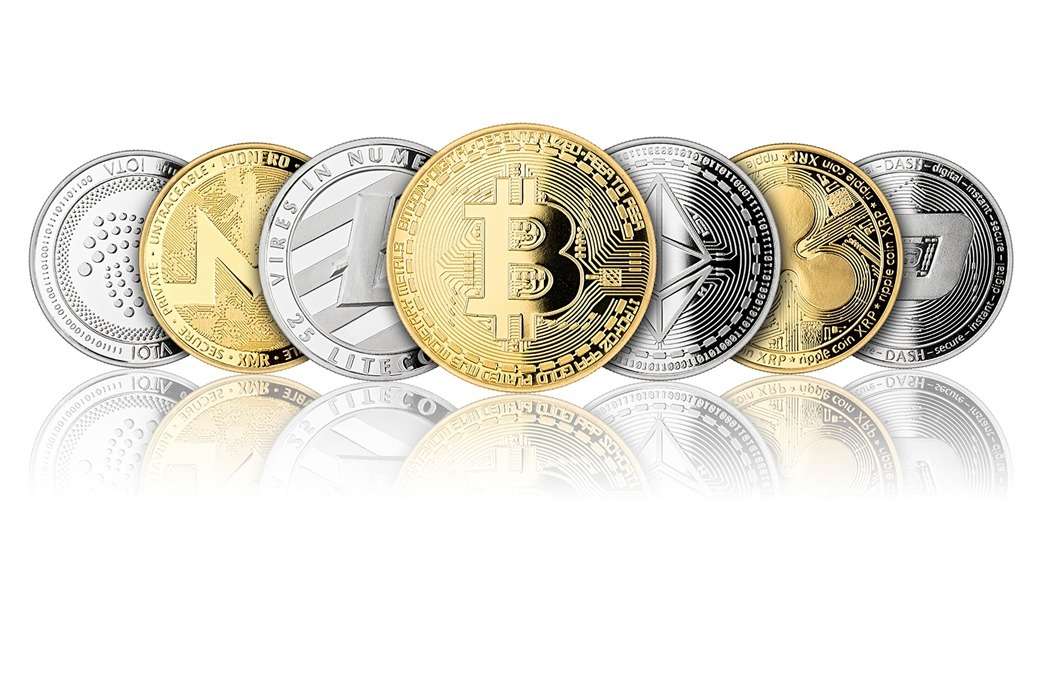
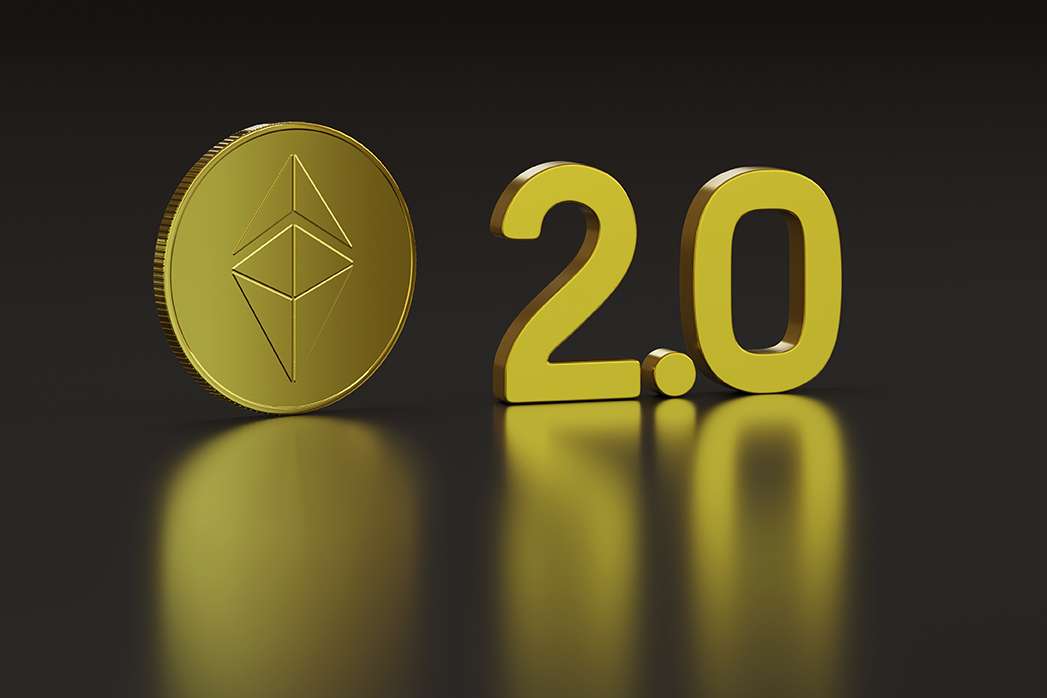
Ethereum 2.0 Symbols on a black background.

Enough Speculation as Ethereum 2.0 is Set to Launch in September

“Protocol upgrades change mechanics, not incentives.” — DNA Crypto.
Enough Speculation as Ethereum 2.0 is Set to Launch in September Ethereum’s move to proof-of-stake may still be at the dock. Preston Van Loon, the Ethereum core developer, announced to a panel that the move would enter its final stages in the next three months. He said that September was the most reasonable timeline for the move. Justin Drake, a panel member, expressed a strong desire to make it happen by September. Justin and Preston have repeatedly referenced the “difficulty bomb” in this context; they are referring to the event known as The Merge. A Merge is the process by which the proof-of-stake beacon chain is merged with the existing Ethereum blockchain. Hence, the Ethereum network will shift from mining-based to staking-based. Individuals with high-performance supercomputers operate a mining-based network to earn Ethereum. On the other hand, staking is when Ethereum users deposit coins to earn rewards. It is important to note that the core developers didn’t choose September randomly. In May, Ethereum Core developers agreed not to upgrade the network to delay the Merge, which will begin to destabilise the network. The Merge is a blockchain constituent that deliberately slows the network. Its main intention was to drive the move to proof-of-stake among developers and to ensure miners found it challenging to remain behind once the initiative was launched. Although it is still in the testing phase, Ethereum Core developers have chosen to give it their full attention. If completed smoothly, the Merge would render the difficulty bomb useless. Both proof-of-work and stakeholder incentives aim to ensure the network is not only secure but also decentralised. However, proof-of-stake offers more advantages than proof-of-work. Proof-of-stake, for example, uses significantly less energy while also making it easier for individuals to run a network. Therefore, proof-of-stake is more secure and decentralised than proof-of-work. However, the primary reason Ethereum holders worldwide are waiting for the Merge is that it reduces Ethereum issuance by up to 90%. Fewer issuance means the demand outweighs the supply; thus, the coin’s price skyrockets. Currently, CoinMarketCap data show that a single ETH coin is worth about $2,000. The Merge is expected to push Ethereum to its highest price, surpassing its November 2021 price of $4,891. Signs of proof of stake could be seen as early as December 2020, during the completion of Phase 0, referred to as “Ethereum 2.0, which is a set of renovations to scale the network and make it safer. However, at that time, it was simply a beacon chain. It was a proof-of-stake network, but it could not be relied on to perform any function. Therefore, holders can only lock their Ethereum coins into it in hopes of future profits; however, The Merge will change that. Ethereum 2.0 is not the network’s final upgrade. A key component of Ethereum 2.0 is sharding, a strategy that enables the Ethereum network to be subdivided into multiple chains. According to the Ethereum Foundation, authenticators will only be required to validate data for the entity (shard) they are validating, rather than the entire network. The foundation adds that this strategy will significantly and immediately reduce hardware requirements. Image: Adobe Stock Disclaimer: This article is provided for informational purposes only. It is not offered or intended to be used as legal, tax, investment, financial, or other advice.

Read more →

Bitcoins and Crypto Finance.

The Pros and Cons of Cryptocurrency

The Pros and Cons of Cryptocurrency Disruption of the financial industry and its structures has been an ongoing conversation for a while, and cryptocurrency has been a part of this discussion. There are several reasons why some people believe cryptocurrency is a transformational technology,…

Read more →

The words goldman sachs on a background of bitcoin.

Goldman Sachs Backed Loans as a Result of Cryptocurrency

Goldman Sachs Backed Loans as a Result of Cryptocurrency

Giant Investment bank Goldman Sachs has allowed its clients to borrow cash using Bitcoin as collateral. The Bitcoin-backed loan model was granted using a special lending department within the bank. According to experts, the move could spur greater involvement by the financial sector in the cryptocurrency market.

Typically, large banks’ acceptance of a new asset class is viewed as a significant indicator of industry progress. The launch of over-the-counter bitcoin options is a considerable achievement for Goldman Sachs, which is among the first financial institutions of its kind.

The bank’s spokesperson told CoinDesk that they recently secured a lending facility, which is now used to lend collateralised BTC, with the borrower retaining ownership of the Bitcoin. All these credit procedures are structured in line with the 24/7/365-day risk management guidelines.

What is a Bitcoin Backed Loan?

A Bitcoin-backed loan allows anyone to take advantage of the volatility of the cryptocurrency market by borrowing fiat currencies such as US Dollars, Sterling Pounds, Euros, and more. The loans are initiated by individuals who deposit their BTC into a Cryptopay account as collateral. In exchange, they receive a loan in their desired currency, which they can spend as they please. Backed Loans enable margin lending on the blockchain and exemplify a decentralised financial system built on Ethereum.

Such loans allow borrowers to obtain fiat currency by fronting their Bitcoin (or other cryptocurrency) as collateral, without having to sell.

As Goldman Sachs (GS) continues to lay the groundwork for its highly anticipated entrance into the cryptocurrency market, a new report finds that banking giants are steadily increasing their involvement in virtual assets, with many firms already participating in initial coin offerings (ICOs), buying and selling cryptocurrencies, and exploring the possibility of launching their own crypto products.

BlackRock, the world’s largest asset manager with $10 trillion in assets under management, announced the launch of a blockchain-focused exchange-traded fund (ETF). Under a $ 400 million funding arrangement, the company will also partner with the blockchain company Circle.

Effects of The Giant Investment Bank’s Loaning Actions

Propy, the blockchain real estate platform, announced a partnership with Abra to enable its customers to access home loans using cryptocurrency holdings as collateral. This new feature is included in all real estate purchases on the Propy platform.

Just last month, a new homeowner purchased an apartment in Austin, Texas, via USDC.homes, which is powered by Decentralised Title, Time and Location (DTTL) technology. USDC.homes is a platform where buyers can purchase properties from sellers who use the platform’s DTTL technology. In this case, the seller who sold the property on the USDC.The home’s platform is the previous owner of the apartment.

El Salvador is currently raising funds for its Bitcoin-backed bonds, which aim to raise $1 billion for the development of BTC City and to increase the size of the country’s BTC reserves.

Image Source: Adobe Stock

Disclaimer: This article is provided for informational purposes only. It is not offered or intended to be used as legal, tax, investment, financial, or other advice.
Read more →

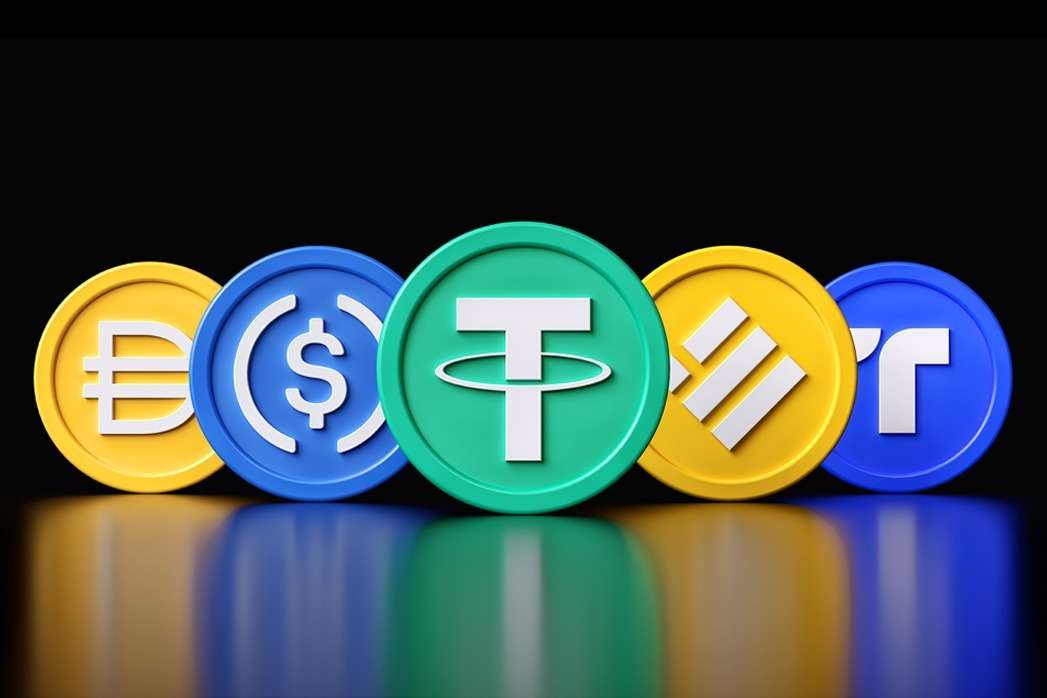
Top five cryptocurrency stablecoin tokens by market capitalization on March 2022. Tether, Usd Coin, Binance Usd, Terra Usd and Dai. High quality 3D

Stablecoins – What are They? How Do They Work?

A Stablecoin is a cryptocurrency whose value is pegged to an external asset, such as fiat currency or gold, to maintain a stable value. Some cryptocurrencies offer several benefits; the most notable is that they do not require a central authority to process transactions, thereby enabling their use worldwide. However, crypto’s crucial debit is that crypto prices fluctuate frequently.

Therefore, these assets are complex for the public to use. Typically, people want to know how much money they have to make financial decisions. The inherently unpredictable nature of crypto contrasts with the price stability enjoyed by money. The value of currency, e.g., the U.S. dollar, is also affected by changes in value, but to a lesser extent than cryptocurrencies.

Stablecoin Overview

Stablecoins aim to mitigate value fluctuations by pegging crypto to a stable external reference – typically fiat currencies. Fiat is a currency issued by the government and used in daily transactions. Examples include the United States dollar ($), the pound sterling (£), and the Euro (€).

Generally, the reality propelling Stablecoin will comprise a” reserve “where it steadily stores the asset or basket of means supporting Stablecoin. They are pegged to tangible – world assets. Whenever a Stablecoin holder withdraws their assets, the total value of the withdrawal is subtracted from the standby cash reserve.

An intricate type of Stablecoin is collateralised with cryptocurrencies other than fiat currencies, yet it is still designed to track a conventional asset.

Maker is a renowned Stablecoin supplier that uses this medium and achieves this milestone using the “Vault, which locks up a holder’s crypto security. As soon as the intelligent contract proves that the guarantee is in place, the contract makes the holder eligible for a DAI loan.

Algorithmic Stablecoins are another class of Stablecoins. It is not collateralised. They are either burned or minted to preserve the coin’s value.

Categories of Stablecoin Collateral

  • Fiat: It is the most common collateral for Stablecoin; the most popular being the U.S dollar.
  • Precious metals: Some cryptocurrencies are pegged to precious metals, e.g., gold & Silver.
  • Cryptocurrencies Some Stablecoins use the likes of Ether, Ethereum’s network native coin, as security.

Common Stablecoins

  • Tether (USDT): Tether is one of the most widely used Stablecoins, pegged to the value of the US dollar. It is known for its high liquidity and is widely used for trading and transactions in the cryptocurrency space.
  •  
  • USD Coin (USDC): USDC is another primary Stablecoin pegged to the US dollar and is supported by several major cryptocurrency exchanges. It’s known for its transparency and regulatory compliance.
  •  
  • DAI: DAI is unique compared to other Stablecoins as it is decentralised and maintains its value by using smart contracts and collateral on the Ethereum blockchain. It is not pegged to any specific fiat currency but aims to maintain a stable value around $1 USD.
  •  
  • Binance USD (BUSD): Binance USD is a stablecoin issued by Binance and pegged to the US dollar. It’s backed by reserves of US dollars held by Paxos Trust Company.
  •  
  • TrueUSD (TUSD): TrueUSD is a USD-backed stablecoin that operates similarly to USDC and USDT, aiming to provide stability and transparency through regular audits and a reserve-backed system.
  •  
  • Paxos Standard (PAX): Paxos Standard is a regulated USD-backed Stablecoin issued by Paxos Trust Company. It’s designed to be fully collateralised by US dollars held in FDIC-insured banks.
  •  
  • HUSD: HUSD is an ERC-20 Stablecoin that is backed by multiple Stablecoins, aiming to provide users with a diversified and balanced portfolio.

Finally, there are some drawbacks to Stablecoins, mainly due to their typical structure. Hence, it presents distinct challenges compared with other cryptocurrencies. 

Cryptocurrency was designed to replace third-party firms that manage users’ funds. These third-party firms can block certain transactions. However, some Stablecoins can also block certain transactions.

Disclaimer: This article is provided for informational purposes only. It is not offered or intended to be used as legal, tax, investment, financial, or other advice.

Read more →