

“Crypto capital is no longer chasing volatility. It is seeking stability, yield, and real-world backing.” DNA Crypto.
The Shift Is Already Happening
Crypto markets have created significant wealth over the past decade.
Early participants focused on access, growth and market timing. Returns were driven by volatility, and success was often measured by the ability to navigate cycles.
That dynamic is changing.
As portfolios mature, investor behaviour is evolving. The question is no longer how to generate returns, but how to protect and compound capital over time.
This shift reflects a broader transition from speculative participation to structured allocation, similar to the patterns observed in traditional financial markets.
As outlined in the crypto narrative cycle, markets naturally move from hype-driven growth to infrastructure-driven stability.
The Problem With On-Chain Yield
Decentralised finance introduced new ways to generate yield.
Liquidity provision, staking, and lending created opportunities for returns previously unavailable. However, these models are inherently unstable.
Yield farming is inconsistent, often driven by incentives rather than underlying economic value. Smart contract risk introduces exposure that is difficult to quantify, and platform failures continue to demonstrate structural weaknesses.
Returns are rarely predictable.
Crypto created liquidity, but not stability.
As explored in DeFi evolution and infrastructure separation, the market is already distinguishing between sustainable financial systems and experimental yield models.
Why Property Is The Natural Destination
As capital seeks stability, it moves towards assets that generate consistent income and retain long-term value.
Property has historically fulfilled this role.
It provides:
- – Predictable rental income
- – Tangible asset backing
- – Protection against inflation
- – Long-term appreciation potential
This makes it a natural destination for maturing crypto capital.
As outlined in real-world asset tokenisation, the integration of digital capital with real assets is not a trend, but a structural evolution.
Property is where capital settles.
The Problem With Traditional Property
Despite its advantages, traditional property investment remains inaccessible to many investors.
High entry thresholds, often exceeding six figures, limit participation. Liquidity is constrained, transactions are slow, and asset management introduces additional complexity.
This creates a disconnect.
While property offers stability, it lacks flexibility.
Capital becomes locked, costs remain high, and exit strategies are limited.
These constraints have historically prevented broader participation.
Tokenised Property Changes Everything
Tokenisation removes many of these barriers.
By representing property ownership digitally, investors can access real estate markets with lower capital requirements, improved liquidity and simplified management structures.
This enables:
- – Lower entry points for global investors
- – Monthly income distributions in digital currencies
- – Reduced operational complexity
- – Greater flexibility in portfolio allocation
As explored in the context of tokenised real estate liquidity, the shift is not about digitising assets. It is about improving how capital interacts with them.
Crypto is no longer the asset. It is the infrastructure.
Why The Philippines Is Emerging
Certain markets are positioned to benefit earlier from this transition.
The Philippines, and Cebu in particular, presents a combination of strong fundamentals and early-stage pricing. Demand for rental property continues to grow, driven by population expansion, tourism and foreign investment.
At the same time, supply remains constrained in key locations, supporting both yield and long-term value.
This creates an environment where income-producing assets can be accessed at valuations that are not yet fully aligned with global demand.
Unlike more mature markets such as London or Dubai, the opportunity remains asymmetric.
Timing Matters More Than Ever
Capital flows do not wait for full market maturity.
They move ahead of it.
Property markets that are still priced locally, but increasingly influenced by global capital, present the strongest opportunities. As demand increases and access improves, pricing adjusts accordingly.
This creates a window.
Positioning early allows investors to capture both yield and appreciation, while late entry reduces return asymmetry.
Timing, in this context, is not about short-term speculation. It is about structural positioning.
The New Investor Mindset
Investor behaviour is evolving in a clear direction.
- – From speculation to allocation
- – From trading to income generation
- – From volatility to stability
This shift reflects a broader understanding of capital management.
Returns are no longer measured solely by growth. They are measured by consistency, resilience and long-term performance.
This is the mindset that defines institutional participation.
Where This Is Going
Tokenisation will continue to expand.
Property will become more accessible, more liquid and more integrated with digital financial systems. Investors will be able to allocate capital globally, without the traditional constraints of geography or scale.
At the same time, crypto will evolve into a supporting layer.
It will provide the infrastructure through which capital moves, rather than the primary destination for that capital.
As explored in tokenisation and the global property cycle, the convergence of digital assets and real estate is already underway.
The Bridge Between Systems
This transition creates a clear role for infrastructure providers.
DNA Crypto and Defi Property operate at the intersection of digital capital and real-world assets, enabling investors to move between systems efficiently and securely.
This includes:
- – Access to Bitcoin and digital asset markets
- – Structured onboarding aligned with regulatory standards
- – Entry into tokenised real estate opportunities
The opportunity is not within either system.
It is the bridge between them.
Conclusion
Crypto created wealth.
Property preserves and compounds it.
The next phase of digital capital is not defined by volatility, but by allocation into assets that generate income and retain value.
The opportunity lies in connecting these two worlds.
The next phase of digital capital is not virtual.
It is real.
Relevant DNACrypto Articles
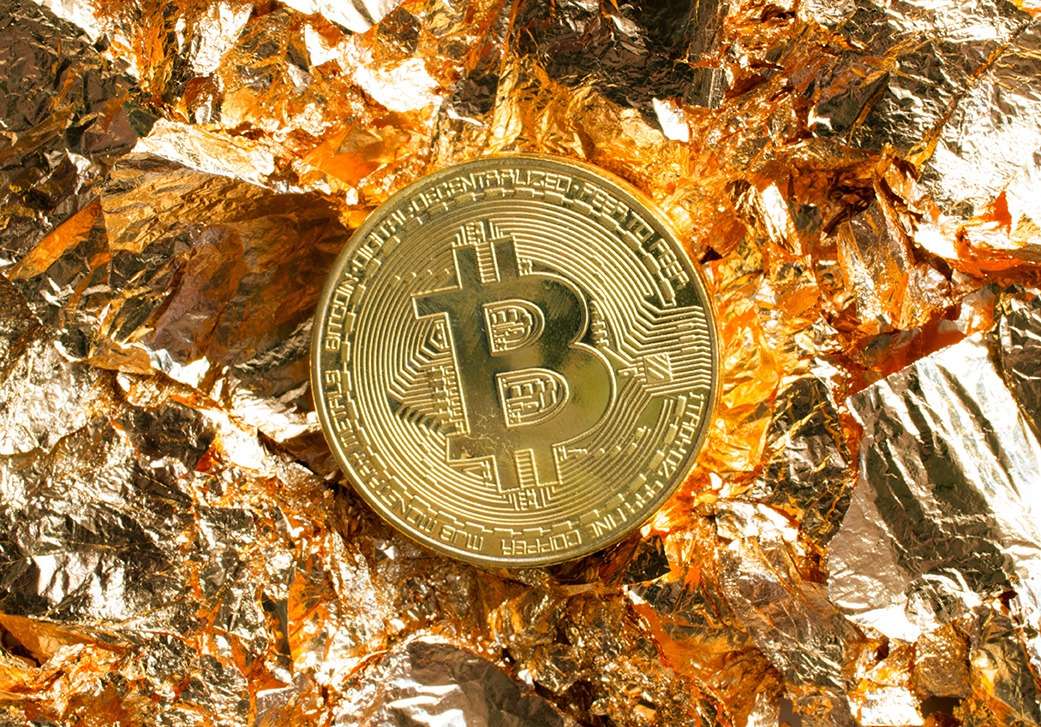
Image Source: Adobe Stock
Disclaimer: This article is for informational purposes only and does not constitute financial, legal, or investment advice.
Register today at DNACrypto.co