

“Bitcoin does not need louder narratives. It needs quieter operators.” — DNA Crypto
For most of Bitcoin’s history, price has been the story.
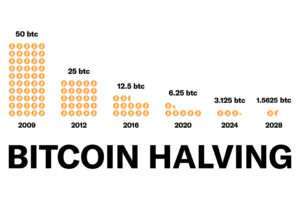
Up cycles, crashes, halvings, narratives.
That phase is ending.
Bitcoin’s price still matters — but it is no longer where the real competition is taking place. The decisive battle has quietly shifted underneath the charts, into infrastructure.
– Access.
– Liquidity.
– Custody.
– Settlement.
This is where Bitcoin’s future is now being shaped.
Price Is a Signal. Infrastructure Is Power.
Price reacts. Infrastructure determines.
Markets obsess over price because it is visible and emotionally engaging. But institutions operate differently. They focus on what controls outcomes, not what generates headlines.
Infrastructure decides:
- – who can access Bitcoin at scale
- – who can move size without disruption
- – who settles reliably under stress
- – who remains operational when others freeze
This is why the most consequential Bitcoin developments today rarely trend on social media.
They happen in boardrooms, compliance teams, custody agreements, and settlement rails.
The Real Battlefield: Quiet, Technical, Decisive
The Bitcoin infrastructure war is being fought across four fronts:
- – Custody — who controls keys, recovery, governance, and segregation
- – Execution — who can source deep liquidity without signalling or slippage
- – Settlement — who can deliver finality without counterparty risk
- – Access — which institutions are allowed to use, under which jurisdictions
ETFs accelerated exposure.
OTC desks move in size.
Custodians define trust.
Settlement rails decide survivability.
This is not ideological competition… It is an operational selection.
As we explored in Bitcoin as Financial Infrastructure, Bitcoin is no longer being evaluated as an alternative asset — it is being absorbed into financial plumbing by those who can operate it safely at scale.
Why Bitcoin’s Future Will Be Decided Quietly
Retail narratives assume adoption is loud and viral.
Institutional adoption is silent and procedural.
Institutions do not ask: “Is Bitcoin going up?”
They ask:
- – Who controls the keys?
- – What happens if something breaks?
- – Who approves movements?
- – How do we recover?
- – What jurisdiction governs failure?
This is why custody has emerged as the real choke point — a theme we broke down in The Bitcoin Custody Game, where infrastructure competence, not belief, determines who participates.
Bitcoin does not fail because of volatility.
It fails when the infrastructure cannot support trust.
Bitcoin’s Advantage: Sitting Outside the System
Here is the paradox most miss.
Bitcoin is not winning the infrastructure war by outpacing everyone.
It is winning by not depending on the same assumptions.
- – No central issuer
- – No settlement intermediary
- – No policy override
- – No rescue authority
As discussed in Bitcoin Acts as Disaster-Proof Money, Bitcoin’s value emerges most clearly when traditional rails fail, slow, or fragment.
Infrastructure competition defines access.
Bitcoin defines an exit.
That distinction is becoming increasingly valuable.
What This Means for Serious Capital
The future Bitcoin winners will not be the loudest voices or the boldest price predictions.
They will be the firms that can:
- – custody Bitcoin securely and govern it properly
- – execute size without market impact
- – settle reliably across jurisdictions
- – remain operational under stress
This is why family offices, funds, and institutions are shifting from curiosity to capability, as explored in Why Family Offices Are Turning to Bitcoin.
They are not chasing price.
They are securing optionality.
DNACrypto View
To go deeper into the infrastructure themes shaping Bitcoin’s next phase:
- – Bitcoin as Financial Infrastructure — why Bitcoin is now treated as rails, not speculation
- – The Bitcoin Custody Game — custody as the real institutional bottleneck
- – Why Dependency, Not Volatility, Is the Biggest Financial Risk — infrastructure failure as the true systemic threat
- – The Bitcoin Liquidity Squeeze — how supply dynamics amplify infrastructure importance
- – Money Is Becoming a Network — how settlement topology now defines value
Image Source: Adobe Stock
Disclaimer: This article is for informational purposes only and does not constitute legal, tax or investment advice.
Register today at DNACrypto.co