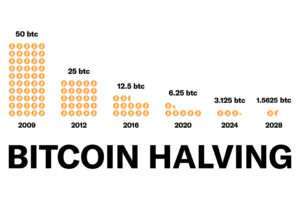


“Scarcity is coded into Bitcoin. Urgency is coded into the story told around it.” DNA Crypto.
Bitcoin Has No Marketing Department. Yet It Is Marketed Everywhere.
Bitcoin has achieved something unusual in financial history. There is no chief executive of Bitcoin, no investor-relations department, no central advertising budget and no company deciding what the official sales message should be.
Yet few financial assets are surrounded by a more persistent message.
There will only ever be 21 million. Institutions are coming. Governments are buying. The supply is disappearing. Fiat money will continue losing purchasing power. Wall Street has finally understood. Those who wait may discover that the opportunity has passed them by.
Some of those statements are facts. Some are reasonable interpretations. Others are predictions.
What joins them together is an emotional conclusion that has become extraordinarily powerful: you may regret not owning Bitcoin before everyone else understands it.
That is where this article begins.
Not with the claim that Bitcoin is a fraud, because it is not. Not with the claim that everybody promoting Bitcoin is dishonest, because there is no evidence for that either.
The more interesting question is simpler.
Who benefits when Bitcoin starts to feel inevitable?
Michael Saylor Is The Obvious Place To Start
Michael Saylor has become perhaps the most recognisable institutional advocate for Bitcoin in the world. He speaks about it with unusual certainty, presents it as superior long-term capital and has spent years encouraging individuals and corporations to reconsider how they store wealth.
It’s hard to argue that his advocacy has been casual. Strategy maintains an extensive archive of Bitcoin interviews, corporate events and presentations, including material carrying titles such as “Bitcoin: There Is No Second Best” and discussions of what could drive Bitcoin hundreds of times higher. Strategy’s own media archives document the scale of that public campaign.
Saylor may believe every word.
That does not make him economically neutral.
According to Strategy’s 12 October regulatory disclosure, the company held 848,250 Bitcoin as of 11 October, acquired for approximately $64 billion. That is just over 4% of Bitcoin’s eventual 21 million supply. Strategy’s October SEC disclosure
Strategy’s capital structure, financing strategy and investment proposition are now deeply connected to Bitcoin. Greater institutional acceptance of Bitcoin can strengthen the case for the asset Strategy owns in extraordinary quantity.
This is not evidence of misconduct.
It is evidence of an incentive.
Financial markets normally recognise these distinctions without difficulty. When an oil executive explains why energy demand will remain strong, investors understand that the speaker may be sincere while also running a business whose fortunes depend on energy. When a property developer argues that prime real estate remains scarce, nobody mistakes the statement for independent research.
Bitcoin should not be held to a different standard simply because it has no issuer.
The Difference Between Conviction And Marketing Matters
The distinction became particularly interesting during 2026 because Strategy itself began selling some of its Bitcoin.
Between 29 June and 5 July, the company sold 3,588 BTC for approximately $216 million. Strategy said the proceeds were used to fund preferred-stock distributions and replenish its US dollar reserve. Later, it sold another 1,638 BTC, with proceeds used for preferred dividends and repurchases of its STRC securities. The July SEC filing and the August filing describe those transactions.
There is nothing inherently contradictory about a corporation selling an asset to manage its capital structure. Public companies have obligations that individual savers do not.
What made the episode revealing was the language surrounding it.
For years, “never sell your Bitcoin” had become one of the strongest slogans associated with the Bitcoin treasury philosophy. In September, Strategy chief executive Phong Le described the idea as a “good marketing notion” while explaining why the economics of a public company require greater flexibility.
Strategy itself now lists the interview in its media archive under the title “Never Sell Your Bitcoin Was Just Marketing”.
That should not be read as an admission that Bitcoin itself was deceptively promoted.
Read it as something more useful.
The language that attracts capital can be simpler and more absolute than the decisions required once that capital has arrived.
DNACrypto explored part of this tension in Bitcoin Treasuries Are Testing The Myth Of Never Sell. The issue is not whether a treasury company may sell Bitcoin. Of course it may. The issue is what happens when a memorable investment slogan becomes confused with corporate financial policy.
Saylor Is Only One Part Of A Much Larger Machine
Focusing only on Michael Saylor would miss the larger story.
Bitcoin now sits inside an ecosystem in which many different businesses can benefit when more capital enters the asset class.
ETF sponsors collect fees on assets under management. Exchanges earn revenue when customers trade. Custodians charge for securing assets. Brokers earn spreads or commissions. Market makers benefit from trading activity and liquidity provision. Financial media benefits from subjects that attract audiences. Influencers can convert attention into followers, advertising, subscriptions or commercial relationships.
Existing Bitcoin owners also have an obvious economic interest in wider adoption because increased demand for a supply-constrained asset can increase the value of what they already own.
None of those incentives is hidden.
That is precisely what makes them interesting.
The Bitcoin ecosystem doesn’t need a central organisation telling everyone to promote the same story. Different participants can arrive at similar behaviour because their economic incentives point in broadly the same direction.
That is a fundamentally different claim from conspiracy.
Wall Street Is No Longer A Spectator
The arrival of spot Bitcoin ETFs made this incentive structure considerably more important.
BlackRock’s iShares Bitcoin Trust, IBIT, had approximately $65.7 billion in net assets on 8 October and charges a 0.25% sponsor fee. BlackRock’s IBIT product information publishes both figures.
This does not mean BlackRock needs Bitcoin to rise, nor does the existence of a fee establish improper promotion. Asset managers charge fees for providing investment products across equities, bonds, commodities and countless other markets.
But the economics are worth understanding.
A larger Bitcoin ETF creates a larger fee-generating asset pool. Increased investor acceptance can produce additional inflows. Higher Bitcoin prices can also increase the value of assets already held inside the product.
BlackRock therefore does not have to be part of a hidden campaign for Bitcoin adoption to be economically exposed to its success.
The same principle applies across the ETF ecosystem.
This is why Bitcoin ETF flows deserve to be analysed as capital behaviour rather than presented as proof that institutions have endorsed Bitcoin.
An ETF is a distribution mechanism.
Distribution and independent judgement are not the same thing.
Influence Has An Economic Effect
The social-media layer makes the system even more interesting.
A peer-reviewed study published in the Review of Accounting Studies examined approximately 36,000 tweets from 180 prominent crypto influencers covering more than 1,600 digital assets. The researchers found that influencer posts were associated with positive short-term returns, but significantly negative longer-horizon returns followed these. The pattern became stronger when posts contained more positive sentiment or appeared to recommend buying. The research is available here.
The study covered the broader crypto market rather than Bitcoin advocacy specifically, so it would be wrong to use it as evidence against Saylor or any individual Bitcoin commentator.
What it demonstrates is that attention can move capital.
And when attention itself becomes monetisable, the person generating it can have an economic incentive that is different from the investor receiving it.
A commentator may benefit from being watched whether the audience ultimately makes money or not.
That is not unique to crypto. Financial television, newsletters, investment conferences and market commentary have always lived with versions of the same conflict.
Crypto accelerates it.
Fear Of Missing Out Is Not A Meme. It Changes Decisions.
The psychological mechanism behind this has also been studied directly.
Research published in Psychology & Marketing used five studies containing eight experiments to examine how fear-of-missing-out appeals affect cryptocurrency investment decisions. The researchers found that externally induced FOMO increased participants’ intention to invest and that the effect operated through emotional processes. The research can be read here.
This matters because much of Bitcoin’s most effective language is built naturally around scarcity and anticipated regret.
The supply is fixed.
Institutional adoption is increasing.
Someone else is buying.
You have not bought yet.
Imagine what happens if they were right.
No one needs to say “panic and buy explicitly”. The structure of the story can generate urgency by itself.
That urgency becomes even more powerful when accompanied by rising prices, corporate purchases, ETF inflows and respected financial institutions entering the market.
Each new development seems to validate the last.
The 21 Million Supply Is Real. The Deadline Is Not.
This distinction deserves more attention.
Bitcoin’s maximum supply is a genuine feature of the protocol. The fact that no more than 21 million Bitcoin are intended to exist is not marketing language invented by an asset manager.
But a real scarcity characteristic can still be used to create an exaggerated sense of urgency.
There is a subtle movement between two statements:
- – Bitcoin has a fixed maximum supply of 21 million.
- – If you do not buy Bitcoin now, there will not be enough left for you later.
The first is a protocol characteristic.
The second is an investment narrative.
Bitcoin is divisible. An investor does not require one entire Bitcoin to participate in the asset. Scarcity can influence price if demand increases, but scarcity alone cannot tell an investor what the correct valuation should be today.
This is important because scarcity is most persuasive when it becomes attached to a clock.
The asset is limited, institutions are arriving,, and the rational investor must act before everyone else.
That final step is not coded into Bitcoin.
It is an argument.
No Dark Room Is Required
This is where conspiracy theories can actually weaken the more serious criticism.
I found no credible evidence that Michael Saylor, BlackRock, exchanges, ETF sponsors, influencers and large Bitcoin holders are secretly coordinating a single campaign to manipulate the public into buying Bitcoin.
They do not need to.
Consider the incentives independently.
- – A Bitcoin treasury company benefits when its underlying asset becomes more widely accepted and valuable.
- – An ETF provider can benefit when more assets enter a fee-paying product.
- – An exchange benefits from trading activity.
- – A custodian benefits from assets being placed into custody.
- – A market maker benefits from liquid trading markets.
- – A media business benefits when Bitcoin attracts attention.
- – An influencer can benefit from an expanding audience.
- – An existing Bitcoin holder can benefit when new demand meets constrained supply.
These parties do not need to meet or agree on a script.
The incentives can coordinate the behaviour without coordinating the people.
That may be the more important mechanism to understand.
Bitcoin Has Built A Distributed Sales Force
Traditional financial products usually separate producer, distributor and customer.
A fund manager creates a product. A marketing department promotes it. An adviser distributes it. A customer decides whether to buy.
Bitcoin blurs those roles.
The customer can also become an advocate.
A person buys Bitcoin and then explains Bitcoin to friends. A chief executive adds Bitcoin to the corporate treasury and begins appearing at Bitcoin conferences. An investment manager launches an ETF and then educates advisers about the case for a Bitcoin allocation. An influencer purchases Bitcoin and creates content explaining why others should consider doing the same.
The economic exposure travels alongside the advocacy.
This produces something close to a distributed sales force, even though nobody centrally recruited it.
The most effective member of that sales force may be the investor who sincerely believes they are helping somebody else understand money before it is too late.
Sincerity does not weaken the system.
It strengthens it.
Price Can Become Proof Of The Story
This is where Bitcoin becomes reflexive.
A narrative attracts capital. New capital pushes against available supply. A rising price attracts media attention. Media attention brings new investors. ETF inflows and corporate purchases are reported as evidence of adoption. That adoption appears to validate the original narrative, which can attract still more capital.
The price is no longer merely the outcome.
It becomes part of the argument.
This helps explain why Bitcoin is increasingly becoming a flow market. Price formation is influenced not just by what investors think Bitcoin is worth in theory, but by where the next marginal pool of capital is coming from.
The mechanism also works in reverse.
If prices fall, ETF flows weaken, treasury companies lose access to favourable capital, and media attention turns negative, the evidence that previously reinforced the bullish narrative can begin reinforcing a bearish one instead.
That is why reflexive markets can feel inevitable immediately before they stop feeling inevitable.
The Treasury Boom Has Already Shown The Other Side
Bitcoin treasury companies provide a useful example of what happens when a strong narrative meets financial engineering.
The strategy demonstrated that a public company could raise capital, acquire Bitcoin and potentially increase Bitcoin exposure per share when market conditions were favourable. Other companies adopted variations of the model.
But the model also introduced a new dependency. The ability to keep acquiring Bitcoin could depend on equity valuations, financing terms and investor willingness to continue funding the strategy.
The Financial Times reported in September that Bitcoin treasury companies had collectively lost more than $80 billion in market value from their 2025 peak as weaker Bitcoin prices and declining equity premiums tested the model. The FT analysis found that many treasury companies had suffered severe share-price declines.
This does not invalidate corporate Bitcoin ownership.
It shows that a compelling story can still run into the math of capital structure.
DNACrypto examined the same tension in The Bitcoin Treasury Trade Is Finally Being Tested.
When capital is plentiful, conviction and financing can reinforce each other.
When capital becomes scarce, the company still has bills to pay.
Investors Should Separate The Asset From The Messenger
None of this produces an argument against owning Bitcoin.
Bitcoin can have genuine value as a scarce digital asset while some people promoting it also have financial incentives to persuade others of that value.
Those two facts can exist simultaneously.
The mistake is allowing admiration for the messenger to substitute for analysis of the asset.
An investor listening to Michael Saylor should know that Strategy owns an extraordinary quantity of Bitcoin. An investor watching an ETF advertisement should understand how the provider earns money. An investor following a crypto personality should ask whether the person owns the asset being discussed, receives compensation or monetises the audience surrounding it.
This is standard investment discipline, not cynicism.
The same principle applies when analysing institutional Bitcoin allocation. Institutional participation is relevant information. It is not a substitute for deciding what role Bitcoin should actually play in a portfolio.
Seven Questions Worth Asking Before Believing The Narrative
Investors do not need to distrust everybody discussing Bitcoin. They need to understand the incentives attached to the discussion.
- – Does the person promoting Bitcoin already own significant Bitcoin or securities whose value depends on it?
- – Does the organisation earn fees when additional capital enters Bitcoin products?
- – Is the claim a verifiable property of Bitcoin, or a forecast about what other investors will do?
- – Is scarcity being explained, or being used to create artificial urgency?
- – Are downside scenarios discussed with the same confidence as upside scenarios?
- – Would the argument still sound convincing if Bitcoin traded sideways for five years?
- – Is the speaker explaining Bitcoin, or selling certainty about Bitcoin?
The final question may be the most useful.
Markets are uncertain by definition. Anyone selling certainty deserves more scrutiny than somebody selling an argument.
The Capital Behaviour Shift
The deeper significance is that narrative itself has become part of Bitcoin’s market infrastructure.
For a traditional asset, investors often think of research and marketing as activities that happen around the market. With Bitcoin, narrative can influence the marginal buyer, the marginal buyer can influence price, and price can then influence the credibility of the narrative.
This changes how capital behaves.
An investor who sees another institutional purchase may interpret it as information about Bitcoin’s fundamental value. Another investor may interpret the same purchase as evidence that future demand will increase. A third may buy simply because they fear everybody else has understood something they have missed.
All three buyers enter the same market for different reasons.
The result can look like consensus even when the underlying reasoning is completely different.
Bitcoin’s most powerful marketing asset may therefore be capital already moving into Bitcoin.
Money attracts attention. Attention creates legitimacy. Legitimacy attracts more money.
That feedback loop deserves to be understood alongside custody, liquidity, ownership and the other infrastructure questions explored throughout DNACrypto’s Bitcoin market liquidity analysis.
This Does Not Make Bitcoin A Ponzi Scheme
There is an important boundary here.
All asset markets depend to some extent on future buyers. A shareholder cannot sell without another investor buying. Property prices require buyers. Gold requires demand. Government bonds trade because investors assign value to future cash flows and sovereign credit.
The existence of promotional incentives does not make Bitcoin a Ponzi scheme, and calling it one avoids the harder analytical work.
Bitcoin has a functioning network, transparent monetary rules, transferable ownership and a global market. Its valuation can be debated without pretending those characteristics do not exist.
A more useful criticism is that Bitcoin’s decentralised structure does not remove conflicts of interest among the people around it.
There is no Bitcoin company.
There is still a Bitcoin industry.
And industries have incentives.
Conclusion
I began this investigation with the same suspicion many investors eventually encounter: can an asset really generate this much certainty without somebody powerful standing behind the message?
The evidence points to a less conspiratorial, but more interesting, answer.
Michael Saylor does not need to be controlled by a hidden force to promote Bitcoin passionately. Strategy owns 848,250 BTC and has built a corporate strategy around the asset. ETF providers do not need secret instructions to benefit from increased assets under management. Exchanges, custodians, brokers, market makers, media companies, influencers and existing holders all have their own reasons to welcome deeper participation.
Some participants are true believers. Some are commercial operators. Many are both.
That does not make their arguments wrong.
It means investors should understand who benefits when those arguments succeed.
The remarkable thing about Bitcoin may be that nobody needs to control the marketing machine. The network has created an ecosystem in which thousands of independent financial incentives can point towards the same outcome: wider adoption.
That is why the narrative can feel coordinated even when the participants are not.
The 21 million limit is real.
The technological properties are real.
The institutional adoption is real.
But the feeling that there is a once-in-a-lifetime deadline to act is something investors should examine far more carefully.
Bitcoin’s scarcity is part of the protocol. The fear of being left behind is part of the market.
Understanding the difference may be one of the most important forms of risk management an investor can practise.
Relevant DNACrypto Articles
- – Bitcoin Treasuries Are Testing The Myth Of Never Sell
- – The Bitcoin Treasury Trade Is Finally Being Tested
- – Bitcoin Is Becoming A Flow Market
- – Bitcoin ETFs Are Buying. So Who Is Selling?
- – Institutional Bitcoin Allocation
- – Bitcoin Investment
Institutional liquidity: If you are a market maker able to offer DNACrypto competitive institutional pricing or discounted execution, we would be interested in speaking with you. Visit DNACrypto.co.
Image Source: AI Stock
Disclaimer: This article is for informational purposes only and does not constitute financial, legal or investment advice.